


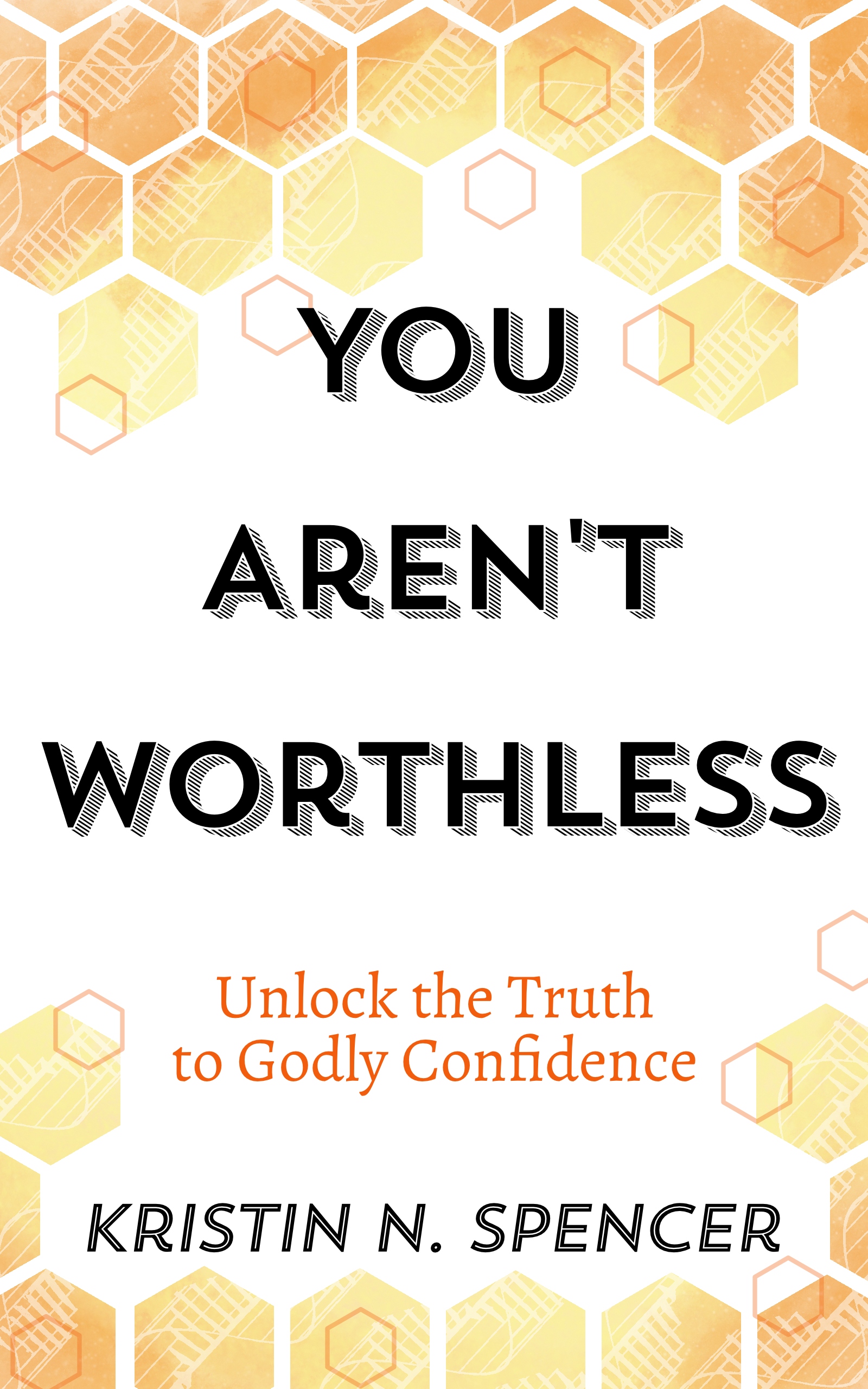
3,19 €
Mehr erfahren.
- Herausgeber: Literary Symmetry
- Kategorie: Ratgeber
- Sprache: Englisch
Embrace the Freedom Confidence Brings
How would your life change if you suddenly felt confident about every aspect of your existence? Don’t wait to find out. Bestselling author, Kristin N. Spencer, wants to help you see the truth about who you are: a beloved child of God.
Do you long to feel loved and cherished? Look no further. By employing the principles set forth in this transparent and practical book, you will finally understand and will be able to work past all of the obstacles that have kept you from living in the fulfilled freedom that godly confidence creates.
Do you want to know if this book is for you?
• Have you ever felt worthless?
• Has anyone ever told you that you have low self-esteem?
• Do you ever wish that you were someone else?
• Are you curious about why God put you on Earth?
• Have you ever felt like there has to be more to this life?
• Has your lack of confidence ever stopped you from pursuing an opportunity you desperately wanted to take?
Whether you have been labeled as having low self-esteem, or are exhausted from dealing with the pain of feeling unloved and unnoticed, You Aren’t Worthless will help you learn and embrace the truth that leads to real and lasting confidence.
Make Your Brain Believe
In order to understand God’s plan for you and how to be confident in who you are and the calling on your life, you will walk through chapters that teach you how to do the following:
Learn the truth about your identity in Christ.
Realize of the two most powerful lies Christians believe about themselves.
Walk through a proven path to freedom from pride.
Follow a guide to understanding God’s plan for humility.
Learn how to embrace confidence concepts that are biblical while avoiding those that aren’t.
Understand God’s love for you and why that matters.
Overcome damaging parental expectations and relationships.
Along with these empowering skills, you will also be able to go through a 30-day challenge at the end of the book that will help you turn every low-confidence moment into an opportunity for personal growth through a proven four-step process.
Don’t delay your quest to unlock the truth to godly confidence. Order your copy of You Aren’t Worthless today.
Das E-Book können Sie in Legimi-Apps oder einer beliebigen App lesen, die das folgende Format unterstützen:
Seitenzahl: 238
Veröffentlichungsjahr: 2019
Ähnliche


















You Aren’t Worthless
Unlock the Truth to Godly Confidence
Kristin N. Spencer
You Aren't Worthless:
Unlock the Truth to Godly Confidence
Copyright © 2019 (Second Edition)
by Kristin Spencer
Cover photography and artwork by: Kristin Spencer
Scripture taken from the New King James Version®. Copyright © 1982 by Thomas Nelson. Used by permission. All rights reserved.
All rights reserved. No part of this book may be reproduced in any form by any electronic or mechanical means including photocopying, recording, or information storage and retrieval without permission in writing from the author.
ISBN-13: 978-1-951040-01-7
ISBN-10: 1-951040-01-5
On The Web
kristinnspencer.com
Contact the author:
This book is dedicated to my mother, Peggy Louise. I love you, Mom.
This book is also for any person that has ever felt worthless.
I pray that you would find comfort in the truth of God’s word.
Table of Contents
Chapter 1: I Know How You Feel
Chapter 2: Set Free
Chapter 3: Two Powerful Lies Christians Believe
Chapter 4: The Deception Of Pride vs. The Honesty Of Humility
Chapter 5: Confidence Concepts That Are Not Found In The Bible
Chapter 6: The Love That Defines Us
Chapter 7: Earthly Parents and Our Heavenly Father
Chapter 8: To Love Like Jesus
Chapter 9: The Powerful Impact of Godly Confidence
Chapter 10: Created Equal (Everyone Feels Insecure Sometimes)
Chapter 11: Forgiveness and Healing
Chapter 12: How to Combat Low-Confidence Moments
Chapter 13: Bonus Material
Guide
Contents
Start of Content
Chapter 1: I Know How You Feel
Have you ever felt worthless? You’re not alone. There are so many things in the world around us that tell us that we simply aren’t good enough, smart enough, or attractive enough. The world tells us that in order to get rid of our insecurities we need to believe that we are worthy by repeatedly saying we are worthy. But has that actually helped with our insecurities? It has never helped me.
There is a way that you can be delivered from the lie that you are worthless, and the goal of this book is to do just that. You Aren’tWorthless will walk you through the same healing process that God walked me through over the last fourteen years. Instead of fourteen years, the process described in this book can help you find healing from feelings of worthlessness in just a few days. This book is for anyone who has felt worthless, hurt, and like their life doesn’t matter. You do matter, and I will prove that using God’s word. On my own journey, I have discovered freedom from low self-esteem, and you can too.
As my husband and I have ministered to others through discipling and counseling over the past seven years, we have seen the negative effects that feelings of worthlessness can cause. Being a foreign missionary also gave me the advantage to see how this isn’t just a western problem, but a worldwide, spiritual epidemic.
I have seen the methods I describe in this book bring healing and freedom in Jesus Christ. A Bible-centered approach to dealing with issues of spiritual and physical insecurity creates a strong foundation for healing in this process. We will look at specific examples that draw from characters in God’s word that will help us understand how the principles taught in these examples can transform our attitudes about ourselves as individuals, and the reality that is available to us as children of God. I will also dispel popular psychological concepts that the church as a whole has wrongfully embraced as truth.
Gregory Brown, a pastor, professor, and navy reserve chaplain serving at the Handong Global University says, “Kristin exposes the lies of the world system that trap [people] and make them miss the confidence that should come from being Divine image bearers—created to display God’s glory. Throughout the rest of the book, she teaches Scriptural truths that bring healing and help foster godly confidence.”
I promise that if you follow me through the scriptures with an open heart and a prayerful attitude, you will be set free from the unrealistic expectations that have created your feelings of worthlessness and you will find new fulfillment in the truth that God’s love and creative purposes for you make you more valuable than you can imagine.
Please don’t wait to embark on your own journey of healing because you think it might be too painful, or that this kind of healing is impossible for you. Be brave and walk with me as we learn about God’s plan in creating you, and all of the ways He wants to show you that you aren’t worthless. You are very precious in His sight.
Low Confidence: The Love and Life Stealer
When you unlock the truth to godly confidence, it will positively improve every aspect of your life. But what if you leave things the way they are now? What risks are you taking? Changing your behavior is difficult, right? What could possibly be worth all of that effort?
First, I want to tell you that it isn’t that difficult to change your approach to confidence, and you can do so by changing one thing you do every day. Second, you may not realize it, but by settling for a low-confidence attitude, you are missing out on some very important and enjoyable aspects of life in general, but also in your walk with Jesus Christ. But what exactly does the low-confidence life cost you? Here are a few examples.
Greg is in his twenties and even though he would love to have more friends and build a positive support group to counteract his unhealthy family, the thoughts of his mother telling him how hairy and unattractive he is enters his mind every time he thinks about making an effort to get to know someone from work or church better. Why would they want to be friends with him? This low-confidence attitude permeates every aspect of Greg’s life. He’s miserable and lonely and he doesn’t know how to change things.
June loves to write, as long as she doesn’t have to deal with any peers. Self-study is the way to go as far as she is concerned. Though she knows she would benefit exponentially from joining a writing group, the idea of being critiqued by more experienced writers is paralyzing. Instead, she refuses to show anyone her writing, hoarding her manuscripts to herself, and improves at a far slower pace than anyone who is willing to reach out for help. She allows her dreams of self-publishing one of her novels to slowly die, a death harkened by her low-confidence approach to life. Her writing goals just aren’t worth the risk of letting another person see one of her potential mistakes.
After years of avoiding his calling, Tim has finally given into God and decided to become a pastor. He completes seminary and applies to every church with an opening in his denomination across the country. When he finally gets his dream job, he finds himself miserable. The elders (AKA his bosses) aren’t very happy with several things Tim just can’t seem to do right. He quits and takes a job at the local bank, where he licks his wounds and decides that maybe he isn’t a Christian after all.
What is the dilemma that these three people face? You have probably noticed a theme here: all of their problems can be traced back to their lack of godly confidence. As confidence issues progress, they can also lead to more serious obstacles such as addiction, isolation, and depression. Is there anything in your life that you want to do, but are afraid to pursue due to low confidence? With a little understanding, and a simple, daily practice, you can fully embrace godly confidence and completely transform your life.
When I discovered the truth about godly confidence, every single thing about my approach to life changed. My healthy relationships felt safe and full of love, while I noticed that my unhealthy relationships needed to change. I was finally able to pursue the career of my dreams. All of the bitterness I had been collecting against God changed into love, joy, and confidence in Him. My marriage improved. I became a better mom, daughter, sister, and friend. In addition to all of those awesome transformations, my approach to ministry changed from unsure to dynamic and compassion-driven. I became better at loving people. Does that sound appealing to you?
But before we get to the how, I want to share the why through one last story: my own.
Get a head start and download your free pack of printables that accompany this book.
To receive your free printable packet, go to:
youarentworthlessbook.com/packet
Chapter 2: Set Free
As I watched my daughters play at the park, I looked around and saw the other mothers. I prayed in the quiet spaces of my mind, like usual, and something I will never forget happened. God said something to me that would change my life forever and I pray that it will also change your life. But first, I need to rewind.
Growing up in Western American Culture
As a young girl, I was very aware of what the world considered beautiful. This was before people were constantly connected to the internet, but even then there were images taunting me from fashion magazines and television shows. Then there were the living and breathing images of unreachable beauty that I went to school with every day. My family also had a huge role in my understanding of physical beauty. These men and women, who loved Jesus, were often complaining about one body part or another, whether it was their own or that of another person. All of these things pointed to one solution: my physical appearance would never measure up.
As I searched for a group of peers that would accept me, I was usually the willing recipient of cruel jokes and rude comments that turned into mantras I would torture myself with on a daily basis. I sought male affection as a way to battle against these thoughts. I rationalized that if someone wanted to kiss me or have sex with me, then I must be beautiful. But all of these things only left a bigger hole in my heart. I struggled with disordered eating and dressed in oversized clothes.
Once I started walking strongly with the Lord, I thought He would heal all these hurts, but the women I saw at church were struggling with the same insecure feelings as I was. I couldn’t see an example of victory anywhere. Although I believed God when I read in His word that He loved me and He created me, somewhere deep inside I clung onto the lie that God had made a mistake. Surely He hadn’t planned to make me look this way. Why would He make me like this, and drop me in a world whose standard of beauty would always be out of reach? Other Christians told me that I had low self-esteem, and that I needed to trust God, as if saying those two simple sentences to me would fix all of my problems. I really did not understand God’s unconditional love for me, or the fact that God doesn’t make mistakes (God cannot lie, Titus 1:2).
In college, I joined the crew team (rowing) and even when I was working out two or three times a day, on a very strict diet as a vegetarian, I was still a size 10. God did not make me to be thin. That is something I accept now, but then I was extremely irritated by the entire situation. I got involved at church and kept quiet about my confidence problems. My insecurity was like a festering wound that I felt all the time. The deep ache permeated every part of my being. And I noticed that other people in the church, both men and women, said demeaning things about their own physical appearances. When they discussed being thankful, it was always about things or spiritual gifts. I don’t remember ever hearing anyone say that we should be thankful for the body God had given us. I kept seeing people couple up and get married, but no one ever seemed interested in me romantically. This only encouraged my belief in the lie that no one could or would ever think I was beautiful. Looking back I can see that God was protecting me until I met my husband.
Marriage Didn't Fix Me
Even after I got married, though, I still felt unworthy and ugly. My husband struggled with a pornography addiction, and that only magnified my own insecurities. Instead of encouraging him that he could overcome his addictions, I shrunk back, believing in my heart that I could never live up to the perfect images of naked women he could find online. My heart was broken into so many pieces. I was pregnant with our first child, a girl, and I was afraid that I would never be able to be a positive influence in her life. After 20 hours of hard labor, she was born by emergency C-section. This was another strike against my already less-than-perfect body since I ended up suffering from diastasis recti (abdominal separation) that made me look like I was continually three months pregnant. I struggled with postpartum depression and spent many afternoons planning my own suicide. My idea was to wait until I had stored enough breast milk to last my daughter for a few months.
I was under a deep deception about God’s love for me, and this trickery drained the joy out of every positive thing in my life. I was desperate for some kind of change, but I didn’t know what to do. At this point my husband was still struggling with his addiction and was working two jobs. He lost interest in going to church, so I would go with my daughter and sit alone during most services in the nursing mothers’ room. It was one of the loneliest times in my life.
Eventually, God delivered my husband from his pornography addiction, and he cultivated a more intimate relationship with the Lord. He went back to church, and we met other Christian families who we could be ourselves with. A home fellowship formed, and along with it came much needed encouragement and fruitfulness. My insecurities seemed to fade into the background as God called my husband and me to the mission field. I was pregnant with our second daughter and had her just a few weeks before we moved to Hungary to attend the School of Missions at Calvary Chapel Bible College, Europe.
There, for the first time in my life, I met men and women who had strong, godly confidence. I could see that many of the staff members had victory and trusted in God’s love for them. I still didn’t know how to find that peace and trust in God with regards to the person He’d made me to be, but at least I knew it was possible. Since I had a newborn at that time, I spent a lot of time alone in our family’s living area. But I watched how the others interacted with and loved each other. We had women’s prayer once a week, and that was a lifeline. I also attended the Missions class taught by a godly woman who would end up being a loving example of godly confidence in my life. It was a time when God built me up for the next battle, which I never imagined would take place the way it did.
New Dreams, Repeated Defeats
At the end of Bible college my husband and I felt that God had called us to move to Greece, a European country on the coast of the Aegean Sea. Once we moved, we began to serve with another couple who had more experience as missionaries. But the struggles I had with my own insecurities were magnified under the lens of one of the people we served with. The wife of this older couple constantly questioned my ability to do things God had entrusted me with, including being a godly mother. I was repeatedly told by both members of the older couple that as soon as a real worship leader could be found, I would no longer be leading worship. There were also subtle negative comments about my weight and ability to learn a new language. I was told that I didn’t know as much about things as I let on, and that I was too vague when it came to telling other people details about my life.
Previous bad habits crept back in as I allowed others to make rude comments about me, and most of the time I agreed with them. How could more mature Christians be wrong? Slowly, these people also chipped away at the security I had in my friendships with other Christians. I felt alone. The breaking point came when the people we ministered to started coming to me to encourage me to talk to the other people about the rude things they frequently said to and about me in group settings. These Greek brothers and sisters in the faith were offended on my behalf and started vocally supporting me and encouraging me by saying that God was using me positively in their lives. After prayerful consideration and an attempt to follow the model we find for dealing with conflict in Matthew 18, I tried to talk to these people about what had happened. A few meetings later, I was accused of being too sensitive. There were other factors as well, but, after a time of prayer and fasting, my husband decided it was God’s will that we distance ourselves from this destructive situation. I was six months pregnant with our third child at the time (an amazing little boy).
Back at the Park
It was soon after these events took place that I was at the park, watching the girls play, with an obtrusive pregnant belly. I prayed about my broken heart and my confusion about the way God had made me. I remember asking God, “If you wanted me to be able to minister to people, why did you make me like this?” and instead of saying anything, God gave me a vision I would never forget. But more on that later.
After that, I heard a voice tell me that my low self-esteem was a type of pride—a sinful behavior that was keeping me far from the Lord. I remember what it was like to see this pride in my heart for the first time. I was so disgusted that I wanted to vomit. I prayed and asked God for forgiveness, and since that moment I have been free from the prison of insecurities I had built around myself. I have still been tempted to go back to that sin, like a dog returning to its own vomit (Proverbs 26:11), but thankfully God has given me victory to resist this temptation. Since then, I have been able to accept God at His word, and embrace His promises for me and my life as His child.
I have learned so much about God and His love for me through this process, and I want to help you understand His love for you as well. Maybe you feel like you are walking around with an open wound and no one will talk about it. That is why God put it on my heart to write this book, because the enemy knows and exploits a particular weakness that none of us will talk about. I am putting an end to that right now. Let’s talk about it. Let’s talk until every Christian on this planet understands God’s love and plans for them.
Chapter 3: Two Powerful Lies Christians Believe
You live in the world, so you already know about the torrent of lies that flows out of the entertainment industry, advertising agencies, and is even perpetuated by the church. I am a Los Angeles, California girl. In Southern California, the idea that permeates the lifestyle is that all women should have large breasts, small waist lines, and wear makeup. Oh yeah, and they’d better look perfect in a bathing suit, because everyone lives at the beach in summer. These days, the expectations for men are equally unrealistic. They are expected to live at the gym, have chiseled everything, and be completely hairless.
When I was younger, I had never found anyone openly proclaiming that all these ideas have no biblical basis among my family of other believers. I heard that inner beauty should be emphasized above all else, over and over again, but no one said anything to directly contradict the unrealistic expectations associated with physical appearance within the culture surrounding me. I wanted to be told that I was attractive, both inside and out. I looked around and could see that others were craving the same thing, but never found assurance of that fact, even within the church amongst other believers.
While I agree that inner beauty—beauty perpetuated by our desires to follow Jesus Christ and be more like Him—is very important, at the same time, it is foolish to ignore our physical insecurities. As a church body, we must acknowledge God’s perfect and creative plan for our personalities as well as our physical bodies.
For this reason, I believe that within the church we should make a point to tell others that they are attractive when it is appropriate. I am not saying that men should go around the church telling every woman she is beautiful, because some women might get the wrong idea. But we need to tell our daughters. Sisters need to tell sisters. Fathers need to tell their sons that they are handsome, and purposefully created. Brothers need to encourage each other in this way.
I remember when my husband and I were getting ready to graduate from the Missions program at Calvary Chapel Bible College Europe. My father-in-law came to watch our graduation, and took us out to buy dress clothes for the occasion—we had forgotten about graduation when we packed for our family of four, nine months earlier. I remember one of the pastors looked at me in my new dress, and told me how beautiful I looked. It wasn’t awkward or inappropriate. In fact my husband was right there. It was an older brother (in the Lord) moment, and it made me feel so special and cherished. If we want to defend against Satan’s lies, we need to battle them with truth. God only makes exquisite creations, including His children.
The Newest Fad
If we look at the way physical attractiveness has manifested through history, we see that what is considered gorgeous is not a static thing. It changes depending on popular culture over time. I always hear robust women, like me, lamenting over the renaissance age because full-figured women were considered to be the ultimate beauties. In fact, if you look at artwork during that time, some of women are painted to appear pregnant. This ideal of beauty had to do with procreation, and women with wider hips and larger breasts were believed to be more successful in duties such as childbearing and breast feeding, although now we know this is belief is unfounded. According to my Art History professor in university, strange ideals of beauty have affected art since art began. I’ll take her word for it.
We have all heard that during the Golden Age of Hollywood in the 1950s, women like Marilyn Monroe were popularizing the full-figured look. Men who were “rough around the edges” were considered to be the most handome, with actors like Humphrey Bogart and James Cagney (they are both on IMDB’s list of Greatest Tough Guy Actors) gaining a majority of the attention. Then, in the mid 1960s we had the popularity of ultra thin models, like Twiggy. As someone who sews clothes, it makes sense to me that fashion designers want to use thin models, because it is much easier to sew couture clothes for women with fewer curves to account for. But that one fact does not mean that thin is the only kind of beautiful. So we see that over time, the standard of attractiveness has constantly changed.
The idea that women should be as thin as possible, while retaining curves in particular places, has been mainstream for many years. Once in a while, the media will pick an exception to this rule, like Jennifer Lopez, Beyoncé, or Kim Kardashian, but these are still preconceived molds hardly any of us can fit into. Men are pressured to look like one of the Hemsworth brothers with chiseled features and perfectly symmetrical faces. In fact, we use these preconceived ideas to measure the value of others. We look at a man or woman and make a decision about how pleasing they are. If they are more attractive than we are, we envy them and assume they must feel confident about how they look. If we think they are less attractive than we are, we may be tempted to think of them when we attempt to make ourselves feel better about our own lack of attractiveness. Either way. this is a very dangerous game and it is also sinful behavior. Even people who fit into the mold of what the world considers to be beautiful will feel insecure and empty without Jesus Christ. We all have insecurities that Satan wants to exploit.
From a business perspective, it is extremely profitable to exploit people’s insecurities. If you look at the magazine section of the grocery store, what will you see? Hundreds of images of men and women that are aimed at making you feel worse about yourself. But why? Well, if they can offer you some tips or tricks to make you look like the photoshopped images of perfection on the cover, they can sell you their magazine, and various other products that you don’t actually need. There is greed involved on the part of the magazine makers, and their ultimate goal is to create discontentment in you. The less content you are with how you look and what you have (materialism), the more they can sell you. This is a continual cycle that results in multiplied profits for the magazines and their advertisers, while on a personal level it is a destructive pattern in your life that makes you less able to share the love of Jesus Christ with others. It is a complex web of deception that feeds many different types of sin, and steals joy from every person that is trapped in it.
Popular culture, and unfortunately Western Christian culture as well, perpetuate two very significant lies that Satan wants us to believe. These two lies completely devastate us and render us useless as soldiers in God’s army. Let’s examine them each on their own.
Lie #1: God Made A Mistake When He Created You
Do you really believe that God had a plan when He created you, or do you think that God made some mistake? Maybe you don’t like the way your hair frizzes when it’s humid outside. Maybe you hate the way your elbows look. There are literally hundreds of things you could pick to dislike about your physical body. For me, my weight was always the problem. As soon as I went through puberty, I had to work very hard to be thin, and no matter how hard I worked at it, I failed. I remember my mom telling me that once she went through puberty she had to be very careful about what she ate to maintain her weight, and I followed suit. I limited my calories and exercised excessively. In a world that felt so out of my control, disordered eating gave me a sense of control I had never experienced before. I knew that my parents loved me, but my parents’ insecurities further communicated to me that if I wanted to be considered beautiful, I would have to attempt to meet the worldly expectation of beauty. I honestly cannot remember anyone in my family telling me that I was beautiful, except for a few occasions when I dressed up for a school dance or a special occasion. This only reinforced the idea in my mind that I was only good-looking when I tried really hard.




