


1,82 €
Mehr erfahren.
- Herausgeber: Literary Symmetry
- Kategorie: Ratgeber
- Sprache: Englisch
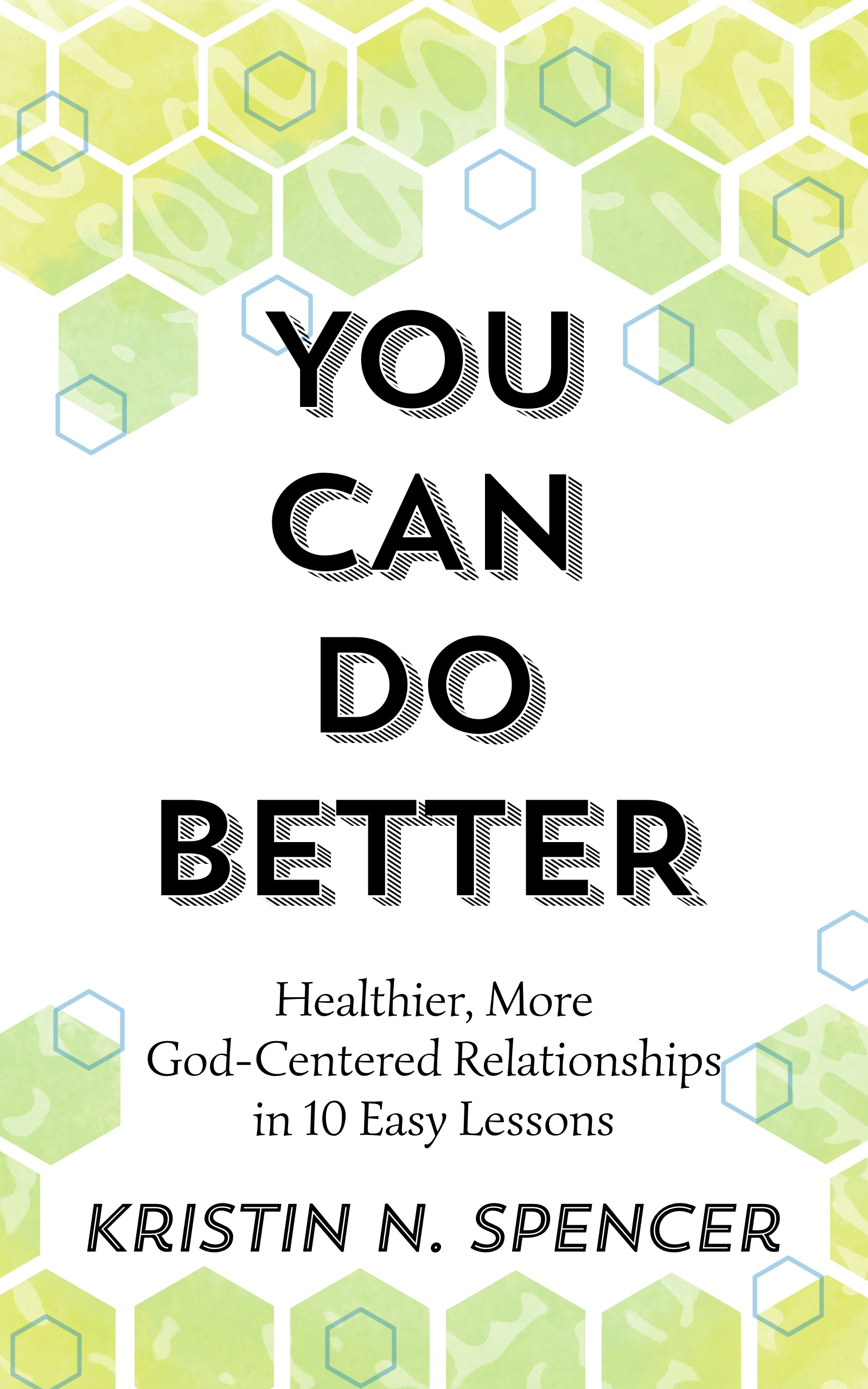
Do you want to improve the quality of your relationships? Have you ever wondered what you would need to change to be a better family member, friend, or spouse? Are you ready to love others more fearlessly than ever before? Join bestselling author Kristin N. Spencer as she guides you through specific passages of the Bible that will change the way you approach all of your relationships, including those that you would identify as challenging or impossible.
You Can Do Better: Healthier, More God-Centered Relationships in 10 Easy Lessons will help you understand the nuances and approaches you can implement, starting today, to improve every single relationship in your life.
Though the concepts of love, forgiveness, fulfillment, mercy, grace, humility, and acceptance are nothing new, we rarely look at our relationships through these helpful and illuminating lenses.
Das E-Book können Sie in Legimi-Apps oder einer beliebigen App lesen, die das folgende Format unterstützen:
Seitenzahl: 84
Veröffentlichungsjahr: 2019
Ähnliche















Contents
Title
Copyright
Dedication
Introduction
Chapter 1: Lesson One: Love
Chapter 2: Lesson Two: Forgiveness
Chapter 3: Lesson Three: Fulfillment
Chapter 4: Lesson Four: Mercy
Chapter 5: Lesson Five: Grace
Chapter 6: Lesson Six: Truth
Chapter 7: Lesson Seven: Expectations
Chapter 8: Lesson Eight: Humility
Chapter 9: Lesson Nine: Acceptance
Chapter 10: Lesson Ten: Jesus
Chapter 11: Pearls Before Swine: A Warning
Chapter 12: Holy Sex Reboot - Preview
Acknowledgements
About the Author
Other Books by Author
Your Free Relationship Diagnostic Tool
Guide
Contents
Start of Content
You
Can
Do
Better
Healthier, More God-Centered
Relationships in 10 Easy Lessons
Kristin N. Spencer
You Can Do Better: Healthier, More God-Centered Relationships in 10 Easy Lessons
Copyright © 2019
by Kristin N. Spencer
Imprint of Literary Symmetry
Cover art by Kristin N. Spencer
Scripture taken from the New King James Version®. Copyright © 1982 by Thomas Nelson. Used by permission. All rights reserved.
All rights reserved. No part of this book may be reproduced in any form by any electronic or mechanical means including photocopying, recording, or information storage and retrieval without permission in writing from the author.
ISBN-13: 978-1-951040-02-4
ISBN-10: 1-951040-02-3
On The Web:
http://kristinnspencer.com
Contact the author:
This book is dedicated to you, the reader.
I applaud your effort to make your relationships better. It is my hope that you when you finish this book, you will understand how embrace and improve your valuable relationships and how to step away from the destructive ones.
Introduction
Think about all of the relationships in your life, good and bad. What if I told you that you could change every single interaction just by reshaping your mindset? Would you be interested? As Christians, we have the most useful piece of living literature available, but when we compile our standards for living healthy and productive lives, we often base our foundations on things outside of the Bible. In just 10 easy lessons, you can change your entire approach to relationships based on an unequivocal truth that will never change and will leave you feeling more fulfilled, accepted, and loved than ever before. From this place of liberty, you can systemically change your interactions and relationships with the people around you.
If you had met me 10 years before, you would not have thought that I would ever be able to write a book about healthy relationships. I was the poster-child for dysfunctional interactions, and almost every single one of my relationships was based on unhealthy principles that I didn’t even realize had been part of my learned behavior growing up. After going through a particularly difficult work-place situation with an abusive individual, my mother told me she wanted to talk to me. Our video call went something like this:
“I feel like this is my fault.”
“I don’t understand, Mom. What are you talking about?”
“I never taught you how to have boundaries, and because of that, people use you. I think you need to learn how to protect yourself and your family by establishing what kind of behaviors you will and won’t accept from people.”
“Okay?” I had never heard my mom mention anything about boundaries before in my life.
“Just promise me you’ll think about it. If you want a few resources, I have a list.”
“Sure, send me what you have.”
Boundaries and Personal Worth
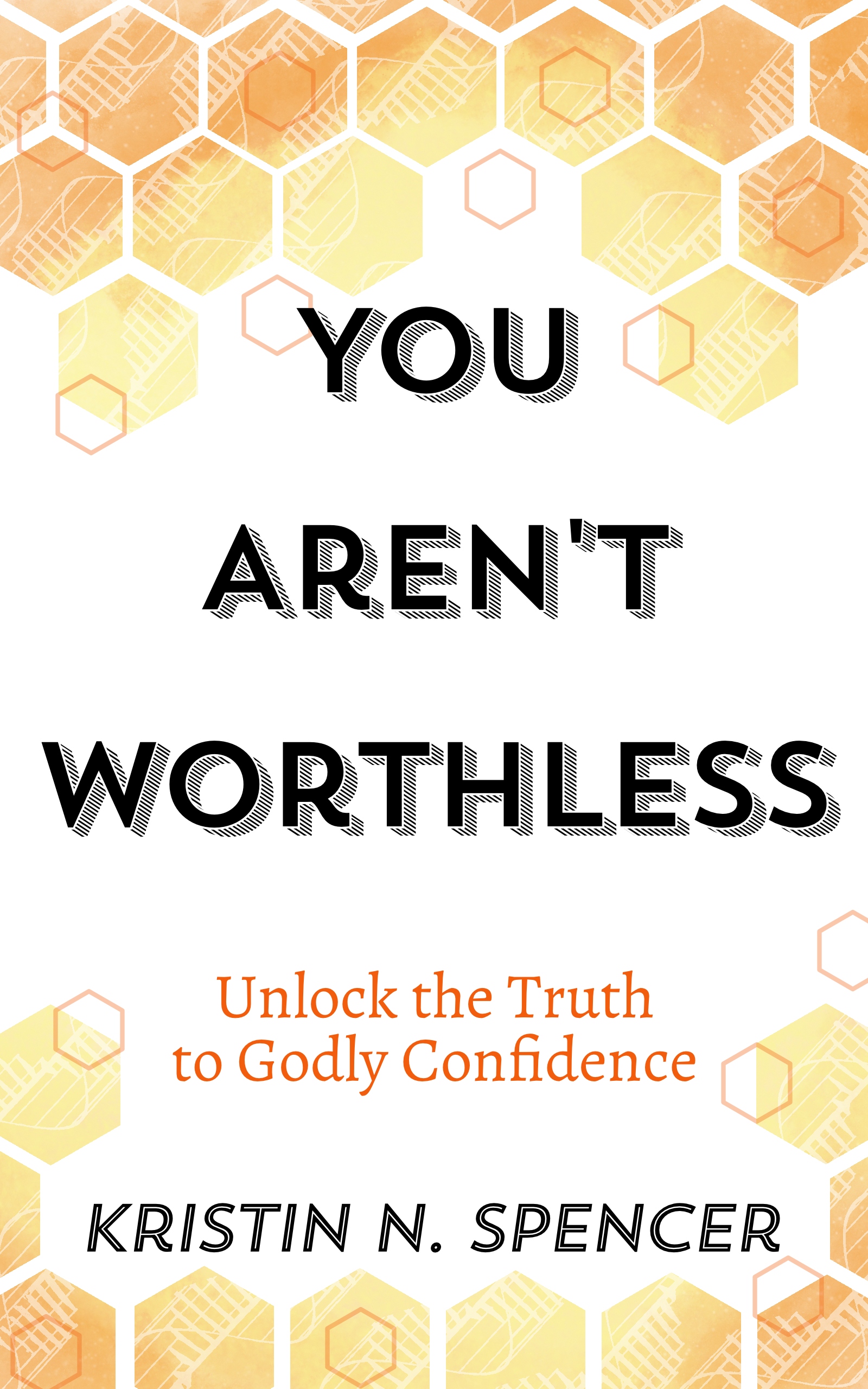
As I learned about healthy boundaries, God was also taking me on a journey to find love and acceptance from Him alone (an odyssey I chronicle in You Aren’t Worthless: Unlock the Truth to Godly Confidence). The culmination of these two learning expeditions led me to place I want to take you as well: establishing and maintaining relationships based on Biblical truth. Though this adventure can seem intimidating, I promise it is well worth the end result.
What about this process seems intimidating? Let me give you an example. If someone wants you to do something sinful, and you choose not to, you will set a boundary and say, “No, I will not do that.” They might get angry. You can’t control their response, which in this case happens to be anger. But you can control whether or not you decide to participate in that sinful activity. This is part of setting a healthy boundary within that relationship. Remember that the point of this guide is to address things from your side, the things you can control, not the things you can’t control, such as the actions of others. Because of this, each lesson starts with the words, “Today I Choose…” followed by each individual topic.
Going forward, it is important to understand that your worth is not based on your relationships or how other people view you. Your worth is based on God’s love for you as His creation. When you keep that in mind, you are able to create boundaries because your worth is not tied up in your relationships or in how others view your worth. If you find yourself having a low-confidence moment, fall back on the following verses and keep pressing forward.
“But as many as received Him, to them He gave the right to become children of God, to those who believe in His name.” -John 1:12
“Behold what manner of love the Father has bestowed on us, that we should be called children of God! Therefore the world does not know us, because it did not know Him.” -1 John 3:1
I can’t wait to take this journey with you as you move forward on this relationship-changing expedition.
Chapter 1: Lesson One: Love
Choose Love…
“Love suffers long and is kind; love does not envy; love does not parade itself, is not puffed up; does not behave rudely, does not seek its own, is not provoked, thinks no evil; does not rejoice in iniquity, but rejoices in the truth; bears all things, believes all things, hopes all things, endures all things.” -1 Corinthians 13:4-7
Love is precious. There is nothing else like it, and this is especially true when we think about the love of God. Because of how valuable love is, we often think of it as something that we should distribute with caution, measuring out each drop against the amount that has first been given to us. The problem with that way of thinking is that it puts a lot of pressure on our relationships. In fact, that model of love distribution is unbiblical. Love is precious, yes, but we are not limited in how much love God gives us. The love that comes from the Father is unlimited. The verse with which 1 John 4:8 ends is, “God is love.” If we realize how infinite God is, we realize that His love is also infinite. God is the source of love.
When we look at love as something to be traded instead of freely given, we become confused about God’s plan for love. In 1 Corinthians 13:5, we see that “love does not seek its own.” When we only give love in exchange for receiving love, that is exactly what we do, seek our own. Choosing love is a risk. It hurts when we love someone and they don’t show us that same love in return. It makes us feel rejected and worthless. But didn’t God warn us that would happen? Verses like Luke 10:16 and John 15:18 remind us that when people reject us, they are rejecting Christ, and that if the world hates us we need to remember that they hated Jesus first. Our flesh, the opposite of our spirit, gets angry with us when we love. Have you ever noticed that it feels so much better to hate and become bitter? Think about the last time someone disagreed with you about something you really cared about. Did their actions in that moment make you want to love them more? Probably not. In fact, you might have felt angry and rejected. Those natural feelings, which lead to hatred, are a result of our living in a fallen world. God never encourages hatred. Our Heavenly Father has chosen us as His children. He doesn’t want us to wallow in human rejection, when He has paid such a high price to welcome us back into fellowship with Him.
Often, when we hear that something bad has happened to a person that was mean to or betrayed us, we feel happy. We also see in today’s verse that, “love does not rejoice in iniquity.” Whether our betrayer is dealing with the consequences or their own sin, or that of someone else’s, we should never allow ourselves to rejoice or feel happy when sin happens. We must remember that love “bears all things,” which means it is our duty as followers of God to listen to and empathize with others when they experience difficulties. And when we listen, we ought to hear, and not to form some sort of argument with whatever that person says.
It is also important to recognize when a relationship has become abusive. In those circumstances we should put distance between ourselves and the abusive person, but that doesn’t mean we should stop loving them. We can still pray for them, while we remove ourselves from that abusive person’s destructive influence.
Ponder this: How would our actions change if we trusted God to refill any love we passed out, instead of waiting for people to reciprocate (show love back)? What would the church as a body look like if we all chose to love this way? How can this choice affect our witness as we share the gospel with non-believers?
A Missed Opportunity




