


24,00 €
Mehr erfahren.
- Herausgeber: Independent Thinking Press
- Kategorie: Ratgeber
- Sprache: Englisch
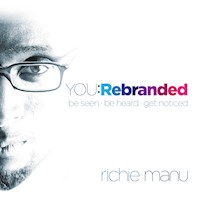
This book will inspire and enthuse you and change the way you think about yourself and your career. You: Rebranded delivers a distinct, provocative and abstract perspective in a compelling practical guide, with indispensable creative elements to improve your career prospects, opportunities and networks, whether you are at the start of your career or finding new paths and direction in your current career. It also serves as a sign post to other essential material, with links and pointers to unique interviews, stories, anecdotes and references. It also puts the reader in full control with digestible, and manageable, tasks and actions which have proven results. Key subjects and features include: Know your Industry: Know yourself Building and nurturing important relationships Key interviews and perspectives New mode of engagement for 21st Century thinking Differentiating Yourself Breaking career myths and misconceptions Vocabulary, codes and clues Wellbeing Manageable Actions and Tasks putting you in control
Das E-Book können Sie in Legimi-Apps oder einer beliebigen App lesen, die das folgende Format unterstützen:
Veröffentlichungsjahr: 2015
Ähnliche
















For my mum – my first and greatest teacher, and my worlds, Langlang, Kix and Flish.
Contents
Introduction
Me
Allow me to introduce myself. I am Richie Manu – a creative mentor, designer and university lecturer. I have spent all of my working life in the creative industries and have gone through a number of career changes. At each stage, I recognised the importance of reinventing and rebranding myself in order to meet the demands of new challenges. My original passion and interest lay in fine art, but I spent the early years in my career working in graphic design, branding and communications. While I was fairly content in my jobs, I yearned for the creative work that I wasn’t always able to do in my day job. While I loved design and branding, what also really drove me was the excitement of merging my interests in music and graphic design.
I had a real interest in acts on the fringe of being signed – I became a ‘band chaser’. I remember literally chasing bands and artists that I knew were building followings and getting attention. As a band chaser, I would approach these up-and-coming acts, or their managers, and offer to be their ‘design manager’: looking after their identity, branding, merchandising and promotions. One of the acts I worked with even gave me a ‘free’ jacket (as part of my payment) with their name emblazoned on the back. It eventually paid for itself by becoming an automatic backstage pass to their gigs. Result!
Early on in my career, I had to understand and implement fundamental principles that were needed to compete and stand out in a competitive environment and to win and retain business. There were dozens of already established designers and agencies specialising in this area of design for the music industry, so making a mark was bound to be a huge challenge, if not impossible. And yet it was achievable. I continued to freelance as a designer working with start-ups and new enterprises. And as a university lecturer, designer and creative mentor, I now specialise in personal and professional development, working with individuals and organisations to find their voice, to grow and to achieve their targets with effective creative approaches and strategies.
That is the crux of this book: I will share with you some of the tools and strategies that I have learned along the way, including the stories and advice of high-flying professionals from a range of industries who have also related to, adopted and applied these methods with great success.
You
Regardless of where you are in your career, there will be pivotal points when you inevitably face the prospect of challenge and change – from education and employment to entrepreneurship and business. As your roles change, so must you. It is inconceivable that you would stay the same person or maintain the same mindsets and habitual patterns throughout these important stages. In fact, adapting to change, reviewing your thinking and assessing your outlook through these critical times is vital as you progress through your career.
How you create, perceive and react to change is crucial. You:Rebranded provides a number of ‘lenses’ to equip you with the stamina to adapt in today’s increasingly fast moving environment, as well as enabling you to challenge traditional conventions of practice and re-navigate your understanding of your value in order to have a positive impact on your career and business opportunities.
Whether you are entering the job market now, have been in employment for years or have aspirations and plans to start your own business, we all have a common objective: to try to stand out from the crowd and communicate our distinctiveness. And that is not easy in an age when everyone is vying for attention and jostling to get to the front of the queue.
There is a lot of noise out there – in both digital and physical environments. And while we might not be able to avoid the noise (and might not want to), the key is figuring out when and how to differentiate ourselves. So, in an age when everyone is shouting, tweeting, screaming, blogging and clamouring for attention, you need to be aware of some of the techniques and approaches that can enhance your characteristics and distinctiveness.
This book is a step towards defining yourself and developing your own authentic voice, enabling you to take a sideways (but forward thinking) look at appraising who you are and where you want to be. You are about to go on a voyage that will take you through the abstract, contrary, thought provoking, alternative, distinctive and informative.
Who are YOU?
You may be among one or more of the following groups:
• The entrepreneur or start-up aiming to define and establish yourself.
• The job hunter or graduate seeking employment at the start of your career.
• The career mover looking for or considering a career change.
• The ladder climber seeking promotion in a competitive work environment.
• The curious wanting to explore innovative ways to stand out from the crowd.
• The up and running – already established but exploring new ways to differentiate yourself from your competitors.
Whoever you are, it is important to recognise the need to change and adapt to new situations and circumstances throughout the various stages of your professional or business career. And as you make your way into new environments, it is vital that you have the tools and knowledge to be able to navigate your way around fresh challenges with confidence. Whatever stage you are at in your career, this book will highlight the essential signposts, experiences and elements that will enhance your progression and distinctiveness.
PART 1
ReThink
1
Digital Watch: Keeping Up with the Times
The information age, along with its social and technological innovations, is impacting on our lives at an exponential rate. Online infrastructure, software applications, computers, hand-held devices, mobile technology, social media and apps have all changed the speed, frequency and way that we interact. When tablets are something we swipe, as well as pop, it becomes clear that technology has also had a significant impact on language, so much so that until recently even a standard spell checker was not happy with the word ‘internet’.
Connectivity, interactivity and engagement via digital mediums is now second nature, especially among millennials, and the permeation of technology, communication and social media has changed the way we do everything from purchasing food, dating, job hunting, entertainment, learning, gaming – the list goes on. As ‘digital natives’, 1 we exist and inhabit the dual environments of the universe and the metaverse, seamlessly floating between physical and virtual existence.
Power shift
The information age, while only a blip in the timeline of the universe, has broken down physical and geographical barriers, including our ability to send messages and communicate globally in a split second. The digital revolution has also shifted the power order from big players to consumers. 2 We have seen it happen in the music industry, with shifts from ownership to streaming access, in gaming and software development and even in the democratisation of publishing, with the popularity of blogs and other online content that can be shared and commented on in seconds.
For the consumer, these changes have broken down barriers rather than supported the big immoveable iron gates of industry. This is the age of the democratisation of knowledge, product and service; it is the world of the bloggers and the empowered, the well-informed and well-equipped amateurs. 3 The intersections of various forms of communication also continue to form part of our connective make-up. 4
There is no doubt that the proliferation of social networks and other digital platforms has had a profound impact on how we communicate, how we are seen, how we are heard and how we get noticed. This also presents an opportunity for us to think, do and say what we do differently, whether employing online tools in the digital space or in offline and physical environments.
Death of the 2D relic?
While digital communication is now prevalent, there are, arguably, still conventional approaches to making an impact. One example is the CV – the curriculum vitae, the résumé, the personal profile; however you wish to label your record of academic, personal and professional achievement. Our history represents a signal to other people who may wish to interact with us, do business with us or hire us about what we might be capable of in the future. But are the days of this 2D relic numbered?
While the CV is a perfectly adequate tool in helping us to progress towards ‘the future’, much of its content is locked in the past. To a certain extent this is unavoidable: we are using a fixed medium through which to demonstrate past experience and abilities. However (and especially in the wrong hands), the CV can work against us by giving others a perfect excuse to undo our achievements through lack of experience. 5
While the requirement for a detailed account of academic and professional experience is as vital as ever (there are many professions in which CVs are still an essential part of the recruitment process), the advent of digital technology and connectivity has made it even more critical to transcend A4 paper. 6 Social media platforms, such as LinkedIn, that enable us to create profiles, connect, interact, discuss and comment are now becoming one of the first stops for prospective employers, clients or business partners. 7
No magic wand
A simple list of professional experience and evidence of knowledge is no longer enough to compete in today’s highly competitive market. New approaches that involve deeper levels of interaction, judgement and critical synthesis are now among the starting points that set individuals and organisations apart. A combination of acquired skills, evidence of application, real-time problem solving and the ability to demonstrate and convey meaning and authenticity in what you have done has increasingly become a standard requirement.
Unfortunately, it is all too common to come across individuals who might as well have rolled up their CV into a tube, waved it around and shouted, ‘Abracadabra!’, in the hope that a job would magically materialise. The same can also be said for creating an online presence: despite being visually engaging, all too often they can become neglected and out of date. Online and offline profiles are living, breathing entities that demand our constant care and attention. More importantly, they need to convey not only what you have done, but also (and much harder to achieve) to become forward looking – providing information on current projects, problems you have recently solved and conveying critical viewpoints on matters related to your industry.
Remember
The growth in digital technology has changed the way we interact. Increasing your channels of communication is essential. Utilise every medium at your disposal to make yourself stand out. However, these mediums are not magic wands and require your constant attention to ensure the information stays relevant and up to date.
Be Seen
Understand the power of the digital landscape, its ability to create a wider and more dynamic reach and to generate more opportunities.
Be Heard
Use a wide range of mediums to become forward looking and to comment on upcoming projects, your viewpoints and problems you have solved.
Get Noticed
The cross-referencing of social, digital and physical platforms presents a great opportunity to think, do and say what you do differently.
1. This term was coined by Marc Prensky in ‘Digital Natives, Digital Immigrants: Part 1’, On the Horizon 9(5) (2001): 1–6.
2. Roy Greenslade’s article on the digital revolution provides an interesting perspective on digital disruption: R. Greenslade, ‘How Digital Revolution Gives Power to the People’, London Evening Standard (6 November 2013). Available at: http://www.standard.co.uk/business/media/roy-greenslade-how-digital-revolution-gives-power-to-the-people-8924261.html.
3. In Creative Disruption, Simon Waldman observes how digital technologies have had a profound impact on businesses and industry. It features case studies of traditional businesses that have become victims of technological advancement and, in contrast, how technology has also created immense opportunities for businesses, old and new, who have capitalised and gained from the digital revolution: S. Waldman, Creative Disruption: What You Need to Do to Shake Up Your Business in a Digital World (Harlow: Financial Times/Prentice Hall, 2010).
4. In their very insightful textbook, The Communication Age, Connecting and Engaging, Edwards et al. discuss convergence and the ways in which ‘many forms of technologically mediated and face-to-face communication overlap and intersect in our daily lives’: A. P. Edwards, C. Edwards, S. T. Wahl and S. A. Myers, The Communication Age, Connecting and Engaging (Thousand Oaks, CA: SAGE, 2012), p. 3.
5. Seth Godin observes: ‘If you’re remarkable … you probably shouldn’t have a résumé at all. A résumé gives the employer everything (s)he needs to reject you. Once you send me the résumé, I can say, “Oh, they’re missing this or they’re missing that” and boom you’re out’. S. Godin, Linchpin: Are You Indispensable? How to Drive Your Career and Create a Remarkable Future (London: Piatkus 2010), p. 71.
6. Godin suggests using a blog or projects that an employer can see or touch (ibid.).
7. Lindsey Pollak states that LinkedIn profiles have started to replace CVs and résumés. She believes that in the future employers will rely on professional networking platforms over traditional résumés to make their hiring decisions. L. Pollak, ‘The Top Job Search Trends of 2013’, LinkedIn Blog (14 January 2013). Available at: http://blog.linkedin.com/2013/01/14/top-job-search-trends-2013/.
2
Quash the Myths
It’s not who you know … it’s how many know you
With the growth of social media and social networks, the accumulation of ‘friends’ in the digital landscape has become a ‘likeable’ trend in a space where individuals, brands and companies are judged by the rate at which they have generated a mass following. The number of likes, connections and friends has created an environment where likeability is measured by the rate at which people have clicked a button. While social media has expanded the global reach and remit of friends in the digital sphere (although, arguably, the term ‘friend’ has acquired a new meaning), it has become increasingly apparent that there is still a genuine need to communicate our qualities and attributes to smaller groups – to people who know as much about us as we know about them. Could it be as few as 150 individuals?
In his book, How Many Friends Does One Person Need?, the evolutionary anthropologist Robin Dunbar comments on how our world has been redefined by social networking. Some individuals are gathering four-figure numbers of ‘friends’, many of whom know little or nothing about them. 1 In anthropological studies, he explored the general relationship between size of brain and size of social groupings among primates, including apes, monkeys and humans, of which the natural grouping was 150. This number, known as the Dunbar number, determines the size of our natural groupings and therefore the number of people with whom we can maintain ‘meaningful relationships’. 2
When building and nurturing meaningful relationships and connections in your personal and professional networks, focus not on how many people know you but how much they know about you – thereby ensuring that you communicate your value, skill or expertise to this key smaller grouping. So, if you can only have 150 people in your network, you need to be certain that these individuals are truly connected to you in a reciprocal manner and are aware of your key attributes.
Networking without networking
There was a time when networking was solely the domain of the guy who walked into an office with a ton of wires, some leads and a toolbox. Networking was his job, and he was our hero because he knew what kind of leads went into what sockets. Things have changed. Now, when we talk about networking we are usually describing our individual web of personal and professional connections.
Networking is vital for making new associations and developing relationships. If you do it well, you can engineer a complex web of interactions all working for you simultaneously in physical and digital environments. Networking also fosters connectivity: knowledge and ideas are shared within industries, pushing forward innovation and creativity.
While the importance of online professional networking is widely acknowledged, there is a side of networking that is not suited to some individuals (and businesses) who may not be naturally acclimatised to such environments – networking events. Face-to-face interaction remains an essential part of our environment and shapes the way we communicate and interact. However, the space in which some networking happens can be a daunting and sometimes hostile space for the uninitiated. Individuals can be put into bubbles – time capsules which show off their best attributes with the view to drumming up connections, associations and new business in a certain window of opportunity.
A crucial element of networking is networking without necessarily knowing you are networking; the first rule of networking is that you don’t talk about networking. For example, explaining what you are working on at the moment or describing something that interests you feels less contrived and more relaxed in the flow of an informal conversation. 3
You can make networking work for you by:
• Communicating what you do concisely and effectively, leaving a positive and memorable impression that makes people want to interact or do business with you.
• Connecting over common interests to establish links with new people.
• Being confident. It is important to celebrate who you are and not try to be something you are not.
• Being your true authentic self. This makes networking effortless.
• Remembering that you are investing your time and energy – so, make sure it is a good investment that creates positive returns.




