


Erhalten Sie Zugang zu diesem und mehr als 300000 Büchern ab EUR 5,99 monatlich.
- Herausgeber: Council of Europe
- Kategorie: Geisteswissenschaft
- Sprache: Englisch
A user-friendly guide to the recommendation that will inspire and motivate many to put youth work in the spotlight and to advocate for its quality and development, from the local to the European level.
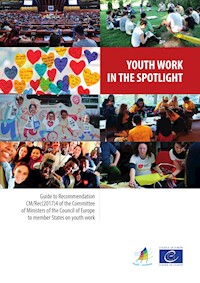
Guide to Recommendation CM/Rec(2017)4 of the Committee of Ministers of the Council of Europe to member States on youth work
Young people are involved in youth work throughout their transition from childhood to adulthood. Youth work offers young people a space for being young together, enjoying this period of life and learning useful things, such as how to be an active citizen, or how to live and work together with different people, or how to prepare for the job market. For young people who experience difficulties such as exclusion or bullying, youth work and youth workers are in many cases a hugely important support factor.
To help its member states to make youth work a reality, in 2017, the Committee of Ministers of the Council of Europe adopted Recommendation CM/Rec(2017)4 on youth work, which is the first internationally agreed policy document that focuses explicitly on youth work, its value for society and the way ahead for its quality development in Europe.This publication is an accompaniment to this recommendation and aims to bring its content closer to potential users: policy makers, youth workers, managers of youth work activities, youth leaders, educators of youth workers, youth organisations, and so on, and provide step-by-step information and guidance on the implementation of the recommendation. The publication also offers advice and examples of actions to take and policies to develop so that youth work can be put in the spotlight of youth policies and can make a difference in young people’s lives.
Sie lesen das E-Book in den Legimi-Apps auf:
Seitenzahl: 121
Veröffentlichungsjahr: 2020
Das E-Book (TTS) können Sie hören im Abo „Legimi Premium” in Legimi-Apps auf:
Ähnliche



















Youth workin the spotlight
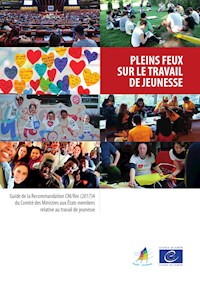
Guide to Recommendation CM/Rec(2017)4 of the Committee of Ministers of the Council of Europe to member States on youth work
Contributors: Nik Paddison, Snezana Baclija Knoch
Editors: Mara Georgescu, Antje Rothemund
Council of EuropeFacebook.com/CouncilOfEuropePublications
The opinions expressed in this work are the responsibility of the authors and do not necessarily reflect the official policy of the Council of Europe.
All rights reserved. No part of this publication may be translated, reproduced or transmitted, in any form or by any means, electronic (CD-Rom, internet, etc.) or mechanical, including photocopying, recording or any information storage or retrieval system, without prior permission in writing from the Directorate of Communication (F-67075 Strasbourg Cedex or [email protected]). Reproduction of material from this publication is authorised for non-commercial education purposes only and on condition that the source is properly quoted.
All other correspondence concerning this document should be addressed to the Youth Department of the Council of Europe
F- 67075 Strasbourg Cedex – France
Email: [email protected]
Cover design: Documents and Publications Production Department (SPDP), Council of Europe
Photos: Council of Europe and Shutterstock
Layout: Jouve, Paris
Council of Europe Publishing
F-67075 Strasbourg Cedex
http://book.coe.int
Paper ISBN 978-92-871-8966-0
© Council of Europe, March 2020
Printed at the Council of Europe
Acknowledgements
We would like to thank:
– the members of the Joint Council on Youth for their feedback and suggestions on this publication
–
Contents
Preface
Youth work in the spotlight
Introduction
Part 1
Youth work explained
Part 2
The recommendations to member states explained
Further reading and webography
Preface
Robust European democracies and social cohesion rely on the civic engagement of all, including young people. In today’s Europe, the support and spaces for young people that youth work creates are crucial if we want to give young people the best start in adult life they can have. During youth, the influence and support of family, friends and school is important – but we know that most young people need additional opportunities, support, resources and tools to develop their full potential as individuals and, moreover, as members of society and young citizens. Youth work is not the only source of support, but it is surely important, providing complementary opportunities, as well as enabling and formative experiences to young people.
■The Council of Europe has supported youth work for years. In 2017, the Committee of Ministers of the Council of Europe adopted a recommendation on youth work, Recommendation CM/Rec(2017)4 of the Committee of Ministers of the Council of Europe to member States on youth work (the recommendation), which is so far the only international policy document offering reference points, benchmarks, policy and quality standards for youth work. The recommendation represents for us a milestone. Our youth sector at the Council of Europe is fully dedicated to its commitment to make this recommendation a living instrument. We will support the implementation and review of the progress made by our member states on youth work in the coming years. We will also accompany member states, support their youth work practitioners and build a solid knowledge basis about youth work in Europe. The evaluation for this recommendation is in-built, which means that we and our member states will have a roadmap for youth work development for years to come.
■This recommendation has created a very important political momentum in Europe for supporting, celebrating and promoting youth work. While many in the youth field understand youth work and the value it has for young people’s learning and development, we need to do much more to make youth work known, understood and valued in all its diversity, creativity and serious commitment to serve young people’s dreams, aspirations and needs. We need more examples of good practice and more peer learning between those willing to develop youth work. This publication is a step in this direction and it provides explanations of the measures included in the recommendation, examples of good practice and questions for reflection for those involved in youth work.
■I trust that this user-friendly guide to the recommendation will inspire and motivate many to put youth work in the spotlight and to advocate for its quality and development, from the local to the European level.
Snežana Samardžić-Marković
Director General of Democracy, Council of Europe
Youth work in the spotlight
■Welcome to “Youth work in the spotlight”. This publication aims to guide readers through Recommendation CM/Rec(2017)4 of the Committee of Ministers of the Council of Europe to member States on youth work (the recommendation). This is the first internationally agreed policy document that focuses on youth work explicitly, its value for society and the way ahead for its quality development in Europe.
■This publication aims to bring the recommendation closer to its potential users: policy makers, youth workers, managers of youth work activities, youth leaders, educators of youth workers, youth organisations, and so on.
■Young people are involved in youth work throughout their transition from childhood to adulthood. Youth work offers young people a space for being young together, enjoying this life period and learning useful things in life, such as how to be an active citizen, how to live and work together with different people. For young people who experience difficulties such as exclusion or bullying, youth work and youth workers are in many cases a hugely important support factor.
■Before anything else, let’s place youth work in context. Read this testimony of young people and their experiences of youth work. It shows at a very personal level the value of youth work for young people.
Raluca’s testimony1
► This is not so much a story, it is more a testimony to the changes in methat have come about because of the youth work I have been involved in and the experiences I have received – youth work and non-formal education making changes in my perception, my way of thinking and my way of seeing things.
► Youth work brought into my life primarily a lot of very diverse friends. It made me broaden my views, it made me think outside the box. I learned a lot of interesting things about places, other people and myself. I became more tolerant, it challenged my creativity and it made me reconsider the way I see things.This experience brought independence for me and people around me, playfulness in learning by doing, it made me improve my ways of being.
► Youth work made me richer in something more than money can buy. I believe that in this experience you can find who you truly are, because by offering yourself and putting yourself in service to others, you learn a lot from them and you help them to learn about themselves.
■What the recommendation does is to place youth work at the centre of public strategies, programmes, youth policies, youth organisations’ work and to highlight, on the one hand, what youth work is, and what youth work needs in order to reach its missions. Young people have a right to programmes responding to their interests, experiences, ideas and needs and in which they can learn, develop and shape their present and future lives. For this reason, youth work should receive public support. What the recommendation does is to spell out this support and encourage member states to put youth work in the spotlight in their youth policy. Hence, the recommendation reaffirms the value of youth work and the responsibility of policy makers to ensure the conditions for youth work to develop:
► the sustainability of European identity and the Council of Europe’s core values (human rights, rule of law and democracy) relies on the creativity, competences, social commitment and contribution of young people and on their confidence in the future as well;
► government policies should support young people in realising their full potential as autonomous members of society, enabling them to develop life plans and exercise their democratic citizenship;
► youth work makes an important contribution to active citizenship by providing opportunities to acquire the knowledge, skills and attitudes for civic engagement and social action.2
■With this publication, we hope to bring the recommendation and its content closer to all those who can, in different capacities, contribute to the development of youth work in Europe.
1. https://pjp-eu.coe.int/en/web/youth-partnership/raluca-oancea.
2. Youth Work Recommendation CM/Rec(2017)4, p.6.
Introduction
The publication
Target group
Our publication aims to reach different target groups that can make a difference for the present and future of youth work in Europe: paid and volunteer youth workers, youth work providers, those involved in policy making related to youth work, from both civil society organisations and public institutions, including local and regional authorities, educators of youth workers and the youth research community.
Scope
■This publication explains the recommendation, particularly the actions and measures that member states should implement to support youth work, relating to the development, promotion and recognition of youth work. It gives examples of how youth work was developed in different contexts across Europe. It also asks questions and gives tips that should guide action for improving youth work.
What is, in fact, a recommendation?
■A Council of Europe recommendation is a formal and legal document that has been adopted by every government of the Council of Europe member states. It is a document that is presented before the Committee of Ministers (meaning a representative of every member state’s government). It is agreed upon by consensus after discussion and debate.
■This particular recommendation was put forward in 2017, after being discussed with the ministries in charge of youth affairs in the countries of the Council of Europe and with many youth organisations and platforms, and it was adopted unanimously on 31 May 2017.
■However, a recommendation like this one only comes to life if people work with it, understand it, promote it, and use it to improve youth work.
Spotlight on you!
► Do you use any other Council of Europe recommendations connected to youth work, for example in the planning, development and implementation of your work?
► International documents, such as this recommendation, are agreed in fora where member states discuss and approve them by consensus. These standards provide forward-looking principles and actions that member states can take, for example, in this case, to make sure every young person has access to quality youth work activities.
► These recommendations are useful tools for those involved in youth work to improve their work and to advocate for better youth policy.
► Check them here:www.coe.int/en/web/youth/standards
Structure
■This publication is structured in three parts.
■The Introduction briefly presents this publication, the recommendation and the work of the Council of Europe relating to young people and youth work.
■Part 1: “Youth work explained” explores the key contents about what youth work is, its principles and values, and its contributions to society and young people’s lives. It highlights the particular policy area of how the competences young people gain through youth work should be validated and recognised.
■Part 2: “The recommendations to member states explained” explores the actual recommendations, with examples and reflection questions.
The recommendation at a glance
■The recommendation is structured like this:
►Preamble
►Recommendations to member states
►Appendix, explaining the scope and purpose of the recommendation, definition and scope of youth work, its principles and measures.
■It is accompanied by:
►Explanatory memorandum, giving more details to the previous content of the recommendation
►Glossary.
■You can find the text of the recommendation and its different language versions here:
www.coe.int/en/web/youth/adopted-texts.
■All page numbers in the footnote references in this guide relate to the combined recommendation and explanatory memorandum available atcoe.int/en/web/youth/accessibility-of-activities.
The recommendation
Preamble
■The preamble refers to previous documents and standards relating to youth policy and youth work, for example: Recommendation Rec(2004)13 on the participation of young people in local and regional life; Recommendation CM/Rec(2010)8 on youth information; and Recommendation CM/Rec(2010)7 on the Council of Europe Charter on Education for Democratic Citizenship and Human Rights Education.
Recommendations to member states
■The recommendation section consists of nine actual recommendations to the member states’ governments and a set of underpinning principles. It also lists a range of measures for member states to take into account when reviewing the situation of youth work in their respective countries. More importantly, the recommendation prioritises areas where action is needed to either safeguard or promote youth work in Europe.
■The recommendations are summarised below:
1. ensuring the establishment or further development of quality youth work;
2. establishing competency-based education and training of paid and volunteer youth workers;
3. the proposed measures and principles promoted as the norm for youth work;
4. setting up a taskforce to elaborate a strategy for the development of European youth work;
5. fostering national and European research on the different forms of youth work;
6. development for the review and evaluation of the impact and outcomes of youth work;
7. promoting the Council of Europe Quality Label for Youth Centres as an example of good practice;
8. supporting the translation of the recommendation into other languages;
9. a proposed review process five years after its approval.
Appendix
■Although it is called “appendix”, this is a very important part of the document. It spells out the definition and scope of youth work as well as the principles of youth work: voluntary and active participation, equality of access, openness and flexibility, being rights-based, being inclusive, and being centred on young people, their needs and abilities. In addition, it mentions that member states secure the active participation of all stakeholders for the development and recognition of youth work.
■Several measures for improving youth work are specified here. The recommendation asks member states to first conduct an analysis of the youth work situation in their countries and create action plans and implement measures for further developing youth work. The measures that the recommendation mentions include:
► legal and political support;
► sustainable funding and structures;
► improved co-ordination across sectors and between the local and the national levels;
► a competency-based framework for the education and training of youth workers;
► appropriate forms of review and evaluation of the impact and outcomes of youth work.
■Two further sections accompany the recommendation.
Explanatory memorandum
■The memorandum explains the background and the drafting process of the recommendation. It looks at the Council of Europe’s vision for youth work in Europe and further elaborates what the recommendation consists of. It closes with a paragraph on follow-up – both for the Council of Europe and the member states.
Glossary
■




