


5,99 €
Mehr erfahren.
- Herausgeber: Tramp Press
- Kategorie: Geisteswissenschaft
- Sprache: Englisch
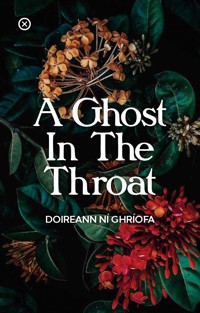
A true original. In this stunningly unusual prose debut, Doireann Ní Ghríofa sculpts essay and autofiction to explore inner life and the deep connection felt between two writers centuries apart. In the 1700s, an Irish noblewoman, on discovering her husband has been murdered, drinks handfuls of his blood and composes an extraordinary poem. Eibhlín Dubh Ní Chonaill's Caoineadh Airt Uí Laoghaire, famously referred to by Peter Levi, Professor of Poetry at Oxford University, as 'the greatest poem written in either Ireland or Britain during the eighteenth century.' In the present day, a young mother narrowly avoids tragedy. On encountering the poem, she becomes obsessed with its parallels with her own life, and sets out to track down the rest of the story. A Ghost in the Throat is a devastating and timeless tale about one woman freeing her voice by reaching into the past and finding another's.
Das E-Book können Sie in Legimi-Apps oder einer beliebigen App lesen, die das folgende Format unterstützen:
Veröffentlichungsjahr: 2020
Ähnliche



















iii
v
To the three Eileens who lit the lantern I see by:
Eileen Blake, Eileen Forkan,
and Eibhlín Dubh Ní Chonaill.
vi
ix
We are an echo that runs, skittering, through a train of rooms.
—Czesław Miłosz
Dá dtéadh mo ghlao chun cinn Go Doire Fhíonáin mór laistiar
Should my howl reach as far as grand Derrynane
—Eibhlín Dubh Ní Chonaillx
contents
1
1. a female text
thug mo shúil aire duit, thug mo chroí taitneamh duit,
how my eye took a shine to you, how my heart took delight in you,
—Eibhlín Dubh Ní Chonaill
THIS IS A FEMALE TEXT.
This is a female text, composed while folding someone else’s clothes. My mind holds it close, and it grows, tender and slow, while my hands perform innumerable chores.
This is a female text borne of guilt and desire, stitched to a soundtrack of cartoon nursery rhymes.4
This is a female text and it is a tiny miracle that it even exists, as it does in this moment, lifted to another consciousness by the ordinary wonder of type. Ordinary, too, the ricochet of thought that swoops, now, from my body to yours.
This is a female text, written in the twenty-first century. How late it is. How much has changed. How little.
This is a female text, which is also a caoineadh: a dirge and a drudge-song, an anthem of praise, a chant and a keen, a lament and an echo, a chorus and a hymn. Join in.5
2012
Every morning of mine is much the same. I kiss my husband, feeling a pang as I do so – no matter how often our morning goodbye is repeated, I always miss him when he leaves. Even as his motorbike roars into the distance, I am already hurrying into my own day. First, I feed our sons, then fill the dishwasher, pick up toys, clean spills, glance at the clock, bring our eldest to school, return home with the toddler and the baby, sigh and snap, laugh and kiss, slump on the sofa to breastfeed the youngest, glance at the clock again, read The Very Hungry Caterpillar several times, try to rinse baby-spew from my ponytail into the bathroom sink, fail, make a tower of blocks to be knocked, attempt to mop, give up when the baby cries, kiss the knees of the toddler who slips on the half-washed floor, glance at the clock yet again, wipe more spilled juice, set the toddler at the table with a jigsaw puzzle, and carry the youngest upstairs for his nap.
The baby sleeps in a third-hand cot held together with black gaff tape, and the walls of our rented bedroom are decorated not with pastel murals, but with a constellation of black mould. I can never think of a lullaby, so I resort to tunes from teenage mixtapes instead. I used to rewind ‘Karma Police’ so obsessively that I wondered whether the brown spool might snap, 6but every time I pressed play the machine gave me the song again. Now, in my exhaustion, I return to that melody, humming it gently as the baby glugs from my breast. Once his jaw relaxes and his eyes roll back, I creep away, struck again by how often moments of my day are lived by countless other women in countless other rooms, through the shared text of our days. I wonder whether they love their drudge-work as I do, whether they take the same joy in slowly erasing a list like mine, filled with such simplicities as:
School-run
Mop
Hoover Upstairs
Pump
Bins
Dishwasher
Laundry
Clean Toilets
Milk/Spinach/Chicken/Porridge
School-run
Bank + Playground
Dinner
Baths
Bedtime
I keep my list as close as my phone, and draw a deep sense of satisfaction each time I strike a task from 7it. In such erasure lies joy. No matter how much I give of myself to household chores, each of the rooms under my control swiftly unravels itself again in my aftermath, as though a shadow hand were already beginning the unwritten lists of my tomorrows: more tidying, more hoovering, more dusting, more wiping and mopping and polishing. When my husband is home, we divide the chores, but when I’m alone, I work alone. I don’t tell him, but I prefer it that way. I like to be in control. Despite all the chores on my list, and despite my devotion to their completion, the house looks as cheerily dishevelled as any other home of young children, no cleaner, no dirtier.
So far this morning, I have only crossed off school-run, a task that encompassed waking the children, dressing, washing, and feeding them, clearing the breakfast table, finding coats and hats and shoes, brushing teeth, shouting the word ‘shoes’ several times, filling a lunchbox, checking a schoolbag, shouting for shoes again, and then, finally, walking to the school and back. Since returning home, I have still only half-filled the dishwasher, half-helped my son with his jigsaw, and half-mopped the floor – nothing worthy of deletion from my list. I cling to my list because it is this list that holds my hand through my days, breaking the hours into a series of small, achievable tasks. By the end of a good list, when I am held again 8in my sleeping husband’s arms, this text has become a sequence of scribbles, an obliteration I observe in joy and satisfaction, because the gradual erasure of this handwritten document makes me feel as though I have achieved something of worth in my hours. The list is both my map and my compass.
Now I can feel myself starting to fall behind, so I skim the text of today’s tasks to find my bearings, then set the dishwasher humming and draw a line through that word. I smile as I help the toddler find his missing jigsaw piece, clap when he completes it, and finally resort to the remote control. I don’t cuddle him close as he watches The Octonauts. I don’t sit on the sofa with him and close my weary eyes for ten minutes. Instead, I hurry to the kitchen, finish mopping, empty the bins, and then check those tasks off my list with a flourish.
At the sink I scrub my hands, nails, and wrists, then scrub them again. I lift sections of funnels and filters from the steam steriliser to assemble my breast-pump. These machines are not cheap and I no longer have a paying job, so I bought mine second-hand. On my screen, the ad seemed almost as poignant as the baby shoes story usually attributed to Ernest Hemingway –
Bought for €209, will sell for €45 ONO.
Used once.
9Every morning for months this machine and I have followed the same small ritual in order to gather milk for the babies of strangers. I unclip my bra and scoop my breast into the funnel. It’s always the right breast, because my left breast is a lazy bastard: by a month post-partum it has all but given up, so both baby and machine must be fully served by the right. I press the switch, wince as it jerks my nipple awkwardly, adjust myself, and then twist the dial that controls the intensity with which the machine pulls the flesh. At first, the mechanism draws fast and firm, mimicking the baby’s pattern of quick suck, until it believes that the milk must have begun to emerge. After a moment or two the pump settles into a steady cadence: long tug, release, repeat. The sensation at nipple level is like a series of small shocks of static electricity, or some strange complication of pins and needles. Unlike feeding the baby, this process always stings, it is never pleasant, and yet the discomfort is endurable. Eventually, the milk stirs to the machine’s demands, un-gripping itself somewhere under my armpit. A drop falls from the nipple to be quickly sucked into the machine, then another, and another, until a little meniscus collects in the base of the bottle. I turn my gaze away.
There are mornings, on finding myself particularly tired, that I might daydream a while, or make 10a ten-minute dent in a library book, but today, as on so many other days, I pick up my scruffy photocopy of Caoineadh Airt Uí Laoghaire, inviting the voice of another woman to haunt my throat a while. This is how I fill the only small silence in my day, by turning up the volume of her voice and combining it with the wheeze-whirr of my pump, until I hear nothing beyond it. In the margin, my pencil enters a dialogue with many previous versions of myself, a changeable record of thought in which each question mark asks about the life of the poet who composed the Caoineadh, but never questions my own. Minutes later, I startle back to find the pump brimming with pale, warm liquid.
—
When we first met, I was a child, and she had been dead for centuries.
Look: I am eleven, a girl who is terrible at sums and at sports, a girl given to staring out windows, a girl whose only real gift lies in daydreaming. The teacher snaps my name, startling me back to the flimsy prefab. Her voice makes it a fine day in 1773, and sets English soldiers crouching in ambush. I add ditch-water to drench their knees. Their muskets point towards a young man who is tumbling from his saddle now, in slow, slow motion. A woman rides in to kneel over 11him, her voice rising in an antique formula of breath and syllable the teacher calls a ‘caoineadh’, a keen to lament the dead. Her voice generates an echo strong enough to reach a girl in the distance with dark hair and bitten nails. Me.
In the classroom, we are presented with an image of this woman standing alone, a convenient breeze setting her as a windswept, rosy-cheeked colleen. This, we are told, is Eibhlín Dubh Ní Chonaill, among the last noblewomen of the old Irish order. Her story seems sad, yes, but also a little dull. Schoolwork. Boring. My gaze has already soared away with the crows, while my mind loops back to my most-hated pop-song, ‘and you give yourself away …’ No matter how I try to oust them, those lyrics won’t let me be.
—
By the time I find her again, I only half-remember our first meeting. As a teenager I develop a schoolgirl crush on this caoineadh, swooning over the tragic romance embedded in its lines. When Eibhlín Dubh describes falling in love at first sight and abandoning her family to marry a stranger, I love her for it, just as every teenage girl loves the story of running away forever. When she finds her murdered lover and drinks handfuls of his blood, I scribble pierced hearts 12in the margin. Although I don’t understand it yet, something ricochets in me whenever I return to this image of a woman kneeling to drink from the body of a lover, something that reminds me of the inner glint I feel whenever a boyfriend presses his teenage hips to mine and his lips to my throat.
My homework is returned to me with a large red X, and worse, the teacher’s scrawl cautions: ‘Don’t let your imagination run away with you!’ I have felt these verses so deeply that I know my answer must be correct, and so, in righteous exasperation, I thump page after page down hard as I make my way back to the poem, scowling. In response to the request ‘Describe the poet’s first encounter with Art Ó Laoghaire,’ I had written: ‘She jumps on his horse and rides away with him forever,’ but on returning, I am baffled to find that the teacher is correct: this image does not exist in the text. If not from the poem, then where did it come from? I can visualise it so clearly: Eibhlín Dubh’s arms circling her lover’s waist, her fingers woven over his warm belly, the drumming of hooves, and the long ribbon of hair streaming behind her. It may not be real to my teacher, but it is to me.
—
13If my childhood understanding of this poem was, well, childish, and my teenage interpretation little more than a swoon, my readings swerved again in adulthood.
I had no classes to attend anymore, no textbooks or poems to study, but I had set myself a new curriculum to master. In attempting to raise our family on a single income, I was teaching myself to live by the rigours of frugality. I examined classified ads and supermarket deals with care. I met internet strangers and handed them coins in exchange for bundles of their babies’ clothes. I sold bundles of our own. I roamed car boot sales, haggling over toddler toys and stair-gates. I only bought car seats on sale. There was a doggedness to be learned from such thrift, and I soon took to it.
My earliest years of motherhood, in all their fatigue and awe and fretfulness, took place in various rented rooms of the inner city. Although I had been raised in the countryside, I found that I adored it there: the terraces of smiling neighbours with all their tabbies and terriers, all our bins lined up side by side, the overheard cries of rage or lust in the dark, and the weekend parties with their happy, drunken choruses. Our taps always dripped, there were rats in the tiny yard, and the night city’s glimmering made stars invisible, but when I woke to feed my first son, and then my second, I could split the curtains and see the 14moon between the spires. In those city rooms, I wrote a poem. I wrote another. I wrote a book. If the poems that came to me on those nights might be considered love poems, then they were in love with rain and alpine flowers, with the strange vocabularies of a pregnant body, with clouds and with grandmothers. No poem arrived in praise of the man who slept next to me as I wrote, the man whose moonlit skin always drew my lips towards him. The love I held for him felt too vast to pour into the neat vessel of a poem. I couldn’t put it into words. I still can’t. As he dreamt, I watched poems hurrying towards me through the dark. The city had lit something in me, something that pulsed, vulnerable as a fontanelle, something that trembled, as I did, between bliss and exhaustion.
We had already moved house twice in three years, and still the headlines reported that rents were increasing. Our landlords always saw opportunity in such bulletins, and who could blame them? Me. I blamed them every time we were evicted with a shrug. No matter how glowing their letters of reference, I always resented being forced to leave another home. Now we were on the cusp of moving again. I’d searched for weeks, until eventually I found a nearby town with lower rents. We signed another lease, packed our car, and left the city. I didn’t want to go. I drove slow, my elbow straining to change 15gear, wedged between our old TV and a bin-bag of teddies, my voice leading a chorus through ‘five little ducks went swimming one day’. I found my way along unfamiliar roads, ‘over the hills and far away’, scanning signs for Bishopstown and Bandon, for Macroom and Blarney, while singing ‘Mammy Duck said Quack, Quack, Quack …’ until my eye tripped over a sign for Kilcrea.
Kilcrea – Kilcrea – the word repeated in my mind as I unlocked a new door, it repeated and repeated as I scoured dirt from the tiles, and grimaced at the biography of old blood and semen stains on the mattresses. Kilcrea, Kilcrea, the word vexed me for days, as I unpacked books and coats and baby monitors, spoons and towels and tangled phone chargers, until finally, I remembered – Yes! – in that old poem from school, wasn’t Kilcrea the name of the graveyard where the poet buried her lover? I cringed, remembering my crush on that poem, as I cringed when I recalled all the skinny rock-stars torn and tacked onto my teenage walls, the vocabulary they allowed me to express the beginnings of desire. I flinched, in general, at my teenage self. She made me uncomfortable, that girl, how she displayed her wants so brashly, that girl who flaunted a schoolbag Tipp-Exed with longing, who scribbled her own marker over layers of laneway graffiti, who stared obscenely at strangers from bus windows, who 16met their eyes and held them until she saw her own lust stir there. The girl caught in forbidden behaviours behind the school and threatened with expulsion. The girl called a slut and a whore and a frigid bitch. The girl condemned to ‘silent treatment’. The girl punished and punished and punished again. The girl who didn’t care. I was here, singing to a child while scrubbing old shit from a stranger’s toilet. Where was she?
—
In the school car park, I found myself a little early to pick up my eldest and sought shelter from the rain under a tree. My son was still dreaming under his plastic buggy-cover, and I couldn’t help but admire his ruby cheeks and the plump, dimpled arms I tucked back under his blanket. There. In the scrubby grass that bordered the concrete, bumblebees were browsing – if I had a garden of my own, I thought, I’d fill it with low forests of clover and all the ugly weeds they adore, I’d throw myself to my knees in service to bees. I looked past them towards the hills in the distance, and, thinking of that road-sign again, I rummaged for my phone. There were many more verses to the Caoineadh than I recalled, thirty, or more. The poem’s landscape came to life as I read, it was alive all around me, alive and fizzing with rain, 17and I felt myself alive in it. Under that drenched tree, I found her sons, ‘Conchubhar beag an cheana is Fear Ó Laoghaire, an leanbh’ – which I translated to myself as ‘our dotey little Conchubhar / and Fear Ó Laoghaire, the babba’. I was startled to find Eibhlín Dubh pregnant again with her third child, just as I was. I had never imagined her as a mother in any of my previous readings, or perhaps I had simply ignored that part of her identity, since the collision of mother and desire wouldn’t have fitted with how my teenage self wanted to see her. As my fingertip-scar navigated the text now, however, I could almost imagine her lullaby-hum in the dark. I scrolled the text from beginning to end, then swiped back to read it all again. Slower, this time.
The poem began within Eibhlín Dubh’s gaze as she watched a man stroll across a market. His name was Art and, as he walked, she wanted him. Once they eloped, they led a life that could only be described as opulent: oh, the lavish bedchambers, oh, the delectable meals, oh, the couture, oh, the long, long mornings of sleep in sumptuous duck-down. As Art’s wife, she wanted for nothing. I envied her her home and wondered how many servants it took to keep it all going, how many shadow-women doing their shadow-work, the kind of shadow-women I come from. Eibhlín dedicates entire verses to her lover in 18descriptions so vivid that they shudder with a deep love and a desire that still feels electric, but the fact that this poem was composed after his murder means that grief casts its murk-shadow over every line of praise. How powerful such a cataloguing must have felt in the aftermath of his murder, when each spoken detail conjured him back again, alive and impeccably dressed, with a shining pin glistening in his hat, and ‘the suit of fine couture / stitched and spun abroad for you’. She shows us Art as desired, not only by herself, but by others, too, by posh city women who –
always
stooped their curtsies low for you.
How well, they could see
what a hearty bed-mate you’d be,
what a man to share a saddle with,
what a man to spark a child with.
Although the couple were living through the regime of fear and cruelty inflicted by the Penal Laws, her husband was defiant. Despite his many enemies, Art seemed somehow unassailable to Eibhlín, until the day that ‘she came to me, your steed, / with her reins trailing the cobbles, / and your heart’s blood smeared from cheek to saddle’. In this terrifying moment, Eibhlín neither hesitated nor sought help. Instead, she leapt into that drenched saddle and let her husband’s 19horse carry her to his body. In anguish and in grief, then, she fell upon him, keening and drinking mouthfuls of his blood. Even in such a moment of raw horror, desire remained – she roared over his corpse, ordering him to rise from the dead so she might ‘have a bed dressed / in bright blankets / and embellished quilts / to spark your sweat and set it spilling’. But Art was dead, and the text she composed became an evolving record of praise, sorrow, lust, and reminiscence.
Through the darkness of grief, this rage is a lucifer match, struck and sparking. She curses the man who ordered Art’s murder: ‘Morris, you runt; on you, I wish anguish! – / May bad blood spurt from your heart and your liver! / Your eyes grow glaucoma! / Your knee-bones both shatter!’ Such furies burn and dissipate and burn again, for this is a poem fuelled by the twin fires of anger and desire. Eibhlín rails against all involved in Art’s betrayal, including her own brother-in-law, ‘that shit-talking clown’. Rage. Rage and anguish. Rage and anguish and love. She despairs for her two young sons, ‘and the third, still within me, / I fear will never breathe’. What losses this woman has suffered. What losses are yet to come. She is in pain, as is the poem itself; this text is a text in pain. It aches. When the school-bell rang, my son found me in the rain, my face turned towards the hills where Eibhlín Dubh once lived.20
That night, the baby squirmed inside me until I abandoned sleep, scrambling for my phone instead. My husband instinctively curled his sleeping body into mine; despite his snores, I felt him grow hard against the dip of my back. I frowned, holding very still until I was sure he was asleep, then inching away to whisper the poem to myself, conjuring a voice through hundreds of years, from her pregnant body to mine. As everyone else dreamed, my eyes were open in the dark.
—
When I finally fell asleep, another mother was waking. Sensing a mouth gripped to her milk, she lifted herself by claw and by clench, stretched, and then opened her wings, sleek as an opera cloak. An infant clung to her fur as she twitched, readying herself for flight from arrangements of stone which were dreamt, drawn, and built by human hands long before. Soon, she was in motion, plunging and soaring, swooping and falling, devouring every aquatic midge she found over The Lough, while her infant gripped tight, still and suckling, eyes closed to her mother’s momentum. To glimpse a bat in flight is to sense a flicker at the periphery of one’s vision, phantom inverted commas tilting through the dark. A complex system of echolocation 21allows her to navigate the night, guided by the echoes that answer her voice.
—
Months passed the way months will, in a spin of grocery lists, vomiting bugs, Easter eggs, hoovering, and electricity bills. I grew and grew, until one morphine-bright day in July my third son made his slow way from my belly to my chest, and I found myself in the whip exhaustion of night-feeds again. Throughout those yellow-nappy weeks, when everything spun wildly in the erratic orbit of others’ needs, only the lines of the Caoineadh remained steadfast.
In falling into the whirligig of those days, I had stolen from myself something so precious and so nebulous that I wasn’t myself without it. Desire. After the birth, every flicker of want was erased from me with such a neat completeness that I felt utterly vacant. To fulfil all its needs for intimacy, my body served and was served by the small body of another. I still experienced powerful physical urges, but they were never sexual. I was ruled by milk now, an ocean that surged and ripped to the laws of its own tides.
Sex was a problem. It hurt and hurt. For months after the birth, it felt as though some inner door had slammed shut. All I sought from life was to 22drag myself and my animal exhaustion through the daylight hours until darkness eventually led me to bed and into another night of fractured sleep. How quickly desire had abandoned me, its evaporation a swift invisibility, as a puddle gives itself back to sky. I was not myself. I was a large, tattered jumper, my seams all fretted and frayed, and yet this garment was so comfortable, so soft and so easy, that I wanted nothing more than to immerse myself in its gentle bulk forever. I was bone-weary, yes, but I was also mostly content. However, I found such abstinence too much of a horror to inflict on the man I loved so much. Whereas my husband insisted that all was well, and that he would happily wait until the exhaustion had passed and I wanted him again, I found that I could not accept this gentle gift. So I lied. I made of desire another chore to suffer, an unwritten item that hovered invisibly at the foot of my lists. Whenever I forced myself through the motions, I was choosing both a literal forcing, because it hurt so much for me to shove that locked door open, and an emotional forcing, because he is a good man, and I was intentionally deceiving him. As for the sex, it hurt and hurt until the pain made me bite the sad skin between my thumb and finger. Days after those teeth marks faded, a pattern of bruises still punctuated the skin. I convinced myself that it must be good to endure such 23pain if it facilitated the pleasure of another. Only now do I see that I was making his body another item on my list of responsibilities, and that I was doing so without his consent. I was so ashamed of my failings – both of honesty and of the body – that I tried to hide this calamity. I said goodnight early instead. I made excuses. I slept at the edge of the bed. There, I kept the Caoineadh under my pillow, and whenever I stirred to feed the baby, Eibhlín Dubh’s words broke through my trippy, exhausted haze. Her life and her desires were so distant from mine, and yet she felt so close. Before long, the poem began to leak into my days. My curiosity grew until it sent me out of the house and towards the only rooms that could help.
—
Look: it is a Tuesday morning, and a security guard in a creased blue uniform is unlocking a door and standing aside with a light-hearted bow, because here I come, with my hair scraped into a rough bun, a milk-stained blouse, a baby in a sling, a toddler in a buggy, a nappy-bag spewing books, and what could only be described as a dangerous light in my eyes. I know that I have a six-minute window at best before the screeching begins, so I am unclipping the buggy, fast, faster now, and urging the toddler upstairs. ‘No 24stopping.’ I peek into the sling where tiny eyelids swipe in sleep, plonk the toddler by my feet and – eyes darting around in search of the librarian who once chastised me – I shove a forbidden banana into his fist. ‘Please,’ I whisper, ‘please, just sit still while Mammy just – just –?’ I tug a wrinkled list from the nappy-bag, my fingertips racing the spines. Just twominutes, I think, just two. The sling squirms and the baby rips an extravagant blast into his nappy. I smile (how could I not?), and yank the last two books from the shelf. I am grinning as I kiss the toddler’s hair, grinning as I hoist my load sideways, step by slow step down the stairs, with one gooey banana-hand in mine, and a very familiar smell rising from the sling.
This is how a woman in my situation comes to chase down every translation of Eibhlín Dubh’s words, of which there are many, necessitating many such library visits. Such is the number of individuals who have chosen to translate this poem that it seems almost like a rite of passage, or a series of cover-versions of a beloved old song. Many of the translations I find feeble – dead texts that try, but fail, to find the thumping pulse of Eibhlín Dubh’s presence – but some are memorably strong. Few come close enough to her voice to satiate me, and the accompanying pages of her broader circumstances are often so sparse that they leave me hungry. Not just hungry. I am starving. I long to know 25more of her life, both before and after the moment of composition. I want to know who she was, where she came from, and what happened next. I want to know what became of her children and grandchildren. I want to read details of her burial place so I can lay flowers on her grave. I want to know her, and to know her life, and I am lazy, so I want to find all these answers laid out easily before me, preferably in a single library book. The literature available to me, however, is mostly uninterested in answering such peripheral curiosities. Still, I search, because I am convinced that there must be a text in existence, somewhere, that shares my wonder.
Once I exhaust the public libraries, I set to asking favours of university friends, stealing into libraries under assumed identities to make stealth-copies of various histories, volumes on translation, and journal articles, each source adding a brushstroke or two to the portrait of Eibhlín Dubh that is growing in my mind. I use them to add new words to my stashes of information, tucking copies under our bed, in the car, and by the breast-pump. My weeks are decanted between the twin forces of milk and text, weeks that soon pour into months, and then into years. I make myself a life in which whenever I let myself sit, it is to emit pale syllables of milk, while sipping my own dark sustenance from ink.26
2. a liquid echo
go ngeobhainn é im’ thaobh dheas nó i mbinn mo léine, is go léigfinn cead slé’ leat
I’d have seized it here in my right side, or here, in my blouse’s pleats, anything, anything to let you gallop free
—Eibhlín Dubh Ní Chonaill
i skitter through chaotic mornings of laundry and lunchboxes and immunisations, always anticipating my next session at the breast-pump, because this is as close as I get to a rest. To sit and read while bound to my insatiable machine is to leave my lists behind and stroll instead through doors opened by Eibhlín Dubh. Reading balances the strange equation of such moments – it always feels pleasing to sit and give a little more of myself away, especially if I can simultaneously take in a little more of her life. Once the receptacle grows itself a liquid lid, I switch off the 28pump, mark my page, then sigh and set to work again. I lift the pump to the worktop, tap the last droplets into a sterile bottle, screw the cap tightly, and write the label by hand: DOIREANN NÍ GHRÍOFA – 03/10/2012 – 250 ml.




