


Erhalten Sie Zugang zu diesem und mehr als 300000 Büchern ab EUR 5,99 monatlich.
- Herausgeber: The Lilliput Press
- Kategorie: Fachliteratur
- Sprache: Englisch
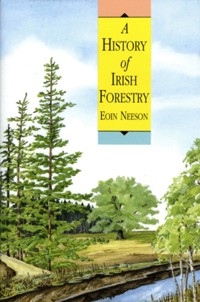
This comprehensive study, with a foreword by Lord Killanin, looks at Irish forestry from the migration of the first wood species some 10,000 years ago to the present day. Part One, The Historical Background, examines the primeval forest and early settlers, woodlands, land title and tenure under the Celts, codified with Brehon law; Norman forest law imposed in the early medieval period; the Tudor conquest and plantations; and the development of estate and 'scientific' forestry during the eighteenth and nineteenth centuries. It also considers the political dimension of Irish forestry, and socio-economic factors such as land hunger and agrarian reform. Part Two, Forestry in Modern Ireland, chronicles the twentieth century, beginning with the Irish Forestry Committee of 1907. In the struggle for independence, replenishing the country's forestry stock was placed high on the list of national objectives. State afforestation schemes laid foundations gradually built upon during the mid-century as the techniques and role of forestry were debated, policies defined and planting programmes instituted. With Coillte established in 1989 and EC-aided expansion plans for the 1990s, private and state interests converge in a major national enterprise. The husbanding of Ireland's natural resources and its documentation are now part of a broader environmental awareness. Forests are of inestimable importance. They provide and protect. They sustain the biosphere, regulate climate, nurture diversity, serve recreation, and yield wood: a commodity which contributes more than any other to society, as fuel, as industrial timber and – in the form of paper – the key medium of civilization. A History of Irish Forestry will be of interest to all concerned with Ireland's past, and future.
Sie lesen das E-Book in den Legimi-Apps auf:
Seitenzahl: 881
Veröffentlichungsjahr: 2015
Das E-Book (TTS) können Sie hören im Abo „Legimi Premium” in Legimi-Apps auf:
Ähnliche


















‘Cadadhéanfhaimídfeastaganadhmad
TádeireadhnagcoilltearIár…?’
CORRECTION
The attribution in footnote 51 of chapter 17, page 367, to the speech on the Forest Estimate by the Minister for Forestry, Michael Smith TD, in 1988 as the source of ‘stated forest policy’ on page 277, is not correct.
The quotation attributed to Dr Niall O’Carroll in the footnote related to this incorrect statement and not to the published contents of the Minister’s speech. Dr O’Carroll’s observation, therefore, is correct.
The author and publishers regret the error and apologize to Dr O’Carroll for any possible inference that Dr O’Carroll was not aware of government policy. Any such inference is wholly without foundation.
A History of Irish Forestry
Eoin Neeson
CONTENTS
ACKNOWLEDGMENTS
This book covers a period of approximately 2000 years, from Celtic Ireland to the 1990s. There is an introductory reference to the post-glacial period during which the ecological foundations were laid, but the book is primarily concerned with the history and development of forestry during the historical period. It is hoped that the reader will find it a useful guide both to earlier times and as a record of the growth and development of afforestation in the twentieth century.
During the writing of the book a great deal of help, encouragement and information came from many sources. My first thanks must go to the Advisory Group which I established at the outset of the project to guide me through virgin territory and who attended numerous meetings and waded through notes and drafts at no little inconvenience to themselves. I was privileged to be able to draw on the collective experience, freely and generously offered, of the members – particularly the late Mr Tim McEvoy, former chief inspector, FWS, whose inital encouragement was unstinting and compelling; Mr Patrick Howard, former principal officer, FWS, who was a constant source of advice and a rock of common sense; Professor Tom Clear, former professor of forestry, UCD and Professor Padraic Joyce, professor of forestry UCD, whose combined knowledge and experience in the field was made freely available; and Dr Niall O’Carroll, chief inspector, professional unit, Forest Service, Department of Energy.
The late Seán MacBride was, as always, exceptionally courteous and generous of his time and knowledge, as was Dr T. K. Whitaker, Chancellor of the NUI. Thanks are also due to Mr Dan McGlynn, former assistant chief inspector of the FWS, and to Mr H. M. Fitzpatrick, doyen of Irish foresters, for their time, extensive comments and insights; Mr John Tyrrell, who was very helpful about ship building and Wicklow timber sources; Mr Darach Connolly, who made available the papers of the late Joseph Connolly; Dr Ronan Fanning; Mr Patrick Whooley, former secretary of the Department of Fisheries and Forestry; the late Mr Thomas Rea; Mr R. M. Keogh; Mr Brendan Halligan, who clarified an important aspect of Bord na Móna activities in relation to forestry; the staff of the Forestry School at Avondale whose kindness and attention were of great assistance and to the many officers of the Forest Service who offered encouragement and advice and those who, even when unaware of being so, were a stimulus.
Thanks and acknowledgment are due the ministers under whose authority this work progressed – Liam Kavanagh, TD; Brendan Daly, TD; Ray Burke, TD; Michael Smith, TD; Robert Molloy, TD – and to the secretaries of the Departments – the late Mr Seamus de Paor, whose response to the idea was enthusiastic from the outset; Mr Patrick Whooley and Mr John Loughrey – who were unfailing in their support throughout. My thanks are due to the staff of the National Library of Ireland, the library of Trinity College Dublin and also the libraries of the Departments of Energy, Agriculture and Coillte.
Finally I owe a particular debt of gratitude to Helen Litton, whose painstaking editing contributed in no small way to the end product. Whatever mistakes, errors or omissions that remain are my own.
* * *
The views and opinions expressed in the book, except where otherwise stated, are mine alone and do not necessarily, or at all, represent the official view of the Minister for Energy or of the Forest Service of the Department of Energy.
Eoin Neeson
FOREWORD
When invited by Antony Farrell of The Lilliput Press to write the Foreword to AHistoryofIrishForestry it appeared to me strange, as I come from a rocky area where stone walls replace wooden fencing and trees are at a minimum. In Dublin I often stroll beneath the trees of the resuscitated Phoenix Park (OPW) and Temple Gardens (Corporation), or in the west of Ireland among the few trees clipped by the south-west gales and bending to the north-east. After reading the proofs I learned what part Irish forestry had played in the history of Ireland, politically, socially and economically.
Having had a lifelong interest in our heritage, and thanks to the greening of the Emerald Isle and the new appoach to our countryside, this book, the subject of which has never yet been covered so fully, on pages themselves derived from forestry, is most opportune. It is a comprehensive work, starting from the earliest times to the modern day.
A new, generous understanding of the past now extends to trees, whether planted in the wide streets of eighteenth-century or modern Dublin or in forests and landlords’ demesnes. Our earliest trackways across the vanishing bogs of Ireland, now being protected by those conscious of the environment, were made of timber, and throughout history wood has played a vital part in Irish life, as seen in medieval castles such as those restored at Aughnanure and Drimnagh or in the great Georgian houses in the country and city. These buildings are unique not only in their façades or interior stucco work but in their fenestration and wood furnishings, which include the magnificent doors under fanlights (many of them in Dublin spoilt by too many name-plates and unfortunate modern door furnishings), and the best of furniture which our forests were able to provide for the craft cabinet-maker.
I have always been anxious about some aspects of tree farming which encourages quick-growing conifers that can be harvested in the shortest time. Successive governments did not take into consideration a longer-term investment in our countryside of broad leaf or hardwoods and ignored landscaping with the harsh, unlandscaped tree lines. When Coillte, the State-owned company for forestry, was formed it came under the Department of Energy, and ‘energy’ infers the burning of wood rather than the growing of wood for other commercial purposes. But the Department, which is represented with the Department of Finance on Coillte, has to be business-like and now has an Environmental Officer and a policy of what it plants and where, avoiding areas of scientific interest or National Parks. The National Heritage Council under my chairmanship made several representations on this subject, and I am glad to say these were heeded, and that long-term planning should ensure forestry does not end as have our bogs.
AHistoryofIrishForestry appears to me of inestimable worth to those commercially involved and to others with a social and historical interest in forestry. How lucky Eoin Neeson is to have an Irish publisher. Except for religious and school publishing, they were thin on the ground when I was an ambitious, aspiring writer over fifty years ago. The appendices, sources of information and index will be invaluable to the reader who wishes to study further.
Killanin
DublinandSpiddal,1991
INTRODUCTION
During the last two hundred years in Ireland the topic of forestry has given rise to much controversy and comment. But, hitherto, no comprehensive assessment of what looks like becoming one of our major industrial enterprises within the next fifty years has been published.
In order to attempt a broad perspective, a progression must be traced, and periods of emphasis categorized. The most effective method is historical, since it includes species-dominance and life-cycle as well as references to the contemporary legal status of forests and woodlands. Except for a very general introduction, the geologic primeval period is excluded.
The assessment may be divided into four periods. Firstly we have what may be called the ‘Gaelic period’, which dates from the proto-historic period to the end of the Tudor conquest. It embraces the definitive change of dominant species during that time; rights of title and ownership; obligations and penalties under Brehon Law tracts and derivative claims of ownership; Norman claims to absolute ownership of land and consequentially assumed rights, and the decline, revival and destruction of the Gaelic Order before and during the Tudor conquest.
The second period runs from the Tudor conquest to the Act of Union, when, so far as may be judged, the greatest exploitation and decline of Irish natural forests occurred. During what I call this, the ‘Period of Foreign Exploitation’, some species (and whole forests) virtually vanished from the landscape. What remained was of little value. This period also produced developments in timber industries, and the beginning of extensive timber imports. It ended with the Act of Union when, for the first time, the forest laws of Great Britain applied to the forests of this country. One result of this legal ‘regularization’ was the development of a climate of public opinion, principally among farmers, hostile to forests and forestry, the residual effects of which still exist.
During this period, from about the middle of the eighteenth century, another development began which, for want of a better name, is called ‘Estate Forestry’, to distinguish it from later ‘State Forestry’, of which it was an important precursor. It exemplifies a trend amongst landowners in England, Scotland and Ireland, partly fashionable and scientific, towards enlightened self-interest. Such people, both the dilettante and the genuinely committed, were in a position to undertake long-term economic investment while at the same time entertaining an interest in ‘scientific’ forestry. ‘Estate Forestry’ and those engaged in it were, for 180 years, to have profound and formative effects on the whole subsequent course of Irish forestry.
The third period covered is the nineteenth century, ending in 1899, when the Department of Agriculture and Technical Instruction (DATI), which went on to form a committee for forestry, was established. During the nineteenth century far-reaching changes occurred in the course of Irish forestry. Principles of forest management, economics and species changed, not only in Ireland, but also, if for widely differing reasons, in Britain and continental Europe. In Ireland great social and political changes also occurred. Some of these, in respect of land and tenure, greatly affected forestry and attitudes towards it.
Finally, the twentieth century saw the emergence, growth and development of an Irish forest policy which was to provide the foundation for the national afforestation programme undertaken after independence in 1922. Forest policy was largely promoted, encouraged and, to some extent, controlled by landowners. They were the inheritors of ‘Estate Forestry’. They were also (the new tenantry apart) those most affected by the Land Acts that were altering the whole social order in rural Ireland, with all the resulting consequences, legal and otherwise, for forestry and land title. The movements for national expression and self-determination, and the First World War, also influenced forest policy-makers.
Although the idea had existed since 1884, the beginning of the State Forestry programme effectively coincided with the period when the foundations of the State itself were being laid. Clearly, having regard to the times, events, individuals and interests involved, the possibility of conflict already lurked, so to speak, on the forest floor when the State came into being. The interests and motives of those who knew most about forestry, namely the landowners, were, for a number of reasons, suspect. Almost all were representative of a minority traditionally regarded as repressive and with an alien tradition. Since they represented a resented elitism their very existence fuelled hostility among rural smallholders, even though the Land Acts offered tenants certain land purchase rights. In frequently creating many holdings from one, this had a direct bearing on the later problem of fractured holdings and piecemeal acquisition.
Most landlords belonged to a class which regretted the passing of the ruptured link with Britain. Since such forestry as existed was (and for many years remained) ‘Estate Forestry’; and because those who had managed government forest policy under the DATI tended to be either members of the landed class or of the English tradition (for the very good reason that they knew most about the subject), forestry was generally associated with this elitism and was resented in the Irish rural community. This affected the questions of tenure, land for planting and any conceivable land purchase or land-use policy. ‘The landlord was regarded as an alien, both by birth and religion, possessing by right of conquest what the farmers considered to be theirs by hereditary right’ (Dardis).
On the other hand, many enthusiastic nationalists, at a time when it was believed that natural resources hardly existed in the country, and regardless of their own lack of experience or expertise, held views on forestry coloured by a romanticism which envisaged it as some sort of boundless natural panacea of limitless economic and social potential. They tended to join in unlikely alliance with the landowners to promote programmes of forestry and reafforestation, but did not always agree among themselves and, for a considerable period after independence, some might say to the present day, there were almost as many forest policies as there were forest policy makers.
There were other important factors. The natural political polarization which is at the heart of representative democracy, while it examines legislation in the making on any issue with care and caution, also tends to a short-term rather than a long-term view of economic planning, particularly when the national purse is lean and its strings tightly drawn. Short-term planning, however, is impractical when forestry is being undertaken virtually denovo, without established forests of any significance and in the absence of any social forestry conscience, tradition or system of established management. In such circumstances a capital-intensive undertaking such as new forestry is costly, but has a low political priority. Their high level of professionalism notwithstanding, it strains the limits of common sense to suppose that the key English or Scottish forest experts introduced to assist the new State’s forest programme were all free of partisanship. Inevitably they came into conflict both with landowners and enthusiasts; with, at a more active level, politicians and smallholders and, sometimes, with their own staffs; and, of course, with each other.
Once the State programme got under way the influence of ‘Estate Forestry’ began to decline. This was not foreseen, perhaps, and had some curious consequences, the most important being the metamorphosis of State input to the planned National Programme from a minority one to one approaching 80 per cent. Circumstances also led to existing estate forests being drastically reduced during the Second World War, weakening the landowners of whom remarked Mr H. M. FitzPatrick, ‘they knew more about forestry than all the rest of us put together’. During the early years proposals for forestry programmes and bases for policy emerged at regular intervals from a variety of sources. They were sometimes so self-cancelling that advocates of one policy would neither speak to, nor give credence to, the advocates of another.
These were some of the problems that beset the infant Irish National Forest Programme. In spite of this Irish forestry has grown from less than 101,173.6 (South and North combined) hectares in 1922, to more than 404,695 hectares (1,000,000 acres in the State) today. This considerable progress, the type of woodlands created, their location, economic viability, ancillary industries and potential are described in Part Two, while Part One is concerned with the historical development up to 1900.
The question of the role and function of a bureaucracy in relation to the initiation, administration and continuing management of a productive forestry marketing programme on such a vast scale requires consideration. The National Forest Programme was undertaken largely from scratch; such managed forests as were in the country were in private hands. Forests had to be created from nothing, with limited tradition and experience, and little capital outlay. The obstacles were great, but there were also opportunities – to avoid the limitations of imposed outmoded traditions and methods, for instance. But there is a point between the development of a State forestry programme, denovo, and the successful marketing of its product, where the management dynamics radically alter.
Forestry means more than simply the natural or managed activity of dense tree growth on a piece of land. We take the use of woods, of timber and of wood products by man from beyond the dawn of history so much for granted that we overlook the fact that the relationship between these two living organisms, man and tree, is no less than the relationship between man and domestic animals. One may speak of ‘domestic forests’ in much the same sense and for similar reasons.
In the Preface to his book Trees, Rushford writes:
If it were not for the spread of the human race there would be vastly more trees and greater areas of forests on the face of the earth, and their appearance would often be entirely different. Mankind has brought about great changes in his environment both by reckless destruction of forests and the pursuit of rapid financial gain, and by significant alteration of forest types. In the context of the geological timescale it was physical factors – climate, altitude, soil-type and so on – that determined whether a region could support a forest of some kind, but man’s influence has now made itself felt with relative suddenness and left its mark on every part of the world.
In areas where the equable climate has favoured the development of human civilization, the exploitation of forest resources has caused damage that is irreversible.
Without some appreciation of its past or sense of continuity, any account of Irish forestry must be valueless. This book has attempted to identify the trends and influences that have led to the forests of Ireland today, and to pursue a chronology faithful to that development. The research and collation of material has been a pioneering task, aspects of which will no doubt prove controversial.
During the research a number of issues, other than that of the general and historically superior one of the disappearance of vast forest areas between 1600 and 1800, stood out as worthy of note.
First was the exceptional decline of hazel over a twenty-to-thirty-year period at the turn of the eighteenth century. The inference I have drawn here points clearly to a new and perhaps significant historical conclusion.
Secondly, the concept of a national forestry programme envisaged in the seminal 1908 Committee Report underwent an extraordinary metamorphosis. The original proposal was virtually stood on its head – and, paradoxically, achieved the target set by the 1908 Committee almost to the year, if by a route and means totally unforeseen by that committee.
Thirdly, at a time when the co-operative movement was well established among the rural population, co-operative methods – until recently – failed to make any impact on the development of forestry.
In general, the history of Irish forests and forestry has paralleled the political history of the country. Given the social and economic importance of woodlands – ever-changing though these aspects were from century to century – that is less surprising than it might seem. What does surprise is how little attention has been given to it.
PART ONE
The Historical Background
CHAPTER ONE
Primeval Forest and Early Man
‘And out of the ground made the Lord God to grow every tree that is pleasant to the sight, and good for food’ – Genesis.
THE TOPOGRAPHYOF IRELAND was determined about 2,000,000 years ago when an increasingly cold climate led to dramatic alterations in the landscape. Intense cold replaced wet, tropical conditions in which dense woods and forests, consisting largely of trees now either extinct or exotic in this country, flourished on very deep soils of up to thirty metres, compared with an average of about one metre today. The subsequent Ice Age covered much of the country with ice and glaciers.
When, after some 1,990,000 years, the ice withdrew, retreating glaciers scoured the country, creating new valleys and ravines. The hitherto hidden rocky skeleton of the land was exposed. The resulting much altered landscape is basically what we know today. The low-lying central plain, floored essentially by carboniferous limestone, is surrounded by a rim of mountains, in a general saucer shape. The mountains (some more than 300,000,000 years old), eroded and rounded, are far older than the lowlands.
Between 10,000 and 8000 years ago land bridges connecting Ireland with Britain and the Continent were inundated. The forests and woods of that time, established since the ice withdrawal, consisted of species that endured, in some cases, until today. This was the foundation from which all subsequent forests and forest lands developed.1
When man came to Ireland between 9000 and 8000 years ago, so far as we know, he found an island with a climate somewhat warmer than today. It has remained much the same size; 84,000 sq. km. (32,000 sq. miles), about 486 km. (302 miles) north to south and 275 km. (171 miles) east to west. It had, as now, many modest-sized lakes but fewer turf bogs, some of them still undeveloped, filling ancient lake basins with the detritus of the ice withdrawal.
This mountain-rimmed island west of the European mainland, dominated by the Atlantic Ocean, has a ‘typical west maritime climate… It is modified by the Gulf Stream flowing north-eastwards… from the warm regions of the Carribean’, producing a climate with an ‘absence of extremes favourable to the growth… of tree and shrub species… and the climate is especially suitable for forest trees… The method by which these so-called primeval forests were destroyed is not clearly understood, owing to the superimposition of climatic change and the activities of early settlers – both forces for vegetation change. However there is considerable evidence that the deterioration of climate which began about 3000 BC stimulated bog development at the expense of forests in many regions.’2
The author goes on to state:
Soil is the most important side factor in influencing tree growth. There are considerable variations in forest soils in Ireland. This is a result of a wide range of origins. It is further complicated by climatic, ecologic and topographic factors; an excess of precipitation over evapotranspiration in large areas of the country results in a tendency towards podzolization – intensely leached mineral soil – where drainage is free; gleying or peat formation where it is impeded.
When the first mesolithic people arrived, the forests were mainly established woods of lowland oak, elm, ash and pine, and hazel, alder and birch on poorer soils. These forests may already have been somewhat in decline, and man’s activities after his arrival presumably hastened the process. The currently available evidence is scanty, but suggests that the earliest inhabitants were of the later mesolithic period. They lived here more or less undisturbed and unchanging for about 3000 years, when they were joined by a very different people, neolithic agriculturalists.
Pollen counts indicate that for some 2000 years after man’s arrival, that is until about 7000 years ago, the carpet of forest layering the country was virtually undisturbed. At that time the first of two factors to affect the blanket forest adversely became increasingly evident. This was the growth of raised bog, a process that overlapped the arrival of the neolithic farmers, who introduced the second factor, forest clearance to create arable.
The terms paleolithic, mesolithic and neolithic, generally speaking, refer to periods of prehistoric time. It is not necessarily the case that a level of attainment in a later period was more advanced than that of an earlier one, or that one culture did not overlap another. For instance the Maori and aboriginal people of New Zealand and Australia in the early part of the last century were culturally paleolithic/mesolithic. The Bushmen of the Kalahari Desert today are mesolithic. The term paleolithic refers to the earliest period of the stone age, when stone weapons and tools were first developed by hunter/fisher peoples. The mesolithic period indicates a hunter/fisher pastoral, transitional period of the Stone Age, and the neolithic period means the later stone-age, food-producing period, characterized by polished stone implements, some of which were used for agricultural purposes.
In the historic meaning, paleolithic and mesolithic refer to a period lasting over a million years, when people lived a largely nomadic existence hunting and collecting wild plants and berries. Such food-gathering societies were gradually converted to or replaced by neolithic food-producing societies. This change also laid the foundations of civilization. ‘Hitherto, communities had been restricted by the number of game animals and the amount of edible plants available: now it was possible to plant more seed, till more land and breed more animals as the population increased… the word “neolithic” in fact simply implies food production based on crops and domesticated stock, without metals…’3
There is evidence of early human activity at Mount Sandel near Coleraine in Co. Down, from where artefacts have been carbon-dated to 8650 years ago, + or -50 years. This site has provided flint tools, mainly small flint points called microliths, and small hand-axes made of flint flakes, typical of a hunter/fisher community that did not engage in farming. There is evidence of similar late mesolithic communities in Denmark and of early mesolithic in both Denmark and England. No evidence has so far been discovered indicating the presence of early mesolithic or earlier paleolithic peoples in Ireland.
The mesolithic peoples of Mount Sandel and the Larne (the Larnian people, so-called because the stone implements they used are common in the raised beach gravels at Larne, Co. Antrim) appear to have had little knowledge of agriculture. The country was smothered in dense forest and there were no plains on which they could hunt. They existed as hunter-fishers roaming the edges of forests, coasts, the shores of lakes and rivers, and probably operated from semi-permanent or seasonal camps, as the Amazonian Indians do today. In a primitive way they may have cultivated certain naturally regenerative crops, such as bracken and nettles.
A comparison can be made with the seasonal migrations of the Maori at the time when they first came in contact with white settlers about 200 years ago:
(They) had a wider range of implements than the Larnians, but were, like them, essentially food-collectors… For one such group the following yearly pattern in search of protein has been recorded – September and October, up to Tuturau for lampreys at the Mataura Falls; November on to the Wainea plains to get eels; December, back to Tuturau to dry food; January, to the coast to catch fish and collect sea-weed; February, making sea-weed bags; March, to the offshore islands; April, catching and smoking sea-birds; May, return from the islands; June, bringing presents of smoked sea-birds to friends and relatives; July and August, catching forest birds.4
Notably two months – February and April – are devoted to manufacturing. Some similar cyclic pattern may have operated amongst the mesolithic hunter/fishers of Ireland. Since much of the available evidence about them consists of worked or partially worked flint implements it seems reasonable to conclude that they devoted considerable time to manufacturing these.
The mesolithic people probably cured meat and fish by salting, smoking and drying on racks as is still done in Iceland, Greenland and elsewhere. They certainly had boats of some kind, and were clearly capable wood-workers. Perhaps part of the attraction of Ireland for these nomadic people was the abundance of available timber. Such dense woods, besides being a multiple food source, provided the raw materials for fuel, fishing and building, a means of making containers (of bark; they had no pottery), and, fundamental to north European nomadic hunters, the means of making vessels to penetrate the otherwise inaccessible country via its rivers and lakes. They probably used some form of dug-out or burnt-out canoes. From Toome Bay on Lough Neagh, as Mitchell5 demonstrates, comes evidence of wood which had been worked for a special purpose. By the time these mesolithic people were absorbed or superseded by the neolithic farmers, they had inhabited the country for some 3000 years, about 400 years more than the period separating us, today, from the first coming of the Celts. And after them the neolithic people inhabited it for as long before the Celts arrived.
The decline of forest cover accelerated with the arrival of these neolithic farmers between 5000 and 6000 years ago. One of their first concerns would have been to clear land for tillage and grazing, a task in many ways simpler and less demanding in forest land than in open plains or savannah, which require the use of ploughs to break up the tangled grass roots.
It is hard for us to picture the majesty and silence of those primeval woods, that stretched from Ireland far across northern Europe. We are accustomed to an almost treeless countryside, and if we can find anywhere some scraps of ‘native’ woodland, we are disappointed by the quality of the trees. For thousands of years man has been roving the Irish woodlands seeking for ‘good’ timber for houses, ships and other uses. As a result all the well-grown ‘good’ trees have long since disappeared, and what are left are the progeny of ‘bad’ trees rejected by earlier carpenters. If we visit the National Museum we can see wooden shields lm in diameter, worked from a slice taken from the trunk of a well-grown forest alder. We could not find in Ireland to-day a single alder tree capable of supplying a blank for such a shield. In some remote parts of Europe scraps of upland valleys have escaped the loggers’ attentions, and there we can recapture something of the vanished dignity of the Irish forests.6
From the arrival of the neolithic farmers, through the early and late Bronze Ages and the coming of the Celts about 800 BC to the beginning of the Iron Age, was a period of great change and activity in the Irish landscape, especially in relation to woodlands. Given the time-scale involved, the change was never immediately apparent, unlike the man-made environmental changes dramatically taking place today.
About 5000 BC Ireland would have presented a mosaic of different woodland types composed of a few species, depending upon local soil and climatic conditions. The lowlands and sheltered valleys had a covering of mixed broadleaf forest, chiefly of oak; pines and birch were dominant on poorer sites, especially in the west. Alder and willows formed local scrub woodlands on marshy sites near lakes and rivers. The remains of these forests can still be seen in cutaway bogs at altitudes ranging from sea level to 600 metres (1800 ft) at Turlough Hill in Co. Wicklow.7 Why these early forests disappeared is not fully understood. But there is evidence to suggest, among other reasons, that climatic deterioration, which began about 3000 BC, stimulated bog development at the expense of forests. Extensive areas of forest were cleared by felling, by fire and by grazing stock. These clearances, and the prevailing climate, encouraged bogland to expand, downwards from the mountains and upwards from wet hollows, providing the foundations on which the later enormous bogland increases occurred. These recurring vast boggy areas, not without reason, have been called ‘wet deserts’.
The stone monuments from these remote times are impressive, but they give the impression that stone was the most commonly used material for building purposes. That was not the case. Wooden buildings were the universal type in Europe at that time and there is no reason to think that Ireland was any different in this respect. The scarcity of significant remains is due to the climate, in which timber, especially light, treated timber such as wattling, perishes. ‘In 1967 a rectangular house, 7 X 6m. and walled on two sides with thin planks of oak, was found at Ballynagilly, Co. Tyrone in Northern Ireland. Associated pottery suggests a date of about 3000 BC…’8 Irish building in wood continued up to the seventeenth century, maybe later. The ancient stone constructions that survive, including Newgrange, circular forts, the remains of monasteries and so on would have had substantial timber buildings both within and without the walls. Many later monasteries, of which only some stone fragments remain, were teaching establishments with up to 4000 people, all of whom required to be catered for in their everyday needs. Hence their attraction for the Norse invaders.
Since the early migratory settlers to this island came by sea, it follows that they were both boat-builders and craftsmen of some skill.
With space for the crew and two dogs, and bedding for the stock, its [a frame boat covered with hides] load for a sea-passage might have been two adult cows and two calves, or about six pigs or ten sheep or goats. Because of the difficulty of watering stock on a voyage, such trips must of necessity have been short… Case thinks that stock, if well watered beforehand might hold out for two days… it is clear that sea-voyages would have to be planned with some care, and that undue holdups had to be avoided.9
Domestic animals were very much smaller at that time.
A people capable of constructing vessels to carry them across miles of open sea were not only accomplished wood-workers, but also tool-makers and planners. Craft construction required worked timber of some kind, whether it was frames covered in hides, dug-or burnt-out canoes, rafts or timber boats. Boat-building is a derived skill, and it is not reasonable to assume that it was the primary skill of these people, or that their planning and manufacturing skills were confined to it and to seafaring. Accordingly we may infer that the peoples who first inhabited this country demonstrated from the outset some skill in the use and working of timber.
The techniques they used in building their boats were very likely adapted from techniques of domestic building, farming – clearance, tillage, pasturage – and, of course, hunting and fishing. They also brought with them considerable farming knowledge, skills in the manufacture and in the use of tools, and the organizational ability demanded by communal migration overseas. Such skills and co-operation would not manifest themselves spontaneously for this purpose alone.
H. J. Case concluded that ‘lightness and manoeuvrability were more important than size’ and that a boat similar to the currachs and naomhogs of the west coast, about thirty feet long, with about eight oarsmen and able to carry about three tons or up to forty people, could have been the optimum.10 In 1976-7 Tim Severin with several companions crossed the Atlantic in a similar boat made in traditional manner of lengths of timber, rods, pegs of wood, binding and hides.
No one knows where these early settlers came from or where they first landed. However, the coasts of Antrim and Down were clearly visible from Britain. People of advanced neolithic culture, roughly equivalent to nineteenth-century Australian aboriginals, were capable of coming from anywhere on the northern coast of the continental mainland, and of making landfall on the southern and western coasts of Ireland as well as in the north-east.
There would have been considerable advance scouting before major community migrations took place. While a migratory group would include men, women, children and infants, together with breeding and milking livestock and seed-corn, it is unlikely that an entire community would embark simultaneously, and not impossible that there was more than one migration from different sources, at roughly the same time. Such voyages could only be made at certain times of the year, probably between July and October, when the work of harvesting crops was over and there was still grass and leaf-fodder in the new destination.
Such early neolithic settlers built plank as well as clay and wattle houses, as did their European counterparts. The roofs, usually of thatch, were supported by interior posts. They surrounded their settlements and farms with stockades for protection; they built storage and refuse pits and sowed crops. To the present day their descendants have used the native timber for precisely similar purposes; to construct homes, make boats, tools and utensils.
The fitting of wooden handles to his stone axes was of great importance to all neolithic man’s activities. It converted them from hand-held chopping implements of limited potential, to axes, mattocks, picks, adzes and so on which could be wielded with great power, enabling the user to fell trees, work large timbers, and erect substantial buildings. This effective conjunction of wooden handle and blade has remained one of the single most important technical developments in the history of mankind, second only, perhaps, to the discovery and effective use of the wheel. The weapon technology of the neolithic people would have been similarly progressive and both arrowheads and scrapers of flint, useful for making stems for basket-work and making and arming arrows, have been found. Though they have not been found in Ireland, ‘bows of yew wood have been found in Somerset’.11
Coincidentally with man’s arrival in Ireland some forest trees, notably and quite dramatically the elm, went into decline. Hazel scrub was universal. Pollen counts of the period 5500 to 5200 years ago clearly demonstrate this. Mitchell writes:
I picture that quite a small group of men could sweep through an elm-wood quickly, ring-barking the trees, and so indeed putting an end to the production of elm pollen. In any case the soil of the tillage patch created was going to become exhausted quite quickly and it would have been stupid to put into land that was only going to have a short life the immense amount of effort necessary to produce neat fields, free of tree trunks and stumps.12
This point has been evidenced more recently in Brazil where the Amazonian forest clearances provided cleared land for settlers, but the experiment was of mixed success. For every plot of good land with vital soil, there were several of land of poor quality which – when it grew anything – produced only stunted crops or brush.
The American geographer, Carl Sauer, wrote:
Primitive agriculture is located in woodlands. Even the pioneer American farmer hardly invaded the grasslands until the second quarter of the past century. His fields were clearings won by deadening, usually by girdling (ring-barking), the trees. Thelargerthetrees,theeasierthetask: brush required grubbing and cutting; sod stopped his advance until he had plows capable of ripping through matted grass roots. The forest litter he cleared up by occasional burning; the dead trunks hardly interfered with his planting. TheAmericanpioneerlearnedandfollowedIndianpractices. It is curious that scholars, because they carried into their thinking the tidy fields of the European plowman and the felling of trees by ax, have so often thought that forests repelled agriculture and that open lands invited it13 (author’s italics).
The evidence, from the remains of the forests found in cutaway bogs, is that the early settlers in Ireland followed a similar practice to that described above.
The disposition of trees in those early times tended to be mainly oak on the lowlands and pine on the highlands, but this was by no means exclusively the case. The native Scots pine, possibly for climatic reasons, suffered a serious decline at an early stage and by the twelfth or thirteenth century AD was altogether extinct. Work by Bord na Móna on some bogs, including lowland bogs, has uncovered what have come to be called ‘forest graveyards’; great cemeteries of Scots pine tree-stumps, some of them 5000 years old. Many are blackened by fire rings and some appear to display the clean, flat planes of skilful axe-work, thus exhibiting precisely the sort of tell-tale evidence one would expect from the residue of forest cleared in the manner described.
The efficacy of the stone axes employed by neolithic man is surprising. Experiments were conducted in Denmark in the 1950s:
A genuine neolithic blade was fitted to an ash-wood haft, copied from an original haft dating from neolithic times recovered from Sigersslev Bog. It was found that the blade broke if fitted too tightly; it had to be left free to vibrate slightly in the haft. The axe was most effective when swung only from the elbow, with short, sharp cuts rather than swinging blows from the shoulder, which is the most effective way of using a metal blade.
Three men managed to clear 600 square yards of silver birch forest in four hours. More than 100 trees were felled with one axe-head, which had not been sharpened for 4000 years.14
Forest regions such as those referred to above were cleared and palisades and stockades were erected for protection – mainly against natural predators like the bear, the wolf, the lynx and the fox, all of which abounded and for whom the availability of domestic animals was a gastronomic bonanza.
Charcoal (c. 4500 years old) indicates that hazel, ash, hawthorn and holly were the most frequently used firewoods. ‘The hazel at all times found conditions in Ireland very favourable… In its first expansion …its contribution to the … pollen-rain seems to have been greater than elsewhere in Europe… (When) a woodland area which had been cleared by farmers was abandoned, hazel immediately expanded into it… The pollen count shows that … from the first woodland disturbance more than 5000 years ago, until the Tudor clearance in the late sixteenth century, there must have been very extensive hazel scrub in Ireland.’15
There is abundant evidence of timber use. Much of it has been revealed from accidental discoveries in the bogs and fenlands which preserve fibrous artefacts that might otherwise have decayed. We possess dug-out canoes a thousand years old, plates, implements, utensils and house frames. In some cases the very walls and flooring of the houses themselves, constructed of woven wicker-work and wattle, often with traces of the mud, lime and dung covering still adhering to it, have been preserved. There is also clear evidence of the deliberate cultivation of timber for specific purposes. The Dal gCais of Thomond deliberately cultivated an ash and holly wood for weapon and domestic building purposes. Hazel, the principal ingredient of wattle building, was cultivated for this purpose from time immemorial.
By the year AD 300 forest regeneration was no longer capable of swallowing up the habitation sites that must have come and gone countless times over the preceding 3000 years. In the intervening period appeared monuments such as those in the Boyne valley. Others, less enduring, were laid down and their foundations established; for instance roads.
Many of the roads of ancient Ireland were what came to be called, in America, ‘corduroy roads’ – that is a surface of planks or of tree trunks laid parallel and often used where the soil was soft or boggy, or within the habitat of a community. Such classes of road are recorded in the Brehon Laws (the law tracts of ancient Ireland), referred to collectively as conaicai (any kind of) road. The seven classes, in order of size and merit, were: 1, slíghe, such as one of five great highways from Tara; 2, rannt, a major road; 3, bóthar, a good road; 4, rot, clearly of later usage and of foreign derivation; 5, tuagrota, and 6, lamrota of which the same might be said. In addition there were two specific types of road relevant to forestry – a bealach, meaning a pass (or cleft) through a forest which required to be maintained (Bealach Mughna, Ballaghmoon in Carlow, is one example), and a togher, a pathway.
The use of logs and wattles as a community surface is an obvious practical development, as the speed with which forest mud can be churned up in the Irish climate and the time it takes to harden again (if ever) when a site is in continual use, indicate. Besides bealachs and toghers, bridges and fords of timber were subject to laws, many of which had to do with maintenance and upkeep.
Clearly, from the very earliest times trees were an important part of the Irish landscape. The continuous and fundamental interaction between trees and men is often given recognition and acknowledgement in man’s mysterious propitiatory religious rites. In a story concerning the mysterious Celtic division of the country into four parts, each of which is (apparently paradoxically and incorrectly) called a fifth, a tree is an important symbol of each.
Fintan of Munster, reviewing the history of Ireland at Tara, told ‘of a strange personage called Trefuilngid Tre-eochair who suddenly appeared at a gathering of the men of Ireland on the day when Christ was crucified… In his left hand he carried stone tablets and in his right a branch with three fruits – nuts, apples and acorns’.16 He confirmed that Ireland consisted of four quarters and a centre. These were the provinces of Leinster, Connacht, Ulster, Munster and the centre, which was Tara. Before he left, Trefuilngid gave Fintan some berries from his branch with an injunction to plant them in places appropriate to these divisions, which Fintan duly did. From them grew five trees: – BileTortan, the Ash of Tortu; EoRossa, the Bole of Ross (a yew); EoMugna, the Oak of Mugna; CraebhDaithi, the Bough of Daithi (also ash) and BileUisnig, the Ash of Uisneach. ‘Though the location of most of these five places is uncertain there can be no doubt that the underlying idea is that the trees symbolize the four quarters around the centre.’17
In ancient Ireland lines without breadth symbolized the supernatural in the realm of space. For instance, ‘Irish poets believed that the brink of water was always a place where eicse – “wisdom”, “poetry”, “knowledge” – was revealed. And the mystical fifth fifth of the five fifths of Ireland is held to be some such centre without dimension.’18 This has been expressed in terms relating to trees, ‘between the bark and the tree’.19
There is an established connection between trees, woodlands and druidism. There are some (possibly prejudiced) observations about druidism in Britain and on the Continent from Julius Caesar and others and some of these may refer to local variations not relevant to Ireland. Not enough is known about Irish druidism to indicate how or if it differed from the form practised in Britain and on the Continent. There appears to be sufficient common ground in other social customs among the Celtic peoples generally to warrant the assumption that trees, even if they were not worshipped here as in Gaul, were treated with considerable importance.
However, no tradition similar to that of Britain and the Continent survives in this country about the use of oak-trees and of mistletoe, which is not native to Ireland. The common view that Irish druids held religious meetings and performed their rituals under the shade of a sacred oak is based on the assumption that druidism in Ireland was identical with that of Britain and Gaul, which is doubtful. Sacred groves involving holly may have featured in Irish druidic worship, but even that is uncertain. That is not to suggest that Irish druidical practices were any more wholesome than those of their counterparts elsewhere, but they do appear to have been different in some respects, including the attitude to trees. It is possible that Irish druidism was laundered by Christian recorders and historians to eradicate traces of the pagan past. But so far as we know, the dominant Irish idol, Crom Cruach, was a permanent figure of stone, not of wood, and this fundamental fact may have resulted from a form of druidism in Ireland as distinctive as the language.
In Gaul and in Britain mistletoe featured in druidic rituals. One theory is that this was because its pale berries resemble the moon and druidism was a moon cult (the Celts counted the passage of time by nights rather than by days). Mistletoe is not native here and has no traditional significance in Ireland. The custom of kissing under mistletoe may, therefore, be imported. In view of its established sacred use elsewhere, the dearth of Irish tradition may be connected with a ‘clean-up’ more vigorous than in some other instances to eradicate a powerful druidic symbol and, perhaps, some more ‘exuberant’ customs.
Details of the druidic religion are very scanty, but we may confidently assume that it imposed certain laws, rituals and prohibitions which affected the people in general. As it would be fallacious to suppose that people are other than children of their age, we may presume that they reacted to such influences much as people today raised in a similar environment might do. It is also fairly certain that, as the inheritors of traditions predominantly Indo-European going back for thousands of years, they practised a religion containing elements already very ancient. We know that in Celtic Ireland stones and wells were objects of worship; but though certain kinds of tree, the ash and the yew for instance, were to some extent venerated, there is no evidence to suggest that trees were worshipped as they were in Gaul and Britain.20
While Irish records do not relate that Irish druids (drui or dli) shared the Gaulish veneration for the oak, it seems to have occasionally figured in rites and may have had some significance, perhaps accounting for the name ‘doire’, oak-wood or grove,which seems to have had a special appeal. Other trees were also accorded a special place, in particular the yew, used frequently to mark the bounds of sanctuary land around a church and, therefore, associated with the word ‘fidnemed’ and with the complicated laws of sanctuary in Ireland. When, for instance, Mael Mordha of Leinster sought refuge in a yew tree after the battle of Glen Mama in AD 999, he was probably seeking recognized sanctuary as much as concealment.
Fortified dwelling places, strategically sited as they frequently were, on the highest spot of the local terrain, were particularly liable to be struck [by lightning] and, even if the reason was completely obscure to the people of the period, it may have been common knowledge that a tall tree near the house would attract the flash and save the house itself from damage. This may, conceivably, be the reason for the custom of planting trees in the immediate precincts of dwelling places and the protective tree would, naturally, command the regard and the reverence of the inhabitants. With the coming of Christianity it would follow that its churches and cells would also be provided with guardian trees. When, therefore, the annals record that Ciaran’s yew at Clonmacnoise and the bile of Swords were struck by lightning we ought, perhaps, to read between the lines that the adjacent buildings were saved from damage by the presence of these sacred lightning conductors and, further, that, however ignorant they may have been of the nature of electricity, the monks of both institutions were conscious of their protective function.21
The word fidnemed is connected etymologically with the Gaulish word for a sacred grove, nemeton. But in Ireland the yew (or the ash) took the place of the Continental and British oak. Giraldus Cambrensis wrote: ‘Yews, with their bitter sap, are more frequently to be found in (Ireland) than in any other place I have visited; but you will see them principally in old cemeteries and sacred places where they were planted in ancient times by the hands of holy men to give them what ornament and beauty they could.22 The name of Newry in Co. Down is an anglicization of the Irish word, iubher – yew. The word for a yew wood is Eochaill, from which the town of Youghal in east Cork derives its name.
Where more than one community vies for the same territory, or where ideologies vie for control of a community, the dominant beliefs (or perhaps the beliefs of the dominant) tend to endure. Aspects of subordinate faiths or rituals can survive in adapted form; thus, from being part of a living ritual or worship, becoming a source of minor tradition. This process occurred with the adaptation of heathen places of veneration, often trees and/or wells, which were absorbed in large numbers by Christianity. Some, however, presumably because of their character, had their pagan significance altogether obliterated. The word bile is commonly found in placenames all over the country, indicating not only that the ‘cult’ of the sacred tree was a universal phenomenon, but also its tenaciousness – e.g. Knocknavilla (Galway, Mayo, Tipperary, Wexford), Gortavilla (Cork), Gortvilly (Tyrone), etc.
A gloss on the MartyrologyofOengus, compiled, according to tradition, at Tallaght suggest that a bile was to be found growing at every church. It refers to bilenacille, ‘the bile of the church’, as if on the assumption that it formed part of the view of every church.
From the story of Fintan it will be recalled that two of the five trees that grew from the berries Trefuilngid gave to Fintan were billeanna, the BileUisnig and the BileTortan, that neither of them were oaks and that three of them were ash. One of these, the BileTortan, features again in both the BookofArmagh and the TripartiteLifeof StPatrick, which tells us that Patrick ‘went thereafter to the BileTortan and near the BileTortan he built a church for Justinian the Presbyter which now belongs to the community of Ard Brecain’ (Co. Meath).23 One wonders if the BileTortan did not represent the mystic centre without dimension, and if it was not this fact that attached the Patrician legend to it. Inauguration trees and the trees outside a king’s rath were also called bile. Most were ash trees.
If a claim for special veneration of any tree can be made it would seem to be the ash. Apart from its frequent occurrence as a bile or sacred tree, it is also associated with holy wells in large numbers, i.e., 75 ash, 7 oak, from a random sample of 210 such sites:
…the very frequency of ash trees at holy wells is, in itself, a testimony of the sacred character of the trees growing there, for nothing else could have saved them from use as fuel or timber in a countryside as starved for wood as was the greater part of Ireland during the eighteenth and ninteenth centuries, when the dearth of timber erected the winning of the semi-fossil timber from the bogs into a major rural industry.24
The word craebh, though having the literal meaning ‘branch’, was interchangeable with bile, and had the same sacred meaning – as used in respect of the Bile (or Craebh) Uisnig. The CraebhDaithi was similarly called the BileDaithi. There seems little room for doubting that the ash was the tree most venerated by Irish Celts. A. T. Lucas cites the tenaciousness of this tradition: ‘In 1834 there was still growing in Tombrickane, in Borrisokane parish, Co. Tipperary, a large ash, twenty-two feet in circumference at the base, which O’Donovan says was called “bellow-tree” in English… (or) “Big Bell tree” … there can be no doubt that (these) are versions of the Irish bile.’25 Even today folklore throughout the country maintains that the ash will be the first tree to be hit by lightning.
Stories associated with inauguration trees (called bile and also invested with the mystic qualities of fidnemed or ‘sanctuary’), are common. One recalls the destruction of the Dal gCais bile at Magh Adhair in 982 by King Malachy, who carried it off to roof his castle; the destruction of the ‘biledha’ at the O’Neill inauguration site at Tullaghogue in 1111; and that of the Uí Fiachrach Aidhne of Connacht by the O’Briens and Mac Carthys in 1129.
Eoin MacNeill attributed some early personal names to trees, suggesting that they derive from tree-worship. Mac Cuill (son of hazel) was so-called because ‘hazel was a god to Mac Cuill’, and he cites as other similar examples ‘Mac Cairthin, son of rowan’, ‘Mac Ibair, son of yew’ and ‘Mac Cuilin, son of holly’.
But it is in the adaptation of the word ‘fidnemed’ to Christian use that we see the true absorption of one tradition by another. Fid meaning ‘wood’, and neimed meaning ‘sacred place’, became absorbed by Christianity and associated almost exclusively with the numerous churches that were established – one must conclude by deliberate policy – on the sites of heathen sacred places. The point is further made that ‘the very beginning of Armagh as an ecclesiastical site was due to the presence of this sacred grove, the original church having been founded near it as part of a policy to Christianize pagan cult centres by diverting the popular attachment to them into Christian channels’.26
Certain other species of tree retain a mysterious significance which may account for the stature they occupy in the legal hierarchy of trees in Celtic Ireland. One of these, the rowan (sorbus), quicken tree or mountain ash (a misnomer since it is not a member of the ash family) had a tutelary function, especially in the dairy, observed in parts of the country within living memory. In spite of its mysterious power the rowan (caorthann) does not seem to have belonged to any group of ancient sacred trees. Nonetheless it had a considerable role in popular magic. Besides its power to protect dairies and dairy produce, it was hung in the house to offset fire-raising and to keep the dead from rising, and would increase the speed of a hound if it were tied to its collar. Branches of rowan were placed over the doors of houses and byres to keep away witches and fairies alike.
It has been argued that the association between the rowan and milk derives from the possible use of its bark as winter feed for cattle. Furze, which also had defensive magical properties over milk and butter, was widely used in Ireland as cattle-fodder.27 Alternatively it has been suggested28 that the Irish may have adopted the magical virtues of the rowan from the Norse, who are known to have used its bark as cattle fodder and ‘being, as they were, a people preoccupied almost beyond modern comprehension with cows and milk, they (the Irish) would have been predisposed to adopt with alacrity any new magical practices for the protection of both…’. An old term for the rowan was fidnandruad, the ‘wood’ or tree of the druids.




