


64,99 €
Mehr erfahren.
- Herausgeber: John Wiley & Sons
- Kategorie: Fachliteratur
- Serie: Jossey-Bass Public Health/Health Services Text
- Sprache: Englisch
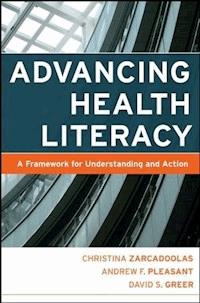
Advancing Health Literacy addresses the crisis in health literacy in the United States and around the world. This book thoroughly examines the critical role of literacy in public health and outlines a practical, effective model that bridges the gap between health education, health promotion, and health communication. Step by step, the authors outline the theory and practice of health literacy from a public health perspective. This comprehensive resource includes the history of health literacy, theoretical foundations of health and language literacy, the role of the media, a series of case studies on important topics including prenatal care, anthrax, HIV/AIDS, genomics, and diabetes. The book concludes with a series of practical guidelines for the development and assessment of health communications materials. Also included are essential techniques needed to help people make informed decisions, advocate for themselves and their community, mitigate risk, and live healthier lives.
Sie lesen das E-Book in den Legimi-Apps auf:
Seitenzahl: 472
Veröffentlichungsjahr: 2012
Ähnliche



















Contents
Title
Copyright
List of Tables, Figures, and Exhibits
Preface
Acknowledgments
The Authors
Chapter 1: Health Literacy
Definitions of Key Terms
Medical Information
The Relationship Between Health and Literacy
Characteristics of People as Language Users
Wrapping Up
Exercises
Chapter 2: Advancing Health Literacy
Historical Considerations
A Brief History: How Did We Get to Health Literacy?
Early Public Health Promotion and Education
Social Movements and Advocacy in the 1960s and 1970s
Informed Consumer Decision Making and Community Collaboration in the 1980s and 1990s
The 21st Century
Wrapping Up
Exercises
Chapter 3: Defining Health Literacy
Literacy: Defining Terms
Reality Bytes
The Evolving Field of Health Literacy
A Multidimensional Model of Health Literacy
Wrapping Up
Exercises
Chapter 4: Literacy at Work
How Language Works
Reading
Spoken Language
Implications for Spoken and Written Health Messages
Wrapping Up
Exercises
Chapter 5: The Traditional Mass Media
Introduction to Mass Media
Media Content: Challenges and Opportunities to Advance Health Literacy
Wrapping Up
Exercises
Chapter 6: Health Literacy and the Internet
Internet Use in Health Care
Potential Disadvantages and Barriers to the Internet for Conveying Health-Related Information
Wrapping Up
Exercises
Chapter 7: Baby Basics
Healthy Beginnings: Infant and Maternal Health
The Baby Basics Book and Program
The Baby Basics Program Model
Wrapping Up
Exercises
Chapter 8: Anthrax
The American Public Reacts
The U.S. Postal Service Postcard: A Mixed Success
Seeking Anthrax Answers on the Internet
Scientific Uncertainty: A Consistent Challenge
Wrapping Up
Exercises
Chapter 9: Genomics and Health Literacy
Why Genomics?
Understanding and Misunderstanding Genomics: A Review
Wrapping Up
Exercises
Chapter 10: Highlighting the Role of Civic Literacy
Smoking and Health: The Threat
Smoking and Health Literacy
Massachusetts Tobacco Control Program
Wrapping Up
Exercises
Chapter 11: Highlighting the Role of Cultural Literacy, Part 1
HIV/AIDS in the United States
The Public Dialogue
The Conflict in Communicating About HIV/AIDS
Community Planning: The San Francisco AIDS Foundation
Wrapping Up
Exercises
Chapter 12: Highlighting the Role of Cultural Literacy, Part 2
How to Be Culturally Relevant
Diabetes and Native Americans: An Epidemic of Culture
The Role of Culture in Diabetes Prevention and Care
The Sioux San Hospital Diabetes Program
Listening to the Community
Wrapping Up
Exercises
Chapter 13: Program Evaluation
Adult Basic Education and Health Literacy
Targeting Breast and Cervical Cancer
What Is Evaluation?
HEAL:BCC Implementation and Evaluation
Lessons Learned from the Evaluation
Wrapping Up
Exercises
Chapter 14: Guidelines for Advancing Health Literacy
Guideline 1: General
Guideline 2: Vocabulary
Guideline 3: Sentences
Guideline 4: Text Structure
Guideline 5: Giving Instructions
Guideline 6: Field Testing
Guideline 7: Spoken Language
Guideline 8: Language Translation
Guideline 9: Web Design
Guideline 10: Graphics and Layout of Print Materials
Guideline 11: Media
References
Name Index
Subject Index
Copyright © 2006 by John Wiley & Sons, Inc. All rights reserved.
Published by Jossey-Bass
A Wiley Imprint
989 Market Street, San Francisco, CA 94103–1741 www.josseybass.com
No part of this publication may be reproduced, stored in a retrieval system, or transmitted in any form or by any means, electronic, mechanical, photocopying, recording, scanning, or otherwise, except as permitted under Section 107 or 108 of the 1976 United States Copyright Act, without either the prior written permission of the publisher, or authorization through payment of the appropriate per-copy fee to the Copyright Clearance Center, Inc., 222 Rosewood Drive, Danvers, MA 01923, 978–750–8400, fax 978–646–8600, or on the web at www.copyright.com. Requests to the publisher for permission should be addressed to the Permissions Department, John Wiley & Sons, Inc., 111 River Street, Hoboken, NJ 07030, 201–748–6011, fax 201–748–6008, or online at http://www.wiley.com/go/permissions.
Limit of Liability/Disclaimer of Warranty: While the publisher and author have used their best efforts in preparing this book, they make no representations or warranties with respect to the accuracy or completeness of the contents of this book and specifically disclaim any implied warranties of merchantability or fitness for a particular purpose. No warranty may be created or extended by sales representatives or written sales materials. The advice and strategies contained herein may not be suitable for your situation. You should consult with a professional where appropriate. Neither the publisher nor author shall be liable for any loss of profit or any other commercial damages, including but not limited to special, incidental, consequential, or other damages.
Readers should be aware that internet web sites offered as citations and/or sources for further information may have changed or disappeared between the time this was written and when it is read.
Jossey-Bass books and products are available through most bookstores. To contact Jossey-Bass directly call our Customer Care Department within the U.S. at 800–956–7739, outside the U.S. at 317–572–3986, or fax 317–572–4002.
Jossey-Bass also publishes its books in a variety of electronic formats. Some content that appears in print may not be available in electronic books.
Library of Congress Cataloging-in-Publication Data
Zarcadoolas, Christina, 1948–
Advancing health literacy : a framework for understanding and action / Christina Zarcadoolas, Andrew F. Pleasant, David S. Greer.
p.; cm.
Includes bibliographical references and index.
ISBN-13: 978-0-7879-8433-5 (pbk.)
ISBN-10: 0-7879-8433-7 (pbk.)
1. Health education. 2. Patient education. 3. Literacy. I. Pleasant, Andrew F., 1962— II. Greer, David S. III. Title.
[DNLM: 1. Health Education. 2. Educational Status. WA 590 Z36a 2006]
RA440.5.Z37 2006
613—dc22 2006013528
List of Tables, Figures, and Exhibits
Tables
1.1
English Literacy Levels Among Minorities in the United States
4.1
The Scaffolding of Communication Architecture
4.2
Differences in Structure and Function of Spoken and Written Language
5.1
Areas of Potential Mismatch
6.1
Estimated Internet Access, 2002
6.2
Health Topics Searched Online
6.3
Opportunities and Cautions of the Internet
7.1
Baby Basics Toolbox Evaluation of Key Indicators
Figures
2.1
Most Common Causes of Death, United States, 2000
6.1
Online Activities as a Percentage of Internet Users, Persons Age Three and Up, 2001
11.1
Proportion of AIDS Cases in the United States, by Race/Ethnicity and Year of Report, 1985-1999
Exhibits
2.1
Nineteenth-Century Advertisement for Lydia Pinkham’s Vegetable Compound
2.2
National Tuberculosis Society Christmas Seal Campaign, 1907
3.1
Antibiotic Resistance Print Ad
4.1
Warning Label on a Cigarette Package
4.2
2000 Florida Presidential Election Ballot
4.3
Three Sentence Truths
4.4
Example of Cohesion
5.1
Nineteenth-Century Advertisement: Dr. Kilmer’s Swamp Root Kidney Liver and Bladder Cure
7.1
Cover of
Baby Basics
7.2
Sample Page from
Baby Basics
7.3
Sample Page from Baby Basics Patient Planner
7.4
Sample from Baby Basics Moms Club Curriculum
8.1
Anthrax in the United States: A Time Line, September to November 2001
8.2
USPS Postcard Regarding Suspicious Mail
8.3
CDC Web Site Definition of Anthrax
9.1
Fitter Family Examining Staff with Winning Family, Kansas State Free Fair, Topeka, 1920
10.1
“Baby Monitor” Television Spot
10.2
Antismoking Banner for Public Buses
11.1
A Fact-Filled, Nontargeted Advertisement for AIDS Education
12.1
Two Versions of the Four Winds Nutrition Model
12.2
Four Winds Nutrition Model Adapted for the Mandan, Hidatsa, and Arikara Nation: Traditional Food Sources
12.3
Four Winds Nutrition Model Adapted for the Mandan, Hidatsa, and Arikara Nation: Loss of Tribal Homelands
13.1
Logo for the HEAL:BCC Project
13.2
HEAL:BCC Curriculum
13.3
HEAL:BCC
Word List
and
Passport to Health
14.1
Example: Hard-to-Read Vocabulary and Easy-to-Read Vocabulary
14.2
Example: Defining Words in the Text
14.3
Example: Normalizing
14.4
Example: Revising Groups of Sentences
14.5
Example: Complex Versus Simple Sentences
14.6
Example: Varying Sentence Length and Complexity
14.7
Example: Transforming Long, Complex Sentences
14.8
Example: Active Versus Passive Form
14.9
Example: Reducing Use of Nominal Forms
14.10
Example: Avoiding Multiply Embedded, Packed Sentences
14.11
Checklist for Writing Clear Sentences
14.12
Example: Cohesion
14.13
Example: Advance Organizer
14.14
Checklist for General Text Structure
Preface
A silent killer maneuvers just below the surface of almost all the health issues that will lead to death and disease in the 21st century. The U.S. population faces well-recognized health risks, including chronic diseases, environmental degradation, and natural and man-made disasters, but the silent killer is less diagnosed and remains essentially untreated. The silent killer is low health literacy: the reality that almost half of adults in the United States, over 90 million people, struggle to find, understand, and correctly use health information.
For example, people with low or inadequate health literacy find it difficult, if not impossible, to accurately read instructions for taking medications, understand their health plan restrictions, understand and act on public health warnings, or accurately read evacuation plans and other emergency information. Major health policy reports such as Healthy People 2010 strongly link poor education, low literacy, poor health, and early death in the United States and around the rest of the world. Disasters such as the terrorist attacks on September 11, 2001, and Hurricane Katrina in 2005 have tragically demonstrated that poor communication can be deadly. Low health literacy is one of the most unheralded yet critical threats to public health.
This book outlines a new model of health literacy, applies the model to the analysis of public health messages in a series of case studies, and presents best-practice guidelines for communicating health messages. The model addresses skills and abilities that people use to understand and act on health information and demonstrates how health professionals can use these insights to communicate more effectively and advance health literacy. In this book, we take an inclusive view of literacy by defining it as a rich and varied range of skills and abilities: the repertoire of resources a person or group of people have, or can develop, to understand and act on information.
The Goal of This Book
Our goal is to answer the following question: How can this model of health literacy and the literacy principles it outlines improve the daily performance of health professionals and health programs in their efforts to advance individual and public health literacy?
We explore and answer a number of questions: What are the goals of communicating with the public about health? How are health issues currently being communicated? Is the language used easy to read, listen to, and understand? What core concepts and vocabulary are essential? If we acknowledge that people will understand messages at different levels, are the messages constructed so that this can actually occur? Is the public able to absorb and use health information in a meaningful way? Does health communication advance the public’s understanding of health, science, and technology?
We define health literacy as the ability to understand, evaluate, and act on spoken, written, and visual health information to reduce risk and live a healthier life. It is more than the ability to read health information. Health literacy is made up of a broad range of skills—some complex, some mundane—that allow people to make health care decisions and to advocate for themselves, their family, and their community. Adequate health literacy is one path to improved health and quality of life.
Consequences of Low Health Literacy
The consequences of low health literacy include poorer health outcomes, increased risk in emergency situations, lack of social empowerment and self-efficacy, and the financial costs associated with a less healthy population. There are other consequences, including an increased burden on health care providers when they treat people who do not adhere to medical treatments and preventive measures because of their lack of understanding. Low health literacy also results in the overuse or misuse of the health care system, which drives up costs. Consider these examples of the results of low health literacy:
Health promotion and education efforts urgently need to identify relevant characteristics of individuals and groups in order to design effective health messages and campaigns. The success of health promotion depends on bridging the content of health promotion to individuals. Health literacy skills make that possible.
What Does Hard-to-Understand Health Information Look Like?
Within the world of medicine and health care, complex information is so commonplace that it is often very difficult for professionals to recognize the barriers this information presents to the public. If the gap between message and audience were found only rarely or only in the elite media, there would be less cause for concern. Unfortunately, complexity is far more ubiquitous. For instance, following the 2001 terrorist attacks on the United States and the later anthrax incidents, the health web site WebMD presented the following explanation of anthrax that poses many barriers for people with low health literacy:
What Is Anthrax?
For thousands of years, anthrax—an animal disease—has been around. The bacterium is called Bacillus anthracis, which can “seed” itself and produce long-lasting spores. These spores can stay in the environment a long time. The bacterium produces toxins that cause three types of anthrax. In cases of exposure, one has come in contact with a small amount of bacteria, but enough to cause the disease. Anthrax is not contagious.
This communication raises a number of questions:
Does the public:
Have the reading ability to understand bacterium and Bacillus anthracis?
Have a working concept of what a spore is? Is it important that they have this knowledge?
Have the ability to use this information to help judge their personal risk and take appropriate actions?
If the answers are no, how do we respond?
While the twentieth century saw a dramatic decrease in death from communicable diseases, primarily thanks to antimicrobials and improved hygiene, the 21st century will likely see an increase in death and disability from chronic conditions, including heart disease and cancer, as well as mental health conditions and other illnesses related to lifestyle and behavior (Institute for the Future, 2003). People who have a broad range of literacy skills can take part in the personal and public dialogue on issues that are important to their lives and well-being as well as those of others.
The Growing Complexity of Medicine and Health
There is a growing movement to better understand how experts communicate with the general public and what that public needs to understand about often complex and changing science and health information. This movement toward creating a more literate public is partially driven by the apparent disconnect between knowledge, science, and technology and what the public understands of those issues.
In genomics, scientists tell us that the identification of the complete structure of human DNA will enable the development of new treatments for some of our most perplexing health problems. How likely is it that the general public can understand this dramatic breakthrough and use it effectively? What would they need to understand to develop informed public judgment about stem cell research or cloning, or to assess the differences between human reproductive cloning and nuclear transplantation? As medical science and technology advance at an accelerated pace, there is danger that individuals and the public will fail to master critical knowledge, to the detriment of their health and well-being.
What You Will Find in This Book
In Chapter 1 we define health literacy and use examples of complex, high-barrier messages and easy-to-understand, low-barrier messages to clarify the problem. We discuss the changing demographics of the country and the implications for public health officials and other health providers.
We place the discussion of health literacy in a historical context in Chapter 2, looking at the movement from public health education in the early 1900s, to the current models of the health consumer and shared decision making.
In Chapter 3 we redefine health literacy, broadening the definition to include four critical domains: fundamental, scientific, civic, and cultural literacy.
In Chapter 4 we present basic language and reading theory and discuss how language and reading work. We discuss models from linguistics, communications, and social marketing to analyze a range of health communications.
In Chapter 5 we discuss how the media work in setting the agenda, framing, and disseminating health information. We explain the function and meaning of several models of mass communication, including social marketing.
In Chapter 6 we discuss the newest mass communication medium, the internet, which growing numbers of people are using to access health information. We discuss issues of access, under-standability, and trust that arise in that communication context.
Chapters 7 through 13 present a series of case studies of actual health communications. Each case highlights a different domain discussed in our health literacy model: prenatal health education, genomics, smoking cessation, anthrax, HIV/AIDS, diabetes, and breast cancer.
In Chapter 14, we present best-practice guidelines for writing and designing linguistically and culturally appropriate health information using health literacy principles discussed in the book.
Health and health literacy are powerfully linked, and every health communication can be an opportunity to foster both. Health literacy is now recognized as a major public health issue. The purpose of this book is to provide health professionals, communicators, and students with the insights and the tools they will need to communicate effectively in a rapidly evolving and increasingly complex environment.
Acknowledgments
We thank the following people who assisted along the way: our students Andrea Balazs, Marian Thorpe, and Nathan James and our colleagues and collaborators Wei Ying Wong; Polly Reynolds; Sabrina Kurtz-Rossi, Sally Waldron, and Judy Titzel of World Education; Lisa Bernstein at the What to Expect Foundation; and Kibbe Conti, who introduced us to the Four Winds Nutrition Model. A National Library of Medicine publication grant made this work’s start a possibility, and we thank the library. There would be no final product without the dedication and patience given to us by Patricia Caton. We also acknowledge the support of Andy Pasternack and everyone else at Jossey-Bass who worked on this book.
The Authors
Christina Zarcadoolas is a sociolinguist who has worked for over 30 years on people’s use of spoken and written language. She focuses on how various publics understand health and environmental issues. She began her work as a teacher of the deaf in Rhode Island and New York City. The specific reading challenges of deaf people as well as their unique fluency with visual language served as a major cornerstone for her studies of language in use. Through the study of patient-physician communication in the 1980s and public understanding of environmental issues in the 1990s, she has become nationally known for her work on health and environmental literacy. Her research focuses on analyzing and closing the gaps between expert knowledge and public understanding of health and environmental issues. She was on the faculty at Brown University’s Center for Environmental Studies for 15 years, where she designed and taught courses on public perception of the environment and environmental communication and worked with numerous federal, state, and community-based organizations to solve communication problems. She is on the faculty of Mount Sinai School of Medicine in the Department of Community and Preventive Medicine. She is currently working on applying health literacy principles in the area of emergency preparedness. Zarcadoolas received her Ph.D. from Brown University.
Andrew Pleasant works both internationally and within the United States on issues of health literacy; the communication of science, health, and environmental issues; and how individuals and communities can create positive change in order to protect and improve human health and the quality of natural and built environments. Pleasant is an assistant professor in the Department of Human Ecology and the Department of Family and Community Health Sciences at Rutgers, the State University of New Jersey. Prior to earning a master’s degree in environmental studies from Brown University and a Ph.D. in communication from Cornell University, he worked as a photojournalist, journalist, and editor at daily newspapers in the United States.
David S. Greer joined the administration and faculty of the new medical school at Brown University in 1974. He founded and chaired the Department of Family Medicine, the Department of Community Health, and the Gerontology Center at Brown University in Providence, Rhode Island. In 1981, he was appointed dean of medicine at Brown and remained in that position until 1992.
Greer has been a family doctor, researcher, medical school leader, community leader, and mentor to countless health professionals for many decades. During the 1960s and 1970s, he founded the first hospital-connected public housing facility for the physically impaired in the nation based in Fall River, Massachusetts. His geriatric career began with his interest in housing and community support, which led to federal funding for Highland Heights Apartments. This was a prototype of the now-ubiquitous assisted living facilities in the United States.
Greer’s honors and awards include an honorary doctor of humane letters from Southeastern Massachusetts University, the Distinguished Service Award from the University of Chicago Medical Alumni Association, and the Outstanding Citizen Award from the Jewish Veterans Auxiliary. Greer received his B.S. from the University of Notre Dame and M.D. from the University of Chicago. He was a founding director of International Physicians for the Prevention of Nuclear War, which won the Nobel Peace Prize in 1985.
Chapter 1
Health Literacy
Why Is It a Public Health Issue?
More than half the adults in the United States find it difficult, if not impossible, to understand their health plan coverage, read instructions for taking medications and drug interactions, or understand and act on public health warnings. These tasks are a function of health literacy, which we can begin defining as a person’s ability to find, understand, and act on health information. While we will expand and elaborate on this definition throughout this book and present a new framework for understanding health literacy, this chapter establishes the fundamentals of why health literacy is a major public health issue that can and should be addressed by health professionals in many fields. (A number of important government and academic initiatives are now focused on health literacy: Ad Hoc Committee on Health Literacy, 1999; U.S. Department of Health and Human Services, 2000; Schwartzberg, VanGeest, & Wang, 2005; Partnership for Clear Health Communication, 2003; Nielsen-Bohlman, Panzer, & Kindig, 2004.)
Lesen Sie weiter in der vollständigen Ausgabe!
Lesen Sie weiter in der vollständigen Ausgabe!
Lesen Sie weiter in der vollständigen Ausgabe!
Lesen Sie weiter in der vollständigen Ausgabe!
Lesen Sie weiter in der vollständigen Ausgabe!
Lesen Sie weiter in der vollständigen Ausgabe!
Lesen Sie weiter in der vollständigen Ausgabe!
Lesen Sie weiter in der vollständigen Ausgabe!
Lesen Sie weiter in der vollständigen Ausgabe!
Lesen Sie weiter in der vollständigen Ausgabe!
Lesen Sie weiter in der vollständigen Ausgabe!
Lesen Sie weiter in der vollständigen Ausgabe!
Lesen Sie weiter in der vollständigen Ausgabe!
Lesen Sie weiter in der vollständigen Ausgabe!
Lesen Sie weiter in der vollständigen Ausgabe!
Lesen Sie weiter in der vollständigen Ausgabe!




