


16,99 €
Mehr erfahren.
- Herausgeber: John Wiley & Sons
- Kategorie: Geisteswissenschaft
- Sprache: Englisch
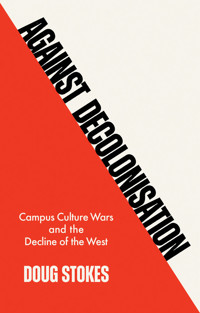
Following the killing of George Floyd in 2020, a moral panic gripped the US and UK. To atone for an alleged history of racism, statues were torn down and symbols of national identity attacked. Across universities, fringe theories became the new orthodoxy, with a cadre of activists backed by university technocrats adopting a binary worldview of moral certainty, sin and deconstructive redemption through Western self-erasure. This hard-hitting book surveys these developments for the first time. It unpacks and challenges the theories and arguments deployed by 'decolonisers' in a university system now characterised by garbled leadership and illiberal groupthink. The desire to question the West's sense of itself, deconstruct its narratives and overthrow its institutional order is an impulse that, ironically, was underpinned by a more confident and assured Western hegemony, which is now waning and under great strain. If its light continues to dim, who or what will carry the torch for human freedom and progress?
Sie lesen das E-Book in den Legimi-Apps auf:
Seitenzahl: 300
Veröffentlichungsjahr: 2023
Ähnliche




















CONTENTS
Cover
Dedication
Title Page
Copyright
Introduction
Racism in America?
Is the UK systemically racist?
The book’s key arguments
Notes
1 Identity politics, decolonisation and social theory
Race and revolution
Post-Marxist social theory and decolonisation
Post-colonialism
Decolonisation theory and British universities
The malign nature of ‘whiteness’
Summary
Notes
2 Racism on campus
The EHRC and racism in British universities
UUK: Leading anti-racist cultural change
The Race Equality Charter
The degree attainment gap
Changing the curriculum
Microaggressions and unconscious biases
Summary
Notes
3 Moral panic and illiberalism in universities
EHRC reports: Are universities racist?
Mathiness
BAME numbers?
Conceptual apartheid
Attainment gap?
Identifying the variables
Microaggressions and emotive reasoning
Universities: The white working class
Universities as racist elite institutions
Notes
4 History reclaimed
Defending science and reason
The importance of science and ontology
The Eurocentric nature of decolonial history
History reclaimed
Slavery in human history
What ends slavery?
Slavery in Africa
Did slavery make Britain rich?
The life of ordinary people in the UK during the time of slavery
Notes
5 Accounting for ‘wokery’
Intersectional illiberalism
Woke capitalism
Globalisation and the managerial class
Munchausen syndrome by progressive proxy
Notes
Conclusion: The future of the West?
Notes
Index
End User License Agreement
Guide
Cover
Table of Contents
Dedication
Title Page
Copyright
Introduction
Begin Reading
Conclusion
Index
End User License Agreement
Pages
iii
v
vi
1
2
3
4
5
6
7
8
9
10
11
12
13
14
15
16
17
18
19
20
21
22
23
24
25
26
27
28
29
30
31
32
33
34
35
36
37
38
39
40
41
42
43
44
45
46
47
48
49
50
51
52
53
54
55
56
57
58
59
60
61
62
63
64
65
66
67
68
69
70
71
72
73
74
75
76
77
78
79
80
81
82
83
84
85
86
87
88
89
90
91
92
93
94
95
96
97
98
99
100
101
102
103
104
105
106
107
108
109
110
111
112
113
114
115
116
117
118
119
120
121
122
123
124
125
126
127
128
129
130
131
132
133
134
135
136
137
138
139
140
141
142
143
144
145
146
147
148
149
150
187
188
189
190
191
192
193
194
195
196
197
198
199
200
201
Dedication
In 1925, a young schoolboy discovered the body of Alfred Morgan by the banks of the River Lee in Edmonton. A crane driver, he had cut his own throat. Morgan’s profound grief at the loss of his eldest son, killed in an industrial accident two years earlier, followed the tragic loss of two other children, both to bronchitis in their early years. He was an affectionate father of seven children and his widow, Maria Gertrude Morgan, stated at the inquest that he was a man who would not even ‘kill a fly’. Already desperately poor, Maria, my great grandmother, was left widowed and raised the remaining children in Hackney Wick, East London. I dedicate this book to their memory, and the decency and fortitude of the millions of other ordinary Britons whose stories have all too frequently been left untold.
I also dedicate this book to my wife, Hilary Lawson and our children, Lucas, Erica, Owen and Stella.
Against Decolonisation
Campus Culture Wars and the Decline of the West
DOUG STOKES
polity
Copyright © Doug Stokes 2023
The right of Doug Stokes to be identified as Author of this Work has been asserted in accordance with the UK Copyright, Designs and Patents Act 1988.
First published in 2023 by Polity Press
Polity Press65 Bridge StreetCambridge CB2 1UR, UK
Polity Press111 River StreetHoboken, NJ 07030, USA
All rights reserved. Except for the quotation of short passages for the purpose of criticism and review, no part of this publication may be reproduced, stored in a retrieval system or transmitted, in any form or by any means, electronic, mechanical, photocopying, recording or otherwise, without the prior permission of the publisher.
ISBN-13: 978-1-5095-5424-9
A catalogue record for this book is available from the British Library.
Library of Congress Control Number: 2023931486
The publisher has used its best endeavours to ensure that the URLs for external websites referred to in this book are correct and active at the time of going to press. However, the publisher has no responsibility for the websites and can make no guarantee that a site will remain live or that the content is or will remain appropriate.
Every effort has been made to trace all copyright holders, but if any have been overlooked the publisher will be pleased to include any necessary credits in any subsequent reprint or edition.
For further information on Polity, visit our website: politybooks.com
Introduction
With the shocking killing of George Floyd in America in 2020 and the rise of the Black Lives Matter movement (BLM), global awareness has been raised about the ongoing injustice of racism. In the US alone, 14,000 protesters were arrested on BLM marches. President Joe Biden captured the sentiment well. He argued that Floyd’s death had more of an impact than that of the civil rights leader, Martin Luther King. ‘Dr King’s assassination did not have the worldwide impact that George Floyd’s death did.’1 The legacy of racism and structural inequality for non-white minorities is now said to be one of the world’s principal ethical challenges. The USA’s very political DNA has been denounced by its senior leaders. Americans must ‘acknowledge that we are an imperfect union – and have been since the beginning’, argued Linda Thomas-Greenfield, US Ambassador to the United Nations. The ‘original sin of slavery [has] weaved white supremacy into our founding documents and principles’.2
Biden’s administration has instituted an ambitious ‘wholegovernment equity agenda’ to address inequality. On his first day in office, Biden signed the ‘Advancing Racial Equity and Support for Underserved Communities’ act, a ‘generational commitment that will require sustained leadership and partnership with all communities’. It is designed to tackle ‘the enormous human costs of systemic racism, persistent poverty, and other disparities’.3 Vice-President Kamala Harris explained that US citizens will all now ‘end up in the same place’ and thus ensure equal outcomes for everybody. Without this change and transformation, the West’s ethical trajectory will remain compromised and social justice will not be realised.
In response, many parts of American society are undergoing radical change, even those generally considered to be the most conservative. For example, the US Navy’s new fealty pledge states that service personnel must ‘invest the time, attention and empathy required to analyse and evaluate Navy-wide issues related to racism, sexism, ableism and other structural and interpersonal biases’.4
Drawing on academic theories, especially ‘critical race theory’, corporate America is also pursuing a new agenda of Equality, Diversity, Inclusion (EDI) to address what is said to be lingering forms of ‘white privilege’ and ‘whiteness’. In this pursuit, liberal forms of anti-racism, captured most notably by Martin Luther King’s insistence on the importance of character over colour, are being abandoned.
The new anti-racism openly advocates the importance of identity over the individual and, increasingly, the collective guilt of white people. Yale’s Claudia Rankine explained that those in the West are ‘inside a culture that’s dedicated to whiteness and its dominance over other people because white people have been socialised to believe that they are superior, better-looking, smarter’.5
The rot is said to be so deep that Stanford’s Social Innovation Review argued that even the standards of professionalism are ‘defined by white supremacy culture – or the systemic, institutionalized centering of whiteness’. An alleged lack of diversity at the top of corporate America is taken as indicative of these trends of structural racism and ‘whiteness’.6 Most American multinationals have now adopted these ideas. For example, the world’s largest asset manager is BlackRock, with US$10 trillion in assets under management in 2022, and now insists on diversity targets for the companies in which it holds shares.7
The global dominance of American culture means that the cultural effects of this new illiberal American ‘anti-racism’ has had a global impact. BLM protests occurred in sixty countries and every continent, even including Antarctica. As Greenfield argued, just ‘look at the way the Black Lives Matter movement spread … What took hold in the streets of Minneapolis made it to Monrovia, and Madrid, and London, and Sydney, and Berlin, and Cape Town; Stockholm, and Rio de Janeiro, and Tokyo, and on, and on, and on’. These protests are necessary, she argued, as ‘in today’s world’ every society is racist.8 As such, corporate America and the US government is increasingly wedded to the global export of a worldview predicated around the centrality of identity, the ubiquity of racism and the morally compromised nature of Western civilisation.
The justified disgust at Floyd’s killing also helped energise a movement in the UK to address what was said to be a similar history of racial injustice and the legacy effects of discrimination. It was captured symbolically by the toppling of the Bristol-based statue of the slave trader Edward Colston.9 The protests also targeted other prominent figures from British history said to be tarnished with the evil of racism including Winston Churchill, Oliver Cromwell and Horatio Nelson. Even a statue of the Indian independence leader, Mahatma Gandhi, was targeted and sprayed with the word ‘racist’. Demonstrators also attacked the Cenotaph in London, a memorial to the over a million British war dead, including those fighting Hitler’s genocidal racism.10
From the Archbishop of Canterbury’s declaration of the need to remove depictions of a white Jesus to investigations as to why the British countryside is racist, British institutions, like American ones, are undergoing a process of transformation in a desire to be more equitable and to create what are said to be genuinely ‘anti-racist’ institutions. The call to ‘decolonise’ British history and its institutions has become one the most important ways to acknowledge the alleged legacy effects of transatlantic slavery. Even King Charles argued that the history of transatlantic slavery should be given the same national level of importance as the Holocaust.11 How accurate is this characterisation of racism in the US and the UK?
Racism in America?
The shocking killing of George Floyd reinforced a dominant perception of systemic anti-black racism in American policing. Many have ‘concluded that a structural or institutional bias against people of color, shaped by long-standing racial, economic, and social inequities, infects the criminal justice system’, argues New York University’s Brennan Centre. As a result, these ‘systemic inequities can also instil implicit biases – unconscious prejudices that favor in-groups and stigmatise outgroups – among individual law enforcement officials, influencing their day-to-day actions while interacting with the public’.12
When asked, over half of Americans with Left-Liberal political views estimated that police killed 1,000 or more unarmed black men in 2019. The actual number was thirteen, according to the leading database on police killings.13 In the same year, those with liberal to very-liberal political views estimated the proportion of black men killed by the police to be 56% and 60%, respectively, when the actual figure is 24.9%.14
When we examine the data, we must control for two crucial variables: demographics and the social contexts of police interactions. The most recent census data for 2020 show that the US is now 57.8% white, 18.7% Hispanic, 12.4% black and 6% Asian. Despite only comprising 12.4% of the population, African Americans make up 53% of known homicide offenders in the US and commit about 60% of robberies.15 The Bureau of Justice Statistics showed that in 2021 the ‘share of violent incidents involving black offenders (29%) was greater than the population percentage of black persons (12%)’.16 FBI data show that black or African Americans comprised 44% of all violent offenders in 2021 (compared with 43% of the white population, including the sizable Hispanic population).17 Of victims, the black or African American population comprised the most significant victim group too, at 38%.
When examining police–citizen interactions, especially those that lead to fatalities, the social context is thus critical. The kinds and prevalence of crimes will be the leading indicator of police interaction in what will likely be high-stress and perilous situations where violence would be statistically far more likely (e.g. homicides, violent crime). Moreover, given this higher prevalence, another key metric in the debate on police–civilian violence is the rate at which firearms are used in those interactions, and thus where there is a higher probability of fatality. What do the data show?
A major study concluded that in areas of relative deprivation, police–citizen encounters were actually ‘more likely to result in a police fatality than in a citizen fatality’. Guns were ‘significantly more likely to be used by citizens involved in police fatalities’; that helps explain ‘why the odds of police lethal victimisation, relative to police use of force, increased in more disadvantaged areas’.18 The latest data on police killed nationally by felons show that between 2010 and 2019, white offenders killed a total of 303 officers. Black offenders killed 199. As such, of the 537 total murders of police officers between 2010 and 2019, white offenders were responsible for 56% of all murders, and black offenders for 37%. When controlling for demographic factors, black Americans are thus disproportionately responsible for police murders in often highly violent encounters.19
Despite this, a leading multifactor study concluded that there is ‘little evidence that black citizens are more likely than white citizens to be fatally shot by police nationally’.20 The authors continue that when examining police–citizen interactions, appropriate benchmarks must be used to understand racial disparities. ‘Journalists, advocacy groups, and politicians continue to use the general population benchmark to suggest that the police disproportionately target minorities for deadly force. Framing the issue as one involving racial bias not only misleads but polarises police officers and citizens who want reform.’ 21 As such, there is a pervasive implicit bias narrative in relation to American policing but this ‘hypothesised relationship between the decision to shoot and suspect race was not supported’ by a growing body of major research surveys.22
Despite these real-world variables, unarmed black fatalities at the hands of the American police generate nine times as many news search results as white victims.23 This perhaps confirms a powerful media narrative of structural racism across American policing and society more generally. An admittedly simple test for the ubiquity of this narrative is that while the name of George Floyd is now known around the world, the name of Tony Timpa is largely unknown. Timpa died in almost identical circumstances to Floyd, the crucial difference being that he was white.24 Since Floyd’s death, Edward Bronstein was killed in nearly similar circumstances too, but again, is barely known and is white.25
The data on hate crime are similarly counterintuitive. For example, in 2019, race was reported for 6,406 known hate-crime offenders. Of these offenders, 52% were white and comprised 58% of the American population. However, 23.9% of American hate crimes were committed by black Americans despite being only 12.4% of the American population.26 2020 figures confirm this. White Americans committed 55% of hate crimes and black Americans 21%.27
The dominant narrative of racist white police officers randomly gunning down innocent and unarmed black men is false. Most police killings occur in situations of extreme violence, with the higher level of relative deprivation in an area meaning a higher probability of a police officer being murdered by an armed citizen. When controlling for population size, the police are three times more likely to be murdered by black felons than white felons. To the extent that committing a racially motivated hate crime is a proxy for racism, American blacks are twice as racist as American whites.
None of this is discussed to lessen the legacy of racism in America’s history or its likely ongoing effects. Moreover, black Americans are more likely to be deeply concerned about criminal violence, which is unsurprising, given that black Americans are much more likely to be victims of violent crime. Multiple variables will feed into the data above, including poverty, education, family background and culture, all of which intersect in complex ways to shape human agency.
However, the key point is the jarringly counter-intuitive disconnect between the dominant media narrative and reality. More importantly, the moral power of this narrative has gone global, and is now being used to transform the politics, culture and institutions not just of the US but also of the UK, given the historically close connections between the two nations.
Is the UK systemically racist?
Beyond America, what is the reality in the UK and is it a structurally racist society that needs to be decolonised and undergo radical transformation? Like the US media, the British media has pushed a narrative of ubiquitous racism, xenophobia and discrimination that is allegedly prevalent across the UK. A major study found that between 2010 and 2020, ‘terms such as racism and white supremacy in popular UK media outlets increased on average by 769% and 2,827%, respectively’. The report continues that mentions ‘of prejudice have also become far more prominent in the BBC, the UK’s leading public service outlet. From 2010 to 2020, mentions in BBC content of terms suggestive of racism have increased by over 802% … hate speech (880%), … or slavery (413%).’28
What do those data show? In 2019, the European Union conducted one of the most extensive surveys across the European continent. Its report, Discrimination in the European Union, showed that the United Kingdom is one of the least racist societies in Europe; a continent already characterised by extensive anti-discrimination laws and norms, and that partially explains the mass legal and illegal migration from across the world to the continent, especially to the UK. Why would any non-European risk their lives, or move thousands of miles to start a life in a deeply racist hellhole?
On working with a colleague from a different ethnicity, 89% of the British population were comfortable, with 5% either indifferent or did not know. Italy, a mature and developed European democracy, stood at only 56% being comfortable. On being comfortable with the highest political position in the land occupied by somebody from a different ethnic origin or skin colour, the UK scored 88%. This was reflected in the 2022 leadership contest in the UK’s Conservative party, where Kemi Badenoch, a black woman of Nigerian ancestry, was the clear favourite among the party’s membership, a party regularly portrayed as being xenophobic and racist by its political opponents. At the time of writing, the UK’s Prime Minister is Rishi Sunak, whose parents are of Indian descent.
Perhaps more important, and illustrative of how deep anti-discrimination norms have become embedded in British society, 86% of those surveyed reported that they would be comfortable with their children being in a loving relationship with a black person.29 This is reflected in the data. The last British census data available at the time of writing was conducted in 2021.30 It showed that 3% of the British population were mixed race, one percentage point up from the 2011 census that was double from the 2001 census. Research by Alita Nandi and Lucinda Platt suggests the figure could be three times as high. If correct, mixed-race people are a more significant proportion of the population than any other minority ethnic group.31
The study above confirms data from an earlier and similarly extensive 2016 European Union Agency for Fundamental Rights study. It was based on face-to-face interviews with 25,515 respondents with different ethnic minority and immigrant backgrounds across 28 EU member states. While people of black African descent faced ‘widespread and entrenched prejudice and exclusion’ across the EU, the UK had one of the lowest reported levels of race-related harassment and violence in the twelve-country study. The highest violence rates were reported in Finland (14%), closely followed by Austria and the Republic of Ireland (13%). The figure among UK respondents was 3%.32
Across nearly every measure, the UK was the least racist and discriminatory country in Europe. A clear majority of 59% of respondents stated that discrimination was rare to nonexistent in the UK. For African migrants to the UK, only 6% reported being discriminated against because of their ethnic origin over twelve months; 0% when looking for housing; 3% when in contact with their children’s schools.33
The non-discriminatory nature of the UK shows up in education and earnings too. For example, at our most selective universities, only 5% of disadvantaged young people enrol compared with the national average of 12%. Part-time students from lower-income backgrounds have dropped by a massive 42% over the past six years. The Office for National Statistics (ONS) figures show that the historically low entry rate into higher education of white pupils from state schools has been this way since 2006. The most significant increase in entry rates between 2006 and 2018 was among black pupils, from 21.6% to 41.2%; the smallest increase was among white pupils, from 21.8% to 29.5%.34 In contrast, the latest ethnic data show that 38.7% of white pupils went to university, whereas mixed pupils stood at 47.6%, black pupils at 59.9%, and Asian pupils at 64.3% and Chinese pupils 80.9%.35
At Oxford, often held up as a beacon of privilege, 24.6% of its 2021 intake were black or minority ethnic students. This confirms an annual trend of upward and significant BME36 student enrolment (for example, in 2017, BME students admitted were 17.8%). This reflects a broader trend across British universities. The 2019 data show that the proportion of 19- to 25-year-olds across the UK was 80.6% white and 19.4% BME. However, BME students made up almost 29% of the total intake at British universities in the same year, including over 25% at the elite Russell Group.37 These educational disadvantages have significant real-world effects. The Office for National Statistics data show that Chinese, Indian, and mixed or multiple ethnicity employees all have higher median hourly pay than white British employees, with Chinese employees earning 30.9% more than white British employees.38
Tellingly, a child on free school meals is the leading indicator of deprivation, but this does not impact all ethnic groups equally. In terms of progression among young men, 67% of Chinese, 54% of Indian, 53% of Bangladeshi, 52% of black African, and 24% of black Caribbean on free school meals progress to higher education. White British men? At just 13%, they are the least likely group to study at university after those from traveller backgrounds.
A Parliamentary report noted that in 2018/19, just 53% of Free School Meal (FSM) eligible white British pupils met the expected development standard at the end of the early years foundation stage; one of the lowest percentages for any disadvantaged ethnic group.39 The trends have seemingly become so entrenched that the UK Parliament’s Education Select Committee commissioned a report in 2021 to examine the decades-long disadvantages of white working-class kids entitled ‘The Forgotten: How White Working-Class Pupils Have Been Let Down, and How to Change It’. It found that the ‘proportion of white British pupils who were FSM-eligible starting higher education by the age of nineteen in 2018/19 was 16%, the lowest of any ethnic group other than travellers of Irish heritage and Gypsy/Roma’ with one of the key reasons being a ‘failure to address low participation in higher education’.40
In what is little more than a form of progressive political hypochondria, the UK’s exit from the European Union (Brexit) was also mistakenly portrayed as a xenophobic or racist reaction to non-white immigration and has formed a key part of the narrative that the UK is a racist country.
However, in terms of post-Brexit visas, all the highest groups granted skilled work visas originate outside the European Union. In 2021, ‘Indian nationals account for over two-fifths (42%) of all skilled work visas granted. There was a large increase in skilled work visa grants to Nigerian nationals, which more than doubled (+108%) to 8,646 in September 2021. Compared to 2019, Nigerian nationals saw the greatest increase in skilled work visa grants, increasing by 149% (+5,173).’41 Almost three-quarters (72%) of the initial decisions in 2021 were grants of asylum, humanitarian protection or alternative forms of leave, representing the highest number since 1990.42 In 2021, there were 48,540 asylum applications to the UK, the highest number since 2003. Despite this, and as the Financial Times’ extensive data set shows, between ‘2016 and 2019, the number of immigrants to the UK was broadly unchanged, yet the share of Britons concerned about immigration plummeted from almost half to one in seven’.43
More recent polling by ICM Unlimited in January 2021 found that 62% of black British people considered their British national identity to be important – only marginally lower than the more comprehensive general population figure of 64%.
The British Police Service is one of Britain’s most vilified public institutions. As part of their adaptation to the post-George Floyd era, they released an ‘anti-racist’ action plan in May 2022.44 However, the Police Service enjoys overwhelming support from ethnic minorities. ONS data show that the UK’s Chinese, Bangladeshi, Indian and black African demographic have a higher confidence level in their local police force in 2019 than white British people, at over 75%.45
While eliminating all racism and discrimination is impossible and, where it raises its ugly head, it should always be tackled robustly, the above-mentioned trends are very clear and apparent. On the one hand, we have a dominant cultural and political narrative that portrays the West and the UK as endemically racist. Following the killing of George Floyd and the intensification of American cultural and political trends in the UK, this narrative of racial moral panic has grown incredibly powerful. It has helped shape British politics and, as we shall see in later chapters, is leading to profound changes across British institutions.
On the other hand, the data show that many ethnic minorities earn more money, have better educational outcomes, and attend universities in greater per capita numbers than the white majority. The UK is not only one of the least racist societies on earth, as evidenced by the remarkable success of its ethnic minorities, which itself is the result of decades of institutional efforts to integrate and welcome minorities, but it remains an open, tolerant and welcoming country, even after Brexit, which is mistakenly portrayed as xenophobic and racist in origin.
The book’s key arguments
This book seeks to explore this puzzle. On the issues of race, identity and equality in the UK, how do we explain the extraordinary contrast between the reality of a successful multi-racial liberal democracy and the dominant narrative of grievance and racial discord that is now leading many British institutions to undergo a process of ‘decolonisation’? Nowhere is this more pronounced than in the university system, where these ideas have germinated and spread across British institutions.
In the next chapter, I examine the Cold War shift in Left social theory from a Marxian focus on political economy and class to a postmodern focus on culture and identity. This shift was occasioned by the almost total failure of revolutionary Marxism to inspire ordinary people in the advanced capitalist economies during the Cold War and a subsequent transfer of political hope to third world revolutionary movements. The politics of race and decolonisation were further developed as part of the cultural turn of Left social theory that rejected the materialism of Marxism, championed judgemental relativism and adopted a strategy of the deconstruction of Western civilisation, itself seen as a racist and oppressive construct.
Chapter 2 shows how these ideas have now been adopted across the British university system, especially after George Floyd’s killing. British universities have been accused of being systemically racist and guilty of reinforcing unequal outcomes for ethnic minorities, including differential degree outcomes and staff and student numbers. One of the ways to address these alleged unequal outcomes is to undergo a decolonisation process and decentre white, Eurocentric curriculums from our centres of learning. By doing so, universities and European civilisation more generally can begin to atone for slavery, colonialism, and the legacies of these forms of historical oppression. These ideas have been adopted by university leaders and are leading to widespread change on British campuses, and culture and politics more generally.
Chapter 3 then examines the arguments used to sustain this radical transformation of British universities and culture. I show that the arguments of those calling for the decolonisation of British universities are demonstrably wrong. All the available data show universities are incredibly diverse, as is British society. Instead, UK universities have become consumed by a racial moral panic that has accelerated illiberal and authoritarian trends on British campuses, infantilised students, and threatened the keystone value of academic freedom throughout the UK. Even though the UK is one of the least discriminatory societies on earth, there has been an exponential growth of academic sub-fields around the themes of social justice and the alleged ubiquity of prejudice.46 This has significant implications for the future of Britain and how it understands its identity and place in the world.
Chapter 4 examines the history used to support the claims of the decolonisation movement. I call for a reclamation of history and science. Rather than decolonisation, we should return to rational adjudication, academic freedom and scientific realism. These values have helped propel humanity forward and allow us to fairly interrogate Britain’s history. I show that slavery and colonialism have been common throughout human history. Britain helped end slavery, including that of various African slave kingdoms. The claim that all white British citizens are collectively racially guilty for the sin of slavery is morally repugnant and is itself a form of historically illiterate racism.
Chapter 5 relates the decolonisation of British universities to deeper shifts in the politics of the West. A new technocratic Professional Managerial Class (PMC) has emerged under globalisation that secures hegemony through advancing a politics of vulnerability and the bureaucratic corralling of moralising coalitions around identity issues. The ‘woke’ intersectionalism championed by corporations and PMC elites fits an era geared towards forms of supranational governance in a flat, post-national moral economy. Those who reject these values are portrayed as backward, denigrating their political agency. Absent a return to pluralism, tolerance and fairness, the politics of the Anglophone West will become more divisive and broken.
In concluding the book, I argue that while far from perfect, the Western-led liberal international order has helped transform humanity for the better. The Anglophone world’s culture wars have profound geopolitical consequences. The desire to decolonise the Anglophone West and the adoption of identity politics by political and cultural elites are suicidal moves in the context of rising illiberal and authoritarian ‘civilisational states’ like China. Human freedom and progress are not the natural order of things. They must be made and then defended. Supine leaders of institutions and political activists should be careful what they wish for. If we do deconstruct the West, who or what will replace it?
Notes
1.
Independent.
‘Biden Divides Opinion as Comments Comparing Deaths of MLK and George Floyd Resurface’, 18 January 2022.
2.
United States Mission to the United Nations. ‘Remarks by Ambassador Linda Thomas-Greenfield at the 30th Annual Summit of the National Action Network’, 14 April 2021.
3.
The White House. ‘Advancing Equity and Racial Justice Through the Federal Government’.
https://www.whitehouse.gov/equity/
.
4.
Task Force One Navy,
https://media.defense.gov/2021/Jan/26/2002570959/-1/-1/1/TASK%20FORCE%20ONE%20NAVY%20FINAL%20REPORT.PDF
5.
Benson, Dzifa. ‘Claudia Rankine: “We Are inside a Culture That’s Dedicated to Whiteness”’, 6 May 2022.
https://www.ft.com/content/1353904c-affa-4bdc-9b0b-14bf5a7eb475
; See also Brownlee, Dana. ‘Avoiding Terms Like “White Privilege” Is A Horrible Anti-Racism Strategy. Here’s Why’. Forbes.
https://www.forbes.com/sites/danabrownlee/2022/08/25/avoiding-terms-like-white-privilege-is-a-horrible-anti-racism-strategyheres-why/
.
6.
‘The Bias of “Professionalism” Standards (SSIR)’.
https://ssir.org/articles/entry/the_bias_of_professionalism_standards
; See also Judy Blair. ‘White Supremacy Culture in a Pandemic’, 16 April 2020.
https://judy-blair.com/2020/04/16/white-supremacy-culture-in-a-pandemic/
; Hoyle, Ben. ‘Focusing on the Correct Answer in Maths “Is Racist”’.
https://www.thetimes.co.uk/article/focusing-on-the-correct-answer-in-maths-is-racist-96gcztfs2
.
7.
Kerber, Ross, Jessica DiNapoli and Jessica DiNapoli. ‘BlackRock Adds Diversity Target for US Boardrooms’.
Reuters
, 18 December 2021; see also Fortune. ‘Is Your CEO an Anti-Racist?’.
https://fortune.com/2022/09/09/next-street-managing-partner-says-c-suite-needs-anti-racist-training-for-equity-commitments/
.
8.
United States Mission to the United Nations. ‘Remarks by Ambassador Linda Thomas-Greenfield at the 30th Annual Summit of the National Action Network’, 14 April 2021.
9.
BBC News. ‘Black Lives Matter Protests Held across England’, 20 June 2020; McDonald, Henry. ‘C of E Should Rethink Portrayal of Jesus as White, Welby Says’.
Guardian
, 26 June 2020, Karim, Fariha. ‘Rural Britain Is Racist, Says Countryfile Presenter Ellie Harrison’,
https://www.thetimes.co.uk/article/rural-britain-is-racist-says-countryfile-presenter-ellie-harrison-wpk0lc7gn
; on museums see Museums Association. ‘Decolonising-Museums – Campaigns’.
https://www.museumsassociation.org/campaigns/decolonising-museums/
; on the National Trust see National Trust. ‘Addressing Our Histories of Colonialism and Historic Slavery’.
https://www.nationaltrust.org.uk/features/addressing-the-histories-of-slavery-and-colonialism-at-the-national-trust
.
10.
Times of India
. ‘35 Cops Injured in Further London Violence as Gandhi Statue Defaced’, 9 June 2020.
11.
Areo. ‘Olúfẹ́mi Táíwò’s “Against Decolonisation”’, 17 June 2022; Táíwò, Olúfẹ́mi.
Against Decolonisation: Taking African Agency Seriously
. Hurst Publishers, 2022.
12.
‘Hidden in Plain Sight: Racism, White Supremacy, and Far-Right Militancy in Law Enforcement | Brennan Center for Justice’.
https://www.brennancenter.org/our-work/research-reports/hidden-plain-sight-racism-white-supremacy-and-far-right-militancy-law
.
13.
Washington Post
. ‘Fatal Force: Police Shootings Database’; See also ‘CDE: Expanded Homicide Data’.
https://cde.ucr.cjis.gov/LATEST/webapp/#/pages/homefordata
.
14.
‘How Informed are Americans about Race and Policing?’ Research Report: CUPES-007 | 20 February 2021,
https://www.skeptic.com/research-center/reports/Research-Report-CUPES-007.pdf
.
15.
Mac Donald, Heather. ‘Opinion | The Myth of Systemic Police Racism’.
Wall Street Journal
, 2 June 2020.
16.
US Department of Justice Office, Criminal Victimization, 2021. September 2022, p. 10.
https://bjs.ojp.gov/content/pub/pdf/cv21.pdf
.
17.
‘CDE’.
https://cde.ucr.cjis.gov/LATEST/webapp/#/pages/explorer/crime/crime-trend
.
18.
Fridel, Emma E., Keller G. Sheppard and Gregory M. Zimmerman. ‘Integrating the Literature on Police Use of Deadly Force and Police Lethal Victimization: How Does Place Impact Fatal Police–Citizen Encounters?’
Journal of Quantitative Criminology
36 (4) (December 2020): 968.
19.
FBI. ‘Table 42’.
https://ucr.fbi.gov/leoka/2019/tables/table-42.xls
.
20.
Shjarback, John A. and Justin Nix. ‘Considering Violence against Police by Citizen Race/Ethnicity to Contextualize Representation in Officer-Involved Shootings’.
Journal of Criminal Justice
66 (1 January 2020).
21.
Ibid., p. 8.
22.
Worrall, John L., Stephen A. Bishopp, Scott C. Zinser, Andrew P. Wheeler and Scott W. Phillips. ‘Exploring Bias in Police Shooting Decisions With Real Shoot/Don’t Shoot Cases’.
Crime and Delinquency
64 (9) (1 August 2018). For an extended survey of the literature on American policing and race see Brown, Robert A. and James Frank. ‘Race and Officer Decision Making: Examining Differences in Arrest Outcomes between Black and White Officers’.
Justice Quarterly
23 (1) (1 March 2006): 96–126; Shane, Jon M., Brian Lawton and Zoë Swenson. ‘The Prevalence of Fatal Police Shootings by US Police, 2015–2016: Patterns and Answers from a New Data Set’.
Journal of Criminal Justice
52 (1 September 2017): 101–11; for a meta-analysis, see Oramas Mora, Daniela, William Terrill, and Jacob Foster. ‘A Decade of Police Use of Deadly Force Research (2011–2020)’.
Homicide Studies
, 17 October 2022; Johnson, David J., Trevor Tress, Nicole Burkel, Carley Taylor and Joseph Cesario. ‘Officer Characteristics and Racial Disparities in Fatal Officer-Involved Shootings’.
Proceedings of the National Academy of Sciences
116 (32) (6 August 2019): 15877–82.
23.
Tablet Magazine
. ‘Woke Terms and Media Racism Statistics’, 5 August 2020.
24.
Zraick, Karen. ‘Dallas Officers Pinned Tony Timpa and Joked During Fatal Encounter, Video Shows’.
New York Times
, 1 August 2019.
25.




