


9,59 €
Mehr erfahren.
- Herausgeber: Luath Press
- Kategorie: Geisteswissenschaft
- Serie: Viewpoints
- Sprache: Englisch
There is only one argument for Scottish independence: the cultural argument. It was there long before North Sea oil had been discovered, and it will be here long after the oil has run out. How have perceptions of Scottish culture been shaped by its role within Britain? What would be different about culture in an Independent Scotland? Why is culture the key to the independence debate? ALEXANDER MOFFAT and ALAN RIACH take a hard look at the most neglected aspect of the argument for Scotland's distinctive national identity: the arts. Their proposition is that music, painting, architecture and, pre-eminently, literature, are the fuel and fire that makes imagination possible. Neglect them at your peril. For Moffat and Riach, jobs, health and trade are matters of material fact that need to be enlivened by imagination. How can we organise society to help us approach what the arts have to give. Why have we been so poor at representing our arts comprehensively, both within Scotland and internationally? What can be done? How might things be different? The arts are of paramount importance in the modern world. Moffat and Riach take the argument out of the hands of politicians and economists and beyond the petty squabbles of party politics. Praise for Arts of Resistance An inspiration, a revelation and education, as to the extraordinary richness and organic cohesion of twentieth-century Scottish culture, full of intellectual adventure and openness to the wider world… full of passion and intelligence… This is a landmark book. THE TIMES LITERARY SUPPLEMENT
Das E-Book können Sie in Legimi-Apps oder einer beliebigen App lesen, die das folgende Format unterstützen:
Seitenzahl: 425
Veröffentlichungsjahr: 2014
Ähnliche
















ALEXANDER MOFFAT RSA is an artist and teacher. Born in Dunfermline in 1943, he studied painting at Edinburgh College of Art. From 1968 to 1978 he was the Director of the New 57 Gallery in Edinburgh. In 1979 he joined the staff of The Glasgow School of Art where he was Head of Painting from 1992 until his retirement in 2005. His portraits of the major poets of the Scottish Renaissance movement now hang in the Scottish National Portrait Gallery and his paintings are represented in many public and private collections including the Yale Center for British Art, USA and the Pushkin Museum in Moscow.
ALAN RIACH is a poet and teacher. Born in Airdrie in 1957, he studied English literature at Cambridge University from 1976 to 1979. He completed his PhD in the Department of Scottish Literature at Glasgow University in 1986. His academic career has included positions as a post-doctoral research fellow, senior lecturer, Associate Professor and Pro-Dean in the Faculty of Arts, University of Waikato, Hamilton, New Zealand, 1986–2000. He returned to Scotland in January 2001 and is currently the Professor of Scottish Literature at the University of Glasgow. His poems are collected inThis Folding Map(1990),An Open Return(1991),First & Last Songs(1995),Clearances(2001) andHomecoming(2009).
Luath Press is an independently owned and managed book publishing company based in Scotland, and is not aligned to any political party or grouping.Viewpointsis an occasional series exploring issues of current and future relevance.
By the same authors:
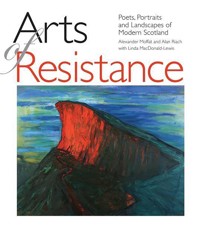
Arts of Resistance, Poets, Portraits and Landscapes of Modern Scotland, Luath Press, 2008
Arts of Independence
The Cultural Argument and Why ItMatters Most
ALEXANDER MOFFAT and ALAN RIACH
LuathPress Limited
EDINBURGH
www.luath.co.uk
First published 2014
ISBN: 978-1-908373-75-5
ISBN (eBook): 978-1-909912-93-9
The publishers acknowledge the support of Creative Scotland towards the publication of this volume.
The authors’ right to be identified as author of this work under the Copyright, Designs and Patents Act 1988 has been asserted.
© Alexander Moffat and Alan Riach 2014
Contents
Acknowledgements
Preface: The Moment Before
Introduction
PART ONE – THE CULTURAL ARGUMENT
The HeraldManifesto
The First Dialogue: The Unanswered Questions Answered
The Economic Argument
Better Together?
Scotland’s Self-Suppression
The USA: Cultural Self-Projection
Apply That to Scotland
The Languages of Scotland
Government, Arts and People
Langholm Common Riding
PART TWO – THE UNION: BEFORE, DURING AND AFTER
The Union Means Money
The Second Dialogue: What do we do with the Union?
London or Edinburgh?
The Union and Democracy
Royalty, the British Army and Brute Force
British and Scottish?
Money and Culture: The Lure of London
Beyond the Union
PART THREE – THE ARTS OF INDEPENDENCE
Democracy, Education and the Arts in Scotland
The Third Dialogue: 21st-Century Kulchur
Poets, Philosophers and Politicians
The Machinery of Trivialisation
The Work of Democracy
The Virtues of Nationalism
The Origins of Modernity
The History of the Future
Conclusion
Colour Picture Section
Acknowledgements
Our first thanks are to Gavin MacDougall, our publisher, who invited us to make this book, and has been wonderfully patient with our rate of progress and many revisions. The help we have been given through comments and suggestions made by Louise Hutcheson and Ceris Aston at Luath Press have been immensely valuable and we are grateful to them. We would like to thank Will Maclean, Ken Currie and Douglas Gordon for supplying images of their work, and the Fergusson Gallery, Perth and Kinross Council, for permission to reproduce J.D. Fergusson’s ‘Les Eus’. Thanks also to Stewart Sanderson for the index and Lydia Nowak for her patience with the proofs.
Preface: The Moment Before
ALL ARTS WORK for independence. They represent things, actions, relations of purpose and power. We learn from them and act, according to our deepest dispositions and our conscious choices, made in the air of wherever it is we inhabit, in observation only of whatever rules we choose and know that we wish to obey, or whatever it is we choose and know we should destroy. This learning is delight, these choices are a pleasure, these decisions made are taken no more lightly than the movements of a dance, that may appear as skip, turn, lift and buoyant motion, but like the actor’s lines, may be learnt, acquired, focused and directed, powerfully, and to effect. Great work is hard work. Learning is pleasure. These are our premises, the promises we make, and the beliefs that have generated the arguments that occupy the pages of this book.
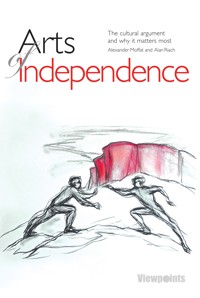
The cover depicts the red cliff of our previous collaboration,Arts of Resistance: the radical road by Salisbury Crags, next to Arthur’s Seat, overlooking the capital city of Scotland, in front of which depicted are two figures, limbs stretched in the moment before contact, one, perhaps, acquisitive, the other defensive, claiming the ground. No simple conflict here: rather a sense of perennial contest, ignorance and knowledge, violence and art, foreclosure or elaboration challenging, extending possibilities. Which is which? Who’s who? Wait there – hold on – there are things to be said, things to be talked about, and maybe after the conversation, after the depictions in art, after the work of the imagination is taken through to its possible conclusions, then we can come to our decisions without the failure of physical conflict. The long history of struggle for an independent Scotland from the 19th century to the 21st is characterised not by violence but by patience, poetry, argument, commitment to the process of democracy, commitment to education, belief in what the arts can do. These are not idealist claims, but simply the facts of the history here, which constitute a rare distinction.
Our argument is this:
Literature, painting, music, architecture – all the arts – are the most essential outward forms in which we make distinct our own humanity. They are what must be at the heart of all education. Education helps people make informed choices in a peaceful political structure called democracy. Each thinking, feeling adult has a vote to cast for how she or he may thus be represented. The political representatives elected are responsible to people. The arts are there to help people to live. Therefore to argue for an independent Scotland must be to argue for the distinctive works of art that have arisen from the people of Scotland, throughout history, to find ways to make them and the values they embody more widely and deeply understood and enjoyed, in Scotland and internationally, and to create and develop new ways to further them, for future generations. This demands our engagement with the arts of other nations, throughout the world. These truths are distorted to the detriment and destruction of the well-being of people in the structure of state defined by the United Kingdom. We have an opportunity to change that here in Scotland. Our human potential would be more fully exercised in an independent Scotland.
From this argument, the further implications are clear: the United Kingdom is made of not only Scotland and England, but Wales and Northern Ireland also. In the third dialogue of the book, we talk about the variations of ethos, diversities of social identity, that are as present in England as in any other country, and we should acknowledge immediately that such diversity is within the character of any nation. Our argument is to oppose imperialism, to oppose the conformity of subjection pressed upon people by Empire, to reject the mortmain of the uniform identity that insists on any single story dominating others.
Perhaps at the heart of the question is the conflict of knowledge and ignorance. Knowledge may bring sympathy; yet also, it may prompt resistance. But ignorance only makes subjects of us all.
It is a common sentence that Knowledge is power; but who hath duly considered or set forth the power of Ignorance? Knowledge slowly builds up what Ignorance in an hour pulls down. Knowledge, through patient and frugal centuries, enlarges discovery and makes record of it; Ignorance, wanting the day’s dinner, lights a fire with the record, and gives a flavour to its one roast with the burnt souls of many generations. Knowledge, instructing the sense, refining and multiplying needs, transforms itself into skill and makes life various with a new six days’ work; comes Ignorance drunk on the seventh, with a firkin of oil and creation is shrivelled up in blackness. Of a truth, Knowledge is power, but it is a power reined in by scruple, having a conscience of what must be and what may be; whereas Ignorance is a blind giant who, let him but wax unbound, would make it a sport to seize the pillars that hold up the long-wrought fabric of human good, and turn all the places of joy dark as a buried Babylon. And looking at life parcel-wise, in the growth of a single lot, who having a practised vision may not see that ignorance of the true bond between events, and the false conceit of means whereby sequences may be compelled – like that of falsity of eyesight which overlooks the gradations of distance, seeing that which is afar off as if it were within a step or a grasp – precipitates the mistaken soul on destruction?
It is salutary to consider that that passage was written by George Eliot, published as an epigraph to Chapter 21 of her novel,Daniel Deronda(1876). What we are committed to is the practised vision so described, a more accurate seeing, the true bonds between events, what must and what may be, in an independent Scotland.
Introduction
WE BELIEVE THAT Scotland should be an independent country. That belief is based on many years of practice as teachers, artists, a painter and a poet, both of us travellers in other lands, and both of us residents in Scotland.
Our proposition is that the arts in Scotland – literature, painting, music, sculpture, architecture, all the arts – are more than essential in the argument for an independent Scotland. They are pre-eminent. Economic, political and social questions need to be asked and answered but without the cultural argument, they are merely the mechanics. What gives Scotland and the people who live in Scotland the distinction of cultural identity is always more important than the number of chips in a fish supper, crucial as that must be for all of us. And this cultural identity has been suppressed and neglected, in the educational institutions, the mass media, the political deliberations and the ponderous pontifications of so many public balloons.
Cool, reasoned arguments are required but we want more than that. We want the passion and emotional investment that gives us the courage of our dispositions. We need to validate our prejudices, or abandon them. We want balanced consideration backed up and overtaken at times by marvellous conviction, expressions of faith and delight and good humour, open declarations that can be discussed freely. We want to consider how we feel about our country in comparison with other people and how they feel about their countries. We want to look at nationalism in all its facets – consider its overwhelming threat when it becomes what we might call uber-nationalism, or imperialism, the imposing authority of power over others and control through colonial occupation of one kind or another – but also to consider its value as resistance against such authority, its work in liberation, the opening of possibilities, the urge to critical self-exploration and its value in artistic practice.
This book arises from a lecture delivered by Alan Riach at the ‘Changin’ Scotland’ gathering in Ullapool in November 2012. The theme was ‘The Role of the Arts, Culture and Identity in Scotland’. The event was organised by Alexander Moffat, David Harding and Sam Ainsley, and the article based on the lecture was published in the newspaperThe Heraldon 20 February 2013. The publisher of our previous collaborative book,Arts of Resistance(2009) invited us to build from that article and explore the questions it raised in another collaborative work. This is the result.
Arts of Independencefollows fromArts of Resistance. The two books are intended to be complementary, this one following through and developing arguments and ideas that were implicit in the earlier one.Arts of Resistancewas profusely illustrated, so that readers could see the works of the artists we were talking about.Arts of Independenceis much more of a discussion – we want to focus on the words, the meanings of the words, what the ideas are that hold such sway over people in society generally.Arts of Independenceis a more challenging book. Necessarily so.
We have structured the book in three sections, each with sub-sections and digressions, some data and factual documentation, arguments that take us along various avenues and side-tracks, before we return to the main emphasis and its elaborations. This structure is an affirmation of Friedrich Nietzsche’s aphorism 154 fromBeyond Good and Evil(1886): ‘Objections, non-sequiturs, cheerful distrust, joyous mockery – all are signs of health. Everything absolute belongs to the realm of pathology.’ We are mindful, too, of that book’s subtitle,Prelude to a Philosophy of the Future. Our intention is that the arguments, examples and value ofArts of Independenceshould remain valid long after Scotland becomes an independent country once again.
The essential value and validity of the arts is the central theme of the book and a credo we would both stand for. Yet it is not a credo we would follow blindly. We would want to question and criticise all works of art and their contexts, who or what interests they serve. As the Nigerian Nobel laureate Wole Soyinka puts it, ‘The greatest threat to freedom is the absence of criticism’. What is called a work of art does not always possess value and validity. It requires criticism and evaluation. And such criticism and evaluation must be convincing. For example, if Tracey Emin appears on television news and magazine programmes, this may be less to do with the quality of any of her works of art and more to do with the way media represents such an artist. That has more to do with the phenomenon of celebrity culture than with critical evaluation of works of art. Picasso was a great artist and a world celebrity. Emin is at best a minor artist and her celebrity status, such as it is, does not arise from critical or comparative evaluation. This understanding can be extended. In the 18th century the fashionable priorities of gentility throughout Europe generated unquantified numbers of portraits of rich people: the nobility, dukes and duchesses, utter non-entities, humanly dull in their flattering representations in innumerable paintings of almost utter worthlessness.
John Berger once asked, ‘has anyone ever tried to estimate how many framed oil paintings, dating from the 15th century to the 19th, there are in existence?’ His argument is that what art historians talk about and we see in museums is in fact a tiny fraction of what was actually produced, and most of it worthless. He picks out the banality of 19th-century official portraits, 18th-century landscapes and 17th-century religious pictures as examples. He goes on:
The art of any culture will show a wide differential of talent. But I doubt whether anywhere else the difference between the masterpieces and the average is as large as it is in the European tradition of the last five centuries. The difference is not only a question of skill and imagination, but also of morale. The average work – and increasingly after the 16th century – was produced cynically; that is to say its content, its message, the values it was nominally upholding, were less meaningful for the producer than the finishing of the commission. Hack-work is not the result of clumsiness or provincialism; it is the result of the market making more insistent demands than the job.
As such, even major artists can turn out work for the market that is less seriously valuable than other work they produce. This is certainly the case, for example, with the Glasgow Boys and the Scottish Colourists. If the critical value of appreciation is rendered invalid and the market is permitted to dictate the only value of a work of art, understanding what makes a work of art valuable in human, rather than commercial, terms, is made irrelevant.
In many places, that is precisely what is happening today.
The 18th century, the age of dictionaries, encyclopaedias and the codification of knowledge, was also the age of slavery and the era in Europe when the great tragedies of the preceding century – not to mention the tragic drama of ancient Greece, the plays of Aeschylus, Euripides and Sophocles – were unmentionable.King Learcould not be performed without a tacked-on happy ending. Yet emerging from this world were Mozart, Watteau, David, Fergusson, Burns, Scott, in a strong cultural reaction against what had been happening in the half-century before them and in some cases was still happening around them. The achievements of the Enlightenment are manifold and various, but there is a liability in them. Gentlemen philosophers may take us deep into vital questions and there is much to learn from exploration of this kind. Scottish philosophers in this field are pre-eminent. Hume teaches us scepticism of the most essential kind. Hutton teaches us a sense of earth, of geological time, by which we must measure true human value. Smith teaches us that there emphatically is such a thing as society and in order to make money valuable and make an economy viable we must care for it, deeply and practically, and work for the benefit of all. However, the Enlightenment is not all there is. The wild imaginations of the wayward artists and writers, whose insights into humanity no Enlightenment man could encompass – Aeschylus, Shakespeare, Mahler, Sibelius, Flaubert, MacDiarmid – are needed to counterpoint and qualify more reasoning and rational minds. Laws of life, whatever they are, constant and changing, always produce their own men and women who make them, codify them, and give them to others – but they also generate outlaws.
Even the artists and writers and painters we might associate with the Enlightenment are not easily codified within a definition of Apollonian, classical, or neo-classical identity. Haydn, Mozart and Beethoven cross from Enlightenment to Romantic eras, but each foreshadows, arises from, or draws on, both. Likewise Gericault, Turner, Fuseli, and David. In the paintings of David there is a tension between the neo-classical and the proto-Romantic and that tension is not present in the Apollonian world of order. Each of these composers and painters knows intrinsically, physically, viscerally, intuitively and intellectually, the conflicting dynamics of chaos and order. Burns and Scott are of their company. And yet, we might generalise, the forces of law, the state and civilisation are always trying to impose order on the chaos of creative potential. And the forces that drive artists of whatever complexion or kind always arise from the depths of that chaos of human potential, resisting codification, commodification, order imposed from above, the laws of whatever market or state.
There have been periods in European history where the arts were little more than the toys of the rich. And if we really understand this, it is a vital warning. Compare the Turner prizewinners, fashionable art scenes, the salons and city sophisticates of the 20th and 21st centuries with the plays of Bertolt Brecht or John McGrath, the paintings of Kathe Kollwitz or Joan Eardley, the poems of Sorley MacLean or Wole Soyinka or Ernesto Cardenal, or the novels of James Robertson or Thomas Mann. Consider art as a means by which we learn about the world. Then consider art as a power game, money-led. Consider the unmistakably commercial disposition in the transfer of artistic authority from Paris to New York in the immediate aftermath of the Second World War. And consider the role of the church. Great art has come from the church: Michelangelo, Velazquez, El Greco, just as great work has been done by commission. Not all portraits made for rich patrons are bad. But in any given period there is good and bad art and they are often differentiated by those works of art made for money and vanity, on the one hand, or on the other hand, those works of art made by critical outsiders. Often the distinction is evident between the work of commercial advertising and the work of art: adverts are made to take, to sell you things; works of art are made to give, to tell you things, if you want and are able to learn from them. Of course there is art in advertising and there is advertising in art but still, they are different. Their motives, purpose, ethos and practice are different. So in this analysis, what is the meaning of success? Financial or humanly lasting? In some cultures, success may be measured by the bank balance. In others by the love that surrounds you on your death-bed. And there is no guarantee, of course.
So where are the parameters for a sense of success? In what context does the work of art address itself to other people? Where do you begin from, as a writer, a painter, a sculptor, a composer? What do you draw on, who are you talking to?
Artists have frequently been committed to and engaged in nationalism. Many of the greatest artists were nation-builders like Verdi and Wagner, the French Impressionists, Grieg, Sibelius, Pushkin, Borodin and Balakirev, and many were deeply aware of how national cultures interact with one another. Consider Debussy’s reaction to German music. And more generally, consider how art reflects and represents a nation’s self-esteem. Artists present their nation’s culture to the world. This is perfectly evident in Italian neo-realist cinema, in Satyajit Ray’sAputrilogy, in Bergman’s film visions of Sweden, and Kurosawa’s of Japan. And alongside these we might register the significance of the displaced artists of the 20th century, Stravinsky, Rachmaninov, Schoenberg, and Bartok remaining true to their original cultures in all their travels and residences.The Rite of Springmay be a high-culture text, the paradigm of Modernism in music, internationally significant way beyond any concerns of ‘narrow nationalism’. And yet Stravinsky chose to give it a subtitle, emphatically present in its universal interpretation: ‘Pictures of Pagan Russia’. These artists and composers cannot simply be described as ‘international’ Modernists who came from nowhere in particular. It was important to return Bartok’s remains to Hungary, for example, despite the fact that the name of the homeland he came from had long since disappeared. Is it going too far to claim that Poland would hardly exist were it not for Chopin? Perhaps. But Poland would certainly not be what it is without Chopin. And Chopin visiting Scotland, performing in Glasgow, prefigures the strong connections between the two countries that were realised when so many Polish people settled in Scotland in the aftermath of the Second World War. That is, national identity is strengthened and enriched by the recognition of difference, welcome and gratitude. It is not to be denied, in social or political or artistic terms. A recording of Stravinsky’s ‘Petrushka’ exists transcribed for two accordions, which, far from making it sound banal and hackneyed, deepens and subtly emphasises the profoundly Russian nature of the music, and its popular character. Why should not Scotland be thus represented in the world?
Artists whose work really stands the test of time are as present in Scottish culture and history as in any other. More so, perhaps. We have had more than our fair share of them – from major Enlightenment figures such as Gavin Hamilton, Allan Ramsay, Henry Raeburn and David Wilkie, who remained hugely influential throughout the 19th century, to Charles Rennie Mackintosh and Patrick Geddes and so on. And long before the Unions of 1603 and 1707, there were John Barbour, Robert Henryson, William Dunbar, David Lyndsay and Alexander Montgomerie. And the composer Robert Carver – some would describe him as Scotland’s greatest composer – at the court of James IV in the early 16th century. The idea that independence would narrow the parameters of the Scottish artistic imagination is utterly unfounded. Where does it come from, this idea?
In the aftermath of the Second World War, the exclusion of Scottish art from the Edinburgh International Festival resonated for decades with the implication that Scottish art had no international calibre. And the centralisation of the Arts Council in London with a Scottish regional division also emphasised this idea that Scotland was no more than a region. Our institutional education system in Scotland neglected and oppressed literature in the Gaelic and Scots languages (with one glaring exception), not to mention works of art and music by Scottish artists and composers. Things changed radically in the second half of the 20th century, from the establishment of the Scottish Arts Council in 1967 to that of the National Theatre of Scotland in 2006, though there is no Scottish National Theatre building to house the company. Art galleries established in Stornoway, in Orkney, the new Shetland Museum in Lerwick – all these new initiatives since the Second World War herald new possibilities, new beginnings in particular localities far from the major cities. Yet the legacy of long-standing institutional neglect of, and hostility to, the full inheritance of the arts of Scotland is still with us. Perhaps it is the most difficult of all the obstacles we have to overcome to find the sense of value that would endorse and justify the validity of Scottish independence.
That is what this book sets out to do.
It begins with the cultural argument for Scottish independence set out boldly, as it was in the newspaper article and the conference lecture. This argument is followed by the first dialogue between us, prompted by Sandy Moffat’s response to Alan Riach’s essay. The first dialogue explores those questions not addressed by the cultural argument, disposing of some that are almost clichés in the public discussion, pausing on others that require further thought. Familiar lines everyone has heard about the economic argument and whether or not Scotland and England are ‘Better Together’ or ‘Stronger Apart’, and the paradox of self-suppression in Scotland’s story, what some have termed ‘inferiorism’, compared to the political and cultural self-projection of the United States after 1945, the various forms of relationship between national governments, the arts and people generally, are all discussed, and we end Part One with an evocation of an exemplary day festival in the Scottish border town of Langholm.
Part Two looks at the Union, from the Union of the crowns in 1603, to the Union of the parliaments in 1707, to the fruits the Union brought, financially and culturally, through the 18th and 19th centuries, to the rise of the British Empire and the central significance of the Union to all that the British Empire means. We explore aspects of this significance through facts, details, anecdotes, personal experiences, and an overall picture of accumulated details giving an impression of what the relation between money and culture in the story of the Union really is, what it means, and what it portends for the future. Central to the Union is the idea of Britishness, but what does that idea stand for? What does it mean? What role in it is there for the royal family and the government at Westminster, the armed forces, the differences of social and cultural character in Scotland and England? We talk about the idea of democracy under the crown, royalty as an inherited family position of privilege, and just how far education can go in this state system. Education democratises and democracy educates. That’s our belief. But consider the state of the United Kingdom: what sort of democracy is it? How well-educated are its citizens? Or should we say, subjects?
Part Three closes in on the idea of democracy. How could the ideal of democracy work in an independent Scotland? How has it worked in the United Kingdom? The story of the last two centuries in the western world has been of the rise of democracy in the representation of otherwise silenced people, working class people, women, many of whom were not fully enfranchised until the 20th century. So where are we in the 21st century, with revolutionised technology and rampant managerialism? What might we achieve in an imaginary but perhaps not impossible future? Arising from our own knowledge and experience of many parts of Scotland, our work in the arts and in education, both in Scotland and internationally, what priorities would we endorse? And considering Scotland as it might be, looking at some of its worst aspects, shown in the violence associated with sport and religion, and the potential for some of its best aspects, in media, museums and libraries, what can we do to achieve these priorities? What might be made of Scotland, how much is there to build on, realistically, critically, sceptically and hopefully? If we are to make a new Scotland now, to enter a new modernity, what did the Modernism of a hundred years ago mean in terms of literature and the arts? What examples might we look at by considering the relation between Modernism and nationalism? And how should we think of nationalism, a word that seems to excite disdain or concern among some people, a word that some people almost automatically associate with fascism and dictatorship, and yet a word that is integral to many liberation movements, political struggles away from dictatorship and towards rejuvenation and redefining human potential within the borders of a national state? Was this not what Nelson Mandela aspired to in South Africa? Was not his vision one of a nation reborn? The word nationalism itself needs to be examined in this light.
Each section of the book follows the same form: an essay offering a set of propositions and observations and a dialogue probing further ideas arising from them.
In Glasgow, in Lanarkshire, in Fife, and in many of the industrial or post-industrial areas of the central belt of Scotland, there remains a deep reluctance about independence, an opposition to the Scottish National Party and a loyalty of immensely constipated retention to the Labour Party, despite the fact that the Labour Party in 2014 bears almost no relation to the Labour Party that for a hundred years sought to represent working people, and has no connection whatever any more to what we would call the Labour Movement. The representatives of the Labour Movement remaining in the Labour Party must know that their ideals are most possible, would most closely be brought to reality, in an independent Scotland. The paradox is that the Conservative Party, if you believe there are virtues there, and even the Liberal Democrats, whose history in Scotland certainly has its values and nobilities at times, indeed all the major UK parties would warrant more serious and deeper evaluation by Scots within an independent Scotland. But the people of the Labour Party most of all must know the deepest roots of what they represent historically demand allegiance to the break-up of empire and delusions of imperialism, and that this is not only a matter of wages and welfare and homes, but a matter of dignity, self-realisation, doing the best for as many as we can. Culture demands leisure and leisure demands its fulfilment in work that yields life and brings life to its best articulation. The cultural visions this book presents might enable some people at least, to think about this once again.
The arts all deepen and sharpen our sense and understanding of reality.
And yet the pronouncements against independence we have heard are so astonishing in their flippancy, banality, insupportably portentous misery, that we have sometimes felt gloomy indeed. We must vote NO, we have heard, because: ‘We must save Scotland from itself!’ – ‘There are no policies!’ – ‘We want to wipe that smug smile off Alex Salmond’s face!’ – ‘We are much better off without the additional bureaucracy in Edinburgh – without the “wee pretendy parliament in Edinburgh”’ – ‘We are “better together” and stronger at the table of the world powers as part of the United Kingdom!’ – ‘We couldn’t go it alone economically, the figures don’t add up’ – ‘The best people go to London’ – ‘We’ve been feeding at the same trough for far too long to do something different now’ – ‘Things are fine just now, don’t try to fix it if it isn’t broken’ – ‘We don’t even want to talk about that – it’s just ridiculous.’
Serious professional people we know have said these things or things very like them. What is going on? Why are people so afraid of even the prospect of change? If you don’t want to talk about something so important, you should know that that in itself is a sign of the trouble you’re in.
Then there is the question, ‘How can we be certain about what the future will bring?’ To which the only answer is, ‘You can’t.’ But you can be pretty sure about the current state of things, and show what the likely prognosis is if we carry on as we are. And we can be very sure about what the arts can do, how they can help us to live, what and who they are for.
The question of independence is so important, so crucial in the self-determination of every life in Scotland, and the lives of all those people around the world now who care about it, and in future generations who will care, and indeed in the ways in which we now and those to come understand the lives of people of all the generations gone, that we insult them all and disgrace ourselves by refusing to talk about it openly. Or by offering such spurious statements and exclamations as those noted above.
What are the arguments in favour of remaining within the United Kingdom? We have yet to hear any. Alex Massie has said that the best possible case for the Union is the high Tory case, which is about the permanence of institutions – despite the fact that the high British institutions bought into not only by Tories and Liberals but also by Labour are all in a state of terminal decay. The nostalgic appeal made by unionists seems to evoke a fairytale Britain that never existed.
We have heard people talk of their feelings of uncertainty and disposition to be cautious, and we have seen and read the ‘Better Together’ representatives fostering fear, ignorance and eagerly spreading misinformation, but we have not encountered anywhere serious arguments convincing us in any way that voting to maintain the authority of the Westminster Government will be better for anyone, in Scotland, or in England.
When you are old and grey and your grandchildren ask you, ‘How did you vote? What did you vote for?’ what will you say?
Why should we even lift our own hands to try to write in such a way that these concerns are made more public? Why not just relax, golaissez-faire, and what will be will be what will be?
Hugh MacDiarmid wrote in a letter of 27 November 1970:
I fear that so far as a very large part of our population is concerned the process of Anglicisation has gone so far that they are just utterly hopeless. However, as long as there are a hundred of us there is still hope.
There is still hope. There are far more than a hundred now. But the challenge is immense. Despite every attempt of our writers and artists to alert us to the distinctions of Scotland, our critical sense of their value has been under-nourished and worn down for 300 years and more. We have been ruled by authorities in London who care little or nothing for Scotland and the people of Scotland. Many of us have learned not to care or set value on our own, most vulnerable, arts. Our critical sense and self-esteem has thereby been insulted and betrayed.
This critical sense is precisely what all our best writers and artists help us not to betray. That is the liberty Scottish literature and the arts – like literature and the arts in any country – insists upon and exemplifies. It is with the arts that our hope resides and this is where it is to be renewed. Before, during and after the Union, in an independent Scotland, their work is never done.
PART ONE
The Cultural Argument
The Herald Manifesto
THERE IS ONLY one argument for Scottish independence: the cultural argument. It was there long before North Sea oil had been discovered, and it will be here long after the oil has run out.
It is the only distinction that matters. No-one denies the importance of economics – putting bread on the table, jobs, health – but they are all mere matters of material fact unless occupied and enlivened by imagination. The arts – music, painting, architecture, and, pre-eminently, literature – are the fuel and fire that makes imagination possible. Neglect them at your peril.
Why should literature be pre-eminent?
Apart from experience of life itself, it’s our best way to understand other people most deeply. Everyone is alike: we all share desires, frustrations, needs, predilections, but every one of us carries the cultural significance of our individuality, upbringing, birth, geography, languages, skin colour, social preferences, habits and beliefs.
In Scotland, the cultural world is distinct. History, terrain, cityscapes, landscapes, economies and, above all, literature, give us this distinction. These things are as particular as in England, Ireland, Wales, America, France, Italy – anywhere. Our cultural identity is various, but distinct. The Borders are a long way from Shetland. Aberdeen is very different from Glasgow. Yet all share something that relates them to the identity we call Scotland.
This shared identity is mythic. It arises from historical fact but myth has a greater power than history. It is evident in the recurring themes of literature. In America, the myth of the American dream, from log cabin to White House, the myth of the frontier, have potent authority. The failure of the dream is the central theme ofThe Great Gatsbyand more schoolchildren in Scotland will read that book than anything by Walter Scott. Why?
International scholars have worked hard to make our artistic heritage more widely available. Scotland’s art, music, history and literature are much more familiar now than they were 50 years ago among the universities. Yet these things have not sufficiently permeated the broad spectrum of Scottish teaching or media institutions. This is the crucial point.
Independence is the best and most needed choice for Scotland’s future because our arts should be a living conversation for all of us. Without them, people suffer from dullness and ignorance. The National Galleries still houses its wonderful collection of Scottish paintings in the basement. It is time to change that.
The ‘spine’ of Scottish literature has been regenerated at particular historical moments. Allan Ramsay in the 18th century and Hugh MacDiarmid in the early 20th century deliberately set out to re-introduce older traditions of Scottish literature to their contemporaries. The resurgence of creative work in the 1980s and 1990s in Scotland coincided with a comprehensive revaluation of literature, art and music. The purpose of having this depth of understanding is to provide something essential for ‘vertebrate’ identity – only by such understanding can the subject be compared and valued alongside other literatures.
Yet other than scholars and students, how many people in Scotland are confident about our literature and arts? On BBC2’sNewsnightprogramme on 29 November 2011, I was asked, ‘Is there such a thing as Scottish literature?’ Stunned by the inanity, I was grateful when the novelist A.L. Kennedy leant forward and replied:
Is there such a thing as English literature or Irish literature or American literature? You don’t want to claim any literature for a country because it’s international and has to do with the commonality of human experience, but Scotland exists, as a cultural entity, as an historical entity. I want somebody to be able to sit in a Scottish school and think, I can succeed, being myself from my country, using the language that I use, being the person that I am…
The great American critic Hugh Kenner began his study of modern literature in England,A Sinking Island(1987), by stating that the word ‘English’, until recently, ‘implied the culture of an island called England’.
When you put your mark on the paper in the ballot box, that’s what you must bear in mind. It is the essential reason why I shall vote YES for independence.
On 25 January 2012, the Scottish Government acted to end three centuries of institutional neglect in our education system by ensuring that works of Scottish literature must be in the school curriculum throughout Scotland.
A follow-up survey organised by the Scottish Qualifications Authority demonstrated the extent of ignorance among schoolteachers of English in Scotland, most of whom still have to ask the question, ‘What is Scottish literature?’ Following from ignorance comes fear and negativity; nobody wants to be told to teach a subject about which they know nothing.
You can sympathise with someone studying English, getting a university degree, who will know not only Shakespeare, Austen and Dickens, but also some American, Irish, and post-colonial work. But most UK university English departments don’t teach Scottish literature. Only one university in Scotland has an established Chair in the subject.
Those of us who argued for an exam question were opposed by the biggest teachers’ union. The Educational Institute of Scotland said that an exam question on Scottish literature is not the best solution because exams put students off. So why have exam questions on Shakespeare?
As a professional teacher since 1986, teaching Scottish literature in New Zealand, China, India, France, Romania, Poland, Spain, Australia, Singapore, Ireland, the USA, and Scotland, where I hold the Chair of Scottish Literature at Glasgow University, I believe that teaching in courses over time is absolutely necessary. But so are exams. They test certain skills, capacities for knowledge and the application of knowledge under pressure, that are valuable. Not everyone likes what they’re taught, but they will remember what they need.
I deplore the competition-mentality that skews teaching to produce league table results.
As for responses to the mandatory Scottish question, anecdotes are not evidence but some of the stories I have heard are appalling. At one headteachers’ meeting, allegedly, the verdict was that there were no teachable plays by Scottish authors. At another, the opinion was that compared to English, Irish or American literature, no Scottish literature was of any quality.
These comments go well beyond, ‘What is Scottish literature?’ If they represent anyone’s true opinions, they are based on ignorance, prejudice and political hostility – not only to me and the subject I profess, but to every generation of schoolchildren that comes under their care.
It is time to change that forever.
The First Dialogue:The Unanswered Questions Answered
ALEXANDER MOFFATYourHeraldManifesto makes the cultural argument – and that’s your argument, not one that the newspaper necessarily endorses – but what about the economic argument? You know that people will respond to what you’ve said by insisting that the facts of the economy are far more significant and that you’re being elitist or irrelevant to the needs of people, with regard to jobs, health and social services, and the working economy. Most people, I suspect, would give priority to these questions over anything to do with poems or paintings. And for good reason.
We’re living in an age of austerity, of economic crisis, not only in theUKbut in theUSA, Europe and Japan, the great motors of global economic growth. Of course it wasn’t supposed to be like this. With the collapse of the Soviet Union we were told that capitalism had triumphed and that prosperity would grow accordingly, with ordinary folks benefitting from the ingenuity of the financial markets – the so called trickle-down effect. In reality, the rich got richer and the poor got poorer. It’s impossible now to be optimistic about the future, especially when one looks at the situation in Spain and Greece. There is colossal debt everywhere that’s not going to go away for years, and an awful lot of people are terribly worried and concerned. What do we say to them?
The Economic Argument
ALAN RIACHI won’t go back on what I said. The cultural argument is the only one that really matters, in the end – but the second paragraph of my essay acknowledges what you’re pointing out, and there’s no denying that. Of course we have to find answers to many questions that arise now, but I think a lot of them will always be speculative. Whether or not we become an independent nation state sooner or later, there is no absolute prediction about what the future will bring, except to say it’ll bring its own time and conditions. So how would you answer the question: How do we sustain a working economy?
SANDYThere was a lecture on the economics of Scottish independence given by Professor John Kay of the London School of Economics, at Glasgow University on 21 February 2013, in which he said this:
Small states in the modern world are not only viable in economic terms, but some are among the most successful in the global economy. That is, there are few economies of scale – as an economist would put it – in state size today, outside military expenditure; and armed strength is of reduced, perhaps negative, value. Arguably there were such economies in the 19th century and certainly that was believed then. But now being small is entirely consistent with very high levels of national prosperity. However, such prosperity is conditional on being an active and effective player in a global economic order.
And he went on:
The result of independence could be a much more vibrant economic environment. It is hard to deny that devolution has led to some revival of Scottish identity and self-confidence, and independence might do more. Independence might also be characterised by a rather unattractive mixture of conservative municipal socialism. One which did so much damage to economic progress in Scotland with crony capitalism and produced such disastrous results in other small Western European countries, such as Ireland and Iceland. There are pluses and minuses in the ways independence might influence the climate of business behaviour and it is far from evident what the balance might prove to be. But this issue is the central economic question in the independence debate.
ALANThat seems a pretty fair account. I doubt if the early days of independence will be a stroll in the park.
SANDYAnd yet, in many ways the economic argument has already been won. There is general agreement between Nationalists and Unionists – even such as David Cameron – that Scotland can be a successful independent nation economically. The argument is now abouthowsuccessful our economy can be, and whether it can be more or less successful in the Union or as an independent nation state. That argument can lead to a rather boring stalemate of claim and counter claim. Neither you nor I are professional economists but even if we were, would our opinion be any more trustworthy?
ALANEconomic theory is a highly subjective area. It’s storytelling, in a different way. Economic facts and figures, within relatively secure but very broad limits, can be turned in different directions. But having read all I’ve read on the subject, on both sides, it seems pretty clear that there is a deep agreement about the question of the economic viability of an independent Scotland. In terms of national resources, Scotland could sustain itself perfectly well, in the global market. That’s not to be complacent, but we shouldn’t be scared about it either. Sure, it’s a rapidly changing world, there is violence and conflict and sometimes it seems to some people that violence is the only way they can bring about change. So the situation we’re in here is very fortunate. How often do the people of a country get the opportunity, by democratic means, peacefully, by voting for it, to re-make their nation?
SANDYI agree with you that Scotland exists because of our culture and history, our literature and arts, but contrast this with the relative absence of considerations about art and culture in the political debate. The Scottish National Party is paying a price for its lack of interest in the arts.
ALANThere is an awful failure among theSNPpeople in Government to imbue their referendum campaign with either poetry or passion.
SANDYTo be fair, it’s not much in evidence among any of the other political parties.
Better Together?
ALANIn May 2012, it was reported in the press that Stirling Labour and Conservative city councillors, both in the minority, were forming a Unionist coalition to outnumber the majority ofSNPcouncillors. This was described as a treacherous betrayal of the people of Stirling, who had voted either for the Tories or for Labour, believing that they represented different interests among their constituents. That they would get together to form the administration on Stirling Council, to ensure theSNPgroup were kept from power, was a shock for many people, but reports followed of another Labour/Tory alliance in Aberdeen.
SANDYA similar sense of betrayal followed a standing ovation given to Alistair Darling, former Labour chancellor, at the Scottish Conservative conference in July 2013. Appropriately, he looked rather embarrassed. He was speaking in his capacity as leader of ‘Better Together’, campaigning for the Union alongside Conservatives, Labour and Liberal Democrats. Former leader of the Conservative Party in Scotland, Annabel Goldie, recollected that Darling’s great-uncle was the late Sir William Darling, the ConservativeMPfor Edinburgh South after the war. Darling said that while they may have their differences, both Labour and the Conservatives agreed that theUKwas the best option, appealing to British patriotism. The room full of Conservatives gave him lavish applause. And there’s a further irony here. The ‘Better Together’ campaign is chiefly funded by wealthy Tory supporters, but mainly run by Labour activists who are using the opportunity to covertly shore up the Labour vote with an eye to the nextUKGeneral Election! Aye, it’s hard to believe. Who would have thought that Scottish Labour would have taken over as the leading Unionist party?
ALANThe whole Unionist Alliance is a betrayal of the people each of these parties pretends to represent. And the biggest disappointment is the Labour Party. There is no representation of the ideals of the Labour movement there, the sense of social justice as something worth fighting for, something attainable, and something that can be brought about by breaking up the myth of the British Empire and realising the potential of all the nations and constituent parts of those nations.
SANDY




