


Erhalten Sie Zugang zu diesem und mehr als 300000 Büchern ab EUR 5,99 monatlich.
- Herausgeber: Captivating Travels
- Kategorie: Lebensstil
- Sprache: Englisch
Explore Athens with Maps, QR Codes, and Over 80 Images Walk through ancient ruins. Eat where locals eat. Find your way with maps, visual guides, and real advice you can use. This is a clear, practical, and structured guide designed to help you experience Athens with purpose, without wasting time or money. Visit major landmarks, historic neighborhoods, and lesser-known corners of the city, eat well, and understand what you're seeing. What to Expect Inside This Guide: - A clear breakdown of Athens' ancient landmarks, including the Acropolis, Ancient Agora, and Temple of Olympian Zeus. - Advice for visiting lesser-known sites like the Pnyx, Philopappos Hill, Kaisariani Monastery, and Anafiotika. - Structured itineraries for 1, 2, or 3-day trips, built to balance movement, rest, and real experience. - Local insight on the best neighborhoods to stay in, based on noise levels, transport, safety, and atmosphere. - A guide to Greek food culture, including what to order, how to eat like a local, and how to avoid tourist pricing - A curated list of 20 top landmarks and activities, explained clearly so you know why each one matters - A useful selection of Greek phrases and polite expressions for restaurants, transport, and daily interaction. - And much, much more! Whether you're here for ruins, food, streets, or stories, this guide keeps your trip grounded, flexible, and clear. Click Add to Cart now to get your copy.
Sie lesen das E-Book in den Legimi-Apps auf:
Seitenzahl: 85
Veröffentlichungsjahr: 2025
Das E-Book (TTS) können Sie hören im Abo „Legimi Premium” in Legimi-Apps auf:
Ähnliche


















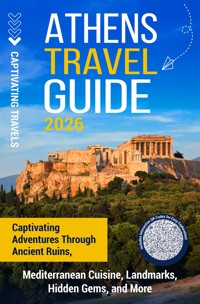
Athens Travel Guide
Captivating Adventures through Ancient Ruins, Mediterranean Cuisine, Landmarks, Hidden Gems, and More
Table of Contents
Title Page
Athens Travel Guide
Introduction
Chapter 1: Preparing for the Journey
Chapter 2: Getting There & Getting Around
Chapter 3: Athens, Ancient & Modern
Chapter 4: Archaeological Ruins
Chapter 5: Mediterranean Cuisine & Markets
Chapter 6: Culture, People & Traditions
Chapter 7: Must-See Landmarks & Historic Sites
Chapter 8: Lesser-Known Finds & Quiet Corners
Chapter 9: Food & Dining Tips
Chapter 10: Sample Itineraries
Chapter 11: Top 20 Landmarks & Activities
Chapter 12: Top 10 Photography Spots & Tips
Chapter 13: Where to Stay & Rest
Chapter 14: Useful Greek Phrases & Tips
Appendix: Where to Find Key Landmarks in This Guide
© Copyright 2025 - All rights reserved.
The content contained within this book may not be reproduced, duplicated, or transmitted without direct written permission from the author or the publisher.
Under no circumstances will any blame or legal responsibility be held against the publisher, or author, for any damages, reparation, or monetary loss due to the information contained within this book, either directly or indirectly.
Legal Notice:
This book is copyright protected. It is only for personal use. You cannot amend, distribute, sell, use, quote, or paraphrase any part, or the content within this book, without the consent of the author or publisher.
Disclaimer Notice:
Please note the information contained within this document is for educational and entertainment purposes only. All effort has been executed to present accurate, up-to-date, reliable, and complete information. No warranties of any kind are declared or implied. Readers acknowledge that the author is not engaging in the rendering of legal, financial, medical, or professional advice. The content within this book has been derived from various sources. Please consult a licensed professional before attempting any techniques outlined in this book.
By reading this document, the reader agrees that under no circumstances is the author responsible for any losses, direct or indirect, that are incurred as a result of the use of the information contained within this document, including, but not limited to, errors, omissions, or inaccuracies.
While every effort has been made to ensure that the information in this guide is accurate and up-to-date, travel details such as prices, operating hours, and visa requirements can change. Travelers are advised to check the latest information from relevant sources before their trip.
Introduction
An aerial view of the Acropolis of Athens.
Athens is a city where ancient ruins sit next to apartment blocks. You will see temples above highways, markets below marble columns, and locals walking past both without stopping. This guide is for travelers who want to see Athens as it is, historic, dense, direct, and alive.
The streets are uneven. Many are narrow. Sidewalks are small. Scooters may ignore traffic signals. Restaurants stay open late. You will smell grilled meat and strong coffee. You will hear church bells and street music. You will walk more than planned.
Most travel guides waste time. This one does not. It shows you what matters, how to get there, and how to avoid delays. It removes the guesswork so you can focus on the experience.
A Short History
Athens has been inhabited since the Stone Age. It became a city-state in the 8th century BCE. In the 5th century BCE, it reached its peak during the Classical period. Democracy was developed. Theater became public. Thinkers like Socrates, Plato, and Aristotle debated in open forums. The Parthenon was built during this time.
Later, Athens fell under Macedonian, Roman, Byzantine, and Ottoman rule. Each empire added layers. Temples became churches, then mosques, then ruins. Greece gained independence from the Ottomans in the early 1830s. Athens became the capital in 1834.
Today, the metropolitan area holds about 3.5 million people. It’s the political and economic center of Greece. It moves fast. It is loud, functional, and lived-in, but it still holds more ancient history per square meter than almost any other place in the world.
The Parthenon temple.
When to Visit
March to early June and mid-September to early November offer the best weather. These months are cooler, less crowded, and easier for walking. Summer is hot and packed. Temperatures can stay above 35°C (95°F). Winter is less busy, but many outdoor sites are less enjoyable in the rain.
National holidays, strikes, and local protests can affect hours and transit. Always check updates before making fixed plans.
What You Will Find in This Guide
Maps for easy navigation.
Full-color images.
QR codes for extra resources
Use this guide to avoid wasting hours, standing in wrong lines, or missing what you came to see. Every section is built to be useful during your trip, from the start. Keep your phone charged. Wear good shoes. Stay aware of your surroundings. Athens rewards those who keep moving.
Administrative map of Athens.
Chapter 1: Preparing for the Journey
Plaka in Athens.
Athens is active and built for walking. Streets are tight, and the city is layered with history, movement, and detail. Planning ahead will help you focus on the experience instead of logistics. This chapter covers what you need to know before arrival, including entry rules, money, language, clothing, and practical tools to carry.
Map of Athens
Entry and Visa Requirements
Greece is a full member of the Schengen Zone, a collective of 29 European countries that have abolished internal border controls. For travelers, this means that once they have entered Greece and passed through the initial border control, they can travel freely to any other Schengen country without undergoing additional passport checks. This unified travel area simplifies movement, but it also means that the entry rules are not unique to Greece; they are part of a harmonized Schengen policy. Therefore, the validity of a traveler's documentation must be assessed based on the broader Schengen regulations, not just those of Greece.
The core principle governing short-term stays for visa-exempt nationals is the "90/180-day rule." This rule permits citizens of countries such as the United States, Canada, the United Kingdom, Australia, and New Zealand to stay within the Schengen Area for a maximum of 90 days within any 180-day period. It is crucial for travelers to understand that this limit is not per country, but for the entire zone. Any time spent in other Schengen countries within the previous 180 days counts toward the 90-day limit. Overstaying this limit can result in serious consequences, including a ban from re-entering the Schengen Area for up to three years. This rule applies to short-term travel for tourism, business meetings, cultural events, and short studies.
Currency and Payments
Greek bagels sold at Ermou Street in Athens.
The local currency is the euro (€). You will use both cards and cash. Larger shops, restaurants, and hotels accept cards. Smaller businesses and kiosks often prefer cash.
ATMs are widely available. For better rates and lower fees, use machines connected to banks rather than standalone units in tourist areas.
Tipping is not required, but rounding up is polite. Leave a few coins in cafés and 5 to 10 percent at restaurants with table service. In taxis, rounding up is enough.
Language
A tourist enjoys the view of the Parthenon.
Greek is the official language in Athens, and English is widely spoken in central areas, especially by younger people and those working in tourism. Outside of the main sites, you may hear little or no English.
Street signs are usually written in both Greek and English. Menus and public notices often follow the same pattern.
Basic Greek phrases will help with small interactions. Locals appreciate effort. A short list of useful words is included in Chapter 14.
Power and Charging
Greece uses Type C and Type F plugs with 230V / 50Hz electricity. These are common across Europe. If you’re coming from outside Europe, bring a plug adapter. Check that your electronics support 220–240V before using them.
Phones and Internet
Free Wi-Fi is common in hotels, restaurants, and many public areas. Speed and reliability vary by location.
For steady internet access, consider buying a local SIM card. Main providers include:
COSMOTE
Vodafone
Nova
Prepaid SIM cards are available at the airport and in city shops. You’ll need your passport to register.
Health and Safety
Visitors explore ancient ruins in Athens.
Athens is a safe city for travelers. Most visits go without problems. The main risk is pickpocketing in busy areas like:
Metro stations (especially Line 1 and Line 3)
Monastiraki Square
Airport buses and crowded trams
Use a bag that closes fully. Keep your phone and wallet secure in front pockets or zipped compartments.
Pharmacies are well-stocked and marked with a green cross. Staff are knowledgeable and often speak English. You can get most common medicines without a prescription. Bring any personal prescriptions in their original packaging.
Tap water is safe to drink in Athens.
For emergencies, call 112 for police, fire, or ambulance. This number works across the EU.
Clothing and Packing
Ensure that you pack all your holiday essentials.
Athens weather depends on the season:
Spring (March to May):
Mild days, cool nights. Light jackets and layers work well.
Summer (June to August):
Hot and dry. Lightweight, breathable clothing is essential.
Autumn (September to November):
Similar to spring. The weather stays warm into October.
Winter (December to February):
Cool and rainy. Bring warmer clothes and a rain layer.
Year-round, bring:
Comfortable walking shoes with solid grip
Light, loose clothing for warm days
One modest outfit for churches or monasteries (cover shoulders and knees)
A light jacket or sweater
Sunglasses, hat, and sunscreen
A small umbrella or rain jacket (especially November–March)
Reusable water bottle (refillable at public fountains)
Power adapter (Type C or F plugs)
Day bag with a zipper
Athens has many staircases, inclines, and cobblestone streets. Choose bags you can carry or roll easily. Avoid oversized luggage if you plan to use public transport or stay in older buildings.
Documents and Essentials
Before you leave, prepare the following:
Passport (valid for at least 3 months past your departure)
Travel insurance confirmation
Flight and hotel bookings (printed or saved offline)
Bank card with international access
Local emergency contacts
Copies of key documents (both digital and printed)




