


1,99 €
Mehr erfahren.
- Herausgeber: Quickie Classics
- Kategorie: Sachliteratur, Reportagen, Biografien
- Sprache: Englisch
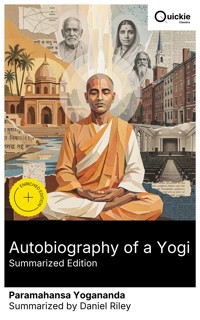
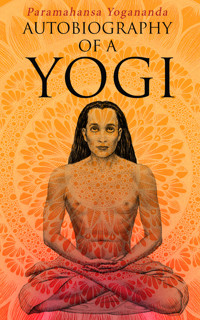
Autobiography of a Yogi traces Yogananda's path from a spiritually ardent youth in India to a world teacher of Kriya Yoga, weaving his meeting with Sri Yukteswar, portraits of saints such as Lahiri Mahasaya and Anandamayi Ma, and visionary episodes into a lucid, devotional narrative. Its prose, alternately anecdotal and analytical, balances humor with metaphysical exposition and seeks to reconcile yogic discipline with modern rationality. Published in 1946, it stands in a transnational modernist milieu, introducing Hindu mysticism to Western readers without sacrificing traditional rigor. Yogananda (1893–1952), shaped by the devotional and reformist currents of the Bengal Renaissance and trained by Sri Yukteswar in the lineage of Lahiri Mahasaya, came to Boston in 1920 as India's delegate to the International Congress of Religious Liberals. He soon founded the Self-Realization Fellowship and lectured across America to a technologically confident yet spiritually searching public. This encounter with Western modernity, joined to rigorous Kriya discipline and a comparative interest in science and scripture, impelled a memoir that would serve as both testimony and method. Recommended to seekers, scholars of religion, and historians of modern yoga, this classic offers an accessible doorway to yogic practice and an enduring map of cross-cultural spirituality. Quickie Classics summarizes timeless works with precision, preserving the author's voice and keeping the prose clear, fast, and readable—distilled, never diluted. Enriched Edition extras: Introduction · Synopsis · Historical Context · Author Biography · Brief Analysis · 4 Reflection Q&As · Editorial Footnotes.
Das E-Book können Sie in Legimi-Apps oder einer beliebigen App lesen, die das folgende Format unterstützen:
Veröffentlichungsjahr: 2026
Ähnliche

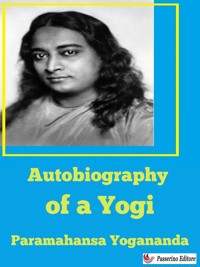




Autobiography of a Yogi (Summarized Edition)
Table of Contents
Introduction
At its heart, Autobiography of a Yogi explores the meeting point between mystical experience and modern inquiry, where inner realization confronts the tests of ordinary life. Paramahansa Yogananda’s classic invites readers into a first-person journey through the disciplines of yoga and the search for a guiding teacher, arranging personal episodes as a lens on universal questions. Without demanding prior belief, it treats spiritual practice as lived experiment, taking seriously both wonder and scrutiny. The result is a narrative that steadily broadens from a youthful longing to a mature vision of service, offering an entry to a tradition while remaining attentive to the contemporary reader’s doubts.
First published in 1946, the book belongs to the tradition of spiritual autobiography, blending memoir, travel narrative, and contemplative exposition. Its settings range from early-twentieth-century India to the United States, tracing a path that mirrors a broader exchange between Eastern and Western approaches to the inner life. As a pioneering teacher of yoga in America, Yogananda frames his experiences within the public cultures of lecture halls, ashrams, and urban audiences, presenting a life that unfolds across continents. The publication emerged at a moment when global spiritual conversation was quickening, and it helped to articulate a vocabulary for that dialogue.
The premise is straightforward and inviting: a young seeker in India pursues a true guru, undertakes disciplined training, and eventually carries a message of yoga to new audiences. The storytelling is intimate and conversational, yet shaped by a deliberate pedagogical impulse; episodes are followed by reflections that connect practice to principle. The tone balances reverence with approachability, combining memorable scenes with patient explanation. Yogananda’s voice is candid about obstacles and aspirations, and he writes with a steady confidence that the methods he describes can be tested in one’s own life. The reading experience is both narrative-driven and quietly instructional.
Central themes emerge with clarity. The guru–disciple relationship appears not as submission but as apprenticeship in freedom, where discipline becomes a conduit for insight. The book presents yoga—especially Kriya Yoga—as a practical science of consciousness aimed at self-realization rather than sectarian identity. It argues for the universality of spiritual truths while honoring the particularity of lineage and method. Episodes of apparent wonder are paired with counsel toward discernment, encouraging readers to weigh experience rather than chase spectacle. Ethical living, devotion, and service function as the ordinary ground of extraordinary awareness, suggesting that inner transformation must be verified in conduct.
A notable thread is the book’s engagement with modernity—its scientific metaphors, its respect for experiment, and its curiosity about how ancient disciplines meet contemporary life. Yogananda writes as a bridge figure who welcomes dialogue across cultures, insisting that interior practice can coexist with rational inquiry. For today’s readers navigating pluralism, the text models a stance that is neither relativistic nor dogmatic: rooted in a tradition yet hospitable to conversation. Its pages offer a vocabulary for mindful attention, energetic health, resilience, and moral clarity without collapsing into self-help formulas, emphasizing steady practice and inward verification over public performance.
Readers who arrive with skepticism will find that the narrative anticipates their questions. Miraculous reports are set alongside matter-of-fact descriptions of habits, study, and effort, so that the extraordinary never eclipses the daily. The prose is measured and courteous, with occasional touches of humor and a consistent patience for explanation. Historical details anchor the account in a particular time while keeping the focus on practices that the author presents as timeless. One can read it as a memoir, a primer on meditation, or a cross-cultural chronicle; in any case, it guides without coercion and persuades through witness rather than argument.
Autobiography of a Yogi endures because it offers a credible path from yearning to disciplined joy, and because it treats spiritual life as something to be lived, tested, and shared. Without presuming any particular background, it proposes that attention, devotion, and ethical steadiness can reorient a human life. For contemporary seekers—religious or secular—the book provides a map and a companionship, showing how interior practice can serve compassion in the world. It is neither an escape nor a spectacle, but an invitation to experiment with awareness. To begin reading is to enter a conversation that continues to renew itself.
Synopsis
Autobiography of a Yogi, first published in the United States in 1946, presents Paramahansa Yogananda’s account of his life and spiritual path while introducing readers to the tradition of Kriya Yoga. The narrative moves from his childhood in India through years of disciplined training and his later mission in the West. Blending memoir with spiritual reportage, he profiles teachers and seekers, comments on meditation and God-realization, and reflects on the relationship between faith and reason. The tone is testimonial yet explanatory, seeking to show how ancient yogic disciplines can be practiced within modern social settings and examined with a spirit of inquiry.
Yogananda recounts being born Mukunda Lal Ghosh in northern India and describes a childhood marked by strong spiritual yearning. Early experiences, including visions and a deep attraction to monastic life, fuel an urgent search for a true guide. Family expectations and formal schooling present a countercurrent, creating tension between worldly responsibilities and inner calling. He narrates formative losses and lessons, portraying adolescence as a period of experiment and resolve. The cityscapes of his youth, along with cultural and devotional practices, become a backdrop against which he tests ideals of renunciation, self-control, and the possibility of direct divine experience.
A significant portion of the early chapters follows his attempts to reach the Himalayas and his encounters with renowned sadhus and yogis. He reports meetings with figures credited with unusual abilities and spiritual insight, framing these episodes as observations rather than proofs. Through them he explores questions of discernment, devotion, and the limits of curiosity. The portraits serve to illuminate diverse paths within India’s spiritual landscape, from rigorous asceticism to inward contemplation within ordinary life. Yogananda presents these stories as lessons in humility and focus, emphasizing discipline over spectacle and suggesting that sincere practice, not marvels, anchors progress.
The narrative culminates in his meeting with his guru, Swami Sri Yukteswar, a decisive threshold that shapes the rest of his life. Under this guidance he enters rigorous training, learning meditation methods and ethical foundations central to Kriya Yoga. The teacher–disciple relationship is presented as both exacting and compassionate, oriented toward inner transformation rather than outward display. Yogananda also introduces a lineage that includes Lahiri Mahasaya and Mahavatar Babaji, placing his practice within a structured tradition. He wrestles with completing college at his guru’s insistence, acknowledging the value of balance between spiritual striving and worldly competence.
Committed to sharing practical techniques, Yogananda establishes a school for boys in Ranchi, integrating modern subjects with a yogic approach to health, concentration, and character. He describes experiments in combining physical, moral, and meditative training, with an emphasis on energization and calmness. Administrative challenges, resource constraints, and community responses are treated as tests of perseverance and adaptability. The school becomes an early model for transmitting yogic principles in an educational setting, reinforcing his belief that spiritual development should enhance, not replace, responsible engagement with daily life. These chapters articulate a pedagogy of self-mastery applied to ordinary duties.
In 1920 Yogananda travels to the United States to address a religious gathering in Boston, an invitation that extends his mission beyond India. He begins lecturing widely, presenting yoga as a universal science of the soul accessible to seekers of any faith. He founds Self-Realization Fellowship to organize lessons, publish materials, and train students in meditation and ethical living. Encounters with scientists, educators, and cultural figures, including the botanist Luther Burbank, illustrate his interest in dialogue between spirituality and empirical inquiry. The narrative highlights both enthusiasm and skepticism, portraying his efforts to translate Indian concepts for Western audiences.
Midway through the story he returns to India, reconnecting with family, disciples, and his guru. He visits prominent leaders, such as Mahatma Gandhi, and travels through spiritual centers to observe diverse practices. The itinerary includes stops in Europe, where he meets the Bavarian mystic Therese Neumann, a figure of intense devotional life. These journeys provide a vantage point for comparing cultures and examining austerity, service, and contemplative balance. Yogananda treats personal milestones as occasions for reflection on loyalty to one’s path and on the continuity of inner guidance, expressing gratitude without insisting that readers accept every account at face value.
The later chapters consolidate his teachings and organizational work, presenting Kriya Yoga as a method for interiorized worship grounded in daily discipline. He discusses moral causation, free will, healing, and the interplay of mind and life energy, framing extraordinary occurrences as natural laws not yet fully understood. Cautioning against credulous fascination, he urges steady practice and ethical clarity. Stories of devotees and colleagues illustrate applications of meditation in work, family, and service. The tone remains instructional: techniques are proposed as means to verify spiritual claims through personal experience rather than reliance on dogma or outward authority.
Closing reflections position the autobiography as a bridge between East and West, arguing for harmony among religions and compatibility between spirituality and reason. Without demanding doctrinal assent, Yogananda invites readers to test ideals of meditation, character, and devotion in their own lives. The book’s enduring significance lies in its accessible portrayal of a disciplined path that promises inward transformation and universal fellowship. By presenting a lineage, a method, and a life dedicated to practice, it offers a sustained argument for the possibility of direct, unifying awareness of the divine, while leaving ultimate conclusions to the reader’s inquiry.
Historical Context
During the late British Raj, Bengal—and especially Calcutta—was a crucible of modern education, publishing, and reform. Born in 1893 in Gorakhpur and raised in Calcutta, Mukunda Lal Ghosh (later Paramahansa Yogananda) came of age amid elite schools, railways, and a rapidly expanding urban middle class. The University of Calcutta, founded in 1857, supplied a credentialed path for aspiring professionals and reformers; Yogananda completed a degree there in 1915 at the urging of his teacher. This milieu of bureaucratic order, English-language learning, and Indian self-renewal furnishes the institutional backdrop for an autobiography that treats spiritual practice as a serious, modern vocation.
Late nineteenth- and early twentieth-century Bengal’s religious-intellectual life was marked by the Brahmo Samaj (1828), the teachings of Ramakrishna (1836–1886), and Swami Vivekananda’s global presentation of Vedanta after 1893. Calcutta’s journals and lecture societies diffused debates about scripture, ethics, and scientific modernity. The Theosophical Society (founded 1875) and other comparative-religion networks fostered cross-cultural curiosity. Simultaneously, Indian scientists such as Jagadish Chandra Bose advanced research from institutions like the University of Calcutta and, from 1917, the Bose Institute. Autobiography of a Yogi emerges from this environment, articulating yoga and Vedanta in universalist terms that resonated with readers schooled in both classical texts and modern science.
The book situates its author in the Kriya Yoga lineage associated with Lahiri Mahasaya (1828–1895) and his disciple Swami Sri Yukteswar (1855–1936), figures active in Bengal and Benares who taught a disciplined, pranayama-centered path within a Hindu devotional and Vedantic framework. Under Sri Yukteswar’s guidance, Mukunda took monastic vows in 1915, becoming Swami Yogananda Giri within the Dashanami (Shankara) order. The narrative’s emphasis on guru–disciple ties, scripture, and daily yogic practice mirrors early twentieth-century efforts to codify yoga as an ethical, meditative discipline, distinguishable from folk asceticism and aligned with reformist currents that stressed sobriety, service, and scriptural literacy.
In 1917 Yogananda founded a residential school at Ranchi that combined academic subjects with yoga, health practices, and character training; from this initiative grew the Yogoda Satsanga Society of India. His how-to-live education paralleled wider experiments in Indian pedagogy, such as Rabindranath Tagore’s Santiniketan (established 1901), which sought to cultivate holistic, culturally grounded learning under colonial rule. The Ranchi project drew on philanthropic networks, volunteer teachers, and inspections required in British India’s educational framework. The book’s accounts of this period reflect a reformist confidence that disciplined, value-based schooling could restore social vitality while remaining compatible with modern science and administration.
In 1920 Yogananda sailed to the United States as a delegate to the International Congress of Religious Liberals in Boston, part of a recognized circuit for Asian religious teachers established after 1893. He soon founded the Self-Realization Fellowship to organize lessons, publications, and public lectures. Throughout the 1920s he toured widely, addressing large audiences in major American cities and establishing centers. In 1925 the fellowship acquired the former Mount Washington Hotel in Los Angeles as its headquarters, anchoring West Coast operations. These developments placed his teaching within the era’s institutional structures of lecture bureaus, mail-order courses, and urban religious clubs.
His American career unfolded amid robust currents of metaphysical religion, including New Thought, Christian Science, and Theosophy, which had strong West Coast constituencies. Restrictive immigration laws—the 1917 Asiatic Barred Zone Act and the Immigration Act of 1924—shaped perceptions of Asian teachers, even as public curiosity about yoga, diet, and physical culture grew. Lecture circuits and civic forums provided platforms during prosperity and the Great Depression alike, and his organization used correspondence lessons to reach dispersed students. The book’s rhetoric of scientific yoga and personal discipline aligns with contemporaneous self-help and mind-cure idioms while presenting a distinct devotional and meditative framework.
From 1935 to 1936 Yogananda visited India, reconnecting with ashrams, family, and students. He met Mahatma Gandhi at Wardha in 1935, a documented encounter illustrating exchanges between spiritual teachers and nationalist leaders concerned with discipline and nonviolence. The period coincided with India’s Civil Disobedience movement and debates over education, village industry, and self-rule. He strengthened Yogoda Satsanga Society’s administration and then returned to the United States to continue his work. The travel narrative portions of the autobiography are framed by this anticolonial era, tracing spiritual lineages while acknowledging the modern political transformations underway in India and the diaspora.
Autobiography of a Yogi was published in New York in 1946 by Philosophical Library, featuring an introduction by the Celtic and Tibetan studies scholar W. Y. Evans-Wentz and a dedication to the American botanist Luther Burbank. Appearing just after World War II, it entered a marketplace newly receptive to comparative religion and personal growth literature. Subsequent printings kept the work in circulation as the author continued lecturing and writing in the United States until his death in 1952. The book reflects its era’s universalist aspirations and confidence in dialogue between spirituality and science, while critiquing sectarianism and the narrow materialism of industrial modernity.
Author Biography
Paramahansa Yogananda (1893–1952) was an Indian spiritual teacher and author whose work helped introduce yoga and meditation to a broad Western audience in the early to mid-twentieth century. Best known for his book Autobiography of a Yogi, he presented Kriya Yoga as a practical path to inner realization, emphasizing meditation, ethical living, and the harmony of spiritual truths across religions. Through public lectures, books, and a worldwide network of study lessons, he built an enduring platform that connected ancient Indic practices with modern seekers. His legacy is closely linked to institutions he founded, which continue to disseminate his teachings globally.
Born in 1893 in India as Mukunda Lal Ghosh, Yogananda showed early interest in spiritual disciplines and in the lives of India’s saints. As a young man he met the revered guru Sri Yukteswar Giri, under whose guidance he deepened his practice and understanding of Kriya Yoga. He completed a bachelor’s degree at the University of Calcutta and, in the mid-1910s, took formal monastic vows, receiving the name Yogananda. His formative influences included classical Hindu texts such as the Bhagavad Gita and the Upanishads, as well as the devotional and yogic traditions of his lineage, which stressed direct personal experience of the divine.
Yogananda began his public work in India by founding a small school in Bengal in 1917, integrating yoga training with a modern academic curriculum. The school soon moved to Ranchi and became the nucleus of Yogoda Satsanga Society of India (YSS), established to preserve and spread his methods of meditation and character formation. He described “Yogoda” as a system for harmonizing body, mind, and soul. From this base he experimented with educational reforms that paired physical culture and introspection with conventional studies, anticipating later interest in holistic education and foreshadowing his broader mission to present practical spirituality for contemporary life.
In 1920 Yogananda traveled to the United States as a delegate to a religious congress in Boston. He soon founded Self-Realization Fellowship (SRF) to organize his work and began extensive lecture tours that drew large audiences in major American cities. During the mid-1920s he established SRF headquarters in Los Angeles, from which he coordinated lessons in Kriya Yoga and published introductory materials, including The Science of Religion. His speaking emphasized the compatibility of scientific inquiry and spiritual practice, and his nonsectarian approach resonated with a public curious about meditation, health, and the psychological benefits of disciplined inner life.
Yogananda’s most famous work, Autobiography of a Yogi (first published in 1946), offered readers an accessible account of India’s yogic heritage and his own path, shaping popular understanding of meditation for generations. He also authored collections such as Whispers from Eternity, Scientific Healing Affirmations, and Songs of the Soul, and he produced extensive commentaries on the Bhagavad Gita and the teachings of Jesus that were circulated through SRF/YSS lessons and later published. His writing combined devotional language with practical instruction, and the Autobiography, in particular, became a widely translated spiritual classic with sustained readership worldwide.
In the mid-1930s Yogananda returned to India, visited centers associated with his lineage, and met prominent figures, including Mahatma Gandhi. During this period his guru conferred on him the honorary monastic title “Paramahansa,” signifying a high degree of spiritual attainment. Back in the United States he continued teaching, consolidating organizational structures and expanding publications. He emphasized the essential unity underlying world religions, often interpreting the Gospels and the Gita as complementary pathways to the same realization. In 1950 SRF opened the Lake Shrine in Southern California, a retreat setting that reflected his vision of quiet, universal devotion and accessible meditation practice.
Yogananda passed away in 1952 in Los Angeles shortly after delivering a public address. In the decades since, SRF/YSS has continued to preserve his lessons, publish his commentaries, and maintain temples and retreat centers. His influence is evident in the widespread acceptance of meditation as a daily discipline, in interfaith dialogues that stress experiential spirituality, and in the global interest in Kriya Yoga. Autobiography of a Yogi remains a touchstone text for many readers, shaping perceptions of yoga beyond physical postures and highlighting a way of life grounded in ethical conduct, inner stillness, and universal fellowship.




