



0,49 €
Mehr erfahren.
- Herausgeber: DigiCat
- Kategorie: Religion und Spiritualität
- Sprache: Englisch
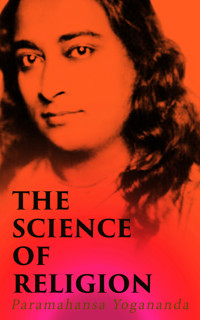
In "The Science of Religion," Paramahansa Yogananda presents a profound exploration of the universal principles underlying the world's spiritual traditions. Yogananda employs a unique blend of philosophical inquiry and practical guidance, offering insights that bridge Eastern spirituality with Western thought. The book is marked by its lyrical prose and contemplative style, inviting readers to delve into the deeper meanings of faith and spirituality. Throughout, Yogananda emphasizes the scientifically verifiable aspects of spiritual experiences, positioning religion not merely as dogma but as a science of human consciousness. Paramahansa Yogananda, a pivotal figure in the introduction of Eastern spirituality to the Western world, was deeply influenced by his own experiences of divine realization and his studies of various religious practices. His seminal work, "Autobiography of a Yogi," laid the foundation for a more comprehensive understanding of spiritual science, where he sought to elucidate the common essence of different religions. Yogananda's life journey, marked by quests for truth, positioned him uniquely to address the paralleled spheres of science and spirituality. This book is highly recommended for readers seeking to enrich their spiritual understanding through a scholarly yet accessible exploration of religion's universal truths. Whether you are a student of philosophy, a seeker of spiritual knowledge, or someone curious about the intersection of science and faith, Yogananda's work offers timeless insights that resonate across cultures and epochs. In this enriched edition, we have carefully created added value for your reading experience: - A succinct Introduction situates the work's timeless appeal and themes. - The Synopsis outlines the central plot, highlighting key developments without spoiling critical twists. - A detailed Historical Context immerses you in the era's events and influences that shaped the writing. - An Author Biography reveals milestones in the author's life, illuminating the personal insights behind the text. - A thorough Analysis dissects symbols, motifs, and character arcs to unearth underlying meanings. - Reflection questions prompt you to engage personally with the work's messages, connecting them to modern life. - Hand‐picked Memorable Quotes shine a spotlight on moments of literary brilliance. - Interactive footnotes clarify unusual references, historical allusions, and archaic phrases for an effortless, more informed read.
Das E-Book können Sie in Legimi-Apps oder einer beliebigen App lesen, die das folgende Format unterstützen:
Veröffentlichungsjahr: 2023
Ähnliche
















The Science of Religion
Table of Contents
Introduction
In a world torn between fervent belief and skeptical inquiry, this work insists that the heart’s highest truths can be approached with the rigor of a science. Paramahansa Yogananda’s The Science of Religion proposes a meeting point where faith and method collaborate rather than compete, inviting readers to test spiritual principles through disciplined experience. The result is a concise manifesto for inner verification: religion as lived experiment, not inherited assertion. Without resorting to polemic, it frames a path that respects tradition while demanding personal evidence, and it sketches a universal language flexible enough to honor diverse creeds yet precise enough to guide practice.
Paramahansa Yogananda, an Indian yogi who came to international prominence in the twentieth century, first arrived in the United States in 1920 to speak at a religious gathering in Boston. In the early 1920s, as he began teaching and lecturing across America, he articulated ideas that would be distilled into The Science of Religion. The book grew out of those talks and reflects his effort to introduce a broad audience to yoga’s philosophical foundations. Published in association with his teaching work and his organization, it presented a concise framework that complemented the practical instruction he offered to students seeking a systematic way to explore the inner life.
At its core, the book advances a simple, audacious premise: beneath the outward forms of the world’s religions lies a common experiential aim, and that aim can be approached through reliable methods. Yogananda delineates the distinction between belief and direct realization, directing readers toward the inner capacities by which spiritual truth becomes personal knowledge. Rather than urging adherence to any sectarian program, he emphasizes principles that illuminate the search for enduring happiness and freedom from suffering. The promise is neither speculative nor anti-intellectual; it is a proposal that spiritual insight is verifiable when approached with discipline, clarity, and ethical intention.
Its classic status stems from both content and timing. Emerging during a formative period for cross-cultural exchange, The Science of Religion helped articulate an accessible bridge between Eastern contemplative traditions and Western habits of inquiry. It argued that reason and devotion need not live in separate rooms. The book’s brevity is part of its power: by presenting a distilled argument, it offered a portable set of ideas that could travel across lecture halls, living rooms, and study groups. This directness gave it unusual staying power, allowing successive generations to return to its thesis without the barrier of dense technical jargon.
Literarily, the book is notable for clear progression of thought, illustrative comparisons across faiths, and confident, measured prose. Yogananda writes as a teacher addressing an audience new to his subject, yet he avoids condescension and avoids needless ornament. The argument moves from universal human motives to practical means, building a ladder of concepts the reader can climb without specialist training. Its rhetoric appeals equally to intuition and logic, balancing warmth with restraint. That blend of tone—steady, lucid, invitational—has made it a touchstone for those seeking language that honors both the head and the heart.
The work also helped establish a vocabulary that later writers in spirituality and comparative religion would adopt: terms such as inner experimentation, universality of religious experience, and method in mysticism gained wider legitimacy through presentations like this. In framing meditation as a disciplined inquiry rather than an esoteric curiosity, it contributed to broader acceptance of contemplative practice in the West. Many contemporary explorations of interfaith understanding, practical mysticism, and the psychology of happiness echo its approach, positioning personal transformation as both experiential and ethically grounded, and drawing on Yogananda’s template for coherence and accessibility.
Within Yogananda’s broader legacy, The Science of Religion functions as an early, foundational statement. It anticipates themes he later expanded for a mass readership, notably in Autobiography of a Yogi, while retaining a unique concision. Readers often encounter it as an entryway: a short, orienting work that clarifies the aims and scope of yoga philosophy before they undertake more extensive studies. Over the decades, it has circulated through lectures, classes, and organizational editions associated with his teaching mission, maintaining its role as a compact charter for a spiritually curious, intellectually serious audience.
Beyond its contribution to yoga studies, the book engages the comparative study of religion by seeking what is shared rather than what divides. Without flattening the rich diversity of faiths, Yogananda posits a common experiential denominator—an inner fulfillment toward which varied paths point. That move neither erases doctrine nor prizes novelty for its own sake; instead, it reframes religious differences as expressions of a deeper unity. In doing so, the book encourages respectful dialogue, providing readers with conceptual tools to appreciate multiple traditions while keeping the focus on transformative experience.
Philosophically, the argument turns on an analysis of motivation—why humans seek happiness, how suffering arises, and what faculties allow us to test claims about ultimate reality. Yogananda treats attention, introspection, and ethical self-discipline as instruments, suggesting that they can be refined and calibrated much like tools in any field of study. This lays a foundation for a disciplined spiritual psychology that avoids the extremes of mere sentiment or sterile abstraction. The result is a framework in which religious life is neither retreat from the world nor capitulation to it, but a method of knowing that reshapes living.
Practically, The Science of Religion points toward meditation and right conduct as the means by which its thesis can be validated. It advocates practice not as blind obedience but as a series of reproducible steps, accessible to sincere seekers regardless of background. By foregrounding method, the book lowers barriers to entry: one need not inherit a particular creed to begin. While it does not attempt to provide an exhaustive manual, it sets expectations and standards for effort, patience, and self-honesty, guiding readers toward a durable discipline that can sustain inquiry over months and years.
The book’s impact also owes much to its portability across contexts—academic, devotional, and personal. It has been read in classrooms exploring global religions, in communities formed around Yogananda’s teachings, and by independent seekers testing its proposals in their own lives. Its continuing presence in print and in study circles attests to the resonance of its central claim: that spiritual truth, while profound, need not be opaque. Rather than resting on authority alone, it invites a partnership between teacher and practitioner, tradition and experience, with accountability on both sides.
Today, The Science of Religion remains strikingly relevant. In an era of information overload and ideological fragmentation, its quiet insistence on testable inner experience offers a humane corrective. It speaks to readers wary of both dogmatism and relativism, proposing a third way grounded in disciplined practice, ethical clarity, and an expansive view of human potential. By articulating a universal aim and practical means, it has secured lasting appeal: a concise classic that continues to guide seekers who wish not merely to believe thoughtfully, but to know responsibly.
Synopsis
The Science of Religion by Paramahansa Yogananda is a concise philosophical treatise that proposes a universal, experiential basis for religion. Addressed to readers shaped by scientific thinking, the book argues that spiritual truth can be approached systematically rather than accepted merely on authority. Yogananda presents religion not as a collection of dogmas but as a practical discipline oriented toward a clear human aim. Throughout, he speaks in comparative terms, seeking common ground among traditions while maintaining that inner experience is decisive. The text unfolds as a reasoned progression from defining religion’s purpose to outlining methods for testing its claims in one’s own life.
Yogananda begins by identifying the fundamental human drive: the search for lasting happiness and freedom from suffering. He distinguishes between transient satisfactions—tied to changeable external conditions—and a durable, higher joy that is independent of circumstance. Religion, he contends, is properly understood as the means to attain this enduring state. By framing the problem in experiential terms, he prepares the argument that religion operates like a science: it sets a goal, proposes methods, and invites verification through practice. This emphasis on results rather than profession of belief reorients the reader toward inner evidence as the measure of spiritual validity.
Having established the aim, the book examines the human instrument through which it must be realized. Yogananda describes the interplay of body, senses, mind, and a deeper conscious reality often termed the soul. He argues that outwardly directed attention fragments awareness and ties well-being to impermanent stimuli, producing dissatisfaction. The remedy, he proposes, lies in the gradual interiorization of attention, calming the mind and drawing energy away from compulsive sensory engagement. This inward shift does not negate the world but alters one’s relation to it, making happiness less dependent on external change and more grounded in direct, stable awareness.
Ethical self-discipline, in Yogananda’s account, forms the necessary foundation for reliable inner experience. He maintains that virtues such as truthfulness, moderation, and nonharm align the mind with clarity, reduce inner conflict, and create conditions in which concentration can deepen. Conversely, clinging to prejudice and mere sectarian allegiance obscures the goal by substituting identity for realization. The book thus positions morality as a functional support rather than an end in itself: an ordered life that steadies the mind and emotions, making them suitable instruments for the methodical exploration of consciousness that constitutes religion’s practical core.




