


35,99 €
Mehr erfahren.
- Herausgeber: John Wiley & Sons
- Kategorie: Fachliteratur
- Serie: Basic Guide Dentistry Series
- Sprache: Englisch
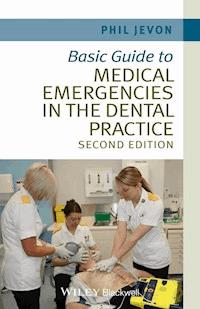
The Basic Guide to Medical Emergencies in the Dental Practice is a must-have book for all dental care professionals and general dentists.
Written in a clear and accessible style, this second edition has been fully revised and updated in line with the latest guidelines. Chapters cover such key topics as the ABCDE approach to patient assessment, resuscitation equipment, respiratory and cardiac disorders, paediatric emergencies, and legal and ethical issues. Readers will also find two brand new chapters on the principles of first aid, and drugs for medical emergencies.
- Follows Resuscitation Council (UK) Guidelines
- Companion website with self-assessment exercises, serving as revision as well as non-verifiable CPD credit
- Over 50% new images
- Student friendly colourful layout with learning outcomes
Sie lesen das E-Book in den Legimi-Apps auf:
Seitenzahl: 337
Veröffentlichungsjahr: 2014
Ähnliche














BASIC GUIDE TO MEDICAL EMERGENCIES IN THE DENTAL PRACTICE
Second Edition
Phil Jevon
RN, BSc (Hons), PGCE
Medical Education, Walsall Healthcare NHS TrustWalsall, UKHonorary Clinical Lecturer (Medicine), University of BirminghamBirmingham, UK
Consulting Editors
Celia Strickland, BDS Dental Practitioner, Staffordshire, UK
Tessa Meese, Lead DCP Tutor, Health Education, West Midlands, UK; Dental Nurse Manager, Birmingham Dental Hospital, Birmingham, UK; Editor-in-Chief, Dental Nursing
Jagtar Singh Pooni, BSc (Hons), MRCP (England), FRCA, Consultant in Anaesthesia & Intensive Care Medicine, New Cross Hospital, Wolverhampton, UK
This edition first published 2014 © 2010 by Phil Jevon 2014 by John Wiley & Sons, Ltd
Registered office: John Wiley & Sons, Ltd, The Atrium, Southern Gate, Chichester, West Sussex, PO19 8SQ, UK
Editorial offices: 9600 Garsington Road, Oxford, OX4 2DQ, UK The Atrium, Southern Gate, Chichester, West Sussex, PO19 8SQ, UK 111 River Street, Hoboken, NJ 07030-5774, USA
For details of our global editorial offices, for customer services and for information about how to apply for permission to reuse the copyright material in this book please see our website at www.wiley.com/wiley-blackwell
The right of the author to be identified as the author of this work has been asserted in accordance with the UK Copyright, Designs and Patents Act 1988.
All rights reserved. No part of this publication may be reproduced, stored in a retrieval system, or transmitted, in any form or by any means, electronic, mechanical, photocopying, recording or otherwise, except as permitted by the UK Copyright, Designs and Patents Act 1988, without the prior permission of the publisher.
Designations used by companies to distinguish their products are often claimed as trademarks. All brand names and product names used in this book are trade names, service marks, trademarks or registered trademarks of their respective owners. The publisher is not associated with any product or vendor mentioned in this book. It is sold on the understanding that the publisher is not engaged in rendering professional services. If professional advice or other expert assistance is required, the services of a competent professional should be sought.
The contents of this work are intended to further general scientific research, understanding, and discussion only and are not intended and should not be relied upon as recommending or promoting a specific method, diagnosis, or treatment by health science practitioners for any particular patient. The publisher and the author make no representations or warranties with respect to the accuracy or completeness of the contents of this work and specifically disclaim all warranties, including without limitation any implied warranties of fitness for a particular purpose. In view of ongoing research, equipment modifications, changes in governmental regulations, and the constant flow of information relating to the use of medicines, equipment, and devices, the reader is urged to review and evaluate the information provided in the package insert or instructions for each medicine, equipment, or device for, among other things, any changes in the instructions or indication of usage and for added warnings and precautions. Readers should consult with a specialist where appropriate. The fact that an organization or Website is referred to in this work as a citation and/or a potential source of further information does not mean that the author or the publisher endorses the information the organization or Website may provide or recommendations it may make. Further, readers should be aware that Internet Websites listed in this work may have changed or disappeared between when this work was written and when it is read. No warranty may be created or extended by any promotional statements for this work. Neither the publisher nor the author shall be liable for any damages arising herefrom.
Library of Congress Cataloging-in-Publication Data
Jevon, Philip, author. Basic guide to medical emergencies in the dental practice / Phil Jevon; consulting editors, Celia Strickland, Tessa Meese, Jagtar Singh Pooni. — Second edition. p. ; cm. Includes bibliographical references and index. ISBN 978-1-118-68883-0 (pbk.) I. Strickland, Celia, editor. II. Meese, Tessa, editor. III. Pooni, J. S. (Jagtar Singh), editor. IV. Title. [DNLM: 1. Dental Care—methods. 2. Emergency Treatment—methods. 3. Emergencies. WU 105] RK51.5 617.6’026—dc23
2013043841
A catalogue record for this book is available from the British Library. Wiley also publishes its books in a variety of electronic formats. Some content that appears in print may not be available in electronic books.
Cover image: courtesy of Phil Jevon Cover design by Workhaus
Contents
Cover
Foreword
Acknowledgements
About the companion website
Chapter 1: An overview of the management of medical emergencies and resuscitation in the dental practice
INTRODUCTION
CONCEPT OF THE CHAIN OF SURVIVAL
INCIDENCE OF MEDICAL EMERGENCIES IN DENTAL PRACTICE
GENERAL DENTAL COUNCIL GUIDELINES ON MEDICAL EMERGENCIES
RESUSCITATION COUNCIL (UK) QUALITY STANDARDS
ABCDE ASSESSMENT OF THE SICK PATIENT
MEDICAL RISK ASSESSMENT IN GENERAL DENTAL PRACTICE
PRINCIPLES OF SAFER HANDLING DURING CARDIOPULMONARY RESUSCITATION
PROCEDURE FOR CALLING 999 FOR AN AMBULANCE
IMPORTANCE OF HUMAN FACTORS AND TEAMWORK
CONCLUSION
REFERENCES
Chapter 2: Resuscitation equipment in the dental practice
INTRODUCTION
RECOMMENDED MINIMUM RESUSCITATION EQUIPMENT IN THE DENTAL PRACTICE
CHECKING RESUSCITATION EQUIPMENT AND DRUGS
CHECKING RESUSCITATION EQUIPMENT FOLLOWING USE
CARE, HANDLING AND STORAGE OF OXYGEN CYLINDERS
CONCLUSION
REFERENCES
Chapter 3: ABCDE: Recognition and treatment of the acutely ill patient
INTRODUCTION
CLINICAL SIGNS OF ACUTE ILLNESS AND DETERIORATION
THE ABCDE APPROACH
GENERAL PRINCIPLES OF THE ABCDE APPROACH
THE ABCDE APPROACH TO THE SICK PATIENT
PRINCIPLES OF PULSE OXIMETRY
PROCEDURE FOR ADMINISTERING OXYGEN TO THE ACUTELY ILL PATIENT
PROCEDURE FOR RECORDING BLOOD PRESSURE
MEDICAL EMERGENCIES IN THE DENTAL PRACTICE POSTER
CONCLUSION
REFERENCES
Chapter 4: Respiratory disorders
INTRODUCTION
MANAGEMENT OF ACUTE ASTHMA ATTACK
MANAGEMENT OF HYPERVENTILATION
MANAGEMENT OF EXACERBATION OF CHRONIC OBSTRUCTIVE PULMONARY DISEASE
PROCEDURE FOR USING AN INHALER
PROCEDURE FOR USING A SPACER DEVICE
CONCLUSION
REFERENCES
Chapter 5: Cardiovascular disorders
INTRODUCTION
MANAGEMENT OF ANGINA
MANAGEMENT OF MYOCARDIAL INFARCTION
MANAGEMENT OF PALPITATIONS
MANAGEMENT OF SYNCOPE
CONCLUSION
REFERENCES
Chapter 6: Endocrine disorders
INTRODUCTION
MANAGEMENT OF HYPOGLYCAEMIA
PROCEDURE FOR BLOOD GLUCOSE MEASUREMENT USING A GLUCOMETER
MANAGEMENT OF ADRENAL INSUFFICIENCY
CONCLUSION
REFERENCES
Chapter 7: Neurological disorders
INTRODUCTION
MANAGEMENT OF A GENERALISED TONIC–CLONIC SEIZURE
MANAGEMENT OF STROKE
MANAGEMENT OF ALTERED LEVEL OF CONSCIOUSNESS
PROCEDURE FOR PLACING A PATIENT IN THE RECOVERY POSITION
SPINAL INJURY
CONCLUSION
REFERENCES
Chapter 8: Anaphylaxis
INTRODUCTION
DEFINITION
INCIDENCE
PATHOPHYSIOLOGY
CAUSES
CLINICAL FEATURES AND DIAGNOSIS
TREATMENT
RISK ASSESSMENT
CONCLUSION
REFERENCES
Chapter 9: Cardiopulmonary resuscitation in the dental practice
INTRODUCTION
RESUSCITATION COUNCIL (UK) AUTOMATED EXTERNAL DEFIBRILLATION ALGORITHM
PROCEDURE FOR CARDIOPULMONARY RESUSCITATION IN THE DENTAL CHAIR
PROCEDURE FOR PERFORMING CHEST COMPRESSIONS
CONCLUSION
REFERENCES
Chapter 10: Airway management and ventilation
INTRODUCTION
CAUSES OF AIRWAY OBSTRUCTION
RECOGNITION OF AIRWAY OBSTRUCTION
SIMPLE TECHNIQUES TO OPEN AND CLEAR THE AIRWAY
USE OF OROPHARYNGEAL AIRWAY
PRINCIPLES OF VENTILATION
TREATMENT OF FOREIGN BODY AIRWAY OBSTRUCTION
CONCLUSION
REFERENCES
Chapter 11: Automated external defibrillation
INTRODUCTION
VENTRICULAR FIBRILLATION
PHYSIOLOGY OF DEFIBRILLATION
FACTORS AFFECTING SUCCESSFUL DEFIBRILLATION
SAFETY ISSUES AND DEFIBRILLATION
PROCEDURE FOR AUTOMATED EXTERNAL DEFIBRILLATION
CONCLUSION
REFERENCES
Chapter 12: Paediatric emergencies
INTRODUCTION
ABCDE ASSESSMENT OF A SICK CHILD
PRINCIPLES OF PAEDIATRIC RESUSCITATION
PLACING A CHILD INTO THE RECOVERY POSITION
MANAGEMENT OF FOREIGN BODY AIRWAY OBSTRUCTION
CONCLUSION
REFERENCES
Chapter 13: An overview of emergency drugs in the dental practice
INTRODUCTION
ADRENALINE
ASPIRIN
GLUCAGON
GLYCERYL TRINITRATE SPRAY
MIDAZOLAM
ORAL GLUCOSE SOLUTION/TABLETS/GEL/POWDER
SALBUTAMOL INHALER
CONCLUSION
REFERENCES
Chapter 14: Principles of first aid in the dental practice
INTRODUCTION
PRIORITIES OF FIRST AID
RESPONSIBILITIES WHEN PROVIDING FIRST AID
ASSESSMENT OF THE CASUALTY
WOUNDS AND BLEEDING
MINOR BURNS AND SCALDS
POISONING, STINGS AND BITES
IMPORTANCE OF RECORD KEEPING
SUMMARY
REFERENCES
Chapter 15: Professional, ethical and legal issues
INTRODUCTION
THE SCOPE OF A DENTAL PROFESSIONAL'S ACCOUNTABILITY
THE FIFTH SPHERE OF ACCOUNTABILITY
LEGAL REQUIREMENTS FOR CONSENT AND ACTING IN A PATIENT'S BEST INTERESTS
DUTY OF CONFIDENCE OWED TO PATIENTS BY DENTAL PROFESSIONALS
CONCLUSION
REFERENCES
Index
End User License Agreement
List of Tables
Chapter 8
Table 8.1
Chapter 15
Table 15.1
Table 15.2
Table 15.3
List of Illustrations
Chapter 1
Figure 1.1 Chain of survival.
Source
: Laerdal Medical Ltd, Orpington, Kent, UK. Reproduced with permission.
Figure 1.2 Ambulance control centre.
Source
: West Midlands Ambulance Service. Reproduced with permission.
Figure 1.3
(a)
Ambulance. Reproduced with kind permission from West Midlands Ambulance Service.
(b)
Paramedic on a motorcycle.
Source
: West Midlands Ambulance Service. Reproduced with permission.
Chapter 2
Figure 2.1 Oropharyngeal airways.
Figure 2.2 Portable suction device.
Source
: Timesco, Basildon, UK. Reproduced with permission.
Figure 2.3 Pocket mask with oxygen port.
Figure 2.4 Self-inflating resuscitation bag with oxygen reservoir and tubing.
Figure 2.5 Oxygen face mask with tubing.
Figure 2.6
(a)
Portable oxygen cylinder (D size) with
(b)
pressure reduction valve and flowmeter.
Figure 2.7 Automated external defibrillator (AED)
(a)
closed,
(b)
open, with
(c)
defibrillation electrodes, a pair of heavy-duty scissors and a razor, and
(d)
adult pads.
Figure 2.8 Automated blood glucose measurement device.
Figure 2.9 Checking self-inflating resuscitation bag.
Chapter 3
Figure 3.1 Administering high concentration of oxygen via a non-rebreathe mask.
Figure 3.2 Measuring capillary refill time.
Figure 3.3 AVPU: scale for assessing level of consciousness.
Figure 3.4 Pulse oximeter.
Figure 3.5 Checking the non-rebreathe mask: with oxygen 12–15 l attached, occlude the valve between the mask and the oxygen reservoir bag, checking that the reservoir bag fills up.
Figure 3.6 Checking the non-rebreathe mask: with oxygen 12–15 l attached, release the pressure on the valve and squeeze the oxygen reservoir bag – it should be empty.
Figure 3.7 Respiratory rate indictor.
Figure 3.8 Mercury sphygmomanometer.
Figure 3.9 Manual blood pressure measurement.
Figure 3.10 ‘Medical Emergencies in the Dental Practice' poster.
Source
: Walsall Healthcare NHS Trust. Reproduced with permission.
Chapter 4
Figure 4.1 British Thoracic Society (2008) guidelines on the management of acute asthma (Reproduced with kind permission).
Figure 4.2 Example of a short-acting beta-2 adrenoceptor stimulant inhaler.
Figure 4.3 Spacer device.
Figure 4.4 Spacer device not available: a plastic or paper cup with a hole in the bottom for the inhaler mouthpiece will suffice (British Medical Association and Pharmaceutical Society of Great Britain, 2013).
Figure 4.5 Management of hyperventilation: reassurance.
Figure 4.6 Using an inhaler: remove the mouthpiece cover from the inhaler.
Figure 4.7 Using an inhaler: at the start of inspiration, ask the patient to press the canister down while he continues to inhale slowly and deeply.
Figure 4.8 Using an inhaler: ask the patient to hold his breath for up to 10 seconds and then to breathe out normally.
Figure 4.9
(a)
,
(b)
Using a spacer device: assemble if necessary.
Figure 4.10 Using a spacer device: remove the cap from the mouthpiece on the inhaler and fit the latter to the spacer device.
Figure 4.11 Using a spacer device: ask the patient to inhale deeply and slowly, then hold his breath for 10 seconds (or as long as it is comfortable).
Chapter 5
Figure 5.1 Glyceryl trinitrate spray.
Figure 5.2 Aspirin 300 mg.
Figure 5.3 Sit the patient down (lay him flat if in shock).
Figure 5.4 British Heart Foundation's ‘Doubt Kills' chest pain awareness campaign (2008). Reproduced with permission.
Figure 5.5 Example of a vagal manoeuvre: ask the patient to attempt to blow the plunger out of a syringe.
Figure 5.6 Dealing with a faint: lay the patient flat and raise the legs.
Chapter 6
Figure 6.1 Glucose 10 mg.
Figure 6.2 Glucagon.
Figure 6.3 Blood glucose measurement device or glucometer.
Figure 6.4 Blood glucose measurement: using the finger-prick device, stab the side of the finger.
Figure 6.5 Blood glucose measurement: wait for the reading to be displayed on the glucometer.
Chapter 7
Figure 7.1 Buccal administration of midazolam.
Source
: ViroPharma. Reproduced with permission.
Figure 7.2 The Stroke Association's FAST guidelines for assessing a patient with a suspected stroke.
Source
: The Stroke Association. Reproduced with permission.
Figure 7.3 Position the arm nearest to the dental practitioner perpendicular to the patient's body with the elbow bent and the hand palm uppermost.
Figure 7.4 The recovery position: grasp the far leg just above the knee and pull it up and roll the patient towards you.
Figure 7.5 The recovery position: tilt the patient's head back to ensure that the airway remains open.
Chapter 8
Figure 8.1 Urticaria.
Source
: From Dr J. Halpern, Consultant Dermatologist.
Figure 8.2 Angioedema.
Source
: From Dr J. Halpern, Consultant Dermatologist.
Figure 8.3 Resuscitation Council (UK) algorithm for the management of anaphylaxis.
Source
: Resuscitation Council (UK). Reproduced with permission.
Figure 8.4 Adrenaline 1:1000 solution (1 mg in 1 ml).
Figure 8.5 Adrenaline 1:1000 pre-filled syringe.
Figure 8.6 EpiPen.
Source
: Meda. Reproduced with permission.
Chapter 9
Figure 9.1 Resuscitation Council (UK) automated external defibrillation algorithm.
Source
: Resuscitation Council (UK). Reproduced with permission.
Figure 9.2 CPR: assess responsiveness – gently shake and shout.
Figure 9.3 CPR: assess for signs of normal breathing – look, listen and feel.
Figure 9.4 CPR: chest compressions.
Figure 9.5 CPR: two-person technique for ventilating using a self-inflating bag.
Figure 9.6 Using the AED: once the AED arrives, switch it on and apply large adhesive electrodes.
Figure 9.7 Using the AED: deliver shock (usually involves pressing a flashing shock button).
Figure 9.8 Using the AED: after delivery of the shock, restart chest compressions immediately as instructed by the AED. Ideally change over the person performing chest compressions.
Figure 9.9 Chest compressions in the dental chair.
Figure 9.10 Chest compression on the floor.
Figure 9.11 Chest compressions: interlock the fingers.
Chapter 10
Figure 10.1 Head tilt, chin lift manoeuvre.
Figure 10.2 Jaw thrust manoeuvre.
Figure 10.3 Suction apparatus.
Figure 10.4 Oropharyngeal airway.
Figure 10.5 Insertion of oropharyngeal airway: estimating the correct size.
Figure 10.6 Insertion of oropharyngeal airway: insert the airway in the inverted position initially.
Figure 10.7 Insertion of oropharyngeal airway: as it passes over the soft palate, rotate the airway through 180 degrees.
Figure 10.8
(a, b)
Barrier devices.
Figure 10.9 While maintaining head tilt and chin lift, pinch the soft part of the patient's nose (use the index finger and thumb of the hand on the patient's forehead), open the patient's mouth and take a normal breath in.
Figure 10.10 Pocket mask.
Figure 10.11 Mouth-to-mask ventilation: take a breath in and ventilate the patient with sufficient air to cause visible chest rise.
Figure 10.12 Self-inflating bag.
Figure 10.13 Patient on the floor: ventilation with a self-inflating bag.
Figure 10.14 Patient in the dental chair: ventilation with a self-inflating bag.
Figure 10.15 Choking: back slaps.
Figure 10.16 Choking: abdominal thrusts.
Chapter 11
Figure 11.1 Ventricular fibrillation.
Figure 11.2 Adhesive pad electrodes.
Figure 11.3 Automated external defibrillation: application of adhesive pad electrodes on the chest.
Figure 11.4 Automated external defibrillation: if shock is advised, shout ‘stand clear' and perform visual check to ensure that all staff are clear.
Figure 11.5 Automated external defibrillation: press shock button.
Chapter 12
Figure 12.1 Paediatric non-rebreathe mask.
Figure 12.2 Suspected bacterial meningitis: the tumbler test.
Source
: Meningitis UK, Registered Charity 1076774. Reproduced with permission.
Figure 12.3 Opening the airway in an infant.
Figure 12.4 Opening the airway in a child.
Figure 12.5 Ventilations using a self-inflating bag.
Figure 12.6 Paediatric face masks.
Figure 12.7 Using an adult pocket mask in an infant (upside down).
Figure 12.8 Paediatric pocket mask.
Figure 12.9 Chest compressions in an infant.
Figure 12.10 Chest compressions in a child:
(a)
one-handed technique;
(b)
two-handed technique.
Figure 12.11 Paediatric AED pads.
Figure 12.12 Treatment of FBAO in an infant: back blows.
Figure 12.13 Treatment of FBAO in a child: back blows.
Chapter 13
Figure 13.1 ‘Emergency Drugs in the Dental Practice' guide.
Source
: Walsall Healthcare NHS Trust. Reproduced with permission.
Chapter 14
Figure 14.1 Treatment of severe bleeding: if possible, raise the injured part of the body above the level of the heart to slow down blood flow to the wound.
Figure 14.2 Treatment of a severe burn: cold running water for at least 10 minutes.
Chapter 15
Figure 15.1 Accountability to whom.
Guide
Cover
Table of Contents
Foreword
Chapter 1
Pages
ix
x
xi
1
2
3
4
5
6
7
8
9
10
11
12
13
14
15
16
17
18
19
20
21
22
23
24
25
26
27
28
29
30
31
32
33
34
35
36
37
38
39
40
41
42
43
44
45
46
47
48
49
50
51
52
53
54
55
56
57
58
59
60
61
62
63
64
65
66
67
68
69
70
71
72
73
74
75
76
77
78
79
80
81
82
83
84
85
86
87
88
89
90
91
92
93
94
95
96
97
98
99
100
101
102
103
104
105
106
107
108
109
110
111
112
113
114
115
116
117
118
119
120
121
122
123
124
125
126
127
128
129
130
131
132
133
134
135
136
137
138
139
140
141
142
143
144
145
146
147
148
149
150
151
152
153
154
155
156
157
158
159
160
161
162
163
164
165
166
167
168
169
170
171
172
173
174
175
176
177
178
179
180
181
182
183
184
185
186
187
188
189
190
191
192
193
194
195
196
197
198
199
200
201
202
203
204
205
206
207
208
209
210
211
212
213
214
215
216
217
218
219
220
221
222
223
224
225
226
227
228
229
230
231
232
233
234
235
236
237
238
239
240
241
242
243
244
Foreword
It is a pleasure to write a foreword for this text which covers a range of medical emergencies in dental practice. It is well laid out, easy to follow and a very useful resource for all members of the dental team and especially helpful for dentists, dental therapists and hygienists and dental nurses. The General Dental Council's Standards for the Dental Team states we should follow the guidance on medical emergencies and training updates issued by the Resuscitation Council (UK), this text conveniently pulls much of that information together into a very readable form.
We never know when these skills may be required. Although we may do everything we can to try to prevent a medical emergency, we have to be vigilant and prepared when looking after our patients. You can be confident in the content of this book as it follows national guidelines and forms a very convenient reference text.
I would encourage all members of the dental team to read this work and also to dip into it periodically for useful reminders. Students and qualified professional groups will find it very useful.
Professor Philip J. LumleyBDS, FDSRCPS, FDSRCS, MDentSc, PhDUniversity of Birmingham School of Dentistry
Acknowledgements
I would like to thank Steve Webb and Mandeep Dhanda, together with the dental staff at Walsall Healthcare NHS Trust, for their help with the images.
I would like to thank Richard Griffith for kindly updating his “Professional, Ethical and Legal Issues” chapter.
About the companion website
This book is accompanied by a companion website:
www.wiley.com/go/jevon/medicalemergencies
The website includes:
50 interactive Multiple-Choice Questions
Powerpoints of all figures from the book for downloading
Chapter 1An overview of the management of medical emergencies and resuscitation in the dental practice
INTRODUCTION
Every dental practice has a duty of care to ensure that an effective and safe service is provided for its patients (Jevon, 2012). The satisfactory performance in a medical emergency or in a resuscitation attempt in the dental practice has wide-ranging implications in terms of resuscitation equipment, resuscitation training, standards of care, clinical governance, risk management and clinical audit (Jevon, 2009).
The Resuscitation Council (UK) (2013) has updated its standards for clinical practice and training in resuscitation for dental practitioners and dental care professionals in general dental practice. All members of the dental team need to be aware of what their role would be in the event of a medical emergency and should be trained appropriately with regular practice sessions (Greenwood, 2009).
The aim of this chapter is to provide an overview of the management of medical emergencies and resuscitation in the dental practice.
LEARNING OUTCOMES
At the end of the chapter the reader will be able to:
Discuss the concept of the chain of survival
Discuss the incidence of medical emergencies in the dental practice
Outline the General Dental Council guidelines on medical emergencies
Summarise the Resuscitation Council (UK) standards
Discuss the principles of safer handling during cardiopulmonary resuscitation (CPR)
Outline the procedure for calling 999 for an ambulance
Discuss the importance of human factors and teamwork in a medical emergency
CONCEPT OF THE CHAIN OF SURVIVAL
Survival from cardiac arrest relies on a sequence of time-sensitive interventions (Nolan et al., 2010). The concept of the original chain of survival emphasised that each time-sensitive intervention must be optimised in order to maximise the chance of survival: a chain is only as strong as its weakest link (Cummins et al., 1991).
The chain of survival (Figure 1.1) stresses the importance of recognising critical illness and/or angina and preventing cardiac arrest (both in and out of hospital) and post-resuscitation care (Nolan et al., 2006):
Early recognition and call for help to prevent cardiac arrest
: this link stresses the importance of recognising patients at risk of cardiac arrest, dialling 999 for the emergency services and providing effective treatment to hopefully prevent cardiac arrest (Nolan
et al
., 2010); patients sustaining an out-of-hospital cardiac arrest usually display warning symptoms for a significant duration before the event (Müller
et al
., 2006).
Early CPR to buy time
and
early defibrillation to restart the heart
: the two central links in the chain stress the importance of linking CPR and defibrillation as essential components of early resuscitation in an attempt to restore life. Early CPR can double or even triple the chances of a patient surviving an out-of-hospital ventricular fibrillation (shockable rhythm) induced cardiac arrest (Holmberg
et al
., 1998, 2001; Waalewijn
et al
., 2001).
Post-resuscitation care to restore quality of life
: the priority is to preserve cerebral and myocardial function and to restore quality of life (Nolan
et al
., 2010).
Figure 1.1 Chain of survival. Source: Laerdal Medical Ltd, Orpington, Kent, UK. Reproduced with permission.
INCIDENCE OF MEDICAL EMERGENCIES IN DENTAL PRACTICE
The incidence of medical emergencies in dental practice is very low. Medical emergencies occur in hospital dental practice more frequently, but in similar proportions to that found in general dental practice (Atherton et al., 2000). With the elderly population in dental practices increasing, medical emergencies in the dental practice will undoubtedly occur (Dym, 2008).
A literature search for published surveys on the incidence of medical emergencies and resuscitation in the dental practice found the following.
Survey of dental practitioners in Australia
A postal questionnaire survey of 1250 general dental practitioners undertaken in Australia (Chapman, 1997) found that:
one in seven (14%) had had to resuscitate a patient;
the most common medical emergencies encountered were adverse reactions to local anaesthetics, grand mal seizures, angina and hypoglycaemia.
Survey of dentists in England
A survey of dentists (Girdler and Smith, 1999) (300 responded) in England found that over a 12-month period they had encountered:
vasovagal syncope (63%) – 596 patients affected;
angina (12%) – 53 patients affected;
hypoglycaemia (10%) – 54 patients affected;
epileptic fit (10%) – 42 patients affected;
choking (5%) – 27 patients affected;
asthma (5%) – 20 patients affected;
cardiac arrest (0.3%) – 1 patient affected.
Survey of dental practitioners in a UK university dental hospital
Atherton et al. (2000) assessed the frequency of medical emergencies by undertaking a survey of clinical staff (dentists, hygienists, nurses and radiographers) at a university dental hospital. The researchers found that:
fainting was the commonest event;
other medical emergency events were experienced with an average frequency of 1.8 events per year;
highest frequency of emergencies were reported by staff in oral surgery.
Survey of dentists in New Zealand
A total of 199 dentists responded to a postal survey undertaken by Broadbent and Thomson (2001) in New Zealand, with the following findings:
Medical emergencies had occurred in 129 practices (65.2%) within the previous 10 years (mean – 2.0 events per 10,000 patients treated under local analgesia, other forms of pain control or sedation);
Vasovagal events were the most common emergencies occurring in 121 (61.1%) practices within the previous year (mean 6.9 events per 10,000 patients treated under local analgesia, other forms of pain control or sedation).
Survey of dental staff in Ohio
A survey of dental staff in Ohio (Kandray et al., 2007) found that 5% had performed CPR on a patient in their dental surgery.
Survey of dentists in Germany
A survey of 620 dentists in Germany (Müller et al., 2008) found that in a 12-month period:
57% had encountered up to 3 emergencies;
36% had encountered up to 10 emergencies;
Vasovagal episode was the most common reported emergency – average 2 per dentist;
42 dentists (7%) had encountered an epileptic fit;
24 dentists (4%) had encountered an asthma attack;
5 dentists (0.8%) had encountered choking;
7 dentists (1.1%) had encountered anaphylaxis;
2 dentists (0.3%) had encountered a cardiopulmonary arrest.
GENERAL DENTAL COUNCIL GUIDELINES ON MEDICAL EMERGENCIES
Standards for the Dental team (General Dental Council, 2013) emphasises that all dental professionals are responsible for putting patients' interests first, and acting to protect them. Central to this responsibility is the need for dental professionals to ensure that they are able to deal with medical emergencies that may arise in their practice. Such emergencies are, fortunately, a rare occurrence, but it is important to recognise that a medical emergency could happen at any time and that all members of the dental team need to know their role in the event of one occurring.
The General Dental Council, in its publication Principles of Dental Team Working (General Dental Council, 2006), states that the person who employs, manages or leads a team in a dental practice should ensure that:
There are arrangements for at least two people available to deal with medical emergencies when treatment is planned to take place;
All members of staff, not just the registered team members, know their role if a patient collapses or there is another kind of medical emergency;
All members of staff who might be involved in dealing with a medical emergency are trained and prepared to deal with such an emergency at any time;
Members of the team practice together regularly in a simulated emergency so they know exactly what to do.
Maintaining the knowledge and competence to deal with medical emergencies is an important aspect of all dental professionals continuing professional development (General Dental Council, 2006). The above guidance has been endorsed by the Resuscitation Council (UK) (2013).
RESUSCITATION COUNCIL (UK) QUALITY STANDARDS
The Resuscitation Council (UK)'s Quality standards for cardiopulmonary resuscitation practice and training: primary dental care (2013) provides guidance and recommendations concerning the management of a cardiac arrest in the dental practice.
Topics covered include medical risk assessment, resuscitation procedures and the use of resuscitation equipment in the dental practice in general dental practice. It also includes topics such as staff training, patient transfer and post-resuscitation/emergency care.
The key recommendations in the statement are that:
Every dental practice should have a procedure in place for medical risk assessment of their patients;
Specific resuscitation equipment should be immediately available in every dental practice (this should be standardised throughout the United Kingdom);
Every clinical area should have immediate access to an automated external defibrillator (AED);
Dental practitioners and dental care professionals should receive training in CPR, including basic airway management and the use of an AED, with annual updates;
Regular simulated emergency scenarios should take place in the dental practice;
Dental practices should have a protocol in place for calling medical assistance in an emergency (this will usually be calling 999 for an ambulance);
All medical emergencies should be audited.
For further information, access the Resuscitation Council (UK)'s website http://www.resus.org.uk/pages/QSCPR_PrimaryDentalCare.htm accessed 4 December 2013).
‘A patient could collapse on any premises at any time, whether they have received treatment or not. It is therefore essential that ALL registrants are trained in dealing with medical emergencies, including resuscitation, and possess up to date evidence of capability'. General Dental Council ‘Scope of Practice' 2013
ABCDE ASSESSMENT OF THE SICK PATIENT
Many people who suffer an out-of-hospital cardiac arrest display warning symptoms for a significant duration before collapse (Müller et al., 2006). These symptoms could include:
chest pain;
dyspnoea (breathlessness);
nausea/vomiting;
dizziness/syncope. (Müller
et al
., 2006)
The Resuscitation Council (UK) (2012) recommends the ABCDE approach to assess the sick patient (see Chapter 3). All dental professionals should be familiar with the approach because, not only will it help them to recognise the warning symptoms which many people exhibit prior to sudden cardiac arrest, but also it will help to establish whether the patient is sick or not. The logical and systematic ABCDE approach to assessing the sick patient incorporates:
airway;
breathing;
circulation;
disability;
exposure.
When assessing the patient, a complete initial assessment should be undertaken, identifying and treating life-threatening problems first, before moving on to the next part of assessment. The effectiveness of treatment/intervention should be evaluated and regular reassessment undertaken. The need to call for an ambulance should be recognised and other members of the multidisciplinary team should be utilised as appropriate so that patient assessment, instigation of appropriate monitoring and interventions can be undertaken.
MEDICAL RISK ASSESSMENT IN GENERAL DENTAL PRACTICE
Although any patient could experience a medical emergency in general practice, certain patients will be at higher risk. It is therefore important to identify these patients by undertaking medical and medication histories. The dental practitioner can then take measures to reduce the chance of a problem arising in dental practice.
History taking
Medical and medication histories should be obtained by the dental practitioner and should not be delegated to another member of the dental team; if a patient completes a health questionnaire it is only acceptable if augmented by a verbal history taken by the dental practitioner (Resuscitation Council (UK), 2012). For some patients, it may be necessary to modify the planned treatment or even refer them for treatment in hospital.
Risk stratification scoring system
A risk stratification scoring system, e.g. the American Society of Anaesthesiologists' classification, should be used routinely by the dental practitioner when assessing a patient for dental treatment, as it may help to identify those patients who are at greater risk of a medical emergency during dental treatment (Resuscitation Council (UK), 2012). It should trigger hospital referral for treatment if a certain level of risk is attained. It has been suggested that a risk stratification could be incorporated into the routine medical history questionnaire so that all patients are risk assessed (Resuscitation Council (UK), 2012).
Up-to-date patient details
It is recommended to update the patient's medical and medication histories on a regular basis (at least annually) or more frequently as required; it may be necessary to liaise with the patient's general practitioner (Resuscitation Council (UK), 2012).
Existing medical problem
Patients with certain existing medical problems are more likely to suffer a medical emergency in the dental surgery:
Angina
: if a patient has frequent episodes of angina following exertion or suffers from angina that is easily provoked, he or she may experience an episode of angina in the dental practice. If the patient suffers from angina episodes caused by anxiety or stress, he may benefit from being prescribed an oral anxiolytic drug, e.g. diazepam, before dental treatment.
Note
: prolonged drug treatment may lead to dependence (British Medical Association and The Royal Pharmaceutical Society, 2013. The patient should be considered at higher risk if he or she has unstable angina, angina episodes at night or has had a recent admission to hospital with angina. For these patients, in-hospital treatment may be prudent (Resuscitation Council (UK), 2012).
Asthma
: an asthmatic patient is more likely to have a severe asthma attack in the dental practice if he or she has had a previous near-fatal asthmatic episode, if he has been admitted to the emergency department with asthma in the previous 12 months, or if he has been prescribed three or more classes of medication, or if he regularly requires beta-2 agonist therapy (British Thoracic Society, 2008).
Epilepsy
: the patient will usually be able to provide the dental practitioner with a good indication of how well his condition is controlled. There is a greater risk of having a fit in the dental practice if his fits are poorly controlled or if his medications have recently been altered. It would be prudent to ascertain the timings of, and precipitating factors for, the patient's last three fits (Resuscitation Council (UK), 2012).
Diabetes
: a patient with Type 1 diabetes (on insulin) is more likely become hypoglycaemic in the dental practice than a patient with Type 2 diabetes (diet or tablet controlled); patients whose diabetes is poorly controlled or who have poor awareness of their hypoglycaemic episodes are more likely to develop hypoglycaemia (Resuscitation Council (UK), 2012).
Allergies
: it is important to ascertain whether the patient has any known allergies, particularly to local anaesthetic, antibiotics or latex. If the patient has a severe latex allergy, use latex-free gloves; he should either be treated in a hospital environment or in a latex-free dental environment where appropriate resuscitation facilities are at hand (Resuscitation Council (UK), 2012).
PRINCIPLES OF SAFER HANDLING DURING CARDIOPULMONARY RESUSCITATION
The Resuscitation Council (UK), in its publication Guidance for Safer Handling during Resuscitation in Healthcare Settings (2009), has issued guidelines concerning safer handling during CPR. Although specifically aimed at hospital staff, the guidelines can be adapted for use when performing CPR in the dental practice. An overview will now be provided. Although the use of slide sheets is recommended when moving the patient, these are not usually available in the dental practice.
Cardiac arrest on the floor
If the patient has collapsed on the floor, e.g. in the waiting room, perform CPR on the floor. If the area has restricted access, consider sliding the patient across the floor.
Ventilation: kneel behind the patient's head ensuring the knees are shoulder-width apart, rest back to sit on the heels and lean forwards from the hips towards the patient's face.
Chest compressions: kneel at the side of the patient, level with his chest, and adopt a high kneeling position with the knees shoulder-width apart; position the shoulders directly over the patient's sternum and keeping the arms straight compress the chest ensuring the force for compressions results from flexing the hips.
Cardiac arrest in the dental chair
Remove any environmental hazards, e.g. mouthwash, dental instrument tray.
Lower the chair into a horizontal position.
Ventilation: to use the mask device, ideally sit on the dentist's stool at the head end of the chair. The person squeezing the bag should stand with their feet in a walk/stand position facing the patient; avoid prolonged static postures.
Chest compressions: ensure the chair is at a height which places the patient between the knee and mid-thigh of the person performing chest compressions; stand at the side of the chair with the feet shoulder-width apart, position the shoulders directly over the patient's sternum and, keeping the arms straight, compress the chest, ensuring the force for compressions results from flexing the hips.
Cardiac arrest in a chair in the waiting room
Lowering the patient to the floor: with two colleagues, slide the patient on to the floor; ideally a third person should support the patient's head during the procedure.
Cardiac arrest in the toilet
Ensure the toilet door is kept open and access maintained.
Lowering the patient to the floor: with two colleagues, slide the patient on to the floor; ideally a third person should support the patient's head during the procedure.
PROCEDURE FOR CALLING 999 FOR AN AMBULANCE
There are many emergency situations in the dental practice which will require an ambulance to be called, e.g. chest pain, difficulty with breathing, anaphylaxis and cardiopulmonary arrest. When calling 999 for an ambulance, the following is a suggested procedure:
If available, obtain the ‘when dialling 999 information card' that will have the dental practice's address, telephone number and any specific instructions or guidelines if the practice is difficult to find. Reading from this card will make it easier for the person calling 999 for an ambulance and will help minimise the risk of incorrect information being given.
Lift the telephone receiver or switch the phone on and dial 999 (when using a telephone in a dental practice it is usually necessary to access an outside line first, e.g. by pressing a specific key or pressing 9).
When the telephone operator answers, he or she will ask which emergency service you require. Tell the operator that you need an ambulance and you will then be connected to the ambulance service. (It is important to remember that 999 (or 112) is used for other emergencies as well such as the fire service, police, mountain rescue, coastguard.)
Once connected to the ambulance service, the ambulance control officer (
Figure 1.2
) will ask you where you would like the ambulance to come to, the telephone number of the phone you are calling from and details of the emergency. Give accurate details of the address or location where help is needed. If there is a recognisable landmark, e.g. famous shop nearby, this information will be helpful. An ambulance or paramedic on a motorcycle will be dispatched (
Figures 1.3a
and
1.3b
).
If appropriate, stay on the line and continue to listen to important advice provided by the ambulance control officer.
Confirm with the senior dental practitioner that an ambulance has been called.
Note the time the 999 call was made.
If possible, ask someone to wait outside the dental practice to attract the attention of the ambulance when it draws near (a patient may be willing to do this).
Figure 1.2 Ambulance control centre. Source: West Midlands Ambulance Service. Reproduced with permission.
(a)
(b)
Figure 1.3(a) Ambulance. Reproduced with kind permission from West Midlands Ambulance Service. (b) Paramedic on a motorcycle. Source: West Midlands Ambulance Service. Reproduced with permission.
It is important to:
stay calm;




