


12,96 €
Mehr erfahren.
- Herausgeber: Paraclete Press
- Kategorie: Religion und Spiritualität
- Sprache: Englisch
Do you long to live the abundant life that Jesus promised his followers? If so, then you will want to weave the threads of beauty, truth, life, and love into the tapestry of your life. When these essentials are each present in some measure in our relationships, ministries, vocations, and life choices, then we are more likely to find ourselves living a good and abundant life with God.
Das E-Book können Sie in Legimi-Apps oder einer beliebigen App lesen, die das folgende Format unterstützen:
Seitenzahl: 195
Veröffentlichungsjahr: 2019
Ähnliche











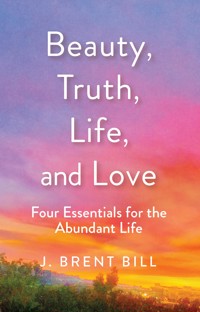
Beauty, Truth, Life, and Love
Four Essentials for the Abundant Life
J. BRENT BILL
2019 First Printing
Beauty, Truth, Life, and Love: Four Essentials for the Abundant Life
Copyright © 2019 by J. Brent Bill
ISBN 978-1-64060-202-1
Scripture quotations marked (NIV) are taken from the Holy Bible, New International Version®, NIV®. Copyright © 1973, 1978, 1984, 2011 by Biblica, Inc.® Used by permission. All rights reserved worldwide.
Scripture quotations marked (NABRE) are taken from the New American Bible, revised edition © 2010, 1991, 1986, 1970 Confraternity of Christian Doctrine, Inc., Washington, DC. All Rights Reserved.
The Paraclete Press name and logo (dove on cross) are trademarks of Paraclete Press, Inc.
Library of Congress Cataloging-in-Publication Data
Names: Bill, J. Brent, 1951- author.
Title: Beauty, Truth, Life, and Love : four essentials for the abundant life / J. Brent Bill.
Description: Brewster, MA : Paraclete Press, Inc., 2019. | Includes bibliographical references.
Identifiers: LCCN 2019019057 | ISBN 9781640602021 (tradepaper)
Subjects: LCSH: Christian life.
Classification: LCC BV4501.3 .B4945 2019 | DDC 248.4—dc23
LC record available at https://lccn.loc.gov/2019019057
10 9 8 7 6 5 4 3 2 1
All rights reserved. No portion of this book may be reproduced, stored in an electronic retrieval system, or transmitted in any form or by any means—electronic, mechanical, photocopy, recording, or any other—except for brief quotations in printed reviews, without the prior permission of the publisher.
Published by Paraclete PressBrewster, Massachusettswww.paracletepress.comPrinted in the United States of America
CONTENTS
AUTHOR’S NOTE
CHAPTER 1
The Ideals Life, or The Abundant Life?
CHAPTER 2
Beauty—Engaging the Divine Spark
CHAPTER 3
Truth—Living in Utter Rightness
CHAPTER 4
Life—Vim, Vigor, and Vivacity
CHAPTER 5
Love—Being Directed by Heart
CHAPTER 6
Weaving Beauty, Truth, Life, and Love into the Tapestry of Life
ACKNOWLEDGMENTS
RESOURCES FOR GOING DEEPER
CHAPTER NOTES
PERMISSIONS
AUTHOR’S NOTE
Throughout the book you’ll find little interludes titled “Beauty Rest,” “Testing for True,” “Life Lines,” and “Love Letters.” These are meant as short timeouts for reflection on what you have just read. They are based on the Quaker tradition of asking spiritual questions that help us personalize how the Spirit is speaking to us through the text and our daily lives. They are meant to help you examine your life and soul and seek clarity as you search for beauty, truth, life, and love while you move through life. There are no “right” answers—just right for you. They are meant as a pause to give you time to look deeply inside and tap into divine insight.
Please take the time to use them in peacefully listening to God’s voice and your own soul in silence. As you contemplate them, allow your mind and soul to fill with words, ideas, or images of beauty, truth, life, and love. If you do, God will gently lead you deeper into the Holy.
CHAPTER 1
The Ideals Life, or The Abundant Life?
I came so that they might have life and have it more abundantly.
—JESUS
Are you living the abundant life?
An abundant life—not an abundance life. There’s a significant difference between the two. Many of us middle-class North Americans are living the abundance life. We have more things than ever. Bigger televisions that grow smarter every day. Technology-laden cars telling us when we’ve drifted out of our lane or applying our brakes when someone in front of us stops suddenly. Computers more powerful than the ones that helped land men on the moon are held in the palms of our hands Yet, for all our stuff, Henry David Thoreau’s nineteenth-century dictum that “the mass of men [and women] lead lives of quiet desperation” is still true.
Despite thousands of books about the good life and countless commercials for products guaranteeing it, Americans are not very happy. A recent survey revealed that the United States was out-happied by Costa Rica—even though our per-capita income is over $47,000 and Costa Ricans earn an average of under $7,000 annually! For all our emphasis on the accoutrements of the good life and our financial ability to obtain them, we Americans don’t even make the top-ten happy list. We come in at number fourteen. The good news is we beat out Malta.
Perhaps our lack of happiness or sense that our lives are less than they could be is because our abundance life is rooted in transient things. A dip in the economy can wipe out a lifetime of savings. Trade wars can raise the cost of goods to unaffordable levels, result in the elimination of jobs, put farmers out of business, and more. Plus, all these televisions, tablets, phones, cars, and clothes are constantly being replaced by new and better ones. Advertising, social media, and the like tell us we must have them. And, judging by our buying habits, we believe it.
My main car (I also have a farm pickup and an antique MG that’s been in our family since it was new) is just over three years old. It has fewer than thirty-five thousand miles on it. It had everything I wanted on it when I bought it. The good people at Nissan, however, keep sending me information about the newest model—and all the improvements it has over my formerly state-of-the-art automobile. I appreciate their looking out for my automobile welfare, but my car is perfectly fine as it is.
The sad thing is, I’m tempted by all the new gadgets. I want those cool improvements.
They won’t, though, bring me the abundant life. When I am silent and still, I realize that the abundant life is a spiritual state of being. The abundance life is an acquisitional way of living.
The abundant life that Jesus came to give us reveals itself in things such as “love, joy, peace, forbearance, kindness, goodness, faithfulness, gentleness and self-control.” A new Nissan, even if it does come with “Intelligent Mobility,” will not give me any of those things. What will bring them is growing into the person God created me to be, doing the work God meant me to do, being in the relationships I am supposed to have, and so on. I believe that the abundant life is found in four essential ideals. They can guide us into the life Jesus promised if we incorporate them into our daily lives. Those four ideals are beauty, truth, life, and love.
I think one reason that we who desire the abundant life miss living it is that we don’t often think about those four things as relating to life of the spirit and faith. I know I don’t—or at least I didn’t. As you’ll see, this is changing for me. Instead we too often consider other things when we think about our work, Christian mission, families, vocations, and relationships. Things such as
• Obligation
• Duty
• Right
• Ought
• Shouldn’t
And so we ask questions such as
• What should I do?
• What duty do I as a person of faith have?
• What’s the best thing?
• What’s the biblical thing?
• What would Jesus do?
The above ideals and questions are not bad. They each have their place in our lives. But they are not the best way to live an abundant life. They leave out the things that bring joy and authenticity to our lives in the Spirit. If we want our spiritual lives to be abundant and full, which is what Scripture tells us they are meant to be, then we need to look for ideals that are deeper and more soul-fulfilling than those of duty, obligation, and Christian correctness.
Beauty, truth, life, and love move us beyond doing life and faith correctly into doing them well. Beauty, truth, life, and love are central to the very essence of the life God desires for us to live. That’s because they are the very essence of God. Yet we often neglect beauty, truth,life, and love as we think about our walk with God. We rarely look for them when we consider what God wants for us.
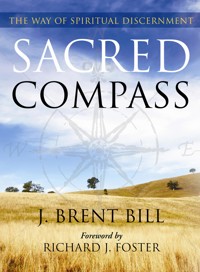
I first began thinking about how beauty, truth, life, and love are essential to faithful living when I was asked to give an address to a gathering of Quakers in Ohio in 2012. Their theme was “Finding Our Way: The Process of Discernment.” Some of the Friends (as Quakers are called) on the planning committee had read my book Sacred Compass: The Way of Spiritual Discernment. In that book, I proposed that a compass makes a good metaphor for our spiritual lives and the work of discerning God’s will. That’s because the life of faith can’t be programmed into a GPS. It’s a meandering pilgrimage along which we may find ourselves wandering. And wondering. Keeping our soul’s eyes on our spiritual compass leads us to the holy discovery that we can move through life abundantly. The abundant life we are invited into is one of continuous experiences of God and of spiritual transformation.
The Friends liked what I wrote but wondered if I had learned anything more about discernment since writing that book. If so, would I be willing to share what I’d learned? As I pondered their request I thought about what life and the Spirit had taught me over the last decade. I practiced the things I wrote in Sacred Compass, but even so, sometimes I still seemed to have missed the discernment boat. Some things had gone—if not wrong—not exactly right.
I spent time examining those times and things. As I looked closely at them, I realized that in each case at least one of four things was missing. These things were beauty, truth, life, and love. In the things that went right, all four were present, albeit in varying degrees. The more of each of the four was present, the better things went vocationally, relationally, and so on. It became obvious to me that beauty, truth, life, and love must be present in some measure in every important facet of my life. If they’re not present, then it’s a clear indication that the task, the relationship, the opportunity is not for me. The task is not mine to do. The relationship will not be healthy. The opportunity, no matter how worthy or attractive, is not for me.
So I said yes to the planning committee and began writing my address. I felt energized by it. Indeed, I felt that beauty, truth, life, and love were all present as my thoughts came together.
Then, just before it was time to give my presentation, I was given the chance to put my thesis to work. To move it from theory to practice. That’s because I found myself leaving a position that I’d held for more than eleven years. That job was extremely well paying, gave me opportunities to travel and work with fascinating people, had a certain amount of prestige, and more. Suddenly it was time to discern what work I was supposed to do next.
As I began seeking, various job offers and suggestions came my way. All the things that came my way, not surprisingly, were positions similar to the one I had just left. I went for some interviews. The job I left, as you’ll learn more about later, had ceased to be life-giving for me and for the organization so long as I was the person holding it. These offers left me cold. I knew I could do them and do them reasonably well. However, they did not make my heart sing.
I prayed. I pondered. Still, as a person quickly approaching retirement, I questioned whether I would dare turn down any position that paid well in exchange for one that fulfilled my new deeper discernment criteria.
Would I really look for beauty, truth, life, and love in what came next?
Or play it safe?
Well, it seemed more than a bit disingenuous at best to stand in front of a group of Quakers and offer them a way into deeper living and not practice that way myself. So, while I continued looking at vocational opportunities, I also began asking if any of those prospective positions fit my new discernment criteria.
None did. And though I can be a non-anxious presence in any number of situations, I was not when it came to the job search. I was hyper-anxious. That’s partly because I’m a problem solver. A fixer. I had a problem, and I wanted to throw all my efforts into fixing it—by finding a job.
Through it all, I kept hearing the words of the old hymn “Jesus Calls Us, O’er the Tumult.” I was certainly in the tumult. The words that continued to come to mind were these:
Jesus calls us from the worship
of the vain world’s golden store,
from each idol that would keep us,
saying, “Christian, love me more.”
Honestly, I’m not certain I could love Jesus more than the “vain world’s golden store.” The latter, however, hadn’t served me so well in living the abundant life, so I decided to trust, to relax a bit, and to follow my search for beauty, truth, life, and love in whatever was to come next.
Shortly after I began waiting and trusting, I received an e-mail from a friend about a position that met all those requirements. I tested each one.
• Was there beauty in it?
• Was it true to who I was?
• Would it be life-giving?
• Did my interest in it come from love?
They were all present. So I applied for the position.
Later that month, at the gathering of Friends where I was to speak and while tweaking the manuscript of my address, I received an e-mail inviting me for an interview for the position. And the adventure began. You’ll hear more about that later too.
This was the beginning of living a truly experimental life of being guided by beauty, truth, life, and love. I soon found that they were guiding me aright both personally and on my pilgrimage to the face of our loving God. I discovered that when they were each present in some measure in my relationships, ministries, vocations, and life choices, then I was more likely to find myself living more abundantly. They fed my soul with the nourishment necessary for me to grow more fully into the person I was created to be.
I don’t claim to have arrived at the perfectly abundant life. I am human and continue to make mistakes … or downright failures. Yet, in many ways, I have a deeper sense of life satisfaction, contentment, and happiness since I’ve sought to live a life of beauty, truth, life, and love.
I believe you will too.
CHAPTER 2
Beauty—Engaging the Divine Spark
Begin with the beautiful, and it leads you to the true.
—FATHER ROBERT BARRON
Beauty: the quality or aggregate of qualities in a person or thing that gives pleasure to the senses or pleasurably exalts the mind or spirit.
—Merriam-Webster Dictionary
I surprised myself by going to the opera one night. It was a first for me as someone who has always mocked, albeit gently, opera as little more than a country-western song that lasts three hours and is sung in a foreign language. Tosca fit those criteria—it was long (two hours and forty-nine minutes instead of two minutes and forty-nine seconds like many country-western songs) and incredibly sad. All the leads die. “There’s blood everywhere,” said the docent gleefully prior to the show. Of course, where it differed was that there was no truck or dog or D-I-V-O-R-C-E. Just death and sadness.
What I didn’t expect, though, was to be so completely drawn in and mesmerized by Tosca. It was beautiful—the sets, the symphony, the singers, the music. Captivating. The time flew by. It was amazing. While I didn’t run out and buy season tickets, you can be sure that I’ll be putting opera on my list of things to do. It was too beautiful an experience not to enjoy again.
T. C. Henley wrote in an essay, “Beauty is a nectar which intoxicates the soul.” Tosca certainly intoxicated my soul—just as beauty moves me in soaring works like opera, Manet’s impressionism, the architecture of the National Cathedral, an Ansel Adams photograph, a finely turned phrase in a novel, and in the everyday experiences of my life.
So why, if I want to live a God-intoxicated life, do I so often forget that beauty is part of my discernment of what God wants me to do with my life? Why is it I rarely ask, What beauty will come to me by doing this? or, What beautiful thing will result from my doing that?
Why Not Beauty? Reason 1
There are a couple of reasons why we forget that beauty is essential to the life of faith. One is that beauty has such a small place in society today—or at least the idea of beauty. We are becoming a society of technocrats and worker bees focused on outcomes. Production. Busyness.
Production is not wrong, in and of itself. I’ve produced a good bit of writing in my life. And that’s been good for me—including good for my soul.
Busyness, though, seems to not allow room for living.
Even education, as arts programs are cut or removed from curriculum offerings, seems more focused on training rather than broadening human experience, including an introduction to beauty.
I admit I often didn’t appreciate every aspect of Music 170—“Music Appreciation”—my first semester at Malone College. My grade in the course attests to that. However, “Music Appreciation” did introduce me to forms of music that I hadn’t previously appreciated. I was more interested at that time in people appreciating my guitar playing in a band and listening to rock and roll than Ravel. The only reason my grade was a passing one was because I got extra credit for ushering at performances of the Canton, Ohio, symphony orchestra.
I found live orchestra music fascinating and much more engaging than the scratched-up LPs I listened to on so-so turntables over inadequate headphones in the college library. As bad as my final grade was, my marks went up after listening to live symphonic music. I now have a wide range of classical, baroque, and modern symphonic recordings and attend concerts when I can. The first preset radio button in my car is set to the local classical station.
Our society urges more toward entertainment than engagement with beauty. While beauty can be entertaining, as Tosca was, it is much more than entertainment. Entertainment occupies our time; beauty fills it with meaning. Beauty contains truth. One of my favorite lines in Ian McEwan’s screenplay of The Children Act is “What is beauty in a poem? It’s more than just lovely sounds, and it has to be saying something that’s true.”
Entertainment can be engaging and mind- and soul-numbing at the same time if it does not have beauty. If it is not true.
This is not to disparage entertainment. Sometimes it’s just what we need. Like the night I was driving home through a winding, hilly road surrounded by deep woods on both sides. As I came around a curve, a huge deer jumped out of the forest and directly into the path of my car. There was no time for me to stop or for the deer to run and so, even though I hit the brakes, I ran into it going about sixty miles per hour. The impact was terrific, throwing the deer up my hood, hoofs skittering across the windshield, over the roof of the car, and back onto the road. I was momentarily deafened by the noise of the collision. I got out and went to look at the deer. It was dead. I walked back to my car to check it out. The roof was scratched and slightly caved in. The hood was a crumpled mess. The entire front end was caved in, with one headlight out and the other pointing in an odd direction. I was shaking like the leaves in the woods around me.
A fellow stopped. “Can I have the deer?” he asked. “Yep,” I said. I knew I didn’t want it. The county sheriff came by. “It looks drivable,” he said of the car. “Gonna head home?” Home was fifty miles northwest of where I was, but since the closest town had no rent-a-car place or hotel, I decided to make the trek. Two hours later—driving by one working fog light, a headlight that wobbled and pointed in all directions whenever I hit a slight irregularity in the road, and my hazard lights flashing—I pulled into my driveway. “Where have you been?” asked Nancy in that pre-cell-phone age. Then she saw the car and me quaking, though not the Quaker type of quaking. “I’ll pour you a glass of wine,” she said. My son Chris came out and looked at the car. “I know just what you need,” he said. And he led me into the family room to watch a show I’d always scoffed at as stupid. South Park. It was stupid. But it was perfect. Just what I needed. I laughed. I enjoyed time with Chris. I stopped obsessing about the deer. At least for a little while.
So, I’m not disparaging entertainment. It has its place in our lives. A prominent place. But not at the price of excluding beauty.
Beauty Rest ___________________________
Relax your body, mind, and spirit.
Take two or three deep breaths.
Put the book down and think about the following slowly and gently.
Which is larger in my daily life—entertainment or beauty? Why is that?
Entertainment can have beauty certainly. I can be entertained by things that are beautiful, such as a well-made film, or a walk through the National Gallery in Washington, DC, or a stroll through the redwoods at Armstrong Redwoods State Reserve in Guerneville, California. Entertaining experiences are enriched by the presence of beauty.
That’s because beauty takes us deeper and provides connection to the best parts of universal human experience. Beauty can break open our hearts and spirits and give us new insights. Think of how seeing a wedding ceremony between two people who you love can bring you to tears—the beauty of their love for each other and the rightness of their coming together in the mystical union of marriage. Think of your own mental catalog of moments or experiences that stunned you with their loveliness. A baby’s smile. Lifelong lovers holding hands. A caregiver tenderly tending to a dying loved one. Such naturally beautiful experiences remind our spirits of the amazing gift of simply being alive in this world of wonder and human connection. These are things that defy commodification and cannot be priced, yet are priceless.
While each of these above may not be outside of our everyday existence, that does not make them any less miraculous or beautiful. We can see that they are blessings beyond belief if we truly stop to consider them. What is that mysterious thing that brings two people, previously strangers to each other, together in the beautiful bond of love? How is it that a human egg and tiny sperm connect and transmit life, and blue eyes, and brown hair, and any other of the amazing genetic transfers to that smiling baby? What is it that moves a caregiver to be so compassionate as a part of her or his profession?




