


35,99 €
Mehr erfahren.
- Herausgeber: John Wiley & Sons
- Kategorie: Geisteswissenschaft
- Sprache: Englisch
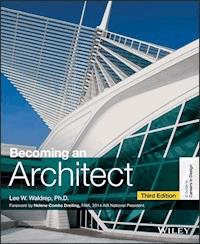
"Becoming an Architect will inspire future architects, career consultants, and human resources professionals alike, providing all the information you'll need to make intelligent decisions about careers in architecture." --From the Foreword by Helene Combs Dreiling, FAIA, 2014 AIA National President Starting a career as an architect is an exciting prospect, but it's important to do your research before you take the plunge. The third edition of Becoming an Architect is an update to the best-selling guide and highlights the risks and rewards on the path to a career as an architect. You'll find new insight and tons of helpful resources, as well as a complete outline of the trajectory of an architect's early career, from higher education through internship and licensure. More than thirty-two new interviews and profiles from architecture students, emerging, and established professionals give the resource a truly personal feel, and help get you acquainted with real-life scenarios from architects from varying backgrounds and specialties. With a highly accessible approach, this guide provides a complete overview of the profession, including educational requirements, design specialties, registration requirements, and the paths of a career in architecture. Whether you're a high school student, a college undergraduate, a career counselor, or a human resource professional, Becoming an Architect offers much-needed advice and information to anyone interested in career development for architects. * Covers recent changes to the Intern Development Program (IDP) * Provides advice on obtaining professional experience while studying to be an architect * Considers career paths in a myriad of work environments, such as government agencies, education, and research * Includes helpful appendixes with resources for further information, such as career-related associations, websites, and recommended reading Obtain a solid introduction to a career as an architect, and plan your own path with the guidance and advice of dozens of others who have already started this process.
Sie lesen das E-Book in den Legimi-Apps auf:
Seitenzahl: 644
Veröffentlichungsjahr: 2014
Ähnliche




















Table of Contents
Cover
Other Titles in the Series
Title Page
Copyright
Dedication
Foreword
Preface
Acknowledgments
Chapter 1: The Definition of an Architect
What Do Architects Do?
Design Process
Why Architecture?
Is Architecture for You?
Profile of the Profession
Notes
Chapter 2: The Education of an Architect
Preparation
Paths to an Accredited Degree
Decision-Making Process
Resources
Application Process
You Are an Architecture Student
Academic Enrichment
Conclusion
Notes
Chapter 3: The Experience of an Architect
Gaining Experience as a Student
Gaining Experience as an Emerging Professional
A.R.C.H.I.T.E.C.T.
Moving toward Licensure
Conclusion
Notes
Chapter 4: The Careers of an Architect
Career Designing
Career Paths
Notes
Chapter 5: The Future of theArchitecture Profession
Sustainability
New Technologies/Social Media
Building Information Modeling (BIM)
New Practices
Integrated Project Delivery (IPD)
Collaboration
Diversity
Globalization
Public Interest Design
Distance Education/Learning
The Future
Notes
Appendix A: Resources of an Architect
COLLATERAL ORGANIZATIONS
Architecture-Related Associations
Associations—Related Careers
Dedicated to Architecture
Community Service
Recommended Reading
Websites
Appendix B: Accredited Architecture Programsin the United States and Canada
Alabama
Alaska
Arizona
Arkansas
California
Colorado
Connecticut
Delaware
District of Columbia
Florida
Georgia
Hawaii
Idaho
Illinois
Indiana
Iowa
Kansas
Kentucky
Louisiana
Maine
Maryland
Massachusetts
Michigan
Minnesota
Mississippi
Missouri
Montana
Nebraska
Nevada
New Hampshire
New Jersey
New Mexico
New York
North Carolina
North Dakota
Ohio
Oklahoma
Oregon
Pennsylvania
Puerto Rico
Rhode Island
South Carolina
South Dakota
Tennessee
Texas
Utah
Vermont
Virginia
Washington
West Virginia
Wisconsin
Wyoming
International
Canada
Appendix C: Career Profiles
More from Wiley
Index
End User License Agreement
Pages
xvi
1
2
3
4
5
6
7
8
9
10
11
12
13
14
15
16
17
18
19
20
21
22
23
24
25
26
27
28
29
30
31
32
33
34
35
36
37
38
39
40
41
42
43
44
45
46
47
48
49
50
51
52
53
54
55
56
57
58
59
60
61
62
63
64
65
66
67
68
69
70
71
72
73
74
75
76
77
78
79
80
81
82
83
84
85
86
87
88
89
90
91
92
93
94
95
96
97
98
99
100
101
102
103
104
105
106
107
108
109
110
111
112
113
114
115
116
117
118
119
120
121
122
123
124
125
126
127
128
129
130
131
132
133
134
135
136
137
138
139
140
141
142
143
144
145
146
147
148
149
150
151
152
153
154
155
156
157
158
159
160
161
162
163
164
165
166
167
168
169
170
171
172
173
174
175
176
177
178
179
180
181
182
183
184
185
186
187
188
189
190
191
192
193
194
195
196
197
198
199
200
201
202
203
204
205
206
207
208
209
210
211
212
213
214
215
216
217
218
219
220
221
222
223
224
225
226
227
228
229
230
231
232
233
234
235
236
237
238
239
240
241
242
243
244
245
246
247
248
249
250
251
252
253
254
255
256
257
258
259
260
261
262
263
264
265
266
267
268
269
270
271
272
273
274
275
276
277
278
279
280
281
282
283
284
285
286
287
288
289
290
291
292
293
294
295
296
297
298
299
300
301
302
303
304
305
306
307
308
309
310
311
312
313
314
315
316
317
318
319
320
321
322
323
324
325
326
327
329
330
331
332
333
334
335
336
337
338
339
340
341
342
343
344
345
346
347
348
349
350
Guide
Table of Contents
Other Titles in the Series
Becoming a Green Building Professional
Holley Henderson
Becoming a Fashion Designer
Lisa Springsteel
Becoming a Graphic Designer, Fourth Edition
Steven Heller, Teresa Fernandes
Becoming a Digital Designer
Steven Heller, David Womack
Becoming a Construction Manager
John J. McKeon
Becoming a Landscape Architect
Kelleann Foster
Becoming an Urban Planner
Michael Bayer, Nancy Frank, Jason Valerius
Becoming an Interior Designer
,
Second Edition
Christine M. Piotrowski
Becoming an Architect
A Guide to Careers in Design
Third Edition
Lee W. Waldrep, Ph.D.
Cover Design: C. Wallace
Front cover image: Quadracci Pavilion, Milwaukee Art Museum courtesy of Lee W. Waldrep, Ph.D.
Back cover images (clockwise from top left): Jay Pritzker Pavilion courtesy of Lee W. Waldrep, Ph.D.; Illustration courtesy of Ashley Wood Clark; The Miller House © Susan Hanes; Smithsonian Donald W. Reynolds Center for American Art and Portraiture courtesy of Bryan Becker
Inside back flap image courtesy of John Myefski, Myefski Architects, Inc.
This book is printed on acid-free paper.
Copyright © 2014 by John Wiley & Sons, Inc. All rights reserved.
Published by John Wiley & Sons, Inc., Hoboken, New Jersey
Published simultaneously in Canada
No part of this publication may be reproduced, stored in a retrieval system, or transmitted in any form or by any means, electronic, mechanical, photocopying, recording, scanning, or otherwise, except as permitted under Section 107 or 108 of the 1976 United States Copyright Act, without either the prior written permission of the Publisher, or authorization through payment of the appropriate per-copy fee to the Copyright Clearance Center, 222 Rosewood Drive, Danvers, MA 01923, (978) 750-8400, fax (978) 646-8600, or on the web at www.copyright.com. Requests to the Publisher for permission should be addressed to the Permissions Department, John Wiley & Sons, Inc., 111 River Street, Hoboken, NJ 07030, (201) 748-6011, fax (201) 748-6008, or online at www.wiley.com/go/permissions.
Limit of Liability/Disclaimer of Warranty: While the publisher and author have used their best efforts in preparing this book, they make no representations or warranties with the respect to the accuracy or completeness of the contents of this book and specifically disclaim any implied warranties of merchantability or fitness for a particular purpose. No warranty may be created or extended by sales representatives or written sales materials. The advice and strategies contained herein may not be suitable for your situation. You should consult with a professional where appropriate. Neither the publisher nor the author shall be liable for damages arising herefrom.
For general information about our other products and services, please contact our Customer Care Department within the United States at (800) 762-2974, outside the United States at (317) 572-3993 or fax (317) 572-4002.
Wiley publishes in a variety of print and electronic formats and by print-on-demand. Some material included with standard print versions of this book may not be included in e-books or in print-ondemand. If this book refers to media such as a CD or DVD that is not included in the version you purchased, you may download this material at http://booksupport.wiley.com. For more information about Wiley products, visit www.wiley.com.
Library of Congress Cataloging-in-Publication Data:
Waldrep, Lee W.
Becoming an architect : a guide to careers in design / Lee W. Waldrep, Ph.D. -- Third edition.
pages cm
Includes bibliographical references and index.
ISBN 978-1-118-61213-2 (pbk.), ISBN 978-1-118-85719-9 (ebk.); ISBN 978-1-118-85738-0 (ebk.)
1. Architecture--Vocational guidance. I. Title.
NA1995.W35 2014
720.23--dc23
2013042097
To Cassidy, Karli, Anslie, and my loving wife, Sherry
To close friends Doug Garofalo, FAIA (1958–2011)
Barbara Laurie, AIA, NOMA (1961–2013)
Foreword
“Education is not the filling of a pail, but the lighting of a fire.”
William Butler Yeats
THE SECOND MOST IMPORTANT WORD in the third edition of Becoming an Architect (“architect” is obviously the first) is “becoming.” Why focus on process rather than the object or goal? Because to strive to be an architect is always a matter of moving forward and beyond, a matter, in short, of becoming. It has to be. Ever since the first human beings climbed down from trees and stepped out of the shadow of caves to build structures of thatch, wood, clay, and stone, the art and science of architecture have evolved in response to technology, cultural imperatives, and climate change. Whatever design and construction skills we brought with us in our journey had to be modified and adapted to the new realities of available materials, site, and weather. This growing body of knowledge then had to be transferred from one generation to the next to keep from literally reinventing the wheel every time we set tool to stone and wood or hand to clay.
The fact that the art and science of architecture is constantly in a state of becoming, of pushing outward at the edges of the known, is the unmistakable handprint of a great irony or paradox: What at first glance seems to be the most static of the arts, upon closer inspection and affection reveals itself as constantly shape-shifting. It becomes, if you will, the most personal, revealing, and lasting signature of the unique values of a culture. In fact, to paraphrase Churchill, architecture shapes cultures and entire civilizations, whether it be the Great Wall of China, the pyramids, or Europe's great cathedrals.
Yet we are not simply passengers headed for new ports. We ourselves are in a state of becoming as our awareness of how little we know drives our thirst to explore and create new knowledge and new ways of applying our maturing skills. This capacity for growth is bestowed on every artist. Consider the early compositions of a Beethoven or the art of Goya or the work of Louis Kahn; compare this to their later or final work. Something profound happens in their “becoming.” Often it is the honing down, the grasp for greater simplicity as vision is refined. The body grows older, but the soul grows lighter; insight becomes more profound. More is accomplished by a few well-wrought lines than protracted arm wrestling with the muse.
Although architecture is a collaborative art (which, thank goodness, is its glory), the endlessly unwinding path to “becoming” can be lonely: It's long past midnight, the screen in front of us is blank, and the client (not to mention our partners) expect a presentation later in the day. Times like these—all too frequent—reveal one of the great strengths of this book, one that's not nearly commented on enough. Within the covers of Becoming an Architect, author Lee W. Waldrep has convened some of the most interesting and eloquent voices in our profession. They respond to the questions you would ask if you could beam them down to your living room, studio, or on a long hike through the woods. You may not agree with everything you read. But let it rest a few months, then go back. After all, you will be in a different place.
When I look back through the rear view mirror of my own career, I am not the architect I was when I was fresh out of architecture school. Whether better or worse, I leave to the judgment of others. But wherever I am going, I know other architects have been there before me. What has varied is the speed of change and the many surprises in its wake—not all of which are welcomed. What hasn't changed is the support, guidance, and, yes, necessary reality checks offered by fellow architects who are on a similar journey of becoming. Men and women who, like me, will be grateful for the companionship of the valuable resource that is Becoming an Architect.
Helene Combs Dreiling, FAIA2014 President of The American Institute of ArchitectsExecutive Director, Virginia Center for Architecture
Preface
IN SECOND GRADE, my career ambition was to become a clown. Only later did I desire to become an architect. One of my older brothers first pursued architecture in college (he later switched to music). A ninth-grade drafting class was my first formal introduction to what I thought was the profession. At the same time, I had the opportunity to meet with an architect in my hometown. In high school, I interned in an architect's office, drafting and making models. All of these experiences helped me decide to pursue architecture in college.
After six years of college, two architecture degrees from Michigan and Arizona State University, a year as national vice president of the American Institute of Architecture Students (AIAS), and three months working in a firm, I decided architecture was not a good fit. However, from my experiences in architecture, I discovered that I wanted to help others in their pursuit of becoming an architect. Thus, the idea for this book has been over 30 years in development.
Becoming an Architect: A Guide to Careers in Design, 3rd edition, will help you navigate the process of becoming an architect. Its purpose is to provide you with an outline of the process: (1) a National Architectural Accrediting Board (NAAB) accredited professional degree in architecture, (2) the experience or internship component (IDP), and (3) the Architect Registration Exam (ARE). Further, it will help you launch your professional career in architecture.
Chapter 1, “The Definition of an Architect,” introduces the basic duties and tasks of an architect. After reading this chapter, you will be better able to decide if you are suited to become an architect. The chapter outlines the basic skills, characteristics, attitudes, motivations, and aptitudes of architects. Finally, it provides a profile of the architecture profession.
Chapter 2, “The Education of an Architect,” outlines the education to becoming an architect. It emphasizes that the education of an architect is lifelong and does not end with the receipt of a formal degree. The first of the chapter's three parts focuses on preparation—the courses and activities you can pursue to prepare for an architectural education. The second part provides insight into selecting an architecture program. It delineates the three paths to graduation with a professional degree program. Further, it outlines the attributes—individual, institution, and academic unit—to consider when selecting a program. The third part of the chapter describes the typical architecture curriculum.
As training is a required element of becoming an architect, Chapter 3, “The Experience of an Architect,” concentrates on gaining experience both while in school and upon graduation. First, it discusses strategies to gain experience while in school through part-time, summer, or cooperative education opportunities; afterward, the chapter outlines gaining experience as an emerging professional. An additional portion uses the acronym A.R.C.H.I.T.E.C.T. in support of the search for positions that provide useful experience. The chapter also provides a basic overview of the Intern Development Program (IDP), a required program in almost all 50 states for documenting your experiences under the supervision of a licensed architect. Further, the chapter introduces the requirements and process of the ARE.
Chapter 4, “The Careers of an Architect,” outlines the career designing process (assessing, exploring, decision making, and planning) and the career paths available to graduates of an architectural education—both those within architectural practice and outside and beyond architecture.
Finally, the Chapter 5, “The Future of the Architecture Profession,” provides insight into the future of the profession of architecture. Terms associated with the future of the profession are outlined and, along with those focused on throughout the book, answer the question, “What do you see as the future for the architecture profession?”
Career profiles of architecture students, emerging professionals, educators, and practitioners appear throughout the book and are a wonderful resource for personal stories. Some profiles highlight the traditional path of an architect within a private architecture firm, while others describe related settings in which an architect might work—corporations, government agencies, and education and research. A series of pointed questions related to the profession and the responses of those individuals profiled are also distributed throughout.
The first of three appendixes lists resources for further information. Note especially the first five associations listed: the American Institute of Architects (AIA), American Institute of Architecture Students (AIAS), Association of Collegiate Schools of Architecture (ACSA), NAAB, and National Council of Architectural Registration Boards (NCARB). Also included are career-related associations and other useful resources, including websites, and recommended reading.
The second appendix lists institutions offering NAAB/Canadian Architectural Certification Board (CACB-CCCA) accredited programs in the United States and Canada. The third appendix lists those students, interns, and professionals profiled in the book.
As you will soon discover, becoming an architect is a satisfying and worthwhile endeavor. Enjoy the process of becoming and being an architect, as it will provide a long and meaningful career path.
Lee W. Waldrep, Ph.D.May 2014
Acknowledgments
WHEN I COMPLETED my doctoral dissertation, I stated that authoring it was the closest I would ever come to designing architecture. This statement remains true, but in terms of work, authoring this book far exceeds writing my dissertation. I still may never design a residence or a skyscraper, but I hope this book helps future architects design their careers.
First, I wish to extend my love and appreciation to my parents, Carl E. and Marsha L. Waldrep, who will never see the results of my labor but were certainly an inspiration to me. Although they both passed while I was a child, they continue to live within me to this day.
Next, and just as important, I would like to acknowledge the support of my family—my wife, Sherry, and my triplet daughters, Cassidy, Karli, and Anslie. Without their willingness to let me escape from family obligations, I would not have completed this project. Now that the book is complete, I am ready to swim in the new pool.
I also wish to express my appreciation to the many students, emerging professionals, educators, and architects profiled throughout this book, many of whom I have known throughout my career (see Appendix C). Without exception, all were more than willing participants to this project and are as much the authors of this book as I am.
Thanks are also extended to Brian P. Kelly, AIA, director of the architecture program and associate professor in the School of Architecture, Planning, and Preservation at the University of Maryland; Michelle A. Rinehart, EdD, assistant dean for academic affairs and outreach in the College of Architecture at Georgia Institute of Technology and David Zach, futurist for all sharing their insights. Additional thanks are extended to Andrea Rutledge, executive director of NAAB, my colleague and friend.
Special kudos to the following individuals: Jenny Castronuovo, who more than assisted me with the collection of images for the first edition of the book; Margaret DeLeeuw, Shawna Grant, Allison Wilson, Robyn Payne, and Deana Moore, who provided insight as the manuscript was being written; and Michal Seltzer, for mocking up a cover design for daily inspiration. Also, I wish to express my appreciation to Dr. Kathryn H. Anthony, a special friend who knows all too well the challenges of authoring a book. My appreciation is also extended to Grace H. Kim, AIA, a friend who first recommended to John Wiley & Sons that I would be a good author for this project. She was also instrumental in providing images.
I wish to express my appreciation to Kathryn Bourgoine, my editor, and Nancy Cintron, senior production editor, both at Wiley, for guiding me throughout the process.
Finally, I wish to thank all the architecture students and colleagues within the architecture discipline with whom I have interacted with over my 20-plus-year career; you have been the reason I so much enjoy my work.
Chapter 1The Definition of an Architect
Newseum, Washington, DC. Architect: Polshek Partnership Architects LLP. Photographer: Lee W. Waldrep, Ph.D
He looked at the granite. To be cut, he thought, and made into walls. He looked at a tree. To be split and made into rafters. He looked at a streak of rust on the stone and thought of iron ore under the ground to be melted and to emerge as girders against the sky. These rocks, he thought, are here for me; waiting for the drill, the dynamite and my voice; waiting to be split, ripped, pounded, reborn, waiting for the shape my hands will give to them.
Ayn Rand, The Fountainhead1
AFTER READING THE PRECEDING TEXT from The Fountainhead by Ayn Rand, what are your thoughts and feelings? Can you relate to the main character, Howard Roark, in this passage? Are you overcome with the possibilities of creating with the materials around you?
Do you want to be an architect? Do you wish to study architecture? If your answer is “Yes” to any of these questions, this book is for you.
What is the definition of an architect? The American Heritage Dictionary of the English Language2 defines architect as:
One who designs and supervises the construction of buildings or other structures.
är-ki-tekt,
n. [MF architecte, fr. L architectus, fr. Gk architekton master builder, fr. Archi- + tekton builder]
Of course, this definition simply scratches the surface. Becoming and being an architect are much more.
What Do Architects Do?
People need places in which to live, work, play, learn, worship, meet, govern, shop, eat—private and public spaces, indoors and out; rooms, buildings, and complexes; neighborhoods and towns; suburbs and cities. Architects, professionals trained in the art and science of building design and licensed to protect public health, safety, and welfare, transform these needs into concepts and then develop the concepts into building images that can be constructed by others.
Lesen Sie weiter in der vollständigen Ausgabe!
Lesen Sie weiter in der vollständigen Ausgabe!
Lesen Sie weiter in der vollständigen Ausgabe!
Lesen Sie weiter in der vollständigen Ausgabe!
Lesen Sie weiter in der vollständigen Ausgabe!
Lesen Sie weiter in der vollständigen Ausgabe!
Lesen Sie weiter in der vollständigen Ausgabe!
Lesen Sie weiter in der vollständigen Ausgabe!
Lesen Sie weiter in der vollständigen Ausgabe!
Lesen Sie weiter in der vollständigen Ausgabe!




