


102,99 €
Mehr erfahren.
- Herausgeber: John Wiley & Sons
- Kategorie: Fachliteratur
- Sprache: Englisch
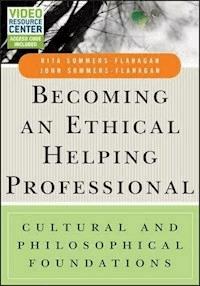
An engaging way to cover ethical choices in counseling settings
This guide will take readers on a wide-ranging tour of ethics—covering both the theoretical and practical aspects of providing sound, ethical care. In addition to invaluable information, this book provides access to chapter objectives, candid case studies, stories from both students and counselors, questions for reflection, and student discussion activities.
Coverage goes beyond a laundry-list approach to rules of conduct, and plumbs the philosophical roots embedded in today's professional codes. Engaging case studies explore how ethical rules and principles apply in various real-world settings and specialties.
After covering ethical philosophies, codes, and standards, Becoming an Ethical Helping Professional further discusses:
- The helping relationship from beginning to end
- Confidentiality and trust
- Boundaries, roles, and limits
- Assessment: peering through the right lens
- Research, efficacy, and competence
John & Rita Sommers-Flanagan have written an exceptional resource that considers both the process and the content of making ethical choices as a counselor or psychotherapist.
Sie lesen das E-Book in den Legimi-Apps auf:
Seitenzahl: 883
Veröffentlichungsjahr: 2015
Ähnliche



















Table of Contents
Title Page
Copyright
Dedication
Acknowledgments
About the Authors
About the Contributors
Preface
Accompanying Video Resource Center to Becoming an Ethical Helping Professional
SECTION ONE: THE FOUNDATION
Chapter One: COUNSELING ETHICS ANDTHE BIG PICTURE
CHAPTER ORIENTATION
DEFINING THE TERMS
THE ROLE OF ETHICS IN THE PROFESSIONS
THE ROLE OF MORALITY IN HUMAN CULTURE
ARE THERE UNIVERSAL MORALS?
GLOBAL HUMAN RIGHTS
MORAL VALUES, RULES, AND PRINCIPLES
PROFESSIONAL IDENTITY: POWER AND PERIL
ATTRIBUTES OF PROFESSIONAL HELPING: COMMON GROUND
PROFESSIONAL ORGANIZATIONS AND ASSOCIATIONS
AND WHO IS THE CLIENT?
CHAPTER WRAP- UP
Chapter Two: PHILOSOPHY AND CULTURE: ROOTS AND PRISMS
CHAPTER ORIENTATION
EXPLORING MORAL PHILOSOPHIES
CHARACTER OR VIRTUE ETHICS
DEONTOLOGICAL ETHICS
UTILITARIAN OR CONSEQUENTIALIST ETHICS
SITUATION ETHICS
THE PRINCIPLES APPROACH
BIOETHICS AND MID- LEVEL PRINCIPLES
ALTERNATIVE CULTURAL VIEWS ON MORALITY AND ETHICS
CHAPTER WRAP- UP
Chapter Three: ETHICS CODES, CODES OF CONDUCT, EMPLOYER POLICIES, AND THE LAW
CHAPTER ORIENTATION
WHY CODES?
FUNCTIONS OF THE CODES
DISTINCTIONS BETWEEN CODES AND LAWS
POLICIES AND PRACTICES
GUIDELINES, CODES OF BEHAVIOR, AND MISSION STATEMENTS
ETHICAL CONSIDERATIONS IN CRISIS COUNSELING
USING ETHICAL PRINCIPLES TO GUIDE CRISIS WORK
CHAPTER WRAP- UP
Chapter Four: PROFESSIONAL IDENTITY DEVELOPMENT: VALUES AND DEFINITIONS
CHAPTER ORIENTATION
THE INTRICACIES OF HELPING
THE INTERSECTION OF MOTIVATIONS AND VALUES
MORAL SENSITIVITY AND CLINICAL CONCERNS
CHOICES ABOUT DISPLAYING VALUES
CARE FOR THE CARING
ANXIETIES THAT ARE (OR SHOULD BE) COMMON TOGRADUATE STUDENTS
BURNOUT AWARENESS AND PREVENTION
WEAVING THE STRANDS TOGETHER
CHAPTER WRAP- UP
SECTION TWO: THE DAY TO DAY CHALLENGES COMMON TO ALL
Chapter Five: THE HELPING RELATIONSHIP: FROM BEGINNING TO END
CHAPTER ORIENTATION
BEFORE THE BEGINNING
INFORMED CONSENT AND INFORMED REFUSAL
THE FIRST SESSION: COMPETENCY AND REFERRAL
WHEN YOUR SKILLS AND CLIENT NEEDS DO NOT MATCH
TECHNOLOGY REARS ITS UGLY (BEAUTIFUL?) HEAD
ENDING WELL
CHAPTER WRAP- UP
Chapter Six: CONFIDENTIALITY AND TRUST
CHAPTER ORIENTATION
CONFIDENTIALITY AND THE THERAPEUTIC RELATIONSHIP
THE LIMITS OF CONFIDENTIALITY AND THEIR EVOLUTION
CATEGORIES OF EXCEPTIONS TO CONFIDENTIALITY
TECHNOLOGY AND THE INTERNET
PARTICULAR POPULATIONS AND CONFIDENTIALITY CONCERNS
PROFESSIONAL RECORD KEEPING
CHAPTER WRAP- UP
Chapter Seven: BOUNDARIES, ROLES, AND LIMITS
CHAPTER ORIENTATION
INTRODUCTION TO ROLES, BOUNDARIES, AND RELATIONSHIP RULES
WHY ALL THE FUSS ABOUT BOUNDARIES AND RELATIONSHIPS?
DISTINCTIVE ASPECTS OF PROFESSIONAL HELPING RELATIONSHIPS
ETHICS CODES AND TERMS
BOUNDARIES, ROLES, TIMING, AND INFORMED CONSENT
PRACTICES AND TECHNIQUES WITH BOUNDARY IMPLICATIONS
ASSESSING POTENTIAL BENEFIT AND HARM
LITTLE COMMUNITIES, BIG BOUNDARIES?
ROMANCE, SEX, LOVE, AND LUST
SEX BEFORE OR AFTER?
CHAPTER WRAP- UP
Chapter Eight: ASSESSMENT, EVALUATION, TESTING: PEERING THROUGH THE RIGHT LENSES
CHAPTER ORIENTATION
THE ROOTS AND NATURE OF ASSESSMENT
THE ABCs OF ETHICAL ASSESSMENT
INFORMAL ASSESSMENT
CLINICAL INTERVIEWING
ASSESSMENT AND SCIENCE
TESTING
FORMAL EVALUATIONS
DIAGNOSIS AND THE DSM SYSTEM
THE PURPOSE OF DIAGNOSIS
THE XYZs OF ETHICAL ASSESSMENT
CHAPTER WRAP- UP
Chapter Nine: COMPETENCE, ACCOUNTABILITY, AND RESEARCH: HOW WE KNOW WHAT WE SHOULD KNOW
CHAPTER ORIENTATION
COMPETENCE: YOU'LL KNOW IT WHEN YOU SEE IT?
DEFINING THE MINIMAL BOUNDARIES OF COMPETENCE
SPECIALTIES, SPECIALIZATION, AND COMPETENCE
ONGOING COMPETENCE AND SELF- ASSESSMENT
COMPETENCE, ACCOUNTABILITY, AND RESEARCH EVIDENCE
COUNSELING AND PSYCHOTHERAPY OUTCOMES RESEARCH
SEARCHING FOR COMPROMISE: EVIDENCE- BASED PRACTICE PRINCIPLES
ETHICAL CONCERNS IN RESEARCH AND PUBLICATION
CHAPTER WRAP- UP
SECTION THREE: SPECIFIC SPECIALTIES AND PROFESSIONAL IDENTITIES
Chapter Ten: COUNSELING IN THE SCHOOLS
CHAPTER ORIENTATION
PROFESSIONAL SCHOOL COUNSELING
WHY ARE SCHOOL COUNSELING ETHICS SO CHALLENGING?
CONFIDENTIALITY: A COMMON CONUNDRUM
INFORMED CONSENT(S): AN INCREASINGLY IMPORTANT PRACTICE
LEGAL CONCERNS
MULTIPLE RELATIONSHIPS: MANY HATS, ONE SCHOOL
HOT COUNSELING TOPICS AND CONCERNS
CAREER COUNSELING AND COLLEGE GUIDANCE
DIVERSITY ISSUES
WORKING ETHICALLY WITH GROUPS IN SCHOOLS
AN ETHICAL DECISION- MAKING MODEL FOR SCHOOL COUNSELORS
CHAPTER WRAP- UP
Chapter Eleven: PSYCHOTHERAPY, MENTAL HEALTH COUNSELING, AND CAREER COUNSELING
CHAPTER ORIENTATION
MENTAL HEALTH COUNSELING: ROOTS AND DIRECTIONS
DISTINGUISHING AND COMMON FEATURES AMONG MENTAL HEALTH PROFESSIONS
ISSUES IN AGENCY AND INDEPENDENT PRACTICE
ETHICAL CONCERNS IN CAREER COUNSELING
CHAPTER WRAP- UP
Chapter Twelve: MORE SPECIALTIES: FAMILIES, COUPLES, REHABILITATION, ADDICTIONS, PASTORAL
CHAPTER ORIENTATION
INTRODUCTION: WHY THESE SPECIALTIES?
COUPLE AND FAMILY THERAPY
REHABILITATION COUNSELING
ADDICTIONS COUNSELING
PASTORAL COUNSELING
BEYOND SPECIALTY
CHAPTER WRAP- UP
Chapter Thirteen: TEACHING, MENTORING, SUPERVISION
CHAPTER ORIENTATION
ALPHA, OMEGA: BEGINNING AND END
MORAL PHILOSOPHY AND PROFESSIONAL ELDERHOOD
TEACHING: THE TRANSFORMING FORCE OF KNOWLEDGE
SUPERVISION: UNDERGIRDING AND OVERSIGHT
CHAPTER WRAP- UP
Epilogue
A LIFE-LONG BALANCING ACT
NO ONE IS PERFECT
BEST PRACTICES AND LIKELY CONCERNS
A FOND FAREWELL
References
Appendix A: Universal Declaration of Human Rights
PREAMBLE
Author Index
Subject Index
About the Video Resource Center
WHAT'S AVAILABLE AT THE VIDEO RESOURCE CENTER
Video Resource Center
End User License Agreement
Pages
xvii
xix
xxi
xxii
xxiii
xxiv
xxv
1
3
4
5
6
7
8
9
10
11
12
13
14
15
16
17
18
19
20
21
22
23
24
25
26
27
28
29
30
31
32
33
34
35
36
37
38
39
40
41
42
43
44
45
46
47
48
49
50
51
52
53
54
55
56
57
58
59
60
61
62
63
64
65
66
67
68
69
70
71
72
73
74
75
76
77
78
79
80
81
82
83
84
85
86
87
88
89
90
91
92
93
94
95
96
97
98
99
100
101
102
103
104
107
109
110
111
112
113
114
115
116
117
118
119
120
121
122
123
124
125
126
127
128
129
130
131
132
133
134
135
136
137
138
139
140
141
142
143
144
145
146
147
148
149
150
151
152
153
154
155
156
157
158
159
160
161
162
163
164
165
166
167
168
169
170
171
172
173
174
175
176
177
178
179
180
181
182
183
184
185
186
187
188
189
190
191
192
193
194
195
196
197
198
199
200
201
202
203
204
205
206
207
208
209
210
211
212
213
214
215
216
217
218
219
220
221
222
223
224
225
226
227
228
229
230
231
232
233
235
236
237
238
239
240
241
242
243
244
245
246
247
248
249
250
251
252
253
254
255
256
257
258
259
260
261
262
263
264
265
266
267
268
269
270
271
272
273
274
275
276
277
278
279
280
281
282
283
284
285
286
287
288
289
290
291
292
293
294
295
296
297
298
299
300
301
302
303
304
305
306
307
308
309
310
311
312
313
314
315
316
317
318
319
320
321
322
323
324
325
326
327
328
329
330
331
332
333
334
335
336
337
338
339
340
341
342
343
344
345
346
347
348
349
350
351
352
353
354
355
356
357
358
359
360
361
362
363
364
365
366
367
368
369
370
371
372
393
373
374
375
376
377
378
379
380
381
382
383
384
385
386
387
388
389
390
391
392
Guide
Cover
Table of Contents
Preface
SECTION ONE: THE FOUNDATION
Begin Reading
List of Tables
Chapter Ten: COUNSELING IN THE SCHOOLS
Table 10.1: The Transformed School Counselor Role
Becoming an Ethical Helping Professional
CULTURAL AND PHILOSOPHICAL FOUNDATIONS
RITA SOMMERS-FLANAGAN JOHN SOMMERS-FLANAGAN
This book is printed on acid- free paper.
Copyright © 2015 by John Wiley & Sons. All rights reserved.
Published by John Wiley & Sons, Inc., Hoboken, New Jersey.
Published simultaneously in Canada.
No part of this publication may be reproduced, stored in a retrieval system, or transmitted in any form or by any means, electronic, mechanical, photocopying, recording, scanning, or otherwise, except as permitted under Section 107 or 108 of the 1976 United States Copyright Act, without either the prior written permission of the Publisher, or authorization through payment of the appropriate per- copy fee to the Copyright Clearance Center, Inc., 222 Rosewood Drive, Danvers, MA 01923, (978) 750-8400, fax (978) 646- 8600, or on the web at www.copyright.com. Requests to the Publisher for permission should be addressed to the Permissions Department, John Wiley & Sons, Inc., 111 River Street, Hoboken, NJ 07030, (201) 748- 6011, fax (201) 748- 6008.
Limit of Liability/Disclaimer of Warranty: While the publisher and author have used their best efforts in preparing this book, they make no representations or warranties with respect to the accuracy or completeness of the contents of this book and specifically disclaim any implied warranties of merchantability or fitness for a particular purpose. No warranty may be created or extended by sales representatives or written sales materials. The advice and strategies contained herein may not be suitable for your situation. You should consult with a professional where appropriate. Neither the publisher nor author shall be liable for any loss of profit or any other commercial damages, including but not limited to special, incidental, consequential, or other damages.
This publication is designed to provide accurate and authoritative information in regard to the subject matter covered. It is sold with the understanding that the publisher is not engaged in rendering professional services. If legal, accounting, medical, psychological or any other expert assistance is required, the services of a competent professional person should be sought.
Designations used by companies to distinguish their products are often claimed as trademarks. In all instances where John Wiley & Sons, Inc. is aware of a claim, the product names appear in initial capital or all capital letters. Readers, however, should contact the appropriate companies for more complete information regarding trademarks and registration.
For general information on our other products and services please contact our Customer Care Department within the U.S. at (800) 762- 2974, outside the U.S. at (317) 572- 3993 or fax (317) 572- 4002.
Wiley also publishes its books in a variety of electronic formats. Some content that appears in print may not be available in electronic books. For more information about Wiley products, visit our website at www.wiley.com
Note about Photocopy Rights: The publisher grants purchasers permission to reproduce handouts from this book for professional use with their clients.
Library of Congress Cataloging- in- Publication Data:
Sommers- Flanagan, Rita, 1953-
Becoming an ethical helping professional : cultural and philosophical foundation / by Rita Sommers- Flanagan, John Sommers- Flanagan.
p. cm.
ISBN 978-1-119-08496-9 (paper)
ISBN 978-1-119-08787-8 (ePDF)
ISBN 978-1-119-08792-2 (ePub)
1. Human services personnel—Professional ethics. 2. Human services—Moral and ethical aspects. 3. Counselors—Professional ethics. 4. Counseling—Moral and ethical aspects. I. Sommers- Flanagan, John, 1957- II. Title.
HV10.5.S65 2007
174'.9361—dc22
2006011099
Dedication
To those seeking help, to those offering help, and to all who refuse to simplify that interaction.
Acknowledgments
We owe many debts of gratitude to colleagues, friends, critics, and family members. We thank our contributing authors—you'll find their voices peppered here and there in the text. Tracey Belmont deserves credit for bothering us about this idea for years, finally starting the process that made it real. Lisa Gebo stepped in as our senior editor at a critical time, adding her warmth and wisdom to the mix. The rest of the incredible workforce at John Wiley and Sons also deserve our thanks, especially Isabel Pratt, Katherine Willert, and Judi Knott, who were always ready with supportive answers. Editors Susan Dodson and Sarah Sunderland were also very helpful.
Our friend and mentor, Deni Elliott, started us down the philosophical road (lo those many years ago) and provided essential guidance and support. Our reviewers all offered challenging and excellent ideas. We appreciated their efforts. We couldn't really ask Liz Welfel to review, since we are now officially competitors, but her ongoing devotion to ethics and her vision for how things could be will always provide inspiration to us.
Noah Kastelowitz- Leiberman is a video- making protégé with skill and style that we appreciate enormously and that will take him far. Our students and colleagues featured in the videos, Mika Watanabe- Taylor, Brenda C. Binkerd, John McKay, Monica Carlson Roscoe, Deanne Bell, Nilda Bishop, Mehrdad Kia, and A.J. Johnson were all wonderful, and most generous with their time, insight, and good humor. Thanks, too, to Connie and Ross Keogh for moral and technological support.
Our families continued to support our writing with grace and love, even when weddings, holidays, graduations, college choices, and book deadlines ended up all stirred together like a big pot of family stew. We are indeed fortunate to live (together) through such interesting times.
Rita and John Sommers- Flanagan
About the Authors
Rita and John Sommers- Flanagan have been helping professionals for over 30 years. They currently serve as full- time faculty members in the Counselor Education program at the University of Montana. Trained most recently as clinical psychologists, they have held and currently hold a number of helping positions that provide them with insight into the many dimensions involved in helping relationships. Rita has held positions as a rehabilitation counselor, disabled student advisor, director of a Big Brother Big Sister program, acting director of UM's Ethics Center, and director of Women's Studies. She is also certified as a school counselor. John has held positions as a recreation therapist, psychologist in private practice, and executive director of a community parenting education organization. Both currently work as mental health consultants at Trapper Creek Job Corps.
Drs. Sommers- Flanagan provide continuing education training workshops nationally and internationally. They are the authors of Clinical Interviewing, in its third edition, and the popular Counseling and Psychotherapy Theories in Context and Practice: Skills, Strategies, and Techniques, as well as four other applied texts. They live in Missoula, Montana and enjoy gardening, parenting, writing, teaching, and considering the deep and ethical meanings of life.
About the Contributors
Nancy Bodenhorn is an Assistant Professor at Virginia Tech in Blacksburg, Virginia where she teaches School Counseling, Multicultural, and Ethics classes, and coordinates the school counseling program. She was a school counselor for twenty years in the U.S., in Thailand, and in Belgium. She maintains her professional and personal wellness with regular tennis games, music, laughter, and friendships.
Tim Bond BA (Hons), CQSW, Cert Ed, PhD is a Reader in Counselling and Professional Ethics in the Graduate School of Education, University of Bristol. He has written extensively on professional ethics for counselling and the caring professions. He has been actively involved in ethical development in the British Association for Counselling and Psychotherapy since the mid 1980s and was chair of the association from 1994–1996. He is a member of the Executive Council of the International Association for Counselling. His other major interests concern research ethics, particularly in the social sciences. He continues to work as a counsellor in a small private practice.
Mary Alice Bruce is an Associate Professor at the University of Wyoming where she coordinates the school counseling program. As a Fulbright Senior Scholar in Guatemala, she worked with school counselors as well as conducted cross- cultural studies on women's spirituality. Currently, she is a member of the CACREP 2008 Standards Revision Committee and cochair of the ACA International Committee. When not engaged in academia, yoga as well as cross country skiing and snowshoeing in the Rocky Mountains with her husband, children, family and friends offer fun times.
Aida Hutz is an Assistant Professor in Counselor Education at the University of Montana. She was born in Brasil and spent much of her early childhood there, and currently maintains family and personal connections there. She completed her doctoral studies at the University of Northern Arizona. Her research and writing interests include multicultural issues and counseling process variables.
Joyce Jarosz Hannula teaches Educational Psychology at Montana State University and Psychology and Advanced Placement Psychology at Bozeman Senior High School. She is first generation Ukrainian- American, and has recently been able to reconnect with her Ukrainian family members. Her work with high school and college students consistently wins her strong praise and she is the recipient of many teaching honors and awards.
Cathy Jenni began her sojourn into qualitative research when, at age 5, she began asking questions about the meaning of people, flowers, storybooks, religious statues, her Springer Spaniel Satan, and far- away cultures. She received her training in phenomenological research from Andy Giorgi and as a result has enjoyed many journeys into the inner experiencing of research subjects, students, clients, and friends. She is currently working on the absence of the body in contemporary traditional psychotherapy approaches.
Mika Watanabe- Taylor, MA is a Disability Services Coordinator at the University of Montana- Missoula. She is currently pursuing a doctoral degree in Education at the university. She also coordinates the summer program for youth with disabilities for transitioning from high school to postsecondary settings. She has been recognized for her leadership in the American Counseling Association and was the 2004 president of the Montana Counseling Association.
Preface
There are many ironies in writing a textbook, not the least of which is that the preface is written last. Maybe if we had written the preface first, this book would not have taken us on quite so many adventures. Not that we're complaining; we've been on some grand excusions and we are excited to share them with you. We've dug around in musty old philosophy texts, bemoaning things like Artistotle's gender problems, Kant's apparent rigidity, and the short shrift given to Joseph Fletcher. We've traveled a long ways back in time, and taken quick trips around this increasingly small planet we all call home to try and deepen the dialogue among the cultures. We've boldly (rashly?) waded into the middle of the helping turf wars: There are specialty and professional identity conundrums with no easy answers.
And the result? This text is appropriate (and important) for anyone considering a career in the helping professions. Not all professional helpers provide the traditional 50- minute hour of counseling or therapy—and those who do also provide other forms of helping. However, all professional helpers engage in the creation and maintenance of helping relationships that have therapeutic potential. We use the words counselor, therapist, mental health professional, and helper interchangeably, believing that the shared ethical domain is greater than the sum of the distinctions.
When we began this project, we had to ask ourselves a question you might be asking as well: Why another ethics text in the helping professions? There are a number of excellent texts already. Why is this one necessary or unique? We wrote it because we believe the gap between the theories about right and wrong and the application of helping skills has grown dangerously wide. We wrote it because most of us claim to value multicultural skills and awareness but often fail to exert the energy necessary to grasp other worldviews. Ethics (morality/right- and- wrong) is a central strand in our own and other worldviews. It isn't always easy to wrestle with this material. It is not comfortable to face our own ignorance, confusion, and biases, but it is the right thing to do.
Some who reviewed this text were concerned that graduate students would be unhappy with or resistant to the thinking required in parts of this book. Others worried that faculty might not be familiar with some of the material and therefore be intimidated. We can understand these reservations, but in our experience, graduate students and faculty are deeply concerned about our callings as professionals. These callings include developing the kind of wisdom and depth necessary to reach meaningfully across cultures and practices. In this book, we give faculty and students alike permission to explore new realms of thought—to consider controversial or foreign concepts together. At the same time, we've structured the book so this material can be minimized or even temporarily shelved without omitting any of the more pragmatic ethical concerns inherent in professional development.
Another valid criticism is the fact that we do not include all possible moral theories, and we do not rank the theories in terms of utility or perfection. What we hope to provide is exposure and ample food for thought. We are not proposing that helping professionals declare their allegiance to one moral philosophy, but rather that they become much more aware of the complexities in the ongoing evolution of ethical thought and behavior.
Because sometimes ethical material is so challenging, we've made liberal use of our hallmark almost- free associations, down- to- earth examples, and sometimes questionable senses of humor. Some will find this refreshing; others may use less complimentary descriptions. There is a method to our madness: Ethical concerns are everywhere and occasionally, it is just fine to, as our daughters say, CHILL! and just meander in the mundane or mull the outlandish.
Books like this one usually move through time in the form of newer editions. Even now, you can expand your sense of professional identity by entering into a dialogue with us. We would love to hear every reader's reactions throughout the book and are especially interested in feedback on the risks we have taken by including both intellectually challenging material as well as an irreverent writing style.
After an orientational first chapter, Chapter 2 provides a reader- friendly synopsis of moral philosophy and offers overviews of significantly divergent ethical worldviews. Chapter 3 specifically addresses the development of codes and standards and practice, and Chapter 4 rounds out this section by considering values as they interact with ethics. We hope these foundations will accompany the reader as the text moves into Chapters 5–9, covering the core ethical challenges in the helping relationship: confidentiality, boundaries, assessment, and competence.
In the final section of the book, Chapters 10–13, we write about specialties within the helping professions. With current lifespan expectancies, no one could live long enough to make use of all the specialty coverage this text provides. However, even if readers never, in their wildest dreams, consider trying to offer pastoral or addictions counseling, knowing what these fellow helpers face and what is expected ethically of them helps all of us broaden our grasp of the many facets of helping and mental health care. We also provide a short epilogue about the dynamics and practicalities of ethical misbehavior.
Our intention has been to write a book that is philosophically palatable and sophisticated, clinically sensitive, and personally meaningful and challenging. To this end, we've:
supplied code quotes, practical applications, and clinical examples;
included current topics, such as human rights and ethical concerns in crisis work;
allowed ourselves to digress and reflect aloud (hoping to prod readers to do the same);
convinced some of our most interesting colleagues to say a few words;
and offered diversity concerns that move beyond the usual, overused examples.
Ethical practices evolve and hopefully improve with time and deliberate attention. More than ever, we realize that becoming ethical helpers is a lifelong interactive process greatly enhanced by soul- searching, frank debate, and intellectual integrity. We hope this book contributes to these endeavors.
Accompanying Video Resource Center to Becoming an Ethical Helping Professional
New copies of Becoming an Ethical Helping Professional come with an access code for the Video Resource Center (VRC). We created this VRC to offer readers live and interactive perspectives on ethical considerations in professional helping. We believe that it is profoundly important to listen to persons from diverse backgrounds, life experiences, and philosophical positions in order to gain empathy and wisdom. Our intention in making the videos was to create a conversational tone as together we consider common historic philosophical positions in ethics. We also hoped to bring thoughtful experts directly into your world, allowing you to listen in as they consider the cultural dynamics of ethical lives. We hope that you find the VRC thought-provoking, instructive, and entertaining.
SECTION ONE
THE FOUNDATION
Chapter OneCOUNSELING ETHICS ANDTHE BIG PICTURE
Let us toast twice. First to the older generation: May your days come to be many, full of comfort and understanding. May they be spent knowing that those days past have held a completeness uncommon and unknown to many, and that every detail of your beings continues in the lives of those who follow.
To the younger: May we accept these gifts, knowing that they are of this tradition, of this old- fashioned courage, of ethics, and that they can be carried along forever like rusting relics, or they can be worn as wings.
Let us wear them as wings.
—Terry Tempest Williams
CHAPTER ORIENTATION
To be perfectly honest (which we are compelled to be since this is an ethics text) we know this chapter and the next will present you with challenges, ideas, and material not commonly included in your run- of- the- mill applied ethics text. And we are not apologizing for this, although we will be very understanding if you contact us or complain to your instructor that you find little relevance in learning to pronounce deontological or nonmaleficence. We hope that by the end of this text, you will agree with us that this material is worth the time and brain expansion necessary to absorb a bit of it. For now, our overall explanation is this: We love our profession and believe it has a central role to play in the future health and well- being of many societies. Professional helping entails a powerful interaction that can be of great benefit or great harm. For the sake of our profession, those we serve, and the future nature of those interactions, we ask you to bear with us and delve thoughtfully into the content in these first two chapters. You are the next generation of practicing professionals and, knowingly or by default, you will shape the ethics and professional identities of future helping professions. As Alasdair MacIntyre (1998b) said, “Understanding the world of morality and changing it are far from incompatible tasks” (p.2).
This chapter explores applied and philosophical connections between morals, ethics, principles, and values, and concludes by linking this inquiry to your professional identity as a counselor. You will be considering:
the definitions of the words ethics and morals;
the role of ethics in the professions;
the role of morality in human culture;
the concept of universal morals;
Lesen Sie weiter in der vollständigen Ausgabe!
Lesen Sie weiter in der vollständigen Ausgabe!
Lesen Sie weiter in der vollständigen Ausgabe!
Lesen Sie weiter in der vollständigen Ausgabe!
Lesen Sie weiter in der vollständigen Ausgabe!
Lesen Sie weiter in der vollständigen Ausgabe!
Lesen Sie weiter in der vollständigen Ausgabe!
Lesen Sie weiter in der vollständigen Ausgabe!
Lesen Sie weiter in der vollständigen Ausgabe!
Lesen Sie weiter in der vollständigen Ausgabe!
Lesen Sie weiter in der vollständigen Ausgabe!
Lesen Sie weiter in der vollständigen Ausgabe!
Lesen Sie weiter in der vollständigen Ausgabe!
Lesen Sie weiter in der vollständigen Ausgabe!
Lesen Sie weiter in der vollständigen Ausgabe!
Lesen Sie weiter in der vollständigen Ausgabe!
Lesen Sie weiter in der vollständigen Ausgabe!
Lesen Sie weiter in der vollständigen Ausgabe!
Lesen Sie weiter in der vollständigen Ausgabe!
Lesen Sie weiter in der vollständigen Ausgabe!
Lesen Sie weiter in der vollständigen Ausgabe!
Lesen Sie weiter in der vollständigen Ausgabe!




