


Erhalten Sie Zugang zu diesem und mehr als 300000 Büchern ab EUR 5,99 monatlich.
- Herausgeber: Pocket Essentials
- Kategorie: Geisteswissenschaft
- Sprache: Englisch
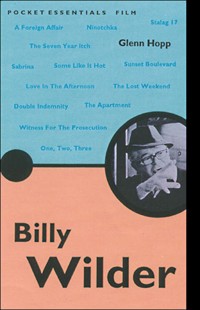
A bullet-riddled body floats in the pool of a faded screen star. A desperate wife and a crafty insurance man mix lust with murder. Two musicians flee Prohibition gangsters by joining an all-girl band. A likeable loser climbs the corporate ladder by pimping for his bosses. Only in the skewed world of Billy Wilder would such situations provide the context for classic cinema: Sunset Boulevard, Double Indemnity, Some Like It Hot, and The Apartment. Over a career longer than that of any other celebrated film-maker, Wilder has co written and directed an enduring body of work noted for its range, intelligence, wit, and bracing, if off-kilter, morality. A master of many genres, the six-time Oscar winner has given the world classic comedies (Ninotchka, The Seven Year Itch), romances (Sabrina, Love In The Afternoon), and dramas (The Lost Weekend, Stalag 17). Even movies once dismissed as failures (Ace In The Hole; Kiss Me, Stupid) now attract admiring fans. Examine the many sides of Billy Wilder: writer, producer, director, quipster, iconoclast, mensch. What's in this book? As well as an introductory essay, each of Wilder's Hollywood films is individually reviewed and analyzed. The reference section assesses books on Wilder. Don't end up with the fuzzy end of the lollipop or the squeezed-out tube of toothpaste! Discover a great filmmaker-or get to know him even better.
Sie lesen das E-Book in den Legimi-Apps auf:
Seitenzahl: 184
Veröffentlichungsjahr: 2016
Das E-Book (TTS) können Sie hören im Abo „Legimi Premium” in Legimi-Apps auf:
Ähnliche




















Billy Wilder
A bullet-riddled body floats in the pool of a faded screen star. A desperate wife and a crafty insurance man mix lust with murder. Two musicians flee Prohibition gangsters by joining an all-girl band. A likeable loser climbs the corporate ladder by pimping for his bosses. Only in the skewed world of Billy Wilder would such situations provide the context for classic cinema: Sunset Boulevard, Double Indemnity, Some Like It Hot, and The Apartment. Over a career longer than that of any other celebrated film-maker, Wilder has co written and directed an enduring body of work noted for its range, intelligence, wit, and bracing, if off-kilter, morality. A master of many genres, the six-time Oscar winner has given the world classic comedies (Ninotchka, The Seven Year Itch), romances (Sabrina, Love In The Afternoon), and dramas (The Lost Weekend, Stalag 17). Even movies once dismissed as failures (Ace In The Hole; Kiss Me, Stupid) now attract admiring fans. Examine the many sides of Billy Wilder: writer, producer, director, quipster, iconoclast, mensch.
What's in this book? As well as an introductory essay, each of Wilder's Hollywood films is individually reviewed and analyzed. The reference section assesses books on Wilder. Don't end up with the fuzzy end of the lollipop or the squeezed-out tube of toothpaste! Discover a great filmmaker-or get to know him even better.
Praise for The Pocket Essential Billy Wilder
'Glenn Hopp writes authoritatively and analytically...' - Sunday Telegraph
'Pocket Essentials embody the axiom that it's possible to distill all the vitals of a topic into a short, cheap volume. Hopp captures Wilder's fizzy cocktail of mittel-European sceptic and hard-boiled hustler' - Audiencemag.com
Billy Wilder: A Certain Amount Of Charm
Billy Wilder is telling a story, something he does very well. He’s in a seminar at the American Film Institute, talking about how he works with actors. Shortly before shooting began on The Apartment, Wilder says, he and his writing partner I A L Diamond needed to replace one of the leads. The nature of the role made it desirable to cast someone who was likable but who would also be convincing when revealed to be a cad. “We looked at each other,” Wilder explains, “and both said simultaneously: ‘Fred MacMurray!’ Same intonation. ‘Fred MacMurray!’”
MacMurray wasn’t so sure. ‘I can’t do it,’ Wilder quotes MacMurray as saying. ‘I can’t play a man who’s got an illicit love affair in the apartment of one of my employees with the elevator girl and at Christmas yet.’ MacMurray wanted to protect a lucrative contract he had with Walt Disney for a series of family films in which he would play, as Wilder tells it, “that meshuggene professor with the Volkswagen.” MacMurray voiced his objections (“They would never forgive me! I’m through! I’m finished!”), and then Wilder attempted to change MacMurray’s mind: “That took twenty minutes. Everything is possible if you’ve just got a certain amount of charm.”
Charm is a useful byword for the career of Billy Wilder. His films often explore the charm of innocence and the charm of corruption, or to put it more precisely, the charm of corruption for the innocent and the charm of innocence for the corrupt. The director does not regard cloistered virtue as being very photogenic, but tainted virtue is another thing entirely. In his most serious dramas, characters who have compromised and corrupted themselves in tragic ways—like Joe Gillis in Sunset Boulevard and Chuck Tatum in Ace In The Hole—undertake too late to reclaim their integrity. In his comedies, characters whose desires are represented by the corruptions of worldly compromise and easy comfort—like Bud Baxter in The Apartment, Harry Hinkle in The Fortune Cookie, John Pringle in A Foreign Affair—relinquish their spoils and return gladly, if a bit stained, to the integrity they previously had no use for. Virtue becomes its own, more appreciated reward and vice its own punishment. Since the 1930s, Wilder’s cinematic charm has been making audiences accept some unconventional truths and root for some unlikely heroes.
Perhaps Fred MacMurray also sensed that Wilder is one of Hollywood’s anti-Disneys. A Wilder project, redeemed though it was by the charm of its writing and direction, nonetheless often addressed a subject in a way that offended the keepers of the status quo. This, of course, may simply be another way of saying that Wilder puts his directorial charms and exploration of innocence and corruption to the service of a realist’s vision while Disney prefers the eye of fantasy. The realist is usually the one whose work elicits the sharp intake of breath from the audience when they sense that things may not be the way they appear on the surface. As Wilder’s character Barry Detweiler, a Hollywood producer, says in Fedora: “Sugar and spice, and underneath that—cement and stainless steel.” It’s a bracing recipe, one that usually allows Wilder to adhere to his cardinal rule of film-making: “Don’t bore people, which is a very, very difficult thing... If you have anything worthwhile saying better be very sure it is wrapped in chocolate so they will swallow it.”
If in some ways Billy Wilder is an anti-Disney, what would a trip be like to Wilderland, that imaginative theme park based on the spirit of his films? It would, at least superficially, be eclectic. Wilder made films in every genre of his day except the western. He made the pioneering film noir in 1944, Double Indemnity, which also starred Fred MacMurray (playing a killer, the role that first made him fret about the safety of his career). What came to be the staples of that genre—hard-bitten voice-over narration, a dangerous femme fatale, urban landscapes shrouded in darkness both photographically and morally—are all on display in this landmark movie. Wilder made the first film that took a realistic look at alcoholism (The Lost Weekend), one of the first POW films (Stalag 17), and a handful of films in various shades of light and dark that might be labeled ‘fairy tales for adults.’
Beyond these differences in genre, Wilder’s films are unified by a fascination with the comic and dramatic possibilities of disguise and deception. These disguises may be physical or psychological, intentional or unintentional. In an often-reprinted essay that first appeared in Film Comment, Stephen Farber points out that in Wilder’s films relationships initially made for convenience can unexpectedly produce genuine affection, just as the shrewdness and wit required to swindle or exploit can win the director’s approval. Farber states an important irony when he writes that ‘deception is, in some twisted way, the one truthful, respectable act in the Wilder universe.’
Contrarian
Wilderland may also be characterized as much by what is absent as by what turns up. There is no self-pity, no sentimentalizing, no triteness, nothing saccharine. Wilder’s brand of realism groups him with a particular type of author. It is not the stylistic realism of slice of life but rather a realism that questions assumptions. Imagine that throughout literary history there had been a society of like-minded writers named the Iconoclastic Authors League. Billy Wilder would be a member in good standing in this club of idol smashers—and not just because the group’s initials match those of his long-time writing partner, I A L Diamond.
What names would appear on the roster of this heretical club? The founder might well be Euripides, the classical Greek dramatist whose play Medea fought received notions of male superiority and male smugness. Other literary iconoclasts in this group would be Voltaire, Jonathan Swift, George Eliot (really Mary Ann Evans masking herself with a male pseudonym), Mark Twain, Henrik Ibsen (whose dying words were “on the contrary”), and Bernard Shaw. One of Shaw’s most quotable observations could even serve as the group’s catchphrase: “All great truths begin as blasphemies.” The contentious phrasing is something that only a true iconoclast would devise. Few will notice that Shaw does not claim all blasphemies become great truths but rather that you cannot find a great truth that did not come into the world overturning conventions and making people angry.
More importantly, Shaw’s remark discloses the moral credentials of the Iconoclastic Authors League. The irony of many of these writers, Wilder included, is that they do not challenge conventional thinking simply to ruffle Disneyesque feathers, however satisfying that may be. Scratch an iconoclast, and you will often find a particular type of moralist, someone who recognizes the difference between morality and moral superiority. Iconoclastic thinking knows that conformity stultifies. Real human growth and insights become possible only after one is freed from the trappings of social convention. These moralists in horns cherish the insights gleaned from the rejection of conformity partly because such truths are hardwon.
Mensch
In spite of his acerbic, crusty reputation, Wilder has often been described as a moralist or even a romantic at heart. Under their astringent surface, his films consistently reveal a life-affirming quality. An attentive look at his movies should document both Wilder the idol smasher and Wilder the moralist. One of the best expressions of his voice of conscience appears in The Apartment. Jack Lemmon plays Bud Baxter, an accountant at an insurance company who has been lending his apartment to various married executives as a place to take their girlfriends. Bud’s next-door neighbor, Dr Dreyfuss, hears what goes on through the walls and mistakenly thinks that Bud is a party-loving Casanova. “Slow down, kid!” the doctor cautions in an early scene as Bud carries out another basket of empty liquor bottles. Later, after one of the women attempts suicide in Bud’s apartment, Dr Dreyfuss saves her life and delivers to Bud some sterner advice: “I’d like to kick your keester clear around the block... Why don’t you grow up, Baxter? Be a Mensch. Do you know what that is?... A Mensch—a human being.” Wilder biographer Ed Sikov comments wonderfully on the scene: ‘[Dreyfuss] is the film’s benevolent paternal figure... the man to whom Wilder entrusts the film’s only moral....Be a Mensch doesn’t just mean be a real person. It means be a good and decent person.’
The benevolent paternal figure in Double Indemnity is Barton Keyes, the claims manager at another Wilder insurance company, the aptly named Pacific All-Risk. Keyes is at the mercy of a “little man” in the pit of his stomach who ties Keyes into knots every time a fraudulent claim appears. This combination conscience/burglar alarm has never let Keyes down. He even admits to having checked up on his own fiancée after his little man started giving him trouble: “And the stuff that came out. She’d been dyeing her hair ever since she was sixteen. And there was a manic-depressive in her family, on the mother’s side. And she already had one husband, a professional pool player in Baltimore. And as for her brother...” Only amid the sleaze and corruption of Double Indemnity would a man with such impossibly high standards and such a lonely obsession with integrity win the sympathy of the audience. In almost all of his films, Wilder tailors this life-affirming force to match his unorthodox point of view. In the dramatic films, it often represents conscience, although never in a preachy way; in the comedies, it often helps to bring together the lovers, removing psychological or plot-related obstacles in their path. One of the pleasures of a Wilder movie is the way Keyes’ “little man” reappears in transformed and satisfying ways.
Writer
Wilder has usually described himself as first a writer, then a director. From his youth to the present, his work as a writer has shaped his view of the world. He was born Samuel Wilder in 1906 in the village of Sucha, south of Kraków, part of the Austro-Hungarian empire. His mother as a teenager had spent a long visit with an uncle in New York, and she fondly recalled cigar-store Indians and Buffalo Bill’s wild west show. She nicknamed her son Billy and gave him a fascination for America. At some time between 1910 and 1916, the Wilder family moved to Vienna about 200 miles to the west. Wilder later left the University of Vienna where he was studying to be a lawyer and took a job at a newspaper. He worked as a crime reporter and pursued the Viennese elite for additional copy. He managed to interview Sigmund Freud, Alfred Adler, Richard Strauss, and Arthur Schnitzler. (Axel Madsen reports that all four interviews occurred on the same morning; Wilder has often said that Freud sent him away as soon as he learned that Wilder was a reporter.) Wilder’s stories in 1926 about the concert tour of American musician Paul Whiteman led to White-man’s offer for Wilder to accompany him and his band to Berlin.
After Whiteman and the band continued their tour, Wilder stayed in Berlin. He worked as a freelance reporter for various tabloids, magazines, and newspapers. His most famous series of articles described his activities as a gigolo at the Hotel Eden, or as he later explained it somewhat less luridly, as a tea-time dance partner for lonely old ladies. He also absorbed the disillusioned, decadent spirit and culture of the most notorious city in Europe. His artistic contemporaries were Bertolt Brecht, Kurt Weill, Thomas Mann, Fritz Lang, Erich Maria Remarque, Friedrich Hollander, and George Grosz. Wilder frequented the Romanisches Café on the Kurfürstendamm where such artists gathered. When later questioned about his artistic influences, he has usually mentioned the books of the American realists Mark Twain, Upton Sinclair, and Sinclair Lewis rather than the works of his Berlin contemporaries. Café society did suggest to Wilder, however, the potentially lucrative activity of ghost-writing in the German film industry.
The story of how he first sold a script may or may not be true, but it makes for a good anecdote: a naked producer clutching his trousers pounded on Wilder’s door in a rooming house. The producer and his lover in another apartment had been interrupted by the unexpected arrival of her boyfriend. Giving the producer a place to hide, Wilder began pitching script ideas; soon, he had some cash for one of his screenplays, and the producer had his pants back. As it happened, the nervous gentleman was not a very high-ranking producer. Wilder later thanked the girl with the jealous boyfriend, but he also encouraged her to start up a flirtation with Erich Pommer, the production chief at UFA, the premier German studio.
One way or another, Wilder received his first screen credit in 1929 for writing The Daredevil Reporter, a chase film about kidnapped American heiresses and an intrepid newsman. His most noteworthy script from his years in Berlin was for People On Sunday (1929), which concerns the leisurely weekend outing of two ordinary Berlin couples who swim, picnic, and relax with others. Many of Wilder’s collaborators on this film later distinguished themselves in Hollywood: Curt Siodmak and his brother Robert (whose idea the film develops), Fred Zinnemann (later the director of many classics, including High Noon, From Here To Eternity, and A Man For All Seasons), and Edgar G Ulmer (a director of lesser repute, mostly of mystery and horror films). Another important project was Wilder’s script for Emil And The Detectives (1931), a story about a boy who mobilizes the youth of Berlin to help him apprehend a thief. Wilder received screen credits in Berlin for his writing work (mostly in collaboration) on thirteen films from 1929 to 1933. He not only eventually met Erich Pommer—and under perfectly respectable circumstances—but became, as Wilder’s friend and fellow screenwriter Walter Reisch recalled, “Pommer’s favorite writer.”
When Hitler was named chancellor in early 1933, Wilder and other Jews in Berlin wondered what they should do. Wilder later told biographer Kevin Lally about seeing a team of SS men pounce on an old Jew and beat him to death, a brutality the Nazis called ‘street theater.’ The day after the Reichstag Fire, Wilder left Berlin on the night train to Paris. During the war his mother and other members of his family perished in the Holocaust.
In 1933 Wilder restarted his career in Paris. He was billed as the co-director (with Alexander Esway) and co-writer of Mauvaise Graine (The Bad Seed), about a teenage girl, played by Danielle Darrieux, who becomes involved with a gang of car thieves. Wilder’s first directing experience was not a pleasant one. He was much happier when he successfully pitched an idea to Joe May, a former UFA producer, who was now working at Columbia Pictures in Hollywood. After nine months in Paris, Wilder had an offer of a steamship ticket to America and a weekly salary to develop his treatment into a script.
In Hollywood, Wilder learned English by conducting a very active social life and by listening to the radio, especially baseball games and Jack Benny. His first project at Columbia fell through, and after six months his visa expired. Stranded in Mexicali, Mexico, restricted by stringent immigration quotas, and hampered by a lack of documentation other than his birth certificate and passport, Wilder seems to have convinced an official at the US consulate to approve his return to America on the credentials of one sentence: “I write movies.” The film-loving vice-consul stamped Wilder’s passport and told him to “write some good ones.” (Wilder, recounting the story at the 1988 Oscars, concluded: “I’ve tried ever since. I certainly didn’t want to disappoint that dear man in Mexicali.”)
Wilder eventually became a writer at Paramount, the studio with which he had his longest association. In 1937 he was teamed with Charles Brackett, an urbane, conservative New Englander and the opposite of brash, liberal Billy Wilder. But however clamorous their arguments (and Brackett is said to have thrown telephone books at Wilder in response to constant needling), the incompatibility resulted in some of the most brilliant scripts Hollywood has ever seen. Wilder terminated the partnership after Sunset Boulevard. He said that the creative spark was lacking with Brackett, but both men may simply have been worn down by their constant battles over taste. Wilder wanted to push the limits in developing their subject matter, and Brackett usually found such suggestions offensive. After working with a series of collaborators for one script each, Wilder has written his twelve most recent scripts with I A L Diamond.
Diamond had been born Itek Dommnici in Romania. His family moved to the US in 1929 when he was nine, and he grew up in Brooklyn. His father changed the family name to Diamond, and his son adopted the initials I A L when he started writing and needed a classy-sounding byline. He explained his choice by citing his consecutive championships as a schoolboy in the tri-state competition of the Interscholastic Algebra League. Most people, however, called him Iz.
A Wilder script has a tight structure and sharp, memorable dialogue. Often the final third of the script is still being written when shooting begins, a practice Wilder started in his early days in Hollywood to safeguard his continuing involvement with the project. Everything fits together in a Wilder script. Economy is important. He learned—maybe from Charles Brackett, maybe from Ernst Lubitsch, maybe through an intuition of his own—that the dramatic use of objects can reveal character, fuel the plot, develop an idea. Selected objects are often invested with emotional meaning in cinematically interesting ways.
Reading a Wilder script, one senses his true love of screenwriting. Even the descriptions of the sets show some flair. Bud Baxter’s apartment, in the script published by the Praeger Film Library, is said to have ‘lots of books, a record player, stacks of records, and a television set—21 inches and 24 payments.’ Joe Gillis seems to speak for Wilder when he says in Sunset Boulevard: “Audiences don’t know somebody sits down and writes a picture; they think the actors make it up as they go along.” Another telling comment by Gillis appears to voice some of Wilder’s frustrations with the writer’s diminished lot in the assembly-line Hollywood system: “I wrote a script once about Okies in the Dust Bowl. You’d never know it because when it reached the screen the whole thing played on a torpedo boat.” In a sense, Wilder’s simple statement to the vice-consul in Mexicali was perhaps the most self-defining remark he could make: “I write movies.” Louis Giannetti points out in Masters Of The American Cinema that Wilder is one of the few writers for the movies who is not a frustrated novelist, playwright, or poet. He is proud of being a screenwriter; he finally became a director, in fact, to protect the integrity of his scripts.
Director
Wilder’s directorial approach reveals an austere elegance. Like many directors who started in the classical era of Hollywood, Wilder does not apply the elements of cinematic style ostentatiously. Craftsmanship comes through restraint. Insinuation and nuance are favored over flash and glitter. Axel Madsen, in one of the first books about Wilder, quoted the director’s views on film style: “Helicopter shots, I don’t mind—but not in the living room, please. There is a disregard for neatness in directing.” It is not surprising that the sophisticated comedies of Ernst Lubitsch are one of Wilder’s great inspirations, nor that for years Wilder has kept near his desk a sign that reads, ‘How Would Lubitsch Do It?’ These Wilder traits of directorial neatness and well-crafted scripts have left a legacy as impressive as that of any other film-maker. He has received 21 Academy Award nominations and six wins: one for producing, two for directing, three for writing. He is also a recipient of the Academy’s Irving Thalberg Award. A director today could well ask, ‘How would Wilder do it?’




