


Erhalten Sie Zugang zu diesem und mehr als 300000 Büchern ab EUR 5,99 monatlich.
- Herausgeber: The History Press
- Kategorie: Geisteswissenschaft
- Sprache: Englisch
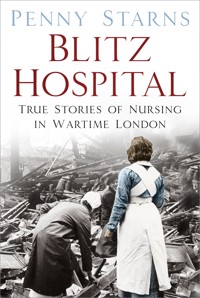
When the Blitz hit London, everything changed. Once, the Home Front was relatively safe – now it wasn't. Suddenly, London was its own front line. Blitz Hospital follows the fortunes of two major London hospitals as they struggled to cope with mounting wartime casualties: St Thomas' and The London. The diaries, letters and reports of medical and nursing staff highlight the many human stories of tremendous courage and hope that lived and breathed within the corridors of London's hospitals during the Blitz.
Sie lesen das E-Book in den Legimi-Apps auf:
Seitenzahl: 359
Veröffentlichungsjahr: 2018
Das E-Book (TTS) können Sie hören im Abo „Legimi Premium” in Legimi-Apps auf:
Ähnliche















Dedicated to my Grandmother Florence Reid,a survivor of the London Blitz.
First published 2018
The History Press
The Mill, Brimscombe Port
Stroud, Gloucestershire, GL5 2QG
www.thehistorypress.co.uk
© Penny Starns, 2018
The right of Penny Starns to be identified as the Author of this work has been asserted in accordance with the Copyright, Designs and Patents Act 1988.
All rights reserved. No part of this book may be reprinted or reproduced or utilised in any form or by any electronic, mechanical or other means, now known or hereafter invented, including photocopying and recording, or in any information storage or retrieval system, without the permission in writing from the Publishers.
British Library Cataloguing in Publication Data.
A catalogue record for this book is available from the British Library.
ISBN 978 0 7509 9031 8
Typesetting and origination by The History PressPrinted and bound in Great Britain by TJ International LtdeBook converted by Geethik Technologies
CONTENTS
Acknowledgements
Introduction
1 Getting Ready for War
2 The Phoney War
3 The First Night of the Blitz
4 Taking to the Underground
5 The Relentless Symphony of War
6 Danger in Safety
7 Nursing the Enemy
8 The Second Great Fire of London
9 Prolonged Air Raids
10 Medical Advances
11 Nursing in Crisis
12 Chaos and Controversy
13 The Mini Blitz
14 Victory
15 Post-War Reconstruction
Select Bibliography
ACKNOWLEDGEMENTS
The process of writing this book has been greatly assisted by the military and civilian nurses who generously recounted their wartime experiences for my research. They include: Monica Baly, Mary Bates, Glenys Branson, Constance Collingwood, Gertrude Cooper, Ursula Dowling, Brenda Fuller, Anne Gallimore, Monica Goulding, Daphne Ingram, Anita Kelly, Margaret Kneebone, Sylvia Mayo, Kay McCormack, Anne Moat, Phyllis Thoms and Dame Margot Turner. The remarkable story of the latter is the subject of a separate book entitled Surviving Tenko. Dame Margot’s oral history testimony is held in the Imperial War Museum Sound Archive. The families of Rose Evans, Gladys Tyler, Florence Johnson and Grace Davis have also provided me with valuable source material.
Special thanks are due to the late Dr Monica Baly for her kindness, wisdom and guidance in the field of nursing history. Monica remained a very dear friend until her death in 1998. Thanks are also due to my PhD mentor Professor Rodney Lowe for his expertise in the field of welfare history. I am indebted to Captain Jane Titley, ARRC Matron-in-Chief of Queen Alexandra’s Royal Naval Nursing Service 1991–94, and Colonel Eric Ernest Gruber Von Arni ARRC of the Queen Alexandra’s Royal Army Nursing Service, for giving me valuable insights into the history and development of military nursing during the early stages of my research.
Archivists across the country have also assisted my research, especially those who are based at the Imperial War Museum, The National Archives, Royal London Hospital Archives, London Metropolitan Archives and the Royal College of Nursing Archives.
I thank my father Edward Starns for his consistent encouragement, and his vivid recollections of living through the Blitz. I am also grateful to those who have patiently listened to my ideas; these include Nigel Line, Michael and Rocha Brown, James and Lewis Brown, Joanna Denman, Catherine Nile and Margaret Taplin.
INTRODUCTION
In every war in our history, Britain has looked to the women to care for the sick and wounded. It is women’s work. The nurses never let us down. Florence Nightingale lit a candle in the Crimea 85 years ago. The women of today have kept it burning brightly, not only in France, Egypt and Greece but in Poplar, Portsmouth, Liverpool, Hull and all the other battlefields on the Home Front.
Government recruitment poster
Imperial War Museum 536/172/K9540
As a Ministry of Health nurse recruitment poster acknowledged, what could be termed as being the ‘front line’ during the Second World War was arbitrary. Medical staff were just as likely to be killed on the Home Front as they were when working within international theatres of war. Indeed, at the height of the Blitz, between September 1940 and May 1941, Home Front medical staff were far more likely to be killed or injured whilst administering emergency medical care than their international counterparts. As the German Luftwaffe subjected Britain’s major cities and ports to unremitting waves of aerial bombardment, doctors, nurses, first aiders, ambulance drivers and Air Raid Precaution workers constantly risked their lives to give urgent treatment to the severely wounded. Over 87,000 casualties were sustained during this period and city hospitals, especially in London, were working under extreme conditions. They were also experiencing acute staffing problems. A shortage of male doctors forced medical schools to open their doors to women, and nurses also extended their field of influence. A delighted senior nurse triumphantly wrote in the Nurses’ League Review of The London Hospital:
On March 1st the theatres were taken over by me and are now entirely run by the nursing staff. (Applause) This, as you will realise has meant a lot of reorganisation and it will take some time before they are running as we would wish. This, however, will mean that far more nurses can have theatre experience than was possible in the past.1
But as nurses’ responsibilities increased, so did their workloads, and throughout the Blitz they worked at a furious pace. The diaries of London nurses reveal that they were confronted by a vast array of appalling injuries on a daily and nightly basis, ‘charred bodies burnt black beyond recognition, gashed limbs and fractured spines. Gaping head injuries and bodies ripped apart by the force of bomb blasts.’ London skies were frequently aglow with burning buildings, as a nurse recorded on 7 September 1940: ‘One early evening I noticed that the city skyline was a brilliant red – it was just like a glorious sunset. Then I realised that if it was the sun, it was going down in the wrong place, because the glow was in the East.’2
Undoubtedly, the East End of London bore the brunt of the Blitz, which killed over 20,000 civilians in London alone. Survivors were cared for by staff at the city’s hospitals, most of whom were an integral part of the government’s official Emergency Hospital Scheme. Although source material is included from a variety of London hospitals, this book primarily follows the fortunes of two major London hospitals as they struggled to cope with mounting wartime casualties: St Thomas’ Hospital and The London Hospital (The Royal London from 1990 onwards). The diaries, letters and reports of medical and nursing staff highlight the many human stories of tremendous courage and hope that lived and breathed within the corridors, theatres and wards of London’s hospitals during the Blitz.
Background History of British Hospitals
By the early twentieth century, most British hospitals fell into two categories, depending on their funding arrangements. First were the voluntary hospitals, which were maintained by charitable donations; second, the local authority hospitals, which were funded by regional authorities. Voluntary hospitals tended to be prestigious institutions where medical men carved out their reputations and careers. On the other hand, local authority hospitals tended to be more lowly establishments, often feared by members of the public because of their long-standing associations with nineteenth-century workhouses. St Thomas’ and The London were both voluntary hospitals.
St Thomas’ Hospital
St Thomas’ Hospital was originally the infirmary of an Augustinian Priory dedicated to St Mary the Virgin. In 1173 it was afforded the name of St Thomas the Martyr, but the institution was destroyed by fire thirty-nine years later. Recognising that the infirmary had been a vital source of care for the sick, the Bishop of Winchester re-endowed the infirmary as an independent hospital, which was erected near London Bridge. However, like many other religiously affiliated establishments, St Thomas’ was forcibly closed during the Reformation. It was not until the reign of King Edward VI that all monies and land were returned to St Thomas’ and the hospital underwent a period of expansion. By the late seventeenth century, it was possible to discern a fledgling medical school, with both surgeons and physicians accepting apprentices and pupils for tuition.
During the eighteenth century, highly influential anatomists such as William Cheseldon gave lectures to medical students at St Thomas’ and the hospital gained an excellent reputation for the study of anatomy and physiology, and clinical practice. For a time hospital governors controlled the medical school, but by 1860 control was handed back to physicians and surgeons. In the same year, Florence Nightingale established her first civilian training school for nurses at St Thomas’, further enhancing the hospital’s already prestigious reputation. As St Thomas’ fame grew, further expansion was needed, and in 1868 Queen Victoria laid a foundation stone for an additional building, which was constructed near Westminster Bridge at Lambeth. Opened in 1871, this new building gave St Thomas’ an extra 588 beds, and its prestige continued to grow.
During the First World War, 200 beds were set aside for military use and hospital staff played an important role in caring for the sick and injured. Crucially, new medical and surgical innovations had been implemented on the Western Front in response to modern warfare. These innovations, along with new medical research programmes, had significant implications for both military and civilian patients. Moreover, it was up to medical schools across Great Britain to ensure that this new-found knowledge was rapidly disseminated amongst all cohorts of medical students. Not content with merely passing on this new medical information, medical staff at St Thomas’ were quick to initiate their own interwar research programmes. Thus, on the eve of the Second World War, St Thomas’ was one of the most important teaching hospitals in London.3
The London Hospital
The London also began life as an infirmary, in 1740. Situated near the East End docks, it was dedicated primarily to healing the sick of merchant seamen and their families. Hospital buildings were initially located in Featherstone Street and Prescot Street, then in 1752 further building work began on Whitechapel Road. Referred to by staff as ‘the front block’, the Whitechapel building was opened in 1759. Further extensions were constructed to the east and west of the main building in 1770. By this stage, surgeons and physicians were actively encouraging pupils to accompany them on their ward rounds, and in 1785 the first lecture theatre opened its doors. Subsequently, The London Hospital Medical College was established, and from 1854 onwards came under the jurisdiction of the Hospital House Committee. Spurred on by the Industrial Revolution and a rapid growth in population, the demand for medical care increased. The London expanded accordingly, and by the turn of the century boasted over 1,000 beds. The London was the biggest voluntary, general hospital in Great Britain.
In addition to a medical college, The London also boasted an excellent nurse training programme. Matron Eva Luckes, who was a good friend of Florence Nightingale, had established a nurse training system similar to that at St Thomas’ Hospital. However, some of Luckes’ views on nurse training differed from those of her friend. Whilst Nightingale believed that nurse training should be entirely ward-based, Luckes argued that nurses needed a preliminary training school, to enable nurses to learn subjects such as anatomy and physiology. Emerging nurse reformers such as Ethel Bedford-Fenwick and members of the British Nursing Association (BNA) went a stage further, arguing that nurses needed state registration in order to provide protection for the sick. Suffragist Bedford-Fenwick also claimed that ‘the nurse question is the woman question’. Subsequently, the drive for nurse registration was inextricably linked to the drive for female suffrage.
Eva Luckes, who was one of the youngest matrons in the country, introduced a series of educational reforms at The London but did not support the registration movement. Like Nightingale, she believed that nursing was a vocation that could not be tested by rigorous examinations. As Dr Baly has noted, Nightingale ‘saw the registrationists as wanting to lower the standard, whereas they saw themselves as wanting to raise it and make nursing more exclusive’. Furthermore, she feared that nursing would be divided against itself, stating, ‘I have terror lest the B.N.A’s and the anti-B.N.A’s should form hostile camps.’4 Nightingale’s fears were well founded, and nursing factions did indeed become politically fragmented. Yet despite her own reservations on the subject of registration, Luckes was convinced of the need to improve nurse education, and established one the first preliminary training schools for nurses in Britain.
Between 1914 and 1918, like all major hospitals, The London admitted its fair share of wounded soldiers, usually in groups of 300 or more. Often the injured were Belgian or French, which created considerable communication problems. Throughout this time, new techniques were introduced for dressing wounds, along with new nursing practices. In response to a growing need for nurse education, Eva Luckes compiled a series of detailed lectures for nurses, which were widely published. Further publications included guidance for nursing sisters. Luckes remained at The London until her death in 1919. During the interwar years, both the nursing school and medical college continued to thrive and grow in stature.
British Nursing
By 1939, British nursing was no longer a fledgling profession. Following a complex and often acrimonious thirty-year battle, the Nurse Registration Act was passed in 1919. This legislation gave nurses their long sought-after professional status, and offered some protection for the sick. Registration was achieved after a period of three years of hospital training and the passing of final examinations. Training schools were supervised by a General Nursing Council (GNC) but there was no uniform standard of training. Nurses worked long hours for poor pay, and were subjected to severe discipline and a myriad of petty rules. Consequently, wastage rates amongst probationer nurses were very high, with most hospitals losing over 50 per cent of their trainees within the first two years. Nurse training schools also had competition from other quarters. Whereas in the mid-nineteenth century young women were not particularly well educated, by 1900 their educational opportunities had increased. The 1870 Education Act had allowed school boards to widen their appeal to include more girls, and in 1869 Cambridge University founded Girton, the first of its female colleges. Educational reforms increased women’s career choices. There were 172,000 female schoolteachers in 1901 and 51,000 female civil servants by 1911.5 Women’s work also expanded during the First World War.
Thus, by the 1930s, British nursing faced a professional dilemma, which was never adequately addressed. Educated recruits did not make for a biddable workforce, and they needed something in the way of intellectual stimulus. But trying to marry the practical demands of nursing with intellectual endeavour was virtually impossible. Moreover, nurses were their own worst enemies, since ‘the greatest obstacle to change came from nurses themselves. Nightingale nurses were reared in an atmosphere of obedience and conformity and second and third generations clung tenaciously to the principles that had raised them, first to respectability then to admiration. Obedience is inimical to innovation.’6
Incentives to enter the nursing profession were few and far between, and published advice for new probationers did nothing to encourage young girls into the profession, claiming that, as a result of spending their lives amid sorrow, suffering and the results of sin, nurses naturally became excessively morbid, introspective and depressed. According to nursing manuals, an antidote to this seemingly unavoidable descent into melancholia was for probationers to exercise rigorously in off-duty hours. Guidelines for new recruits also recommended regular church attendance, and trips to theatre or cinema productions to lift their minds out of the doldrums. However, probationers were often expected to forego their off-duty time because of staff shortages. Since they were also expected to attend lectures in their off-duty hours, there was precious little time for probationers to indulge in leisure activities, uplifting or otherwise.
Disincentives to nurse recruitment were identified in various official reports, and a government committee chaired by the Earl of Athlone published an interim report on the subject in 1939. The report concluded that in order to improve recruitment levels, it was necessary for the government to afford official recognition to assistant nurses and to subsidise voluntary hospitals, to enable these institutions to standardise training and improve salaries.7 Not surprisingly, these recommendations were rejected by both government and nursing camps. Government officials were opposed to the idea of funding voluntary hospitals on economic grounds, whereas registered nurses vehemently objected to the proposed recognition of assistant nurses, believing this would undermine their hard-won status. With the outbreak of war in 1939, however, it soon became abundantly clear that both government and nursing camps would be forced to make concessions.
Sources
This book is based on primary source material obtained from an extensive collection of oral history testimonies and a wide variety of archives. These include the archives of St Thomas’ Hospital, now located at the London Metropolitan Archives, and those of The Royal London. In addition, material has also been obtained from the British National Archives. This includes records of the General Nursing Council, the Ministry of Health, the Ministry of Labour and War Office files. Further material has been gleaned from the British Newspaper Library, the Imperial War Museum and the Royal College of Nursing Archives. Hansard House of Commons and House of Lords debates for the period were also examined in depth. Contemporary journals and newspapers were consulted at length. Of these, the British Journal of Nursing proved to be the most useful. It was not by any means the only nursing journal of the period, but it was the only one that remained constantly attuned, both to the global wartime political situation and to the more mundane problems faced by nurses themselves. Whilst Nursing Illustrated and other nursing periodicals relayed to their readers the virtues of beauty treatments, or introduced them to new wartime recipes, the British Journal of Nursing kept its readership up to date with current affairs and medical developments. As such, the paper appeared to represent the views of nurses who were politically aware and professionally motivated. Additional material includes the author’s published PhD thesis: March of the Matrons (2000), and the oral history testimonies of military and civilian nurses who worked during the Second World War; these were conducted by the author between 1993 and 1997. The BBC Radio 4 programme Frontline Females was based on the author’s research and extracts are quoted in the text.
Notes
1 Nurse Littleboy, The Royal London Hospital Nurses’ League Review, no. xi (1942), p. 8.
2 Recollections of Dame Kathleen Raven, Royal College of Nursing, History of Nursing Journal, vol. 3, no. 3 (1990), pp. 44–45.
3 For further information on St Thomas’ role in the First World War please see London County Council Public Health ref: P.H./SHS/2.
4 Baly, M., Florence Nightingale and the Nursing Legacy (1997), p. 193.
5Report of the Census of England and Wales (London: HMSO, 1911).
6 Baly, op. cit., p. 219.
7 Early reports include The Lancet Commission on Nursing 1932 and The Interdepartmental Committee on the Nursing Service 1937. The Athlone Committee was disbanded during the war but its findings were resurrected by the Rushcliffe Committee in 1943.
1
GETTING READY FOR WAR
Despite the economic constraints of the interwar period, British Government ministers began to prepare for the Second World War as early as 1922. Civil defence strategies were discussed and medical plans formulated. Moreover, even at this early stage of planning, it was acknowledged that the main threat to civilians would come from the air. This was confirmed by subsequent events in Europe. During the Spanish Civil War, which began in 1936, Barcelona was subjected to over 340 air raids, which killed and maimed thousands of civilians. Thus, by 1937, British medical plans were based on the worst case scenario. As the nation’s capital city and centre of government, London was obviously a major target for enemy action. The Imperial Defence Committee estimated that during the first two years of war, between 1 and 2 million hospital beds would be needed. They stockpiled thousands of cardboard coffins and concluded that as soon as war was declared, at least 3,500 tons of explosives would be dropped on London during the first twenty-four hours, and 700 tons each day for at least a fortnight thereafter.1
Working on these alarming predictions, the government introduced a number of civil defence measures and emergency medical schemes. Blackout conditions were imposed, gas masks issued to adults and children, Air Raid Precaution wardens and firefighters recruited and barrage balloons erected. Plans were unveiled to evacuate children and vulnerable adults away from major cities into the surrounding countryside, and staff at voluntary hospitals were conscripted and subjected to the jurisdiction of the Ministry of Health.2 An Emergency Hospital Scheme was established, which divided the country into sectors with a matron and administrative staff for each sector, and this was supported by a system of first aid posts.
On 3 September 1939, Prime Minister Neville Chamberlain announced that Britain was at war with Germany. Almost immediately the Minister of Health, Walter Elliot, asked all hospitals across England to discharge as many patients as possible, in order to free up beds in readiness for air raid casualties. Patients in London hospitals who still needed care were evacuated by modified Green Line buses and ambulance trains to hospitals situated on the outskirts of the city. Many of London’s voluntary hospitals became casualty clearing stations and outpatient departments closed virtually overnight.
On paper, medical preparations for war seemed to be more than adequate. However, there were not enough trained doctors and nurses to staff first aid posts, and a shortage of orthopaedic surgeons undermined the effectiveness of casualty clearing stations. Furthermore, medical experience gained during the Spanish Civil War had shown that unless casualties received immediate on-the-spot skilled attention, subsequent treatment was often useless. Senior Spanish orthopaedic surgeon Professor Trueta thus advised British medical personnel that highly skilled surgical teams needed to be at the centre of all major cities. He also advocated the implementation of his own signature five-step surgical treatment, which had saved many lives during the Spanish conflict. This included: immediate wound cleaning (within six hours of injury), excision of dead tissue, surgical treatment of fractures, wound drainage and closed immobilisation of fractures with plaster of Paris.
However, medical plans for British civilian casualties ran contrary to Professor Trueta’s advice. Under the British Emergency Scheme, casualties were to receive basic care at first aid posts and hospitals designated as casualty clearing stations, and nearly all experienced surgeons would be waiting for casualties in centres remote from London. In view of Trueta’s recommendations, senior doctors urged the Ministry of Health to revise existing arrangements.3 They also questioned the role of voluntary hospitals within emergency schemes. The Chairman of the Formation Committee of the Air Raid Defence League, Sir Ralph Wedgwood, was also concerned, pointing out that:
From almost every aspect, London hospitals are unsuitable to be casualty clearing stations. To make them bomb proof would be expensive and in most cases impossible. Far too many of our hospitals are liable to attack during an air raid. St Thomas’s and Westminster are close to Battersea power station, which will be a target. Others are fatally close to the Thames. 4
Yet despite these valid criticisms of emergency medical planning, the Ministry of Health remained intransigent. In the meantime, whilst doctors debated the merits and drawbacks of casualty clearance, registered nurses vented their own objections to medical policies emanating from Whitehall. These were primarily based on the need to protect their hard-won registered status, which in turn protected their patients from charlatans. Much to the dismay of registered nurses, Ministry of Health officials had substituted the word ‘registered’ with the word ‘trained’, which had no significance in law. The British Journal of Nursing, edited by Ethel Bedford-Fenwick, a leading protagonist of the nurse registration movement, was quick to defend professional status. In an article entitled ‘The Duty and Privilege of the Registered Nurse in War’, she praised registered nurses:
Hand in hand with skilled medicine and surgery the ministrations of the registered nurse is the greatest remedial asset in war. No body of women hold more honourable status in the body politic than the members of our Naval Military and Air Force Nursing Services. In times of peace, wherever worn, their uniform commands respect, and in times of war the devotion of our fighting forces is their inspiration and reward. The splendid body of registered nurses, now available in their tens of thousands for national service, will, we have no doubt, offer their skill and comfort to our sick and wounded, and although the reactionary Ministry of Health has ignored their legal title in every memorandum concerning the nursing service issued to the profession and the public, that lack of consideration will in no way affect their devotion to their King and country. As citizens of the British Empire Registered Nurses are all out to serve with the utmost ardour and devotion.5
Bedford-Fenwick was also quick to condemn the General Nursing Council (GNC) for their wholehearted support of a controversial government plan which, in a bid to ease nursing shortages, gave state recognition to a roll of assistant nurses. Not surprisingly, registered nurses, who were required to undertake three years’ training and pass rigorous examinations, were up in arms at this decision. This situation was further compounded by the government’s introduction of a Civil Nursing Reserve (CNR). Designed to supplement the civilian nursing services, the CNR contained mainly assistant nurses and auxiliaries, and from the outset caused considerable chaos. Hospital administrators, for instance, seizing an opportunity to reduce wage bills, were quick to use wartime conditions to replace registered nurses with CNR assistant nurses. Thus, within a mere two months, over 2,000 registered nurses in London had been made redundant. Registered nurses who had entered the armed forces were also frequently replaced by assistants. These problems were compounded by salary discrepancies. Registered nurses working for the CNR were paid the sum of £90 a year, whereas most registered nurses working in hospitals were paid £70 a year. Not surprisingly, many hospital nurses abandoned their positions and flocked to join the reserve.
Voluntary Aid Detachment nurses (VADs), recruited by the Order of St John of Jerusalem and the British Red Cross, were better organised than the CNR, and in most instances better trained. They supplemented both military and civilian medical services and in theory their training consisted of twelve first aid lectures, and between fifty and ninety hours of practical hospital experience. However, the government’s central emergency committee was so desperate to recruit nurses for civilian first aid posts that VADs were assigned to duties even if they lacked the ‘compulsory’ fifty to ninety hours practical hospital training.6
With such an urgent emphasis on quantity rather than quality, and a sweeping dilution of the nursing profession with untrained personnel, Ministry of Health officials displayed an alarming degree of ignorance with regard to different levels of nursing expertise. For instance, at this stage, there were no government attempts to restrict the tidal wave of registered nurses who were rushing to join the armed forces, and seemingly no understanding of how this same tidal wave would seriously undermine civilian nursing services. Initially there were 30,000 women in the CNR, but only 7,000 of these were registered nurses. Moreover, despite the fact that civilian nursing services were severely understaffed, the CNR was restricted to working within the emergency services. The policy of emptying as many hospitals as possible in readiness for casualties had also caused significant health problems. Not only was there a lack of outpatient care for patients in need of medical supervision, the practice of emptying sanatoriums had resulted in a threefold increase in tuberculosis cases. Thus, by the end of September 1939, civilian medical and nursing services had descended into a state of chaos.
Nevertheless, although senior doctors and nurses were aware of hospital staffing difficulties and organisational shortcomings, the average probationer nurse seemed to be quite unaware of both government and nursing politics. Monica Dickens, recalling her wartime experience as a probationer nurse, was quite astonished by the insular nature of nurse training:
Most of them [nurses] had no interest in anything that happened a yard outside the iron railings. They never read a paper, except the Nursing Times, and only turned on the Common Room wireless when the nine o’clock news was safely over. They were only interested in the war as far as it affected them personally – shortage of Dettol and cotton wool perhaps, or jam for tea only once a week. The ward beds had ear phones fitted to them, connected with a central receiving set, and while I was dusting lockers I used to enquire about the seven o’clock news. ‘Why do you always ask if there’s any news?’ a patient asked me one morning. ‘Well, I don’t know – because I’m interested I suppose.’ ‘Funny’ she said, ‘I shouldn’t have thought a nurse would be interested.’ That summed up the attitude of the outside world towards nurses and of nurses to the outside world. Nurse Donavon once asked me, ‘Whatever were you talking to Sister Mason about at dinner?’ ‘Oh, the war,’ I said vaguely. ‘Settling world politics.’
‘Good gracious,’ she said, ‘hadn’t you got anything better to talk about than that?’ I asked her what she would talk about when a German officer swaggered through the glass doors to take over the ward. ‘I’d ask him if he’d had his bowels open,’ she said, and laughed coarsely.7
In fairness to young probationers, work schedules were gruelling and they had little time with which to acquaint themselves with current affairs. They were allowed one day off a week, and were expected to attend lectures during their off-duty hours. Some, like probationer nurse Dickens, took a satirical approach to their education:
The lectures were on hygiene, nursing, anatomy and physiology. Hygiene was alright if you happened to be keen on sewage and activated sludge. A knowledge of plumbing is apparently essential to a good nurse and soon I could not pass a house without gauging the efficiency of its outside pipe system. Nursing was mostly practical work – bandaging each other and making the bed of a lay figure that was known as Old Mother Riley and appeared to be a maternity case.
Anatomy was fascinating. I started to write a story entitled: The Skeleton in the Cupboard, in which the hero was called Pyloric Sphincter and the heroine Hernia Bistoury. There was a beautiful spy called Vena Cava and a will-o-the-wisp creature called Poly O Myelitis, who led a gypsy life on a Cavernous Sinus. The heroine’s unattractive friend, who was always tagging along as an unwanted third, was Ulna Tuberosity, and there was a dapper old gentleman called Sir Glenoid Fossa, who collected antiques and owned the inlaid ivory Malleolus, the blunt instrument that silenced the barking of Hernia’s faithful Mastoid.8
In an attempt to protect their free time, probationers who were less committed to the nursing profession became adept at the art of subterfuge. The invention of sick parents or grandparents, the last-minute conjuring up of funerals of dead aunts and uncles, a fantasy catalogue of dental appointments and a series of imaginary family crises, were all introduced to unsuspecting nurse tutors as a way of avoiding lectures. Consequently, probationers who were more conscientious became extremely popular when examinations were looming large, as shirkers avidly sought their company in a desperate attempt to acquire knowledge.
New recruits, however, were more concerned with how to assimilate into the nursing hierarchy and learn the process of practical nursing. Rose Evans, a new probationer at The London in the autumn of 1939, wrote to her aunt in Wales to describe her first impressions of hospital life:
Dear Aunt Flo,
Well here I am at the famous London hospital and I can hardly believe it. Although I must admit I’ve blotted my copybook already. In my rush to get here I forgot the key to my suitcase and a big surly porter was summoned to force it open. He was very unhappy about being called away from his tea break to do such a thing. I could tell by the way he looked at me that he thought me far too stupid to be a nurse. I am meant to be sharing my bed room with another probationer called Gladys Tyler, but I haven’t met her yet. Apparently her father is very sick. Our room is a good size with a huge oak wardrobe that almost touches the ceiling. There is also a dressing table, two beds and a desk. Wash rooms are along the corridor and a small laundry. All our uniforms are washed and pressed by the hospital laundry so we’ve only to wash our smalls and personal things. The food here is very stodgy. A second year called Mabel says that big chunks of bread are served with every meal. They also serve something called ‘hooray pie.’ It’s supposed to be a meat pie but it’s mainly made of potato – so if one of us manages to find some meat we are told to shout hooray.
My uniform is quite fetching but my black stockings are very thick and uncomfortable. My legs itch every time I pull them on, and to make matters worse, my flat lace up shoes make me look just like Granny.
London looks very eerie when evening comes because every building is blacked out. All our windows are crisscrossed with sticky tape to protect us from bomb blasts, and every floor has a large cupboard jam packed with iron beds ready for air raid casualties. Mabel thinks they’re a waste of time. She says we’re all done for – but I get the feeling she’s not the most cheerful of souls! Most of our staff and patients have gone to the countryside, and there’s been an awful commotion over some patients who went from St Mary’s to Harefield last week – they’ve all gone down with meningitis.9
Every hospital seems to have a set of unwritten rules and The London is no different. Nurses and sisters eat on separate tables and we have to stand up every time a registered nurse comes into the dining room. Even second and third year probationers do not sit with the first years. We are the lowliest of the low and given the crummiest of jobs, like collecting sputum trays and cleaning the sluice. We have to be on the wards by 7am and we finish at 8.30pm. If we’re not too busy we can have a couple of hours off in the day. Every morning at 6am I am woken by a very loud knock on the bedroom door. This is followed by a lot of door banging along the corridor as probationers go in and out of wash rooms. As you know I’ve never been much of an early bird and it takes me at least ten minutes to come to. My feet ache most days and my hands go bright red when I Dettol the baths. But everyone is in the same boat.
You will be pleased to know that I remembered to pack my white gloves for church, and my anatomy book for lessons, which I almost forgot because it had disappeared out of sight under my bed as I was packing. Mother calls me scatter brained. These days she’s fretting about something all the time, and has taken to scrubbing the doorstep several times a day. I swear we have the shiniest front step on the Barking Road. I hope Uncle David’s arthritis isn’t playing up. Mother says it’s down to the damp Welsh air. I have to go to dinner now – more bread and dripping! I don’t know when I will see you next but I promise to write again soon.
Rose x
Just over 2 miles away, sitting in a dilapidated house on Poplar High Street, Rose’s absent roommate Gladys Tyler was drinking sickly sweet sherry. Dutifully talking to some aged relatives, most of whom she could only vaguely remember from childhood, she surveyed the crowded parlour. Her father’s funeral had been a straightforward, no-nonsense affair, but it seemed as though all of Poplar had turned out to say their farewells. Grief-stricken and fighting back tears, her mother sat near the window in an armchair that had clearly seen better days. Her two younger sisters, meanwhile, moved effortlessly across the dimly lit room exchanging polite pleasantries and shaking hands with mourners. Everyone agreed, as they munched their way through a mountain of sandwiches, that it had been a ‘good send-off’. Gladys wondered if there could ever be a ‘bad send-off’. For as long as she could remember, her father had suffered from a weak heart, the legacy of childhood rheumatic fever. She desperately wanted the day to be over, if only to escape the endless well-meaning platitudes and sympathetic glances. With a pang of guilt she took comfort from the fact that probationer nurses had to live in during their training. A ruling which gave her the perfect excuse to leave home. Overwhelmed by grief, she clutched at her sherry glass as though it were a lifeline, and walked slowly across the room to sit beside her mother. Eventually, as the afternoon drew to a close, her mother forced a smile and thanked their guests for coming. Two days later, Gladys, her compassionate leave at an end, returned to The London to restart her nurse training.
Arriving at the nurses’ home, she fumbled for her keys and unlocked the bedroom door. Clearly someone else had taken up residence. There was a faint smell of gardenia in the air. Pots of cold cream and rouge lay neatly on the left-hand side of the dressing table, along with a powder compact, a string of beads and a framed photograph. Part of the imposing wardrobe was occupied by a silvery grey jacket, three cotton blouses and two skirts. Nightclothes were carefully folded on the bed nearest the sash window. Gladys, still reeling from the loss of her father, slowly unpacked her belongings and changed into her uniform. Briefly inspecting her appearance in the full length mirror, she adjusted her overly starched white cap and apron. Then, determined to seek solace in her work, she walked briskly along an empty corridor towards Matron’s office to report for duty.
Matron Reynolds had just completed her daily ward rounds when Gladys knocked tentatively on her door. Amiable and efficient, she briskly called out ‘Enter’ then greeted her nurse with a kindly smile. Talking softly to Gladys in a reassuring manner about her father’s demise, she passed her a small, crisp piece of paper. Gladys meekly accepted the handwritten duty rota, acknowledging inwardly the importance of her work – a lifeline which offered some much-needed structure and purpose. Dark, hollow shadows, etched under her eyes, were the only outward signs of her bereavement. She kept a firm lid on her emotions during the day, but cried silent tears every night before falling asleep. Vivid images of her father haunted her dreams, and flitted uninvited into her waking mind at random. Unnerved and at times overwhelmed by grief, she searched endlessly, fruitlessly for an anchor. Anything that would keep the gut-wrenching pain of loss at bay.
Matron Reynolds also understood that Gladys needed to lose herself in work. Matron was no stranger to sadness. A vast array of nursing experiences had taught her how to cope with loss. Although making the seemingly unbearable bearable was no easy task. One of her own ward sisters had soothed a bereaved husband by saying: ‘Sometimes people simply have to put one foot in front of the other every day until the pain eases. Until happy memories take root inside.’ Matron was heartened by her empathetic staff, and uplifted by the human ability to heal. In her youth, she had read works by ancient philosophers and was consoled by Plato’s belief that philosophy provided a medical cure for souls in distress. She also expressed sympathy for those in despair and fleeing persecution. Adding a number of refugee nurses to her register, she made small comments in margins alongside these entries. For instance, writing about one young probationer nurse, who was eventually nicknamed Hockey, she noted: ‘Lisbeth Hochsinger of Jewish extraction, born in Graz Austria, a medical refugee: her family have suffered greatly at the hands of the Nazis.’10
Lisbeth had been hurriedly brought over to England by Quakers and was a highly intelligent young woman. In her homeland she had been in the process of studying to become a doctor, when Hitler’s relentless persecution of Jews had forced her to become a refugee. Upon her arrival in London, Lisbeth was informed that it was impossible for her to continue her studies, and she was encouraged to enter the nursing profession. As such, she chose to train at The London, simply because she was an excellent swimmer and the hospital boasted a good size swimming pool.
Matron Reynolds was also an intelligent woman and was known as a liberal amongst her peers. She had trained at The London, and worked as a medical research assistant before becoming a member of the Rockefella travelling fellowship. She gave unequivocal support to those who advocated improvements to technical nurse training and employed well-qualified nurse tutors. Under her excellent leadership, the title probationer nurse was changed to that of student nurse, and she prepared her nurses as much as possible for the exigencies of war.
Notes
1 Titmuss, R., Problems of Social Policy (1950), p. 15.
2 Staff at voluntary hospitals were subjected to the jurisdiction of the Ministry of Health from 1938 onwards. A government White Paper was published in July 1939, which outlined the Emergency Hospital Scheme and system of first aid posts. For a more in-depth analysis of emergency medical preparations, please see National Archive Ministry of Health records: M.H./76/137, M.H.76/127 and M.H.76/348.
3 Hansard House of Commons Parliamentary Debates, 5th series, 13 June 1940, col. 1456. Debate between members of the Supply Committee and the Ministry of Health War Services.
4 ‘Hospital Emergency Schemes’, Nursing Illustrated, 25 August 1939, p. 2.
5British Journal of Nursing, September 1939, p. 226.
6Nursing Illustrated, September 1939. Government statement appeals especially to married and retired nurses.
7 Dickens, M., One Pair of Feet (1942), p. 37.
8Ibid., p. 33.
9 In 1939, Harefield Sanatorium was designated as Harefield Emergency Hospital and served as a base for St Mary’s Hospital. Soon after the first transfer of patients from St Mary’s Hospital to Harefield in September 1939, there was an outbreak of meningococcal meningitis. All patients were treated with a relatively new drug called sulphanilamide and nobody died during this epidemic. Before the introduction of this drug, mortality rates were often as high as 90 per cent.
10 Matron Mabel Reynolds. The London Hospital Nurses’ Register, 1939. Lisbeth Hochsinger became known by the nickname Hockey. In Austria she had been a third-year medical student until Nazi persecution threatened her family. Brought to England by Quakers, Hockey studied English language and began nurse training at The London. An extremely intelligent lady with a gift for conducting research, she eventually became director of the first Nurse Research Unit in Britain, based at Edinburgh University. Lisbeth Hockey was awarded the OBE and died in 2004.




