


Erhalten Sie Zugang zu diesem und mehr als 300000 Büchern ab EUR 5,99 monatlich.
- Herausgeber: The History Press
- Kategorie: Geisteswissenschaft
- Sprache: Englisch
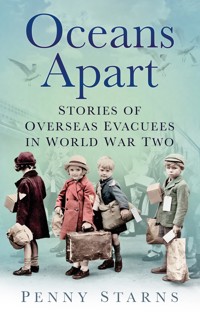
From May 1940, the Children's Overseas Reception Board began to move children to Australia, South Africa, Canada and New Zealand for their own safety during the Second World War. The scheme was extremely popular, and over 200,000 applications were made within just four months, while thousands of children were also sent to be privately evacuated overseas. The 'sea-vacs', as they became known, had a variety of experiences. After weeks at sea, they began new lives thousands of miles away. Letters home took up to twelve weeks to reach their destination, and many children were totally cut off from their families in the UK. While most were well cared for, others found their time abroad a miserable, difficult or frightening experience as they encountered homesickness, prejudice and even abuse. Using a range of primary source material, including diaries, letters and interviews, Penny Starns reveals in heart-breaking detail the unique and personal experiences of sea-vacs, as well as their surprising influence on international wartime policy in their power to elicit international sympathy and financial support for the British war effort.
Sie lesen das E-Book in den Legimi-Apps auf:
Seitenzahl: 324
Veröffentlichungsjahr: 2014
Das E-Book (TTS) können Sie hören im Abo „Legimi Premium” in Legimi-Apps auf:
Ähnliche

















OceansApart
Dedicated to the memory of Margaret Hill-Smith
Front cover images: Monica B. Morris Archives; Wikimedia Commons.
Back cover image: Wikimedia Commons.
First published 2014
This paperback edition first published 2022
The History Press
97 St George’s Place, Cheltenham,
Gloucestershire, GL50 3QB
www.thehistorypress.co.uk
© Penny Starns, 2014, 2022
The right of Penny Starns to be identified as the Author of this work has been asserted in accordance with the Copyright, Designs and Patents Act 1988.
All rights reserved. No part of this book may be reprinted or reproduced or utilised in any form or by any electronic, mechanical or other means, now known or hereafter invented, including photocopying and recording, or in any information storage or retrieval system, without the permission in writing from the Publishers.
British Library Cataloguing in Publication Data.
A catalogue record for this book is available from the British Library.
ISBN 978 0 7509 5472 3
Typesetting and origination by The History Press
Printed and bound in Great Britain by TJ Books Limited, Padstow, Cornwall.
eBook converted by Geethik Technologies
Contents
Acknowledgements
‘There’ll Always Be an England’
Introduction
1 The Ties that Bind
2 The Children’s Overseas Reception Board
3 ‘Good British Stock’
4 The SS City of Benares
5 American Resolve
6 Voyages
7 Communications
8 Maintaining National Identity
9 Sea-Vacs in Canada
10 Australian Sea-Vacs
11 Kiwi Brits
12 South Africa
13 Homecomings
14 Success or Failure?
15 A Great Adventure
Bibliography
Acknowledgements
Firstly I would like to thank my editor Sophie Bradshaw and the production team at The History Press for their excellent work. I also thank my PhD supervisor Professor Rodney Lowe for initially guiding my research into child welfare. In addition I am very grateful to all of the ex-sea-vacs who recounted their individual experiences in the form of oral history testimonies, and to the various ships’ escorts, host family members and childcare professionals who documented their stories. These fascinating accounts have added a richness and depth to the overall text. Margaret Bush deserves a special thank you for generously allowing me to include her personal story and unique images of her childhood in Canada. I also extend my gratitude to archivist Anthony Richards of the Imperial War Museum, who assisted my research, and to the many archivists who helped me to find further information in both the national and county archives across the country, and beyond into the realms of empire.
I thank my father Edward Starns for his love and continuing support, and my friends Timothy Dowling, Maggie Keech, Deborah Evans, Jo Denman, and Catherine Nile for their encouragement. I also appreciate my brother Christopher for his previous research assistance. Finally I thank my sons and grandchildren for their love and humour.
‘There’ll Always Be an England’
I give you a toast Ladies and Gentlemen
I give you a toast Ladies and Gentlemen
May this fair land we love so well
In dignity and freedom dwell
While worlds may change and go awry
Whilst there is still one voice to cry!
There’ll always be an England
While there’s a country lane
Wherever there’s a cottage small
Beside a field of grain
There’ll always be an England
While there’s a busy street
Wherever there’s a turning wheel
A million marching feet
Red white and blue
What does it mean to you?
Surely you’re proud
Shout it out loud
Britons awake!
The Empire too
We can depend on you
Freedom remains
These are the chains
Nothing can break
There’ll always be an England
And England shall be free
If England means as much to you
As England means to me
‘There’ll Always Be an England’ was composed and written by Albert Rostron Parker and Charles Hugh Owen Ferry in the summer of 1939. The song became a hit for Vera Lynn during the Second World War, and it was adopted by the sea-vacs as their signature tune when leaving and approaching ports, and most poignantly when they were in their lifeboats awaiting rescue after their ships had been torpedoed by the enemy.
Introduction
Much has been written in recent years of the horrors of forced child-migration schemes; of children who were sent to the Dominions in order to work the land and boost population numbers. Often they were badly treated and exploited in the process.1 The story of children who were sent overseas during the Second World War however, was dramatically different. This cohort of children were generally fussed over, feted, adored and completely spoilt; they were viewed as special and treated accordingly. Known as sea-vacs, the history of these extraordinary youngsters is complex and controversial. The subject matter embraces the pressing concerns of the British at war, but also highlights the prevailing social attitudes with regard to class distinctions, child welfare, eugenics, religious affiliations and national identities. In the wider sense, the topic also sheds light on the shifting sands of competing social and political ideologies within the British Empire and the strenuous efforts that were made to strengthen and uphold traditions of colonial rule. Indeed, during the months leading up to the war some sections of British society chose to make full use of colonial ties and were already abandoning the country faster than rats leaving a sinking ship.
Upper-class British families began sending their children overseas in the latter part of 1938. Some already had family connections in the United States of America or in the Dominions, and were therefore able to rely on a reasonable welcome and accommodation for their children. By virtue of their affluence, all of these families were able to secure private shipping arrangements. According to The Times newspaper, thousands of these wealthy children had been shipped abroad in the months leading up to the declaration of war, and during the forty-eight hours immediately before this declaration 5,000 adults and children had fled from Southampton to the United States.2 Furthermore, long queues of chauffeur-driven cars, the titled and well-to-do accompanied by their valets and maids staggering under the weight of their luggage, became a prominent feature of all British ports. Alongside these privately secured escape routes, companies such as Kodak and Ford established their own evacuation schemes. Notable academics in Canada and the US even operated eugenically motivated evacuation programmes designed to support and preserve the intellectual elite by persuading scholars to offer homes to the children of Cambridge or Oxford dons.
Naturally, this rapid exodus of the British social, financial and intellectual elite prompted deep resentment in other sections of society. The average shipping fare from Britain to the United States was somewhere between £15 and £18. For around 75 per cent of the British population this amount constituted their monthly wage, and effectively priced them out of the market in terms of sending their children abroad. However, by April 1940 public criticism of elitist escape routes, combined with a significant shift in wartime circumstances, galvanised the government into action. While politicians hotly debated the pros and cons of sending children overseas, it was the imminent threat of invasion that drove policy decisions at this stage. Consequently, a Children’s Overseas Reception Board was established, and British children were sent to far-flung corners of the empire.
Some sea-vacs did not arrive at their destination because their ships were torpedoed en route by the Germans, but most duly arrived on foreign shores with their meagre belongings in brown paper bags. As they lined up against the harbour walls they resembled small packages – little bundles of confused and apprehensive children. From this point on, the experiences of sea-vacs varied enormously. For instance, one young girl found herself taking tea with Albert Einstein, while another was forced to take up residence in a brothel. Some children were orphaned and adopted by their host families. Others were told that they were splendid ambassadors for Britain. The majority remained overseas for the duration of the war, and they attempted to maintain their sense of British identity along with their family ties. To this end, efforts were made to keep children in touch with their families through the BBC World Service. For most, however, by the time they returned to their own families they had adopted the accent and culture of their host country. This resulted in a resounding clash of personal lifestyles and expectations on their return to Britain, and a strange sense of not belonging to the mother country anymore. This book documents the rationale behind the sea-vac policy, the hopes and fears of sea-vacs, their joys and woes and their perceptions of their host countries.
Sources
The text of this book relies heavily on the primary source materials that are held at The National Archives at Kew, London; Australian, Canadian, New Zealand and South African Government Archives; and those held at the Imperial War Museum. At The National Archives, Dominion records, especially the DO/131 series, have been particularly useful since they document the official history of the Children’s Overseas Reception Board. Records from the Ministry of Health, Ministry of Education, Ministry of Home Security and Ministry of Labour have also been consulted. The Hansard House of Commons Parliamentary Debates 5th Series has been an illuminating source of information, particularly the debates of 1939 onwards. The Imperial War Museum contains a wealth of information in the form of diaries, memoirs, private papers and the letters of children who were evacuated overseas. Collectively, they have revealed an extraordinary chain of events, from the outbound voyages of young children leaving Britain to their host family experiences and their eventual homecomings at the end of the war. The Imperial War Museum also holds the Patricia Lin collection, which contains 127 overseas evacuee questionnaires. Secondary source material is listed in the select bibliography at the end of this book. The main secondary works consulted, however, are Michael Fethney’s book Absurd and the Brave (1990), Edward Stokes’ Innocents Abroad (1994) and Geoffrey Shakespeare’s autobiography Let Candles Be Brought In (1949).
Notes
1. In November 2009, the Australian Prime Minister Kevin Rudd formally apologised to the adults who as children were forcibly removed from their orphanages in Britain and transplanted in Australia. Most of these forced migrations were instigated by children’s charities and Dominions governments, particularly Canada and Australia.
2.The Times, 1 September 1939.
1
The Ties that Bind
Offers to provide an overseas refuge for British children for the duration of the Second World War were received by the British government in the spring of 1939. These offers were extended primarily by the Dominions, such as Canada and Australia, but the United States of America also offered to take children. Even Latin American countries were keen to offer help in this respect. However, most British politicians at this stage viewed overseas evacuation as unnecessary, potentially expensive and probably unwieldy in terms of administration. Furthermore, for some people the very notion of sending children overseas smacked of defeatism, and ministers argued that it was tantamount to waving a white flag before the war had even started. These early offers of help, therefore, were virtually dismissed out of hand. At this point, government ministers were reasonably confident that their home front civil defence policies, which included a framework of Air Raid Precautions (ARP) shelters and wardens, Voluntary Aid Detachment nurses and blackout procedures, would provide adequate protection from aerial bombardment. The cornerstone of civil defence measures, however, relied on the systematic movement of city children and other vulnerable civilians to areas of relative safety in the countryside. This planned mass evacuation was referred to officially as the government’s dispersal policy, and ministers were in the process of persuading the general public that domestic civilian evacuation was the best possible course of action should war break out.
Nevertheless, the issue of overseas evacuation was discussed at length in the House of Commons, and it is clear from early debates on the subject that politicians had a number of concerns and prejudices with regard to sending children abroad. Some of these were sensible and pertinent, while others were highly amusing. For instance, there was a general consensus within the corridors of power that British children should not be sent to Latin American countries because English was not the first language. This consideration did not appear to have influenced domestic internal evacuation whereby hundreds of Liverpool children were sent to Welsh-speaking North Wales. However, the decision to refuse offers of help from Latin American countries was viewed as a sensible one, not simply because of language difficulties but also because these countries did not have strong political or economic ties with Britain. Prevailing political opinion regarded governments in these countries as unstable and potentially volatile. A large number of politicians were also wary about sending children to Australia. During the nineteenth century, Australia had been first and foremost a penal colony. British prisons during this period were overcrowded and overflowing, and thousands of criminals were condemned to penal servitude in Australia as an alternative to incarceration in Britain. Given this association, a few officials vehemently argued that sending children to live in Australia with a bunch of convict descendants was not an appropriate course of action.
In stark contrast, Canada and South Africa were considered to be ideal destinations for ‘good British stock’ should the need for overseas evacuation arise. The populations of these countries were regarded as decent, hard-working and of thoroughly ‘good stock’. Strangely perhaps, in view of Britain’s long standing special relationship with the US, politicians in Whitehall shied away from the idea of sending children to America. Their reluctance appeared to be based on the prevailing view that American children were spoilt, rude, arrogant, ill-disciplined and loud. Members of Parliament also expressed a dim view of the average American mother. According to the parliamentary records of 1939 and 1940, they were described as lazy, materialistic and vain. Amusing stereotypes labelled them as gossipy women who were ignorant, superficial and totally lacking in child-rearing skills. American mothers were considered to be loud, aggressive, ignorant, overindulgent, and petulant, whereas the demure middle- and upper-class English rose mothers were praised for being reserved in their thinking and diligent in their mothering. Even English working-class mothers were venerated when compared to their counterparts in the United States. Rear Admiral Beamish, for example, was very critical of the American lifestyle, and was most vociferous on this point. During a debate of the Dominions Office Supply Committee, he strongly ridiculed American mothers and claimed, ‘There is a very good apple grown in this country known as the American mother. The reason it is called an American mother is that it only has one pip.’1
The rear admiral then went on to express that, in his view, American children were usually in charge of their mothers rather than the other way around. His view prompted murmurs of agreement and a good deal of support, but it was not shared by all. Indeed, during the same debate Major Braithwaite poured scorn on such stereotypical attitudes and declared them to be most unhelpful. He stated:
I do not think that this is the sort of thing that ought to be said to the Committee at this time. America has shown herself our friend and is willing to give us all the armaments she can, and to cast any aspersion in that direction is something I bitterly resent.2
Nevertheless, these stereotypes, however unfair or inaccurate they proved to be, did serve to block any official government moves to send British children directly to the US during the war. In fact the majority of British government officials decided that should it become necessary to send children overseas then the Dominions would be the preferred destination as this measure would serve to strengthen pre-existing ties between Britain and her empire.
The initial reluctance to send children overseas by means of any organised and officially endorsed scheme did not deter well-to-do families from sending their offspring by private means. Between 20,000 and 30,000 children were evacuated overseas for the duration of the war. Many of them left Britain before the war broke out and did so in sporadic droves. An estimated 5,000 people left Britain’s shores over the two-day period immediately prior to the declaration of war on 3 September 1939. This upper-class exodus included a large number of parents, nannies and grandparents. The Thames Valley in the September of 1939 was filled with men and women of all ages, in various stages of hunger, exhaustion and fear, offering absurd sums for accommodation in already overcrowded houses and even for food. This horde of satin-clad pinstriped refugees poured through for two or three days, eating everything that was for sale, downing all the spirits in the pubs, and then vanished.3
Large companies such as Warner Brothers, Kodak, Ford and Hoover also provided a means of escape by paying for the overseas evacuation of children belonging to their British employees. American universities did their part too, offering refuge to the children of leading academics working within British universities. Not surprisingly this elitist escapism became an emotive issue, and the brutal unfairness of the situation was hammered home by the increasing number of newspaper articles that focused on the wonderful lives that children were enjoying on the other side of the Atlantic.
J.B. Priestley, the famous writer and broadcaster, recalled his thoughts on the subject on his first day of duty with the Home Guard:
I remember wishing that we could send all our children out of this island, every boy and girl of them, across the sea to the wide Dominions, and turn Britain into the greatest fortress the world has known; so that then, with an easy mind, we could fight and fight these Nazis until we broke their black hearts.4
Another contemporary observer described the problem succinctly:
Why should the son of a rich man sleep in security in New York’s gay lighted towers, the roar of traffic bound on peaceful errands in his ears, while the son of the poor man dozed in crowded shelters below our dangerous cities, menaced by the bomber’s drone? It was unfair; and something needed to be done about it.5
Although the inequitable nature of private overseas evacuation schemes was obvious to all, public opinion was divided over the issue of sea-vacs. The fact that adults were fleeing Britain was particularly frowned upon. Undoubtedly a few sections of the population were resentful and felt deprived because they were not afforded the same opportunity to leave the country, but the majority viewed adult sea-vacs as lily-livered cowards. According to the national press, they were abandoning Britain in her hour of need, and if they were prepared to run away from danger then the country was well rid of such despicable people, while politicians maintained that since all adults were desperately needed for the war effort, any large-scale departure from Britain’s shores should be avoided.
Whilst the population as a whole took a dim view of adult emigration at this time, opinion was more cohesive with regard to the subject of child sea-vacs. Over 80 per cent of the population suggested that it was appropriate for the British government to send children overseas out of harm’s way. This overwhelming support for a government overseas evacuation programme was rather surprising, since domestic evacuation turned out to be a dismal failure. Less than 50 per cent of parents took advantage of the government’s dispersal policy, which was implemented on the last day of August and the first two days of September in 1939, and 90 per cent of these evacuees were back in the cities by Christmas the same year.6 Therefore, it seemed rather incongruous that parents were prepared to send their children to the far-flung corners of the empire while simultaneously refusing to send their children to areas of relative safety in rural Britain. Government ministers, who were naturally disappointed with the failure of their dispersal policy, resolved to go back to the drawing board and initiate further domestic evacuation schemes on an ad hoc basis in the coming months.
By the spring of 1940, however, the war had taken an unexpected turn. On 12 May Germany invaded France, and Britain’s main ally succumbed rapidly to enemy attack. Winston Churchill took over from Neville Chamberlain as prime minister and on 26 May, the Dunkirk retreat began. Subsequently, nearly 900 ships, many of them privately owned, brought 338,226 troops safely back to Britain. The combination of the fall of France and the dire plight of the British Expeditionary Force in Dunkirk prompted fears of an imminent invasion. Suddenly, overseas evacuation seemed not only an attractive proposition but a wholly desirable one in terms of saving the British race. Thus when the Dominions and the United States of America renewed their offers of hospitality, overseas evacuation became, for the first time, a serious option.
Geoffrey Shakespeare, the Under Secretary of State for Dominion Affairs, was given the task of constructing an inter-departmental committee to ‘consider offers made from overseas to house and care for children, whether accompanied or unaccompanied, from the European war zone, residing in Great Britain, including those orphaned by war, and to make recommendations thereon’.7
Members of Parliament duly resurrected the debates of 1939 and raised new arguments for Shakespeare to consider. From the outset he was forced to tread a careful path. Recalling his dilemma he noted:
I was warned through a high Treasury authority that the policy was unpopular and that I should be well advised to tread delicately. Here was a dilemma. If we failed to evacuate children at a rate that the public thought necessary we should be charged with muddle and inefficiency. If we succeeded in accelerating the pace, those in high places would become restive and perhaps put an end to evacuation altogether. Those of us who were charged with the responsibility of the scheme were therefore in a somewhat invidious position, but we were so inspired with the rightness of our task and the need for urgency that we went ahead with all speed.
In justice to the War Cabinet, I can frankly state that I understood why they should take a more sober view of this experiment. In the early stages the response to the announcement that a scheme had been worked out for the evacuation of children was so instantaneous and overwhelming that it revealed a deep current of public apprehension. Questions of national morale were involved.8
From an analysis of House of Commons debates in 1940, the prospect of sending children overseas was wholly justified on the grounds that they were either ‘useless mouths’, ‘potential saviours’ or ‘ambassadors for Britain’. It was not surprising that, at a time of strict food rationing and substantial material shortages, transporting children overseas was seen as a sensible option, since they could not contribute in any way to the overall war effort. Military personnel also endorsed the notion, albeit with a few reservations. Army chiefs welcomed the idea on the grounds that it would lift military morale if soldiers knew that their children were safely accommodated thousands of miles away from the European conflict. They also stated categorically that if Britain was invaded, children who were left in cities could potentially get in the way of fighting, or perhaps even be taken as prisoners and used as hostages by the enemy. From a military standpoint, therefore, it seemed that an official overseas evacuation plan had received the thumbs up. Only the Admiralty voiced concerns, claiming that they were unable to guarantee safe passage for children once they embarked on their ocean voyages. Admiralty chiefs stated that they were only able to provide Royal Naval ships as escorts for part of the journey, and pointed out that all ocean-bound journeys were fraught with danger. This claim was not pure rhetoric because at this stage in the war, Britain was losing an average of sixty-six ships a month.
Whilst the notion of getting rid of useless mouths dominated some official thinking, racial preservation also became a key concern with the threat of invasion uppermost in politicians’ minds. Eugenicist MPs argued that sending children overseas was a way of making sure the British race survived. They maintained that if Britain actually succumbed to a German invasion, these children would be potential saviours and would join the Dominion armed forces and continue the battle with the enemy and reclaim Britain as their own. Other MPs, including Lady Astor, viewed child sea-vacs in the role of the nation’s ambassadors, who would display exemplary behaviour overseas and tug at the heartstrings of their host countries. In this way, such children would rally ongoing support for the British war effort.
Churchill, however, despised the prospect of sending children overseas. He declared that the idea smacked of ‘scuttling under the threat of invasion’. Furthermore, he considered it to be defeatist and beset with grave difficulties.9
Evidence suggests that a number of children agreed with the prime minister and made their feelings clear. The 10-year-old David Wedgwood Benn, for instance, wrote a letter to Churchill, which was published in The Times. In the letter the young David begs to be allowed to stay in England despite the forthcoming danger, against his family’s plans to send him to Canada. He forcefully claimed that he would rather remain in Britain amongst the bombs than to be shipped away and desert his country.10 Churchill enthusiastically pronounced that he was heartily cheered by the letter and responded by writing a missive to the boy’s father praising his exemplary stance and virtues of national pride, courage and determination. He then sent the young David a copy of his memoirs.
Churchill firmly believed that any mass migration of children would damage the nation’s morale, but his views were in the minority. The cross-party political climate had shifted and now favoured some form of official overseas evacuation scheme. Furthermore, Geoffrey Shakespeare had prepared a detailed report that advocated for the rapid implementation of overseas evacuation for children. Interestingly, however, Shakespeare chose not to sell his report to the House of Commons on the grounds of the useless mouths argument, nor on eugenically based standpoints or ambassadorial roles. Instead he encouraged politicians to view child sea-vacs in economic terms and as a method of strengthening ties between Britain and her colonies. In many respects he argued that his proposed policy was a mere economic and political trade-off – a golden opportunity that would have borne fruit even if it were not dictated by the circumstances of war. Speaking at Whitehall, Shakespeare stated somewhat lyrically:
There is one other justification for the scheme which is in no way associated with the war. It may perhaps be one of the blessings which will flow from the war. It is still true in our national economy that exports should balance imports. We are importing into this country the fighting men of the Dominions, and we are exporting back to the Dominions the best of our children, and for this double blessing the Mother country will be forever in the debt of the daughter Dominions. This plan for evacuating children overseas is really an invisible export, because who can tell what will be the far-reaching consequences of it and what the value of it will be? It may well be that it contains within its breast the germ of a wise emigration policy for the better distribution of the population within the territories of the British Empire. That is what so many of us have been urging for so long and have prayed for. The dream is in sight of realisation. These children will form friendships, contacts and associations in the Dominions and the silken cord which binds the Empire together will be strengthened beyond all power to sever.11
There was an underlying assumption in Shakespeare’s speech that Britain’s problems were her own to resolve. Furthermore, the emotive outlining of his policy to MPs was highly influential and appealed in particular to those politicians who were against sending children to the US. In setting out his declaration to strengthen ties with the Dominions and provide a new colonial distribution of the British race, Shakespeare had effectively established the policy course for the British government’s subsequent Children’s Overseas Reception Board. CORB, as it became known, aimed to increase the availability of overseas evacuation for all children regardless of their social class. As Shakespeare, who became the organisation’s chairman, recorded in his memoirs:
Why should the benefits of security in war time be dispensed to a selective few? If Britain was really to be a fortress, would it not be prudent to get rid of the weaker members in the fortress – the old and the young? And if there was now an opportunity of evacuating a large number of children overseas, it was idle to pretend that our war effort would be furthered by retaining them. I had always taken a special interest in problems of migration and the redistribution of population within the Empire. It would be foolish to let this opportunity slip. The clouds were surely big with mercy and were breaking with twin blessings on our heads – the gift of complete safety for our children and the resumption of migration. The only essential condition was that the scheme should be open to all alike, and no one must get the benefit of it solely by wealth.12
Notes
1. Hansard Parliamentary Debates House of Commons 5th Series, 2 July 1940, col. 783.
2.Ibid.
3. Calder, A., The People’s War (1971) p. 36.
4. Henderson, M., ‘North American Evacuation: a good idea or a bad mistake?’ in Children: The Invisible Victims of War (2008) p. 97.
5.Ibid. p. 96.
6. For a detailed analysis of the British government’s civil defence and evacuation policy see Starns, P., Blitz Families: The Children Who Stayed Behind (2012).
7. Report of the Inter-Departmental Committee on the Reception of Children Overseas (Cmd.6213) The National Archives CAB 67/7/172, Minutes, 15 June 1940; Official CORB History DO 131/43.
8. Shakespeare, G., Let Candles Be Brought In (1949) p. 265.
9. The National Archives CAB 65/7/174 21 June 1940 & CAB 65/8/179, 1 July 1940.
10.The Times, 4 July 1940. David Wedgwood Benn is the younger brother of the post-war Labour MP Tony Benn.
11. Hansard Parliamentary Debates House of Commons 5th series, 2 July 1940, col. 714.
12. Shakespeare, G., Let Candles Be Brought In (1949) pp. 243–4.
2
The Children’s Overseas Reception Board
As a Liberal MP and chairman of the CORB, Geoffrey Shakespeare was a man of great integrity, enthusiastic in his approach to work and meticulous in his planning. Given the task of considering the offers made from overseas to take British children, he pursued his remit with vigour and clarity. He appointed Arthur Mullins, who was the permanent secretary to the Department of Overseas Trade, as director general of the new board of CORB and Marjorie Maxse, who had hitherto been the chief organiser of the Conservative Party, was given the task of making welfare arrangements. With a clear vision of how the scheme should be implemented, Shakespeare worked assiduously on the finer details and on 17 June 1940 he presented his recommendations in this respect to the War Cabinet as follows:
• Children evacuated overseas should be between the ages of five and fifteen.
• All children should be school children.
• At least ninety per cent of children should be selected from grant-aided schools.
• Parents of grant-aided schoolchildren would be required to pay six shillings a week to host families but transport overseas would be free.
• Parents of school children in the private sector would be required to pay one pound a week to host families.
• Preference should be given to children from designated evacuation areas (children in cities most at risk from bombing).
• Ideally, the scheme should include more children from poorer families.
• Children sent overseas would be fostered by host families.
• Parents needed to understand that under the government scheme children would remain overseas until war had ceased. They would however, be given free passage back to Britain at the earliest opportunity after the war.1
Whilst Shakespeare was in the process of outlining his detailed recommendations, news of the French surrender reached the War Cabinet. Thus Cabinet members quickly turned their attention to this latest dramatic turn of events, and the plan to evacuate children abroad was seemingly endorsed by default.
As Shakespeare noted in his memoirs:
It can readily be imagined how all interest in the evacuation of children was eclipsed by the stark magnitude of this momentous event. It was often said of Maurice Hankey (later Lord Hankey), when he was Secretary to the War Cabinet, that after a completely inconclusive discussion he managed to record in the minutes such measure of agreement as there was. Cabinet Ministers were often surprised on reading the minutes to find what decisions had been taken. The Cabinet minutes on this occasion recorded the endorsement of the Children Overseas Reception Scheme. But if I were asked for a frank opinion, I should say that Winston Churchill did not appreciate what had happened; and I, for one, would not blame him. He was present while I unfolded the plan, but only present in the sense that his body was sunk in the Prime Minister’s chair. His spirit was far away – soaring over the battlefields of France and witnessing her dying agony.
At a later date, when the scheme was in full swing, Mrs Winston Churchill rang me from number ten Downing Street to ask whether I could stop the evacuation of her husband’s great niece, Sally Churchill. Some comment had appeared in the press that the children or grandchildren, nephews and nieces of prominent public men were among those sent overseas. One could imagine the enormous propaganda effect, in the unscrupulous mouth of Lord Haw Haw, if it were announced to the world that a Churchill had fled to the USA, and how the story might have been embroidered by an announcement that Winston Churchill was making arrangements to follow suit! It appeared that Mrs X, in the kindness of her heart, had included in the party of her own children to be evacuated Mr Churchill’s great niece. Mr Churchill knew nothing about it. Could I help? If the pass-port had been issued could I get it withdrawn? If she was on the ship could I take her off? I promised to ring back in half an hour. The telephone buzzed. I discovered the whereabouts of Sally Churchill and her pass-port was withheld.
I doubt if the Prime Minister was ever in favour of the scheme from its inception. I do not criticise him for his opinion. The virtue of his leadership was that he was always a fighter, and to him the prospect of a fight on British soil was ‘one fight more – the best, and the last!’ He was therefore, opposed to any policy that would give the slightest impression of the weakening of national morale, such as would have resulted from any whole scale evacuation of children overseas.2
Undoubtedly the minutes of the meeting suggest that approval for the scheme was assumed rather than stated. Certainly Churchill’s opposition was not voiced at this meeting, though a few days later he told his fellow War Cabinet members, ‘a large movement of this kind encourages a defeatist spirit, which is entirely contrary to the true facts of the position and should be sternly discouraged’.3
Churchill did however acknowledge that it was acceptable for a limited number of children to be sent overseas.4 Therefore, while some scholars have maintained that Churchill would have opposed the implementation of an overseas evacuation scheme outright if he had not been so preoccupied with events unfolding in France, this was simply not the case. It is obvious that Shakespeare was given the task of planning for overseas evacuation because the prime minister and other government ministers intended to seriously consider this migration as a feasible option, particularly when they were faced with the imminent threat of a German invasion. Even in his famous and uplifting ‘we will fight on the beaches’ speech, Churchill stated with absolute certainty that, should the need arise, Britain would continue to fight against the Nazis by using Dominion forces. Sending British children to the Dominions, therefore, was a means of strengthening this resolve and a way of preparing these same children for the task of fighting for their country from across the seas. In fact, an analysis of parliamentary papers reveals that the prime minister was reasonably content for the scheme to go ahead, but only if it was strictly regulated in terms of numbers of children. He did not want to send out a signal to the world that Britain was lessening her resolve, but he was eager to squash the idea that only the rich were able to send their offspring overseas. Speaking in the House of Commons on 18 July 1940, he maintained that:
His Majesty’s Government have been deeply touched by the kindly offers of hospitality received from the Dominions and the United States. They will take pains to make sure that in the use that is made of these offers there shall be no question of rich people having an advantage, if advantage there be, over poor.5
Shakespeare also doggedly shared this standpoint and condemned eugenicist MPs who argued that upper-class schoolchildren should be given priority within the CORB scheme in order to preserve racial integrity. Indeed, Shakespeare’s response to such suggestions was swift and firm. He defended his egalitarian approach by stating:
I have seen it suggested in some quarters that it would be a good policy if some of our public schools, whose names are rich in tradition, tore up their roots here and settled down overseas. That has been urged even in respect of schools situated, as most of them are, in the less vulnerable areas of this country. The Government is fundamentally opposed to such a policy. Even if such a policy were desirable, which it is not, there can never be, in time of war, the available shipping capacity. Nothing would so undermine public morale as to grant such facilities to the privileged few. Such a policy would militate against the spirit of resolution and tenacity with which we intend to prosecute this war.6




