


82,99 €
Mehr erfahren.
- Herausgeber: John Wiley & Sons
- Kategorie: Geisteswissenschaft
- Sprache: Englisch
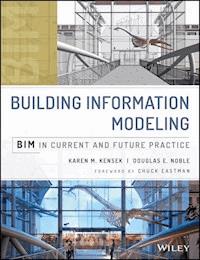
The bright future and exciting possibilities of BIM
Many architects and engineers regard BIM as a disruptive force, changing the way building professionals design, build, and ultimately manage a built structure. With its emphasis on continuing advances in BIM research, teaching, and practice, Building Information Modeling: BIM in Current and Future Practice encourages readers to transform disruption to opportunity and challenges them to reconsider their preconceptions about BIM.
Thought leaders from universities and professional practice composed essays exploring BIM's potential to improve the products and processes of architectural design including the structure and content of the tools themselves. These authors provide insights for assessing the current practice and research directions of BIM and speculate about its future. The twenty-six chapters are thematically grouped in six sections that present complementary and sometimes incompatible positions:
- Design Thinking and BIM
- BIM Analytics
- Comprehensive BIM
- Reasoning with BIM
- Professional BIM
- BIM Speculations
Das E-Book können Sie in Legimi-Apps oder einer beliebigen App lesen, die das folgende Format unterstützen:
Seitenzahl: 673
Veröffentlichungsjahr: 2014
Ähnliche




















Contents
Foreword
Acknowledgments
Introduction
Software Mentioned
Part 1: Design Thinking and BIM
Chapter 1: Smart Buildings/Smart(er) Designers: BIM and the Creative Design Process
1.1 Introduction
1.2 Evaluation of Visual Information: Form
1.3 Generative Abilities of Parametric Models
1.4 How Lighting, Thermal, and Structural Considerations Can Drive the Design
1.5 Limitations of Current Parametric Models
1.6 Physics and Materiality
1.7 Design and Construction 2.0
1.8 Conclusion
Discussion Questions
Bibliography
Chapter 2: Necessity of Cognitive Modeling in BIM’s Future
2.1 Introduction: Some Useful Concepts
2.2 Building Information Modeling: The Brand New World of Design Computing
2.3 Cognitive Strategies for BIM: Challenges and Opportunities
2.4 Conclusions
Discussion Questions
References
Chapter 3: Modeling Architectural Meaning
3.1 Introduction
3.2 Architectural Ontology
3.3 Regulating Lines
3.4 Diagrams and Semantics
3.5 Types
3.6 Conclusion
Discussion Questions
References
Chapter 4: Knowledge-Based Building Information Modeling
4.1 The Potential of Building Information Modeling (BIM) to Capture Design Expertise
4.2 “Vanilla BIM” versus Knowledge-Based BIM
4.3 What Is Design Expertise?
4.4 Capturing and Deploying Design Expertise
4.5 Examples of Deployment
4.6 Summary
Discussion Questions
References
Part 2: BIM Analytics
Chapter 5: Parametric BIM SIM: Integrating Parametric Modeling, BIM, and Simulation for Architectural Design
5.1 Executive Summary
5.2 Introduction
5.3 Complexity and Interfaces
5.4 Case Studies
5.5 Conclusion
Acknowledgments
Discussion Questions
References
Chapter 6: Models and Measurement: Changing Design Value with Simulation, Analysis, and Outcomes
6.1 Introduction
6.2 BIM 1.0
6.3 Analysis and Simulation through BIM 1.0
6.4 BIM 2.0
6.5 Geometry, Behavioral Properties, Parameters, and Analysis
6.6 Ideation and Design Production under BIM 2.0
6.7 Design Empowerment
6.8 Conclusion: Avenues to Alternative Value Generation
Discussion Questions
References
Chapter 7: Energy Modeling in Conceptual Design
7.1 Introduction
7.2 Building Performance Simulation (BPS)
7.3 BIM’s Role in the Process
7.4 Conceptual Design Decisions
7.5 Sensitivity Analysis and Optimization
7.6 BIM Affordances
7.7 Conclusion
Acknowledgments
Discussion Questions
References
Chapter 8: Performance Art: Analytics and the New Theater of Design Practice
8.1 Introduction
8.2 Instruments
8.3 Analytics
8.4 Interactions
8.5 Conclusion: Algorithms Are Thoughts
Discussion Questions
References
Chapter 9: Automated Energy Performance Visualization for BIM
9.1 Introduction
9.2 Case Study: Automated Analysis of U.S. Courthouse Models for GSA
9.3 Performance Visualization
9.4 Discussion
9.5 Conclusion
Acknowledgments
Discussion Questions
References
Chapter 10: Urban Energy Information Modeling: High Fidelity Aggregated Building Simulation for District Energy Systems
10.1 Introduction
10.2 Understanding District Energy Systems
10.3 Community Energy Planning
10.4 Dynamic Energy Mapping
10.5 The Future: BIM in Urban Energy Information Modeling
Discussion Questions
References
Chapter 11: BIM and the Predesign Process: Modeling the Unknown
11.1 Introduction
11.2 Limits of Traditional Early Design Analysis
11.3 BIM-Based Detailed Performance Analysis
11.4 Conclusion: Inventing a New BIM for Early Design Analysis
Discussion Questions
References
Chapter 12: Analytical BIM: BIM Fragments, Domain Gaps, and Other Impediments
12.1 Introduction
12.2 Analytical Modeling
12.3 Building Information Modeling
12.4 Levels of BIM
12.5 FDEIC Knowledge
12.6 Feedback Loop
12.7 Fragment BIMs and Three Gaps
12.8 Conclusion
Acknowledgments
Discussion Questions
References
Part 3: Comprehensive BIM
Chapter 13: One BIM to Rule Them All: Future Reality or Myth?
13.1 Introduction
13.2 A Brief History of the Single Model
13.3 The 2D Interregnum
13.4 What’s Wrong with This Picture?
13.5 One BIM to Rule Them All?
Discussion Questions
References
Chapter 14: Component-Based BIM: A Comprehensive, Detailed, Single-Model Strategy
14.1 Executive Summary
14.2 The Wicked Problem of Making Architecture
14.3 Implementing Component-Based Design
14.4 Conclusion
Discussion Questions
References
Chapter 15: BIM Ecosystem: The Coevolution of Products, Processes, and People
15.1 Introduction
15.2 Coevolution of Products, Processes, and People
15.3 Understanding the Industry Context of BIM
15.4 Establishing a BIM Ecosystem: Operational and Support Technical Requirements in BIM
15.5 Establishing a BIM Ecosystem: Collaborative Platform BIM Decision Framework
15.6 Discussion and Future BIM Ecosystem
Discussion Questions
References
Part 4: Reasoning with BIM
Chapter 16: BIM, Materials, and Fabrication
16.1 The Uber-Detail
16.2 Materials
16.3 The Logic of Materiality
16.4 Soft Data
16.5 Backward BIM
16.6 BIM, Materials, and Fabrication
16.7 Going Forward
16.8 Conclusion
Discussion Questions
References
Chapter 17: Communicating Semantics through Model Restructuring and Representation
17.1 Introduction
17.2 Spatial Reasoning and Querying
17.3 Reasoning for Green Certification
17.4 Conclusion
Discussion Questions
References
Chapter 18: BIM as a Catalyst to Foster Creativity through Collaboration
18.1 Introduction
18.2 The Role of Collaboration in Design
18.3 Social Framework
18.4 Computational Workflows
18.5 Conclusion
Acknowledgments
Discussion Questions
References
Chapter 19: BIM and Virtual Reconstruction: A Long-Term View of (Re-)Modeling
19.1 Executive Summary
19.2 Introduction
19.3 BIM and Virtual Reconstruction
19.4 Information Basis: Model Tree Structures
19.5 Model Porting and Data Exchange
19.6 Outlook: Where Do We Go from Here?
19.7 Conclusion
Discussion Questions
References
Part 5: Professional BIM
Chapter 20: Managing BIM Projects, Organizations, and Policies: Turning Aspirations into Quantitative Measures of Success
20.1 Introduction
20.2 Scorecard Methodology
20.3 Project Evaluation
20.4 Continuous Evaluation
20.5 Performance Indicators
20.6 Portfolio Evaluation
20.7 Country-Level BIM Evaluations
20.8 Conclusion
Acknowledgments
Discussion Questions
References
Chapter 21: Space: The First (and Final) Frontier of BIM
21.1 Introduction
21.2 Historical Perspectives of Space and the Facility Life Cycle
21.3 Space, Measurement, and BIM
21.4 BIM Spatial Pioneers: Coast Guard and GSA
21.5 Project Spatial BIM: Connecting Program to Design, Construction, and Facility Management
21.6 Geospatial, Campus-Wide, and Services-Oriented Spatial BIM
21.7 Standardizing Spatial BIM: IFMA-BOMA, BISDM, Citygml, and Indoor Navigation
21.8 Conclusion
Discussion Questions
References
Chapter 22: Translating Designs for Construction + Operations: The Future of BIM in a World of Material and Energy Scarcity
22.1 Buildings, Information, and Modeling
22.2 The Changing Character of Architectural Representations
22.3 Facilitating the Translation from Design to Construction—with Matter
22.4 Facilitating the Translation from Design to Operations—with Energy
22.5 Conclusion
Discussion Questions
References
Chapter 23: Marx, BIM, and Contemporary Labor
23.1 BIM and Work
23.2 BIM Managers: What They Are Doing
23.3 The Enactment of Enlightened Management Theory
23.4 Conclusion: Post-Capitalist Architecture
Discussion Questions
References
Part 6: BIM Speculation
Chapter 24: Beyond BIM: Next-Generation Building Information Modeling to Support Form, Function, and Use of Buildings
24.1 Rationale
24.2 The Shortcomings of BIM
24.3 Form, Function, Use
24.4 Dependencies
24.5 Objectives
24.6 Methodology
24.7 Implementation
24.8 Conclusion
Acknowledgments
Discussion Questions
References
Chapter 25: Engines of Information: Big Data from Small Buildings
25.1 Introduction
25.2 Data to Information
25.3 Looking through the Lens of Data
25.4 Building an Information Model
25.5 The Present Future
25.6 IM: Drop the (B)
25.7 Information to Knowledge
25.8 Conclusion
Discussion Questions
References
Lesen Sie weiter in der vollständigen Ausgabe!
Lesen Sie weiter in der vollständigen Ausgabe!
Lesen Sie weiter in der vollständigen Ausgabe!
Lesen Sie weiter in der vollständigen Ausgabe!
Lesen Sie weiter in der vollständigen Ausgabe!
Lesen Sie weiter in der vollständigen Ausgabe!
Lesen Sie weiter in der vollständigen Ausgabe!
Lesen Sie weiter in der vollständigen Ausgabe!
Lesen Sie weiter in der vollständigen Ausgabe!
Lesen Sie weiter in der vollständigen Ausgabe!
Lesen Sie weiter in der vollständigen Ausgabe!
Lesen Sie weiter in der vollständigen Ausgabe!
Lesen Sie weiter in der vollständigen Ausgabe!
Lesen Sie weiter in der vollständigen Ausgabe!
Lesen Sie weiter in der vollständigen Ausgabe!
Lesen Sie weiter in der vollständigen Ausgabe!
Lesen Sie weiter in der vollständigen Ausgabe!
Lesen Sie weiter in der vollständigen Ausgabe!
Lesen Sie weiter in der vollständigen Ausgabe!
Lesen Sie weiter in der vollständigen Ausgabe!
Lesen Sie weiter in der vollständigen Ausgabe!
Lesen Sie weiter in der vollständigen Ausgabe!
Lesen Sie weiter in der vollständigen Ausgabe!
Lesen Sie weiter in der vollständigen Ausgabe!
Lesen Sie weiter in der vollständigen Ausgabe!
Lesen Sie weiter in der vollständigen Ausgabe!
Lesen Sie weiter in der vollständigen Ausgabe!
Lesen Sie weiter in der vollständigen Ausgabe!
Lesen Sie weiter in der vollständigen Ausgabe!
Lesen Sie weiter in der vollständigen Ausgabe!
Lesen Sie weiter in der vollständigen Ausgabe!
Lesen Sie weiter in der vollständigen Ausgabe!
Lesen Sie weiter in der vollständigen Ausgabe!
Lesen Sie weiter in der vollständigen Ausgabe!
Lesen Sie weiter in der vollständigen Ausgabe!
Lesen Sie weiter in der vollständigen Ausgabe!
Lesen Sie weiter in der vollständigen Ausgabe!
Lesen Sie weiter in der vollständigen Ausgabe!
Lesen Sie weiter in der vollständigen Ausgabe!
Lesen Sie weiter in der vollständigen Ausgabe!
Lesen Sie weiter in der vollständigen Ausgabe!
Lesen Sie weiter in der vollständigen Ausgabe!
Lesen Sie weiter in der vollständigen Ausgabe!




