


0,00 €
Mehr erfahren.
- Herausgeber: Blackmore Dennett
- Kategorie: Geisteswissenschaft
- Sprache: Englisch
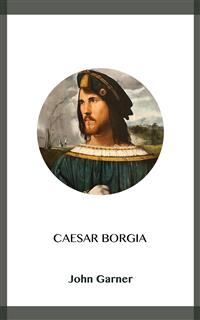
With the passing of the “great man theory,” biography and history have become completely separated, and a personality such as Caesar Borgia is interesting now chiefly as a product of the egoism of the age. Vast, unrestrained selfishness was the predominant characteristic of the men of the Italian Renaissance. The Peninsula was in the grasp of a number of petty tyrants who, to advance their own interests and those of their families, hesitated at no crime. Never before was love of power so general and carried to such extremes. Men and women were mere pawns in a stupendous political game. In the governing families the women especially were regarded as assets to be used in establishing alliances to increase the power of the clan. Men of iron played fast and loose with states and principalities; to them the lives of a city’s population were nothing except so far as their own projects and power were concerned. Of this world the Borgias were part, although they were interlopers in the affairs of the Peninsula; they saw other upstarts securing vast wealth and dominion, and why should not they? The thing were easy with Rodrigo Borgia on the throne of St. Peter. Money in unlimited amounts was at their command and the spiritual weapons of the Church had not yet been cast on the rubbish-heap—there were still kings and princes that quaked at the threat of excommunication. Other men, other families, have played a much more important part than the Borgias in the drama of history; others have committed as great crimes; others have surpassed them in every field of human activity—in fact, no member of the Borgia family ever produced anything of enduring value to Italy or the human race. We are therefore led to ask why Alexander VI., Caesar, and Lucretia Borgia have always aroused such profound interest. Gregorovius ascribes this to the violent contrast of their mode of living—their morals—with the sacredness of the Holy Office. An explanation wholly adequate; for, although there were temporal princes who equalled or surpassed Alexander VI. and Caesar Borgia in wickedness, the Papacy furnishes no other example, in the person of Pope or cardinal, of as great moral obliquity. Caesar had been a cardinal, and in all his projects, after as well as before he relinquished the purple, he was supported by the Pope, his father.
Das E-Book können Sie in Legimi-Apps oder einer beliebigen App lesen, die das folgende Format unterstützen:
Veröffentlichungsjahr: 2018
Ähnliche




















CAESAR BORGIA
by John Garner
Published 2018 by Blackmore Dennett
All rights reserved. This book or any portion thereof may not be reproduced or used in any manner whatsoever without the express written permission of the publisher except for the use of brief quotations in a book review.
Thank you for your purchase. If you enjoyed this work, please leave us a comment.
1 2 3 4 10 8 7 6 5 00 000
TABLE OF CONTENTS
INTRODUCTION
CHAPTER I
CHAPTER II.
CHAPTER III
CHAPTER IV
CHAPTER V
CHAPTER VI
CHAPTER VII
CHAPTER VIII
CHAPTER IX
CHAPTER X
CHAPTER XI
CHAPTER XII
INTRODUCTION
The Renaissance—The Papacy in the fifteenth century—The Borgia.
Possessing a mild climate and a fertile soil, Italy from the earliest times has attracted the invader, the adventurer. Extending out into the Mediterranean, she has been exposed to attacks on all sides, and when the Roman Empire, disintegrated by its own corruption and wickedness, had passed away, no strong central power was left to repel the marauders who swarmed into the peninsula from all sides.
The rich plains of the north attracted the Teutonic tribes who established the Lombard Kingdom, and from the south came the Arabs, bringing their arts and crafts to Sicily. To the Orient the merchants of Venice went for their perfumes, their spices, their gorgeous stuffs, their stamped leathers, and with them they brought back much of the civilisation of the Far East.
Owing to her geographical position, to conditions resulting from her past history, and the prizes she offered the bold and unscrupulous, Italy at an early date became the battle-ground of Europe. Human ambitions and energies now have the entire globe for their field, but before America was discovered little was known of either Africa or Asia, consequently civilisation was almost entirely restricted to Western Europe.
Italy was a seething cauldron of life and activity, and there sprang into being a race of strong, many-sided individuals. Like Spain, she became, in the fifteenth and sixteenth centuries, a land of mighty personalities, of men of varied gifts and vast energy. While Spain gave the world Cortez, Murillo, Velazquez, Calderon, Charles V., Loyola, Alva, and Gonsalvo de Cordova, Italy produced Columbus, Michael Angelo, Raphael, Ariosto, Ludovico il Moro, St. Francis, Prospero Colonna, and Julius II.
Students have ever been fascinated by those periods in the world’s history which have been characterised by unusual activity in the domains of art, letters, science, and politics. The marvellous flowering in architecture and sculpture in the age of Pericles, in poetry and the drama in the time of Elizabeth, and in all the arts during the vaguely defined period of the Italian Renaissance have never ceased to baffle the historian and the psychologist.
Professor Gebhart, in a work of great erudition has endeavoured to account for the civilisation of the Italian Renaissance by reference to “the inherent characteristics of the Italian soul; to certain great and persistent tendencies in her intellectual life, and to certain facts in her political career—causes which affect the entire life of the people; some of which were remote in time, but of lasting effect, while others were recent and transitory.”
In all fields of worthy human endeavour men in Italy had constantly before them the inspiration of splendid achievement; but they were also confronted by examples of evil, vast and successful, reaping material rewards such as rarely fall to the lot of virtue. Throughout Italy, in the age of the Borgia, impudent but brave and crafty adventurers were establishing princely houses, enjoying boundless dominion and wealth—and could their example have been lost on Alexander VI. and Caesar Borgia?
The Renaissance in Italy was much more than a revival in literature and the graphic arts; it was the supreme development of Italian civilisation as a whole, the most perfect expression of the genius and intellectual life of the peninsula.
The chief causes of the Italian Renaissance, causes inherent in Italy herself, were, above all, liberty of the individual mind and social freedom. The persistence of Latin traditions, and the ever-present memory of Greece were likewise potent factors; while the language reached maturity at exactly the right moment. The affluents that came later to swell the movement and hasten the development of the peninsula were the foreign civilisations, Byzantine, Arabian, Norman, Provençal and French.
The Italian spirit has always been essentially practical; abstractions have never appealed to it as anything more than mental gymnastics; for pure metaphysics the Italians cared but little; the wholetendency of their philosophy was utilitarian. In Dante’s “Convito” the question of pure being, the universals, matter and force are subordinate subjects; the “Banquet” is chiefly concerned with discussions of manners; the happiness and welfare of humanity, the government of cities—it is the work, not of a metaphysician, but of a publicist and moralist—ethics is placed above metaphysics; its philosophy is wholly practical.
The chosen study of the Italian universities was jurisprudence. Law, the offspring of pure reason and experience seeking to reconcile changeable conditions with the immutable principles of justice, assumed, owing to the importance of the interests it endeavoured to harmonise—interests upon which rest the government and peace of the world—the first place in the universities of the peninsula. Roman law was the favourite discipline of mediaeval Italy.
The Papacy and the Empire; the relations and the limits of the spiritual power with reference to the temporal and feudal power; the universal monarchy, and the freedom of the cities—such were the weighty problems to which Italy devoted her intellect. Jurisprudence controlled all her mental activities just as absolutely as scholasticism did those of France. The juristprudents Accorso and his sons, Jacopo of Arena, Cino da Pistoja, Bartolo and Baldo, were the men who lent lustre to the Italian universities of the thirteenth century. Law was the basis of a liberal education. Petrarch had studied it. His contempt for the scholasticism of “the disputatious city of Paris” is well known. One of his favourite sayings was: “The object of education is to teach men to think, and not merely to teach them to argue.” Logic he regarded simply as a useful tool.
The freedom the Italians displayed in their intellectual life was manifest also in their religious conscience—and this is one of the most striking characteristics of their genius. During the Middle Ages they resembled none of the other members of the great family of Christian nations. Subtle metaphysics, refined theology, strict regime, dogmatism, elaborate ritual, restless casuistry, all were repellent to the Italian genius. The Italian regarded the Church of Italy as the Universal Church and as largely his handiwork. In St. Peter’s chair, in the Sacred College, in the great monastical institutions he sees himself; he knows human passions prevail there as well as elsewhere—consequently he does not hesitate to enter the Church. This is why they never found the national religion a too heavy burden, why they seldom seceded and founded sects. Italy never originated any great national heresy or beheld any general religious uprisings like the popular movements initiated by Peter Waldo, Wyclif, Huss, and Luther, although later numerous heresies from other parts of Europe entered the peninsula. When other countries were burning witches and heretics at the stake Italy put Dolcino di Novara and Francesco da Pistoja to death for advocating the abolition of private property. In 1327 the poet Cecco d’Ascoli was burned at the stake for practising astrology and necromancy, but in 1452 the priest Niccolò da Verona, condemned in Bologna for sorcery, was taken from the stake by the populace and saved. Savonarola suffered martyrdom, not for his religious theories, but for his political dreams.
The Italians never spared the Papacy. Dante placed Pope Anastasius in the red-hot sepulchre of the heresiarchs, and Boniface VIII. in the circle of the simoniacs with Nicholas III., and to St. Peter in Paradise he ascribes these ghibelline words: “He who on earth now usurps my seat before the Son of God, has made of my tomb a sink of blood and filth.” And Petrarch describes the papal city of Avignon as “a sewer in which is collected all the filth of the universe.”
Without an appreciation of the Italian character and a knowledge of conditions in the peninsula before and during the Renaissance it is impossible to understand how such men as Sixtus IV. and Alexander VI. could have been chosen to fill the chair of St. Peter.
* * * * *
By the end of the fifteenth century the Papacy had almost entirely lost its sacred character and had become a political prize for which all the powerful families contended. It was an office to which any cardinal, regardless of his fitness, might aspire.
Like Naples, Florence, Milan, Perugia, and all the other petty despotisms of the peninsula, it was a secular principality with the sole difference that its head had certain priestly functions to perform and that he was an elected not an hereditary sovereign. Owing to this latter fact it was the most corrupt of all at this time, and its corruption was all the more vile and hideous because of the contrast between the theoretical sacredness and the actual baseness of its head.
In the course of the centuries the Papacy had evolved the astonishing and absurd fiction that the occupant of St. Peter’s chair had the right to make and unmake sovereigns at will; and princes and potentates made a pretence of yielding to this doctrine, knowing that the Church, being able to control the thoughts, actions, and conscience of the ignorant masses, by the terror it inspired, was the strongest ally they could have to maintain them in their usurped and illegitimate domination over those whom they called their subjects and whose subjection had always originated in acts of violence on the part of their masters.
The Papacy was the greatest office in Christendom. It enjoyed a vast income; the patronage, the benefices at its disposal, were innumerable, and during the period of the Renaissance they were usually sold to the highest bidder. Owing to the vast power of the Pope as the arbiter of the destinies of mankind beyond the grave, as well as in this world, his friendship and support were sought by all the potentates of Europe. Being human, it is quite natural that he was always ready to profit by this circumstance. The humblest priest might aspire to the great office, and if he was sufficiently astute and corrupt might attain it. During the fifteenth century in the election of the supreme head of the Church votes were bought and sold even more brazenly than they are to-day on the occasion of the election of a United States senator, and the rabble made bets on the result just as they now do on the outcome of a political contest. Giustinian records the odds that were given on the election of Giuliano della Rovere against his rivals.
Just as only a wealthy man, a member of a great family, or a representative of a powerful interest can now hope to attain a high political office, so in those days none other could hope to reach the Papacy, except when the rivalry among the leading aspirants was so intense that some obscure member of the Sacred College—a “dark horse”—was selected as a compromise candidate; and it is worthy of note that the one so selected was generally in such poor health or so decrepit that he could not hold the office long, and consequently during the period between his election and his death the rival candidates would have another opportunity to develop their respective forces and strengthen their tactics for a new election. It therefore seems that the Divine influences which were supposed to preside over the election of a Pope were somewhat uncertain in their operation, or that the influences of the Borgia, the Piccolomini, the Della Rovere, the Cibo, and the Medici factions outweighed the supernatural, and there is ample evidence to show that this was precisely their view. A story is told of a certain cardinal who, it was noticed during the conclave, was bowed and bent beneath the weight of years and infirmities; indeed, he was scarcely able to hold up his head—his eyes were ever on the ground. “Surely,” said his colleagues, “he will soon go to his reward—we will make him our Pope.” Immediately after his election his eyes brightened, his voice grew strong, he straightened up erect—and the Princes of the Church marvelled greatly. “Whence this change?” they asked; “to what miracle is it due? You were bent—your eyes ever on the ground—but now——!”
“Ah! my beloved children, I was only looking for the keys of St. Peter—and I have found them!”
Any strong candidate for the great honour and the vast emoluments of the Holy Office could count on the vigorous support of his own family and in many cases on that also of various princes in Italy and throughout Europe.
When Nicholas V. succumbed to the gout in 1455 the Sacred College was composed of twenty cardinals, and in the conclave which followed the three strongest candidates were Capranica, Bessarion, and Alonzo Borgia. The contest had reached the acute stage when Alain, Archbishop of Avignon and Cardinal of Santa Prassede, sprang to his feet and asked, “Shall we select for Pope, for head of the Latin Church, a Greek, a mere interloper? Bessarion still wears his beard—and forsooth, he is to be our Lord!”
Then arose his Eminence the Cardinal-Bishop of Nicæa, graceful as he was erudite, and, announcing that it would be a mistake to elect him, cast his vote for Alonzo de Borja, Cardinal of Santi Quattro Coronati, deciding the election in favour of the Spaniard, who assumed the name Calixtus III. Thus it was that the Spanish house of Borja entered into the history of Italy and of the Papacy, April 8, 1455.
Alonzo Borja was born in Xativa, Spain, in 1378; he developed into a studious boy and became a professor at Lerida; later he was made a canon by the anti-Pope Benedict XIII. In Alonzo’s youth a prophet, Vicenzo Ferrerio, had announced that the studious boy would some day wear the tiara, and shortly after his election Alonzo secured the canonisation of the prophetic Vicenzo, thus showing that he recognised merit.
Alonzo was regarded as the leading jurist of his day and as one of the most astute men who ever occupied the throne of St. Peter. He was the first of the Borja to come to Italy, having accompanied Alfonso of Aragon as secretary. By Martin V. he was made Bishop of Valencia and created cardinal by Eugene IV.
When Bessarion arose and cast his vote—with great tact and perhaps equal political acumen—in the aged cardinal’s favour, the Curia remembered that Alonzo was seventy-seven years of age and afflicted with the gout—and his election was assured.
When Alonzo assumed the tiara he pledged his word to the Sacred College that he would keep himself free from all nepotism—thus showing that this was a growing evil—a promise he promptly, broke by bestowing the purple upon his nephew, Juan Luis de Mila, whom he appointed papal representative in Bologna, and upon Rodrigo Borgia, whom he made legate to the Marches and Vice-Chancellor of the Church. He likewise made Juan Mila, Bishop of Zamora, a cardinal.
The new Pope’s nephews—his sister’s sons—were bad men in a bad age, but, blinded by his affection for them, he did not foresee to what his passion would lead.
CALISTVS PAPA-III-HISPANVS
POPE CALIXTUS III.
From an engraving of 1580.
Rodrigo Borgia, when the cardinalate was bestowed upon him by his uncle, September 26, 1456, was about twenty-five years of age, handsome and profligate. Like the Claudian family of Rome, the Borgia of Valencia possessed great intellectual force and physical beauty.
Rodrigo’s brother, Pier Luigi, who was a year younger than the cardinal, remained a layman, but the highest temporal honours were bestowed upon him; he was made Gonfalonier of the Church, Prefect of the city, and finally Warder of the Castle of St. Angelo—in spite of the protests of Capranica and Scarampo, who consequently became the object of the Holy Father’s undying hatred. Pier Luigi has been described as a handsome and depraved ruffian.
Even as early as this—the first period of the Borgia supremacy—Rome was teeming with Spaniards; when Alonzo was made cardinal numerous members of the related Borgia and Mila families flocked thither—their number and aggressiveness being attested by the general and intense hatred that was felt for the Catalans. It was through the Borgias and their followers that Spain secured the strong grip upon the Papacy which she held for a hundred years—although the way had been prepared by the establishment of the Spanish power in Naples and Sicily. To the Eternal City they flocked, kinsmen and retainers, fortune-hunters, and adventurers of every sort; they secured all the important offices; they became utterly lawless and, justice being perverted, they robbed and murdered with impunity.
In July, 1458, Calixtus further advanced Pier Luigi by bestowing upon him the vicariate of Benevento and Terracina. He became the most powerful man in Rome, and seemed destined for a great future when his career was abruptly terminated. The Orsini had risen to expel the Colonna and the Catalans; and Pier Luigi, having sold the Castle of St. Angelo to the cardinals, fled to Civitavecchia, where, attacked by a fever, he died—August, 1458—leaving his vast property to his brother Rodrigo, who, already wealthy, now became one of the richest of the cardinals.
August 6, 1458, Calixtus passed away—to the great relief of the Romans, who expressed their joy at being delivered from the Spanish yoke by sacking the Borgia palaces. Calixtus was bitterly criticised for allowing his nephews to rule him and because of the wretched condition of affairs in Rome during his reign, when robbery, violence, and murder were of daily occurrence.
Although Cardinal Rodrigo Borgia had found it prudent to betake himself to Ostia on the death of his uncle, his high position in the Church was not shaken, and he was soon able to return to his house in the Ponte Quarter.
Little is known of the private life of Rodrigo when he was created cardinal, but there is extant a beautiful letter of admonition written to him by Pius II., the amiable Æneas Sylvius, from the baths of Petriolo, June 11, 1460, when Rodrigo was about twenty-nine years of age, which throws a strong light on the personal conduct of the Cardinal of San Niccolò in Carcere Tulliano.
“Dear Son,—We have learned that your Worthiness, forgetful of the high office with which you are invested, was present in the gardens of Giovanni de Bichis four days ago, from the seventeenth to the twenty-second hour, with several women of Siena—women wholly given over to worldliness and vanity. Your companion was one of your colleagues who, owing to his years, if not on account of his office, ought to have been mindful of his duty. We have heard that wanton dances were indulged in; that none of the allurements of love were wanting; and that you conducted yourself in a manner altogether worldly. Shame forbids mention of all that took place, for not only the acts themselves, but also their very names are unworthy your rank. In order that your pleasures might be free from all restraint the husbands, fathers, brothers, and kinsmen of the women were not asked to be present. You and a few servants were the originators of this orgy. I am told that in Siena nothing is now talked of but your vanity, which is generally ridiculed. Here at the baths, where there are a great many people—Churchmen and laity—your name is on every one’s lips. Our displeasure is beyond words, for your conduct has brought the Holy State and Office into disgrace. The people will say that they make us rich and great, and that instead of living blameless lives, we use what they give us to gratify our passions. This is the reason the Princes and the Powers despise us and the laity mock at us. This is why our own mode of living is flung in our faces when we reprove others. Contempt falls to the lot of Christ’s Vicar because he appears to countenance these doings. You, dear son, have charge of the Bishopric of Valencia, the most important in Spain; you are Chancellor of the Church, and what renders your conduct all the more reprehensible is the fact that you have a seat among the cardinals who are the Pope’s advisers. We leave it to you to decide whether it is becoming to your dignity to court young women and to send those whom you love presents of wine and fruits, and during the whole day to give thought to nothing but sensual pleasures. On account of your conduct people blame us, and the memory of your blessed uncle Calixtus also suffers—and many say he did wrong in heaping honours upon you. If you seek to excuse yourself on the ground of your youth, I say to you that you are not so young as not to know what duties your offices impose upon you. A cardinal should be above reproach, and an example of right living in the eyes of all men—and then we should have just grounds for anger when temporal princes revile us, when they dispute with us for the possession of our property and force us to submit to their wills.
“Of a truth we inflict these wounds upon ourselves and of these troubles we ourselves are the cause, since by our conduct we constantly diminish the authority of the Church. Our punishment for it in this world is dishonour, and in the world to come it will be torment well deserved. May your good sense place a restraint upon these frivolities, and may you never again lose sight of your dignity; then people will not regard you as a vain gallant among men. If this occurs again we shall be compelled to show that it was in violation of our admonition, and that it caused us great pain; and our censure will not pass over you without bringing the blush of shame to your cheek. We have always loved you and thought you worthy of our protection, as a man of an earnest and modest character.
“Therefore conduct yourself henceforth in such a way that we may retain this our good opinion of you and may find in you only the example of a well-ordered life. Your years, which are not such as to preclude improvement, permit us to admonish you paternally.”
During the pontificate of Paul II. Gasparino of Verona described Rodrigo Borgia as “handsome and of a most glad countenance. He is gifted with a honeyed eloquence. The beautiful women upon whom he casts his eyes are lured to love him and are moved in a mysterious manner—as iron is attracted by the magnet.”
In 1476, the year of Caesar’s birth, the Cardinal of Pavia wrote Rodrigo a letter in the Pope’s name, urging him to change his manner of living, in which he says: “What I write you will not be long, but this letter is necessary between you and me. Do not entrust this communication, which is inspired by affection, to your secretaries, but keep it with you so that you may read it over occasionally and think of it at least once a year.”
From this it is evident that Rodrigo had not changed his habits. Love of pleasure characterised him throughout his life. He had no less than eight illegitimate children—five sons and three daughters—all of whom were recognised in official documents. At the time of his death, when he was seventy-two years of age, he had a mistress, the beautiful Giulia Farnese, by whom he had had a son, who was then five years old, Don Giovanni, Infans Romanus, Lord of Camerino, whom he first declared to be the child of his son Caesar, but later in a bull dated September 1, 1501, acknowledged to be his own.
It has been said that as Alexander VI. was not an ordinary man he should not be judged by the moral standards of ordinary men. The theory that the great are not subject to the laws which should regulate the conduct of lesser persons is as absurd as it is pernicious. It would be more just to say that the Borgia should be judged, not by the criterions of a later day, but by those of his own age. There is evolution in morals; the standard of right living is higher to-day than it was during the Renaissance, and no man of the character of Alexander VI., were such possible, could now be elected to the Papacy. At that time many thrones were occupied by men who, in this age, could not survive a year. It is, however, exceedingly difficult to judge men of a past age, because, the sphere of morals being a wide one, there may be progress in one field but not in others—in fact, there may be retrogression in some. During the Renaissance there were men who were bad, judged by the criterions of their own day as well as by those of the present, but their contemporaries, ignorant of the laws governing human progress, which include the laws of morality, did not perceive their true status. Surrounded by men of like character, many of the personalities of the Renaissance were blind to their own depravity.
Nepotism was the root, if not of all, of most of the evil in Rome, and it steadily increased from the time of Calixtus III., who was succeeded by Enea Silvio Piccolomini—Pius II.—who was no less devoted to the interests of his family than his predecessor had been to those of his kinsmen. Of the four children of his sister Laudomia, he made Antonio a duke, Andrea a castellan in Pescara, and Giacomo a noble of Montemarciano. Niccolò Forteguerra, a kinsman on his mother’s side, he made cardinal; Alessandro Mirabelli Piccolomini, who in partnership with Ambrogio Spannochi conducted a bank in Rome, was made Master of the Palace and Governor of Frascati. Jacopo Ammananti of Siena was made cardinal and Bishop of Pavia. Lolli, a cousin of the Pope, was given an office, and so many natives of Siena were provided with places at the pontifical court that it was a saying that “all Siena had moved over to Rome.” Even Saint Catherine owed her beatification to Pius II., who died August 15, 1464.
The conclave for the election of his successor was held August 27th. The Bishop of Torcello, a famous Venetian scholar and humanist, addressed the cardinals, deploring the loss of dignity of the Sacred College and exhorting his colleagues to select a man who would put a stop to the abuses in the Church. At the first scrutiny it was found that the Cardinal of San Marco was unanimously elected. The new Pope, who was born in 1418, was the son of Niccolò Barbo and Polisena Condulmer, a sister of Eugene IV.
When a youth, as he was about to embark on a ship for the Orient, he received news of his uncle’s election to the Papacy; promptly perceiving the opportunities for advancing his fortunes offered him by this event, he changed his plans, and assiduously devoted himself to the study of theology, for which he had no aptitude, and in 1440 he was made Cardinal of San Marco.
His Eminence was a stupid but handsome man, tall of figure, majestic, and exceedingly vain of his personal appearance in ecclesiastical pageants. On his election he wanted to assume the name Formoso, the Handsome, but was dissuaded by the cardinals, who also prevented him from taking the name San Marco, which was the battle-cry of the Republic of Venice, consequently Piero Barbo called himself Paul II. and was duly consecrated September 16, 1464.
During the conclave he had sworn to prosecute the war against the Turks; to reform the Curia; to summon a council at the end of the year; to limit the number of cardinals to twenty-four; and not to appoint any one under thirty years of age, or any one who was ignorant of law and theology, or any of his nephews, to the cardinalate. These promises were exacted by the members of the Sacred College for the protection of their traditional privileges. They also secured his permission to meet twice a year to assure themselves that the agreement was being observed.
Their efforts, however, to reduce the monarchical Papacy to an oligarchy failed. The Pope promptly found a way out of the difficulty by presenting the cardinals for their signature a document which purported to be a copy of the original agreement, but which was in fact very different. Out of complaisance some promptly signed it, Bessarion under the Pope’s coercion, while Carvajal was the only one who persisted in his refusal. Among the cardinals created by Paul II. were his kinsmen Marco Barbo, Giovanni Michiel and Battista Zeno.
The Pope himself, according to Corio, was wholly given over to sensual pleasures; he filled his palace with concubines, says Attilius Alexius, and turned night into day, so that it was exceedingly difficult to obtain an audience with him. The licentiousness of his court and the corruption of his clergy were scandalous. He was noted for a vulgar love of display and took a childish delight in showing himself to the Romans on all public occasions. He desired to be thought astute in all ways, but was merely duplicit. He was wholly unable to retain the friendship of other potentates. He, however, did much to embellish the city, in spite of the fact that he was exceedingly avaricious. He was fond of the table, gluttonous, and a valiant drinker. Although comparatively young, his life was terminated by apoplexy, July 26, 1471, following a supper consisting of two huge watermelons.
In the conclave which assembled August 6, 1471, for the selection of his successor Cardinal Bessarion just missed the throne, being defeated by Francesco della Rovere, who owed his success to Borgia, Orsini, and Gonzaga, and also to the zeal of his attendant in the conclave, Fra Pietro Riario. In return for his support Borgia received the commendam of Subiaco; Gonzaga, the abbey of S. Gregorio; and Orsini, famous and wealthy, was appointed camerlengo.
Francesco della Rovere, born in Savona in 1414, was the son of a poor fisherman and a Greek woman, Lucchesina Mugnone. He was created cardinal in 1467 and assumed the title of San Pietro ad Vincula. He had been general of the Minorites and was famous for his scholarship and his skill in controversy. On his election he took the name Sixtus IV., and he was crowned by Rodrigo Borgia August 25, 1471.
With Sixtus the head of the Church rapidly lost his priestly character and became a temporal prince. Thenceforth St. Peter’s successors were Italian sovereigns, and when they possessed the sacred character it was wholly accidental. The life they led compelled them to resort to mundane expedients—the sale of offices and indulgences and the promotion of the interests of their kinsmen. Never before had such shameless nepotism been displayed, and it now became the mainspring of every act of the Pope.
Illegitimate sons of the Popes appeared with every change in the Papacy; they conducted themselves in the Vatican like princes; they terrorised Rome and endeavoured by force to obtain possession of the various Italian principalities. Generally their careers came to an abrupt end with the death of the Pope to whom they owed their advancement, and to whom they were frequently valuable aids, the Pontiff’s desire for temporal supremacy often finding expression through them. The Popes, in their struggle with the cardinals, frequently found these satellites highly useful. Their power, however, did not extend far beyond the boundaries of the States of the Church as they were bitterly opposed by the older dynasties.
Under Calixtus III. Rome had been a Spanish state, in the reign of Pius II. a Sienese, and during the papacy of Sixtus IV. it was a Ligurian monarchy, and the domain of St. Peter had now reached its greatest territorial expansion. Within its boundaries, however, there still remained a number of feudal families and republics to be destroyed. These the papal favourites, anxious to change the States of the Church into an hereditary monarchy, were eager to crush.
December 15, 1471, Sixtus made Pietro Riario, his putative nephew, but probably his son, Cardinal of San Sisto, and Giuliano della Rovere, son of his brother Raffaele, Cardinal of San Pietro ad Vincola, thus breaking his oath. Both these young men were of low origin and no education, and the Sacred College little suspected that one of them, Giuliano, was destined to become the famous Julius II.
Giuliano della Rovere, who was Bishop of Carpentras, was twenty-eight years old, a libertine and man of the world. Pietro Riario was somewhat younger and Sixtus made him Bishop of Treviso and bestowed numerous other honours upon him. Pietro soon entirely dominated the Pope and from a poor friar became a man of vast wealth. He entered upon an unchecked career of vice, and in two years had squandered a fortune of two hundred thousand gold florins and become a physical wreck. He died in 1472, leaving vast debts which were never paid. Other kinsmen of Sixtus remained laymen but nevertheless were advanced to positions of honour through the influence of the Pope.
On the death of Pietro Riario, Sixtus transferred his affections to his nephew Girolamo, probably also the pontiff’s son, who was called to Rome and given the title to Imola, which had been purchased from Taddeo Manfredi. The government of the States of the Church was entrusted to him, and Galeazzo Sforza conferred upon him the hand of his illegitimate daughter, Caterina, the heroic virago who defended Forli against her husband’s murderers and later against Caesar Borgia, and whom her countrymen styled la prima donna d’Italia. In return for the honour Sixtus made Galeazzo’s son, Ascanio, a cardinal.
Soon after this the Pope succeeded in establishing a matrimonial alliance between his family and the princes of Urbino; for, in return for creating Federico di Montefeltre Duke of Urbino, the latter consented to the marriage of his daughter, Giovanna, to Giovanni della Rovere, another brother of Giuliano.
Sixtus also conferred the purple on Cristoforo and Domenico della Rovere; upon his sister’s son, Geronimo Basso, and also on Raffaele Riario, a nephew of Pietro Riario.
It was stated that the Pope in his eagerness to advance his innumerable kinsmen and connections frequently bestowed an office on one, forgetting he had already given it to another. It was even said that Cardinal Pietro Riario entered into an agreement with Galeazzo Maria Sforza, of Milan, by which the duke was to furnish him with money and troops to enable him to seize the papal throne, which Sixtus appears to have been ready to yield to him; the plan, however, which would have resulted in the secularisation of the Papal States, failed through the death of Pietro.
The secularisation of the Papacy, nevertheless, was proceeding rapidly. The Curia was becoming more and more addicted to the vices of the age. German travellers who visited Rome in 1475, the year of the Jubilee—Paul II. having reduced the period intervening between jubilees to twenty-five years for the sake of the money they yielded—relate that they saw nothing but nepotism, simony, extortion, and crime. On every hand was extravagance, pomp, and vulgar love of display. The populace, as in the days of the Roman Empire, clamoured for spectacular exhibitions, and these the Popes lavishly furnished.
The success of the political schemes of Sixtus demanded the overthrow of the Medici, and he consequently, at least, countenanced the Pazzi conspiracy, which resulted in the murder of Giuliano de’ Medici and the wounding of Lorenzo, who only saved himself by flight. Three weeks later the Pope, King Ferdinand of Naples, and the city of Siena formed a league whose avowed purpose was the expulsion of the Medici from Florence.
Sixtus was a consummate politician, and Infessura speaks of the day on which he died as “that most blessed day upon which God delivered Christendom from the hands of a most impious and iniquitous king.” He states that Sixtus had no affection for his people; that he was avaricious, vain, vicious; that he trafficked in offices and benefices, made a plaything of justice, and that he was cruel and vindictive.
According to history Sixtus was an evil ruler in an evil age. All his acts were inspired by a love of power or an exaggerated affection for his kinsmen. He it was who first completely surrendered the Papacy and Rome to his relatives. He used all sorts of means to increase the Church revenues, only to hand them over to his nephews to use in extending the power of his family. He was, however, not wholly devoid of virtue, for he possessed great learning. Impatient of contradiction, he used any means to overcome opposition, and he soon showed that he was born to rule. Sixtus IV. had none of the priestly characteristics which the Supreme Pontiff is supposed to possess; in him the priest was lost in the prince.
From that time forth St. Peter’s successors were temporal sovereigns who happened to be Popes; the members of their families were everywhere treated as princes. Many of their putative nephews were in reality their own illegitimate sons. There was a saying current in Europe during the reign of Sixtus that there were as many popes in Rome as he had nephews. With every change in the Papacy a new swarm came into power, only to fall with their creator’s decease.
The Papacy having become a temporal power, the Pope’s kinsmen were his chief support; at the same time, the Sacred Office was the greatest political instrument an ambitious and powerful family could secure to aid its advancement.
The papal nephews terrorised the domain of the Church and endeavoured to obtain possession of rival states and cities. Nepotism became a system, and, as hereditary succession was denied the Pope, it furnished him the only means by which he could hope to perpetuate his power, but as we have seen the means were inadequate.
The Italians promptly discovered that the same hopes and fears, the same ambitions and passions prevailed in St. Peter’s Chair as ruled elsewhere, and also that the Pope was a very human sovereign and one who enjoyed the advantage of being unhampered by any feudal institutions.
The temporal supremacy of the Pope, however, could be exercised only in the territory about the city of Rome where there were still left a few powerful feudal families, together with a number of small republics whose destruction could be compassed only through the agency of the Pontiff’s favourites or kinsmen. In that way a monarchy might be established which in size and power would have equalled most of the Italian states of that age.
Sixtus created no less than thirty-five cardinals. The Pazzi conspiracy, the war against Ferrara, his treatment of the Colonna and the names of Pietro and Girolamo Riario show to what depths the Papacy had fallen in the closing years of the fifteenth century.
Between the nepotism of Sixtus IV. and that of Alexander VI. there was but little difference. If the nephews of Della Rovere had possessed the ability of the Borgia, or if political events had occurred to disturb the concord of the peninsula, Sixtus IV. would have secured the place in Italy and in the history of Rome which Alexander VI. holds. Sixtus was the first Pope-king, but he was far surpassed by Alexander VI.
Italy had fallen upon evil days; the peninsula was teeming with corruption; everywhere there was a mad scramble for office; every man’s hand was against his neighbour; the Popes engaged in all sorts of financial operations—the sale of offices, honours, indulgences, immunities; and, to make matters worse, foreign invasion threatened the country.
Sixtus died August 12, 1484, and when his opponents learned of his death they rushed forth and sacked the Riario palaces. The conclave for the election of his successor was held August 26th, and it was found that the cardinals were divided into two parties, one comprising Rodrigo Borgia, the Orsini, and the Aragonese faction; the other, Colonna, Cibo, Della Rovere, and the Venetians.
Rodrigo Borgia felt so certain of being elected that he had his palace fortified to preserve it from being sacked. Votes were openly traded for castles, benefices, and papal offices. Ascanio Sforza and the Aragonese, unable to force the election of the Borgia, sold their votes to Cardinal Giambatista Cibo, who was elected August 29, 1484. He assumed the name Innocent VIII. Giuliano della Rovere had managed his campaign most skilfully.
Cibo was a handsome and imposing man, but he possessed neither wealth nor brains. He had numerous progeny by a certain Neapolitan woman. It was his son, Franceschetto Cibo—reputed to be his nephew—who married Maddalena, daughter of Lorenzo de’ Medici, January 20, 1488, in the Vatican amid great pomp, and in return for this honour, Giovanni de’ Medici, then thirteen years of age—the future Leo X.—was created cardinal.
To the cardinals Innocent made all sorts of promises which he never kept—promises made by the man might be broken by the Pope. He was the first of Christ’s Vicars publicly to acknowledge his children, of whom he had seven. He was a loathsome individual, avaricious, vicious, and venal, and completely under the control of his favourites. At Rome he established an office for the sale of pardons whose revenues went to himself and his son Franceschetto. During his reign crime held high carnival throughout the Campagna.
Innocent continued and extended the evil practices of his predecessors. The traffic in offices was conducted on a scale hitherto unknown, for he constantly created new ones solely for the profit to be derived from their sale. He sold the right to collect the customs to certain individuals and bankrupted the State. Rome was a sink of crime and corruption, a market where all the world might purchase indulgences.
Innocent’s nepotism was different from that of some of the other Popes. With him it was based on no political idea or purpose, but simply upon avarice and vulgar greed. He founded no principalities for his sons because he himself was entirely devoid of force and political acumen, and they had neither the ambition nor the ability to make themselves powerful in the State. The county of Cervetri and Anguillara had been given to Franceschetto, but on the death of his father he sold it to Virginio Orsini, and wisely, because he could not have held it.
Infessura tells us that when the wretched Innocent VIII. was on his death-bed his Jewish leech sought to prolong his life with the blood of three young boys who were purchased for a ducat apiece, and who promptly died, whereupon the physician fled and the Pope expired, July 25, 1492.




