


11,99 €
Mehr erfahren.
- Herausgeber: John Wiley & Sons
- Kategorie: Geisteswissenschaft
- Sprache: Englisch
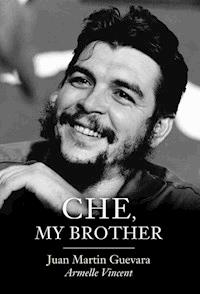
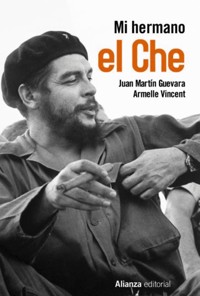
On 9 October 1967, Ernesto Che Guevara, Marxist guerrilla leader and hero of the Cuban Revolution, was captured and executed by Bolivian forces. When the Guevara family learned from the front pages that Che was dead, they decided to say nothing. Fifty years on, his younger brother, Juan Martin, breaks the silence to narrate his intimate memories and share with us his views of the character behind one of history's most iconic figures. Juan Martin brings Che back to life, as a caring and protective older brother. Alongside the many practical jokes and escapades they undertook together, Juan Martin also relates the two extraordinary months he spent with the Comandante in 1959, in Havana, at the epicentre of the Cuban Revolution. He remembers Che as an idealist and adventurer and also as a committed intellectual. And he tells us of their parents - eccentric, cultivated, bohemian - and of their brothers and sisters, all of whom played a part in his political awakening. This unique autobiographical account sheds new light on a figure who continues to be revered as a symbol of revolutionary action and who remains a source of inspiration for many who believe that the struggle for a better world is not in vain.
Sie lesen das E-Book in den Legimi-Apps auf:
Seitenzahl: 406
Veröffentlichungsjahr: 2017
Ähnliche


















Contents
Cover
Title Page
Copyright
Acknowledgements
1 La Quebrada del Yuro
Notes
2 Havana, January 1959
Notes
3 An eccentric couple, always short of money
Notes
4 As free as the wind
Notes
5 A unique character
Notes
6 ‘The American country with the best food’
Notes
7 Discover the world or change it
Notes
8 Return to Buenos Aires
Notes
9 ‘This letter might be the last’
Notes
10 Eight years, three months and twenty-three days
Notes
11 Days of liberation
Notes
12 Flying to Havana
Notes
13 ‘Until forever, my children . . .’
Notes
14 People are often wrong about the Cubans
Notes
15 What can I do but sow seeds?
Notes
16 Che lives on
Notes
17 ‘A year. Already so long ago.’
Appendix I Excerpts from the Algiers speech
Appendix II Letter from Archbishop Moure
Bibliography
End User License Agreement
Guide
Cover
Table of Contents
Begin Reading
Pages
iii
iv
vii
1
2
3
4
5
6
7
8
9
10
11
12
13
14
15
16
17
18
19
20
21
22
23
24
25
26
27
28
29
30
31
32
33
34
35
36
37
38
39
40
41
42
43
44
45
46
47
48
49
50
51
52
53
54
55
56
57
58
59
60
61
62
63
64
65
66
67
68
69
70
71
72
73
74
75
76
77
78
79
80
81
82
83
84
85
86
87
88
89
90
91
92
93
94
95
96
97
98
99
100
101
102
103
104
105
106
107
108
109
110
111
112
113
114
115
116
117
118
119
120
121
122
123
124
125
126
127
128
129
130
131
132
133
134
135
136
137
138
139
140
141
142
143
144
145
146
147
148
149
150
151
152
153
154
155
156
157
158
159
160
161
162
163
164
165
166
167
168
169
170
171
172
173
174
175
176
177
178
179
180
181
182
183
184
185
186
187
188
189
190
191
192
193
194
195
196
197
198
199
200
201
202
203
204
205
206
207
208
209
210
211
212
213
214
215
216
217
218
219
220
221
222
223
224
225
226
227
228
229
230
231
232
233
234
235
236
237
238
239
240
241
242
243
244
245
246
247
248
249
250
251
252
253
254
255
256
258
257
259
260
261
262
263
264
Che, My Brother
Juan Martin Guevara Armelle Vincent
Translated by Andrew Brown
polity
First published in French as Mon frère, le Che, © Éditions Calmann-Lévy, 2016
This English edition © Polity Press, 2017
Polity Press65 Bridge StreetCambridge CB2 1UR, UK
Polity Press350 Main StreetMalden, MA 02148, USA
All rights reserved. Except for the quotation of short passages for the purpose of criticism and review, no part of this publication may be reproduced, stored in a retrieval system or transmitted, in any form or by any means, electronic, mechanical, photocopying, recording or otherwise, without the prior permission of the publisher.
ISBN-13: 978-1-5095-1778-7
A catalogue record for this book is available from the British Library.
Library of Congress Cataloging-in-Publication Data
Names: Guevara, Juan Martin, author. | Vincent, Armelle, author.Title: Che, my brother / Juan Martin Guevara, Armelle Vincent.Other titles: Mon frere le Che. EnglishDescription: English edition. | Cambridge ; Malden, MA : Polity, 2017. |Includes bibliographical references and index. | Original French title from Amazon view of online title page.Identifiers: LCCN 2016041405 (print) | LCCN 2017000120 (ebook) | ISBN 9781509517756 (hardback) | ISBN 9781509517770 (Mobi) | ISBN 9781509517787 (ebook)Subjects: LCSH: Guevara, Che, 1928-1967. | Guerrillas--LatinAmerica--Biography. | Cuba--History--1959-1990. | LatinAmerica--History--1948-1980. | Guevara, Che, 1928-1967. | BISAC: POLITICAL SCIENCE / Political Freedom & Security / Terrorism.Classification: LCC F2849.22.G85 G7613 2017 (print) | LCC F2849.22.G85 (ebook) | DDC 980.03092 [B] --dc23LC record available at https://lccn.loc.gov/2016041405
Every effort has been made to trace all copyright holders, but if any have been inadvertently overlooked the publisher will be pleased to include any necessary credits in any subsequent reprint or edition.
For further information on Polity, visit our website: politybooks.com
Acknowledgements
To all the companions who, faithful to the spirit of Che, have had the courage to persevere in the struggle for ‘the creation of a new society, rich and fair’.
To my fortunate encounter with Armelle that made it possible for me to write this book dedicated to young people, and to the certainty that the world has other Che(s) waiting for the right moment to rise up.
Juan Martin Guevara
1La Quebrada del Yuro
I waited forty-seven years before going to see the spot where my brother Ernesto Guevara was murdered. Everyone knows he was killed by a coward’s rifle on 9 October 1967 in a shabby classroom of the village school in La Higuera, an isolated hamlet in South Bolivia. He had been captured the day before at the bottom of the Quebrada del Yuro, a bare ravine where he had entrenched himself after realizing that his sparse band of guerrillas, weakened by hunger and thirst, was surrounded by the army. They say he died with dignity and that his last words were ‘Póngase sereno y apunte bien. Va a matar a un hombre’ (‘Calm down and take good aim. You’re going to kill a man’). Mario Terán Salazar, the unfortunate soldier appointed to do the dirty work, was shaking. True, Che had for eleven months been public enemy number 1 of the Bolivian army, perhaps even of the entire American continent, but he was a legendary opponent, a mythical figure covered in glory, known for his sense of justice and fairness and also for his immense bravery. What if this Che, gazing unblinkingly at him with his big deep eyes without seeming to judge him, really was the friend and defender of the humble rather than the blood-stained revolutionary portrayed by his superiors? What if his disciples, said to be loyal to a fault, would one day decide to track him down and avenge Che’s death?
Mario Terán Salazar had needed to get drunk before he could find the courage to pull the trigger. When he saw Che sitting calmly, waiting for the inevitable, he rushed out of the classroom, bathed in sweat. His superiors forced him to return.
My brother died standing. They wanted him to die sitting down, to humiliate him. He protested – and he won this last battle. Among his many qualities, or talents, he could be very persuasive.
I bought a new pair of sneakers to get down to Quebrada del Yuro. It’s a deep gorge, falling away abruptly behind La Higuera. It was very difficult, very painful for me to be here. Painful, but necessary. This pilgrimage was a project I’d been carrying around with me for years. It had been almost impossible to come here any earlier. In the first years following Che’s death, I was too young, not quite prepared psychologically. Then Argentina turned fascist and repressive and I languished for nearly nine years in the jails of the military junta that seized power in March 1976. I learned to lie low: in the political climate of my country, it was for many years dangerous to be associated with Che Guevara.
Only my brother Roberto came to the area in October 1967, sent from Buenos Aires by the family to try and identify Ernesto’s body once the news of his death had been announced. He returned deeply shocked and bewildered: by the time he arrived in Bolivia, the remains of our brother had vanished. The Bolivian soldiers led Roberto a merry chase, sending him from one city to another, changing their story every time.
My father and my sisters Celia and Ana Maria never had the strength to make the journey. My mother had succumbed to cancer two years earlier. If she had not already been in the grave, Ernesto’s assassination would have finished her off. She adored him.
I drove here from Buenos Aires with some friends. A journey of 2,600 kilometres. In 1967, we did not know where Ernesto was. He had left Cuba in the greatest secrecy. Only a few people, including Fidel Castro, knew that he was fighting for the liberation of the Bolivian people. My family was lost in conjectures, imagining him to be on the other side of the world, in Africa maybe. In reality, he was only thirty hours away from Buenos Aires, where we lived. We would learn years later1 that he had travelled via the Belgian Congo where, with a dozen or so black Cubans, he had gone to support the Simba rebels.
On the crest of the ravine, I’m approached by a guide. He doesn’t know who I am and I don’t want to reveal my identity. He demands that I give him some money to show me where Che was captured – the first sign that my brother’s death has been turned into a business venture. I am outraged. Che represents the complete opposite of sordid profit. The friend who has accompanied me here is furious; he can’t stop himself from telling the guide who I am. How dare this guide try to get money out of Che’s brother just when he is coming to pay homage for the first time at the site of his fatal defeat? The guide steps back with reverence and stares at me wide-eyed. It’s as if he has just seen an apparition. He apologizes profusely. I’m not listening. I’m used to it. Being the brother of Che has never been a trivial matter. When people learn who I am, they’re dumbstruck. Christ can’t have any brothers or sisters. And Che is a bit like Christ. In La Higuera and Vallegrande, where his body was taken on 9 October to be displayed to the public before disappearing, he became San Ernesto de la Higuera. The locals pray before his image. I generally respect religious beliefs, but this one really bothers me. In the family, since my paternal grandmother Ana Lynch-Ortiz, we haven’t believed in God. My mother never took us to church. Ernesto was a man. We need to pull him down off his pedestal, give life to this bronze statue so we can perpetuate his message. Che would have hated being turned into an idol.
I begin the descent down to the fateful place with a heavy heart. I am struck by the bareness of the ravine. I expected to find dense vegetation. In fact, except for a few dry, thick shrubs, nature is almost like a desert here. I now find it easier to see how Ernesto could have ended up caught like a rat in a trap. It was practically impossible to stay out of sight of the army, which had encircled the Quebrada the day before.
I reach the place where he was wounded by a gunshot in his left thigh and another in his right forearm. I start with amazement. In front of the puny tree against which he had leaned on 8 October, the dry ground is covered by a star, cast in concrete. It marks the exact place where he was sitting when he was discovered. A profound anguish takes hold of me. I’m overwhelmed by doubts. I feel his presence. I pity him. I wonder what he was doing there, alone. Why wasn’t I with him? Of course I should have been with him. I was always a militant, too. He was not only my brother, but my comrade in struggle, my model. I was only twenty-three, but that is no excuse: in the Sierra Maestra in Cuba – the mountain range where the armed struggle started during which
Fidel Castro appointed Che Comandante, and where he distinguished himself – some of the fighters were only fifteen! I didn’t know he was in Bolivia, but I should have known! I should have stayed with him in Cuba in February 1959, and ignored my father’s veto.
I sit down, or rather I slump down onto the place where he had sat. I can still see his handsome face, his hypnotic, inquisitive gaze, his mischievous smile. I can hear his infectious laughter, his voice, his indefinable inflection: with the years he spent in Mexico and then in Cuba, his Spanish had become a mixture of three accents. Did he feel alone, vanquished?
Some of the questions I ask myself have a practical side to them. Others are purely sentimental. Che was not alone, but supported by six fighters who were arrested with him. Could I have helped him escape? That day, five other companions, including Guido ‘Inti’ Peredo, did after all manage to escape the ambush.2 Why didn’t he? I reconstruct the chain of events that led to the death of my brother. Was Che betrayed? If so, by whom? There are several hypotheses, but as that’s all they are, I prefer not to dwell on them. Ernesto was fighting under the name Ramón Benítez. They say he chose the name Ramón in honour of the short story ‘Meeting’ by Julio Cortázar, which recounted the adventures of a group of revolutionaries in the Sierra Maestra. His presence was shrouded in mystery. On the basis of information provided by the CIA – which had brazenly set up an HQ in the presidential palace of René Barrientos in La Paz – the Bolivian government suspected that Ernesto Guevara was commanding the Ñancahuazú army, without having any proof of this.
Until, that is, the Argentinian Ciro Bustos, arrested in the scrub after being authorized by Che to abandon the insurgency, provided them with an identikit portrait of Che, under the threat of spending the rest of his days in prison.
As I climb back up the ravine, I feel devastated, emptied. An unpleasant surprise is waiting for me in La Higuera. As I enter the hamlet to go and pay homage in the school where Ernesto was killed, a woman breaks away from a group of Japanese tourists and pounces on me. She has just learned from another Japanese woman, a journalist, that Che’s brother is here. She cries, and mumbles: ‘Che’s brother, Che’s brother’. She asks me most politely to pose for a photo with her. I have no choice but to agree and comfort her. This Japanese woman apparently considers me to be a reincarnation of Che. I am both disturbed and touched. Almost fifty years after his death, my brother is more than ever present in the collective memory. I’m certainly not Ernesto, but I can, and must, be a conduit for his ideas and his ideals. His five children barely knew him. My sister Celia and my brother Roberto categorically refuse to talk. My sister Ana Maria died of cancer, like my mother. I am seventy-two years old. I can’t waste any time.
The school where Ernesto spent his last night has undergone a few transformations. The wall that separated the two classrooms has been knocked down. The walls are covered with pictures and posters depicting Che’s last hours. The chair he occupied when Mario Terán Salazar came to kill him is still there. I imagine my brother sitting there, waiting for his death. It’s very difficult.
On the village square stands a large white bust sculpted by a Cuban artist, based on the famous photo by Alberto Korda, Guerrillero heroico. This bust, behind which a white cross looms, also has a turbulent history. It was put up in early 1987 and quickly removed by a commando from the Bolivian army, to be replaced by a plaque in memory of the soldiers who were victims of guerrilla warfare. It resumed its place twenty years later, accompanied by a four-metre-high sculpture standing at the entrance to the hamlet. For years, the people of La Higuera and Vallegrande were terrorized. No one dared speak of Che: so as to eradicate all traces of the passage of this ‘subversive’,3 the Bolivian government had banned all mention of his name. In response to the imposed silence, legends inevitably began to be forged. At the time of his capture, the peasants of the Aymara community who inhabit the area had no awareness of the importance of this prisoner. They never saw any strangers, and barely spoke any Spanish. After Che’s death, hordes of journalists descended on their village. Until 9 October 1967, no one had ever heard of La Higuera. On 10 October, thirty-six planes lined up on the improvised runway in Vallegrande, sixty kilometres away. The natives started to realize that a significant event had occurred, that this prisoner was not just any prisoner.
Ernesto’s body was taken to Vallegrande on a stretcher mounted onto the landing gear of a helicopter. The Bolivian military decided to display it in the laundry at the bottom of the garden of the small local hospital, for seventeen hours. They wanted to make an example of him; to show that the whole crew of ‘subversives’ like this Ernesto ‘Che’ Guevara would be annihilated. Che was dead, dead, dead! This pathetic end was to serve as a lesson to the people. They should never stray into such a lamentable adventure, one that was inevitably doomed to failure.
His half-naked body was placed on a cement slab. He was barefoot, his eyes open – even though it was said that a priest had closed them in La Higuera . . . Some have compared the image of my tortured brother to the painting known as The Lamentation of Christ by the Italian Renaissance painter Andrea Mantegna. The resemblance is uncanny, but it means nothing. Some witnesses said that Che’s eyes followed them while they wandered around his body. Others say that the doctor – a secret admirer – responsible for washing his body wanted to embalm it, but didn’t have enough time and so took his heart to keep it in a jar. The same doctor, it is claimed, took two death masks, the first in wax and the second in plaster. One nurse was surprised by the peaceful expression on Ernesto’s face, which contrasted strangely with the other guerrillas who were killed: their faces were marked by suffering and anguish. I don’t believe these idiotic stories. They all tend towards the same goal: to turn Che into a myth. It is this myth that I intend to fight, by giving back to my brother his human face.
After 9 October, fifteen soldiers remained stationed in La Higuera for a year. They told the farmers that they were there to protect them from Che’s accomplices who would inevitably come to kill them in vengeance for his death. For it was these same peasants, wasn’t it, who had betrayed Che.
In this way, a cult was born, amid whispers and fears.
The shameful trade that has developed around Che horrifies me. Ernesto would have disowned these absurd legends that verge on mysticism. In La Higuera and Vallegrande, a whole tourist business is dedicated to Che. There are guided tours along the ‘Che route’. People try to sell you anything and everything. It’s disgusting. When I came out of the school, I saw the objects on display, the T-shirts, the flags. I found it all unspeakably vile. Ernesto was fighting for the liberation of the American continent, and now there are people exploiting his image just to make money. People pray to Santito Che, calling on him to perform miracles, for their cows or whatever! Che wanted to give, not take. He believed in man as master of his destiny and not as subject to some kind of higher force that indulges him (or not) with various things. He believed in struggle. He was a humanist.
I went to La Higuera twice, and I will definitely not be going back. It is no longer a hamlet of four wretched houses, but an open-air shop where they are forever trying to squeeze money out of you. All this has nothing to do with my brother. Nothing.
Ernesto’s body mysteriously disappeared on the morning of 11 October 1967. A nun on duty at the hospital later told a German Franciscan, Brother Anastasio, that she had heard the rustling of a procession in the corridors of the hospital at around 1 a.m. that night. Rumours of all kinds of course started circulating.
The truth came out twenty years later.
Notes
1
. In 1998, about the time his Congo diaries were first published. See Ernesto ‘Che’ Guevara,
The African Dream: The Diaries of the Revolutionary War in the Congo
, trans. Patrick Camiller (London: Harvill, 2001).
2
. They spent over a month evading the Bolivian Army and managed to reach a town without being detected. Guido ‘Inti’ Peredo was hunted down and murdered in 1969.
3
. With the waves of terrorism in Argentina, the adjective ‘subversive’ became a noun, so we will use it in the same way.
2Havana, January 1959
The phone rang late one morning in our house on calle Aráoz in Buenos Aires. My mother jumped. Could it be him? She leapt up, pushing away the table on which a game of solitaire was spread out. For two years, she had been living in a state of deep depression and almost permanent anxiety, finding some solace in this card game that she played while smoking unfiltered dark cigarettes. She was forever worrying herself sick over my elder brother Ernesto. He was fighting at the head of the 8th column ‘Ciro Redondo’ of the Ejercito Rebelde1 of the young revolutionary leader Fidel Castro and his 26th of July Movement, with the goal of overthrowing the Cuban dictator Fulgencio Batista and his policies of savagery and terror. Many times, the international press had announced the death of the ‘Argentinian doctor Ernesto “Che” Guevara’, plunging our family into dismay and uncertainty. But these were just rumours put about by an oppressive regime to confuse the Cuban people and dissuade them from giving any assistance to the revolutionaries. One by one these dismal stories turned out to be false, to our immense relief.
News from Ernesto was scarce. We knew that he was fighting somewhere in Cuba, that the revolutionary army had won some decisive battles, that it had the support of the population and was moving towards the capital. We lived 6,500 kilometres from the island: to us it seemed like light years away. We clung to every bit of information from the theatre of operations that was then based in the Sierra Maestra, the inhospitable mountains on the south-east of the island where the vegetation is impenetrable and temperatures can dip sharply in winter.
Each of the announced deaths of Ernesto became increasingly doubtful, less and less credible. Yet we lived on a knife-edge, in a permanent state of alert. Without saying so, my parents blamed themselves for not having managed to convince this reckless and untameable son to stay put, even though they had never tried to hold him back. They raised us in complete freedom, encouraging all our activities: travel, discovery, adventure, politics and even rebellion. But this? This revolution in a foreign land where every day he risked losing his life? It was so terribly hard for them to understand it and endure it. This beloved son they had pampered, at whose bedside they had spent so many agonizing hours trying to ease the spectacular asthma attacks that sapped him of all strength and prevented him from breathing, was now risking his life for ideals. And he still hadn’t hit thirty! Yet they were forced to admit that this too was something he had learned from them. This was how they had brought us up; but now it had all got out of hand. Ernesto took their lessons to an extreme and gave them a whole new direction.
I was fifteen. I could see that my parents were suffering from his absence, but I could not really appreciate the danger. I admired my brother, the great trail-blazer, alone and almost penniless, who at the age of twenty-one headed off on a 4,500-kilometre-long motorbike jaunt and then, a year later, set off again on his bike with his friend Alberto ‘Mial’ Granado for several months. Then he left on an even longer expedition, at the end of which he met a gang of Cuban revolutionaries with whom he set off to remake the world, at gunpoint, on a remote and exotic island. None of my friends can boast of having such a brother.
My mother grabbed the receiver and answered the phone: ‘Hello?’
‘Hola vieja,2 it’s your son, Ernestito.’
My mother was never very demonstrative. But she could not hold back a cry. In six long years she had heard Ernesto’s voice only once, when he briefly called her from his camp in the Sierra Maestra. Since his final departure from Buenos Aires on 8 July 1953, each of us – my father Ernesto Guevara Lynch, my mother Celia de la Serna, my brother Roberto, my sisters Celia and Ana Maria and I – had exchanged regular letters with him, at least until his immersion in clandestine activities. Family communication was always carried out in writing rather than by phone.
My mother beamed. ‘It’s Ernestito!’ she yelled. She suddenly seemed so happy. The news was excellent. Ernesto told her of the victory won by the Ejercito Rebelde, its triumphal entry into Havana and the retreat of Fulgencio Batista. But he hadn’t phoned us in Buenos Aires to talk about his exploits, he explained. It wasn’t the Comandante who was phoning, but the son and brother. He wanted to hear his mother’s voice, he had missed it so much. The vieja and he loved and respected each other so deeply and intensely. She was the person who had mainly shaped Ernesto. She was into politics and protest before he was. She passed on her love of reading to him, and taught him French, which she spoke fluently. Ernesto was said to be her favourite. This favouritism dated back to the disease that had consumed his childhood: the chronic asthma which prevented him from attending school in the normal way and forced my mother to home school him until he was nine.
I never suffered from their close relationship: as the youngest – I was fifteen years younger than Ernesto and eleven years younger than Roberto – I myself enjoyed a privileged place in the family. Besides, the day after Ernesto’s phone call, when the world learned of the victory of Fidel Castro, my mother made this statement to the journalist Angelina Muñoz from the magazine La Mujer: ‘Of my five children, Ernestito is the most famous, but they are all wonderful’, before adding: ‘I don’t know who I will find in Havana. The last six years have been a vital, intense time for my son. He must have changed. I’m a little intimidated. I never wanted to hamper his freedom. If my husband and I had done so, we wouldn’t have the relationship that we have today, a comradely relationship. My son has never had to confront his family, we’ve always tried to understand and share his anxieties.’
On the evening of the providential phone call, we all gathered at home, euphoric and confused. We asked ourselves the same question: would we recognize Ernesto? Who was this bearded man with an unruly shock of hair held in place by a beret, this Comandante appearing on the front pages of newspapers across the world? What did he have to do with our Ernesto?
In Buenos Aires, people were celebrating in the streets; they had just learned of their heroic compatriot’s victory. All the newspapers announced the triumph of the Cuban revolution. Friends and relatives who had always been the most resistant to Ernesto’s ideas were celebrating too. The Guevara and de la Serna clans had apparently just given birth to a great man and they were bursting with pride. At least for now. Some would later have all the time in the world to try and distance themselves from him when things turned sour in Argentina.
Two days after the phone call, on 6 January 1959, my father, my mother, my sister Celia and I left calle Aráoz for the Ezeiza International Airport. We were off to Cuba. Unfortunately, Roberto and Ana Maria could not come with us. Roberto had work commitments, I forget exactly what; Ana Maria had just had a baby. I was strutting about in the three-piece suit my parents had bought me for the occasion – my very first suit. I would finally be seeing my big brother again, the joker who had introduced me to the adventure stories of Emilio Salgari and Jules Verne. It hardly mattered to me that he had become El Comandante or El Che. Of course, I felt a vague sense of pride – after all, his mug was plastered all over the papers – but it was all still rather distant as far as I was concerned.
We were elated. Fidel Castro had quietly decided to bring us to Havana to celebrate the victory without telling Ernesto. My brother would have rejected the idea; he didn’t want to waste the money of the new revolutionary Cuban state. Over the two years they had fought side by side, Ernesto and Fidel had been bound by a strong, manly friendship that the Cuban intellectual Alfredo Guevara would sum up later in an interview with the Spanish daily El País: ‘Fidel encountered far too many mirrors in his life; Che was not a mirror, he was a cultivated man and had his own values. He spoke to Fidel on equal terms, he was an equal, perhaps the only one among us. He knew that Fidel was the leader and Fidel listened to Che and respected him; there was a perfect complicity between them.’3
Fidel knew how attached his friend was to his family. Ernesto had risked his life to free a country that was not his. So Fidel felt it would be unfair if he was the only one left out of the party. He instructed his other Comandante, Camilo Cienfuegos, to tell us we should go the airport with our luggage. We needed to take a Cubana Airlines plane chartered for the repatriation of Cuban political exiles not only from Argentina, but from Chile, Ecuador and Mexico. This charter flight promised to be an interesting occasion . . .
The first exiles turned up at Ezeiza as heavily laden as mules. One of them in particular was carrying a hundred or so books, bursting out of several bags. Appalled, my father complained to the pilot about the excess weight. We had to fly over the Andes to land first in Santiago, where other exiles were waiting, and then Guayaquil and finally Mexico. The pilot reassured my father and we took off in a very festive atmosphere.
In Guayaquil, the plane began to describe large circles instead of starting its descent to the airport. This manoeuvre lasted almost an hour. The landing gear was refusing to operate. Things got really tense. Then the machinery finally unjammed, thank goodness, and we eventually landed. To think we might have crashed before seeing Ernesto again!
The journey took forever. At each airport, we were mobbed by reporters who wanted to interview Che’s parents. And we thought that our presence in the exiles’ plane had been kept secret! My father gracefully submitted to their requests: his gadabout son had apparently become an international hero!
Coming into Havana, we were again worried that we might crash because the landing gear was still playing up in spite of the repairs carried out in Guayaquil. Finally, the plane touched down gently on the runway of the José Martí airport in Havana. We were exhausted, but overjoyed at the idea of seeing Ernesto again.
When he disembarked, my father knelt down and kissed the Cuban soil.
Bearded armed guerrillas were waiting for us on the tarmac to escort us through the crowd to Ernesto. For security reasons, he had stayed inside the terminal. That morning, Camilo had suggested he should go to the airport ‘where there was a surprise in store for him’. He didn’t have time to get angry, to argue that he absolutely refused any special treatment for himself and his family. After all, Fidel had not yet arrived in Havana. The victory was still fresh. All Ernesto needed to do now was look forward to seeing his family again.
When my mother caught sight of Ernesto, she rushed towards him and her feet got tangled in the forest of television cables littering the ground. She gave him a long hug; it was a moment of extraordinary intensity. My mother sobbed in Ernesto’s arms, as he tenderly embraced her. My father, Celia and I observed the scene. We were deeply moved. For six years my mother had dreamt of this moment. So many times she had thought her son was dead!
For my father, things were different. He loved his oldest son too, but they had a difficult relationship. Our whole family was a bit cracked, but when it came to being crazy, my father was miles ahead of the rest of us. Let’s just say that his continual eccentricities always managed to exasperate his relatives. In addition, though he would later come to accept Ernesto’s ideas, at this time, in January 1959, he shared neither his son’s political opinions nor his unfailing rectitude. He had other ambitions for Ernesto. He planned to use this trip to Havana to sort Ernesto out and convince him to return to Buenos Aires so he could pursue his medical career as an allergy specialist. We would soon see that Ernesto had other plans. My father didn’t seem to understand that, for his son, this revolution was much more than an adventure that would now make way for more serious things. Ernesto told him on the very first day: ‘My medical career, well, let me tell you I gave it up a good time ago. Now I’m a fighter working towards consolidating the government. What will become of me? Who knows? I don’t even know which land I’ll leave my bones in.’ With his usual sense of humour, he added: ‘Never mind, viejo, your name is Ernesto Guevara too, so you can still hang my medical degree on the wall of your architect’s office and set about killing off patients to your heart’s content.’ It should be noted that my father called himself an architect and even practised the profession, but had never actually graduated . . .
My brother now looked nothing like the doctor he had been when he said goodbye on 8 July 1953 in the Retiro station in Buenos Aires, where he became ‘Che’.4 He was transformed, and looked older but quite splendid. Before, he had talked so quickly, gabbling his words that seemed to be running to keep up with his galloping thoughts; now, he was more poised. My father noticed with surprise that he now seemed to mull things over; he thought before speaking. He had left Buenos Aires clean-shaven; he now had a beard, with wispy sparse hair, but a beard all the same. He had liked wearing his hair short so as not to have to comb it; now he had an unruly mane. He had lost weight. Until then, his appetite had varied considerably; depending on his asthma attacks, he had either stuffed himself or picked at his food. He now always wore the olive-green uniform, the broad elastic belt in khaki, and the black beret with the red star showing he was a Comandante. He had more self-assurance, presence, charisma and authority, if such a thing is possible: Ernesto had always had a strong character, a natural ease of manner, the soul of a leader. As a kid he had already been the gang leader, without ever having to impose himself, just because he inspired confidence. At his side, even the older boys felt protected. His friendship was steadfast, his loyalty unwavering.
I noticed the respect he seemed to inspire in his men. It was my brother standing in front of me, smiling with affection as he tickled me just like in the old days; but he was a transfigured man. I was eager to discover this new brother, who had distinguished himself so bravely in battle and, with 3,000 comrades in arms, had overcome a sophisticated army of 50,000 men backed by the world’s greatest power, the United States. But what mattered most to me was rediscovering the complicity of our childhood.
We travelled by jeep to the Hilton Hotel where we were to stay for a while, we didn’t yet know how long. The atmosphere in the streets of Havana was that of a country finally liberated after a long subjection. In every district, music blared out on all sides, and people danced as they celebrated the victory of the young revolutionaries to whom they owed the restoration of their freedom. There was a deafening hubbub. Guerrillas from the Sierra Maestra, barely literate, who had never left their villages or their mountains and had never had an opportunity to gaze at a city, admired the luxury of the capital, the skyscrapers, the cars, the hotels.
At the Hilton, the scene was surreal, and completely exotic to a young Argentinian like me. A tall black man and a dwarf in livery were standing before the doors: guards from another world. The American actor Errol Flynn was pacing up and down in the lobby: the arrival of Che’s column in Havana had caught him while he was on vacation. The luxurious lobby was a baroque mix of guerrillas sprawled on sofas and tourists bewildered at finding themselves so suddenly transformed into improbable witnesses of an ongoing revolution. All these groups seemed stunned: they’d hardly had time to digest the turn of events. As we observed the scene, equally stunned, Comandante Camilo Cienfuegos arrived with his troop. The rumpled guerrillas rose to their feet as one man. Camilo was handsome and imposing with his luxuriant beard, his long hair, his beige cowboy hat and his Thompson submachine gun slung across his shoulders. He burst out into a great roar of laughter. He too had become a legend. Ernesto went over to him and embraced him before introducing him to us. They were firm friends. The Hilton employees were dumbstruck. Everything had happened so fast! It was an incredible spectacle, and I savoured every second. The tables were piled high with firearms, leaving no room for a plate or even a cup. The soldiers were ragged and unkempt. They had just emerged from two years of hiding. Their uniforms, dirty and discoloured by time, the sun and the weather, had been chucked down on the ground with their amulets; their boots were shredded and full of holes. I was astounded to see that young men my age were already officers in the revolutionary army. But the most surprising thing of all was Ernesto. My family had always been marginal, unconventional, totally rebellious in the face of authority. So it was staggering to see that my brother, the very same man who had avoided Argentinian military service on the grounds of his asthma, was now a Comandante.
We were put up in a suite on the sixteenth floor of the Hilton. My mother went out onto the balcony and took in the scene: the Vedado district, the Rampa, the Malecón, the Castillo del Morro, the sea. She was overwhelmed by happiness. She had set herself a goal: she would make the most of her son, meet this Fidel she had heard so much about in Ernesto’s letters and the newspapers, and learn all she could about the revolution and its political, philosophical, economic and practical objectives. My father’s aims were more mundane. Among other things, he wanted to do some networking. It might just conceivably be of use to him later on.
Our trip had been gruelling. We all went to bed amid a riotous din of celebration from the street. We were thrilled and still amazed to be sleeping under the same sky as Ernesto.
When he came to have lunch with us the following day, he was surprised to find my father in the middle of a photo session with an uncle and a cousin of Fidel, Gonzalo Castro and Ana Argiz. Their pride in the recent fame of their respective relations had brought them together. Ernesto was irritated. He would have preferred his father to behave more discreetly, more in tune with the solemnity of the circumstances. But you might as well have asked a starlet to become invisible at the Cannes festival! My father was a flamboyant man and these providential events had given him a perfect opportunity to tread the boards. As a result, Ernesto’s annoyance – and mine – would grow over the next few days as my father made one faux pas after another. He would in fact commit a series of unforgivable blunders, and be obliged to make a hasty departure.
One of my brother’s finest qualities was his probity, his innate and unshakable sense of fairness and justice. This unfailing rectitude was inherited from our mother, who was forever coming up against my father’s whimsicality and his tendency to ‘take his chances’. He was in his element at the Hilton. Luxury suited him, and indeed enchanted him, especially as it was a long time since he had enjoyed it first-hand. Moreover, even at the homes of our affluent relations, we had never experienced this kind of modern comfort that seemed typically American. Our bathroom had a huge bathtub and jacuzzi. The refrigerator had an ice dispenser! For a teenager like me who had never travelled and came from a dilapidated house, such opulence was alien and disturbing. Even for my mother, who had been raised among silks and satins, it was shocking and intolerable in the context of the revolution. Two days after our arrival, she demanded that we be transferred to a less luxurious hotel. We found ourselves in the Comodoro, by the beach, in a suite with an unbelievably huge round bed which the Mexican actress María Félix had slept in. Our window overlooked a jetty with yachts moored along it. The hotel roof had a heliport. Ernesto landed there several times to make surprise visits. The Comodoro was hardly any less luxurious than the Hilton, but it was the only hotel available. So we would have to adapt!
Fidel Castro came over from Santiago de Cuba to Havana two days after us. He was feted as a hero. He made a speech and took up residence on the twenty-third floor of the Hilton. Ernesto was seeing a young woman called Aleida March, a Cuban revolutionary he had met in the Sierra Maestra who had had to go underground to avoid arrest and torture. But Ernesto was living in a monastic room in the fortress San Carlos de la Cabaña,5 where members of the fallen regime were already being put on trial – a task with which Fidel had entrusted him. Indeed, Ernesto would be severely criticized for this, because of the many death sentences he handed down. He explained in an interview: ‘My position is a difficult one. I bear the full responsibility for the sentences I pass. In these circumstances, I cannot have any contact with the accused. I do not know any of the prisoners in La Cabaña. I limit myself to exercising the functions of head of the supreme court and coldly analysing the facts. I start with the assumption that revolutionary justice is true justice.’ Aleida later recounted in her autobiography that the trials, which Che never attended except sometimes when they went to appeal, were very difficult and unpleasant for him, especially when the families of the accused begged him to show clemency.
Ernesto has been accused of cruelty. Nothing is more false. In the Cuban scrub, he treated enemy captives humanely. When they were wounded, he went back to being a doctor and treated them. In the Bolivian scrub, he set them free. The prisoners in La Cabaña were not choirboys: they were the worst torturers in the Cuban dictatorship. They were men who had intimidated, threatened, killed and tortured ordinary people. Ernesto told us that the trials had been decided on by the revolutionary leaders to avoid the rough justice of the street, which was even uglier. The people are generally inclined to lynch the agents of a tyrant who has forced them to endure horrors.
Ernesto categorically forbade me to enter La Cabaña. But I did actually attend one trial. On my third day in Havana, I headed to the basketball stadium on the road to Boyeros. It was there that the first trial took place, the only one that was held in public, involving a sadist known for his cruelty, Sosa Blanco. My memory of it is quite awful. On the basketball court where he was tried, there was the sickening atmosphere of a football match. The public was overexcited and kept screaming: ‘Murderer!’ Even if the accused was guilty of inhumanity, the spectacle could not have been any more painful. Ernesto had warned me that these trials would never give any satisfaction to anyone. He was right. I decided there and then I would never try to get into La Cabaña.
Ernesto sometimes came to the Comodoro for a change of scene. We would wait until his entourage had left the room; then we could forget all about the revolution and talk about Argentina and the good old days. Ernesto asked countless questions about the family, inquiring after everyone, and especially Roberto and Ana Maria, who had stayed at home. I longed to be alone with him. When the opportunity arose, I began by removing his beret and telling him: ‘You may be a Comandante for others, but not for me!’ So he started provoking me and teasing me. It was his way of taking his mind off things and relaxing. He also seemed to need those intimate moments that allowed him to forget his responsibilities and simply become a brother again. There were things that belonged to us alone and that he couldn’t share with the people around him. And after all, he had missed us for six years.
One day when we were alone in his office, he decided he wanted to box. He took off the sling he wore to support his dislocated shoulder and gave me a punch. I hit back with a blow to his elbow. He pretended to be in agony and bent over double. As I went over to help him up, he landed another blow that sent me reeling. I was furious and swore at him. He laughed out loud. He asked me to sit down and said: ‘Let that be a lesson to you, hermanito.6 Never drop your vigilance in the presence of the enemy.’
The rest of the time, he would nag me to go on to higher education. ‘You need to learn’, he kept saying. I was the only sibling who completely refused to go to university. Ernesto was a doctor, Roberto a lawyer and Celia and Ana Maria architects. I wanted to start work as soon as possible and become




