


33,99 €
Mehr erfahren.
- Herausgeber: John Wiley & Sons
- Kategorie: Geisteswissenschaft
- Serie: Architectural Design Primer
- Sprache: Englisch
Demonstrates how a building's setting should inform and inspire rather than constrain architectural design
Context-Architecture and the Genius of Place is a highly engaging, informative discussion of context in architectural theory and practice. Eric Parry, one of the UK's most highly regarded architects — whose work has been widely lauded for its innovative response to its setting — addresses the contemporary definition of context and its importance for sustainable everyday living and urban design. Looking beyond the formal agenda to explore the fundamentals that give new social and cultural perspective to this vital point of departure for designers, this book turns the urban statistician's telescopic focus on global trends inside out for a better understanding of the cultural and physical conditions that make archetypes like the Parisian Café, the London High Street, the Baltic City Square, and the Mumbai Market part of the architect's lexicon. From pavement to landscape, readers will examine how context must be taken into account at every stage in the design process.
This book draws on the author's extensive experience within complex urban settings to show how the existing fabric and social conditions can provide an essential starting point for new design, offering a framework for thinking about design responses and their relationship to cultural origins of place.
- Discover the importance of orientation
- Develop a sequential understanding of urban space
- Hear the dialogue between parts within a whole
- Differentiate the uses of formal and informal
Whereas existing urban settings, particularly historic city centers, are generally regarded as limiting to architectural creativity, this book presents context as grounds for inspiration rather than constraint. When used correctly, these techniques create the feeling that a new building has always been there, simply because it "fits". Context explains the methods behind brilliant architecture, helping designers create buildings that not only belong, but can provide a catalyst to urban life.
Sie lesen das E-Book in den Legimi-Apps auf:
Seitenzahl: 306
Veröffentlichungsjahr: 2015
Ähnliche




















To A. A. P. and I. M. P.
© 2015 John Wiley & Sons Ltd
Registered officeJohn Wiley & Sons Ltd, The Atrium, Southern Gate, Chichester, West Sussex, PO19 8SQ, United Kingdom
For details of our global editorial offices, for customer services and for information about how to apply for permission to reuse the copyright material in this book please see our website at www.wiley.com.
All rights reserved. No part of this publication may be reproduced, stored in a retrieval system, or transmitted, in any form or by any means, electronic, mechanical, photocopying, recording or otherwise, except as permitted by the UK Copyright, Designs and Patents Act 1988, without the prior permission of the publisher.
Wiley publishes in a variety of print and electronic formats and by print-on-demand. Some material included with standard print versions of this book may not be included in e-books or in print-on-demand. If this book refers to media such as a CD or DVD that is not included in the version you purchased, you may download this material at http://booksupport.wiley.com. For more information about Wiley products, visit www.wiley.com.
Designations used by companies to distinguish their products are often claimed as trademarks. All brand names and product names used in this book are trade names, service marks, trademarks or registered trademarks of their respective owners. The publisher is not associated with any product or vendor mentioned in this book.
Limit of Liability/Disclaimer of Warranty: While the publisher and author have used their best efforts in preparing this book, they make no representations or warranties with respect to the accuracy or completeness of the contents of this book and specifically disclaim any implied warranties of merchantability or fitness for a particular purpose. It is sold on the understanding that the publisher is not engaged in rendering professional services and neither the publisher nor the author shall be liable for damages arising herefrom. If professional advice or other expert assistance is required, the services of a competent professional should be sought.
ISBN 978-1-119-95271-8 (paperback) ISBN 978-1-118-94673-2 (ebk) ISBN 978-1-118-94674-9 (ebk) ISBN 978-1-118-94567-4 (ebk)
Executive Commissioning Editor: Helen Castle Project Editor: David Sassian Assistant Editor: Calver Lezama
Cover design, page design and layouts by Karen Willcox, www.karenwillcox.com
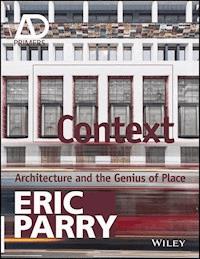
Cover photograph by Dirk Lindner
Acknowledgements
A book of this kind, like designing a building or directing a film, is made up of a complex web of parts, and here the actors are those who have participated; my most significant debt is for the time they allowed me in discussing their projects, particularly Álvaro Siza, Adam Caruso and Peter St John, Shelley McNamara and Yvonne Farrell, Lisa Fior, and Peter and Anneliese Latz. The stimulus to write has been a desire to add a bridge between practice, which consumes my daily life, and the academic discourse of architectural and urban studies. In the latter I am lucky to have long-standing friendships with outstanding contributors: Dalibor Vesely who encouraged me from the outset, Peter Carl, Bob Maxwell, Wilfried Wang and David Leatherbarrow with their boundless generosity, Joseph Rykwert and Richard Sennett through their writings and conversation.
The chapter on the kinetics of the street is the beginning of a broader study that was stimulated by the Theatrum Mundi group that Richard Sennett and Ricky Burdett have set in intriguing motion. Associated with this chapter has been the photographic record created by Dirk Lindner which continues to inspire me. Closer to home the project would not have been possible without the diligent, intelligent support of José de Paiva and in its production to Sarah Blackmore. My partners in practice Robert Kennett and Nick Jackson have been generous in their support and reading of the script. José de Paiva, Tao Sule-DuFour, Eimear Hanratty and Russell Watson have created a number of the drawings for which I am very grateful. Finally for their gracious patience and encouragement I am most indebted to Helen Castle and Merit Claussen.
Contents
Introduction
References
Chapter 1 Pavement
Latent Common Ground
Paving the Sacred, Profane and Political
London Bridge
Lisbon’s Carpet
Field of Stones, Kalmar
Sacred Surfaces
The Mnemonic Device
References
Chapter 2 Horizon
Horizon and Language
The Collective Skyline
The Rise of London’s Skyline
Horizon as City Spectacle
The Wellbeing of Horizon
Bo Bardi, Kahn and Mies van der Rohe: Three Reflections on Architecture and Horizon
Multiple Horizons
References
Chapter 3 Simultaneity
Room
House
Estate
Parish
References
Chapter 4 Kinetics
Bhuleshwar, Mumbai
Rockefeller Center, New York
Layering of Contemporary Cities
Parisian Boulevards
Piccadilly and St James’s, London
References
Chapter 5 Artifice
The Garden of Earthly Delights
The English Pleasure Garden
Sydney Gardens, Bath
Planten un Blomen, Hamburg
Landschaftspark Duisburg-Nord
References
Select Bibliography
Index
Picture Credits
EULA
List of Illustrations
Introduction
View from Piazza della Minerva, Rome
Context through the layers of successive epochs: ancient Roman, early Christian, the Baroque and the contemporary. In the foreground is Francesco Borromini’s Obelisco della Minerva (1667); in the background, the Pantheon (1st century BC, rebuilt
C
AD 126, with subsequent 17th- and 18th-century additions).
Chapter 1
Boyle Family,
Holland Park Avenue Study, London Series
, 1967 and
Cobbles Study, Lorrypark Series
, 1976
Boyle Family’s ‘Journey to the Surface of the Earth’ raised the pavement through their urban taxidermy of the everyday, to the status of high culture. Shown here is part of a display of their work at the Scottish National Gallery of Modern Art, Edinburgh in 2003.
Close-up photographs of pavements
Left to right: Henrietta Street, Dublin, Ireland, vestiges of grandeur and dereliction; monumental interlocking slabs of the Corso di Porta Ticinese, Milan, Italy; pavement detail of the Chiado, Lisbon, Portugal; reordered field stones, setts and precast paths at the Stortorget, Kalmar, Sweden; Stolpersteine, Martin-Luther-King-Platz, Hamburg, Germany; water’s edge at San Giorgio Maggiore, Venice, Italy; detail of the
opus sectile
work of the Cosmati sanctuary pavement, Westminster Abbey, London; Proconnesian marble slabs forming the floor, a frozen sea, in the Hagia Sophia, Istanbul, Turkey.
London Bridge, Duke Hill Street and Tooley Street, Southwark: pre-existing site, London, 1996
As found in 1996, two photo collages of the site before the interventions. Top image to the left, London Bridge, and to the right, Duke Hill Street. The concrete balustrade to the ramp which leads to London Bridge Station acts as a defensive wall insulating commuters from the ‘Borough’. The City of London Corporation owns the land demarcated by the paving slabs at the centre, Southwark the rest.
Lesen Sie weiter in der vollständigen Ausgabe!
Lesen Sie weiter in der vollständigen Ausgabe!
Lesen Sie weiter in der vollständigen Ausgabe!
Lesen Sie weiter in der vollständigen Ausgabe!
Lesen Sie weiter in der vollständigen Ausgabe!
Lesen Sie weiter in der vollständigen Ausgabe!
Lesen Sie weiter in der vollständigen Ausgabe!
Lesen Sie weiter in der vollständigen Ausgabe!
Lesen Sie weiter in der vollständigen Ausgabe!
Lesen Sie weiter in der vollständigen Ausgabe!




