


11,99 €
Mehr erfahren.
- Herausgeber: Forum
- Kategorie: Geisteswissenschaft
- Sprache: Englisch
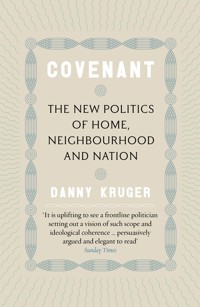
'It is uplifting to see a frontline politician setting out a vision of such scope and ideological coherence ... persuasively argued and elegant to read' Sunday Times A 2023 Book of the Year in Sunday Times and Daily Telegraph Contemporary conservatism can easily be seen as a hollowed-out creed. Combining heartless free-market individualism with an unthinking social liberalism – or else simple authoritarian populism - it offers little to those whose sense of meaning is securely rooted in their families, communities and country. Covenant, Danny Kruger, one of parliament's leading thinkers, argues that we must restore the sources of virtue and belonging that underpin the good life. Our urgent task is to repair the covenantal relationships of love and partnership that our families, local communities and ultimately our country depend on. We must, he contends, go beyond a politics based purely on individual autonomy, social atomisation and self-worship. By examining the most fundamental questions of love, sex, life and death, ranging from marriage to assisted dying, Kruger charts a course towards a conservatism that can respond humanely and wisely to the social, environmental and economic crises that face us. This riposte to both liberal orthodoxy and the authoritarian right is unmissable for anyone interested in British politics. It's a key contribution to the debate on how the Conservative Party can respond to its current crisis.
Das E-Book können Sie in Legimi-Apps oder einer beliebigen App lesen, die das folgende Format unterstützen:
Seitenzahl: 186
Veröffentlichungsjahr: 2023
Ähnliche




















‘Beautifully written and accessible, Covenant turns political theory into practical policy – applying the old conservative truths to the challenges of the 21st century. In future Conservatives will point to this book and say, as Margaret Thatcher did, “this is what we believe!”’
Tim Stanley, Daily Telegraph columnist
‘In this erudite and important book, Danny Kruger shows that the answers to our very modern problems lie not in the ideological dysfunctions of liberalism, but in the norms, customs and insights we once understood but tragically have instead rejected and forgotten’
Nick Timothy, former Chief of Staff to Theresa May
‘In an age when most self-identified “conservatives” are little more than disaster capitalists with a side order of culture war, Danny Kruger stands out. This book shows why: Kruger possesses not only a thorough grasp of the conservative tradition, but also an appropriate realism about present-day challenges and the need not just to conserve but also to rebuild’
Mary Harrington, author of Feminism Against Progress
‘Danny Kruger’s Covenant is a gem of a book, offering a new vision for British conservatism that would replace the decaying “social contract” with a much stronger, covenantal interpretation of our obligations to family, community, and nation. Packed with common-sense policy proposals, it is also a personal declaration of faith in a restored Britain that is almost within reach’
Yoram Hazony, author of Conservatism: A Rediscovery
‘Danny Kruger has written a brilliant and blistering blueprint for a politics of national renewal. Fizzing with philosophical and historical insight and brimming with common sense, he offers a manifesto for realising the common good and healing our fractured political landscape. Kruger’s charter for a new conservatism represents the most promising organising idea for public policy to emerge for many years’
James Orr, Chair, Edmund Burke Foundation UK
‘What a rare pleasure to read a book by a politician that avoids the usual dead, bureaucratic, policy prose and asks fundamental questions about how to live and how to organise a society that transcends the liberal individualism-cum-utilitarianism of mainstream politics. A post-liberal, Scrutonian manifesto for conservatives’
David Goodhart, author of The Road to Somewhere
‘Covenant is required reading for anyone concerned about the current state of politics and society. A powerful and urgent critique of the ruling liberalism, this passionate manifesto for a new kind of conservatism will engage readers on every part of the political spectrum. If you are dissatisfied with the ideas that govern us, Danny Kruger has something of vital interest to say to you’
John Gray, political philosopher
Contents
Foreword: The New ConservatismIntroduction: On Morgan’s Hill1 The Idea and the Order The conditions of virtue The black hole The laws of the Idea 2 On Sex and Death The regulation of sex The dismantling of marriage The hecatomb 3 Oikism A very short history of the Western family Moving home Somewhere, something, someone 4 A New Social Covenant Dominion Place Civil society Afterword: Ideas of EnglandEndnotesForeword
The New Conservatism
There is nothing new in conservatism, though from time to time a new generation finds a fresh way to say the old things, perhaps with some discomfort for the generation that went before. Today, the late twentieth-century battle cry against global communism and domestic socialism – and its early twenty-first-century echo, exhorting the further march of liberalism at home and abroad – is being challenged by a different analysis and a different plan. We are witnessing a powerful popular and intellectual resurgence within conservatism, looking back to the fundamentals of the creed and forward to a meaningful engagement with the tech-driven challenges of the new century.
Today’s ‘New Conservatives’ are less concerned with maximising opportunities for individual freedom than with shoring up the conditions that make freedom possible. These conditions are the institutions of social life: families, communities, nations, and the virtues that sustain them. Put most simply, we need to strengthen the economic, social and cultural forces that make good people.
This argument represents a major challenge to the political orthodoxies of recent times. Yet the solutions to our difficulties lie deeper in our history, and particularly in the history told by conservatives: the steady development and defence over centuries of the institutions that make up the common life of the United Kingdom. And the eternal paradox of conservatism is that this deference to the past fits us for the future: a respect for institutions – and for the foundational institutions of family, community and nation most of all – is the best possible attitude with which to approach modernity. With this attitude, we can make modernity safe and fruitful, as well as respectful of the virtues and the institutions that we need.
Conservatism is the proper basis for prosperity in the age of tech. This is because conservatism entails change, sometimes radical change, at least on the surface. The particular forms by which we organise our common life – our social, economic and political practices – can and must adapt as our material capabilities develop and as new dangers emerge: this book argues for some profound changes in light of the threats and opportunities of the times. But the conservative remembers that the purpose of these practices is simply to sustain the community of the people, that the reason for change is to stay the same.
This book is largely a compendium of ideas I have picked up from writers in this old-new, radical-reactionary tradition. I try to acknowledge the leading exponents of particular points in the endnotes. But more generally, I here state my gratitude to the philosopher-theologians Alasdair MacIntyre, John Gray and John Milbank; to the political theorists and policy thinkers Phillip Blond, Hilary Cottam, Sir Paul Collier, David Goodhart, Matthew Goodwin, Maurice Glasman, Mary Harrington, Polly Mackenzie, Adrian Pabst, Louise Perry, Nina Power, Nick Timothy and David Skelton; to my old friends – the first proper conservatives I met in the Conservative Party – the commentators Tim Montgomerie and Peter Franklin; and of course, with profound reverence, to the late Sir Roger Scruton. I am also inspired by a number of great American writers on similar themes, from the prophets Philip Rieff, Robert Putnam and Charles Murray to today’s ‘post-liberals’ Yoram Hazony, Patrick Deneen, Sohrab Ahmari, Carl Trueman and Oren Cass.
Not all these writers, it should be noted, are on the political Right, and not all will agree with everything that follows. I cite them, whether they like it or not, because I detect that across the old party divide, which we still use to demarcate our allegiances, a bigger loyalty is growing. This loyalty is to what I call the ‘covenant’ on which Western politics is founded. The covenant is threatened in this generation by a malignant growth within liberalism, which has already effectively killed that creed and is coming for the rest of us. Conservatives, communitarians, refugee liberals (those who actually believe in liberty), even socialists and anarchists, all have a common cause: to defend the covenant and restore the proper basis of freedom.
For their inspiration and guidance as I wrote this book I am particularly grateful to my friends at the New Social Covenant Unit, including the parliamentary colleagues we work with; my co-chair Miriam Cates MP; Sam Armstrong; and most of all Imogen Sinclair, with whom I have happily bounced the ideas that appear in this book back and forth for years. My thanks also to David Johnston MP who, though he disagrees with me on much, kindly read the book closely and made suggestions for improvement, some of which I have taken.
The book is dedicated, with love, to my wife Emma, who stands for everything I believe in.
Introduction
On Morgan’s Hill
If a ‘place’ is ground made meaningful by human beings, the central district of Wiltshire must be the oldest place in England. Here our Neolithic forbears built the monuments of their now-silent civilisation: the long and the round barrows; the huge mounds like Silbury Hill (the largest manmade structure of Western prehistory); and the standing stones and circles, like Stonehenge and the older and bigger Avebury, and largest of all but now almost vanished, the great henge at Marden.
Why here, on these downs? Perhaps a reason is that here rise the three rivers that between them water most of southern England. A drop of rain falling on Morgan’s Hill, north of Devizes, can flow west with the Bristol Avon to the Atlantic Ocean, south with the Hampshire Avon to the English Channel, or east with the Kennet to the Thames and the North Sea. Maybe the ancient people knew this, and they felt that this was special ground: the source-place.
We don’t know how Neolithic civilisation ended, although there are signs of war across Europe around the time that the monuments became disused. Yet the sacred streams never suffered, flowing full and clear through the ages – until now. Today, the Avons and the Kennet, like almost all the rivers of England, are low in volume because we extract so much water for our homes and businesses; they are full of artificial nutrients that choke them with weeds, and they are regularly flooded with raw sewage.
As a metaphor for the way we are living, it serves. We are polluting the sources of life. Our treatment of our habitat reflects the self-destructive bent our society is on, which starts with nature and will end with us. For society, too, is depleted, contaminated, and at risk. And so our own great monuments, our modern henges and standing stones – our towers and temples, our intelligent machines, our magical devices for cosmic communication, erected with such effort and ingenuity to awe and astonish – face the fate of the Neolithic ones: to be ruins, grassy hummocks, broken masonry on the bare hills, and only bones in holes to speak of who we were.
The conservative is disposed to be gloomy. History, as Tolkein said, is a ‘long defeat’, a steady attrition of value and spirit under the shadow of the possibility of absolute disaster. And today more than ever, we in the West have reasons to be fearful. Since the turn of the millennium, we have been in a state of chronic war – persistent, multi-domain, hot and cold by turns, and apparently unwinnable – against Islamist groups and states in North Africa, the Middle East and central Asia, and sometimes on our own soil.
In 2008, the global financial system came close to collapse and was only kept together by a huge injection of newly minted money, which disproportionately flowed into the pockets of the already wealthy and held back the prosperity of the public for a decade. In 2020–21, the coronavirus pandemic caused governments – in all good faith, with public support, and perhaps unavoidably – to inflict a social and economic catastrophe on their populations. And in 2022, war erupted once more in Europe, launched by a tyrant who plausibly threatens nuclear war. Meanwhile, we have entered a new polarity, with a weakening West facing a strengthening China, whose rulers are at least as pitiless and aggrandising as Russia’s.
The new millennium has not started well, and it could be about to get worse. Traditional threats like military dictatorships, terrorism and the rivalry of superpowers are now augmented by more complex enemies. Humanity is threatened by the collapse of systems.
The interlinked technologies of the world, the supply chains, data webs and energy grids that sustain modern life, are uniquely vulnerable to attack or accident. The global economy is perched precariously on a growing and increasingly unstable mountain of debt because the problems that caused the 2008 crisis have not been addressed but exacerbated in the years since: the world is leveraged against faith, so far out beyond the pivot that the slightest evaporation of confidence could cause a crash.
Meanwhile, the health of humanity is imperilled by the growing ineffectiveness of antibiotics and the ease of contagion: imagine a lethal pandemic that, like the Spanish Flu of 1918, attacks the young and healthy and mutates faster than our vaccines. War is assuming hideous modern forms, involving robots, cyber attacks and bioweapons that could cripple whole countries, or destroy races, at the touch of a button or the crack of a vial.
The age of tech offers an enticing set of solutions to the threats that beset us. We are offered free, limitless, ecologically harmless energy, sources of robot labour that will make ‘work’ in the traditional sense redundant, and medical miracles that will conquer all illness and maybe even vanquish death itself. Yet we are speeding into the future without the vaguest sense of what these possibilities imply for the things that matter: our sense of ourselves, our relationships with one another, and our place in nature.
In our addiction to progress we are unable to distinguish between mere technological innovation and actual improvements in the condition of mankind. Artificial intelligence is learning fast. The singularity – the moment when tech becomes fully autonomous and unstoppable – is coming. We have little idea as a civilisation how to manage this revolution.
It is no surprise that the great Earth system itself is in danger, with a range of catastrophic ecological tipping points now in view, such as a ‘blue ocean’ event in the Arctic, the melting of the permafrost, or runaway fires in the Amazon. The threats of such catastrophes may be exaggerated; the eschatology of climate alarmism is itself deeply harmful and inhuman; and surely many of the remedies proposed would bring catastrophes of their own. But even without an apocalyptic tipping point, the risk is real that large parts of Africa, India and China will become deserts, while coastal regions, the centres of the economy and population in many countries, will disappear under the sea.
Already, the pressure on land and water is intense. In the decades to come, it is likely that refugees will destabilise their own and neighbouring countries, stoking civil conflict, terrorism and war – and mass migration, on a scale that will dwarf the movements of people that have already transformed the societies (and the politics) of Europe in this century. Tens of millions of desperate migrants will head north and west from Africa, the Middle East and Asia towards our safe and temperate continent, and especially towards the rich and rainy archipelago off its western edge.
How ready are we in the United Kingdom, not just for mass migration but for the other system threats? How strong is society here at home?
These islands, providentially situated in a cool corner of the globe, surrounded by sea and then by friendly, democratic nations, with a powerful economy and a uniquely creative spirit of innovation, with strong defences, a tradition of law and a long history of civil peace, with historic links to all corners of the globe, which gave the world its principal language and much of its culture – surely these islands are well placed, physically and culturally, to face the challenges of the times. Yet these natural advantages are belied by some serious weaknesses.
On the face of it, our economic system seems robust. We have a pro-business environment, with some exuberantly successful firms, sectors and places. But these mask what is shown in the national statistics – the far less prosperous reality everywhere else. Years of artificially low interest rates and an artificially strong pound have given us a sense of being richer than we really are; rising rates and a weakening pound will adjust our impressions painfully. Meanwhile, tax, public spending and public and private debt are at their highest levels since World War II. In general, our productivity is woeful and we have a long tail of low-value businesses, particularly outside the South East and the big cities.
The UK is the most spatially unequal country in the developed world. Our economy is chronically unbalanced, but not just between north and south, or the productive and the rest. The worst unbalance is in the least enterprising sector of all, but the one that matters most to most people. The extreme inflation of house prices and housing costs, pumped up by the low interest rates and money-printing of the last twenty years, sustains a rentier class of landlords and property owners in permanent supremacy over the asset-poor majority. Even the rentiers are, perversely, slaves to debt, indentured to their mortgages, which rising rates will make cruelly heavy.
The effect of all this is extreme stress on the understanding that, by making inequality tolerable, holds society together: the knowledge that a brighter day is coming, that everyone has a decent chance of a good life, and that each generation will be better off than the one before it.
The economic reality is reflected in the state of society. The upshot, at its most pitiable, are the ‘deaths of despair’ described by Angus Deaton: the phenomenon of deaths from drugs and alcohol, suicide and chronic ill-health induced by diet and lifestyle.1 But more generally, we have not deaths but lives of despair. We have epidemics of mental ill-health, domestic abuse and loneliness. We are bored and anxious. We distract and medicate ourselves with a cocktail of passive entertainment, legal and illegal drugs, alcohol and bad food.
As a nation, we are both obese and undernourished, a neat reflection of a society rich in some respects and not in others. The government spends over £150 billion per year – a sixth of national expenditure, 1.5 times the education budget and three times more than we spend on defence – on ‘social protection’, namely support for people who struggle.2 And it is not enough: even with all this welfare, a quarter of the population lives in households with an income that is inadequate for an acceptable standard of living.3
If our economy and society – the fundamental systems on which we each depend – are in some trouble, what of the state? The United Kingdom has much to be proud of in the millions of front-line public servants who maintain the systems that look after us, from the army to the health service. And yet, the state of the state itself – our system of government and the leadership of public bodies – suggests both a profound weakness and a profound threat. Like much of the population itself, public services are simultaneously over-fed and undernourished: they consume ever more public money, and yet there is never enough money for the front line. The National Health Service, in particular, is over-centralised and over-bureaucratic, with costs controlled through rationing and pseudo-market mechanisms, and consequently – though no one intends this and everyone tries to prevent it – it is frequently uncaring in its dealings with both citizens and its own staff.
The endemic tendency of the public sector to centralisation and top-down control reflects the last great threat in my litany of dangers. This is the creation, in response to a crisis – like a new pandemic, or a war, or a melting icecap – of an apparatus of state control that will complete the ruin.
Covid-19 exposed a state unready for disaster, lacking in the most essential elements of resilience: capacity in the health service for a population-wide illness, domestic supply chains in place to cope with a sudden stop to global trade, and systems ready to go for the support of the vulnerable. The state cranked into gear during 2020 to address these requirements. But at the same time, it found for itself a far easier task than organising the needs of the people: creating rules for them to follow. The government – with the support of MPs including, I am ashamed to say, myself – passed laws that suspended the basic civil liberties of the country and gave ministers sweeping powers to curtail them further as required. These laws have now been repealed, but the precedent is established. And more generally, we have grown used to the principle that the answer to a threat is government enforcing universal solutions.
The response to Covid-19 was a ramshackle harbinger of the far more professional apparatus of state control we can expect in future. This time it was universal testing, universal lockdown, universal vaccination; what universal system will be imposed next time? The apparatus will be enabled by technology, by the extraordinary new possibilities of digital and biomedical surveillance, artificial intelligence and autonomous robotics, and authorised by politicians anxiously agreeing with the media that ‘something must be done’ to mitigate this threat or address that injustice. The politicians will credulously accept the assurances of the peddlers of tech that the problem will be fixed quickly, cheaply and without the public minding. And they may be right about the public, for the apparatus will be propelled by an understandable fear in the general population at the threats I have outlined: by our desire for spells and amulets to ward off danger and by our never-to-be-underestimated willingness to trade our freedom for our safety.
It is possible to be paranoid about the intentions of government and its agents in the private sector who enable and profit from the expansion of state power. But the threat is very real. China stands before us as evidence of the dystopic possibility of what Paul Kingsnorth, following Kevin Kelly, calls ‘the technium’: the aggregated machinery of the digital age which forms a single omnipotent intelligence.4 The apparatus is most fully developed in China, with a complete system of tech-enabled state surveillance, complete with ‘social credits’ that reward and punish citizens for their compliance with the rules. China gave us the defining moment of Covid-19: the drone flying between the tower blocks of locked-down Shanghai, intoning from its speaker the recorded message ‘Suppress your soul’s desire for freedom. Do not open your window to sing.’ Welcome to the future.
The way to clean a river is to act wide and deep, patiently and holistically, with a combination of ‘grey and green’ interventions: concrete infrastructure to manage the effects of large-scale human activity, and nature-based solutions to conserve and clean the water and soil. Given that we build houses whose design prodigiously wastes water, we do need more ‘grey’ work: more pipes and sewage treatment works. But ‘grey’ can never be sufficient: we will never pour enough concrete to meet current and projected demand. We need to reduce demand on the infrastructure and we need better solutions than concrete. ‘Green’ interventions – catchment-wide mitigation, better farming practices, better planning and housebuilding design, reed beds that filter dirty water naturally – are the long-term, sustainable answers to pollution, water loss and soil erosion.*




