


241,99 €
Mehr erfahren.
- Herausgeber: John Wiley & Sons
- Kategorie: Fachliteratur
- Sprache: Englisch
A major task of our time is to ensure adequate food supplies for the world's current population (now nearing 7 billion) in a sustainable way while protecting the vital functions and biological diversity of the global environment. The task of providing for a growing population is likely to be even more difficult in view of actual and potential changes in climatic conditions due to global warming, and as the population continues to grow. Current projections suggest that the world's temperatures will rise 1.8-4.0 by 2100 and population may reach 8 billion by the year 2025 and some 9 billion by mid-century, after which it may stabilize. This book addresses these critical issues by presenting the science needed not only to understand climate change effects on crops but also to adapt current agricultural systems, particularly in regard to genetics, to the changing conditions.
Crop Adaptation to Climate Change covers a spectrum of issues related to both crops and climatic conditions. The first two sections provide a foundation on the factors involved in climate stress, assessing current climate change by region and covering crop physiological responses to these changes. The third and final section contains chapters focused on specific crops and the current research to improve their genetic adaptation to climate change.
Written by an international team of authors, Crop Adaptation to Climate Change is a timely look at the potentially serious consequences of climate change for our global food supply, and is an essential resource for academics, researchers and professionals in the fields of crop science, agronomy, plant physiology and molecular biology; crop consultants and breeders; as well as climate and food scientists.
Sie lesen das E-Book in den Legimi-Apps auf:
Seitenzahl: 1659
Veröffentlichungsjahr: 2011
Ähnliche



















Contents
Cover
Title Page
Copyright
List of Contributors
List of Editors
About the Editors
Foreword by Daniel Hillel and Cynthia Rosenzweig
Foreword by M.S. Swaminathan
Foreword by Martin Parry
Foreword by Ahmed Djoghlaf
Foreword by Cary Fowler
Foreword by David K. Skelly
Foreword by Walter P. Falcon
Preface
Acknowledgments
Chapter 1.1: Climate Change, Population Growth, and Crop Production: An Overview
Introduction
Global scenarios on future greenhouse gas emissions and population growth
Climate impacts on crop productivity
Adaptation options in agriculture
Conclusions
Chapter 1.2: Downscaling Global Climatic Predictions to the Regional Level: A Case Study of Regional Effects of Climate Change on Wheat Crop Production in Victoria, Australia
Introduction
Methods
Results
Discussion
Conclusions
Acknowledgments
Chapter 2: Agroecology: Implications for Plant Response to Climate Change
Introduction
Energy balance
Changing CO2 concentrations on plant growth
CO2–nutrient interactions
Water-use efficiency
Climate impacts on crop yields
Implications for agroecology
Chapter 3.1: Impacts of Climate Change on Crop Production in Latin America
Introduction: A background on agriculture in Latin America
Expected climate change in Latin America
Past impacts of climate on production
Looking toward the future
Conclusions
Chapter 3.2: Changing Climate in North America: Implications for Crops
Introduction
Climate change
Implications of climate change
Challenges
Chapter 3.3: Regional Impacts of Climate Change: Africa
Introduction
Climate change and agricultural production in Africa
Climate-dependent challenges
Perception of African farmers to climate change
Coping and adaptation strategies to climate variability and change
Conclusion
Recommendations
Chapter 3.4: Regional Climate Impacts on Agriculture in Europe
Agriculture in Europe
Present climate conditions for agriculture
Climate change impacts
A specific adaptation option: Crop insurance in Spain
Chapter 3.5: Climate Change Impacts and Adaptations in the Countries of the Former Soviet Union
Introduction
Geography of agriculture
Climate change impacts and adaptations
Discussion
Chapter 3.6: Climate Change Impact in Agriculture: Vulnerability and Adaptation Concerns of Semiarid Tropics in Asia
Introduction
Climate change vulnerability in semiarid tropics of Asia
Climate change impacts in Asia
Adaptation to climate change
Conclusions
Future line of investigation
Chapter 3.7: Climate Change Impacts in Japan and Southeast Asia: Implications for Crop Adaptation
Introduction
Climatic change in Japan and Southeast Asia
Projected climate change impacts on crops
Conclusion
Acknowledgments
Chapter 3.8: Regional Impacts: Australia
Introduction
Climate and climate change in Australian cropping regions
Grains, oilseeds, and legumes
Rice
Sugarcane
Viticulture
Fruits, nuts, and vegetables (excluding grapes)
Conclusion
Acknowledgments
Chapter 4: Synthesis of Regional Impacts and Global Agricultural Adjustments
Introduction
Climate change predictions
Implications for crop production
Interventions to minimize climate change impacts
Other implications of climate change
Chapter 5.1: Impacts of High-Temperature Stress and Potential Opportunities for Breeding
Introduction
Effect of high temperature on yield and yield components
Interaction of high temperature with carbon dioxide
Effects of CO2 and temperature on C3 and C4 species
Traits of interest and breeding opportunities for high-temperature tolerance
Breeding for adaptation to increased temperature stress
Sources of genetic variation for heat tolerance
Acknowledgments
Chapter 5.2: Responses to Increased Moisture Stress and Extremes: Whole Plant Response to Drought under Climate Change
Introduction
Thermodynamic effects
Growth and development processes
Conclusion
Chapter 6: Plant Responses to Increased Carbon Dioxide
Introduction
Methods to investigate crop responses to CO2
Overview of plant growth response to e[CO2]
Regulation of photosynthetic response to e[CO2]
Interactions of e[CO2] with climate factors
Summary and future directions
Chapter 7: Genetics Options for Improving the Productivity of Wheat in Water-Limited and Temperature-Stressed Environments
Introduction
Traits that influence plant response to drought and high temperature
Sources of genetic variation for drought and heat tolerance
Combining genetic variation for drought and heat tolerance in applied wheat breeding
Managing plant breeding information to make better decisions: The importance of informatics
Integrating genetic improvement and conservation agriculture to increase productivity under stress
Conclusion
Chapter 8: Genetic Adjustment to Changing Climates: Pea
Introduction
Research on climate change and pea
Genetic resources, gene pools, populations
Genetic manipulation
Chapter 9: Genetic Adjustment to Changing Climates: Chickpea
Introduction
Climates of the chickpea growing regions
Future climate change impacts on chickpea
Adaptation of chickpea to climate change
Conclusions
Chapter 10: Genetic Adjustment to Changing Climates: faba bean
Introduction
Genotype × environment interactions
Resistance to freezing and waterlogging
Resistance to drought, heat, and salinity
Adaptation to elevated carbon dioxide concentration in the air
Resistance to parasites and diseases
Interactions with beneficial organisms
Conclusion
Chapter 11: Adaptation of the Potato Crop to Changing Climates
Introduction
Expected climate change effects for potato areas
Potato responses to climate change effects—heat, drought, and cold stress
Potato biodiversity—sources for abiotic stress tolerance
Breeding for abiotic stress tolerance in potato
Conclusions
Chapter 12: Genetic Adjustment to Changing Climates: Rice
Introduction
Direct effects of elevated CO2 concentration
High nighttime temperature
Interaction of CO2 concentration and temperature
Opportunities for genetic improvement for tolerance
Conclusion and outlook
Acknowledgments
Chapter 13: Genetic Adjustment to Changing Climates: Maize
Introduction
Drought limits the capacity to produce and utilize photosynthate for reproductive growth
Molecular approaches to improve performance under drought
Optimizing root architecture and function for drought tolerance
Pipeline for analysis of candidate genes for drought tolerance
Temperature effects on maize growth and yield
Prospects for the near future
Chapter 14: Sorghum Genetic Enhancement for Climate Change Adaptation
Introduction
Climate change impacts on sorghum production
Predicted climate change effects on crop growth and yield in major sorghum growing areas
Disaggregated effects of predicted changes in temperatures and rainfall on sorghum yields
Characteristics of sorghum that help in coping with climate change
Climate change adaptation and genetic options
Redeployment of germplasm
Drought tolerance
Heat tolerance
Chapter 15: Breeding Cowpea for Future Climates
Introduction
Adaptation to elevated atmospheric [CO2]
Adaptation to global warming
Conclusions
Chapter 16: Genetic Improvement of Common Beans and the Challenges of Climate Change
Introduction
Crop evolution and context
Modeling approach and expected climatic changes
Climate data
Modeling approach
Interaction of climate change with specific constraints
Potential for crop improvement
Future perspectives
Acknowledgments
Chapter 17: Improving Soybean Cultivars for Adaptation to Climate Change and Climate Variability
Introduction
Elevated carbon dioxide and genetic improvement of soybean
Effects of elevated temperature on soybean reproductive processes and yield
Drought and genetic improvement of soybean
Conclusion and future challenges
Chapter 18: Genetic Adjustment to Changing Climates: Vegetables
Global warming and vegetable productivity in the tropics
Genetic variability and development of heat tolerance in selected vegetables
Vegetable genetic resources and adaptation to global warming
Chapter 19: Adaptation of Cassava to Changing Climates
Introduction
Expected climatic changes and the cassava models
Abiotic stresses: expected effects
Biotic stresses: expected effects
Technical solutions
Chapter 20: Changing Climates: Effects on Growing Conditions for Banana and Plantain (Musa spp.) and Possible Responses
Introduction
Modeling approach
Climatic requirements for banana production and modeling of current climatic suitability for banana production
Future perspectives and adaptation measures
Conclusions
Acknowledgments
Chapter 21: Genetic Adjustment to Changing Climates: Sugarcane
Introduction
Genetic background
Use of sugarcane for bioenergy
Traits for climate change
Conclusions
Chapter 22: Breeding Oilseed Brassica for Climate Change
Introduction
Quality changes during seed development
Effect of climate change on seed development
Effect of climate change on diseases and insects
Breeding for climate change
Conclusions and future directions
Chapter 23: The Genetic Envelope of Winegrape Vines: Potential for Adaptation to Future Climate Challenges
Introduction
Climate change impacts to the winegrape industry sector
Adaptation through accessing genetic diversity of winegrape varieties
Concluding remarks
Chapter 24: The Potential of Climate Change Adjustment in Crops: A Synthesis
Introduction
Crop options with climate change
Genetic diversity within crops for adaptation to climate change
Chapter 25: Crop Germplasm Diversity: The Role of Gene Bank Collections in Facilitating Adaptation to Climate Change
Climate Change and Agriculture
The breadth and completeness of germplasm collections
The integrity and security of collections
Facilitating use of gene bank collections by generating and making available information
Interdependence
Conclusions
Chapter 26: Underutilized Species and Climate Change: Current Status and Outlook
Introduction
Importance of underutilized species: a brief overview
Climate change and underutilized species: current studies and gaps in knowledge
Future opportunities and priorities for underutilized species under climate change
Conclusions
Chapter 27: Wild Relative and Transgenic Innovation for Enhancing Crop Adaptation to Warmer and Drier Climate
Introduction
The molecular mechanisms of drought and heat resistance
Drought and heat resistance in wild relatives of crop species
Genetic engineering of crops for adaptation to drought and heat stresses
Concluding remarks
Acknowledgment
Chapter 28: Energy Crops to Combat Climate Change
Introduction
Dedicated energy crops
Balancing food and biofuel production
Climate change and biofuels
Environmental impact of biofuels
Life cycle analysis
Economic sustainability of biofuels
Conclusions
Chapter 29: Research from the Past to the Future
Introduction
An overview of the history of crop improvement
Inspiring breakthroughs in plant science
Incremental advances in plant breeding—the hard slog
The potential of biotechnology
Ecosystem complexity—what it means for farm adaptation and plant breeding
Regional impacts of climate change on crop production
Conclusions for progress in plant science—future opportunities
Index
This edition first published 2011, © 2011 by John Wiley & Sons, Inc.
Wiley-Blackwell is an imprint of John Wiley & Sons, formed by the merger of Wiley's global Scientific, Technical and Medical business with Blackwell Publishing.
Registered office: John Wiley & Sons Ltd, The Atrium, Southern Gate, Chichester, West Sussex, PO19 8SQ, UK
Editorial offices: 2121 State Avenue, Ames, IA 50014-8300 The Atrium, Southern Gate, Chichester, West Sussex, PO19 8SQ, UK 9600 Garsington Road, Oxford, OX4 2DQ, UK
For details of our global editorial offices, for customer services and for information about how to apply for permission to reuse the copyright material in this book please see our website at www.wiley.com/wiley-blackwell.
Authorization to photocopy items for internal or personal use, or the internal or personal use of specific clients, is granted by Blackwell Publishing, provided that the base fee is paid directly to the Copyright Clearance Center, 222 Rosewood Drive, Danvers, MA 01923. For those organizations that have been granted a photocopy license by CCC, a separate system of payments has been arranged. The fee codes for users of the Transactional Reporting Service are ISBN-13: 978-0-8138-2016-3/2011.
Designations used by companies to distinguish their products are often claimed as trademarks. All brand names and product names used in this book are trade names, service marks, trademarks or registered trademarks of their respective owners. The publisher is not associated with any product or vendor mentioned in this book. This publication is designed to provide accurate and authoritative information in regard to the subject matter covered. It is sold on the understanding that the publisher is not engaged in rendering professional services. If professional advice or other expert assistance is required, the services of a competent professional should be sought.
Library of Congress Cataloging-in-Publication Data
Crop adaptation to climate change / edited by Shyam S. Yadav … [et al.]. -- [1st ed.]. p. cm. Includes bibliographical references and index. ISBN 978-0-8138-2016-3 (hardcover : alk. paper) 1. Crops and climate. 2. Crops--Adaptation. 3. Climatic changes. I. Yadav, S. S. (Shyam S.) S600.5.C76 2011 632′.1–dc23 2011013791
A catalogue record for this book is available from the British Library.
This book is published in the following electronic formats: ePDF 9780470960899; Wiley Online Library 9780470960929; ePub 9780470960905; Mobi 9780470960912
Disclaimer The publisher and the author make no representations or warranties with respect to the accuracy or completeness of the contents of this work and specifically disclaim all warranties, including without limitation warranties of fitness for a particular purpose. No warranty may be created or extended by sales or promotional materials. The advice and strategies contained herein may not be suitable for every situation. This work is sold with the understanding that the publisher is not engaged in rendering legal, accounting, or other professional services. If professional assistance is required, the services of a competent professional person should be sought. Neither the publisher nor the author shall be liable for damages arising herefrom. The fact that an organization or Web site is referred to in this work as a citation and/or a potential source of further information does not mean that the author or the publisher endorses the information the organization or Web site may provide or recommendations it may make. Further, readers should be aware that Internet Web sites listed in this work may have changed or disappeared between when this work was written and when it is read.
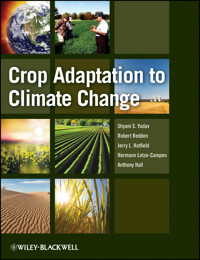
Top right cover photo taken by Suvidya Yadav. In photo: Dr. Jens Berger (left), Ecophysiologist CSIRO, WA, Australia and Dr. Shyam S. Yadav (right) examining the Chickpea lines planted under the ACIAR-ICAR funded chickpea adaptation field trial at the Merredin Dryland Research Institute in Western Australia, Australia 2002.
List of Contributors
Elizabeth Alvarez International Center for Tropical Agriculture (CIAT) AA 6713, Km 17 recta Cali-Palmira, Cali, Colombia
Mike J. Ambrose John Innes Centre Colney, Norwich, NR4 7UH, UK
Ma Cynthia S. Bantilan International Crops Research Institute for the Semi-Arid Tropics (ICRISAT) Patancheru 502324, Andhra Pradesh, India
Martin J. Barbetti School of Plant Biology and UWA Institute of Agriculture The University of Western Australia 35 Stirling Hwy Crawley, W.A. 6009, Australia
Stephen Beebe International Center for Tropical Agriculture (CIAT) AA 6713, Km 17 recta Cali-Palmira, Cali, Colombia
Anthony C. Bellotti International Center for Tropical Agriculture (CIAT) AA 6713, Km 17 recta Cali-Palmira, Cali, Colombia
Craig Beverly Department of Primary Industries Rutherglen, Victoria 3685, Australia
Ranjana Bhattacharjee International Institute of Tropical Agriculture Ibadan, PMB 5320, Nigeria
Matthew W. Blair International Center for Tropical Agriculture (CIAT) AA 6713, Km 17 recta Cali-Palmira, Cali, Colombia
Osana Bonilla-Findji International Center for Tropical Agriculture (CIAT) AA 6713, Km 17 recta Cali-Palmira, Cali, Colombia CGIAR Research Program on Climate Change Agriculture and Food Security (CCAFS)
Kenneth J. Boote University of Florida Agronomy Department Gainesville, FL 32611 United States of America
Maryse Bourgault CSIRO Plant Industry QBP, University of Queensland Brisbane, Queensland, Australia
Juan M. Bueno International Center for Tropical Agriculture (CIAT) AA 6713, Km 17 recta Cali-Palmira, Cali, Colombia
Hernán Ceballos International Center for Tropical Agriculture (CIAT) AA 6713, Km 17 recta Cali-Palmira, Cali, Colombia
Sunita Choudhary International Crops Research Institute for the Semi-Arid Tropics (ICRISAT) Patancheru 502324, Andhra Pradesh, India
Brendan Christy Department of Primary Industries Rutherglen, Victoria 3685, Australia
Peter R. Clingeleffer CSIRO Plant Industry Waite campus, P.O. Box 350 Glen Osmond, South Australia, 5064, Australia
Clarice J. Coyne USDA Agricultural Research Service Plant Introduction Unit, 59 Johnson Hall Washington State University, Pullman, WA 99164-6402 United States of America
Steven J. Crimp CSIRO Climate Adaptation Flagship GPO Box 284, Canberra, ACT 2601, Australia
Jose I. Cubero Departamento de Genética, Universidad de Córdoba, Campus de Rabanales, edificio C5, 14071 Córdoba, Spain
Robert C. de la Peña Monsanto Company, Vegetable Seeds Division 06-08 New Tech Park, 151 Lorong Chuan, Singapore 556741
Nikolay Dronin School of Geography Moscow State University Moscow, Russia
Gérard Duc INRA Institut National de la Recherche Agronomique, UMR 102, Génétique et Ecophysiologie des Légumineuses à Graines, BP 86510, 21065 DIJON cédex, France
M. Ehsan Dulloo Bioversity International Maccarese (Rome), Italy
Andreas W. Ebert AVRDC—The World Vegetable Center P.O. Box 42, Shanhua, Tainan 74199, Taiwan
Daniele Evers CRP—Gabriel Lippmann 41, Rue du Brill, L-4422 Belvaux, Luxembourg
Glenn Fitzgerald Department of Primary Industries Horsham, Victoria 3400, Australia
Bonnie J. Furman USDA Agricultural Research Service Arctic and Subarctic Plant Genetic Resources 533 E. Fireweed Avenue, Palmer, AK 99645 United States of AmericaAs of July 1, 2010: International Maize and Wheat Improvement Center (CIMMYT) Apdo. Postal 6-641, 06600 Mexico, DF MEXICO
Paul A. Gniffke AVRDC—The World Vegetable Center P.O. Box 42, Shanhua, Tainan 74199, Taiwan
Raymundo Gutierrez International Potato Center (CIP) Apartado 1558, La Molina, Lima 12, Peru
Anthony E. Hall Department of Botany and Plant Sciences University of California Riverside, CA 92521-0124 United States of America
Peter Hanson AVRDC—The World Vegetable Center P.O. Box 42, Shanhua, Tainan 74199, Taiwan
Jerry L. Hatfield USDA-ARS National Laboratory for Agriculture and the Environment 2110 University Blvd. Ames, IA 50011 United States of America
Toshihiro Hasegawa National Institute for Agro-environmental Sciences, Tsukuba, Japan
Abu Wali R. Hassan Department of Agricultural Extension Khamarbari, Farmgate, Dhaka-1215, Bangladesh
Vernon Heywood University of Reading Reading, UK
Mark S. Howden Chief Research Scientist Theme Leader, Adaptive Primary Industries and Enterprises CSIRO Climate Adaptation Flagship GPO Box 284, Canberra, ACT 2601, Australia Honorary Professor: School of Land and Environment The University of Melbourne Victoria 3010, Australia
Danny Hunter Bioversity International Via dei Tre Denari 472/a, 00057 Maccarese, Rome, Italy
Muhammad Imtiaz International Center for Agricultural Research in the Dry Areas (ICARDA) P.O. Box 5466, Aleppo, Syria
Geoff Inman-Bamber CSIRO Plant Industry, ATSIP James Cook University Townsville, Queensland, Australia CSIRO, Climate Adaptation Flagship GPO Box 284, Canberra, ACT 2601, Australia
Phillip Jackson CSIRO Plant Industry ATSIP, James Cook University Townsville, Queensland, Australia
S.V. Krishna Jagadish International Rice Research Institute Manila, Philippines
Pasupuleti Janila International Crops Research Institute for the Semi-Arid Tropics (ICRISAT) Patancheru 502324, Andhra Pradesh, India
Abdullah A. Jaradat USDA-Agricultural Research Service, and Department of Agronomy and Plant Genetics University of Minnesota, 803 Iowa Avenue, Morris, MN 56267 United States of America
Andy Jarvis International Center for Tropical Agriculture (CIAT) AA 6713, Km 17 recta Cali-Palmira, Cali, Colombia CGIAR Research Program on Climate Change Agriculture and Food Security (CCAFS)
Jana Kholova International Crops Research Institute for the Semi-Arid Tropics (ICRISAT) Patancheru 502324, Andhra Pradesh, India
Andrei Kirilenko Department of Earth System Science and Policy University of North Dakota Grand Forks, ND 58202-9011 United States of America
Margaret Kneller Consultant, Bioversity International; John Cabot University Italy
Lakshman Krishnamurthy International Crops Research Institute for the Semi-Arid Tropics (ICRISAT) Patancheru 502324, Andhra Pradesh, India
A. Ashok Kumar International Crops Research Institute for the Semi-Arid Tropics (ICRISAT) Patancheru 502324, Andhra Pradesh, India
Pasala Ratna Kumar International Crops Research Institute for the Semi-Arid Tropics (ICRISAT) Patancheru 502324, Andhra Pradesh, India
Tanguy Lafarge CIRAD, UMR AGAP, F-34398 Montpellier, France IRRI, CESD, Los Baños, The Philippines
Wolfgang Link Department of Crop Sciences, University of Göttingen Von Siebold 8, D-37075 Göttingen, Germany
Hermann Lotze-Campen Potsdam Institute for Climate Impact Research (PIK) P.O. Box 601203, 14412 Potsdam, Germany
T. Mahmood Plant Breeding Institute The University of Sydney Cobbitty NSW 2570 Australia
Rajinder S. Malhotra International Center for Agricultural Research in the Dry Areas (ICARDA) P.O. Box 5466, Aleppo, Syria
Pascal Marget INRA Institut National de la Recherche Agronomique, UMR 102, Génétique et Ecophysiologie des Légumineuses à Graines, BP 86510, 21065 DIJON cédex, France
Rebecca J. McGee USDA Agricultural Research Service Grain Legume Genetics and Physiology Unit 303 Johnson Hall, Washington State University Pullman, WA 99164-6434 United States of America
C. Lynne McIntyre CSIRO Plant Industry 306 Carmody Road, St Lucia Brisbane, Qld 4067, Australia
Rolf Meyer Institute for Technology Assessment and Systems Analysis (ITAS) Karlsruhe Institute of Technology (KIT) Hermann-von-Helmholtz-Platz 1 76344 Eggenstein-Leopoldshafen Germany
Carol A. Miles Washington State University, Northwest Research and Extension Center, 16650 State Route 536, Mount Vernon WA 98273 United States of America
Gloria Mosquera International Center for Tropical Agriculture (CIAT) AA 6713, Km 17 recta Cali-Palmira, Cali, Colombia
R.M. Norton International Plant Nutrition Institute 54 Florence St, Horsham, Victoria 3400, Australia
Bonny R. Ntare International Crops Research Institute for the Semi-Arid Tropics BP 320, Bamako, Mali
James Nuttall Department of Primary Industries, Rutherglen, Victoria 3685, Australia
Garry O’ Leary Department of Primary Industries Horsham, Victoria 3400, Australia
Emmanuel Otoo National Best Agriculture Research CSIR-CRI P.O. Box 3785, Kumasi, Ghana
Stefano Padulosi Bioversity International Via dei Tre Denari 472/a, 00057 Maccarese Rome, Italy
Shaobing Peng Crop Physiology and Production Center (CPPC) College of Plant Science and Technology Huazhong Agricultural University Wuhan, Hubei 430070 P.R. China
Sivapuram V.R.K. Prabhakar Senior Policy Researcher Institute for Global Environmental Strategies Hayama, Kanagawa, Japan 240-0115
P.V. Vara Prasad Department of Agronomy Kansas State University Manhattan, KS 66506 United States of America
Boddupalli M. Prasanna CIMMYT (International Maize and Wheat Improvement Center) CIMMYT-Kenya, ICRAF House, United Nations Avenue, Gigiri P.O. Box 1041, Village Market, 00621 Nairobi, Kenya
John H. Prueger USDA-ARS National Laboratory for Agriculture and the Environment 2110 University Blvd. Ames, IA 50011 United States of America
William P. Quick Animal and Plant Sciences The University of Sheffield Western Bank Sheffield S10 2TN, UK
Sampangiramireddy Ramesh University of Agricultural Sciences GKVK, Bangalore 560065, India
Julian Ramirez International Center for Tropical Agriculture (CIAT) AA 6713, Km 17 recta Cali-Palmira, Cali, Colombia CGIAR Research Program on Climate Change Agriculture and Food Security (CCAFS) School of Earth and Environment University of Leeds, Leeds, LS2 9JT, UK
Idupulapati M. Rao International Center for Tropical Agriculture (CIAT) AA 6713, Km 17 recta Cali-Palmira, Cali, Colombia
Robert J. Redden Australian Temperate Field Crops Collection Grains Innovation Park The Department of Primary Industries Private Bag 260, Horsham Victoria 3401, Australia
Belum V.S. Reddy International Crops Research Institute for the Semi-Arid Tropics (ICRISAT) Patancheru 502324, Andhra Pradesh, India
K. Raja Reddy Department of Plant and Soil Sciences Mississippi State University Mississippi State 39762 United States of America
Pulluru S. Reddy Directorate of Sorghum Research Rajendranagar, Hyderabad, 500036, Andhra Pradesh, India
Penny Riffkin Department of Primary Industries Hamilton, Victoria 3300, Australia
Phillip A. Salisbury Melbourne School of Land and Environment, University of Melbourne Victoria 3010 Australia Department of Primary Industries Victoria VABC, 1 Park Drive, La Trobe R & D Park Bundoora, Victoria 3083, Australia
Roland Schafleitner International Potato Center (CIP)Current affiliation: AVRDC—The World Vegetable Center P.O. Box 42, Shanhua, Tainan 74199 Taiwan
Xavier Scheldeman Bioversity International Colombia
Mariah Scurrah International Potato Center (CIP) Apartado 1558, La Molina Lima 12, Peru
S. Seneweera Department of Agriculture and Food Systems Melbourne School of Land and Environment The University of Melbourne Private Bag 260, Horsham Victoria 3400, Australia
Ambrish K. Sharma Indian Agricultural Research Institute Division of Plant Physiology/Genetics New Delhi 110012, India
Naveen P. Singh International Crops Research Institute for the Semi-Arid Tropics (ICRISAT) Patancheru 502324, Andhra Pradesh, India
Rishi P. Singh Birsa Agricultural University Directorate of Farm and Seed Production Ranchi 834006, Jharkhand, India
Laura K. Snook Bioversity International Maccarese, Rome, Italy
Charles Staver Bioversity International Parc Scientifique Agropolis II 34397 Montpellier Cedex 5, France
Frederick L. Stoddard Department of Agricultural Sciences P.O. Box 27 (Latokartanonkaari 5) FIN-00014 University of Helsinki, Finland.
Rachael C. Symonds AVRDC—The World Vegetable Center P.O. Box 42, Shanhua, Tainan 74199, Taiwan
Médulline Terrier International Crops Research Institute for the Semi-Arid Tropics (ICRISAT) Patancheru 502324, Andhra Pradesh, India
Ana M. Torres IFAPA, Centro Alameda de Obispo, Area de Mejora y Biotecnologia, Apdo. 3092, E-14080 Córdoba, Spain
R.M. Trethowan Plant Breeding Institute The University of Sydney Cobbitty NSW 2570 Australia
David Turner School of Plant Biology Faculty of Natural and Agricultural Sciences The University of Western Australia Crawley WA 6009, Australia
Neil C. Turner Centre for Legumes in Mediterranean Agriculture, M080, and UWA Institute of Agriculture The University of Western Australia 35 Stirling Highway, Crawley, WA 6009, Australia
Stephen D. Tyerman School of Agriculture Food and Wine The University of Adelaide Waite Campus, Private Mail Bag 1 Glen Osmond, South Australia, 5064, Australia
Inge Van den Bergh Bioversity International, Parc Scientifique Agropolis II, 34397 Montpellier Cedex 5, France
Vincent Vadez International Crops Research Institute for the Semi-Arid Tropics (ICRISAT) Patancheru 502324, Andhra Pradesh, India
Surinder K. Vasal CIMMYT, Mexico
Reiner Wassmann Karlsruhe Institute of Technology/ IMK-IFU Garmisch-Partenkirchen, Germany
Leanne B. Webb Melbourne School of Land and Environment University of Melbourne C/- CSIRO Marine and Atmospheric Research PMB 1, Aspendale, Victoria, 3195, Australia
Anna Weeks Department of Primary Industries Rutherglen, Victoria 3685, Australia
Mark E. Westgate Department of Agronomy Iowa State University Ames, IA 50011 United States of America
EC (Ted) Wolfe EH Graham Centre for Agricultural Innovation (Charles Sturt University and NSW Department of Primary Industries), Wagga Wagga, NSW 2678 Australia
Gang-Ping Xue CSIRO Plant Industry, 306 Carmody Road St Lucia, Brisbane, Qld 4067, Australia
Shyam S. Yadav International Advisor in Agriculture—Capacity Development Civilian Technical Assistance Program, General Directorate of Programs, Ministry of Agriculture, Irrigation & Livestock, Government of Islamic Republic of Afghanistan Kabul, Afghanistan
Pius Z. Yanda Institute of Resource Assessment, University of Dar es Salaam P.O. Box 35097, Dar Es Salaam, Tanzania
Emmanuel Zapata International Center for Tropical Agriculture (CIAT) AA 6713, Km 17 recta Cali-Palmira, Cali, Colombia
Paul Zindy International Crops Research Institute for the Semi-Arid Tropics (ICRISAT) Patancheru 502324, Andhra Pradesh, India
List of Editors
Shyam S. Yadav International Advisor in Agriculture---Capacity Development Civilian Technical Assistance Program, General Directorate of Programs, Ministry of Agriculture, Irrigation & Livestock, Government of Islamic Republic of Afghanistan Kabul, Afghanistan
Robert J. Redden Australian Temperate Field Crops Collection Grains Innovation Park Department of Primary Industries Private Bag 260 Horsham, VIC, 3401, Australia
Jerry L. Hatfield USDA-ARS National Laboratory for Agriculture and the Environment 2110 University Blvd. Ames, IA 50011 United States of America
Hermann Lotze-Campen Potsdam Institute for Climate Impact Research (PIK) P.O. Box 601203 14412 Potsdam, Germany
Anthony E. Hall Department of Botany and Plant Sciences University of California Riverside, CA 92521-0124 United States of America
About the Editors
Shyam S. Yadav, PhD
Dr Shyam S. Yadav is an International Advisor—Capacity Development in Agriculture at Ministry of Agriculture, Irrigation & Livestock, Government of Islamic Republic of Afghanistan, Kabul, Afghanistan. He received his PhD in Genetics & Plant Breeding from Indian Agricultural Research Institute (IARI), New Delhi, India. He started his professional career as Research Associate/Assistant Wheat Breeder with main responsibility to introgress the Mexican dwarf wheat varieties and tall Indian wheat varieties, to develop new high-yielding semidwarf cultivars in wheat breeding program at Division of Genetics, IARI, New Delhi, India, from 1969–1974. He then worked as an agriculture specialist with the Government of Iraq from 1974 to 1979 to assist in the development and dissemination of crop production and management technology program. On returning back to India in 1979, Dr Yadav joined the Chickpea Breeding Program at Indian Agricultural Research Institute, New Delhi, India, with the responsibility of developing and focusing the program on wide hybridization and introgression in chickpea to develop high-yielding, widely adapted, multiple resistant and quality cultivars.
Under his leadership, the chickpea breeding team developed excellent material of both Kabuli and desi types. As a Program Leader of chickpea breeding team at IARI, he was successful in developing and releasing more than 20 high-yielding, widely adapted commercial chickpea varieties for different planting environments of India from 1988–2006. Some of India's pioneering and foremost chickpea varieties, namely, Pusa kabuli 1053, 1088, 1108, 2024, and Pusa Desi 362, 372, and 1103 were developed and released by him. Simultaneously, he also developed many unique germplasm lines that are being used in various national crop improvement programs by various chickpea breeders nationally and internationally. Dr Yadav has also guided many postgraduates students in the discipline of plant breeding on breeding approaches, methodologies, and techniques from 1990 to 2008. Dr Yadav served as Principal Investigator for various national and international research projects with Indian, Australian, and American research organizations during 1998–2006.
In 2002, he worked as International Legumes Consultant with the Food and Agriculture Organization (FAO) of United Nations in Myanmar. In 2007, he worked as International Technical Expert on standardization of quality products of fruit and vegetable crops for international marketing with United Nations Development Program (UNDP), Saana, Yemen. Later on in the same year of 2007, he was employed as Chief Scientist by Krishidhan Seeds Pvt. Ltd., Maharashtra, India. Then in 2008, he was employed as Chief Scientist and later on as Program Leader of Rice & Grains Program at National Agricultural Research Institute, Lae, Papua New Guinea. Thus, Dr Yadav has a wide working experience as an agriculture scientist, consultant, and expert in different countries across the continents ranging from Australia, United States, Asia, and the Pacific Region.
His primary interest of research has been focused on plant breeding, development of integrated crop production and management technologies and their dissemination at village levels in diversified ecologies, mentoring and coaching of graduate and post graduate students, agricultural personnel, NGOs, and different stakeholders. In his current position, Dr Yadav is responsible for capacity development in the agricultural sector on issues of infrastructure development, administration and management of project planning, management and implementation related issues, and development and dissemination of production technologies. He is also responsible for training of agricultural workers on various technological aspects, which include scientists, extensionists, trainers, farmers, and stakeholders under conflicting environments.
He has published more than 125 research articles in various national and international journals. He is a Fellow of the Indian Society of Genetics and Plant Breeding, Indian Society of Pulses Research and Development, and The Linnean Society of London, UK. The current book on Crop Adaptation to Climate Change is Dr Yadav's fourth book as Chief Editor; prior to this he has edited Chickpea Breeding and Management, CABI, UK, 2007; Lentils: An Ancient Crop of Modern Times, Springer, The Netherlands, 2007; and Climate Change and Management of Cool Season Grain Legume Crops, Springer, The Netherlands, 2010.
Robert J. Redden, PhD
Dr Robert J. Redden completed a PhD in plant breeding and genetics at Cornell University, United States, in 1972. He was a postdoctoral fellow in the CIMMYT wheat breeding program from 1972 to 1974 with responsibility for introgression of spring wheat traits into winter wheat. He was a wheat specialist with IITA Nigeria 1975–1977 to assist with introduction of Mexican wheat into the national wheat program. Dr Redden transferred to the grain legume program at IITA headquarters in Ibadan for the period 1977–1981 with responsibility for the international cowpea breeding program.
Dr Redden was a breeder of Phaseolus for grain in Australia 1982–2000, mainly for small white “navy beans” and also lima and adzuki beans.
From 2001 to present, Dr Redden has been curator of the Australian Temperate Field Crops Collection, with responsibilities for cool season legume germplasm of pea, lentil, chickpea, faba bean and vetch, and for Brassica oilseeds.
Dr Redden has been an author for over 50 refereed articles over topics from biometrics, genetics, plant breeding, entomology, plant pathology, food science, and genetic resources. He has been a coeditor with Dr Yadav for publication of books on Chickpea Management and on Climate Change effects on Cool Season Grain Legumes, and has contributed chapters to books on lentil and on Genetic Resources of Grain Legumes.
Dr Redden has been a guest speaker at legume/climate change workshops with CIAT in both Tanzania and Cali.
In 2008, Dr Redden received the Yunnan Friendship Award for his leadership of two ACIAR legume projects with China.
Jerry L. Hatfield, PhD
Dr Jerry L. Hatfield is the Laboratory Director of the USDA-ARS National Laboratory for Agriculture and the Environment in Ames, Iowa. He received his PhD from Iowa State University in 1975 in the area of Agricultural Climatology and Statistics, an MS in Agronomy from the University of Kentucky in 1972, and BS from Kansas State University in Agronomy in 1971. He served on the faculty of the University of California-Davis as a biometeorologist from 1975 through 1983 and then joined USDA-Agricultural Research Service in Lubbock, Texas, as the Research Leader of the Plant Stress and Water Conservation Research Unit from 1983 through 1989. He was appointed Laboratory Director of the National Soil Tilth Laboratory in 1989 that was renamed to the National Laboratory for Agriculture and the Environment in 2009. His personal research focuses on quantifying the interactions among the components of the soil–plant–atmosphere system to quantify resilience of cropping systems to climate change. He is the lead author on the Agriculture section of the Synthesis and Assessment Product 4.3 on “The Effects of Climate Change on Agriculture, Land Resources, Water Resources, and Biodiversity” a member of the IPCC process that received the 2007 Nobel Peace Prize, and contributing author on “Agriculture” for the State of the Knowledge Report on “Global Climate Change Impacts in the United States and Lead Author on an IPCC Special report on the Effects of Climate Extremes. He is a Fellow of the American Society of Agronomy, Crop Science Society of America, and Soil Science Society of America and Past-President of the American Society of Agronomy. He is the recipient of numerous awards including the USDA Superior Service Award in 1997, the Arthur S. Flemming award for Outstanding Service to the Federal Government in 1997 along with the Distinguished Service Award, Kansas State University in 2002. He is the author or coauthor of 377 refereed publications and the editor of 13 monographs.
Hermann Lotze-Campen, PhD
Dr Hermann Lotze-Campen studied Agricultural Sciences and Agricultural Economics in Kiel (Germany), Reading (United Kingdom), and Minnesota (United States). He holds a PhD in Agricultural Economics from Humboldt University, Berlin. In a previous position at Astrium/InfoTerra, a European space company, he has developed applications of satellite remote sensing information for agricultural statistics and large-scale modeling, precision farming, and forestry. At the Potsdam Institute for Climate Impact Research, Dr Lotze-Campen is leading a research group on the interactions between climate change, agriculture and food production, land and water use, and adaptation options through biomass energy production and technological change.
Anthony E. Hall, PhD
Dr Anthony E. Hall is a Professor Emeritus at the University of California, Riverside. He received his PhD from the University of California, Davis, in 1970. He had a joint appointment as a professor at the University of California, Riverside, and a Crop Ecologist in the California Agricultural Experiment Station from 1971 to 2003. His research involved enhancing agriculture in California and semiarid zones of Africa by developing improved crop varieties and management methods for irrigated and rain-fed production. He led a program that bred five varieties of cowpeas that are being grown in several African countries and have heat tolerance, drought adaptation, and resistance to various pests, and diseases. He collaborated in breeding two cowpea varieties for California that have heat tolerance and resistance to various pests and diseases. He authored the chapter in the Web site www.plantstress.com that reviews breeding for heat tolerance. He is the lead author of the review of Crop Breeding Strategies for the 21st Century in the book on Climate Change and Global Crop Productivity that was published in 2000. He is a Fellow of the Crop Science Society of America and the American Society of Agronomy. In 2000, he received the USAID/BIFAD Chair's Award for Scientific Excellence “For outstanding research on plant responses to environmental stresses and plant breeding, and advising and collaborating with African scientists; thus contributing significantly to the development and extension of cowpea varieties that have provided millions of poor people with more food.” In 2001, he received the USDA Secretary's Honor Award. He is the author or coauthor of 115 refereed journal articles and 44 monographs. He has served as an editor for the journals Irrigation Science, Crop Science and Field Crops Research, and for four scientific books. He is the author of the book Crop Responses to Environment that was published in 2001.
Foreword
Daniel Hillel and Cynthia Rosenzweig
A major task of our time is to ensure adequate food supplies for the world's current population (now nearing 7 billion) in a sustainable way while protecting the vital functions and biological diversity of the global environment. The task of providing for a growing population is likely to be even more difficult in view of actual and potential changes in climatic conditions due to global warming, and as the population continues to grow. Current projections suggest that the world's temperatures will rise 1.8–4.0°C by 2100 and population may reach 8 billion by the year 2025 and some 9 billion by mid-century, after which it may stabilize. This book addresses these critical issues by presenting the science needed not only to understand climate change effects on crops but also to adapt current agricultural systems, particularly in regard to genetics, to the changing conditions.
The natural “greenhouse effect” makes the temperature regime of some regions more hospitable to life forms than it would be otherwise. However, the progressive rise in concentrations of some atmospheric gases due to human activity (starting with the Industrial Revolution and accelerating during the most recent decades) poses the danger of excessive global warming. That rise is due mainly to combustion of fossil fuels (especially coal and petroleum), to clearing (often burning) of natural vegetation, and to enhanced decomposition of organic matter in cultivated soils. The primary culprit gases emitted are CO2, CH4, and N2O. The accumulation of CO2 has changed from the preindustrial value of 280 parts per million (ppm) to a level approaching 400 ppm—indeed a 40% rise!
Unless the emissions of greenhouse gases are curbed significantly, their concentrations will continue to rise, leading to changes in temperature and precipitation and other climate variables that will undoubtedly affect agriculture around the world. Changes in temperature to date have already begun to affect crops and farmers, with earlier spring growing seasons in Europe and North America, for example. These effects are projected to increase as climate continues to change.
Even though long-term projections suggest that temperatures will increase gradually, potential changes in climate variability—for instance, variations in the patterns of temperature and rainfall—can have profound impacts on food security. In near-term decades, higher CO2 may provide some benefits to plant growth and water use, but these are likely to be offset by negative effects of rising temperatures and altered rainfall in the later decades of this century. Such impacts and their interactions will have region-specific and global effects on agricultural systems. The chapters in this book contribute to the understanding of the impacts of climate change variables and their progressive interactions that is critical to developing agricultural systems that will enhance productivity even in a changing climate.
The chapters included in this book are dedicated to the task of assessing the vulnerability of agriculture and adapting it to changing climatic conditions in the major agricultural regions of the world. Since the greater part of the projected population growth is expected take place in the less developed countries of Africa, as well as in parts of Asia and South America, and since climate change impacts are also projected to be more severe in low-latitude zones where many of the less-developed regions lie, the regional coverage of the volume provides much-needed information. An important criterion in future agriculture will be the selection of crops best adapted to the changing conditions, and their optimal management on a sustainable basis, in the diverse conditions in which agriculture is practiced.
As climate changes and populations continue to grow, production of food must increase by a commensurate amount just to maintain present nutritional levels, and by more than that if the diet in currently deficient regions is to be improved. The necessary improvement is not merely quantitative (i.e., measured in per capita consumption of calories, generally derived from starchy grain, tuber, or root crops). It should be qualitative as well (i.e., based on higher nutritional standards, likely to include the greater consumption of animal-derived protein). Advanced crop breeding that enhances genetics, environment, and management interactions as well as nutrition, as described in this book, is critical to developing the crop varieties needed to satisfy these multiple requirements.
Thus, the agricultural sector faces the significant challenge of increasing production to provide food security for the projected human population of 9 billion by mid-century, while protecting the environment and the functioning of its ecosystems. Therefore, scientists need to develop practices to mitigate climate change and adapt agriculture to the portending changes (to the extent that they cannot be avoided), so as to ensure adequate and nutritious production, along with protection of natural resources. The chapters in this book contribute to these crucial tasks.
Dr. Daniel Hillel Senior Research Scientist NASA-Goddard Institute for Space Studies Columbia University 2880 Broadway, New York, NY 10025, USA
Dr. Cynthia Rosenzweig Senior Research Scientist NASA-Goddard Institute for Space Studies Columbia University 2880 Broadway, New York, NY 10025, USA
Foreword
M.S. Swaminathan
It is now widely accepted that climate change will be one of the greatest threats to sustainable food security. For example in India, even a 1°C rise in mean temperature will result in the loss of about 7 million tons of wheat. Sub-Saharan Africa and South Asia could be the regions that are worst affected by global warming. There is already an unacceptable prevalence of malnutrition, with FAO estimating that nearly 1 billion children, women, and men go to bed hungry every night. It is in this context that the present book by Dr Shyam S. Yadav and his colleagues is a very timely one.
Methods of mitigation and adaptation will have to .be standardized for every agroecological region. Agriculture can make a major contribution to mitigation through enhanced carbon sequestration and the building of soil carbon banks. Adaptation measures will vary according to the climatic characteristics of different ecosystems.
Therefore, it will be prudent to establish a Climate Risk Management Research and Extention Center in each agroclimatic zone. Such centers could develop drought, flood, and good weather codes in order to enable the local population to maximize the benefits of normal weather and minimize the adverse impact of unfavorable changes in temperature, precipitation, and sea level. Drought, flood, and good weather codes will have to be developed for each area indicating the steps we should take to minimize damage and maximize benefits.
Fundamental changes will be needed in breeding strategies. Both anticipatory and participatory research will have to receive much greater attention. Prebreeding centers that will help to develop novel genetic combinations for tolerance to biotic and abiotic stresses have to be established. Such prebreeding centers could take up participatory breeding work with farm families in order to combine genetic efficiency with genetic diversity.
Seawater farming is another area that needs attention since seawater constitutes nearly 97% of global water resources. An efficient method of converting seawater into freshwater is through the medium of halophytes. At MSSRF, Chennai, India, a Genetic Garden of Halophytes is being developed. Scientists of MSSRF have also transferred genes for seawater tolerance and for drought resistance from the mangrove Aviccinia marina and the fast growing and drought-tolerant shrub Prosopis juliflora. There are uncommon opportunities now for transferring genes across sexual barriers. In crops like wheat, which are sensitive to night temperature, we should shift the emphasis in breeding from per-crop to per-day productivity.
The book Crop Adaptation to Climate Change contains an extensive range of valuable papers. They will provide a road map for shaping our agricultural future in an era of climate change. I congratulate and thank Dr Shyam S. Yadav, Robert J. Redden, Jerry Hatfield, Hermann Lotze-Campen, and Anthony E. Hall for this timely contribution. I hope it will be read widely by all interested in promoting climate-resilient farming methods.
M.S. Swaminathan Father of the Green Revolution in India World Food Prize Laureate Member of Parliament (Rajya Sabha) Chairman, M. S. Swaminathan Research Foundation Third Cross Street, Taramani Institutional Area Chennai - 600 113, India
Lesen Sie weiter in der vollständigen Ausgabe!
Lesen Sie weiter in der vollständigen Ausgabe!
Lesen Sie weiter in der vollständigen Ausgabe!
Lesen Sie weiter in der vollständigen Ausgabe!
Lesen Sie weiter in der vollständigen Ausgabe!
Lesen Sie weiter in der vollständigen Ausgabe!
Lesen Sie weiter in der vollständigen Ausgabe!
Lesen Sie weiter in der vollständigen Ausgabe!
Lesen Sie weiter in der vollständigen Ausgabe!
Lesen Sie weiter in der vollständigen Ausgabe!
Lesen Sie weiter in der vollständigen Ausgabe!
Lesen Sie weiter in der vollständigen Ausgabe!
Lesen Sie weiter in der vollständigen Ausgabe!
Lesen Sie weiter in der vollständigen Ausgabe!
Lesen Sie weiter in der vollständigen Ausgabe!
Lesen Sie weiter in der vollständigen Ausgabe!
Lesen Sie weiter in der vollständigen Ausgabe!
Lesen Sie weiter in der vollständigen Ausgabe!
Lesen Sie weiter in der vollständigen Ausgabe!
Lesen Sie weiter in der vollständigen Ausgabe!
Lesen Sie weiter in der vollständigen Ausgabe!
Lesen Sie weiter in der vollständigen Ausgabe!
Lesen Sie weiter in der vollständigen Ausgabe!
Lesen Sie weiter in der vollständigen Ausgabe!
Lesen Sie weiter in der vollständigen Ausgabe!
Lesen Sie weiter in der vollständigen Ausgabe!
Lesen Sie weiter in der vollständigen Ausgabe!
Lesen Sie weiter in der vollständigen Ausgabe!
Lesen Sie weiter in der vollständigen Ausgabe!
Lesen Sie weiter in der vollständigen Ausgabe!
Lesen Sie weiter in der vollständigen Ausgabe!
Lesen Sie weiter in der vollständigen Ausgabe!
Lesen Sie weiter in der vollständigen Ausgabe!
Lesen Sie weiter in der vollständigen Ausgabe!
Lesen Sie weiter in der vollständigen Ausgabe!
Lesen Sie weiter in der vollständigen Ausgabe!
Lesen Sie weiter in der vollständigen Ausgabe!
Lesen Sie weiter in der vollständigen Ausgabe!
Lesen Sie weiter in der vollständigen Ausgabe!
Lesen Sie weiter in der vollständigen Ausgabe!
Lesen Sie weiter in der vollständigen Ausgabe!
Lesen Sie weiter in der vollständigen Ausgabe!
Lesen Sie weiter in der vollständigen Ausgabe!
Lesen Sie weiter in der vollständigen Ausgabe!
Lesen Sie weiter in der vollständigen Ausgabe!
Lesen Sie weiter in der vollständigen Ausgabe!




