


17,99 €
Mehr erfahren.
- Herausgeber: Batsford
- Kategorie: Lebensstil
- Sprache: Englisch
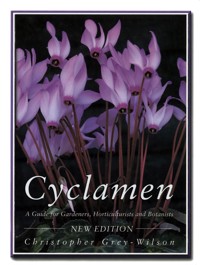
A completely revised and updated edition of the most comprehensive study of the genus Cyclamen ever undertaken, this book covers species both in the wild and in cultivation, along with analyses of the many culrtivars. The book is beautifully illustrated with 200 colour photographs as well as line drawings and maps showing the distribution of the various species in the wild. A chapter is specially devoted to the very important florists' cyclamen, Cyclamen persicum, as well as detailed notes on cultivation and propagation. Cyclamen have become ever more popular as garden plants, and the number of nurseries specializing in them has increased. However, in its natural habitat, the Mediterranean region and western Asia, the 22 known species of Cyclamen are increasingly under threat from development of various sorts. As a result conservation is a major issue in the study of the genus. Cyclamen is an ideal genus for the specialist gardener, having sufficient species to make a collection worthwhile and enough variety to sustain interest throughout the year. There is great diversity in the form and colour of the flowers as well as in the shapes and patterns of the leaves. Some are hardy enough to grow unprotected in the garden, while others make excellent plants for sheltered areas and conservatories, with one or more species in flower at almost every time of the year. This book is the best available source of information for gardeners and horticulturists, and is also invaluable to botanists and taxonomists. Using a minimum of botanical jargon, it tells all those with an interest in the subject everything that they may need or want to know about this fascinating genus.
Das E-Book können Sie in Legimi-Apps oder einer beliebigen App lesen, die das folgende Format unterstützen:
Seitenzahl: 743
Veröffentlichungsjahr: 2015
Ähnliche


















A completely revised and updated edition of the most comprehensive study of the genus Cyclamen ever undertaken, this book covers species both in the wild and in cultivation, along with analyses of the many cultivars. The book is beautifully illustrated with 200 colour photographs as well as line drawings and maps showing the distribution of the various species in the wild. A chapter is specially devoted to the very important florists’ cyclamen, Cyclamen persicum, as well as detailed notes on cultivation and propagation.
Cyclamen have become ever more popular as garden plants, and the number of nurseries specializing in them has increased. However, in its natural habitat, the Mediterranean region and western Asia, the 22 known species of Cyclamen are increasingly under threat from development of various sorts. As a result conservation is a major issue in the study of the genus.
Cyclamen is an ideal genus for the specialist gardener, having sufficient species to make a collection worthwhile and enough variety to sustain interest throughout the year. There is great diversity in the form and colour of the flowers as well as in the shapes and patterns of the leaves. Some are hardy enough to grow unprotected in the garden, while others make excellent plants for sheltered areas and conservatories, with one or more species in flower at almost every time of the year.
This book is the best available source of information for gardeners and horticulturists, and is also invaluable to botanists and taxonomists. Using a minimum of botanical jargon, it tells all those with an interest in the subject everything that they may need or want to know about this fascinating genus.
Christopher Grey-Wilson is editor of the Alpine Garden Society and editor of The Plantsman (RHS) and is a freelance horticultural and botanical writer and photographer. For many years he was a Principal Scientific Officer at the Royal Botanic Gardens, Kew, working as a research botanist and as editor of Curtis’s Botanical Magazine. He has been on a number of major botanical expeditions in pursuit of the mountain flora of Europe and Asia and is the author of several books regarded as standard works. These include Poppies and Clematis, also published by Batsford. He serves on a number of committees of the Royal Horticultural Society, who recently awarded him a Gold Veitch Memorial Medal for services to horticulture. He has been awarded gold medals by the RHS for exhibits of photographs and botanical paintings, as well as two gold medals for exhibit designs at the Chelsea flower show. The previous edition of Cyclamen was nominated for an award by the UK’s Garden Writers’ Guild.
Cyclamen
A Guide for Gardeners, Horticulturists and Botanists
Christopher Grey-Wilson
First edition published 1997
This new revised and updated edition published 2002
Published in the United Kingdom as eBook in 2015
© Christopher Grey-Wilson 2002
The right of Christopher Grey-Wilson to be identified as Author of this work has been asserted by him in accordance with the Copyright, Designs and Patents Act 1988.
eISBN 9781849942218
All rights reserved. No part of this publication may be reproduced, stored in a retrieval system, or transmitted in any form or by any means, electronic, mechanical, photocopying, recording or otherwise, without the prior written permission of the copyright owner.
Published by
Batsford 1 Gower Street London WC1E 6HD
www.batsford.com
An imprint of Pavilion Books Company Ltd
ACKNOWLEDGEMENTS
I am deeply grateful to all those who have assisted in one way or another in the production of this new edition, in particular Chris Brickell, Chris Clennett, John Fielding, John Grimshaw, Rod and Jane Leeds, Alan Leslie, Brian Mathew, Peter Moore, Robert Rolfe, and Bob and Rannveig Wallis. In addition, many members of both the Alpine Garden Society and the Cyclamen Society have provided notes and information over the years: to all I am hugely thankful. Finally, many thanks to Alan Radcliffe-Smith for providing the Latin diagnoses included in this book. C.G-W
PICTURE CREDITS BY PLATE NUMBER
The page numbers refer to the print edition.
[Photos by the author unless otherwise stated]
AGS Slide Library (Mike Ireland) 26
Bob Charman 68
John Fielding 29, 56, 65, 66, 69, 76, 79, 81, 92, 111, 118, 122, 123, 136, 154, 158, 159, 169, 193, 196, 199
Gerald Firak 120
Ronald Frank 52
Doug Joyce 13, 48, 67, 91, 99
Rex Mark 15, 117
Brian Mathew 140
Robert Rolfe 12, 14, 59, 60, 62, 73, 74, 139
Sakata (Japan) 174
Sahin (Holland) 196
Eddie Simpson 25
Bob Wallis 63, 75, 90, 94, 95, 96, 141
Contents
Introduction
Chapter One
The Magic of Cyclamen
Chapter Two
The Cultivation of Cyclamen
Chapter Three
Pests and Diseases
Chapter Four
The Cyclamen Plant
Chapter Five
The Genus Cyclamen
Chapter Six
The Species
Subgenus Psilanthum (Cyclamen repandum group)
Subgenus Gyrophoebe
Series Pubipedia (Cyclamen coum group)
Series Pseudibericum
Series Cilicium (Cyclamen cilicium group)
Subgenus Corticata
Subgenus Persicum (Cyclamen persicum group)
Subgenus Cyclamen
Series Cyclamen (Cyclamen hederifolium group)
Series Purpurascens (Cyclamen purpurascens group)
Series Graecum
Series Rohlfsianum
Chapter Seven
Cyclamen Cultivars
Chapter Eight
Cyclamen persicum, Evolution in Cultivation
Chapter Nine
Cyclamen Hybrids
Chapter Ten
Aberrations
Chapter Eleven
A-Z of Scientific Names of Cyclamen and New Combinations
Chapter Twelve
Cyclamen and Conservation
Appendix I
Generic Subdivisions & Latin Diagnoses of New Subgenera & New Series
Appendix II
Identification Key for Gardeners
Appendix III
Awards
Appendix IV
Nurseries selling Cyclamen in Britain
Appendix V
Societies to Join
Appendix VI
National Collections of Cyclamen
Glossary
Bibliography
Index
Introduction
It is always nice to produce a new edition of a book. I have spent a great deal of time over the years looking at cyclamen, both from a botanical as well as a horticultural point of view. Since the last edition of this work (published in 1997) a surprising amount of new material has come to light to augment our previous knowledge. New DNA investigations into some species and groups have been initiated and there have been further cladistic analyses. Besides this, more extensive fieldwork has been undertaken, both by me and more especially through a series of expeditions sponsored by the Cyclamen Society. I have tried to assimilate as much of this new information as possible. As a result there has been a number of changes in the overall circumscription of the species and in their relationship to one another.
In recent years cyclamen have become increasingly popular in our gardens with a number of nurseries specializing in their cultivation. The thriving Cyclamen Society bears witness to this increased awareness. Interestingly, the popularity of species cyclamen is a particularly British phenomenon and has been so for more than one hundred years. Although there is a growing interest in Continental Europe, the US and elsewhere for the species, it has been the development of the numerous cultivated forms of C. persicum that has predominated. Today in countries like France, Germany, the Netherlands, Italy, Switzerland and Japan C. persicum is a very important ‘flower crop’ produced in many millions as a pot plant.
At the same time as updating the text, I have been able to add quite a few new images of both species and cultivars in an attempt to show the great diversity of flower and form found in the genus. Cyclamen as it is now understood consists of 22 species. It might seem surprising to some that this relatively small genus can occupy such a lot of attention, but our knowledge about these charming little plants continues to expand and more and more people are being captivated by them. I am quite sure that we still have much more to discover both about the species in the wild and about the species and the many forms and cultivars in cultivation.
Important changes in nomenclature that affect both gardeners and botanists are:
• the recognition of C. elegans as a distinct species (formerly C. coum subsp. elegans)
• the upgrading of C. repandum subsp. peleponnesiacum to species – now C. pelopennesiacum
• the reinstating of the name C. alpinum which replaces C. trochopteranthum
This I am quite certain will not be the last word on the species, for the taxonomy of any genus evolves as our knowledge on the subject increases. However, I hope that my approach has been both consistent and reasonably logical. I state this in the full knowledge that no revision can ever fully satisfy every reader.
The captions in this book refer to the pictures on the page in order from top to bottom.
Chapter One
The Magic of Cyclamen
If I walk round my garden in the autumn or in the depths of winter, or again in the spring, there are always cyclamen to be seen in flower. Visitors are always attracted to the cyclamen for they seem to want to flower when most other plants are heading for their winter rest or have not yet woken to the early days of spring. The little flowers, which are borne in profusion, charm and delight the eye and lure the unsuspecting.
The genus Cyclamen is not large. With 22 species that flower at different times from midsummer to late spring, there is scarcely a month when there are none in bloom. Apart from one recently discovered in the northern wilds of Somalia, all the species can be readily grown either in the open garden or under glass.
The small, arched flowers with their swept-back petals are elegant and deserve to be studied close up, for they are often attractively marked and deliciously fragrant. Few flowers rival them for sheer charm, and what can be more alluring than a patch of pink C. coum in full flower early in the year when their only rivals are the pristine purity of the snowdrops, the first shy crocuses, golden winter aconites or bold hellebores? Perhaps it is the fact that they flower at such a discouraging time of year for the gardener that really excites, bringing the hope of spring and a new gardening year. The autumn-flowering C. hederifolium equally delights. When most plants in the garden have finished flowering and look tired and untidy at the end of the season, up pop the fresh pink or white flowers from the bare earth heralding the conclusion of summer and the leaf-fall days of autumn. And late in the spring, just when it seems all the cyclamen have finished, C. repandum puts on a rush of deep pink bloom, its scent wafting across the garden to attract the busy bumblebees.
But it is not only the flowers that attract the eye, for cyclamen have highly ornamental leaves that can carpet the ground for many months. The infinite variety of shape and patterning among the different sorts is legendary; from deep, plain, lustrous greens, to greys, pewters and silver, from simple heart-shaped patterning to washes, blotches and speckles, each plant has its own leaf characteristics and, like fingerprints, very few are exactly the same. As if that were not enough, turn over a leaf and it will often be deep purple or carmine and shiny beneath.
The fruits can be a fascination to children and adults alike, for few plants have such a bizarre corkscrew arrangement of the flower stalk to pull the fruits so close to the ground. Examine a plant in full flower and the twisting of the flower stalks can be observed in many stages as the young fruits begin to develop. At first the petals drop off and then the young fruit is pulled down as the top of the flower stalk begins to arch then loop. In just a few days the stalk has corkscrewed into a series of tight loops pulling the enlarging fruit tight to the ground. In the summer it can be equally enthralling to watch the open fruits display their sugary seeds and to see a succession of ants carry them away to their nests; that is, of course, if the seeds are not required for other purposes, in which case they need to be gathered up quickly before the ants gain all the spoils.
1Cyclamen graecum subsp. graecum, with elegant nodding flowers and twisted upturned petals, highlights the allure of cyclamen.
2 The hardy Cyclamen hederifolium subsp. hederifolium is the commonest and most widely grown species in gardens.
3Cyclamen coum (here subsp. coum) is one of the brightest jewels of the winter border and is ideal for naturalising between trees and shrubs and will self-sow once established.
4 Borders can be devoted to cyclamen; mixed colours of C. hederifolium at Rod and Jane Leeds’ garden in Suffolk bejewel the ground in September.
5 The autumn-flowering Cyclamen hederifolium naturalizes perfectly beneath trees, harmonising with ferns and other shade-tolerant plants.
The cultivated forms of the florist’s cyclamen, C. persicum, are among the most popular pot plants today, grown in large numbers on the Continent, especially in Holland and Germany where they are even used as a cut flower. Indeed, picking small bunches of hardy cyclamen with a few leaves and presenting small posies to friends can delight as much as a sweet bunch of violets, and they last in water equally well.
Cyclamen are certainly addictive. Once one species has been obtained it is difficult to resist collecting all the other species. But then that is only a starting point for there is an infinite variety of leaf shapes and patterns, selected forms and cultivars to gather into the collection. Then comes one of the greatest pleasures, collecting your own seed, sowing it and awaiting the results, for often novelties with different leaf patternings or flower colours will appear.
I can remember cyclamen from childhood. My grandfather had a small patch of C. purpurascens in the front garden that always seemed to bear a few flowers from summer through to autumn. In Northern Ireland, where my parents lived in a farmhouse for several years, the grassy banks along the muddy driveway were alive in the spring with snake’s-head fritillarias with their lively chequered flowers and drifts of Cyclamen repandum spilling down between the trees onto the verge.
However, it was not until I went to Wye College that I had a chance to see cyclamen in the wild. In 1965 I took up a summer vacation job at ‘Floraire’ just outside Geneva where the famous alpine nursery started by Henry Correvon in the late 19th century still prospered and was run by Henry’s grandson Aymon and his wife Heidi. On several occasions Heidi took me up into the mountains to see the wild flowers and I remember particularly clambering through the wooded slopes of the Saleve close to Geneva and seeing the myriad blooms of C. purpurascens (then called C. europaeum) dotting the leafy slopes. The following summer, with three friends from Wye College, I set off on a long expedition overland to western Iran on the Southern Zagros Botanical Expedition. Green and naïve in the art of plant collecting, we had an immensely enjoyable time and achieved moderate success botanically. On our way home through southern Yugoslavia in early September we passed via Skopje to Kotor on the Adriatic coast, where in a number of places there were scented drifts of C. hederifolium, pristine and leafless in the early warm days of autumn. After college I joined the staff at the Royal Botanic Garden, Kew, where I worked for a while for Desmond Meikle whose enthusiasm for plants, especially from the Mediterranean region and western Asia, spurred on my interest. His passion for cyclamen was unsurpassed, aided by a thorough knowledge of the complicated nomenclature of the genus at that time. In 1971 Professor Tom Hewer from Bristol invited me to join him on an expedition (again overland) to Afghanistan. With the backing of Kew and a generous grant from the Royal Horticultural Society we set off on the long road to Kabul in mid-January. The outward journey was punctuated by the bitter weather of the Anatolian Plateau in midwinter, yet along the mild Black Sea coast in early February, spring had already arrived and we were entranced by the catkin-covered hazel groves, yellow with pollen, and the leafy slopes dotted with Lenten roses (Helleborus orientalis), pink primroses (Primula vulgaris subsp. sibthorpii) and scattered snowdrops (Galanthus rizehensis) and, most memorable of all, masses of pink and magenta Cyclamen coum in their first flush of bloom. They have entranced me ever since.
PLANT ASSOCIATIONS
Different species of cyclamen come into flower at different times of the year so they can be associated with a range of plants in the garden setting. Their bright, jolly little flowers bring inspiration through the seasons. They are small plants, less effective as individuals but truly impressive en masse. The range of good companion plants is a large one but it is particularly interesting to note the sorts of plants that they accompany in their native habitats and some of these are listed under the individual species of cyclamen later in the text. Many of the companion plants in the wild make first-rate garden plants in their own right: anemones, buttercups, chionodoxas, colchicums, crocuses, hellebores, certain irises, primroses, scillas, snowdrops, sternbergias, violets and winter aconites to name but a few. Of course, not all these will be found with each cyclamen species in the wild but it gives an idea of the sorts of companion plants that can be grouped in the garden. In addition, cyclamen can work well with shrubs such as daphnes, some of the smaller willows and witch hazels for instance. I once saw a stunning spring display of rich pink Cyclamen repandum beneath a group of Corylopsis sinensis (= C. willmottiae), its filigree of slender branches dripping with pale yellow flowers.
The rich pinks and magenta flowers of some hardy cyclamen can be difficult to place in the garden and the colours can clash with yellows and reds in particular. Placed among cooler colours, especially varying shades of green provided by ferns or the smaller epimediums, or bronzed-leaved ajugas, they can look at ease in attractive harmony.
In fact, only the minority of cyclamen species can be grown in the open garden with ease and I refer to them as the ‘hardy cyclamen’ for want of a better title: luckily their flowers cover not only the autumn, winter and spring seasons but they offer the gardener a good deal of variety in flower colour and leaf interest. The prime species include C. coum and C. hederifolium, the two most commonly seen in gardens, as well as the delightful little autumn-flowering C. cilicium and the spring-flowering C. repandum with its delicately twisted petals.
A CYCLAMEN BORDER
The simplest way to grow cyclamen is to mass them together in a single border of their own; this can be not only very effective but relatively easy to maintain. But a word of warning: cyclamen species do not mix particularly well in such a border unless it is very carefully controlled. I thought at one time that it would be nice to mix C. hederifolium and C. coum in a single border, thus having an autumn display of flowers from the former and a winter show from the latter; however, C. hederifolium is far more vigorous and leafy and soon begins to dominate such an association to the detriment of the more refined C. coum. On the other hand, C. coum and C. cilicium mix tolerably well, being of more or less equal vigour.
6 A bank of Cyclamen coum at the Royal Horticultural Society’s Garden, Wisley, brightens the winter garden.
7 A drift of Cyclamen hederifolium at the base of a hedge makes an interesting feature.
A border devoted to C. hederifolium can be a truly arresting sight in the garden, especially if the various shades of pink are mixed with white-flowered forms. Once established, the plants will sow themselves around freely. Having flowered, the variegated leaves in hues of green, grey, pewter and silver add interest through the winter months and well into spring. Such borders look fine beneath the dappled shade of old trees such as an oak, pear or apple and require little maintenance save for an annual dressing of bone meal and a generous mulch of leaf mould or bark chippings.
Cyclamen hederifolium mixes very well with ferns, the subtle greens of the dissected fronds a gentle foil to the perky blooms in pinks and white. Useful ferns that remain fresh late in the year include the male fern, Dryopteris filix-mas, holly fern, Polystichum lonchitis, and the soft shield fern, Polystichum setiferum, but there are many others from which to choose.
By summer the C. hederifolium leaves have died away and the area can be tidied up. There are few plants that really associate well during this low season for the cyclamen, yet clumps of lungworts or epimediums can provide foliage interest. A few years ago I saw a border of C. hederifolium interspersed with Arum italicum ‘Pictum’ whose bold, variegated foliage provides a lively contrast to that of the cyclamen in autumn and winter. The leaves of both die away at more or less the same time leaving the bold, stiff-stemmed heads of green arum fruits standing sentry-like through the summer months. Then in the autumn as the cyclamen come into bloom the arum heads are turning scarlet to produce a startling display of form and colour, almost too brazen to some eyes. When it comes down to it the choice of planting and colours is very much a personal one; the fun is in trying out different combinations to see which best suit the cyclamen.
Many so-called autumn crocuses, Colchicum species, flower at the same time as C. hederifolium and their bold flowers can provide an interesting contrast, although the leaves of some can prove too coarse in the spring when they develop to their full extent; carefully placed, the two can harmonize rather well. Other autumn-flowering bulbs make even better companions. The true crocuses are especially effective and of those most widely available C. speciosus is perhaps the easiest and will, like the cyclamen, tolerate dappled shade. In sunnier sheltered positions few can be better than C. goulimyi, white or pink with its elegant goblet-flowers drawn aloft on delicate stems like the finest wine glass. To impress neighbours plant a group of autumn-flowering snowdrops, Galanthus reginae-olgae, among the cyclamen and watch them come into flower long before their leaves appear.
Cyclamen coum can be equally effective. Placed in a border close to the house the display of small flowers can be enjoyed in the depths of winter from the warm confines of lounge or kitchen. Borders can be devoted to single colours but are really more effective (as with C. hederifolium) when the different colours are allowed to intermingle; thus the whites, pinks, purples and reds enliven one another against a mat of plain and variegated foliage. Because C. coum flowers in midwinter and early spring it can be associated with winter shrubs in a border. What can be more striking than the red or yellow stems of dogwoods (for instance Cornus alba ‘Sibirica’ with scarlet winter shoots, or C. stolonifera ‘Flaviramea’ with its bright greenish-yellow winter stems) set upon a sea of C. coum in full flower, or the even brighter and more robust stems of the coloured willows, Salix alba ‘Britzensis’ (orange-red stems) or var. vitellina (orange-yellow stems). Both cornus and willow can be pruned hard back in the spring to produce a new flush of colourful growths for the following winter. A hazel coppice is another good setting for C. coum, reflecting one of its associations in the wild. A tapestry of cyclamen can be interspersed with clumps of yellow or pale pink primroses (Primula vulgaris and its subspecies sibthorpii), snowdrops and celandines (Ranunculus ficaria cultivars) in bronzes, creams and yellows, punctuated by bold clumps of Lenten roses, Helleborus X hybridus, with their enticing saucer flowers in greens, yellows, pinks, purples, smoky blues or almost black. For a bolder, perhaps more shocking combination, try planting some of the early flowering corydalis such as C. solida ‘George Baker’ or ‘Wilhelm Schacht’, where the reds and bright pinks will vie with the magentas, pinks and whites of the cyclamen.
Other useful associated shrubs include: Daphne odora, D. mezereum, Hamamelis mollis (especially ‘Pallida’), H. japonica, Viburnum X bodnantense, V. farreri. Other associated herbs include: Adonis amurensis, Eranthis hyemalis and E. cilicica, Euphorbia amygdaloides ‘Purpurea’, Hacquetia epipactis, Iris lazicus and I. reticulata, Leucojum vernum, Omphalodes verna, Pulmonaria species and cultivars, Viola odorata.
In more open borders Cyclamen coum mixes delightfully with Crocus tommasinianus in its various shades of manve, pink, lilac and purple, or Anemone blanda (blue, white or pink), which burst with colour on sunny days.
8 Hardy cyclamen mix well with spring bulbs; here C. coum Pewter Group harmonizes with Galanthus ‘Magnet’ and Helleborus foetidus ‘Westerfisk’.
9Cyclamen coum Nymans Group and Crocus tommasinianus (‘little tommies’) enliven the garden in March.
An area devoted to the Pewter Group of Cyclamen coum can also be very effective with the subtle greys and silvers of the foliage contrasting delightfully with the pinks, purples and reds of the flowers. Less vigorous than some of the green-leaved forms of C. coum, they are best isolated lest their more thuggish cousins overwhelm them.
As spring advances the choice of subjects multiplies rapidly so that by the time C. repandum unfurls its first carmine-pink blooms there is plenty of colour in the garden. C. repandum is not the easiest species to please in the garden, although it is reasonably hardy. In my experience it greatly resents draughty exposed positions in the garden, preferring quiet banks or glades in dappled shade. It, like the others, will naturalize well in short grass and its rather startling colour is perhaps best displayed against a lush green background. However, it can be subtly associated with some of the less bright lungworts, Pulmonaria, and the dainty yet tough epimediums whose filigree of small flowers in whites, yellows, pinks and reds seems to counteract the bolder flowers of the cyclamen. C. repandum can look wonderfully impressive beneath deciduous flowering shrubs such as the various kinds of Corylopsis, Ribes sanguinea (e.g. ‘Brocklebankii’), Salix hastata ‘Wehrhahnii’ or even the common Forsythia.
Other useful associated herbs include: Anemone nemorosa and its cultivars, Cardamine enneaphylla and C. heptaphylla, Dicentra species, Erythronium species and cultivars, Fritillaria meleagris and F. pyrenaica, Hepatica nobilis and H. transsilvanica, Hyacinthus (Muscari) azureus, Narcissus bulbocodium and N. cyclamineus, Omphalodes capadoccica, Polygonatum species, Tiarella cordifolia and T. wherryi, Trillium species, Uvularia perfoliata, Vinca species and cultivars, Viola labradorica ‘Purpurea’ and V. septentrionalis.
Among the hardy cyclamen should be included the small C. intaminatum with its delicate flowers of white and grey. This little treasure is too small for the open garden where it is easily overlooked and readily swamped, but it is a gem worth every effort for it is not difficult to grow and will reward you by seeding around once it is happily situated. The confinement of a trough or raised bed among alpines and small bulbs suit it admirably and will show this charmer to the best advantage, being one of the first species to burst into flower during the autumn.
Cyclamen purpurascens is perfectly hardy but a ‘little devil’ to please in many gardens. It rarely produces the bold flowering display of its cousins, yet its pink flowers are so delightfully scented that it is impossible to resist trying it somewhere in the open garden. It is a plant that requires no detractors; a quiet cool, shady corner where it can grow away undisturbed suits it best of all. A setting amongst small ferns, in dappled shade with a copious mulch of pine needles may suit it best, and when you are tired of the bold displays in the rest of the garden in the height of summer seek solace in such a ‘corner’, for there will invariably be one or two of the sweet blooms at their perfect best.
10 A courtyard in Kyrenia, Northern Cyprus, where the tender Cyclamen persicum has self-sown.
If a warm, fairly dry, sunny corner can be found in the garden then it is well worth trying to grow C. graecum in the open. This, a plant of sun-baked Mediterranean rocks, relishes all the heat and sun that can be provided. The base of a south-facing wall, especially if the border is raised, is an ideal location and some growers have been remarkably lucky with it in such a situation where it will reward the gardener by a display of flowers in the late summer and early autumn. This is a plant that dislikes disturbance once established and it should not be hemmed in by too many other plants, otherwise its attractive and often delightfully ornamental mounds of leaves cannot be seen at their best. Associated plants include other sun-lovers: try some of the autumn-flowering crocuses, Crocus goulimyi, C. niveus and C. medius, the winter or Algerian iris, Iris unguicularis, or Sternbergia lutea and S. sicula with their sumptuous autumn goblet-flowers of bright gold. Associated shrubs include Cistus species, Euphorbia characias, E. c. subsp. wulfenii, Lavandula stoechas and L. lanata, Phlomis fruticosus and Rosmarinus officinalis; all sun worshippers.
Some lucky gardeners have had success with C. mirabile, noted for the rich pink and red hues of its young foliage (in the best forms), and C. alpinum, with its early spring display of whirligig blooms, in the open garden, Both are reasonably hardy though not the easiest to please, but if enough plants are available it is worth experimenting with them in the garden. Otherwise I find they perform best when grown in frames or pots.
Chapter Two
The Cultivation of Cyclamen
Cyclamen are not difficult to grow, it is just that some are more difficult than others. This might seem a rash statement to make but it is quite easy to possess and maintain a large selection of cyclamen in the garden or in airy glasshouses or frames. They will reward careful cultivation with a show of flowers at the appropriate season as well as an attractive display of leaves long after the flowers have faded. Of course, a lot depends on where the plants are being grown. Some species (C. coum and C. hederifolium, C. parviflorum, C. purpurascens) are completely hardy, withstanding temperatures as low as −20°C (-4°F). Others (C. cilicium, C. intaminatum, C. mirabile, C. alpinum) are less hardy but will tolerate subzero temperatures provided that they do not fall below −14°C (7°F). At the other extreme are those species that will not tolerate temperatures below freezing for any length of time; the popular florist’s cyclamen, C. persicum, belongs here, as do C. rohlfsianum and C. cyprium.
These are general notes on cultivation; for more specific details please look under the individual species.
UNDERSTANDING CYCLAMEN CULTIVATION
Cyclamen is a primarily Mediterranean genus and a knowledge of the species’ natural habitats in the wild can provide valuable information for the cultivator. The Mediterranean climate is basically one of cool, wet winters and hot, dry summers. There is little or no frost and cold biting winds are rare. Cyclamen are well adapted to the Mediterranean climate, growing and flowering in the cooler, moister winter and spring months and becoming dormant as the dry, hot summer months approach, when they disappear below ground to rest. The last phase in the annual cycle of the cyclamen plant is the ripening of the fruits, which often happens after the leaves have withered away. This event generally takes place in the summer months; it is no coincidence that this is also the time when foraging ants are at their most numerous, for the sugary-coated seeds are almost exclusively distributed by ants (see p.40).
It would be wrong to assume that all cyclamen require a hot, dry summer baking, for relatively few grow in such conditions in the wild, the best-known examples being C. graecum, C. persicum and C. rohlfsianum. Those who have travelled to the Mediterranean in search of C. repandum and its allies (C. balearicum, C. creticum and C. peloponnesiacum) know that they occupy not the sun-baked habitats but the cooler, moister glades of woodland and valley floors and ravines; they have thin leaves that would soon desiccate in more exposed positions, but they still become dormant in the hot, dry summers. In Crete where C. graecum and C. creticum are sometimes to be found growing in the same valley or on the same ridge their preferred habitat is quite pronounced with the former opting for the more open, sunnier aspects, while the latter seeks the coolness and shade of sheltering rocks or trees.
Many of the other species prefer the shadier, cooler habitats often well away from the Mediterranean shoreline in the hills and mountains where the conditions are less extreme during the summer and where any severe winter weather is often offset by a protective blanket of snow; among these one can include C. alpinum, C. cilicium, C. coum, C. cyprium, C. hederifolium, C. intaminatum, C. libanoticum, C. mirabile and C. pseudibericum.
Three outlying species in particular, C. colchicum, C. parviflorum and C. purpurascens, grow in more temperate climates where the winters are longer and more severe and the summers less hot and dry. C. purpurascens is widespread in the woodlands of central Europe, north as far as southern Poland, and breaks the general pattern by being practically evergreen and coming into flower in the middle of summer; the closely related C. colchicum is the same but is confined to a small region of the Caucasus close to the eastern shore of the Black Sea. C. parviflorum can perhaps be described as the only truly alpine species in the genus, growing in the extreme conditions at altitude in the eastern Pontus Mountains of northern Turkey where the summers are cool and moist and the winters extremely cold with deep snow lying for many months. It is not surprising therefore that this charming little species can often still be found in flower well into summer where snow lingers late on the mountain slopes and meadows.
In more temperate climates cyclamen have to contend not only with rather wetter and often cooler summers but often colder winters, sometimes with severe frosts or even prolonged periods below freezing, which is rarely accompanied by an insulating blanket of snow. It is necessary to provide some of the species with more equable growing conditions by cultivating them in pots in frames or glasshouses where the extremes of climate can be modified. What is perhaps surprising, considering their origins, is how hardy and resilient certain species are, in particular C. cilicium, C. coum and C. hederifolium. In my East Anglian garden, which rarely receives much snow, the plants are often subjected to severe frosts or even prolonged freezing over a number of days. The plants look awful during such conditions with limp and frozen foliage, yet the moment warmer weather returns they perk up and look as if nothing has affected them whatsoever.
11Cyclamen coum subsp. coum is very hardy, withstanding heavy frosts and snow unscathed, even when it is in bloom.
Yet most of the other species will not stand such harsh conditions. In milder gardens many can be grown in the open provided that they are given a sheltered niche which is reasonably dry during the winter months. Indeed, all but C. africanum, C. cyprium, C. persicum and C. rohlfsianum can be grown outside in certain British gardens.
Strangely enough, one would perhaps expect C. purpurascens to be the easiest and hardiest species to grow in the open garden. It is very hardy but, unfortunately, not particularly easy to cultivate well, rarely making a decent display in our gardens.
Hardiness is not simply a question of temperature. It is a complex subject that involves the interaction of different elements of which temperature is just one facet. Other factors that affect hardiness include soil type, moisture content, aspect, exposure and age of the plant. It is quite possible for plants to survive freezing temperatures in dry, well-drained soils while the same species will succumb at similar temperatures in wet soil conditions. Incidentally, the same can be true of plants grown in pots, especially during periods of prolonged freezing, those in pots succumbing whilst the same species outdoors survives without difficulty. Low temperatures accompanied by bitter winds can shrivel and desiccate plants whilst those in sheltered sites survive unscathed.
For these reasons, apart from the reliably hardy and tolerant cyclamen species and cultivars, most growers opt to cultivate their plants in pots in an alpine house or frame where conditions can be more easily controlled. The finest collections of cyclamen are grown under such conditions.
HOW HARDY ARE THEY?
Of course, hardiness is a complex matter and it is difficult to set hard and fast rules. However, under average garden conditions in sheltered areas and with a good fibrous, yet well-drained soil, cyclamen can be classed in the following hardiness groups which are dependent on temperature. Having said this, however, I am rather hesitant to place the species into groups because there will always be those who will claim that certain are hardier or more tender than I state, but so much depends on local conditions. For this reason several species will be found in more than one group.
Group One: Frost-hardy Species (will withstand temperatures as low as −20°C (−4°F), even prolonged freezing).
C. cilicium, C. coum (subsp. coum and caucasicum), C. hederifolium, C. parviflorum, C. pseudibericum (in some gardens only), C. purpurascens. C. hederifolium has been known to have survived prolonged freezing at temperatures as low as −30°C (−22°F).
Group Two: Frost-tolerant Species (not as hardy as Group One but will withstand temperatures as low as −14°C (7°F) but not prolonged freezing below this point).
C. alpinum, C. colchicum, C. elegans (higher altitude forms), C. intaminatum, C. mirabile, C. pseudibericum, C. repandum (not consistently so in all gardens); many would also place C. cilicium in this group rather than the first but I have found it to be equally as hardy as C. coum.
Group Three: Half-hardy Species (will tolerate some frost as low as −4°C (25°F) for a few hours but not prolonged freezing).
C. balearicum, C. creticum,C. elegans, C. graecum, C. libanoticum, C. peloponnesiacum.
Group Four: Tender Species (best kept frost-free, although some forms will tolerate slight, short-term frost).
C. africanum, C. cyprium, C. persicum, C. rohlfsianum; C. somalense probably also belongs in this group.
In temperate gardens all those in Group One can be grown successfully in the open garden given the right conditions, and in the mildest gardens most of those in Group Two can also be tried with varying degrees of success. In fact a series of mild winters in Britain and other parts of western and north-western Europe in recent years has allowed many cyclamen growers to try a greater range of species in the open, even some from Group Three. At the Royal Botanic Gardens, Kew even C. persicum was kept alive outside beneath a sheltered south-facing wall for several years, although the plants never bloomed very freely. Such experiments generally fall foul of the first harsh winter that comes along but the experiment is well worth doing, especially if you have enough plants of the more tender species with which to experiment. It is exciting to be able to coax them into flower under adverse conditions.
For best results however, all the species listed under Groups Two, Three and Four are best grown in pots under glass, or planted out in beds under glass. It is wise to keep all those in Group Four frost-free at all times, although in reality plants will survive a few degrees below freezing overnight, but certainly no more, although even that may damage the foliage to some extent; the plants certainly do best in a frost-free environment. As stated before, the same species will tolerate less frost if the compost is wet than when it is on the dry side, so culture can affect hardiness to some extent.
Frost-tender species do not need to be kept too warm, otherwise they will produce a lot of soft growth and the attractive leaf patternings will be diminished. A minimum temperature of just 2−3°C (36–37°F) is enough. During frosty periods they are best kept on the dryish side but must be watered should the foliage show any sign of wilting.
WHERE TO START
Many people’s first encounter with Cyclamen is with one of the blowsy forms of C. persicum, with cabbagy leaves and over-endowed with blossom, acquired at a florists or garden centre. Carefully nurtured in the confines of the house, they can remain in flower for many weeks but more often than not the leaves begin to yellow and the flower buds fail to open. The plant soon begins to look sick and unhealthy and is quickly discarded. Such experiences put many off growing cyclamen in the future but with a little care even the florist’s cyclamen can reward us for many years: I know at least one person who has managed to keep a single plant growing and flowering annually for more than twenty years.
My advice would be not to start with the florist’s cyclamen but to go for some of the daintier hardy species and then gradually to develop one’s collection by adding some of those that are less easy to cultivate. Undoubtedly the best to start with are the various forms of C. coum and C. hederifolium which can be grown in most garden soils provided that they are not waterlogged at any time of the year and, once established, they will reward by self-sowing in adjacent parts of the garden. These are easy dependable species for the average garden. Later, both C. cilicium and the hardier forms of C. repandum can be added and these four will provide a display of flowers to delight the eye from late August until early May, with C. hederifolium coming into bloom first in the late summer and C. repandum completing the display in the late spring. Later still, species such as C. intaminatum, C. mirabile, C. alpinum and C. purpurascens can be added to the collection.
BUYING PLANTS
Many people are seduced by the packets of tubers sold with brightly coloured wrappings in garden centres and department stores. These tubers are dried and often look as though they have been through a potato scrubber, without a vestige of root or shoot remaining. Unfortunately, many of the larger dried tubers sold have been stripped from the wild. Furthermore, they are often misnamed so that the contents are not the same as the plant depicted; for instance plants labelled C. hederifolium often have the picture of C. cilicium on the packet but they may in fact not be either species, so they are unreliable unless they come from a reputable source. Worse still, these poor dried tubers, although admittedly often very reasonably priced, are generally very difficult to coax into growth, sometimes staying dormant for a year or so before coming into leaf or flower. Many never show any sign of growth and merely, like the proverbial tortoise, shrivel away over a period. To make matters worse, it is often not clear which way up the tubers should be planted. Here the advice is simple: if the tuber has a flat or concave side then plant this uppermost with the rounded side of the tuber at the base. However, this is not always apparent; the growing points which give rise to leaves and flowers are usually located only on the upper surface of the tuber (in old tubers of C. graecum and C. purpurascens, in particular, growing points may be located on various ‘faces’ of the tuber due to distortion or uneven development). To coax dried tubers into activity it is often a good idea to place them in shallow boxes of moist peat and wait for signs of renewed growth. Regular inspection will reveal any such activity and, once detected, the tuber(s) can be placed in the garden. This method has one great advantage as it matters little whether or not tubers are placed upside down for they can be righted between the ‘sprouting’ trays and their planting in the garden. An alternative method advocated by some gardeners is to place the tubers in moist peat in a sealed polythene bag. Unfortunately, whichever method is chosen there will be a high percentage of losses among dried tubers, so expect disappointments. Luckily, only a few species are sold in this manner; they include mainly C. cilicium, C. coum, C. hederifolium, C. purpurascens and C. mirabile and, very occasionally, C. alpinum.
It is far better to seek good plants in growth from a specialist cyclamen nursery or from an alpine nursery or garden centre that sells pot-grown plants in full growth. They will certainly cost a little more, but it is well worth the extra cost for reliability. There is no doubt that cyclamen are far easier to establish from ‘plants in the green’ than dormant tubers; the same is very true of snowdrops and winter aconites. Apart from the obvious benefits of acquiring such plants there is the opportunity to see plants in leaf and/or flower and to be able to select the most desirable for oneself. If it is impossible to reach the desired nursery most will send plants ‘in the green’ through the post. Most of the species and their cultivars and some of the hybrids, even the rarer ones, can be purchased in this way, and a quick glance at The RHS Plant Finder will help find an appropriate source of plants.
Some nurseries (especially bulb nurseries) sell only dormant tubers, generally between May and November and will say so in their catalogues. Others prefer to sell plants in growth and these are usually available between September and May.
It perhaps goes without saying that if plants are chosen at a nursery or garden centre it is wise to select only the healthiest and more vigorous plants, not those that look in any way diseased or impoverished. Reputable nurseries will sell clean stock but there is always the danger that some pest might be introduced with bought-in plants. Of those likely to affect cyclamen potentially the most serious is the vine weevil, which especially seems to favour peat-based composts. To overcome potential risk I always remove all the compost from the roots of the plants and place them in fresh ‘clean’ compost of my own. The initial compost is discarded together with eggs or larvae of vine weevils should they be present. This is a wise precaution, although it can be a bother, especially if a number of plants are bought in; yet vine weevil, if allowed to gain a hold in a collection, can cause a great deal of damage, besides infecting other groups of plants. Incidentally, removing all the compost from a growing cyclamen plant will not cause any harm, provided that plants are potted up or planted out without delay, watered moderately and kept shaded for a week or so if the weather is hot.
GROWING CYCLAMEN IN THE OPEN GARDEN
The hardier cyclamen can be grown outside without any winter protection. They thrive best in a good humus-rich soil (one containing plenty of decomposed organic matter such as compost or leaf mould) but the most vital factor is that it must be well-drained. Naturally, a sheltered site is preferable but C. coum and C. hederifolium will tolerate fairly exposed positions without ill effects. Indeed, for the average garden, and certainly for the beginner, these two species stand supreme. C. hederifolium will in fact survive long periods of freezing without harm and in parts of Europe and North America it has been known to survive conditions where the ground freezes to a depth of 30cm (12in). It is also a species that will put up with temperatures in excess of 30°C (86°F) for short periods.
For sheltered places outdoors C. cilicium, C. purpurascens and C. repandum are well worth trying and will withstand severe cold conditions but generally dislike bitter winter winds. Incidentally, both C. intaminatum and C. parviflorum are equally as hardy in the open garden but because they are so small it is perhaps wise to confine them to sinks or raised beds where their delicate beauty can be better enjoyed and where they will not be overlooked.
Another requirement of most of the hardy species is that they receive reasonably good light during the bleak days of winter: after all, their leaves are mostly well-developed at that time of the year. At the same time, too much sun in the late spring and early summer can prove harmful (though C. cilicium, C. coum and C. hederifolium remain generally unaffected by strong and continuous sunshine); a sheltered site with dappled shade as provided by deciduous shrubs is ideal. Growing cyclamen amongst shrubs or beneath a hedge or trees has one other advantage, in that the roots of trees and shrubs will mop up excessive moisture, creating just the right conditions for many cyclamen.
Soil Type
Cyclamen are quite adaptable and will in fact grow in a range of soils from light sandy loams to leafy clays or a good average loam. They seem happiest in neutral to alkaline or slightly acid soils; some will tolerate acid soils suitable for rhododendrons and other ericaceous plants but, in my experience, they never look as robust and healthy on unduly acid soils – say below pH5.5. Peat is not necessary for cyclamen, except perhaps for C. parviflorum, although it can be a useful additive to improve soil structure and friability. The use of peat will become more restricted as the need for conservation becomes increasingly important and besides, good leaf mould (especially of beech or oak) cannot be bettered. The ideal soil is one that is just above neutral but not unduly alkaline, although some will no doubt argue that many humus-rich soils which suit cyclamen (especially in the wild) may well be acidic.
The drainage of the soil can be improved if necessary by digging in plenty of grit in the top 20cm (8in) or so. If the soil is very heavy and poorly drained then the best answer is to build raised beds to accommodate cyclamen and other plants that demand perfect drainage.
Position
The edge of woodland, sloping leafy banks, stream sides, shrubberies and areas beneath sheltered walls are all ideal places to plant the hardier cyclamen. They can look delightful among the roots of an old tree or in crevices in the rock garden or in open woodland glades, or even naturalized in grassy places. Cyclamen, like many bulbs, look best in drifts and are rarely as effective on their own. A border devoted to a single species such as C. coum or C. hederifolium can be very appealing and a most arresting sight when the plants are in full flower. Cyclamen also make effective plants outdoors for large troughs, containers of various sorts and window boxes.
Cyclamen do not mind competition from the roots of other plants, especially trees and shrubs, but they may be crowded out by vigorous leafy herbaceous plants. They compete well with some of the small, slender-leaved bulbs and various ferns but some care needs to be taken when associating them with other plants in the garden. Another advantage of planting cyclamen in informal settings en masse is that during the summer months they will have died down leaving the area bare. At such times it is easy to remember where they are and it also gives an opportunity to collect the seeds, clean up the site and to top-dress the area with a leafy mulch in preparation for the autumn when most resume growth.
Cyclamen hederifolium will naturalize well in grassy places if the grasses are not too vigorous. Once the leaves have died down in early summer the grass can be mowed (keeping the blades of the mower high) or scythed, but this should be stopped by late August when the first blooms will begin to arise. C. coum will also thrive in such places if the grass is thin and low as it often is beneath large trees.
Planting Cyclamen in the Open Garden
When planted in informal groups, cyclamen produce an attractive dense, leafy cover that helps to subdue weed growth. In addition, once the colony is established, it will begin to seed around freely and to expand.
Cyclamen species do not mix very well in the open garden; they are seldom found growing together in the wild! C. hederifolium is too vigorous for C. coum and will soon overwhelm it. On the other hand C. coum and C. cilicium mix tolerably well and are of more or less equal vigour, with the additional bonus of flowering at different seasons, thus prolonging the interest of the planting.
There is no perfect planting time, although many advocate late August and September when the weather has begun to cool and when many species are commencing renewed root activity. If the weather permits and the soil is in good condition plants can be placed out at almost any time of the year, although it would be rash to plant the less hardy species outside in the autumn or winter before the onset of harsher weather.
Most cyclamen tubers can be planted at a distance of 8–12cm (3–5in) apart, although C. hederifolium is better planted at a distance of 15–20cm (6–8in) as the tubers will become very large in time. A planting depth of 4–6cm (1.5–2.5in) is ideal for the hardier species but 15cm (6in) depth or more for the less hardy ones; in the wild C. hederifolium and C. repandum have been recorded growing at a depth of more than 30cm (12in)!
Most species will transplant successfully in full growth but care should be taken not to damage the roots or tubers unduly.
Cyclamen hederifolium, and to a lesser extent C. coum, are often prolific seeders and colonies can become overcrowded in just a few years. In the case of the former the tubers become so large that they can push one another out of the soil. When this stage is reached it is probably best to lift all the plants, replenish the bed and start all over again. Excess plants can be placed elsewhere in the garden or given away to friends; they make super Christmas presents or gifts at any time.
The less hardy cyclamen such as C. graecum and C. creticum will grow outside in favourable sheltered gardens. Deep planting will ensure extra protection for the tubers from frosty weather. Planting tubers beneath steps or at the base of a warm sunny wall will encourage success. Some growers advocate placing the tubers in a deep hole with a little compost above followed by a slate or brick then more compost. This has the double benefit of adding extra insulation from frost as well as keeping excess moisture away from the tubers. During the winter extra protection can be afforded by placing fern fronds, straw, or other insulation over the plants, taking care not to damage the leaves. However, beware of slugs and snails that delight in hiding in such places. Plastic or indeed any insulator that holds moisture and creates a humid atmosphere is wholly unsuitable and is likely to encourage fungus infections.
Mulches
Cyclamen certainly benefit from mulches in the open garden. Mulches help conserve moisture and suppress weeds, whilst at the same time they can greatly enhance the border. Various types of mulch can be applied. Best of all is a good oak or beech leaf mould, but in fact any good friable leaf mould will suffice (you should seek the permission of the landowner before removing leaf mould from woodland). Pine needles can be equally effective and are said to be excellent for C. purpurascens and C. repandum, but I have had little personal experience in using them.
If leaf mould is unavailable then bark chippings are a good and readily available alternative. I find the coarser types better as the pieces do not get blown around in gales so easily. I remember once applying a large bed with fine bark chippings which I thought would be ideal. A week later a fierce autumn storm struck removing the entire mulch to a distant corner of the garden, where it piled up against a fence, sand dune-like.
Other mulch materials include stone chippings, coir and coconut husks. None of these are as good in my opinion; furthermore they do not look so attractive.
Mulches are best applied during the dormant season so that when the new leaves and flowers appear they push their way through the mulch to the light. Mulches can be applied every year or every two years. A top-dressing of bonemeal can be applied at the same time, if required.
Feeding Cyclamen in the Garden
Cyclamen are not gross feeders, indeed most actively dislike excess feeding. Many fine colonies survive healthily for many years in gardens without ever being fed. A dressing of bonemeal lightly pricked into the surface around the plants will do no harm. Other feeds may lead to over-lush and uncharacteristic leaf growth that may well be more prone to fungus infection. An annual top-dressing of leaf mould or well-rotted compost applied in the late summer will certainly do no harm and will enhance the look of the bed.
Raised Beds, Troughs and Containers
Cyclamen grow well in raised beds, especially where the garden soil is too heavy for them. The beds need not be raised high, even 9–12cm (4–5in) will have the desired effect. The compost placed in the bed can be controlled so that it is exactly right for the plants. A good gritty, free-draining mixture is essential. A suitable compost can be made from equal parts of good fibrous loam (or John Innes Potting Compost No. 2 or its equivalent), grit or coarse ‘angular’ sand and a good flaky leaf mould (in preference to peat) which is best sieved to remove unduly large pieces. If the loam is on the heavy side then the grit or sand can be doubled to increase the drainage. To this can be added bonemeal or a similar organic slow-release fertilizer but it is not essential. The compost should be mixed thoroughly and placed in the raised bed and firmed in. Water well to ascertain that the compost drains freely and then allow the bed to settle for a few days before planting proceeds. If necessary more compost may need to be added to the bed to ‘top it up’.
12Cyclamen hederifolium (here forma albiflorum) can make a very fine and floriferous plant for pot cultivation; cultivated by Mike Brown.
13 An award-winning pot of Cyclamen coum Pewter Group, an excellent species for showing in March and April.
A similar compost is suitable for troughs and other containers. To prevent undue weed growth a gritty top-dressing can be added as a final touch once planting has been completed.
A well-planted raised bed devoted to a single species or with different areas for different species of cyclamen can be a very effective feature in the garden: for instance, when planted with patches of different colour forms of C. coum or simply a mixture of the ordinary pink and white forms of C. hederifolium.
GROWING CYCLAMEN UNDER GLASS
Unless one is fortunate enough to live in a mild, practically frost-free, area only a few of the delightful species of cyclamen can be grown in the open garden. The remainder will need to be grown under glass. None requires heat to grow but they do require frosts to be excluded; the occasional light frost will not affect most (except perhaps C. africanum, C. persicum, C. rohlfsianum




