15,99 €
Mehr erfahren.
- Herausgeber: via tolino media
- Kategorie: Fachliteratur
- Sprache: Englisch
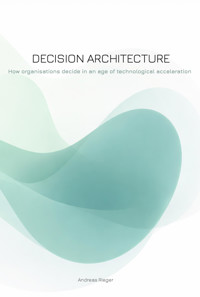
Organisations have always depended on their ability to decide. For much of modern history, this capacity appeared closely linked to the expansion of knowledge. As analytical tools improved and information became more accessible, institutions learned to observe their environments with increasing precision. Decision was expected to follow naturally from understanding. Today this relationship is beginning to change. Across industries, leaders are beginning to describe a quieter and more complex experience of organisational life. Analytical awareness expands continuously, signals become visible earlier and multiple interpretations tend to remain plausible for longer periods of time. Institutions often find themselves understanding their environments with unprecedented depth, while the task of translating that understanding into coordinated commitment becomes increasingly demanding. This book examines the architectural conditions under which decision remains possible in such environments. Rather than treating decision-making as a moment of choice or an expression of leadership style, Andreas Rieger explores how institutions organise the pathways through which knowledge becomes action. He introduces the concept of decision architecture to describe the structural relationships that shape how signals gain legitimacy, how authority stabilises interpretation and how commitment forms under conditions of expanding knowledge. Drawing on the evolution of management thought as well as contemporary organisational experience, the book offers a reflective perspective on maturity, leadership and institutional design in an age of acceleration. It invites readers to reconsider familiar assumptions about intelligence, uncertainty and strategic direction. In doing so, it suggests that the defining challenge for modern organisations may not lie in knowing more, but in remaining capable of deciding while understanding continues to unfold.
Das E-Book können Sie in Legimi-Apps oder einer beliebigen App lesen, die das folgende Format unterstützen:
Veröffentlichungsjahr: 2026