


Erhalten Sie Zugang zu diesem und mehr als 300000 Büchern ab EUR 5,99 monatlich.
- Herausgeber: Quintessence Publishing Co, Inc
- Kategorie: Fachliteratur
- Sprache: Englisch
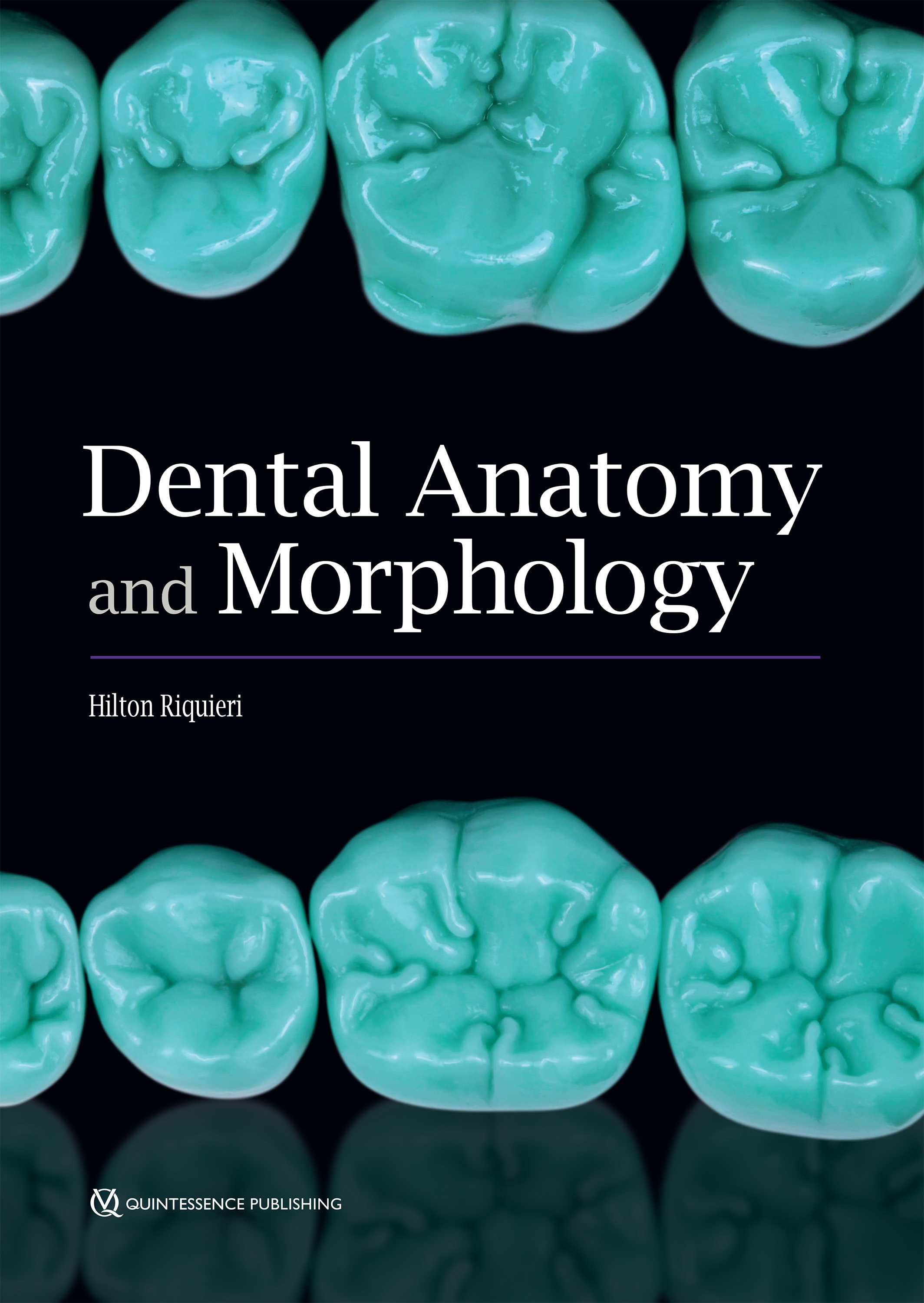
This beautiful atlas conveys not only the practical knowledge of dental anatomy but also the art of sculpting it in wax. The ideal anatomy of each dental structure is described in detail and the waxing techniques are beautifully illustrated step by step for visual reference. The author demonstrates that for every morphologic feature there is an explanation in nature, assigning significance to every minute feature of dental morphology. Organized by tooth and arch, this book views morphology through a clinical lens and repeatedly draws connections between anatomical features and clinical concepts. The fundamental knowledge presented in this text is essential for improving waxing and sculpting techniques and will be useful for students and specialists alike.
Sie lesen das E-Book in den Legimi-Apps auf:
Seitenzahl: 66
Veröffentlichungsjahr: 2019
Das E-Book (TTS) können Sie hören im Abo „Legimi Premium” in Legimi-Apps auf:
Ähnliche



















Dental Anatomy and Morphology
First published as Anatomia e escultura dental in Portuguese in 2016 by Editora Napoleão in Nova Odessa, Brazil.
Library of Congress Cataloging-in-Publication Data
Names: Riquieri, Hilton, author.
Title: Dental anatomy and morphology / Hilton Riquieri.
Other titles: Anatomia e escultura dental. English
Description: Batavia, IL : Quintessence Publishing Co Inc, [2018] |
Includes bibliographical references.
Identifiers: LCCN 2018054950 (print) | LCCN 2018056627 (ebook) | ISBN 9780867158335 (ebook) | ISBN 9780867157703 (hardcover)
Subjects: | MESH: Tooth--anatomy & histology | Dental Models | Atlas
Classification: LCC QP88.6 (ebook) | LCC QP88.6 (print) | NLM WU 17 | DDC 612.3/11--dc23
LC record available at https://lccn.loc.gov/2018054950
© 2019 Quintessence Publishing Co, Inc
Quintessence Publishing Co, Inc
411 N Raddant Road
Batavia, IL 60510
www.quintpub.com
5 4 3 2 1
All rights reserved. This book or any part thereof may not be reproduced, stored in a retrieval system, or transmitted in any form or by any means, electronic, mechanical, photocopying, or otherwise, without prior written permission of the publisher.
Editor: Bryn Grisham
Production: Angelina Schmelter
Design: Sue Zubek and Deoclesio Alessandro Ferro João Garcia
Illustration: Daniel Guimarães
Printed in China
Contents
Forewords by Marco Antonio Bottino and Paulo Kano
Dedication
Preface
Acknowledgments
Contributors
SECTION I POSTERIOR TEETH
01 The Esthetic and Functional Parameters of Posterior Teeth
02 Maxillary First Premolar
03 Maxillary Second Premolar
04 Maxillary First Molar
05 Maxillary Second Molar
06 Maxillary Posterior Quadrant
07 Mandibular First Premolar
08 Mandibular Second Premolar
09 Mandibular First Molar
10 Mandibular Second Molar
11 Mandibular Posterior Quadrant
SECTION II ANTERIOR TEETH
12 The Esthetic and Functional Parameters of Anterior Teeth
13 Maxillary Central Incisor
14 Maxillary Lateral Incisor
15 Maxillary Canine
16 Progressive Technique for Maxillary Anterior Teeth
17 Anterior Segment and Full Arch Wax-ups
Recommended Reading
Forewords
Writing the foreword for a book is a huge responsibility because you endorse the work to the scientific community. For this book, the responsibility increases the pleasure, and the honor of doing it is immeasurable. Let me explain: This work is a gift to the field of dentistry because it was crafted by an outstanding professional, Dr Hilton Riquieri, who excels at waxing dental morphology.
As both an experienced dental technician and a prosthodontist, Dr Hilton is able to synthesize both disciplines as few others. I was very pleased to have Dr Hilton as a doctoral student in the restorative dentistry postgraduate program at the Science and Technology Institute of São Paulo State University. He was an ideal student because the university’s function is to train dentists who have the mission of researching and spreading knowledge in Brazil and abroad.
This important work also showcases photography by Dr Rodrigo Riquieri, who is Dr Hilton’s son; he has already shown his own dedication to the profession in his laboratory and clinical work and has a very promising future. Drs Francci, Saavedra, and Viegas have all proven themselves in teaching, research, and clinical and laboratory experience, and their contributions are excellent.
However, this work attests, above all, to the leadership and synthesizing skills of Dr Riquieri in the art of teaching dental morphology. In 17 chapters, he explains step by step how to draw and sculpt dental anatomy with maximum accuracy. In these chapters, the exquisite morphology of all the teeth are developed and presented carefully, with examples from everyday life that greatly facilitate learning. What strikes me in this book is the richness of detail and the brilliant and direct way of teaching how to study, plan, and execute waxing and sculpting. This book will be very useful to students and professionals who want to improve waxing and sculpting techniques.
This book is a gift, and the field of dentistry will be grateful that—after all of the professional dental training—the authors and contributors have chosen to devote part of their lives to the creation of this scientific and technical book. Enjoy your reading!
Marco Antonio Bottino
This book is a guide that will inspire excellence in dentistry. Because of the fundamentals presented here, anyone who has dedicated themselves to the fabrication of dental prosthodontics should use it to learn the foundations of creating ideal morphology, which demands technical acumen. However, this book conveys not only the practical knowledge of morphology but also the art of its sculpture.
Dr Hilton Riquieri also demonstrates that, for every morphologic feature, there is a scientific explanation. It is immensely rewarding to see professional ability dedicated to teaching. Thus, it is with great honor that I write the foreword of a book whose pages convey much more than just words and images; they share a deep knowledge that comes only from professional experience. Dr Riquieri is an exceptional professional whose sharp insight and illustrative teaching style is evidenced throughout this book. The presentation makes the learning pleasant and easy.
This beautiful atlas describes the anatomy of each dental structure and presents step by step and in detail the execution of sculpture in wax. In addition, the author uses analogies from everyday life to elaborate ideas and concepts of considerable complexity.
Congratulations to those who have shared from their experience and wisdom to prepare this book for worldwide dentistry.
Paulo Kano
Dedication
To Joseph and Divina, father and mother, who are my role models.To my siblings—Carlos, Regina, Eurípedes, and Aparecida—for support and always being present. And the reason for everything: my wife Deborah and my children Rodrigo, Breno, Arthur, and Enrico.
Preface
Learning is an endless path. Drawing and carving are basic skills, like walking and reading, that once learned are known for a lifetime. However, the most we can do is what our perception allows us to see. As Paulo Kano has said, “The hand can only reproduce what the brain can see.” How do we INCREASE our perception, our ability to see more?
Constructivism is a psychogenetic theory introduced by the Swiss biologist, Jean Piaget (1896–1980). This theory states that we develop skills through association of what we want to learn with memorized objects/figures. Thus, knowledge is built up from our interaction with the environment where, with constant training, long-term memory and innate skills are formed.
Sculpture is an innate ability, though we were not born with it. For the final results, 70% depends on perception, 20% depends on psychomotor training, and 10% depends on manual ability.
In Betty Edwards’ discussion of the development of skill training, the student moves from being:
Accumulated knowledge allows us to overcome obstacles, and overcoming difficulties opens new horizons and elevates our personal boundaries. May this book be part of your journey to new horizons.
Acknowledgments
I would like to thank:
Rodrigo Riquieri, who was fundamental to the development of this book thanks to his splendid images.
My collaborating teachers, Drs Carlos Francci, Guilherme Saavedra, and Diogo Viegas, who added their experience to this work with enthusiasm and genius. Being surrounded by people like them is a privilege.
Helcio Marques, owner of the first laboratory in which I worked. In 1981, he accepted me as his assistant. Thank you for the years in which you exercised the virtue of patience with me!
Expedito Bernardes and Perclísio de Oliveira Gomes, professionals who helped me to grow and offered me the opportunity to train and still be paid. Time and distance have not detracted from our friendship or my gratitude.
Sebastião César Manosso and his wife Édila Moreira Manosso, and Benvinda Maria de Souza, Antônio Gasparini, Paulo Rubens Ruiz Possebom, Mário Marques Cunha, Celso Garcia Rodrigues, and Milton José Aricó. In difficult times and without their help, the dream of graduating would not have come true.
My invaluable Professors: Vani Teixeira, Aziz Constantino, Sérgio Reinaldo De Fiore, Antônio Marcolino Pellicano, José Ceratti Turano, Milton Edson Miranda, Luís Ramos, Marcelo Lucchesi Teixeira, Vagner Ortega, and Marco Antônio Bottino.




