


Erhalten Sie Zugang zu diesem und mehr als 300000 Büchern ab EUR 5,99 monatlich.
- Herausgeber: CompanionHouse Books
- Kategorie: Lebensstil
- Sprache: Englisch
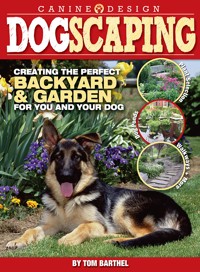
For dog owners and garden lovers alike, Dogscaping presents a plan for the family dog to live in perfect harmony with a green, beautiful backyard. Whether the family dog is a demon digger like a terrier or a shade-seeking greyhound, Dogscaping offers solutions for all dog owners to create the perfect backyard and garden for all members of the human and canine family. Tom Barthel, a certified master gardener and devoted dog owner, approaches the topic of landscaping for dogs organically—figuratively and literally, whenever possible. Encouraging the reader to pursue organic methods, the author includes a terrific chapter on organic lawns and offers tips for maintaining an earth-friendly (and dog-friendly) green-as-can-be lawn. Between the chapters of this book are profiles called "Organic Gardener: Organic Dog," in which he tells entertaining success stories of dog-owning organic gardeners and hobby farmers. In the chapter "Site Planning and Plant Selection," Barthel advises on how to plan the backyard space taking the dog's habits and proclivities in mind and then makes recommendations for various kinds of vines, groundcovers, shrubs, and urine-resistant plants. In its chapter about maintaining the garden and backyard, Dogscaping presents various organic pest and weed control options, which are safe for the dog and practical for the gardener. The author also offers a list of pest-discouraging plants and methods to deter unwanted weeds and visitors (gophers, deer, squirrels, etc.). In the greenest chapter in the book, "Recycling Home, Garden, and Yard Waste," Barthel makes a compelling case for composting, cataloging both the advantages and savings and offering an easy five-step method of composting. Other additions to the dog-friendly backyard include planting fruits and vegetables, adding a water feature, and incorporating decks, gazebos, pathways, and lighting, all of which are covered in individual chapters in this beautifully photographed book. The final chapter of the book "Creating Doggy Nirvana" provides fun ideas for owners to include dog-specific features into their backyard designs, including a pooch pergola, doggy sandbox, and disappearing fountain. The appendix provides US and North American zone maps. Index included.
Sie lesen das E-Book in den Legimi-Apps auf:
Seitenzahl: 178
Veröffentlichungsjahr: 2010
Das E-Book (TTS) können Sie hören im Abo „Legimi Premium” in Legimi-Apps auf:
Ähnliche



















Andrew DePrisco, Editor in Chief
Jarelle S. Stein, Editor
Jennifer Calvert, Associate Editor
Elizabeth L. Spurbeck, Assistant Editor
Camille C. Garcia, Assistant Editor
Brian Bengelsdorf, Senior Art Designer
Karen Julian, Publishing Coordinator
Copyright © 2009 by I-5 Press™ Photographs and illustrations © 2009 by Tom Barthel.
Additional photographs courtesy of/reproduced with permission of: Jeannie Harrison/Close Encounters of the Furry Kind (www.cefkphotos.com)—cover (central image); Karen Taylor—pages 1, 5 (top), 9, 11, 14, 16 (top), 18, 23, 25, 27 (top), 32 (top), 41, 54, 58, 60–61, 79, 81, 91, 103, 113, 123, 125; Shutterstock® Images—pages 3, 4, 5 (bottom), 6 (far left), 48, 51, 52, 53 (bottom), 62, 63 (bottom, right), 70, 84, 85, 92 (bottom), 94 (bottom), 115, 135; Jean Fogle—pages 5 (second from bottom), 105 (bottom); Isabelle Francais/I-5 Publishing, LLC™, and Gina Cioli and Pamela Hunnicutt/I-5 Publishing, LLC™—pages 17, 82; USDA Agricultural Research Service—45, 105 (top, photo by Ken Hammond); American Horticultural Society (www.ahs.org)—page 136; U.S. National Arboretum, USDA-ARA—page 137.
All rights reserved. No part of this book may be reproduced, stored in a retrieval system, or transmitted in any form or by any means, electronic, mechanical, photocopying, recording, or otherwise, without the prior written permission of I-5 Press™, except for the inclusion of brief quotations in an acknowledged review.
Library of Congress Cataloging-in-Publication Data
Barthel, Tom.
Dogscaping : creating the perfect backyard and garden for you and your dog / by Tom Barthel.
p. cm.
Includes index.
ISBN 978-1-935484-95-0
1. Organic gardening. 2. Landscape gardening. 3. Dogs—Health. 4. Dogs—Housing. I. Title.
SB453.5.B38 2010
636.7’083—dc22
2009023292
I-5 Press™
A Division of I-5 Publishing, LLC™
3 Burroughs
Irvine, California 92618
Printed and bound in the USA 15 14 13 12 11 10 09 1 2 3 4 5 6 7 8 9 10
Dedication
Dedicated to my wife, Rachel, whose support and encouragement breathe life into so many of my dreams; also to my dog, Dakota, who enthusiastically tested the theories and methods found here—along with my patience.
CONTENTS
Acknowledgments
Introduction
Chapter 1 Balanced Living
Chapter 2 Site Planning and Plant Selection
Organic Gardeners, Organic Dogs Life with Truffle and Bamboo
Chapter 3 Organic Pest and Weed Control
Chapter 4 Recycling Home, Garden, and Yard Waste
Organic Gardener, Organic Dogs Johann and Gracie Tangled Up in Green
Chapter 5 Natural Fruits and Vegetables
Chapter 6 Soothing Water Features
Organic Gardeners, Organic Dog A Bear Among Vines
Chapter 7 Decks, Gazebos, Pathways, and Lights
Chapter 8 Organic Lawns
Organic Gardener, Organic Dog Green Mountain State Goes Green
Chapter 9 The Well-Behaved Organic Dog
Chapter 10 Creating Doggy Nirvana
Organic Gardener, Organic Dogs Green Family Matters
Appendix
Resources
About the Author
Acknowledgments
The author would like to extend a special thank you to all of those who have shared their gardens, dogs, and green lifestyles with him. Without their generosity, this book would not have been possible.
A big thank you to: Laura Klein and her dogs, Bamboo and Truffle; Leslie May and her dogs, Gracie and Johann; Sandy Pfister, Jerry Perrone, and their dog, Teddy Bear; Laura McKenna and her dog, Roger; the Smith family (Amanda, David, Evangeline, and Gabriel) and their dogs, Scooby, Violet, and Belle; Andee Whiters and her dogs, Mallory and Moose; Cheryl Colburn and her dog, Copper; Tamma Rae Stewart and her dog, Chloe; Claudia Konieczny and her dog, Isabella; Marie and Tim Konieczny and their dog, Clancy; Lillie Kopke, Dan Rapelje, and their dog, Chloe; Bob and Kyle Kirkby and their dogs, Dewey and Dixie; and Steve Kopke and his dog, Star.
Introduction
Dogs and the outdoors go together as naturally as peas and carrots. But if these two are meant to coexist harmoniously, why do so many of our yards and gardens bear the scars of conflict? Muddy, rutted lawns, overturned flowerpots, uprooted vegetables, and minefields of dog waste plague our would-be idyllic landscapes. Worse yet, those landscapes sometimes wreak havoc on our all-too-curious pets, who can become gravely ill after ingesting toxic plants and chemicals commonly found in the very yards they delight in exploring. So why does this conflict between dog and yard exist? Because we are not designing our yards and gardens with our pets in mind, not thinking how to make the yards an organic whole, and not thinking how to live greener.
The various topics in this book, Dogscaping, promote harmonious, healthy, and sustainable yard and garden spaces designed with your pet in mind. With a few back-to-basics principles put in place, every outdoor space has the potential to be canine compatible, environmentally friendly, and beautiful. Learn the rules of engagement found here, and you can create the backyard of your dreams. It is possible to do so without yelling until you’re blue in the face, without chasing your dog from one corner of the yard to the other, and without spending weekend after weekend patching bare spots in the lawn.
Consider this book the start of a journey to a more peaceful outdoor coexistence with your pet. That begins, in chapter 1, with gaining greater insight into who your dog is (including the purpose for which his breed was developed) and why he uses your outdoor space the way he does. By understanding who your dog is, why he acts the way that he does, and how he moves about outdoors, you can learn to balance his needs with your own needs and, by doing so, turn your yard from a war zone into a lush and beautiful oasis.
The following chapters show you how to accomplish just that. Topics covered include information on how to choose plants that possess both beauty and dog-tested durability, a task that presents the greatest challenge for most beginning gardeners. Dogscaping is full of solutions for this problem—telling you about winning plants that can be found at most nurseries in the United States—and for many other problems you may face. Be aware, however, that some of the plants recommended in this book have the potential to cause adverse health effects; plant poisoning may or may not be a concern with your dog. Much of the risk lies in your dog’s personality and how he uses your outdoor environment. If in doubt about a plant, consider the personality of your dog, and consult your veterinarian.
Maintaining a planted environment that is not hazardous for your dog makes for a steep challenge in several ways. In the pages of this book, you’ll also find out how to keep your pet safe and your environment clean through organic weed and pest control. You’ll discover as well how to give your plants a boost with organic fertilizers so they will have a fighting chance against canine chaos.
Don’t let yourself be intimidated by the notion of organic gardening, which often conjures images of hard, intense labor in an age in which chemical weed control and fertilization hold the appeal of instant gratification and ease of use. Natural alternatives can be far easier to use in gardening and lawn care than you may imagine—and often can be made inexpensively from ingredients that you may already own.
In Dogscaping, you’ll learn the basics of how to take yard waste and turn it into your own supergrowth fertilizer. You will get tips on how to keep your flowers and shrubs looking their best, and you’ll discover how to give your lawn a boost and grow an abundance of organic fruits and vegetables. The book also covers landscaping with decks, gazebos, and other structures.
In addition, in various vignettes throughout the book, real organic gardeners will share their secrets about outdoor life with their organic dogs. From the concrete jungles of Los Angeles to the north shore of Lake Michigan, dog lovers are finding battle-tested ways of integrating their dogs into their outdoor environments.
Dogscaping gives homeowners—from beginning gardeners to experienced ones—all of the tools that they will need to create an outdoor lifestyle that welcomes their pets, while also providing a beautiful environment in which they themselves can relax and enjoy nature. This book shows you how to respect your dog and your earth while appreciating what both of them have to offer. You and your pooch can go greener with spectacular results.
CHAPTER 1
Balanced Living
Living in harmony with your dog begins with acquiring a better understanding of his outdoor needs and desires, as well as your own. A good place to begin is by learning more about your dog’s breed—specifically, the characteristics and the purpose for which it was developed. Is your dog a terrier, with a deep-seated need to dig out hidden prey (involving a lot of yard excavating)? Or is he a sporting breed, with the need for speed, racing from one end of your yard to the other (ripping up grass along the way)?
Because every dog is an individual, not just a member of a breed, you also need to observe how your dog spends time in your yard. What does he do, and where does he do it? Does he regularly patrol the fence line, looking for suspicious characters? Does he have a favorite lounging spot, or two? Where does he usually eliminate?
While you are learning about your dog and watching him scamper about your yard, you should also be considering what it is you want to gain from your yard or garden. By taking a look at the big picture of your dog’s natural outdoor habits and your own expectations for outdoor living, you’ll discover how to begin to make beneficial changes to your outdoor environment. A holistic approach that takes into account your needs and those of your dog represents the best chance you have for creating a harmonious outdoor space.
Decode Your Dog: Breed Characteristics
The purebred dog arose out of the need for greater specialization of man’s best friend. Whether hunters, herders, or companions, each canine breed was developed for specific purposes, to carry out particular jobs. Even though the majority of dog owners no longer hunt with their Afghan Hounds or herd with their Shetland Sheepdogs, each dog’s sense of purpose is deeply ingrained in his genetic code.
That same sense of purpose defines how your dog will use your outdoor space. Discovering your dog’s purpose and how you can accommodate it in the best possible way will form the basis of how you tailor your outdoor space to meet his needs as well as your own. The American Kennel Club (AKC) has divided its recognized dog breeds into seven official groups. Consider which of the following groups your dog fits into and the general characteristics of his group.
MOVERS/PURSUERS: HERDING BREEDS
The Herding Group—which includes the Australian Shepherd (right), the Border Collie, the Old English Sheepdog, the Shetland Sheepdog, and the two Welsh Corgis—consists of active dogs originally bred to round up and move a variety of farm animals. In the absence of livestock, herding breeds often attempt to gently herd their owners, especially small children. Today, people choose these dogs for their intelligence and trainability.
Understanding the characteristics of individual breeds is key to yard and canine concordance.
Herding dogs, such as this Shetland Sheepdog, need lots of space for herding and protecting their family.
When designing your outdoor spaces with a herding dog in mind, take into account his desire to actively pursue and herd nearly anything that moves. Fencing or other structures that define and contain your property serve the needs of these breeds best.
Expect these dogs to wear ruts in the grass along fence lines bordering sidewalks, and other areas where they can see people and animals. Their tendency to herd and protect make this habit nearly impossible to break. In chapters 2, 7, and 8, we’ll discuss ways you can accommodate these habits and disguise their muddy side effects with landscape materials and plant choices.
Because many herding breeds also respond well to training and need lots of exercise, owners often teach them a wide range of skills, from catching Frisbees to retrieving balls or decoys. You need to make accommodations for such activities in your yard. Plan to include a long runway for fetching and agility obstacles or a launch pad for aerial Frisbee catching.
HUNTERS/CHASERS: HOUND BREEDS
The Hound Group, which includes such diverse breeds as the Foxhound, Basset Hound (right), Beagle, Bloodhound, Dachshund, and Greyhound, were developed for hunting purposes. By scent, sight, or both, these tenacious hunters will eagerly sniff out and pursue rabbits, foxes, and vermin. As household pets—not used for hunting—these breeds are sought after for their energy, stamina, and friendly personality.
When creating an outdoor space with the needs of a hound in mind, consider adding ways for your dog to indulge his natural hunting and tracking instincts safely and appropriately. For safety’s sake, a fence is an absolute must for a yard with a hound. It prevents wandering: when hounds catch a scent on the breeze or see a squirrel across the street, they are likely to bolt with little regard for boundaries or busy avenues. In addition, the Dachshund, the smallest member of the Hound Group, was bred to hunt and dig for vermin, especially badgers. Pet Dachshunds may like to dig in backyard gardens and lawns or under fences.
A hound’s enthusiastic howl alerts owners to interesting scents on the wind and possible quarries for the hunt!
Because wandering and digging habits are the result of generations of selective breeding within the Hound Group, you must have realistic expectations about what your dog can and cannot do. With some extra planning, you can meet your dog’s needs and your own, creating an appealing landscape that also safely contains him.
PATROLLERS/ PROTECTORS: NON-SPORTING BREEDS
The Non-Sporting Group encompasses a wide variety of dog breeds, ranging from protectors and vermin exterminators to exquisitely groomed status symbols and devoted companions. Each breed is the result of the unique human need for traits like safety and companionship. Breeds such as the Bichon Frise (below), Boston Terrier, Bulldog, Chow Chow, Dalmatian, Lhasa Apso, Poodle, and Shiba Inu serve this need with the best of them.
Non-sporting breeds continue their traditions in the backyard. They are likely to investigate unusual situations and strangers with great interest. In general, they are loyal, gregarious, and full of courage.
An outdoor space that respects the needs of non-sporting breeds reflects the diverse purposes for which these dogs were developed. Fencing that allows them to see their surroundings and investigate neighborhood activity indulges their curious nature while holding back the strangers and wildlife of which these breeds have no fear.
Expect a non-sporting dog to trample plants close to property lines and fenced boundaries. Avoid conflicts in the yard and garden by giving him the opportunity to patrol his territory, looking for intruders. Disguising a chain-link fence may take more ingenuity if you share your yard with a non-sporting breed that craves an unobstructed line of sight, but there are ways to honor your desires and those of your dog. (See Screening, Running, and Patrolling Paths in chapter 2.)
SPEEDSTERS/RETRIEVERS: SPORTING BREEDS
As a group, sporting dogs were developed for hunting waterfowl and other birds. These breeds, including most spaniels, retrievers (such as the Golden above), and pointers, have active and vigorous personalities. Such attributes make them popular additions to busy households.
Developed to spring into action at a moment’s notice to retrieve fallen ducks or flush a flock of grouse from a stand of prairie grass, sporting breeds exhibit higher energy and activity levels than do most other breeds. In the backyard, their greatest need is vigorous daily exercise.
Crisscrossing lawn and garden spaces at warp speed, these breeds can reduce even the most manicured outdoor environment to a muddy mess in a few short days. Yards designed with these breeds in mind survive and thrive when open spaces are planted with tough turf grasses or replaced altogether with stone pathways. Sturdy woody shrubs and protective barriers around more delicate perennials and annuals guard against the dogs’ active habits without sacrificing the beauty of nature.
While You’re Watching
With notebook and pen at the ready, you can do more than observe your pet’s behavior patterns; you can do some advance planning for plant selection.
Plants thrive when placed in areas that match their sun and shade requirements. Each plant you choose for your garden space has an hourly or intensity requirement. Full sun equates to six or more hours of sun exposure. Part sun/part shade indicates four to six hours of sun. Full-shade plants require four or less hours of indirect or dim light.
Note where the shadows fall across your lawn, as well as the time of day you made the observation. Record the amount of sunlight potential flower beds or vegetable gardens usually receive at various times.
Before long, you’ll have a complete sun/shade map of your outdoor space to further help you narrow down plant choices.
Sporting breeds present the most difficult challenges when homeowners are creating a harmonious landscape. However, as the following chapters will discuss, you can accommodate their active habits while maintaining the beauty and functionality of your yard.
Secret to Success: Understanding the Individual
Not every dog fits so nicely into the seven AKC categories. Mixed breeds (such as this Husky/Mastiff mix) often reflect one or more of the official breed groups, and purebreds themselves may behave contrary to their genetics, depending on their level of socialization and training. From time to time, dogs just have quirks. A Labrador Retriever may behave more like a terrier—tenacious and fearless—or a Scottie may live under the assumption that he was born a hound—howling at fresh scents on the breeze.
The important point to remember in the beginning stages of planning a harmonious yard and garden is you need to learn your dog’s particular characteristics and behaviors and keep them in mind. If you ignore those needs and plan for a beautiful landscape for beauty’s sake, you’ll end up in constant conflict with your dog.
POUNCERS/DIGGERS: TERRIER BREEDS
The Terrier Group was first developed to control vermin and provide food. As hunters and killers of rats, mice, and other woodland creatures, terrier breeds possess special personality traits: courage, determination, and spunk. These often feisty, energetic breeds range from the diminutive Scottish, Norfolk, and Cairn to the spirited Soft - Coated Wheaten (left), the majestic Airedale, and the powerful American Staffordshire.
In the home and yard, these dogs typically will not tolerate the presence of other dogs and are always ready for a boisterous confrontation. As a consequence, backyards require fencing that divide the terrier’s space from the space of nearby dogs. Solid fencing and dense plantings in areas with exposure to other neighborhood pets keep temperaments in check.
Most important, the dogs likeliest to dig can be found in the Terrier Group, bred to unearth quarry. Bored terriers can wreak havoc on your yard and garden, as well as pose a danger to themselves by digging under fencing.
LOUNGERS/ SIDEKICKS: TOY BREEDS
Toy Group is a general term used to describe small breeds whose main purpose in life boils down to companionship. Lap dogs and constant sidekicks, these breeds vary widely in temperament and appearance. The ever-more-popular Chihuahua, Pug, Shih Tzu, and Yorkshire Terrier (above) round out the most popular toy breeds, with the Maltese, Pekingese, Pomeranian, and many others not far behind. As living spaces shrink and the demand for portability grows, so too does the demand for these low-impact dogs.
A variety of yard and garden environments stand up well to life with toy breeds. They make less waste, dig smaller holes, and create fewer ruts and wear patterns in the grass. Damage they create can be easily patched or hidden by a well-placed potted plant.
Their curious nature and petite stature, however, put toy breeds at greater risk for exposure to toxic plants and chemicals used to control pests and weeds. Organic gardening practices serve an important role with toy breeds (see chapters 2 and 8). Their small bodies often react quickly to even minimal exposure to toxic chemicals. Because they are short and low to the ground, their mouths and other mucus membranes are particularly vulnerable to poisoning.
Their quick, active movements also lead to special risks. Without careful supervision, they may chew and swallow harmful plants in the blink of an eye, before you have the chance to intervene.
RESCUERS/BRUISERS: WORKING BREEDS
Many of the working breeds, including the Alaskan Malamute, Boxer, Bullmastiff, Doberman Pinscher, Great Dane, Newfoundland, Rottweiler (left), and St. Bernard, were bred to haul sleds, rescue stranded boaters, and guard expansive estates. They were initially developed out of humankind’s need for a strong companion to help with life’s heavy lifting.
The dog’s size and strength require several basic accommodations when owners design their outdoor environments. When sufficiently motivated, a large muscular dog from this group may crash through even the sturdiest garden gate or mow down a freshly installed picket fence as though it never existed.
In addition, the size and volume of dog waste generated by dogs of this stature can quickly overwhelm even a large yard. Yellowed grass and harmful bacteria from feces make for a very unpleasant and potentially unhealthy outdoor environment.
Observe Outdoor Behavior: Field Notes




