


164,99 €
Mehr erfahren.
- Herausgeber: John Wiley & Sons
- Kategorie: Fachliteratur
- Sprache: Englisch
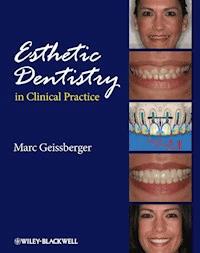
As esthetic dentistry continues to grow in popularity, dentists are offered an opportunity to expand their practices and attract new patients. Esthetic Dentistry in Clinical Practice provides dentists with the skills to take advantage of that opportunity. Clearly outlining esthetic procedures, the book enables dentists to treat patients in an efficient and clinically sound manner, bringing esthetic dentistry to everyday practice.
Sie lesen das E-Book in den Legimi-Apps auf:
Seitenzahl: 649
Veröffentlichungsjahr: 2013
Ähnliche



















Contents
Contributors
Chapter 1 Introduction to Concepts in Esthetic Dentistry
General Principles of Esthetics
Esthetic (Cosmetic) Dentistry
Why Is Esthetic Dentistry Stimulating?
A Brief History of Esthetic Dentistry
Current State of Esthetic Dentistry in the United States
A Broader View of Esthetics
Professional Organizations that Promote Esthetic Dentistry
Works Cited
Chapter 2 Guiding Principles of Esthetic Dentistry
Ethical Principles
Macroesthetics
Dental Midline
Intertooth Relationships
Smile Pattern
Lip Assessment
Gingival Tissue Assessment
Extent of Treatment and Material Selection
Microesthetics
Summary
Works Cited
Chapter 3 Dental Photography in Esthetic Dental Practice
Choosing the Correct Equipment
Settings
Capturing Standard Views
Some Examples of Variations in Photographic Recommendations
Making Photography a Routine Part of Practice
Work Cited
Suggested Reading
Chapter 4 The Initial Patient Examination
First Impressions
The Initial Visit
Dental Examination
Consultation Appointment
Works Cited
Suggested Reading
Chapter 5 Occlusion
Occlusal Disease
Determinants of Occlusion
Centric Relation
Mutually Protected Occlusion and Guidance
Envelope of Motion and Function
Recommendations
Works Cited
Chapter 6 Esthetic Case Design
Conceptualizing the Esthetic Case
Key Components of a Successful Esthetics Case Work-up
Case Studies
Conclusion
Works Cited
Suggested Reading
Chapter 7 Considerations for Treating the Routine Esthetic Case
Bleaching/Tooth Whitening
Class IV Restorations
Peg Laterals or Congenitally Missing Lateral
Composite Veneer
Ceramic Veneers
Diastemas
Anterior Single-Unit Crowns and Esthetic “Update”
Posterior All-Ceramic Crown
Replacing the Single Missing Tooth
Orthodontic Treatment: Complex Cases Made Simple
Unsuccessful Outcomes
Conclusion
Acknowledgements
Works Cited
Suggested Reading
Chapter 8 Considerations for Treating the Moderately Difficult Esthetic Case
Anterior and Posterior Ceramic Restorations
Single-Unit Implants
Immediate Custom Implant Provisionalization: A Prosthetic Technique
Porcelain Veneers
Smile Correction Using Orthodontics, All-Porcelain Crowns, and Veneers
The Buccal Corridor
Restoring the Smile and Anterior Guidance
Cases Involving Fixed and Removable Partial Dentures
Acknowledgements
Works Cited
Suggested Additional Reading
Chapter 9 Considerations for Treating the Complex Aesthetic Case
Goals of Occlusal Therapy
Maintenance of Vertical Dimension
Diagnosing a Loss of VDO
Periodontal Plastic Surgery
Esthetics with Fixed-Removable Restorations
Orthodontic Treatment in Preparation for Restoration
Implants in the Esthetic Zone
Works Cited
Suggested Additional Reading
Chapter 10 Direct Restorative Materials
Fundamental Concepts of Enamel and Dentin Adhesion
Composites
Polyacid-Modified Resin Composites (Compomers)
Resin-Modified Glass-Ionomer Cements
Glass-Ionomer Cements
Future Trends
Light-Curing Units (LCUs)
Works Cited
Chapter 11 Direct Composite Restorative Techniques
Initial Clinical Procedures
Anterior Direct Restorations
Posterior Direct Restorations
Works Cited
Chapter 12 Selecting Indirect Restorative Materials
All-Ceramic Restorations
Making a Selection
Future Trends
Minimum Armamentarium
Works Cited
Suggested Additional Reading
Chapter 13 Color and Shade Selection
Color Perception in Dentistry
Color Matching Conditions
Color Determination in Dentistry
Dimensions of Color
Color Determination Systems
Color Determination Techniques
Communication of Color to the Laboratory
Conclusion
Works Cited
Suggested Additional Reading
Chapter 14 Preparation Design for Indirect
Optimal Preparation Guidelines
Preparation Design
Summary
Works Cited
Chapter 15 Soft Tissue Management, Impression Materials, and Techniques
Periodontal Considerations
Soft Tissue Removal
Tissue Management Prior to Impression Fabrication
Impression Materials
Types of Impression Material
Armamentarium for Final Impressions
General Impression Techniques
Disinfection of Impressions
Salivary Control for Copious Salivators
Works Cited
Suggested Reading
Chapter 16 Provisional Restorations
Treatment Planning
Direct Provisional Restorations
Indirect Provisional Restorations
Provisionals for Porcelain Veneers
Summary
Works Cited
Chapter 17 Laboratory Fabrication of Esthetic Restorations
Historical Perspective
Pressable Ceramics
Glass-Infiltrated Ceramics
Fully Sintered Ceramics
Press to Zirconia
Future Trends
Works Cited
Chapter 18 Luting Agents for Dental Restorations
General Requirements for Luting Agents
Permanent Cementation
Temporary Cementation
The Use of Luting Materials Classified by Type of Restoration
Works Cited
Chapter 19 Restoration Delivery
Inspection and Approval of the Laboratory Work
Contours and Proportions of the Restoration(s)
Anesthesia
Provisional Removal and Tooth Surface Preparation
Initial Try-in and Patient Approval of Esthetic Restorations
Isolation
Restoration Seating and Cementation or Bonding
Final Adjustment, Finishing, and Polishing
Suggested Reading
Chapter 20 Protective Occlusal Splints
General Considerations
Parfunctional Activities
Types of Occlusal Appliances
Diagnosis: Which Patients Are Candidates for an Occlusal Splint?
Record Taking for a Protective Splint
Laboratory Fabrication of the Protective Splint
Delivery of the Protective Splint
Adjustment of the Occlusal Splint
Principles of the Full Occlusal Splint Design (adapted from Dawson 2007; Ash 2007; Ramfjord and Ash 1994)
Works Cited
Suggested Additional Reading
Index
Edition first published 2010© 2010 Blackwell Publishing
Blackwell Publishing was acquired by John Wiley & Sons in February 2007. Blackwell’s publishing program has been merged with Wiley’s global Scientific, Technical, and Medical business to form Wiley-Blackwell.
Editorial Office
2121 State Avenue, Ames, Iowa 50014-8300, USA
For details of our global editorial offices, for customer services, and for information about how to apply for permission to reuse the copyright material in this book, please see our website at www.wiley.com/wiley-blackwell.
Authorization to photocopy items for internal or personal use, or the internal or personal use of specific clients, is granted by Blackwell Publishing, provided that the base fee is paid directly to the Copyright Clearance Center, 222 Rosewood Drive, Danvers, MA 01923. For those organizations that have been granted a photocopy license by CCC, a separate system of payments has been arranged. The fee codes for users of the Transactional Reporting Service are ISBN-13: 978-0-8138-2825-1/2010.
Designations used by companies to distinguish their products are often claimed as trademarks. All brand names and product names used in this book are trade names, service marks, trademarks or registered trademarks of their respective owners. The publisher is not associated with any product or vendor mentioned in this book. This publication is designed to provide accurate and authoritative information in regard to the subject matter covered. It is sold on the understanding that the publisher is not engaged in rendering professional services. If professional advice or other expert assistance is required, the services of a competent professional should be sought.
Disclaimer
The contents of this work are intended to further general scientific research, understanding, and discussion only and are not intended and should not be relied upon as recommending or promoting a specific method, diagnosis, or treatment by practitioners for any particular patient. The publisher and the author make no representations or warranties with respect to the accuracy or completeness of the contents of this work and specifically disclaim all warranties, including without limitation any implied warranties of fitness for a particular purpose. In view of ongoing research, equipment modifications, changes in governmental regulations, and the constant flow of information relating to the use of medicines, equipment, and devices, the reader is urged to review and evaluate the information provided in the package insert or instructions for each medicine, equipment, or device for, among other things, any changes in the instructions or indication of usage and for added warnings and precautions. Readers should consult with a specialist where appropriate. The fact that an organization or Website is referred to in this work as a citation and/or a potential source of further information does not mean that the author or the publisher endorses the information the organization or Website may provide or recommendations it may make. Further, readers should be aware that Internet Websites listed in this work may have changed or disappeared between when this work was written and when it is read. No warranty may be created or extended by any promotional statements for this work. Neither the publisher nor the author shall be liable for any damages arising herefrom.
Companies and the products and instruments cited in this book are solely to assist clinicians. The authors have no financial arrangements and derive no benefits from any of these companies.
Library of Congress Cataloging-in-Publication Data
Geissberger, Marc.
Esthetic dentistry in clinical practice / Marc Geissberger. – 1st ed.
p.; cm.
Includes bibliographical references and index.
ISBN 978-0-8138-2825-1 (hardback : alk. paper)
1. Dentistry–Aesthetic aspects. I. Title.
[DNLM: 1. Esthetics, Dental. WU 100 G313e 2010]
RK54.G45 2010
617.6–dc22
2009041422
A catalog record for this book is available from the U.S. Library of Congress.
1 2010
This text is dedicated to our colleague,
Dudley Cheu, DDS, MBA, BS
Assistant Professor
University of the Pacific
School of Dentistry
March 25, 1941–July 3, 2009
Dudley completed his undergraduate work in sociology and biology at Pacific Union College, University of California–Berkeley, and University of Southern California; he received his DDS from Northwestern University in 1970. He earned his MBA from University of the Pacific in 1999. After leading a successful private dental practice for over twenty-five years, Dudley taught dentistry at University of the Pacific for fifteen years. During his term at the dental school, he was recognized several times by faculty and students in recognition of teaching excellence. He was an active member of the ADA and CDA, volunteering at countless events and programs, serving on many committees, and helping with local arrangements at scientific sessions. His contribution to University of the Pacific and to dental societies, and even his recent trip to Cambodia teaching local dental students were fine examples of his life work and interest. His contributions to this text are greatly appreciated. He will be missed but never forgotten.
Contributors
Editor
Marc Geissberger DDS, MA, BS, CPT
Marc Geissberger is an associate professor and chair of the Department of Restorative Dentistry at the University of the Pacific, Arthur A. Dugoni School of Dentistry. He has eighteen years of experience in dental education. Additionally, he mentors many students and young dentists in the arena of esthetic dentistry and serves as the university representative to the American Academy of Cosmetic Dentistry’s University Council.
Contributing Authors
Gabriela Pitigoi-Aron DDS
Gabriela Pitigoi-Aron is an assistant professor and course director within the Department of Restorative Dentistry at the University of the Pacific, Arthur A. Dugoni School of Dentistry. She is a graduate of the Institute of Medicine and Pharmacy, School of Dentistry, in Bucharest, Romania, where she further completed the Advanced General Dentistry Program.
Dudley Cheu DDS, MBA
Dudley Cheu received his DDS from Northwestern University School of Dentistry and an MBA from the University of the Pacific Eberhardt School of Business. Dr. Cheu is an assistant professor and codirector of the International Dental Studies Curriculum in the Restorative Department at the University of the Pacific.
Daniel Castagna DDS
Dan Castagna received his Doctor of Dental Surgery from the University of the Pacific School of Dentistry in 1981. From graduation to 1989, he participated in full-time private practice in South San Francisco and was part-time faculty at Pacific. In 1990 he transitioned to full-time dental education, acquiring the rank of assistant clinical professor in fixed prosthodontics and removable prosthodontics.
Foroud Hakim DDS, MBA, BS
Foroud Hakim earned his DDS from the University of the Pacific in 1991. In addition to his private practice in general and esthetic dentistry, he currently holds a full-time position at Pacific as assistant professor and curriculum director for the Department of Restorative Dentistry.
Robert Hepps DDS, BS
Robert Hepps is an assistant professor in the Department of Restorative Dentistry at the University of the Pacific. He is a 1971 graduate of the Ohio State University School of Dentistry and has lectured and directed programs on esthetics, practice growth, and development of the comprehensive practice in New York, Florida, and California. He is founder and director of the California Academy of Aesthetic Dentistry and maintains a private practice in San Francisco.
Parag R. Kachalia DDS, BS
Parag Kachalia is an assistant professor in the Department of Restorative Dentistry and codirector of the Pre-doctoral Fixed Prosthodontics Program at the University of the Pacific. He also maintains a private practice in San Ramon, California, with a focus on restorative and cosmetic dentistry.
Brian J. Kenyon DMD, BA
Brian Kenyon completed his undergraduate studies at Brown University and graduated from Tufts University School of Dental Medicine in 1982. He was in private practice in Smithfield, Rhode Island, for seventeen years prior to accepting a full-time faculty position at the University of the Pacific. Dr. Kenyon is currently an associate professor in the Department of Restorative Dentistry and maintains a private practice in San Francisco, California.
Kenneth G. Louie DDS, MA, BA
Kenneth Louie completed his undergraduate studies at the University of California–Berkeley and graduated from the University of the Pacific in 1988. Dr. Louie is the codirector of Pre-clinical Operative and teaches in the senior clinic generalist model. He maintains a private practice in San Francisco, California, in restorative and esthetic dentistry.
Richard G. Lubman DDS
Richard Lubman is a graduate of the Loyola University School of Dentistry in Chicago, Illinois, and has practiced esthetic and restorative dentistry for over thirty years in California. Following retirement from private practice, he joined the faculty as an assistant professor of restorative dentistry at the University of the Pacific.
Mark Macaoay DDS, BS
Mark Macaoay graduated from the University of the Pacific, Arthur A. Dugoni School of Dentistry, and completed an Advanced Education in General Dentistry residency at the Naval Dental Center in San Diego, California. He currently is an assistant professor in the Department of Restorative Dentistry at the University of the Pacific and maintains a private practice in the San Francisco Bay Area.
James Milani DDS, BA
Jim Milani received a DDS degree from the University of the Pacific in 1982. He is an assistant professor in the Department of Restorative Dentistry and maintains a private practice in Lake-port, California.
Jeffrey P. Miles DDS
Jeff Miles graduated from the University of California–San Francisco in 1980. Following twenty-one years of private practice in the San Francisco Bay Area, he joined the faculty at the University of the Pacific, Arthur A. Dugoni School of Dentistry
James B. Morris DDS, BS
Brad Morris graduated from the University of the Pacific with a degree in dentistry in 1991. He continued his education at Columbia University and graduated in 1995 with a certificate in the specialty of prosthodontics. Dr. Morris currently has a practice in Mill Valley, California, and is an assistant professor in the Department of Restorative Dentistry at the University of the Pacific.
Warden Noble DDS, MS, BS
Ward Noble graduated from the University of California at San Francisco with a degree in Dentistry in 1965, and he obtained a master’ s in education in 1968 as well as a master’ s in restorative dentistry in 1970. Dr. Noble is a certified prosthodontist and has worked in private practice for more than thirty years. He is currently a professor in the Department of Restorative Dentistry at the University of the Pacific.
Donnie G. Poe, CDT
Donnie Poe has been a certified dental technician since 1974. He has served the dental laboratory profession since 1981 at the local, state, and national levels. Since 1987 Mr. Poe has given clinics and lectured nationally on waxing, casting, and use of the stereo microscope in dental technology, and he is now on staff at the University of the Pacific.
Gitta Radjaeipour DDS, EdD
Gitta Radjaeipour is an assistant professor of restorative dentistry at the University of the Pacific and has practiced esthetic and restorative dentistry for seventeen years in Northern California. She graduated from Pacific’s dental school in 1992 and has been on faculty continuously since her graduation.
Laura Reid DDS, BS
Laura Reid is an assistant professor in the Department of Restorative Dentistry at the University of the Pacific. She has taught dental anatomy and fixed prosthodontics for the past eight years and practices in Santa Rosa, California.
Eugene Santucci DDS, MA, BS
Eugene Santucci is full-time faculty in the Department of Restorative Dentistry and director of the second-year restorative curriculum. He is a frequent lecturer in the Predoctoral Occlusion course and directs the Occlusion Plus postgraduate program. He maintains a private practice with his wife in Atherton, California.
Noelle Santucci DDS, MA, BS
Noelle Santucci is an assistant professor in the Department of Restorative Dentistry at the University of the Pacific, Arthur A. Dugoni School of Dentistry. She maintains a private practice with her husband in Atherton, California.
Karen A. Schulze DDS, PhD
Karen Schulze graduated in 1992 from the dental program and in 1998 from the PhD program at the University of Leipzig, School of Dentistry in Germany. She is currently an assistant professor and director of the Restorative Research Division in the Department of Restorative Dentistry at the University of the Pacific and maintains a private practice in San Francisco, California.
Ai B. Streacker DDS, BS
Ai Streacker graduated from the University of the Pacific School of Dentistry in 1979, and in 2002 retired from a successful two-decade-plus private practice in San Francisco specializing in esthetic and reconstructive dentistry. He is now an assistant professor in the Department of Restorative Dentistry at the University of the Pacific School of Dentistry. He is the recipient of the Mark Hagge award and the Lucien Schmyd memorial award for excellence in teaching.
Bina Surti DDS
Bina Surti graduated from the University of Detroit Mercy School of Dentistry and completed a residency in Advanced Education in General Dentistry and a fellowship in Implant Restoration at Case Western Reserve University School of Dentistry. She is currently an assistant professor at University of the Pacific in the Department of Restorative Dentistry.
Jessie Vallee DDS, BS
Jessie Vallee is an assistant professor in the Department of Restorative Dentistry at the University of the Pacific. She is a 2004 graduate of Pacific who served three years in the United States Naval Dental Corps upon graduation. She is currently an instructor of Occlusion, Pre-Clinical Fixed Prosthodontics, Integrated Clinical Sciences and maintains a part-time private practice in San Francisco, California.
Marina Wasche DDS, BS
Marina Wasche graduated with honors from the University of California–Davis where she received her Bachelor of Science in biological sciences. She received her Doctor of Dental Surgery with honors from the University of the Pacific and has since become full-time faculty at the Arthur A. Dugoni School of Dentistry. She was recently appointed the director of New Technologies for the Department of Restorative Dentistry.
Richard H. White DDS, BA
Richard White is an assistant professor in the Department of Restorative Dentistry at the University of the Pacific. He has a BA from Albion College and is a graduate of the University of Michigan School of Dentistry. He completed a Dental General Practice residency with the United States Public Health Service, where he continued for a twenty-seven-year career and achieved the rank of dental director. He currently lectures in the occlusion course and restorative dentistry courses at the University of the Pacific.
Chapter 1
Introduction to Concepts in Esthetic Dentistry
Marc Geissberger DDS, MA, BS, CPT
General Principles of Esthetics
Esthetics (also spelled aesthetics) is a subdiscipline of value theory or axiology, which is a branch of philosophy that studies sensory values, sometimes called judgments of sentiment or taste. Esthetics is closely associated with the philosophy of High Art. Esthetics includes art as well as the very purpose behind it. Esthetics as a branch of philosophy studies art, the methods of evaluating art, and judgments of art. Art has existed through all recorded human history. Art is unique to human beings because of our innate ability to abstract. Esthetics is important because it examines the reasons why art has always existed and attempts to bring clarity to a vastly complex intellectual human need (Manns 1997).
The term aesthetics is derived from the Greek “aisthetike” and was coined by the philosopher Alexander Gottlieb Baumgarten in 1735 to mean “the science of how things are known via the senses.” The term was used in German, shortly after Baumgarten introduced its Latin form (Aesthetica), but it did not come into popular use in English until the beginning of the nineteenth century (Kivy 1998). However, much the same study was called studying the “standards of taste” or “judgments of taste” in English, following the vocabulary set by David Hume prior to the introduction of the term aesthetics (Hume 1987).
It has been said that “beauty is in the eye of the beholder.” This very concept suggests that there may not be universal agreement on what constitutes art or beauty. Look at the two images that follow (figs. 1-1 and 1-2). Both are paintings, one abstract and one realistic. Do both appeal to you as a viewer? If so, why? If not, why not? By nature, all esthetic undertakings will elicit an emotional response from its creator, the receipient of the esthetic work, and the larger viewing audience. Successful art must not only appeal to its creator but to the recipient and larger viewing audience as well. Additionally, what one group or society may deem esthetic, another may dismiss as overtly unappealing. Esthetics and art do not necessarily cross cultural, political, generational, or societal boundaries. This being said, can there be a set of guidelines that increase the likelihood of art being deemed esthetic?
Although esthetics studies the broader context of art and may be difficult to fully conceptualize, principles do exist within the field of art that can dramatically enhance the aesthetic appeal of any piece of artwork. This text-book will provide dental practitioners with several tools designed to enhance the beauty of the dental restorations they create. Throughout this text, practitioners will be introduced to several guiding principles, techniques, and methods that, when followed, can dramatically increase the esthetic appeal of their efforts. The goal of this text is to organize and define concepts of esthetics into tangible, meaningful tools that can be applied to the practice of esthetic dentistry.
Esthetic (Cosmetic) Dentistry
For years, the focus of the practice of dentistry was primarily the prevention and treatment of dental disease. This has been loosely described as “need” -based dentistry (Christensen 2000). In the mid to late twentieth century, dentistry evolved as a highly organized profession with advanced treatment methodologies and protocols enabling dentists to successfully treat dental disease. As tooth-colored restorative materials were developed, both dentists and the public began to recognize the esthetic improvements that could be obtained with these advances. During the later part of the twentieth century, practitioners began to see a shift in the type of dentistry the public was seeking. The public was no longer forced to select between metallic restorative materials that restored function but presented esthetic compromises. With the rapid improvements in tooth-colored restorative materials, the discovery of tooth-whitening agents, and the American preoccupation with appearance, patients were suddenly seeking selective procedures that focused on the esthetic improvement of their dentitions. The age of “want”-based dentistry was born (Christensen 2000).
Figure 1-1. Abstract artwork, watercolor on paper, artist unknown.
Figure 1-2. Scrub jay, guache on paper. Artist: Marc Geissberger.
Esthetic (cosmetic) dentistry is a discipline within dentistry in which the primary focus is the modification or alteration of appearance of a patient’s oral structures, in conjunction with the treatment and prevention of structural, functional, or organic oral disease. Through cosmetic dentistry, the appearance of the mouth is altered to more closely match the patient’s subjective concept of what is visually pleasing. Under this definition, successful cosmetic dentistry adheres to the principal that “beauty is in the eye of the beholder.” Furthermore, it requires the practitioner, as the artist, to recognize the subjective nature of all esthetic undertakings.
Under this principle, the dentist is the artist and the patient is the recipient of the artwork. Both individuals have an emotional investment in the process and results. To be successful, the practitioner must be able to put aside personal bias and allow the patient to guide esthetic decisions. Once this occurs, the likelihood of esthetic success dramtically increases. If the dentist is too controlling of the process, superimposing his or her esthetic preconceptions over those of the patient, chances of success will decrease.
Figure 1-3. Schematic representation of the left and right hemispheres of the brain.
Why Is Esthetic Dentistry Stimulating?
Roger W. Sperry PhD, a professor of psychobiology, won a Nobel Peace Prize for Physiology or Medicine in 1981 for his discoveries concerning the functional specialization of the cerebral hemispheres, namely, defining the different function of the left and right hemispheres of the brain. His work led to the belief that the left brain is associated with verbal, logical, and analytical thinking. It excels in naming and categorizing things, symbolic abstraction, speech, reading, writing, and arithmetic. The right brain, on the other hand, functions in a nonverbal manner and excels in visual, spatial, perceptual, and intuitive information (Sperry 1973; fig. 1-3). Dentistry, as a profession, is a relatively left-brain activity where facts rule, strategies are formed, and detail-oriented behavior is commonplace. A well-constructed, logical plan and implementation of any surgical procedure or treatment is essential for clinical success. Esthetics and art are largely right-brain functions, where imagination is prevalent, spatial perception abounds, and possibilities are explored. Success in this area requires imagination, vision, and flexibility.
The successful practice of esthetic dentistry capitalizes on a combination of left-and right-brain behavior. The left-brain behavior allows practitioners to develop sound, logical, and predictable treatment plans. Additionally, they can accomplish the detail work that is required for successful clinical outcomes. The artistic mindset required for esthetic dentistry allows practitioners to engage the right brain in visual, spatial, and intuitive behavior. This total brain engagement may help explain why esthetic dentistry is so appealing and professionally rewarding for dental professionals. Esthetic dentistry can provide a highly stimulating body of work, requiring the practitioner to balance logic, facts, and the known with feeling, perception, and the unknown.
A Brief History of Esthetic Dentistry
Ancient Esthetics
Examples of prehistoric art exist, but they are rare, and the context of their production and use is not very clear, so we can little more than guess at the esthetic culture that guided their production and interpretation. Ancient art was largely, but not entirely, based on the six great ancient civilizations: Egypt, Mesopotamia, Greece, Rome, India, and China. Each of these centers of early civilization developed a unique and characteristic style in its art. Greece had the most influence on the development of esthetics in the West. The period dominated by Greek art saw a veneration of the human physical form and the development of corresponding skills to show musculature, poise, beauty, and anatomically correct proportions.
Greek philosophers initially felt that esthetically appealing objects were beautiful in and of themselves. Plato felt that beautiful objects incorporated proportion, harmony, and unity among their parts. Similarly, in the Metaphysics, Aristotle found that the universal elements of beauty were order, symmetry, and definiteness (Ahmad 2005). These “mathematical” theories of esthetics have been used to establish many of today’s concepts in esthetic dentistry. It must be noted that although several mathematical principles can be applied to beauty and esthetics, they are merely tools and do not constitute absolutes; they will be discussed in greater detail in later chapters.
In twenty-first century United States, dental esthetics may be simplified to include a full dentition consisting of straight, white teeth. The so-called “Hollywood” smile, popularized by American cinema and television, can be recognized worldwide. History shows us that throughout the world, this may not have always been the case. There are several examples of tooth modification for esthetic reasons that do not adhere to the standard of the “Hollywood” smile. Recognizing that there have been and still remain many different concepts of esthetic dentistry helps illustrate that dental beauty is truly in the eye of the beholder. Furthermore, what is appealing to one group may be unappealing to another.
So Much for White Teeth: The Japanese Tradition of Tooth Blackening
An examination of skeletal remains and art from the Asuka to the Edo period (from the seventh to the nineteenth century) reveals a tradition of intentional tooth blackening as a practice among both women and men. The custom, an esthetic symbol from ancient times in Japan called ohaguro, became popular among married women as a way of distinguishing themselves from unmarried women and providing contrast to their white painted faces. The artwork pictured here depicts women from this era with intentionally blackened teeth (fig. 1-4). The black dye was an oxidized mixture of iron shavings melted in vinegar and powdered gallnuts. The tradition of ohaguro became popular among males, especially court nobles and commanders. Among samurais, the custom of ohaguro was a symbol of loyalty to one master within a lifetime. In the case of men, the custom is said to have ended around the Muromati Era (1558–1572) and was far less popular and short-lived compared with the female tradition (Hara 2001). With its origin in Japan, this tradition spread throughout Asia. The tradition of blackening of teeth can still be seen in small pockets of Asian culture today (fig. 1-5).
Figure 1-4. Japanese art depicting a woman with blackened teeth, circa sixteenth century.
Figure 1-5. Modern version of ohaguro depicting Asian female with ceremonially blackened teeth.
African Tooth Modification
The Bantu people of Africa have a myth that holds that death enters the human body through the teeth. Due to this longstanding belief, the Bantu file teeth into points in an attempt to create a portal trough which death may exit the body (Favazza 1996). Figure 1-6 is a photograph of cast reproduction of a Bantu tribesman depicting typical tooth modification associated with these people. Although this tooth modification process has its roots in ancient tribal mythology, over time, this custom became the esthetic norm for many Bantu adults. This created a cultural shift in what constituted a beautiful smile for the Bantu people. Although some may find these tooth modifications to be utterly unaesthetic, the Bantu accept them as beautiful.
Esthetics during the Roman Empire
Roman citizens were acutely aware of tooth-related esthetics. Some practices of the Romans may provide the first real evidence of a cultural bias for whiter teeth. First-century Roman physicians advocated brushing teeth with Portuguese urine to achieve a whiter appearance.
Figure 1-6. Cast reproduction of a Bantu tribesman depicting typical tooth modification. Courtesy Dr. Scott Swank, curator, the Dr. Samuel D. Harris National Museum of Dentistry.
Figure 1-7. First- to second-century attempt at a fixed partial denture involving the lower anterior teeth of a female Roman citizen.
The appearance of missing teeth had a significant social impact in Roman culture. Teeth were crudely replaced for both functional and esthetic purposes. One of the earliest known dental prostheses can be traced to the early Roman Empire. The prosthetic devise utilized multi-karat gold wire to string together “artificial teeth.” The teeth, pictured here, date from the first to the second century AD. They were found in the mouth of an unidentified woman who was buried in an elaborate mausoleum within a Roman necropolis (fig. 1-7).
Figure 1-8. Mayan jadeite inlays. Courtesy Dr. Scott Swank, curator, the Dr. Samuel D. Harris National Museum of Dentistry.
Central American Esthetic Dentistry
Little is known about the Mayan empire because early settlers from Europe destroyed most of its written history. Despite the lack of recorded history, a fair amount has been discovered from Mayan archeological findings. Human remains discovered in Mayan burial sites display two types of esthetic tooth modification. The first is tooth filing, which created a step appearance in the incisors. The second is a sophisticated technique of inlaying various semiprecious stones on the facial aspect of anterior teeth and some first premolars (Ring 1985). This technique utilized round inlay preparations placed in the enamel with corresponding round inlays of jadeite, turquoise, hematite, or other locally available minerals (fig. 1-8).
Victorian Era Esthetics
The Victorian age saw many advances in technological breakthroughs and science. With the advent of marketing and direct sales, the public was inundated with new products touting many great benefits in the market-place. Many examples of esthetic treatment offerings emerged in the form of trade cards. These advertising trade cards often made several exaggerated claims regarding the benefits of the products or services being sold, although the public largely accepted their claims with little hesitation or skepticism (Croll and Swanson 2006).
Current State of Esthetic Dentistry in the United States
The previous sections have illustrated many different types of nontherapeutic tooth modifications centered on esthetic enhancement of the dentition and smile. In 2000 at its annual convention, the American Dental Association asked its member dentists which services were most requested by their forty- to sixty-year-old patients. More than 66% of the dentists surveyed reported that tooth whitening was the first request among that age group. Furthermore, 65% of dentists reported other cosmetic procedures such as crowns and bonding as the second most sought after treatment (McCann 2001). In a 2005 survey of 9,000 American dentists, the American Academy of Cosmetic Dentistry (AACD) found that dentists experienced a 12.5% increase in the number of esthetic procedures done in their offices over a five-year period. The dentists reported that tooth whitening was the number-one requested esthetic procedure (29%; Levin 2005).
Since its creation, the AACD has surveyed American patients regarding esthetic dentistry and their personal preferences. The findings have remained quite consistent over the last two decades. Ninety-two percent of Americans report that an attractive smile is an important social asset. Only 50% of Americans report being happy with their smile. In 2004, the AACD asked Americans, “What is the first thing you notice in a person’s smile? ”
The most common responses were
When the same group of Americans was asked, “What types of things do you consider make a smile unattractive? ” the most common responses were
And finally, when respondents were asked, “What would you most like to improve about your smile? ” the most common response was they wished they had whiter and brighter teeth (AACD 2004).
A Broader View of Esthetics
Although the overwhelming American concept of what constitutes a beautiful smile and teeth may be somewhat uniform, it must be noted that there still remains some variation on just what constitutes a beautiful smile. The concept that big, straight, white teeth with full lips and minimal gingival display represent a beautiful smile is a relatively narrow perspective. If one accepts the notion advanced by the early Greek philosophers that beauty and esthetics is a harmonious blend of symmetry and proportion, one could argue that unaesthetic or unattractive things may, by default, lack symmetry and have poor proportion. When this concept is applied to the smile, we could hypothesize that a beautiful smile would be harmonious, symmetrical, and well proportioned. The human eye may be predisposed to identify objects as symmetrical and well proportioned. The further an object is from this predisposition, the less likely that object would be perceived as beautiful.
Table 1-1. Organizations dedicated to esthetic dentistry.
Academy Name
Year Established
Web Address
American Academy of Esthetic Dentistry
1975
www.estheticacademy.org
American Academy of Cosmetic Dentistry
1984
www.aacd.com
European Academy of Esthetic Dentistry
1986
www.eaed.org
Japanese Academy of Esthetic Dentistry
1990
www.jdshinbi.net
Indian Academy of Aesthetic & Cosmetic Dentistry
1991
www.iaacd.org
Brazilian Society of Aesthetic Dentistry
1994
www.sboe.com.br
British Academy of Aesthetic Dentistry
1995
www.baad.org.uk
Scandinavian Academy of Esthetic Dentistry
1996
www.saed.nu
European Society of Esthetic Dentistry
2003
www.esed-online.com
Canadian Academy for Esthetic Dentistry
2004
www.caed.ca
Australian Academy of Cosmetic Dentistry
2005
www.aacd.com.au
Professional Organizations that Promote Esthetic Dentistry
With the increased awareness of esthetic dentistry throughout the world, it became increasingly important for dental professionals to have focused resources where they could grow their knowledge base, share information with colleagues, and meet formally at annual sessions. This led to the formation of numerous professional organizations with esthetic dentistry as their main focus. Above is a table containing several leading organizations in chronological order from their founding year (table 1-1).
Works Cited
AACD. 2004. Survey of American Public. American Academy of Cosmetic Dentistry.
Ahmad I. 2005. Anterior dental aesthetics: Historical perspective. British Dental Journal 198:737–72.
Christensen GJ. 2000. Elective vs. mandatory dentistry. J Am Dent Assoc 131(10):1496–8.
Croll TP, Swanson BZ. 2006. Victorian era esthetic and restorative dentistry: An advertising trade card gallery. J Esthet Restor Dent 18(5):235–54.
Favazza AR. 1996. Bodies Under Siege, Self-mutilation and Body Modification in Culture and Psychiatry, JHU Press.
Hara Y. 2001. Green Tea: Health Benefits and Applications, CRC Press.
Hume D. 1987. Essays, Moral, Political, and Literary, Liberty Fund, Inc.
Kivy P. 1998. The Blackwell Guide to Aesthetics. Oxford, England: Blackwell.
Levin RP. 2005. North American Survey: The State of Cosmetic Dentistry. Levin Group Study Commissioned by the American Academy of Cosmetic Dentistry. Madison, Wisconsin.
Manns JW. 1997. Explorations in Philosophy: Aesthetics. M E Sharpe.
McCann D. 2001. Who needs Geritol? Give us brighter smiles! Dental Practice Report, pp. 24–6.
Ring ME. 1985. Dentistry, an Illustrated History. New York: Harry N. Abrams & Mosby-Year Book.
Sperry RW. 1973. Hemispheric Specialization of Mental Faculties in the Brain of Man. New York: Random House.
Chapter 2
Guiding Principles of Esthetic Dentistry
Marina Wasche DDS, BS
Robert Hepps DDS, BS
Marc Geissberger DDS, MA, BS, CPT
Esthetic dentistry—complicated, multifaceted, and emotionally charged—can be quite intimidating for the new practitioner. Many general principles of esthetic dentistry must be considered for successful esthetic treatment. Although esthetic dentistry is as much an art form as a science, there are several guiding principles that can dramatically improve the success of esthetic treatment. These principles or guidelines should govern the decision-making process of the esthetic dentist. The purpose of this chapter is to outline the basic guidelines of esthetic dentistry by discussing the following core concepts in detail:
Ethical Principles
The American Dental Association has outlined several ethical principles that define the ethical practice of dentistry of its members. As with all aspects of dentistry, ethical principles must be maintained throughout esthetic treatment. Patient autonomy or self-governance refers to the quality or state of being independent, free, and self-directing (Oxford University Press 2005). This principle is paramount in the practice of esthetic dentistry and must never be marginalized. The patient must be intimately involved in the esthetic decision-making process. Although dentists should never perform any treatment to which they are opposed, they must take the patient’s wishes into consideration.
Lesen Sie weiter in der vollständigen Ausgabe!
Lesen Sie weiter in der vollständigen Ausgabe!
Lesen Sie weiter in der vollständigen Ausgabe!
Lesen Sie weiter in der vollständigen Ausgabe!
Lesen Sie weiter in der vollständigen Ausgabe!
Lesen Sie weiter in der vollständigen Ausgabe!
Lesen Sie weiter in der vollständigen Ausgabe!
Lesen Sie weiter in der vollständigen Ausgabe!
Lesen Sie weiter in der vollständigen Ausgabe!
Lesen Sie weiter in der vollständigen Ausgabe!
Lesen Sie weiter in der vollständigen Ausgabe!
Lesen Sie weiter in der vollständigen Ausgabe!
Lesen Sie weiter in der vollständigen Ausgabe!
Lesen Sie weiter in der vollständigen Ausgabe!
Lesen Sie weiter in der vollständigen Ausgabe!
Lesen Sie weiter in der vollständigen Ausgabe!
Lesen Sie weiter in der vollständigen Ausgabe!
Lesen Sie weiter in der vollständigen Ausgabe!
Lesen Sie weiter in der vollständigen Ausgabe!




