


58,99 €
Mehr erfahren.
- Herausgeber: John Wiley & Sons
- Kategorie: Fachliteratur
- Sprache: Englisch
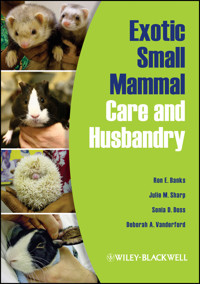
Exotic Small Mammal Care and Husbandry is a practical reference for assessing, handling, and treating small exotic animals in the veterinary clinic. Covering common species such as mice, hamsters, rabbits, and ferrets, the book focuses on nursing care, giving veterinary staff the information they need to work with these less-common patients. With information on basic anatomy, preventative care, and common diseases, Exotic Small Mammal Care and Husbandry provides a thorough grounding in the fundamentals of caring for small exotic mammals and communicating with owners.
Sie lesen das E-Book in den Legimi-Apps auf:
Seitenzahl: 388
Veröffentlichungsjahr: 2013
Ähnliche



















Contents
Acknowledgments
1 Introduction
INTRINSIC FACTORS AFFECTING WELL-BEING
EXTRINSIC FACTORS AFFECTING WELL-BEING
2 Enrichment
ENRICHMENT STRATEGIES
3 Preventive Medicine
BACTERIAL DISEASES
FUNGAL INFECTIONS
VIRAL DISEASE
BITES AND SCRATCHES Bites
PARASITIC INFECTIONS AND INFESTATIONS
4 Rabbits
COMMON BREEDS
BASIC ANATOMY AND PHYSIOLOGY
REPRODUCTION AND SEXING
HUSBANDRY
NUTRITION
ENRICHMENT
HANDLING AND RESTRAINT
PHYSICAL EXAMINATION
CLINICAL TECHNIQUES
PREVENTIVE HEALTH
COMMON DISEASES
5 Ferrets
COMMON BREEDS
BASIC ANATOMY AND PHYSIOLOGY
REPRODUCTION AND SEXING
UNIQUE FEATURES OF IMPORTANCE
HOUSING
HUSBANDRY
NUTRITION
ENRICHMENT
HANDLING, RESTRAINT, AND PHYSICAL EXAM
CLINICAL TECHNIQUES
PREVENTIVE HEALTH
COMMON DISEASES
TREATMENTS
REFERENCES
6 Mice
BASIC ANATOMY AND PHYSIOLOGY
REPRODUCTION AND SEXING
HOUSING AND HUSBANDRY
HANDLING AND RESTRAINT
PHYSICAL EXAM
SAMPLE COLLECTION
DRUG ADMINISTRATION
PREVENTIVE HEALTH
COMMON DISEASES
REFERENCES
7 Rats
COMMON BREEDS
BASIC ANATOMY AND PHYSIOLOGY
REPRODUCTION AND SEXING
UNIQUE FEATURES OF IMPORTANCE
HOUSING AND HUSBANDRY
NUTRITION
ENRICHMENT
HANDLING, RESTRAINT, AND PHYSICAL EXAM
CLINICAL TECHNIQUES
PREVENTIVE HEALTH
COMMON DISEASES
TREATMENTS
8 Gerbils
COMMON BREEDS
BASIC ANATOMY AND PHYSIOLOGY
REPRODUCTION AND SEXING
HOUSING
HUSBANDRY
NUTRITION
ENRICHMENT
HANDLING, RESTRAINT, AND PHYSICAL EXAM
CLINICAL TECHNIQUES
COMMON DISEASES
9 Hamsters
COMMON BREEDS
BASIC ANATOMY AND PHYSIOLOGY
REPRODUCTION AND SEXING
UNIQUE FEATURES OF IMPORTANCE
HOUSING AND HUSBANDRY
NUTRITION
ENRICHMENT
HANDLING AND RESTRAINT
CLINICAL TECHNIQUES
COMMON DISEASES
TREATMENTS
10 Guinea pigs
COMMON BREEDS
BASIC ANATOMY AND PHYSIOLOGY
REPRODUCTION AND SEX DETERMINATION
HUSBANDRY AND NUTRITION
HANDLING AND RESTRAINT
PHYSICAL EXAMINATION
CLINICAL TECHNIQUES
PREVENTIVE HEALTH
COMMON DISEASES
CLINICAL TREATMENTS
11 Chinchillas
COMMON BREEDS
BASIC ANATOMY AND PHYSIOLOGY
REPRODUCTION AND SEXING
UNIQUE FEATURES OF IMPORTANCE
HOUSING, HUSBANDRY, NUTRITION, AND ENRICHMENT
HANDLING AND RESTRAINT
PHYSICAL EXAM
CLINICAL TECHNIQUES
PREVENTIVE HEALTH
COMMON DISEASES
TREATMENTS
REFERENCES
12 Degus
COMMON BREEDS
BASIC ANATOMY AND PHYSIOLOGY
REPRODUCTION AND SEXING
HOUSING AND HUSBANDRY
NUTRITION
ENRICHMENT
HANDLING, RESTRAINT, AND PHYSICAL EXAM
COMMON DISEASES
REFERENCES
13 Hedgehogs
COMMON BREEDS
BASIC ANATOMY AND PHYSIOLOGY
REPRODUCTION AND SEXING
UNIQUE FEATURES OF IMPORTANCE
HOUSING AND HUSBANDRY
NUTRITION
ENRICHMENT
HANDLING, RESTRAINT, AND PHYSICAL EXAM
CLINICAL TECHNIQUES
PREVENTIVE HEALTH
COMMON DISEASES
TREATMENTS
LABORATORY NORMAL VALUES
REFERENCES
14 Sugar Gliders
COMMON BREEDS
BASIC ANATOMY AND PHYSIOLOGY
REPRODUCTION AND SEXING
UNIQUE FEATURES OF IMPORTANCE
HOUSING
HUSBANDRY
NUTRITION
ENRICHMENT
HANDLING, RESTRAINT, AND PHYSICAL EXAM
CLINICAL TECHNIQUES
PREVENTIVE HEALTH
COMMON DISEASES
TREATMENTS
REFERENCES
15 Opossums
BASIC ANATOMY AND PHYSIOLOGY
REPRODUCTION AND SEXING
HOUSING AND HUSBANDRY
HANDLING AND RESTRAINT
NUTRITION
PHYSICAL EXAM
SAMPLE COLLECTION
DRUG ADMINISTRATION
COMMON DISEASES
REFERENCES
Index
Edition first published 2010
© 2010 Ron E. Banks, Julie M. Sharp, Sonia D. Doss, Deborah A. Vanderford
Blackwell Publishing was acquired by John Wiley & Sons in February 2007. Blackwell’s publishing program has been merged with Wiley’s global Scientific, Technical, and Medical business to form Wiley-Blackwell.
Editorial Office
2121 State Avenue, Ames, Iowa 50014-8300, USA
For details of our global editorial offices, for customer services, and for information about how to apply for permission to reuse the copyright material in this book, please see our website at www.wiley.com/wiley-blackwell.
Authorization to photocopy items for internal or personal use, or the internal or personal use of specific clients, is granted by Blackwell Publishing, provided that the base fee is paid directly to the Copyright Clearance Center, 222 Rosewood Drive, Danvers, MA 01923. For those organizations that have been granted a photocopy license by CCC, a separate system of payments has been arranged. The fee codes for users of the Transactional Reporting Service are ISBN-13: 978-0-8138-1022-5/2010.
Designations used by companies to distinguish their products are often claimed as trademarks. All brand names and product names used in this book are trade names, service marks, trademarks or registered trademarks of their respective owners. The publisher is not associated with any product or vendor mentioned in this book. This publication is designed to provide accurate and authoritative information in regard to the subject matter covered. It is sold on the understanding that the publisher is not engaged in rendering professional services. If professional advice or other expert assistance is required, the services of a competent professional should be sought.
Disclaimer
The contents of this work are intended to further general scientific research, understanding, and discussion only and are not intended and should not be relied upon as recommending or promoting a specific method, diagnosis, or treatment by practitioners for any particular patient. The publisher and the author make no representations or warranties with respect to the accuracy or completeness of the contents of this work and specifically disclaim all warranties, including without limitation any implied warranties of fitness for a particular purpose. In view of ongoing research, equipment modifications, changes in governmental regulations, and the constant flow of information relating to the use of medicines, equipment, and devices, the reader is urged to review and evaluate the information provided in the package insert or instructions for each medicine, equipment, or device for, among other things, any changes in the instructions or indication of usage and for added warnings and precautions. Readers should consult with a specialist where appropriate. The fact that an organization or Website is referred to in this work as a citation and/or a potential source of further information does not mean that the author or the publisher endorses the information the organization or Website may provide or recommendations it may make. Further, readers should be aware that Internet Websites listed in this work may have changed or disappeared between when this work was written and when it is read. No warranty may be created or extended by any promotional statements for this work. Neither the publisher nor the author shall be liable for any damages arising herefrom.
Library of Congress Cataloging-in-Publication Data
Exotic small mammal care and husbandry / Ron E. Banks … [et al.].
p. ; cm.
Includes bibliographical references and index.
ISBN 978-0-8138-1022-5 (pbk. : alk. paper) 1. Exotic animals. 2. Pets. I.
Banks, Ron E. [DNLM: 1. Animal Welfare. 2. Veterinary Medicine. 3. Animal Husbandry. 4.
Animals, Domestic. SF 745 E96 2010]
SF413.E96 2010
636–dc22
2009041421
A catalog record for this book is available from the U.S. Library of Congress.
1 2010
Acknowledgments
The authors acknowledge the many unnamed and on occasion unknown contributors to our education and training in the field of husbandry and veterinary medicine. No accomplishment is a singular achievement, and without the assistance of many this book would not have been possible. Thank you.
It is the desire and hope of the authors that this text will be used for the betterment of the animals with which we share this globe and for improvement of the condition and environment in which they live. Our commitment to strong and effective stewardship of the conditions in which we and animals live is the highest ideal one can assign to a human-and-animal relationship; the engaged manner of our compassionate care and our progressive husbandry is the best reflection of our humaneness.
The authors wish to acknowledge Mr. Ian Thomas for all line drawing illustrations as well as the following individuals for assistance with photographs: Amy M. McArdle, CVT, LATG; Dan Johnson, DVM; Judi Fox, Cynthia Prevost, and Dorcas O’Rourke, DVM.
1
Introduction
The role of the veterinary technician continues to develop and mature. Although historically the duties allotted to the veterinary technician have been supportive and responsive—that is, do what you are told when you are told to do it—the current, progressive veterinary climate offers increasing levels of responsibility for engagement. Principal to the modern veterinary technician is the ability to have a dramatic impact on the well-being of the pet by educating the pet owner and assisting with building and maintaining a strong relationship of stewardship and compassion of the pet owner with the pet. To best accomplish this task, the veterinary technician must clearly understand the impact of a variety of factors, both intrinsic and extrinsic, and the role each factor may play in the health and well-being of the small mammal pet.
Any list of factors that affect the well-being of a pet would be incomplete, but to provide an outline for this discussion we should consider those in the following list as having the potential to affect the pet’s well-being:
Genetics
Age
Gender
Immune status
Circadian rhythms
Endocrine system
Cage design
Bedding choices
Cage accessories
Enrichment strategies
Watering options
Feeding options
Temperature
Humidity
Thermal neutral zones
Ventilation
Illumination
Noise
Transportation
Overcrowding
Isolation
Social ranking
Handling
Chemicals used in sanitation
Air quality
Water intake
Feeds and diets
Adventitial diseases
The take-home questions for any discussion such as this are:
What is the pet owner doing that may impact the well-being of the pet?
Is the impact of those actions improving or detracting from the well-being of the pet?
We will discuss the factors affecting the pet’s well-being by considering those which are intrinsic and those which are extrinsic.
INTRINSIC FACTORS AFFECTING WELL-BEING
Intrinsic factors are those that are inherent to the animal, including genetics, age, sex, health, nutritional status, immune status, circadian rhythms, and endocrine factors.
Genetics
Although genetic factors generally are not a concern for small mammal species, excessive inbreeding may present a spectrum of disease states which interfere with the well-being of the pet. For example, malocclusion in a rabbit is highly heritable, especially in selected lines, and will interfere with normal nutrition and regular animal-initiated activities. Malocclusion may interfere with grooming, and it will interfere with selecting and chewing preferred foodstuffs. Pet owners should be discouraged from breeding their own pets because they generally do not have sufficient numbers of animals to provide a varied genetic stock and because additional animals may also add to the abundance of unwanted pets. Breeders must have genetic diversity if they are to maximize a strong and healthy population of pet animals. Even in the best of circumstances, mismating, spontaneous mutations, chromosomal aberrations, and residual heterozygosity may result in undesirable offspring. Afflicted offspring should be neutered; if not, at least they should be prevented from mating.
Age
Neonatal animals have an immature immune system. That may oversimplify the situation, but it is important to note that the very young are susceptible to conditions or circumstances which would not be important to older animals. Rodents less than 1 week of age are exothermic, which means they cannot control their body temperature. Neonatal pups or kittens, when removed from the nest, will become hypothermic relatively quickly. As a general statement, these young animals begin to develop their “internal furnace” around 1 week of age, and by 6–8 weeks of age are fully capable of maintaining a steady core body temperature. Age becomes critically important when considering placement of the cage in a room where the windows allow sunlight and there is variable air flow. A stable, and even warm, place is important for the well-being of neonatal animals. Although not as pronounced, the same kinds of concerns exist for the very old animal too. In both cases the status of immune function is important as neither the very young nor the very old can successfully mount a strong immune challenge to infection. The geriatric animal is prone to increased disease states as the organ systems begin to fail; the young animal is prone to similar concerns, but because of physiologic systems that are not fully functional at the time of birth. This is often species dependent: a guinea pig is “precocious” and ready for all that life can throw at it, whereas a ferret requires weeks of nurturing and care to survive to healthy adulthood.
Gender
Gender may also mark an important consideration for animal well-being. For example, 80% of New Zealand White female rabbits will have uterine adenocarcinoma by 4 years of age; males are not affected (as they obviously lack a uterus). Biomedical research has shown a clear distinction between the susceptibility of mammary tumors to certain chemicals and gender. In the Wistar-Furth rat, 100% of females, but only 19% of males, will develop mammary tumors to DMBA (a carcinogenic chemical used in breast tumor research).
Immune system
Immunologic dysfunction (including hypersensitivity and allergy, autoimmunity, and immunodeficiency) may influence experimental outcome. A litany of agents or situations can alter immune function, such as age, nutritional status, a host of chemicals, various drugs, select food additives, many metals, and specific microbes. In certain circumstances, the immune response may be decreased (most common) or increased in response to the interference of outside agents.
Circadian rhythms
Many behavioral, biochemical, and physiologic parameters (daily, rhythmic, minima and maxima) occur at specific times. For example, blood counts and coagulation times, plasma steroid, body temperature, sensitivity to audiogenic seizure induction (in gerbils), drug metabolism and toxicity (e.g., anesthesia and analgesia), and susceptibility to neoplasia are influenced by circadian rhythms. Although the veterinary technician may not be able to impact most of these items by modulating circadian rhythms, it is worthwhile to recognize that circadian rhythms may impact therapies, enrichment strategies, and outcomes of the pet patient.
Endocrine factors
Sex hormones are important determinants of hepatic cytochrome P450 enzyme activity. Castrating male rats decreases the ability to biotransform xenobiotics and, by extension, can affect the required amount of anesthetic for subsequent events (i.e., castration may extend the effectiveness and duration of anesthesia). Neonatal gonadectomy of select strains of mice leads to high incidence of estrogen-secreting adrenal tumors; so if small mammals are to be neutered, awaiting puberty in the species may be worthwhile.
EXTRINSIC FACTORS AFFECTING WELL-BEING
Extrinsic factors are those that are external to the animal and include physical factors (macroenvironment vs. microenvironment, cage design, caging accessories), chemical factors (air, water, diet, and drugs), microbial agents, stressors, and environmental factors (temperature, humidity, ventilation, illumination, and noise).
Physical factors
The single most important thing a veterinary technician can do is to stop thinking of small mammals as small humans. Just because humans would like something does not mean it is a good choice for the small pet. The focus of consideration for the pet’s well-being is the animal’s environment: The microenvironment is the environment immediately surrounding the animal. It may be the cage, the pen, the box, or the room. The microenvironment is where the animal lives. By extension, the macroenvironment is where the animal’s container is maintained—the macroenvironment is where the humans live. Although the macroenvironment contributes extensively to the microenvironment, one must be principally focused on the “nose of the beast” to achieve a preferred, healthful, supportive, and enriching microenvironment. One way to state it is “what is the animal’s preference?” Even though this approach is generally desirable (e.g., rodents’ preference for solid floors over wire floors), it must be managed for its effectiveness (e.g., a preference for sunflower seeds may interfere with generalized nutrition and well-being).
Cage design
The style or design of the cage used for housing the animal affects its well-being. All other factors being the same, cage design can determine the amount of air, light, and sound the animal receives. Cage design can also impact the amount of heat, humidity, and gaseous waste dissipated into the macroenvironment. Again, all items being equal, plastics or polycarbonate caging materials tend to be an acceptable compromise for most situations. Plastics filter the light, diminish the sound, and foster a stable microenvironment (heat or cool). However, if not properly ventilated, plastics may also limit the amount of fresh air available and thus increase ammonia level, humidity, and the risk of airborne infection.
Studies generally indicate that static (plastic-walled) caging is preferable to slatted wire-walled caging for most small mammals. Many pet owners choose slatted wire-walled cages because it allows for increased “communication and interaction” with their pet, but such caging can have significant disadvantages. For example, a slatted wire-walled cage will allow free exchange of air, but air flow through an accumulation of fecal matter is not a good idea. The preferred caging design is one that provides for normal physiologic and behavioral needs, allows conspecific social interaction, facilitates development of hierarchies within or between enclosures, remains clean and dry, has adequate ventilation, assures access to food and water, serves as a secure environment, is free of sharp edges, and allows an animal to be observed with minimal disturbance.
Cage accessories should receive the same general consideration as caging materials. Items that come in direct contact with the pet should be nonreactive, nonpalatable, smooth and impervious, durable, corrosion resistant, and sturdy. In certain specific situations natural materials such as wood may be used, although the wood should be in the form of branches from pesticide-free trees, without signs of tree disease or damage, and replaced frequently to prevent ingestion or allow for it to become unsanitary. Wood of certain trees may have undesirable products (e.g., tannins in oak, aromatic hydrocarbons in pine and cedar) that could negatively impact the pet animals, and therefore such wood should not be used. Galvanized metal and rubber stoppers may be used, but only if the animal shows no interest in chewing or licking the metal or rubber. Both the zinc in galvanized metal and the rubber of the stopper may have a negative impact on the animal’s well-being.
Water
Too little water is not good and too much water is not good either. Water should be checked daily, as lack of water can kill in as little as 24 hours! Many small animals will not eat if they are not able to drink; considering that most animal feeds are dry kibble, an absence of water may also result in feed intake concerns. In species with a large cecum or appendix (e.g., guinea pigs and rabbits), where the microbes are dependent upon a fluid environment, lack of sufficient water may also result in gut dysbiosis and could result in disease from microbial toxin production or dieoff of desirable microorganisms.
Feeders
The style of feeder used for a species is dependent upon the needs of the species, but all feeders have common criteria for selection. A feeder should allow access to food, minimize contamination with feces and urine, and accommodate group housing considerations, which may require multiple feeding and watering points, while also optimizing the diet consumption.
Temperature and humidity
Species-specific temperature and humidity preferences are reviewed in the species chapters, but certain generalized concepts and issues remain. Management of a stable environment is the most critical aspect of temperature and humidity. Constantly changing temperature and humidity is more harmful to the well-being of the animal than any specific temperature (within reason of course). A general recommendation for all species is 30% to 70% relative humidity. Although there is little evidence for strict control of relative humidity, it is also true that variations in relative humidity are better tolerated at lower temperatures, due to heat loss mechanisms of most animals. Low relative humidity may be more associated with pollution- (e.g., ozone and dust) associated respiratory disease while high relative humidity may be more closely linked to infectious disease (e.g., fungi and bacteria) transmission.
Temperature extremes also have an effect on other aspects of animal care and support. Lactating rats exposed to 95°F (35°C) for 6 hours daily produced less milk than rats housed at 72°F (22°C) Reproduction in rats also decreases markedly at 90°F (32°C) (e.g., retarded testicular development).
Thermo-neutral zone
The thermo-neutral zone (TNZ) is that range of temperatures where no energy is expended by an animal to either cool or heat itself. The TNZ differs by species and does not necessarily relate to the comfort of the animal. As a general rule, animals are most comfortable at a temperature toward the low end or just outside of the low TNZ temperature. Exposure of unadapted animals to temperature higher than 85°F or lower than 40°F without access to shelter may produce clinical effects that could be life threatening.
If the temperature change is of short duration and low magnitude, then few signs are expected and even fewer will be observed. However, if the temperature deviation continues (duration and magnitude), animals will exhibit huddling, curling up, nest building, and increased general activity (all are signs indicating a desire to remove itself or protect itself from the environment). If the deviation continues further (duration and magnitude), animals will alter their metabolism rate and will consume more water and more (or less) food; the growth rate will also be affected. In cases where the temperature changes are colder, animals will enter into hibernation, torpor, or aestivation, will begin nonshivering thermogenesis (brown fat utilization), will have peripheral vascular changes shunting more blood to the core of the body and away from the appendages (the tail of rodents is used for thermoregulation to eliminate excess heat), and will exhibit piloerection (hair standing up).
If the temperature deviation (duration and magnitude) lasts for 14–21 days, then the body increases its fat stores, thickens the fur coat, and significantly restricts heat radiation.
Ventilation
The purpose of ventilation in most circumstances is to remove thermal loads, dilute gaseous and particulate contaminants, and adjust moisture content. Few, if any, pet cages are so secure that oxygen needs of the animal are ever in doubt.
The macroenvironment of most homes provides a fresh air exchange of one to two air changes per hour. Adequate room ventilation does not necessarily ensure adequate ventilation of the microenvironment!
Although not generally a concern, if ammonia in the cage is high or the bedding remains moist for extended periods, then the cage’s location should be considered and perhaps changed or a supplemental fan should be provided to assure a sufficiently dry cage. Because small mammals may also cause an allergic response, a response that can be cumulative, it is generally preferable to maintain the cage as close to an exhaust air duct as possible, but not immediately adjacent to the exhaust vent to prevent strong drafts that can stress the animal.
Illumination
Small mammals are generally crepuscular (more active at dusk or dawn). They do not require light as intense as humans and in fact will tend to withdraw from intense light levels. They will adjust to the light schedules we use in our homes, but left alone small mammals prefer 14 : 10 (light/dark) to 10 : 14 (light/dark). Increasing or decreasing light levels can affect breeding receptivity in some species, but less so in others. Albino animals have pink eyes and are relatively more susceptible to phototoxic retinopathy than pigmented species. Albino animals, if maintained in continuous light, can develop blindness within 18 months. Illumination can also affect medicinal treatment through hepatic enzyme activation. During the light cycle, rodents given a barbiturate will sleep longer than rodents given the same dose during their dark cycle. It is important to ask the pet owner whether the animal is kept exclusively indoors (where light and dark are generally the same year round) or whether the animal is principally an outdoor animal (where light and dark cycles may vary significantly over the year). As a general guideline, small animals require only 325 lux (approximately 30 foot-candles) of light for normal function and development.
Noise
Noise is a significant factor for the well-being of small animals, but it is rarely considered. Small animals tend to hear at a higher frequency compared with humans, but most also hear well at the human upper end (yes, heavy rock music is heard by the pet rat). Noise levels around animals should never exceed 85 dB as auditory effects of noise can occur at >85 dB. The effects are dependent upon the intensity of the noise and the duration (either point or cumulative) of the noise event. Destruction of sensory hairs and supporting cells can start at 90 dB, mechanical damage in rats occurs at 160 dB, and pain has been reported in rats at 140 dB. Rats have developed inner ear damage after prolonged exposure to 100 dB.
Noise also produces direct physiologic effects. Increases in serum cholesterol and in adrenal weights occur in rats exposed to 83 dB and intermittent sound of 114 dB. Audiogenic stress due to pulsed noise exceeding 83 dB may cause reduced fertility in rodents, and audiogenic seizures occur in gerbils and select strains of mice.
Radios, alarms, and timers should not be placed close to small animals. Computer video screens, large fans, and other household motors frequently have ultrasounds that can be highly distressful to small animals. These devices should not be used near small animals unless they have been checked for ultrasonic frequencies. In some cases, artificial background noise may be useful in masking sudden unexpected noise.
Transportation
Any time the animal leaves its home cage, it is being transported—usually just for a trip to the backyard but sometimes much further. Transportation can be a significant stressor for these species, requiring an acclimation period after transportation before “normal” signs are once again observed. Adolescent rats require 1–5 days for complete physiologic recovery after being transported. The use of a similar cage, with familiar accessories, the same food, and some of the same water can lessen the effect of the transport. During transport, animals should be protected from sunlight or wind by placing an opaque cover over the cage. The vision system of animals sees things differently from humans, and the rapid and repeated movement that occurs during transit can be highly stressful. If transport occurs in a vehicle the cage should be secured on the floor or seat of the car using a bungee cord or similar device to prevent tumbling in the event of a quick stop. Care should be taken to secure the top and bottom of the cage to prevent dislodgement and escape of the animal during transit.
Overcrowding and isolation
Animals are generally social creatures (certain exceptions occur during breeding season or due to reproductive processes). Animals may experience adverse conditions from being either overcrowded or isolated. Overcrowding can be mitigated to some degree by effective utilization of enrichment paradigms (e.g., hiding boxes, red film). In many cases, aggressive behavior will be strain- or even sex-specific. Group-housed mice show marked adrenal response that is directly proportional to the animal density. In these conditions, the subordinate animal has the higher adrenal weight and plasma cortisone level due to its stress associated with being subordinate.
Once social groups have been established, fighting may occur if the groups are reassorted or if a new member joins the group. Breeding and reproduction can also be influenced by group housing. Grouped-housed rodents frequently become anestrous and will synchronize the estrous cycles in the presence of a male (Whitten and Bruce effect).
Handling
Regular and gentle handling reduces animal stress and decreases the risk of fear-provoked biting. Correct handling and restraint techniques are critical. Failure to handle gently and correctly may result in injury to the animals and to the handler. The ears of the rabbit are not genetically placed handholds, and the tail of a mouse was not placed there so you could safely pick it up. Veterinary technicians have a special duty to teach and train pet owners on proper methods of restraint and handling.
Chemicals
The potential list of chemicals that could negatively impact animals would be an entire study in toxicology, but we shall concentrate on general concepts and issues related to chemical exposure. Air, feed, water, bedding, and caging materials may all present potential chemical concerns. Chemicals may enter via damaged skin, the intestinal tract, or the respiratory tract. While the list of potential effects of chemical insult is long, the more common outcomes are changes in the hepatic microsomal enzymes, the biotransformation of medications, and the regulation of oxygen radical removal (associated with cancer development).
Chemicals may serve as local irritants, produce generalized disease, alter immune functions, provide allergen exposure, be a source of mutagen, or even function as a teratogen.
Air quality
Air quality is not simply an argument for clean air or sufficient air, but rather for appropriate air. Air can become a disadvantage for these small mammal species.
At 68°F (20°C), air moving at 60 linear feet per minute has a cooling effect of 45°F (7°C). Air this cold, no matter how clean, can significantly stress the animals, especially the neonate or the geriatric animal. High airflow also has a “wash-out effect” upon pheromones.
Clean air is not necessarily a good concept either. Because animals communicate by pheromone, in some cases even to the exclusion of verbal communication, elimination of pheromones prevents the creation of a “home sweet home” for the pet and never allows its complete integration into the cage environment.
Air can also be excessively dirty. Humans can sense airborne ammonia at around 25 ppm (parts per million). Animals begin to show respiratory impact of elevated ammonia at 10 ppm. In some cases, low-level ammonia enhances the potential disease impact. Mycoplasma pulmonis, in the presence of low-level ammonia, will have an increased severity of lung lesions, enhanced growth of the organism, and greater adherence (decreased clearance) of secondary bacteria in the lungs.
Water quality
Most pet animals are provided drinking water from the home tap. In some cases, it is wonderful water, but in other cases, it may be a concern for the pets and their owners. Although most municipal water is treated with chloramines to discourage bacterial growth, high levels of chloramines may affect the immune system. Stressed or injured animals may benefit from filtered water until their return to a healthy state.
Diets
Dietary requirements are addressed in the species chapters of this text, but they deserve a general mention in our review of external factors that may affect the well-being of the pet. Likely the most common cause of dietary modification is provision of treats. Many pet owners will use treats to encourage specific behavior to get the pet to eat. Treats should be limited and never exceed 5% of the total required dietary intake of the animal. Variations in quantity or quality of essential vita mins or minerals may alter drug metabolizing systems, affect membrane integrity, or predispose to the effects of carcinogens. In certain cases, selection of specific treats may serve to benefit the animal’s well-being, as in the case of vitamin C requirements and guinea pigs, or roughage requirement and rabbits. In all cases, diet milling date and storage conditions should be monitored because fat-soluble vitamins will be leached when stored at high temperatures and other vitamins may lose potency if stored for excessive periods of time. Just because it looks like a pelleted pet ration doesn’t mean it is worth feeding to the pet. The most important concern for a dietary discussion is to avoid abrupt diet changes; when changes are required, do so over a period of 2–3 weeks if possible. Although not as habitual as other animals, these small mammals can benefit from changing the feed from time to time and familiarizing them with alternate feedstuffs. Such planning has on occasion facilitated the medical management of a sick patient when presented with diets different from those served at home.
Adventitial diseases
Diseases common to particular species will be addressed in each of the species chapters.
2
Enrichment
The strong and interactive relationship between a pet and its human companion serves to benefit both. If we begin with the premise that “animals are what make us humane” (another way to say it is “animals are the basis for our compassionate relationships to other creatures, including humans”), then our desire to maximize their environment and make their lives as comfortable as possible becomes a logical reason for considering enrichment of the pets’ environment. Recognizing the bond that exists between humans and animals, as well as the value animals bring to the human existence, makes the desire to enhance the environment of animals an easy discussion.
Lesen Sie weiter in der vollständigen Ausgabe!
Lesen Sie weiter in der vollständigen Ausgabe!
Lesen Sie weiter in der vollständigen Ausgabe!
Lesen Sie weiter in der vollständigen Ausgabe!
Lesen Sie weiter in der vollständigen Ausgabe!
Lesen Sie weiter in der vollständigen Ausgabe!
Lesen Sie weiter in der vollständigen Ausgabe!
Lesen Sie weiter in der vollständigen Ausgabe!
Lesen Sie weiter in der vollständigen Ausgabe!
Lesen Sie weiter in der vollständigen Ausgabe!
Lesen Sie weiter in der vollständigen Ausgabe!
Lesen Sie weiter in der vollständigen Ausgabe!
Lesen Sie weiter in der vollständigen Ausgabe!
Lesen Sie weiter in der vollständigen Ausgabe!




