


9,37 €
Mehr erfahren.
- Herausgeber: Sonicbond Publishing
- Kategorie: Geisteswissenschaft
- Serie: On Track
- Sprache: Englisch
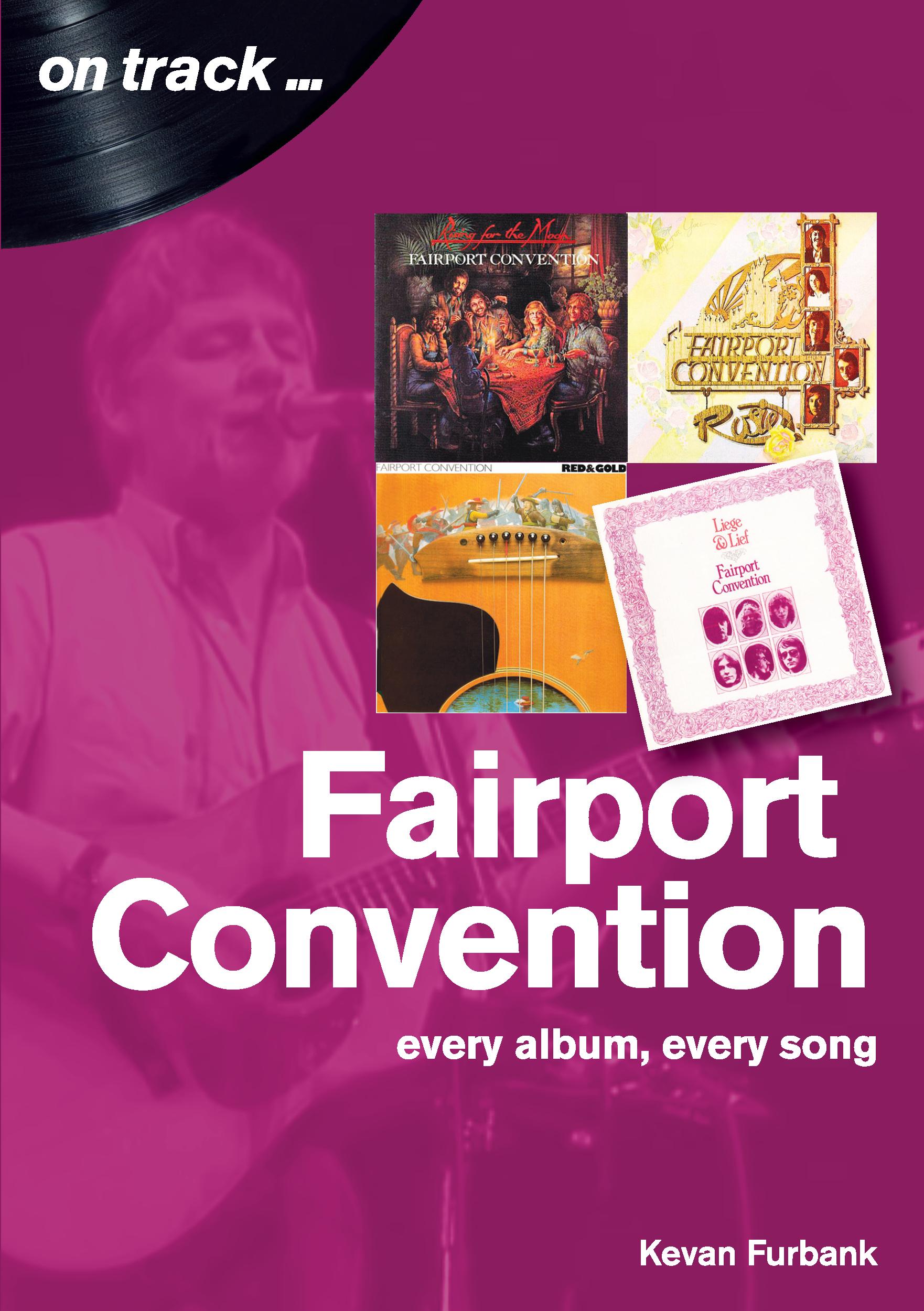
Fairport Convention are a great British institution – or, at least, they should be. For more than 50 years they have helped to keep traditional music alive and kicking by injecting it with a healthy dose of electric rock ’n’ roll. Their finest albums – including What We Did On Our Holidays and Liege And Lief – are landmarks is the development of British music.
In this exhaustive and illuminating book, Kevan Furbank looks at all the studio albums in detail – from their uncertain debut in 1968 to their most recent release, celebrating half a century of music-making. He chronicles the stories behind each recording, touching on the highs and lows, the successes and tragedies, the pleasure and pain, and examines the songwriting, arrangements and traditions that inspired each track. In doing so, he also looks at the contributions made by the many great musicians who have passed through Fairport’s ‘revolving-door’ line-ups, including guitar wizard Richard Thompson, angel-voiced Sandy Denny, demon fiddler Dave Swarbrick and the ‘guv’nor’ of British folk-rock, Ashley Hutchings. Fairport Convention’s musical story is as dramatic as any soap opera. If you have never heard any Fairport this book is the perfect introduction. If you have, you will want to go back and revisit the music this band has made over the last 50 years.
Because, in the words of Richard Thompson, it all comes round again.
Das E-Book können Sie in Legimi-Apps oder einer beliebigen App lesen, die das folgende Format unterstützen:
Seitenzahl: 371
Veröffentlichungsjahr: 2020
Ähnliche

















Sonicbond Publishing Limited
www.sonicbondpublishing.co.uk
Email: [email protected]
First Published in the United Kingdom2020
First Published in the United States 2020
British Library Cataloguing in Publication Data:
A Catalogue record for this book is available from the British Library
Copyright Kevan Furbank 2020
ISBN 978-1-78952-051-4
The rights of Kevan Furbank to be identified as the author of this work has been asserted by him in accordance with the Copyright, Designs and patents Act 1988.
All rights reserved. No part of this publication may be reproduced, stored in a retrieval system or transmitted in any form or by any means, electronic, mechanical, photocopying, recording or otherwise, without prior permission in writing from Sonicbond Publishing Limited
Printed and bound in England
Graphic design and typesetting: Full Moon Media
Contents
Acknowledgements
Come all ye rolling minstrels…
Fairport Convention (1968)
What We Did on Our Holidays (1969)
Unhalfbricking (1969)
Liege And Lief (1969)
Full House (1970)
Angel Delight (1971)
“Babbacombe” Lee (1971)
Rosie (1973)
Nine (1973)
Rising For The Moon (1975)
Gottle O’ Geer (1976)
The Bonny Bunch Of Roses (1977)
Tipplers Tales (1978)
Gladys’ Leap (1985)
Expletive Delighted! (1986)
In Real Time: Live ’87 (1987)
Red & Gold (1988)
The Five Seasons (1990)
Jewel in The Crown (1995)
Old New Borrowed Blue (1996)
Who Knows Where The Time Goes? (1997)
The Wood & The Wire (1999)
XXXV (2002)
Over The Next Hill (2004)
Sense Of Occasion (2007)
Festival Bell (2011)
By Popular Request (2012)
Myths & Heroes (2015)
50:50@50 (2017)
Shuffle And Go (2020)
Fairport Collections
Acknowledgements
Writing a book always has a knock-on effect on friends and family so I would like to apologise for ignoring them for four months. Thanks to my wife Elizabeth and daughters Sarah and Emily for their support, encouragement and quite reckless blind faith in my literary abilities. In particular, I’d like to give three cheers and a tiger to Sarah for helping me with the penultimate chapter of this book so I could hit the deadline.
I would also like to thank Stephen Lambe of Sonicbond Publishing for offering me the opportunity to write this book and his cheerful encouragement.
And, finally, thanks to Fairport Convention for more than 50 years of great music. May your bus roll on…
Come all ye rolling minstrels…
If there was any justice in the world, Fairport Convention would be as revered in the UK as, say, The Grateful Dead are in the US. They took British roots music and dragged it kicking and screaming into the 20th century – and, in the process, created a whole new genre: British folk-rock.
Their career spans an astonishing 53 years at the time of writing, putting them in the same rarified atmosphere of apparently immortal musicians such as The Rolling Stones and Paul McCartney. They have released 29 studio albums and their fourth, Liege And Lief, has been voted by BBC Radio 2 as the Most Influential Folk Album Of All Time and is in Mojo magazine’s list of the 100 Records That Changed The World.
The many musicians who have passed through the band – and anyone who has seen Pete Frame’s family tree for Fairport will know that it is as twisty and entangled as an ancient forest of gnarled oaks – include a who’s-who of folk-rock legends. There is Richard Thompson OBE (no less), regarded as one of Britain’s finest songwriters and one of the world’s greatest guitarists. There is the brief, beautiful flame that was Sandy Denny, a singer and songwriter of rare beauty who was cut down in her prime.
You’ll also find the demon fiddler Dave Swarbrick, Jethro Tull bassist Dave Pegg, Elton John, XTC and Paul McCartney drummer Dave Mattacks. And, standing astride the genre like a genial colossus, there’s Ashley Hutchings – founder of Fairport, Steeleye Span and The Albion Band, and described by Bob Dylan as ‘the single most important figure in English folk-rock’.
In 2019 the current incarnation – singer/guitarist Simon Nicol, bassist Dave Pegg, fiddler Ric Sanders, multi-instrumentalist Chris Leslie and drummer Gerry Conway – was still touring across the UK and Ireland and celebrating 40 years of the Cropredy Festival. Not bad for a band with a combined age of 338!
The story of Fairport Convention starts with bass player Ashley Stephen ‘Tyger’ Hutchings, born in 1945, who formed bands out of people he knew at the North Bank Youth Club in Muswell Hill. One of those was Simon John Breckenridge Nicol, five years younger, whose father was a doctor with a surgery at the family home, Fairport. By 1966 Ashley and Simon were playing together in the Ethnic Shuffle Orchestra.
Richard Thompson, from nearby Totteridge and a year older than Simon, was next to join and, with Ethnic Shuffle Orchestra drummer Shawn Frater, the new group rehearsed above Dr Nicol’s surgery at Fairport – and it was another friend of Simon who dubbed them Fairport Convention. Frater only lasted one gig, replaced by Martin Francis Lamble (same age as Richard).
The band found a vocalist in 18-year-old librarian Judy Aileen Dyble and also pulled in Scunthorpe-born Ian Matthews MacDonald, born June 1946, from defunct pop trio Pyramid. Fairport became part of London’s ‘underground’ music scene, sharing the bill at venues such as Middle Earth and the Electric Garden with the likes of Soft Machine and Procol Harum. They were spotted by American record producer Joe Boyd, who was immediately impressed, especially by the guitar skills of the then 17-year-old Richard Thompson. They signed a contract with Boyd’s Witchseason management company and the producer got them a recording deal with Track Records. Fairport Convention were ready to unleash their music upon the world.
More than 50 years later, the band may not have the same energy as it did back in 1967 – as well as only one of the original members – but there’s still a simple, almost naive joy in the music-making that has survived half a century of trials and tribulations. As Simon Nicol said in a 2016 interview: ‘I want the next CD we make to be outstanding in its own right, without reference to the arc of music preceding it over the last 50 years. I don’t want to be part of a tribute band to Fairport Convention, nor to have our music put under glass in an exhibition case.’
Just how successful Fairport have been in reinventing themselves in the studio can only be assessed by looking at their albums in some detail, examining the motivations, inspirations and artistic decisions behind them – and that is what this book attempts to do. It is not a detailed history of the band, but it is, of course, impossible to separate what went on behind the scenes with what ended up in the record shops.
Finally, it attempts to shine a gentle light on what must be one of the most overlooked British bands of the 20th century – I’m a Fairport fan and I want everyone else to love them just as much as I do, warts and all.
Fairport Convention (1968)
Personnel:
Judy Dyble: lead vocals, electric and acoustic autoharps, recorder, piano
Ian MacDonald: lead vocals, jaw harp
Richard Thompson: vocals, lead electric and acoustic guitars, mandolin
Simon Nicol: vocals, electric 12 and 6 string and acoustic guitars
Ashley Hutchings: bass guitar, jug, double bass
Martin Lamble: percussion, violin
Claire Lowther: cello
John Wood: engineer
Produced at Sound Techniques, London, by Joe Boyd and Tod Lloyd for Witchseason Productions
Record label: Polydor
Release dates: June 1968 (UK), 1970 (US)
Highest chart positions: Uncharted
Running time: 37:46 (original release)
Current edition: 2003 reissue on Polydor/Universal with bonus tracks
Some bands come straight out of the traps with their sound fully-formed, their debut albums acting as templates for most of what follows. Others need a little time to find their feet, to hone their style and sound. Fairport Convention fall into the latter category. Indeed, their self-titled debut in 1968 carries few hints of their future musical direction. Instead, it’s a mixture of American singer/songwriter covers and quirky psychedelia. Even the original compositions owe something to the West Coast sound.
But before the album came a single – a cover of an obscure 1936 swinging ballad by Huey Prince and Lou Singer called ‘If I Had A Ribbon Bow’. Whose idea was this? Perhaps it came from the record collection of Ashley’s dance-band father – or even from Richard’s eclectic tastes. Certainly, he seemed very upset when the single sank without trace following its 23 February 1968 release. He said: ‘I was so mortified [it] wasn’t a hit. I mean, I had invested so much in believing in this song, and in believing that it was going to be a successful record, that when it wasn’t I thought “never again”.’
Before the single was released, they were in Sound Techniques studio in London recording their debut album. Like a lot of bands at the time, Fairport tried to find songs that weren’t too well known so they could stand out from the crowd – and they weren’t prolific and accomplished enough as songwriters to record an entire album of originals. Thanks to Joe Boyd’s contacts in the industry they heard ‘I Don’t Know Where I Stand’ and ‘Chelsea Morning’ from a demo tape left behind by Joni Mitchell. They pulled tracks from obscure albums and singles, from parts of their live repertoire, and the well-listened Boyd no doubt dropped a few hints into young ears eager to learn.
The result is, understandably, an uneven album that has been criticised for its flat production and for Judy Dyble’s distant, somewhat hesitant vocal delivery. But there are many delights to be found, not least the moments when Richard unleashes his distinctive lead guitar and in the interesting arrangements, chord sequences and delivery of some of the original material.
Polydor’s promotion was low-key, with one advertising blurb describing the album as ‘one put together by unusual personalities for that insignificant minority of seekers to whom real music, oddly enough, seems to matter’. The record cover hardly helps. Shot in semi-gloom, it shows two and a half band members’ faces sitting around a table, possibly having a séance lit by an art deco 1930s lamp – you had to open the gatefold to see everyone else. As a result, an insignificant minority of seekers bought it.
‘Time Will Show The Wiser’ (Emitt Rhodes)
This busy, fast-paced rocker is the perfect opening number, showcasing Richard’s confident guitar riffing and licks, with strong ensemble vocals and a catchy, singalong one-line chorus. If Fairport were playing this when Joe Boyd first saw them, then no wonder he thought they showed promise. The song comes from The Merry-Go-Round, the 1967 debut album by a band with the same name featuring US multi-instrumentalist Rhodes. In comparison, the original is a sparse, lightweight affair – Fairport give it the cojones it demands, with a catchy opening guitar riff, strong vocals from Ian and Judy and pounding drums from Martin. Richard clearly liked it so much he used it to open his 1976 career retrospective (guitar, vocal).
‘I Don’t Know Where I Stand’ (Joni Mitchell)
The first of two Joni songs here, this eventually appeared on her second album, Clouds, the following year. Joni’s version of this wistful ballad about emotional insecurity – one of her favourite subjects – is gently finger-picked on a solo guitar to allow her gorgeous voice to soar. Fairport throw guitar, drums and bass on it, while Judy’s vocal is pleasant but unremarkable. All wistfulness is crushed under a somewhat heavy-handed arrangement, although Richard’s solo manages to be clever and entertaining. But this is a track where less would definitely have been more.
‘If (Stomp)’ (Ian MacDonald, Richard Thompson)
The first self-penned song on the album, it’s less a stomp and more a good ol’ Chet Atkins-style country-pickin’ number, mostly written by Richard but with some help on the lyrics from Ian. Not that the lyrics are anything special – ‘If I were rich enough, if I could pitch enough, if you were bitch enough’. But the song is a pleasant ditty and, as always, one can enjoy Richard’s accomplished electric guitar picking, as well as a delightful country-style instrumental. An earlier version supplied the B side for the ‘If I Had A Ribbon Bow’ single.
‘Decameron’ (Paul Ghosh, Andrew Horvitch, Richard Thompson)
Written with two school friends, this wistful ballad in 6/8 reveals the first stirrings of Richard’s rather cynical, world-weary lyrical approach. ‘Every time the sun shines, to me it’s a rainy day’ sings Ian in one of his best vocal performances on the album, supported with gentle harmonies from Judy. Structurally it feels like two songs welded together – the rhythmic verses in A major alternate with a slower, sparser section in D major that gently fades away before lurching back into the verse again. There doesn’t appear to be any sort of chorus nor any explanation of the title in the lyrics. Decameron is Greek for ’10 days’ and is best known as the title of a collection of novellas by 14th-century writer Giovanni Boccaccio.
‘Jack Of Diamonds’ (Bob Dylan, Ben Carruthers)
Talk about obscure! This one was a strange amalgam of the lyrics to a Texas gambling song from the back of Bob Dylan’s third album, set to music by US actor Ben Carruthers, who appeared in The Dirty Dozen movie in 1967. He released it as a single and, according to Fairport biographer Patrick Humphries, it was used in a BBC Play For Today that also starred Carruthers. Ashley thinks the single was given to Richard by Hugh Cornwell, later of The Stranglers. Of all the songs on the album, this one deserves the ‘British Jefferson Airplane’ tag – sinister electric guitar notes drenched in reverb launch into an aggressive, bluesy thrash alternating between B flat minor and E flat before a surprise melodic major key middle eight. It’s marred by Judy Dyble’s terribly out of tune recorder solo (!) and the fact that Ian’s voice is a bit too nice for it. But, along with the opening track above, it showed what this band could do when firing on all cylinders.
‘Portfolio’ (Judy Dyble, Ashley Hutchings)
A silly little throwaway instrumental played on a badly-tuned piano, with Martin squeaking along on violin. At 2:05 it is 2:05 too long.
‘Chelsea Morning’ (Joni Mitchell)
The second Joni song from the same album and a much more successful attempt – the style and subject matter suit a rock band approach. Fast, inventive percussion from Martin and Richard’s rising guitar phrases give it a sense of pace and urgency, especially with racing car sound effects over chopping flamenco-style chords at the end. One quibble: In the slower middle eights, Ian sounds like he’s singing from the next-door studio. Strange.
‘Sun Shade’ (Paul Ghosh, Andrew Horvitch, Richard Thompson)
A lovely little ballad with jazzy chord progressions (C to G minor then D flat major seventh. Try it, it sounds lovely), gentle, wistful singing from Ian and faultless and tasteful electric guitar playing from Richard. And ‘Chuckles’ Thompson supplies suitably uplifting lyrics: ‘Dying’s not easy today’. A small but perfectly formed little song.
‘The Lobster’ (George Painter, Ashley Hutchings, Richard Thompson)
This is where things get a little weird. Some apparently aimless, high-pitched guitar twiddling leads into plodding bass and minor key autoharp sweeps before the entire band thrashes away, with Martin going all-out on the tom-toms. As things calm down, Ian sings a poem by George Painter about a ferocious crustacean, and then the band go quiet for a bit before everyone has another thrash. At times, Richard’s fast electric guitar picking sounds similar to Robert Fripp’s work with Giles, Giles & Fripp. It’s the sort of thing a band plays after saying ‘Hope you like our new direction.’ Thankfully, it leads into…
‘It’s Alright Ma, It’s Only Witchcraft’ (Ashley Hutchings, Richard Thompson)
The title of this song is clearly inspired by Bob Dylan, particularly ‘It’s Alright Ma, I’m Only Bleeding’. A walking bass shuffles into view, Ian sings a jaunty understated verse, Martin’s drums swing beautifully beneath him and then everything bursts into life into a rocking chorus, punctuated by Richard’s unique lead guitar. It’s a simple almost-blues, but the sheer energy and musical chutzpah make this a highpoint of the album, especially when the band break into the chorus of ‘This is the season, stormy weather’s on the way’.
‘One Sure Thing’ (Harvey Brooks, Jim Glover)
From one of the best tracks on the album to, sadly, one of the worst. ‘One Sure Thing’ came from Jim & Jean’s 1966 album Changes and was a fairly dreary minor key moan in its original incarnation. Fairport speed it up a bit but they can’t save it from sounding plodding, bland and listless. Thank whatever musical god you believe in then for Richard’s angular, discordant lead guitar section that briefly drags the song into a completely different territory.
‘M1 Breakdown’ (Ashley Hutchings, Simon Nicol)
The sound of a van – probably a Transit – leads into a banjo-like thrash while Ian twangs a jaw harp. Apparently, it cut his mouth so badly he listened to the playback while dripping blood. After a minute or so, the van and the song break down. A throwaway piece of studio fun, to be sure, but quite spookily prophetic considering what was going to happen to them 18 months later.
2003 Bonus Tracks
‘Suzanne’ (Leonard Cohen)
Tinkling percussion introduces a spirited version of Cohen’s debut single – some may say it’s so busy, with pounding drums, Simon’s staccato electric guitar strum and Richard providing strong licks throughout, that its wistful nature is pretty much lost. It certainly overstays its welcome by about the four-minute mark – but there’s still nearly two minutes more to go! It illustrates a Fairport trait that was both a strength and a weakness: they didn’t just cover songs but made them their own through imaginative, sometimes counter-intuitive arrangements that worked better with some songs than others.
‘If I Had A Ribbon Bow’ (Hughie Prince, Lou Singer)
A major ingredient of British psychedelia in the 1960s was a return to Edwardian fashion and song styles, as evidenced by The Beatles’ Sgt Pepper album and Paul McCartney’s ‘Honey Pie’ on the White Album. So it’s quite reasonable to believe Fairport Convention really did think this could be a hit. First recorded in 1936 by jazz singer Maxine Sullivan as a quirky novelty song, Fairport’s version pretty much follows the original note for note. Richard plays classy jazz guitar and percussionist Tristan Fry provides vibes while Martin delivers a click-clacking rhythm, occasionally using brushes to swing on the drum kit. Judy’s vocal is a little colourless – listen to the original and you’ll hear the difference. It’s a pleasant, quirky, totally un-Fairport-like number that should never have been released as a single and predictably bombed.
‘Morning Glory’ (Larry Beckett, Tim Buckley)
A live TV recording with all the sound imperfections that implies – tinny, distant guitar accompaniment, Judy’s slightly out of tune recorder and a vocal performance from Ian that’s flat and dreary. Highlights are Martin’s busy drums and, of course, a dramatic Richard guitar solo. The original song first appeared on Tim Buckley’s second album, Goodbye And Hello, in 1967.
‘Reno, Nevada’ (Richard Farina)
Another live TV recording but considerably better quality than ‘Morning Glory’. Vocals are a little hesitant, but instrumentally it is approached with much more confidence, with a lengthy Richard guitar break taking up most of its 7:43 length and showing why Joe Boyd was so impressed with him live (despite one or two dodgy notes!). Farina was a US protest singer and author who died aged just 29 in a motorcycle crash a year before this was recorded.
What We Did on Our Holidays (1969)
Personnel:
Alexandra Elene MacLean Denny: vocals, guitars, piano, harpsichord
Ashley Hutchings: bass, backing vocals
Martin Lamble: drums, percussion, violin, tabla & footsteps
Ian Matthews (nee MacDonald): vocals, congas
Simon Nicol: guitars, electric autoharp, electric dulcimer, backing vocals
Richard Thompson: guitars, piano accordion, sitar, vocals
Brice Lacey: robots on ‘Mr Lacey’
Claire Lowther: cello on ‘Book Song’
Kingsley Abbott: coins on ’The Lord Is In This Place…’, backing vocals on ‘Meet On The Ledge’
Paul Ghosh, Andrew Horvitch and Marc Ellington: backing vocals on ‘Meet On The Ledge’
Peter Ross: harmonica on ’Throwaway Street Puzzle’
Recorded at Sound Techniques, Olympic Studios and Morgan Studios, all in London, by Joe Boyd
John Wood: engineer
Record label: Island (UK), A&M (US)
Release dates: January 1969 (released as ‘Fairport Convention’ in US)
Highest chart positions: Uncharted
Running time: 38:07 (reissue 47:53)
Current edition: 2003 Island Remasters
Let us pretend, you and I, that this was actually Fairport Convention’s debut album. A lot of compilations do just that. Why? Because this is head and shoulders above its predecessor, an album of such confidence and quality that several of the tracks have become classics in the band’s repertoire – and one, in particular, is Fairport’s end-of-show anthem. Another, more prosaic, reason may be that Joe Boyd moved all his acts to Island Records before the album’s release, and most compilations tend to take their material from one record label. The choice of material, the performances and the original compositions are all superb, with scarcely any filler. Two things, in particular, stand out – the voice of Sandy Denny and the songwriting of Richard Thompson.
Before the recording came the first of Fairport’s many, many splits. Judy Dyble was asked to leave – Ashley says it was because the band was getting stronger, louder and heavier and her light voice was getting lost. On her website, Judy depicts her ousting as being quite brutal, saying she was ‘unceremoniously dumped’ The band thought they could carry on as an all-male five-piece, but fans kept asking where the girl singer was. After all, Jefferson Airplane had one… So Fairport held auditions, and that was when they met Sandy Denny, According to Simon, she ‘stood out like a clean glass in a sinkful of dirty dishes’.
Alexandra Elene Maclean Denny, born in London in 1947, was already a well-seasoned performer when she met the Fairports. She had played the folk clubs, appeared on the BBC, recorded two released albums with Scottish folk singer Alex Campbell and British folk and blues artist Johnny Silvo and been, briefly, a member of The Strawbs. Her early composition ‘Who Knows Where The Time Goes?’ had been covered by Judy Collins, so Sandy was already well-known as a singer and songwriter.
Her influence on Fairport was immediate. One of her compositions opens the album, she encouraged them to include two traditional songs – one of which, ‘She Moves Through The Fair’, is basically what Sandy did in the clubs with electric backing – and her expressive, versatile and emotive voice gives the band a confident swagger.
The album also sees Richard Thompson’s debut as a solo songwriter. Growing in confidence and skill, he was rapidly creating a distinctive voice for himself – dark, cynical and world-weary, set against catchy, sometimes jaunty melodies. In all, he contributes to five of the original album’s twelve tracks and gives the band a sense of weight and gravitas.
Even the cover was an improvement on the debut – a blackboard covered in a chalk picture by the Fairports in the dressing room of a university, the title taken from a typical start-of-term essay teachers give to their students.
Once again, the album failed to chart, but time has shown the wiser as it is now viewed as one of the two or three essential Fairport releases.
‘Fotheringay’ (Sandy Denny)
A sombre one to open with but, gosh, what a lovely song and what a heartrending subject matter – the imprisonment of Mary, Queen of Scots in Fotheringhay Castle, Northamptonshire, before her execution for attempting to overthrow Queen Elizabeth I. Sandy demoed the tune to different words back in 1966 – it was called ‘Boxful Of Treasures’ – but changed the lyrics after a visit to the 12th century castle in Northamptonshire (while misspelling the name). Structured like a folk song, it has just four verses in A minor, moving very nicely to A major for a slightly baroque-sounding instrumental after the third verse. Sandy and Richard finger-pick acoustic guitars together while Simon adds autoharp, Ashley bass and Martin bells, giving the song just the right amount of backing to create a performance that is heartfelt and touching. The song meant so much to Sandy that she used the title for the name of the band she formed after her first departure from Fairport.
‘Mr Lacey’ (Ashley Hutchings)
Ashley’s only solo composition on the album pays tribute to ‘Professor’ Bruce Lacey, an eccentric British performer who made odd mechanical devices, appeared in Richard Lester films including The Beatles’ Help! and constructed the props for Michael Bentine’s TV series It’s A Square World. The song is a straightforward twelve-bar blues rocker with Richard playing some searing guitar licks while Lacey’s robots provide buzzing noises in the instrumental break. Some 35 years later Lacey appeared live on stage with the Fairports.
‘Book Song’ (Ian Matthews, Richard Thompson)
Matthews (who had changed his name from Ian MacDonald to avoid confusion with Ian McDonald of King Crimson) had the lyrics, written about his future wife, and Richard supplied the waltz-time melody, with Simon adding some low-key sitar. It’s a gentle, wistful little number, beautifully sung by Ian and Sandy together in close harmony, with a tasteful Richard guitar solo. Martin is suitably restrained on drums, confining himself mostly to rimshots.
‘The Lord Is In This Place, How Dreadful Is This Place’ (Richard Thompson, Ashley Hutchings)
Inspired by a gospel blues song performed by Blind Willie Johnson called ‘Dark Was The Night, Cold Was The Ground’, this was a bit of an experiment combining Richard’s slide guitar abilities with the cavernous, echoing recording atmosphere provided by a nearby church. Sandy hums a suitably bluesy tune, with gentle harmony humming behind her. So it wouldn’t be taken too seriously, Kingsley Abbott, a friend of the band, drops some coins in Richard’s cup, and Martin’s footsteps can be heard walking away.
‘No Man’s Land’ (Richard Thompson)
Richard’s first solo composition epitomises his unique combination of grim, gallows-humour lyrics matched to a jaunty tune. It sounds like a leather-trouser-slapping, beer-spilling knees-up, with Thompson providing rumbustious accordion and the band overdubbing handclaps. The music sounds almost triumphant, with massed vocals on the verses. But the lyrics! Read this: ‘It’s no use to be free/ If lies are all the truth they see/ They’ll screw up what you do/ When you’re through’. Believe it or not, this was later covered by The New Seekers!
‘I’ll Keep It With Mine’ (Bob Dylan)
Fairport were still turning to US songwriters for the bulk of their material, particularly for their live set, and this is one written by Dylan in 1964 but first recorded by Judy Collins (all Dylan’s released versions are out-takes). It bears some similarities to Sandy’s ‘Who Knows Where The Time Goes’ with its ascending chord structure, and her performance on this song is rich, emotional and powerful. It opens with a gentle electric guitar strum before subdued bass and drums come in, gaining in volume and power for the chorus. It was released as a single with ‘Fotheringay’ as the B-side but failed to trouble chart compilers.
‘Eastern Rain’ (Joni Mitchell)
Another West Coast song, this time from the pen of the mighty Joni and one that never appeared on any of her studio albums, although it was part of her live repertoire during the late 1960s. Fairport treat it with great respect, fading in on Simon’s autoharp, giving it some drums rolling like thunder and a sharp, angular guitar solo. Sandy shows how to cover a Joni song – compare her nuanced, lyrical rendition with Judy’s vocals on the debut album’s Mitchell numbers.
‘Nottamun Town’ (Trad)
Trad was to become a prolific writer of songs for the Fairports, but this was the first time they explored British folk music. Surprisingly, it didn’t come from Sandy but was known to the band through the version Shirley Collins recorded with Davy Graham for their 1964 album Folk Roots, New Routes. A bit of a ‘riddle’ song with nonsense lyrics, Nottamun may be a corruption of Nottingham. It contains an acoustic guitar solo by Richard that draws heavily on the ‘drone’ sound of traditional instruments such as Scottish bagpipes – his father was Scottish and had a large collection of traditional folk records – but also owes something to the scales of Indian music. Coupled with Martin’s bongos, the track also has an exotic Eastern feel to it. It’s performed by the massed Fairport vocal department of Sandy, Ian, Richard, Simon and Ashley, with simple drone-like harmonies. The result is an unusual blend of folk styles and influences.
‘Tale in Hard Time’ (Richard Thompson)
Another of Richard’s gloomy/jaunty songs, an upbeat, rhythmic number with slit-your-wrists lyrics including ’Take the song from my heart/ Let me learn to despise’. Yet Thompson isn’t doing it for effect – that’s how he writes – and the song works because it is so damn catchy, with a guitar solo that never goes where you expect it to. It opens with two finger-picked guitars in harmony before Ian comes in with the vocal. There’s a repetitive three-note motif played high up on a piano or harpsichord that lasts through most of the song, disappearing during the instrumental but returning for the final verse. It’s a superbly put-together track with excellent musicianship and great attention to detail.
‘She Moves Through The Fair’ (Trad anon)
This was part of Sandy’s repertoire when she did the folk club circuit at the start of her career. An Irish song from Co Donegal, it tells of a couple who are due to be wed, but she dies – possibly at the hands of her disapproving family – and returns to him as a ghost. The song is basically performed solo with acoustic guitar accompaniment, Simon on autoharp, Richard providing tasteful lead guitar and gentle rolling drums from Martin. Once again, Sandy’s singing is superb, investing the song with a sense of mystery and passion, and the entire arrangement hints at what Fairport would later achieve with traditional material.
‘Meet On The Ledge’ (Richard Thompson)
With 29 albums to draw from, it is almost impossible to predict what Fairport Convention will play in any particular gig. But one thing is certain – they will end with this, a song that has become an anthem for the band, a reaffirmation of life but also a tribute to those who are no longer with us. I’ve seen grown men cry at this and it still brings a lump to my throat, no matter how many times I have heard it. The title came from a tree Richard and his friends used to climb as children – it had a large, hanging limb they dubbed ’The Ledge’. Some of the braver ones would climb to the very top of the tree, while others would only get as far as The Ledge. The lyrics suggest loss and the futility of ambition – but they also provide hope in the suggestion that ’The Ledge’ is some kind of afterlife, a place where we will all meet, with intimations of reincarnation in the line ‘it all comes round again’. Subsequent events made the song seem spookily prescient, and with key band members such as Sandy, Martin, Dave Swarbrick and Trevor Lucas now dead it inevitably rekindles old feelings and memories for both the band and the audience. There are many versions of ‘Meet On The Ledge’ – in this, the original, Ian sings the first verse, Sandy the second and then everyone joins in for a moving singalong chorus that can be repeated as many times as you like because, you see, it all comes round again. Issued as a single in November 1968, it went the same way as ‘If I Had A Ribbon Bow’.
‘End Of A Holiday’ (Simon Nicol)
Simon songs are few and far between. This is a short solo acoustic guitar instrumental that started life with lyrics by Ian. Simon says it was put on the album as ‘a sop’ but it is a gentle, winding-down to the record, especially after the emotion of the preceding track.
Bonus Tracks
‘Throwaway Street Puzzle’ (Ashley Hutchings, Richard Thompson)
A bluesy ‘Mr Lacey’ clone played with great energy, originally released as the flipside of ‘Meet On The Ledge’. Chopping, muted guitar chords open proceedings, Sandy and Ian sing some ‘come in and see the show’ blues lyrics while guest Pete Ross provides harmonica and Mr Thompson gives us a powerful lead guitar break. Its first album appearance was on Richard’s (guitar, vocal) solo compilation.
‘You’re Gonna Need My Help’ (McKinley Morganfield)
A swampy 12-bar blues number recorded at the BBC for Symonds On Saturday and first broadcast on 9 February 1969. Fairport do a gutsy, confident version that does the song justice. McKinley Morganfield was the real name of Muddy Waters, the American blues singer regarded as the father of modern Chicago blues. He first released it as the flipside of his 1950 single ‘Sad Letter Blues’.
‘Some Sweet Day’ (Felice & Boudleaux Bryant)
This spirited country stomp was part of Fairport’s repertoire for some time and first recorded in 1967 with Judy Dyble on vocals. A second version was laid down in 1968 for John Peel’s Top Gear radio show, and this third attempt was made during the sessions for this album as a possible third single. The Bryants were an American husband and wife team who wrote and performed country songs – ‘Some Sweet Day’ was first recorded and released by The Everly Brothers in 1960 although the Bryants later did their own version. Fairport’s recording pretty much follows the Everlys’ – it’s a gentle, upbeat, swinging little number with pleasant harmonies. Ian takes most of the vocal duties while Richard plays his electric guitar with a bit of country slide.
Unhalfbricking (1969)
Personnel:
Sandy Denny: vocals, harpsichord
Martin Lamble: drums, stacked chairs
Simon Nicol: electric and acoustic guitars, electric dulcimer, backing vocals
Ashley Hutchings: bass, backing vocals
Richard Thompson: electric and acoustic guitars, electric dulcimer, piano accordion, organ, backing vocals
Additional personnel:
Dave Swarbrick: fiddle on ‘Si Tu Dois Partir’, ‘A Sailor’s Life’ and ‘Cajun Woman’, mandolin on ‘Million Dollar Bash’
Trevor Lucas: triangle on ‘Si Tu Dois Partir’
Marc Ellington: vocals on ‘Million Dollar Bash’
Ian Matthews: backing vocals on ‘Percy’s Song’
Dave Mattacks: drums on ‘Ballad Of Easy Rider’
Recorded at Sound Techniques, London.
Produced by Joe Boyd, Simon Nicol & Fairport
John Wood: engineer
Record label: Island
Release dates: 3 July 1969
Highest chart positions: 12 (UK)
Running time: 39:24 (reissue 47:50)
Current edition: 2003 Universal Island with bonus tracks
Unhalfbricking is seen as a transition album as Fairport Convention’s inspiration moved from the West Coast of America to the highways and byways of rural Britain and Ireland. Its centrepiece, a bold eleven-minute re-imagining of the tragic ballad ‘A Sailor’s Life’, created a loose template for what was to follow on Liege And Lief. It also gave Fairport their one and only hit single – a French-language version of Bob Dylan’s ‘If You Gotta Go, Go Now’ – and an appearance on Top Of The Pops. Sandy’s classic song ‘Who Knows Where The Time Goes?’ makes its first appearance here as a Fairport number and, out of just eight tracks on the album, there are no fewer than three Dylan songs.
It also saw the departure of Ian Matthews, who went on to form his own group, Matthews’ Southern Comfort. Ian was not happy with the new traditional direction in which the band appeared to be going and had apparently made that view crystal clear to the rest of the group. After singing on just one track on the new album, he discovered the band had booked a traditional session – probably ‘A Sailor’s Life’ – without informing him. He said:
Joe Boyd wanted to move on to phase 3 quickly, and sentiments had no place in his plan. I was asked to leave and was dumped on the same day. Presuming that he meant soon, I got in the van to go to the show, Ashley turned to me and said, “Where do you think you’re going.” Sandy, bless her, turned to him and said, “You heartless bastard.” I got out and away they sped.
Fairport’s revolving door policy saw the departure of one member but the arrival of someone who would play a pivotal part in their development as a folk-rock band and end up becoming ‘de facto’ leader until 1979. Fiddler Dave Swarbrick, born in New Malden, south-west London in 1941, was even more of a grizzled folk veteran than Sandy. He had joined the hugely-respected and influential Ian Campbell Folk Group in 1960 before working as a duo with another giant of traditional music, Martin Carthy. He even had a solo album to his name that no budding folk fiddler could afford to ignore.
Joe Boyd called him in as a session musician to play on Richard’s ‘Cajun Woman’. Dave knew ‘A Sailor’s Life’ because it was part of the Carthy-Swarbrick repertoire, and he also ended up playing fiddle on ‘Si Tu Dois Partir’ and mandolin on ‘Million Dollar Bash’. Soon he would become a full-time member, telling his old partner Carthy: ‘I just played with this guy Richard [Thompson] and I want to play with him for the rest of my life.’ Two other non-Fairporters appear on the album. Marc Ellington was a Scottish folk singer and multi-instrumentalist (actually born in Boston, USA) and Aussie Trevor Lucas was Sandy’s boyfriend at the time and bass player in the folk band Eclection.
Unhalfbricking is seen by some as unfairly overlooked, sandwiched between two great albums. In my view it has a slightly incomplete and unfocused feel, due to its over-use of Dylan covers, its baffling title (taken from a game of Ghost in which players add letters to fragments of words) and enigmatic cover, showing Sandy’s parents standing at the entrance to their garden, the band sitting in the background having tea.
There’s also an atmosphere of loss surrounding the album because, between the recording of the tracks and the album’s release, Fairport suffered a terrible tragedy that robbed them of one of their members, forcing Joe Boyd to put together a tracklist while the band was recuperating.
On the back cover of the album is a picture of Fairport enjoying a meal. Ashley later said: ‘The shirt and the leather waistcoat I’m wearing are what I had on when the crash happened. I can clearly remember them being bloodstained. You don’t forget things like that.’
‘Genesis Hall’ (Richard Thompson)
The album opens with an absolute classic from Richard, a composition that uses folk structures and styles to create a modern-day protest song. The title came from a squat in Drury Lane, London, that had been raided and cleared out by the police, creating a moral ambiguity for Richard, whose father was a Scotland Yard detective. But his sympathies clearly lie with the squatters who were evicted, and the lyrical vitriol grows as it goes along, ending with ‘It was all I could do to keep myself/ From taking revenge on your blood’. The rousing chorus is simple and direct: ‘Oh, oh, helpless and slow/ And you don’t have anywhere to go’. The sting of the song is blunted a little by having it sung by Sandy – Richard was still unsure about his voice at this stage – and by the slightly swinging waltz rhythm. Richard’s electric guitar is warmer and more subdued than usual, and there’s an electric dulcimer following the melody line. It’s a powerful song but perhaps one that is a little too dark to be the album opener.
‘Si Tu Dois Partir’ (Bob Dylan)
According to Fairport biographer Patrick Humphries, this slightly-dodgy French version of Dylan’s ‘If You Gotta Go, Go Now’ came about as a spontaneous and somewhat impetuous decision in the dressing room of Middle Earth. Let’s do it Cajun-style, said the band, and the call went up through the PA system for a Frenchman in the house to provide a translation. Apparently, three people turned up and the song was eventually written by committee. For the recording, Richard plays the accordion, Trevor the triangle, Dave Swarbrick on fiddle and Martin a pile of plastic chairs, which fell over towards the end, to create a Cajun-style washboard sound. It reached No 21 in the UK singles chart and gave Fairport their one and only Top of the Pops appearance. Sandy later disowned it as ‘a load of rubbish’ because it misled people into thinking they were a French group. The original song was written around 1965 but first appeared as a Manfred Mann single.
‘Autopsy’ (Sandy Denny)
Richard supposedly suggested the unusual time signature of 5/4 – think of the rhythm in Jethro Tull’s ‘Living In The Past’, although ‘Autopsy’ shifts into 4/4 for the middle eight. A song about a girl who is always crying, it may have been partly autobiographical as Sandy was an emotional person able to burst into tears at the slightest provocation. It’s a minor key lament with a bit of a jazzy swing to it – 5/4 does that to a song. The transition to the 4/4 section is a bit abrupt and plodding, and it’s a relief when it goes back into the original rhythm. Sandy sings it as only she can, stretching single words out across multiple bars in an exquisite legato, but some of the meaning is lost in all the vocal gymnastics.
‘A Sailor’s Life’ (Trad)
This is the moment that marks the beginning of British folk-rock. The most important song on the album that set the course for Fairport’s future direction came about, once again, as a spur-of-the-moment dressing-room decision. Sandy had started playing it just before a gig, the band joined in and the arrangement, including its long electric instrumental ending, was pretty much formed then. It went down so well on stage it was pencilled in for the next album.
In the studio, they did one (or possibly two) run-throughs and then recorded the song in a single, 11-minute take. Sandy had a cold at the time, which probably adds to the dense, claustrophobic atmosphere. Martin’s drums and cymbals roll like the ocean swell, Dave Swarbrick’s rhythmic violin screams like a seagull and Richard provides relatively subdued lead while Simon and Ashley chug along relentlessly. When they listened to it afterwards, everyone knew Fairport had just recorded something special.
Credit must be given to Joe Boyd, who was pushing the band into a more traditional direction and had booked ‘Swarb’ to play violin because he knew he would give the recording some real folk authenticity, as well as deliver the goods in one or two takes. Swarb knew the song well as he had recorded it with Martin Carthy in 1966.
The 18th-century ballad about a girl going to sea to find her ‘Sweet William’ – only to discover that he’s been taken by the briny – was part of Sandy’s folk club repertoire and she probably didn’t consider it anything special. But it excited Ashley and sparked off his interest in traditional music as he rummaged through the archives at Cecil Sharp House, looking for additional verses and stumbling across other songs he thought would be great for the band. So without Sandy’s impromptu dressing-room performance Fairport may have remained the ‘British Jefferson Airplane’ and there would have been no Liege And Lief – and no Steeleye Span and Albion Band. But it also started a process that would lead to Ian quitting and Sandy’s and Ashley’s departure from the band after just one more album.
‘Cajun Woman’ (Richard Thompson)
After ‘A Sailor’s Life’ everything else on the album was inevitably going to sound like an anti-climax. ‘Cajun Woman’ is a bit of a throwaway number from Richard, a Cajun pastiche recorded early on in the sessions with Swarb on fiddle. Having said that, it cracks along powerfully thanks to Martin’s solid drumming and, on close inspection, contains some lyrics to make your blood run cold – ‘Well, it’s welcome to the graveyard/ And welcome to the throne/ Welcome to the orphanage/ Where your family sit and moan’.




