


Erhalten Sie Zugang zu diesem und mehr als 300000 Büchern ab EUR 5,99 monatlich.
- Herausgeber: Fernhurst Books Limited
- Kategorie: Lebensstil
- Serie: Practical Companions
- Sprache: Englisch
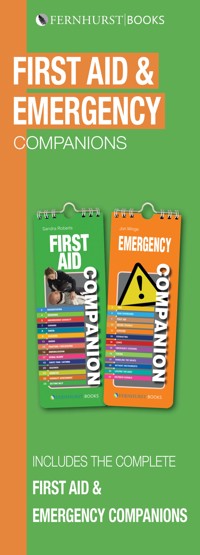
Fernhurst Books' compact, handy guides to first aid and emergencies at sea bundled together in e-book form for the first time. The perfect quick reference guides to keep on your phone or tablet, easily accessible when you are on board. They contain all the essential information for when you need it most when dealing with first aid issues or emergencies at sea. The First Aid Companion is an on-the-water reference guide for most of the first aid emergencies you could come across afloat, including drowning, unconsciousness, external bleeding, immersion, hypothermia and more. The Emergency Companion is there should you ever find yourself in an emergency: it could be your saviour. Covering everything from fires, leaks, engine trouble and emergency steering to man overboard, first aid, dismasting and distress signals, this guide has an important place on board every boat. This will be a valued companion for skipper and crew in an emergency.
Sie lesen das E-Book in den Legimi-Apps auf:
Seitenzahl: 58
Veröffentlichungsjahr: 2024
Das E-Book (TTS) können Sie hören im Abo „Legimi Premium” in Legimi-Apps auf:
Ähnliche


















CONTENTS
FIRST AID
RESUSCITATION
DROWNING
UNCONSCIOUS CASUALTY
CHOKING
SHOCK
BLEEDING
BURNS
FRACTURE / DISLOCATION
IMMOBILISATION
SPINAL INJURY
CHEST PAIN / ASTHMA
SEIZURES
DIABETES
CASUALTY ASSESSMENT
GETTING HELP
EMERGENCY
FIRE
MAN OVERBOARD
FIRST AID
ENGINE TROUBLE
AGROUND
DISMASTING
LEAKS
EMERGENCY STEERING
TOWING
HANDLING THE WAVES
WITHOUT INSTRUMENTS
LEAVING THE BOAT
DISTRESS SIGNALS
RESUSCITATION
D is for danger
Is it safe for casualty, rescuer & bystanders?
R is for response
Does the casualty respond?
A is for airway
Is the airway open allowing the casualty to breath?
B is for breathing
Is the casualty breathing on their own?
1. Shout at the casualty. Do they respond? – tell them to stay still. No response? – kneel by the casualty and shout again. Gently tap and shake their shoulders. Still no response? – turn the casualty onto their back. Shout for help.
2. Open the airway. Place a hand on the forehead and gently tilt the head back. Place fingertips under the chin and lift the chin up.
3. Check for breathing. Place head next to casualty’s face. Keep chin supported. Look, listen and feel for evidence of normal breathing for no longer than 10 seconds. Can you feel breath on your cheek? Can you see the chest rise and fall? Can you hear any sounds? If you don’t think breathing is normal, continue with resuscitation. Raise the alarm. Leave casualty to do this if necessary.
4. Start chest compressions. Kneel by the side of the casualty. Place the heel of one hand in the centre of their chest. Place the heel of the other hand on top of the heel of the first. Interlock fingers and raise them off the chest. Maintain vertical position over casualty. Keep arms locked straight, with hand, elbow and shoulder in line. Press down on the breastbone to a depth of 4-5cm. Release pressure on the chest, letting it return to its original position. Do not remove hands from the chest. Repeat this at a rate of 100 per minute. Complete 30 compressions.
5. Open airway using the head tilt chin lift method. Pinch soft part of the nose using thumb and index finger. Maintain chin lift keeping the mouth open. Take a normal breath and place lips around the casualty’s mouth making sure there is a good seal. Blow steadily in the mouth and watch for the chest to rise as in normal breathing. Take mouth away and watch for the chest to fall as the air comes out. Repeat this once more. This completes two effective rescue breaths.
Rescue breaths didn’t make the chest rise and fall? – before next attempt at breaths, check the mouth for visible obstructions and ensure head tilt and chin lift are adequate. Do not attempt more than two breaths before returning to compressions.
Do not interrupt resuscitation. Only stop CPR if in danger, exhausted, or help arrives to take over.
Two rescuers present? – take turns, swapping over every two minutes, attempting to do so without any break in the CPR.
Unable to do ventilations because of infection risk, presence of blood or vomit, suspicion of poisoning, or just choose not to? – it is important to still do compressions. Continue compressions without any break until help arrives.
The casualty needs to be on a hard surface so may need to be moved from a bunk onto the deck.
DROWNING
DROWNING
Casualty not breathing? – if alone with casualty give 5 rescue breaths then continue with compressions and breaths at a ratio of 30:2 for 1 minute before leaving the casualty to raise the alarm. Where there is another rescuer available to raise the alarm, give 5 rescue breaths and continue with compressions and breaths at 30:2 until help arrives.
UNCONSCIOUS CASUALTY
UNCONSCIOUS CASUALTY
No response? – open the airway and check that breathing is present.
Breathing but unconscious? – place in recovery position.
1. Kneel next to casualty. Straighten their legs. Quickly remove their spectacles and empty pockets. Place the arm closest to you out at right angles to the body with the elbow bent and the palm uppermost.
2. Bring the casualty’s opposite arm across their chest. Hold the back of the casualty’s hand against their cheek with your own palm. Do not let go. This hand supports the head as the casualty is turned.
3. With your other hand grasp the leg furthest away from you just above the knee and pull it up, keeping the foot on the ground. With your hand on the knee pull this leg towards you to roll the casualty on their side.
4. Tilt the head back to make sure the airway remains open. The casualty’s hand may be adjusted under the cheek to support the head or a pillow may be used. Adjust the upper leg so the hip and knee are at right angles.
5. Check breathing every 1 to 2 minutes. If the casualty is not breathing, roll them onto their back and commence resuscitation. (See Resuscitation p.2)
6. If the casualty has to be kept in the recovery position for more than 30 minutes, turn them to the opposite side to relieve pressure on the lower arm.
7. Never leave an unconscious casualty alone unless it is necessary in order to raise the alarm. Cover them to prevent heat loss and protect from the environment as needed.
8. Do not move the casualty unless they are in danger as this may cause further harm.
9. Assess the casualty for signs of injury or possible cause of the unconsciousness, and monitor their pulse. (See Casualty Assessment p.22)
CHOKING
CHOKING
It is important not to confuse this with other emergencies when the casualty may appear to have difficulty breathing. If the obstruction is mild, the casualty will be able to answer or cough and will recover without assistance. If the casualty is unable to answer they may clutch or point to their throat to indicate the problem. Choking frequently occurs during eating.
1. Casualty still conscious? – attempt to dislodge the object. Stand beside the casualty and lean them forward supporting them with an arm. Give up to five sharp blows between the shoulder blades with the heel of your other hand. Check after each slap to see if the object has dislodged.
2. This does not relieve the situation? – do abdominal thrusts. Stand behind the casualty and lean them forward, putting both arms around the upper part of their abdomen. Clench a fist and place it midway between the belly button and the bottom end of the breast bone. Grasp this hand with the other and pull sharply upwards and inwards. Repeat up to five times checking after each thrust to see if the object has dislodged.
3.




