


Erhalten Sie Zugang zu diesem und mehr als 300000 Büchern ab EUR 5,99 monatlich.
- Herausgeber: The Lilliput Press
- Kategorie: Lebensstil
- Sprache: Englisch
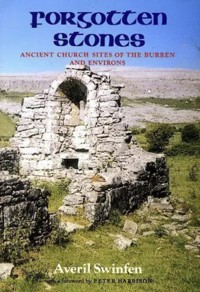
This guide to the 'forgotten stones' of early ecclesiastical sites and buildings is a lovingly detailed record of 82 churches secreted in the hundred-odd square miles of the Burren, a primeval limestone region of north County Clare, one heavily populated, encapsulating Ireland's Christian heritage. The physical remains and state or preservation of each church are carefully described, as are features of archaeological and historic interest – altars, bullauns, carvings, crosses, sheela-na-gigs, wells – and accretions of legend and tradition. Over 120 photographs, a map and drawings, speak eloquently of the riches and reversals of a millennium of worship, remarkably concentrated in this luminous, compelling landscape.
Sie lesen das E-Book in den Legimi-Apps auf:
Seitenzahl: 175
Veröffentlichungsjahr: 1995
Das E-Book (TTS) können Sie hören im Abo „Legimi Premium” in Legimi-Apps auf:
Ähnliche


















AVERIL SWINFEN
FORGOTTEN STONES
Ancient Church Sites of the Burren & Environs
with a foreword byPETER HARBISON
Now therefore ye are no more strangers or foreigners, but fellow-citizens with the saints and of the household of God;
And are built upon the foundation of the apostles and prophets,
Jesus Christ himself being the chief corner stone;
In whom all the building fitly framed together groweth unto an holy temple in the lord:
In whom ye also are builded together for an habitation of God through the Spirit.
Ephesians 2. 19–22
THE LILLIPUT PRESS
To the memory of my father William Marshall Hickman Humphreys, who first pointed The Way.
CONTENTS
Title Page
Dedication
Foreword by Peter Harbison
Introduction
AUGHINISH CHURCH
BALLYALABAN
CARRON CHURCH
CILL-MIC-UI-DONAIN
TEMPLE DISERT IN COTTONDISERT
CLOONEY (SOUTH)
COAD
CORCOMROE ABBEY
DRUMCREEHY, BISHOPSQUARTER
KILVAKEE, DROMORE WOOD
DRUMCLIFF CHURCH
DYSERT O’DEA CHURCH
FORMOYLE
PENAL CHURCH AT FORMOYLE
GLENARAHA CHURCH
GLENINAGH
INAGH
KILBRACT
KILCAMEEN
KILCARRAGH
KILCORNEY
KILCROSS
KILFARBOY CHURCH
KILFENORA CATHEDRAL
KILKEEDY OLD CHURCH
KILKEEDY, CHURCH OF IRELAND
KILLASPUGLONANE
KILLEANY
KILLILAGH
KILLINA
KILLOMORAN
KILLONOGHAN
KILMACDUAGH, COUNTY GALWAY
KILMACREEHY
KILMANAHEEN ANCIENT CHURCH
KILMANAHEEN II
KILMANAHEEN III
KILMOE
KILMOON
KILNABOY
KILNABOY ROMAN CATHOLIC CHURCH
KILNAMONA CHURCH
THE ABBEY CHURCH, KILSHANNY
KILSTAPHEEN
KILTACKEY
KILTONAGHTA
KILTOOLA
KILTORAGHT
KILVOYDAN
KYLECREEN CHURCH
LAHINCH,CHURCH OF IRELAND
LISCULLAUN CHURCH
LISDOONVARNA,CHURCH OF IRELAND
MORAVIAN CHURCH ATCROSSARD
MOY CHURCH
NEWTOWN CHURCH
NOUGHAVAL
O’DAVOREN’S CHAPEL
OUGHTMAMA
PARKMORE CHURCH
RATH
RATHBORNEY
RUAN
SHANCLOUGH CHURCH
SKAGHAVANOO
SLADOO CHURCH
ST CATHERINE’S CHURCH, COROFIN
CHURCH OF ST COLMANMACDUAGH
ST COLUMBA’S CHURCH, CRUMLIN
GLENCOLUMCILLE CHURCH
ST COMAN’S CHURCH
ST MAC CREICHE’SOF MOUNT CALLAN
ST MACDARA’S CHURCHWAFFERIG
TEMPLE CRONAN
TEMPLEDUFF
TEMPLE HARIGAN
TEMPLELINE
TEMPLEMALEY
TEMPLEMORE
TEMPLENADEIRKABLAKEMOUNT
TEMPLENARAHA
TEMPLEPATRICK
TOOMULLIN
OtherChurchSites
GlossaryofTerms
SelectBibliography
Map
Aknowledgments
About the Author
Copyright
FOREWORD
The northern half of County Clare, with the Burren at its core, is a treasure-house for the antiquarian. Stone structures abound simply because there is so much raw material available with which to build them. But their very profusion makes us concentrate too often on the better-known monuments at the expense of the less-striking examples, which tend to be overlooked. Without a knowledge of all of them, our picture of the Burren would have to remain less than complete.
In this book, Averil Swinfen focuses on just one notable class of stone monuments in the Burren, namely the churches, of which there are many both great and small, and her compendious gazetteer makes us acutely aware of their richness and variety. As they cover a time-span of well-nigh a thousand years, they provide us with significant samples of the development of Irish ecclesiastical architecture down the centuries, including some of the most evocatively simple examples which belong to the earlier periods of stone church construction in this country.
It must be said, of course, that hers is not the first intensive look at the churches of north Clare. That distinction belongs to the Ordnance Survey in the year 1839; its work was never officially published, and it had to wait until 1928 before Fr O’Flanagan made it available to the public in typescript form. But more significant was the survey published at the beginning of thius century by the tireless Thomas Johnson Westropp. From his base in Corofin, where he stayed with his friend Dr George Unthank Macnamara, Westropp produced a most valuable catalogue which must have formed the basis for Lady Swinfen’s comprehensive gazetteer. The interval between these two surveys and the present work – almost fifty and a hundred years respectively – gives us an interesting base-line for studying the relative rates of delapidation of the churches over a period of a century and a half, though because of the comparative inaccessability of many of the Burren’s churches, much of the decline is probably due more to natural than to human causes.
But Averil Swinfen goes beyond both of these earlier surveys in providing us with more detailed descriptions of the churches, drawing attention to their present condition, and noticing their unusual features such as the scuplted heads. In addition she gives us the fruit of her extensive research into the known history of each site, in the course of which she comes up with some delightful – and frequently humorous – snippets of information which are not available elsewhere. She has ‘sniffed out’ some of the more interesting gravestones in and around the churches and the stories attached to those who are buried beneath them. And, most importantly for those who will want to use this work as a guidebook, and I am sure they will be many, she provides us with useful information on how to find the individual sites, and a map to ease the task even further.
Other than Lady Swinfen herself, there are probably very few alive today who will have visited the many places she lists in the gazetteer, and she is to be congratulated on having found or re-discovered them all, no matter what the obstacles. Her work should encourage a multitude, including myself, to put on our walking shoes and tramp across field and crag to see what we have not seen before. She will help us to discover the hidden Burren for ourselves, and future generations will recongize in her a champion of the smaller and lesser-known church sites of the region. This work will now take its place among the indispensable volumes in the growing library of Burren books which are helping to open the eyes of the world to this fascinating area. As a guide to the churches of the Burren, it has no rival, and one can only thank the author for having gone to such endless trouble in presenting us with a well-written and well-researched book from which we can all derive great benefit. As with her previous booklet on Kilfenora, one can see it having a long and useful life. It certainly deserves it.
PETER HARBISON
Dublin,July1992
FORGOTTEN STONES
INTRODUCTION
It has been an exhilarating experience to search for old churches in the Burren, a vast open area in the north-west corner of County Clare and the south-west corner of County Galway, on the west coast of Ireland. Around a hundred square miles of carboniferous limestone rock splays its glittering grey crust over hills and pastures, making it one of the strangest landscapes in Europe.
It is a primeval-looking terrain. Some find it uncanny but to others it displays an irresistible attraction. Meandering through this countryside is always a delight for me, but I saught to learn something of the secrets of the many derelict church sites in the Burren. They lie now as forgotten stones, tucked into valleys, under hillsides, on hilltops, by rivers and lakes, in wood and shrubbery, and by the sea-shore. And my quest for ecclesiastical ruins became so absorbing that I strayed farther afield to sites outside the Burren’s traditional borders.
These churches are Ireland’s Christian heritage and speak to us of the past. What they say today does not make for happy listening. ‘Why have you so neglected us?’ they seem to cry. ‘Once we stood for the most precious gift you possess – your Christian faith. We nursed it, guarded it and fought for it. For centuries we have upheld the spirit that nurtured your forebears and sent them forth to spread the word. We have often been sacked and looted, yet subsequently restored by devoted brethren. Now, after centuries of witness, we lie desecrated and forgotten. Is it too late to make amends, so that our vital contribution to the Christian heritage in this region will remain a testimony to future generations?’
‘In this most western corner of Europe we should be able to show that the Christian message came to us in its infancy, for it was accepted and propagated here with great conviction. Through the years other Christian seats of worship have replaced us, yet should all trace of our existence be forgotten?’
The most important ecclesiastical remains have had a modicum of attention, but others lie crumbling, examples of Ireland’s early architecture gradually becoming undistinguishable, and interesting features of its history being lost forever. In many graveyards the crosses and tombstones have been knocked and broken – sometimes even cut up for steps! Can no funds be found to restore these shattered edifices, tidy the burial grounds and reinstate the scattered artefacts and tombstones, so that they can stand in their antiquity as proud witness of the early ecclesiastical life in the Burren? As well as preserving the past for ourselves, the resuscitation of these ancient sites, many of them tucked away in secluded spots, must be an unusual attraction to the discerning visitor, who will sometimes be challenged to seek them out. The better-known ones are easily discovered and usually can be reached without difficulty, but there are many others which are not. The old stone buildings in remote spots, erected at a time when no roads laced the countryside as they do today, can be reached only on foot; and the explorer must be nimble-footed. On a few occasions I failed in my search and had to return another day. Once I forgot to note the landmarks and got lost, and occasionally kind locals came to my assistance.
Each day’s quest was a novel one because there was always something different at my journey’s end. There was such a variety of countryside to cover enroute. It was hazardous at times, and required more than enthusiasm to traverse it in safety and still retain the dignity expected of a more-than-middle-aged female. I quickly learned to ascertain if the high wall that I was about to navigate inwards was a possibility when coming out, or if there was another exit. Bogland required nimble negotiation, as did the limestone ledges. An added deterrent to safe progress, thankfully only encountered once, were bees. Many of the graveyards surrounding these old church sites are very difficult to walk through safely, and a good sense of balance is often needed to prevent one descending below ground before the allotted time. The younger in limb think little of such obstacles and maintain that they add zest to an outing.
At first, on the odd fine days granted to us in the summer of 1986, I visited the sites already known to me. Later, when excessive rain had made the boglands and other parts squelchy to walk on, the roadside churches took priority. Then, after the most treacherous August in decades, the glorious autumn weather came as a blessing, enabling me to get to sites that would have been unapproachable until the surrounding land had dried.
The spring flowers lingered late that year, and though the famed gentians and other alpine plants had folded, the limestone-scattered pastures were still strewn with nodding harebells and other flora, while ferns peeped up from the rock fissures. Those were halcyon days. The soft grey colours of the limestone amongst green pastures glimmered in the sun as fluffy clouds smoothed one colour over another on the terraced hills. Such peace and freedom, God be praised – and praised – He had been here, since time immemorial.
Some of the places I visited were marked on maps; others came to my knowledge only by word of mouth. I wanted to take photographs, but since clambering over walls and through shrubbery is not conducive to carrying bulky equipment, I decided that a small pocket camera would be sufficient to record my findings.
There were frustrating moments: once I arrived at a particularly beautiful site on the edge of a lake, only to find that the sun was shining directly across at my target. Other ruins that proved difficult to photograph were those posed on the summit of hillocks or encompassed by high walls. Some were hidden by shrubbery. One, in a town on the outskirts of the Burren, is now surrounded by buildings and can be visited only by courtesy of the residents. It is almost impossible to photograph.
The ground’s surface can change quickly in some places; rainwater lakes (turloughs) suddenly appear and then as quickly disappear. More than once, mud-soaked lanes almost sucked off my Wellingtons and made a long adventure, but it was usually possible to obtain information about each place. Some known sites had disappeared, the bulldozer having obliterated all trace of them. In others an outline of foundation, a lone cross, or one on an altar of stones, a carving or bullaun – were lonely reminders of more favourable days.
The difficulty of access to some of these forgotten churches is one explanation for their neglect, but it cannot be the only one, for other sites, accessible by road, are in like condition. If we consider when and how they were built – the carting and assembling of the enormous stones over rough land and exceedingly rugged passages – such zealous labour surely entitles their remains to more consideration than they have received.
During the nineteenth century, archaeologists and historians drew attention, time and again, to the lack of interest taken in Ireland’s ancient places, and one went so far as to say that ‘nowhere else is there found so much theoretical respect and practical indifference to the remains of antiquity as in Ireland’. Such a comment would not be in order today because there has been a fast-growing awareness of the country’s antiquities for some years now; but somehow or other many old church sites have been passed over and are slowly dying of ‘practical indifference’.
Looking again at the crumbling ruins of these old churches, we must be profoundly grateful to those learned and caring men who sought out and recorded the history we draw from today.
We learn from ecclesiastical and other literature that the earliest churches were built of wood and wattles. Equally, we read that ‘the ancient churches were not universally of wood, for little stone churches were erected from the earliest Christian times.’ Those made of wood and wattles have not survived, though traces of them have been revealed beneath some stone churches in various parts of Ireland.
The paucity of documentation on early Christian architecture in the Burren has made exact dating hazardous at times, even for experts. Thus, with the reconstruction of so many buildings to take into account, it is perhaps sufficient for us laymen to reply that our Burren ecclesiastical heritage, with known exceptions, is indeterminately ancient, and to tender the maxim of Thomas Champness: ‘When God is the architect, men are the masons and labourers.’
Visitors encountered on my journeys often asked whether the ancient Irish Church was Protestant or Roman Catholic. I take my reply from Professor G.T. Stokes’s IrelandandtheCelticChurch, in which he writes: ‘In my opinion these early Christians were neither Protestant nor Roman Catholic. Many of their practices and doctrines would horrify an ordinary Protestant; others of them would scandalize the ordinary Roman Catholic.’
The following work aims to give a description – condensed in most cases – of the churches and ecclesiastical sites as they were seen when surveyed between 1839 and early this century, while showing the various changes which have occurred over the years; and to relate in connection with them legends, traditions and anecdotes.
For people seeking further information, there are learned and detailed histories available, some of them listed in the Select Bibliography at the back.
AUGHINISH CHURCH
Near the edge of the seashore, on the south-western point of the Aughinish peninsula, the crumbling remains of this church and burial place look out across the ocean. Its silhouette is visible against both sea and sky as one approaches, either from across a few fields at the end of a short boreen or along the seashore.
There is little information on the history of this almost featureless old church, built of limestone blocks. In 1899 T.J. Westropp, one of Ireland’s renowned antiquaries, said that he could find out nothing about when it was built. Carved on one of its large stones, high up on the outside of the north wall, is the date 1617. A great deal of both the south and west walls (those nearest the sea) collapsed about the turn of the century, most likely knocked over by stormy seas.
A nearby resident said that locally it was known as the Orchard (Ullord) Church.
A line in Lady Gregory’s VisionsandBeliefsintheWestofIreland, published in 1920, suggests the possibility that the church might have been in use within living memory of that time: ‘At Aughinish there were two couples came to the shore to be married’ (p. 126). It is recorded that at least until the Great Famine (1845–8), a village of over 300 inhabitants occupied this peninsula. The strange building nearby the church, known locally as the ‘Baking House’, is, no doubt, another remnant of village life.
BALLYALLABAN
Ballyallaban is situated less than two miles south of Ballyvaughan, shortly past the turn-off to the Aillwee Cave.
The avenue that leads to the residence passes through ‘a roughly circular area of raised ground’, approximately 77 feet in diameter. To the right is a stone, altar-like platform, on which stands a late cross; on the ground below is a bullaun.
Available evidence suggests that there may have been an early monastic settlement here, though it has not been recorded. The landowner says that both human and animal bones, and many shells, have been unearthed from the surrounding area.
CARRON CHURCH – CARNE 1302
The fifteenth-century church at Carran, two miles north of Leamaneh Castle on the road to Ballyvaughan, is an imposing ruin. It is easily seen and accessible. The founder and patron of the church are unknown.
This quadrangular building, 56’ x 20’, shows a handsome, pointed doorway in the south wall, with a stoup in the right jamb. The windows, now shrouded in ivy, are in the east and south walls, and are single, pointed slits, one with an ogee head. In position at the east end of the north wall, at least until 1900, were three corbels carved with the faces of a king, a warrior and a woman. Today only the warrior’s head remains. The altar, which was intact until the turn of the century, is now broken and surrounded by debris. The remnants of a belfry are to be found on the west gable.
At the north-west corner is a machiolation – an opening between corbels supporting a parapet – through which stones or liquid could be dropped on assailants. This suggests that there may have been an upper storey, used as a fortified residence.
South of the church is a small cairn, around which coffins were carried before burial.
CILL-MIC-UI-DONAIN The Ascetic’s Church (LEANA)
The route to this church was mentioned as early as 1317 when it was taken by soldiers just before the battle of Corcumroe: ‘Next morning they marched along Bothan-na-mac-Riogh [Road-of-the-Kings, between Corofin and Kilnaboy] … along the Lionas [Leana], along Cill-mic-i-Donain.’
In 1896 Dr G.U. MacNamara heard that a ‘curious stone’ with a carved human head had been found in the vicinity. Eventually he found a place, which he was convinced was the site of the ancient church. This view was shared by T.J. Westropp, who wrote: ‘I brought the existence of the ruins under the notice of the Ordnance Survey, the officers of which took great pains in having them correctly named and located.’
Judging from the description of the find, there cannot have been much left of the site, for the ruins had been pulled down to make boundary fences, ‘not leaving a stone upon a stone’. Nevertheless, there were numerous stones, both cut and uncut, built into the fences of the fields in which the old church stood. These included seven well-cut jamb-stones with scotia moulding at one angle, and another the same, but with a human head carved in alto-relievo at the top of the moulding. Perhaps this was the ‘curious stone’.
At the turn of the century, local people say that the dimensions of the old church were about 20’ x 15’, and that forty or fifty years before, a five-foot high wall was still standing. Possibly those responsible for its destruction did not realize that it was a church.
In 1900 a further reference to the vicinity of the site is found: ‘Down the slope lie some carved blocks and bullauns, the last remains of Kil mic ui donain, or the Ascetic’s Church.’
About 250 yards north-east of the church site the dilapidated ruins of the Friar’s House, Teach-na-mBrathar, were discovered. Some 80 feet north-west of that ruin was a ‘very curious bullaun’, with two well-cut circular hollows and a part of another.




