


Erhalten Sie Zugang zu diesem und mehr als 300000 Büchern ab EUR 5,99 monatlich.
- Herausgeber: The History Press
- Kategorie: Geisteswissenschaft
- Sprache: Englisch
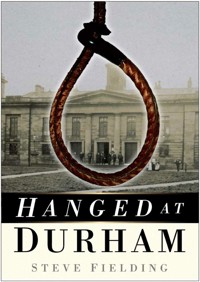
For decades the high walls of Durham gaol have contained some of the countrys most infamous criminals. Until hanging was abolished in the 1960s it was also the main centre of execution for convicted killers from all over the north east. The history of execution within the walls of Durham Gaol began with the hanging of two labourers side by side in 1869, by the notorious hangman William Calcraft. Over the next ninety years a total of seventy-seven people took the short walk to the gallows - including poisoner Mary Cotton, who for over a century was the worst mass murderer in Great Britain, Gatesheads copycat Jack the Ripper, William Waddell, army deserter Brian Chandler, nineteen-year-old Edward Anderson, who murdered his blind uncle, a Teeside dock worker hanged on Christmas Eve, Carlisle muderer John Vickers, the first man hanged under the 1957 Homocide Act, and a South African sailor who preferred death to ten years in prison. Infamous executionors also played a part in the gaols history - Calcraft, who preferred slow strangulation, Marwood, the pioneer of the 'long drop', bungling Bartholomew Binns, the Billingtons, the Pierrepoint family, and Doncaster hangman Stephen Wade. Steve Fielding's highly readable new book features each of the seventy-five cases in one volume for the first time and is fully illustrated with photographs, news cuttings and engravings. It is bound to appeal to anyone interested in the darker side of County Durhams history.
Sie lesen das E-Book in den Legimi-Apps auf:
Seitenzahl: 231
Veröffentlichungsjahr: 2013
Das E-Book (TTS) können Sie hören im Abo „Legimi Premium” in Legimi-Apps auf:
Ähnliche


















HANGEDAT
DURHAM
STEVE FIELDING
First published in 2007 by Sutton Publishing Limited
Reprinted in 2008 by
The History Press
The Mill, Brimscombe Port
Stroud, Gloucestershire, GL5 2QG
www.thehistorypress.co.uk
Reprinted 2009, 2013
This ebook edition first published in 2013
All rights reserved
© Steve Fielding, 2007, 2013
The right of Steve Fielding to be identified as the Author of this work has been asserted in accordance with the Copyright, Designs and Patents Act 1988.
This ebook is copyright material and must not be copied, reproduced, transferred, distributed, leased, licensed or publicly performed or used in any way except as specifically permitted in writing by the publishers, as allowed under the terms and conditions under which it was purchased or as strictly permitted by applicable copyright law. Any unauthorised distribution or use of this text may be a direct infringement of the author’s and publisher’s rights, and those responsible may be liable in law accordingly.
EPUBISBN 978 0 7509 5336 8
Original typesetting by The History Press
CONTENTS
Acknowledgements
Introduction
1.
A Fatal DecisionJohn Dolan, 22 March 1869
2.
The Darlington Fenian MurderJohn McConville, 22 March 1869
3.
Hanged Side by SideJohn Hayes and Hugh Slane, 13 January 1873
4.
The First Female Serial KillerMary Ann Cotton, 24 March 1873
5.
An Uncontrollable TemperCharles Dawson, 5 January 1874
6.
A Small Bottle of PorterEdward Gough, 5 January 1874
7.
For Her Love . . .William Thompson, 5 January 1874
8.
A Question of ProvocationHugh Daley, 28 December 1874
9.
Murder on Easter SundayMichael Gilligan, 2 August 1875
10.
The Body in the RiverWilliam McHugh, 2 August 1875
11.
A Poison of Mice and MenElizabeth Pearson, 2 August 1875
12.
The Heavy DrinkerJohn Williams, 26 July 1876
13.
The PremonitionRobert Vest, 30 July 1878
14.
A Gruesome End to a Gruesome CrimeWilliam Brownless, 16 November 1880
15.
To Escape the Torture of GaolThomas Fury, 16 May 1882
16.
A Botched ExecutionJames Burton, 6 August 1883
17.
The StrikebreakerPeter Bray, 24 November 1883
18.
Death on DutyJoseph Lowson, 28 May 1884
19.
The Gateshead RipperWilliam Waddell, 18 December 1888
20.
The Wedding Day MurderJohn Johnson, 22 December 1891
21.
The Last-Minute ConfessionCharles Smith, 22 March 1898
22.
Murder on the BeachJohn Bowes, 12 December 1900
23.
The Result of a Petty TheftJohn Thompson, 10 December 1901
24.
As Red as Guilty BloodThomas Nicholson, 16 December 1902
25.
Payment with a BulletSamuel Thomas Walton, 16 December 1902
26.
Immoral EarningsJames Duffy, 8 December 1903
27.
More than Anything Else in the WorldGeorge Breeze, 2 August 1904
28.
I Killed Her . . . I Will Swing for HerRobert William Lawman, 24 March 1908
29.
You Might Break My Neck . . .Joseph William Noble, 24 March 1908
30.
The Right to an AppealMatthew John Dodds, 5 August 1908
31.
Murder at West StanleyJeremiah O’Connor, 23 February 1909
32.
The Chopwell TragedyAbel Atherton, 8 December 1909
33.
Dear Tommy . . .Thomas Craig, 12 July 1910
34.
With Necessary Intent?Robert Upton, 24 March 1914
35.
The ConfessorFrank Steele, 11 August 1915
36.
An Axe for the Lady, a Razor for MeJoseph Deans, 20 December 1916
37.
For She Was a Dead Wrong WomanWilliam Hall, 23 March 1920
38.
The Old SoldierJames Riley, 30 November 1920
39.
Delayed in the PostJames Williamson, 21 March 1922
40.
The Uninvited GuestDaniel Cassidy, 3 April 1923
41.
The Hand that Fired the GunHassan Muhamed, 8 August 1923
42.
The Fatal NoteMatthew Frederick Atkinson Nunn, 2 January 1924
43.
A Life for a Life 54Henry Graham, 15 April 1925
44.
The Break-UpThomas Henry Shelton, 15 April 1925
45.
The Jealous ManJames Smith, 10 August 1926
46.
A Faked SuicideJohn Dunn, 6 January 1928
47.
The Tall ManNorman Elliott, 10 August 1928
48.
The GrandsonCharles Conlin, 4 January 1929
49.
A Man to AvoidJames Johnson, 7 August 1929
50.
The Family FeudErnest Wadge Parker, 6 December 1933
51.
That Confounded MoneyJohn Stephenson Bainbridge, 9 May 1935
52.
The Bonfire PartyGeorge Hague, 16 July 1935
53.
The Persistent ThiefChristopher Jackson, 16 December 1936
54.
Circumstantial EvidenceRobert William Hoolhouse, 26 May 1938
55.
Suicide or Murder?William Parker, 26 July 1938
56.
The Full Moon KillerJohn Daymond, 8 February 1939
57.
Let Him Have It!William Appleby and Vincent Ostler, 11 July 1940
58.
Telltale Specks of BloodJohn Wright, 10 September 1940
59.
Hanged on Christmas EveEdward Scollen, 24 December 1940
60.
Double StandardsHenry Lyndo White, 6 March 1941
61.
Swift JusticeEdward Walker Anderson, 31 July 1941
62.
The Trophy KillerWilliam Ambrose Collins, 28 October 1942
63.
Murder at the AerodromeSydney James Delasalle, 13 April 1944
64.
The Wrong GirlCharles Edward Prescott, 5 March 1946
65.
The Eternal TriangleArthur Charles, 26 March 1946
66.
A Lover SpurnedBenjamin Roberts, 14 December 1949
67.
The AnimalJohn Wilson, 14 December 1949
68.
The North Shields StranglerGeorge Finlay Brown, 11 July 1950
69.
A Strange AffairJohn Walker, 13 July 1950
70.
Death WishPatrick Turnage, 14 November 1950
71.
Death of a MistressTahir Ali, 21 March 1952
72.
Jumping to the Wrong ConclusionHerbert Appleby, 24 December 1952
73.
The Homicide ActJohn Willson Vickers, 23 July 1957
74.
Capital Murder?Frank Stokes, 3 September 1958
75.
The DeserterBrian Chandler, 17 December 1958
Appendix I. Public Executions at Dryburn 1802–5
Appendix II. Public Executions outside Durham Gaol 1816–65
Appendix III. Private Executions inside Durham Gaol 1869–1958
ACKNOWLEDGEMENTS
This book would not have been possible but for the help of a number of people. My thanks go to Lisa Moore for help with proofreading and editing the various drafts; to Matthew Spicer for his unselfish help with information and photographs, and for assisting in the many hours of research at The National Archives at Kew; to Tim Leech, who kindly opened his archives and supplied many illustrations and rare documents; to Valerie Robinson at Her Majesty’s Prison Durham for help on historical information; to Janet Buckingham for supplying information on a number of cases and for helping with data input and proofreading; and to Stewart Evans for advice on this project.
Finally thanks to the many people who supplied me with a wealth of information and photographs over the years. I have tried to locate the copyright owners of all images used in this book, but a number of them were untraceable. In particular, I have been unable to locate the copyright owner of a number of images sourced from The National Archives. I apologise if I have inadvertently infringed any existing copyright.
Steve Fielding
March 2007
www.stevefielding.com
Two copies of these conditions would be sent to the hangman. One would be retained, and the other signed and returned when he accepted an engagement. (Author’s collection)
INTRODUCTION
The city of Durham houses one of the most infamous gaols in the country. Notorious residents over the years have included the Kray twins, Myra Hindley, John McVicar, Rose West and Frankie Fraser. It is also the final resting place of almost 100 men and women executed both in public and in private and buried within its walls.
Durham has had a number of gaols built within the city walls over the years and the current prison building is one of the city’s best-known landmarks. As is the case today, there were originally two prisons in the city, one being the County Gaol in Saddler Street, the other the old Bridewell or House of Correction built under Elvet Bridge.
The new gaol was commissioned at Old Elvet to replace the earlier one in the Great North Gate, the cause of serious traffic congestion in the city. The Bishop of Durham, Shute Barrington, pledged over £2,000 towards its construction and, on 31 July 1809, Sir Henry Vane Tempest laid the foundation stones. Large crowds gathered to see the bishop place gold, silver and copper coins into the foundations, bands played and soldiers from the Durham militia fired a volley of rifle shots to celebrate the historic occasion.
The gaol at Old Elvet was finally opened for prisoners in 1819, after a building programme that had taken ten years to complete. The project had gone well over budget and resulted in the conviction of the original architect, Francis Sandys, for theft. Sandys, who had also built the nearby Assize court, was incarcerated at the old gaol and his position taken by two architects in succession, the last being famous Durham builder Ignatius Bonomi, who completed the building in April 1819.
Although prisoners were not transferred to the Elvet prison until August 1819, the first execution at the gaol took place three years earlier. On 17 August 1816 John Grieg was hanged for the murder of Elizabeth Stonehouse on a new gallows purposely built outside the courthouse.
The new gaol was comprised of three blocks: to the east were the main prison and House of Correction; running south through the centre was the largest wing, housing male prisoners and a chapel; and to the west was the debtors’ prison. There were different rooms for debtors, convicted felons and those still awaiting trial. Little effort was made to segregate inmates; thus those on remand pending trial mixed freely with convicted murderers awaiting either execution or transportation to the colonies.
Conditions at the new gaol were better than those at the Great North Gate, although the prisoner’s diet still consisted of two helpings of oatmeal porridge and a pound of bread on Mondays, Wednesdays and Saturdays. On other days it was a few potatoes and fish.
Although there were improvements, the gaol was the subject of several investigations into the treatment and conditions of prisoners. John Howard, a leading prison reform campaigner, made numerous visits to the gaol, being convinced that the governor was covering up the atrocious conditions prisoners lived in.
Before the 1823 Gaol Act, warders had paid for the right to run the gaol. This allowed them to make money by charging the inmates for items such as food, drinking water and ‘other services’ provided. This included the releasing prisoners at their discretion, providing straw for bedding, allowing prostitutes to visit, and the selling of alcohol.
The new Act reflected the changes in attitude to punishment and criminals. Now male and female prisoners were segregated, as were debtors and felons. New rules forbade drinking, swearing and blasphemy, disobedience and indecent behaviour, and prisoners were now classified and separated according to their crimes. Many were put to work: minor offenders had tasks such as clearing rubbish and gardening, while long-term prisoners were often employed in the oakum-picking workshops.
The gaol also had a variety of punishments. These varied according to the misdemeanour but included flogging, birching, the crank, the treadmill and solitary confinement. The treadmill was used as a punishment when an inmate had severely broken the prison rules. They were made to turn the treadmill by walking on it for hours on end at a certain pace determined by warders. Another type of punishment was the crank: prisoners were made to turn a machine with a metal handle resembling a car’s starting handle, which served no purpose whatsoever. As the prisoner gradually became accustomed to the force needed to turn the handle, warders adjusted a tension screw, thereby making it more difficult to turn. This is said to be the reason prison officers are known to this day as ‘screws’.
Before the building of the new gaol, executions were held at the site of the old Dryburn Hospital (to the north of Durham city) and a small metal plaque still marks the spot where they were carried out. Accounts of the origins of the name Dryburn are mixed: one story is that a Jesuit priest was hanged there and, after his death, the adjacent stream (burn) dried up and never flowed again. It may also be a corruption of the name Tyburn, the name of London’s infamous site of execution dating from the Middle Ages to late into the eighteenth century.
Executions at Durham, as at many other towns and cities, were popular spectator events, with crowds often numbering into the thousands travelling from all parts of the county to witness the condemned pay the penalty. Executioners of the day needed no special skills, and often had little or no experience before being entrusted with carrying out an execution.
In 1780, Bartholomew Pendleton acquired the office of executioner by virtue of being related to the Canon of Durham Cathedral. His inexperience led to a bungled execution when he overestimated the length of drop required, and the ensuing long drop resulted in decapitation of the condemned man. Pendleton’s payment was withheld as a result of the error and for future executions he used a much shorter drop. This resulted in death by painful strangulation, with the criminal squirming and choking on the end of the rope for anything up to half an hour, instead of a swift death from a broken neck.
The last execution at Dryburn was that of Richard Metcalfe, hanged on 12 August 1805 for the murder of his son-in-law. Murder was not the only crime punishable by death and, on 12 April 1819, George Atcheson was hanged for the rape of a 10-year-old girl, three years before the only other execution for rape, of miner Henry Anderson, on 12 March 1822.
Other notable public executions include that of Thomas Clarke, a 19-year-old domestic servant at Hallgarth Mill, who was convicted of the murder of 17-year-old housemaid Mary Ann Westhorpe. Clark was sentenced to death by hanging, and afterwards his body was to be handed over to surgeons for dissection. The execution took place at midday on Monday 28 February 1831, before a crowd estimated at more than 15,000. Thomas claimed on the gallows: ‘Gentlemen, I die for another man’s crimes. I am innocent.’
In 1832, William Jobling was wrongly convicted of the murder of Nicholas Fairles, a local magistrate, near Jarrow Slake. Following public protests over the conditions in the South Shields workhouse, supported by strikes by the local miners, the authorities sent in soldiers to quell the disturbances. As the militia tried to evict striking miners, a policeman was killed. The actual killer absconded but Jobling, who had been present and had done nothing to help, was judged to be equally guilty and made a scapegoat. Over 100 mounted hussars and infantrymen were positioned in front of the goal as Jobling was led to the gallows and hanged.
As a warning to others, his body was gibbeted after death. After hanging for the customary hour, it was removed from the rope, stripped and dipped in molten tar to preserve it. It was then dressed in the clothes he had been hanged in, loaded into a cart and paraded around the town before being taken to the scene of the murder. Placed in a gibbet cage of flat bars of iron, Jobling was suspended and left as a frightening warning of the consequences of crime. His friends later snatched the body and gave him a proper burial.
Following an execution, all the data were recorded on an official LPC4 sheet. (Author’s collection)
With the opening of the new gaol, a new type of gallows was erected on the steps outside the new courthouse. Holes to house the beams that supported the platform are still visible in the wall. Following conviction at the Assizes, the prisoner was brought from the adjacent courthouse to the prison through an internal passage and led out for the execution through a passage fashioned from a window, on to the platform of the gallows set up over the main entrance. This was the usual arrangement in many gaols. It was simpler and safer than escorting the prisoner out of the main gates and making him climb the steps to the gallows. Houses across the street with views of the drop would rent out their balconies to those who could afford to pay for the best view of an execution.
The last public execution in Durham was that of Matthew Atkinson on 16 March 1865, hanged for wife-murder at Spen near Winlaton. Thomas Askern was the executioner and the rope broke when Atkinson was placed on the gallows and the lever pulled. The condemned man crashed to the floor and, after being revived, was able to talk with witnesses while a new rope was sought. Thirty minutes later, Atkinson was hanged at the second attempt.
After the abolition of public hangings in 1868, the gallows was set up in the condemned prisoners’ exercise yard in the gaol. The platform was on level ground, fixed over a brick-lined pit. In 1890, a purpose-built execution shed was constructed and used for the first time a year later. Again it was outside in the grounds. This was standard practice at all prisons, but still required the prisoner to make a long walk from the condemned cell, in the case of Durham, on A Wing. The execution shed often had more than one purpose and, at Durham, it also accommodated the prison van.
By the middle of the twentieth century, Durham had a permanent gallows, built to the standard Home Office pattern and housed at the end of D Wing. Built in 1925, this new area had two condemned cells, one adjacent to the gallows, the other separated from the execution chamber by the corridor, which led to the exercise yard. The condemned cells were usually constructed by knocking two or sometimes three standard cells into one. They contained a toilet and washbasin and sometimes had a small alcove, which was converted into an interview area for visitors.
There was a lobby between the cell and the execution chamber, and a mortuary in the yard adjoining the ground floor of the execution chamber. Parts of the execution block remain to this day, although the condemned cell has been removed and the pit covered over. Now used for storage, this area was later renamed E Wing.
Like many old gaols, Durham is reputed to have a ghost. In December 1947, 23-year-old inmate John Slater stabbed to death a fellow prisoner, Norman Eaton, with a table knife. In February 1948, he was sentenced to death and moved to the condemned cell at Durham. Slater was later found insane and transferred to Broadmoor. Shortly after the murder, another prisoner was placed in the cell where the murder took place. The following morning he was found crouched in the corner, stricken with terror. He told the warders he had witnessed a ghostly re-enactment of the murder. When other prisoners also objected to being locked up in the cell, claiming they had seen a ghost, it was converted into a storeroom.
In total, ninety-two men and two women were hanged at Durham between 1800 and 1958. Ninety-one of these executions took place at the prison and three at Dryburn. Seventeen were in public. Only four convicts were executed for crimes other than murder. A complete list of latter-day executions at Durham is included in the appendices to this book.
All of those executed in the last century were buried alongside the prison hospital wall, with only the date of execution and a broad arrow carved into the wall to mark the location of their grave. With just a prison-issue shirt as a shroud, the body was placed into a thin pine box and covered with quicklime. Numerous holes were bored into the box before burial, to help speed up decomposition.
In the early 1990s, as the gaol was being modernised, the graves of some of those executed, including Mary Cotton, were disturbed. Workmen found a pair of women’s shoes attached to her skeletal frame. The bodies were removed from the gaol and later cremated.
Durham Gaol did not retain its own hangman, and instead called upon the services of the country’s chief executioner. The first to officiate at Durham following the abolition of public executions was William Calcraft. Calcraft may have previously visited the city carrying out public executions, but it was Yorkshireman Thomas Askern who performed the majority of latter-day public hangings, including the bungled hanging of Atkinson in the last public execution at the gaol. When Calcraft was finally pensioned off, William Marwood took his place. Marwood’s own career was not without incident, and ended with the terrible events at the execution of James Burton as recorded in Chapter 16.
Victorian hangmen Bartholomew Binns, James Berry and James Billington were all visitors to the gaol and, following Billington’s death, two of his sons, William and John, carried out executions here. The name probably most associated with executions in the twentieth century is that of Pierrepoint, and the first of that name to officiate at Durham was Manchester furniture salesman Henry Pierrepoint. The first of Henry’s five visits to the gaol was for the double execution of Noble and Lawman in 1908. On his first three trips to Durham, he was accompanied by his older brother Thomas as his assistant.
Rochdale barber John Ellis had first visited the gaol as assistant to John Billington at the execution of George Breeze in 1904, and acted as chief executioner at four executions between 1914 and 1920. In November 1920, Ellis had to refuse the offer to hang James Riley, as he had already accepted an engagement at Exeter. The offer was then made to Tom Pierrepoint, who accepted and was present at every subsequent hanging here until 1946, a total of twenty-six executions, including two doubles.
In March 1946, Stephen Wade was engaged to carry out an execution, despite never having visited the gaol as an assistant, and never before having officiated at an execution as a ‘number one’ at any gaol. This appointment of a novice was an unusual step, as the man who had succeeded Tom Pierrepoint was his nephew Albert Pierrepoint. The son of Henry Pierrepoint, Albert was destined to become the best-known hangman of modern times following his executions of notorious killers such as John Christie, Derek Bentley and Ruth Ellis. Despite being the chief executioner for fifteen years, Pierrepoint was to make just one visit to Durham as chief, in 1950, when Wade was unable to officiate through illness.
Wade performed his debut execution to everyone’s satisfaction, and officiated at six of the seven executions in the period leading up to 1956, when hanging was temporarily halted during a Parliamentary debate. Wade died in December 1956 and was replaced on the short Home Office list of executioners by Harry Allen, who had been the assistant at his first execution in 1946.
Allen was the chief executioner at the hanging of John Willson Vickers in 1957. It was also his debut as chief executioner, having succeeded Albert Pierrepoint in the previous year. It was the first execution in Great Britain in almost two years, and the first to be sanctioned under the new Homicide Act. Allen was also engaged for the execution of Frank Stokes in September 1958 but had to reject the offer to hang Brian Chandler a few months later, as he was due in Cyprus on official business.
Robert Leslie ‘Jock’ Stewart carried out the execution of Chandler in what turned out to be the last execution at the gaol. Chandler was the last occupant of the condemned cell, which was dismantled following the abolition of capital punishment in the late 1960s.
This book looks in detail at the stories behind the seventy-five murder cases that led to the killers’ being Hanged at Durham following the passing of the Private Execution Act of 1868.
1
A FATAL DECISION
John Dolan, 22 March 1869
Catherine Keeshan ran a lodging house on Union Lane, Sunderland. She shared the house with her lover of the previous three years, 37-year-old Irish labourer John Dolan, and two lodgers, Hugh Ward and Edward Collins. Ward had taken lodgings there in October 1868 and seemed initially to be on good terms with Dolan.
On 8 December, Dolan and Ward went out drinking, and during the night their discussion turned to Dolan’s paramour, with Ward apparently making some comment about Catherine to which Dolan took exception. They returned to the house in the early hours and Dolan gave Catherine money to go out and buy some ale. When she returned, Ward poured himself a drink but Dolan refused, saying he had to be up early for work on the following morning. Ward then poured a glass for the woman, at which point Dolan jumped to his feet and dragged Catherine out of the room.
They went to their bedroom, where her screams brought Ward running to the room. Dolan pacified him, saying he would not cause any more trouble and Ward went back to his drink. Moments later, more screams rang out and Ward returned to the room and began to fight with Dolan.
Catherine rushed out to find a policeman and in the company of four constables she returned to the house, whereupon the situation calmed down. No sooner had the police departed than Dolan locked the door behind them and started causing trouble. Catherine jumped through the window and called for the police to return, asking them to arrest her drunken lover. They again warned Dolan, who was clearly drunk and aggressive, about his conduct and when Dolan lunged at the woman, he was restrained and hit twice by a policeman. Still they refused to take him into custody, despite her pleas. It was a fatal decision that was to cost two men their lives.
The police finally left the house after Dolan told them he was going to bed, but as Catherine watched him go upstairs she sensed it was not the end of the matter. Following him to the bedroom she could see he was rummaging through a bag. She knew he kept a shoemaker’s knife in it and shouted to Ward to watch out. She rushed out to find the police but before they could return Dolan had viciously stabbed Ward in the stomach and face. The first wound tore open his stomach, the second blinded him in the left eye. Ward died from his injuries a few days later.
Dolan was tried before Mr Justice Lush at Durham Assizes on 24 February 1869; his defence was manslaughter through provocation. The jury took just minutes to find that there was no provocation for a brutal attack and return a verdict of guilty of wilful murder.
2
THE DARLINGTON FENIAN MURDER
John McConville, 22 March 1869




