Dominik Mikulaschek, born in Linz in 1983, has been exploring the invisible architectures of control for over fifteen years. His thriller *House Without Doors* dissects real-life mechanisms of behavioural control and weaves them into a gripping narrative. Without resorting to clichéd villains, he shows how architecture becomes a weapon – through doorways, endless loops and forced decisions. The greatest threat lies not in being locked up, but in the apparent freedom of a perfectly designed labyrinth that anticipates and exploits every movement. An unnervingly realistic wake-up call about the invisible systems of modern power.
Dominik Mikulaschek
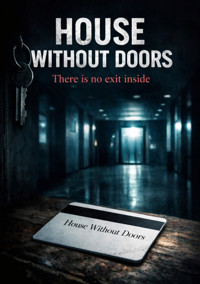
House Without Doors
There is no exit inside
tredition GmbH
© 2026 Dominik Mikulaschek
Printing and distribution on behalf of the author:
tredition GmbH, Heinz-Beusen-Stieg 5, 22926 Ahrensburg, Germany
This work, including its parts, is protected by copyright. The author is responsible for the content. Any use without his consent is prohibited. Publication and distribution are carried out on behalf of the author, who can be contacted at: Dominik Mikulaschek, Holzwurmweg 5, 4040 Linz, Austria. Contact address in accordance with the EU Product Safety Regulation:
Chapter 1 – The Key from the Darkness (Mara)
The card was lying on the kitchen table that morning, between the newspaper and an empty coffee cup, where it hadn’t been the night before. It was made of white plastic, matt and without any sheen, almost clinical. On the front was just an address in a part of town I didn’t know, a twelve-character alphanumeric string and the name of the place in a simple serif font: ‘House Without Doors’. On the back there was no company imprint, no logos, just a narrow black magnetic strip and a tiny expiry date embossed into the plastic: 31.12.25. Valid only for today. I turned the thing over in my hands, felt the sharp edges, tried to find a memory, a connection. Nothing. Last night was a black hole, filled with the familiar hum of streetlights and the dull sensation of not having slept. Someone must have placed it here whilst I sat in my own living room staring at the wall. That was the first piece of information, and it wasn’t good. A card that appears out of nowhere is not an invitation; it is a statement. It states that someone had access. It states that I am expected. I stood up and went to the window, looking down at the empty street. No suspicious car, no watching figure. Just a normal morning. I put the card back on the table as if it were hot. I didn’t want to use it. I just wanted to examine it, understand what it represented, before making a decision. That was my plan, simple and clear: to analyse the threat without confronting it. Yet the piece of plastic on the wood seemed to vibrate, a silent challenge. The clock on the microwave read 7:18 am. The window of the expiry date was already beginning to shrink, second by second, and with every tick I felt the quiet pressure I hated: the pressure of deadlines, of deadlines, of a system that forces you to move. I hated being driven. I poured myself some water and drank it slowly, concentrating on the liquid in my throat, on the reality of my kitchen. The card was a foreign object. I could throw it away. I could cut it up. But then I would never find out who had left it there. And not knowing, as I knew, was often more dangerous than confrontation. So I picked up my phone and typed in the address. A modern commercial complex on the eastern outskirts of town, according to the map a solid block of glass and steel, surrounded by car parks. No residential area. No shopping centre. An office block, unspectacular. The name ‘House Without Doors’ didn’t come up in any search results. That was the second piece of information: the place didn’t officially exist under that name. A private address. A secret. Or a joke. I got dressed: jeans, jumper, sturdy shoes. No intention of going in, just the intention of being nearby, of seeing the building from the outside, of surveying the area. That’s how I always did it: first the surroundings, then the destination. I slipped the map into my jacket pocket, feeling its weight as I walked. The underground was packed with people on their way to work, with tired faces and coffee cups. I watched them, looking for glances that lingered on me. No one looked at me. I was invisible, just as I’d intended. The journey to the eastern edge took twenty-five minutes. When I stepped out of the station, the air was cooler, the traffic lighter. I followed the digital map on my mobile phone through three blocks of office buildings until I saw it: just like in the picture, a six-storey complex with a reflective glass façade, mirroring the grey morning light. Well-tended potted plants stood in front of the entrance. An automatic revolving door turned slowly, letting a man in a suit out. Everything seemed normal, sterile, boring. I stopped on the other side of the street, leaned against a lamppost, and watched. People went in and out, all with purpose, wearing security passes on lanyards around their necks. A security guard in a dark uniform stood in the entrance area, looking casual, his hands behind his back. Nothing seemed out of the ordinary. My pulse calmed down a little. Perhaps it was just a strange publicity stunt after all, a marketing campaign for a co-working space. Perhaps the card was a mistake. I took it out of my pocket and looked at the embossed numbers once more. “31.12.25.” Today. A profile that was expiring. A decision that had to be made now. I looked over at the building, at the security guard. His gaze swept across the street, lingered on me for a few seconds, then drifted on. No recognition, no sign. But a stirring within me, an old feeling of tunnel vision, began to surface. The analysis was over. Now I wanted the test. Not to go in, no. Just to see if the card would have any effect at all. I would walk up to the revolving door, perhaps touch it, and then turn back immediately, back onto the street. A test of the threshold, nothing more. I crossed the street, the card clenched tightly in my closed fist. My shoes crunched on the clean paving in front of the entrance. The security guard saw me coming. His face showed no surprise, no curiosity. He merely gave me a slight nod, an almost imperceptible twitch of his chin, and then stepped aside, away from the revolving door, as if to make way for me. He didn’t wave me through. He simply waited for me. That was the third piece of information, and it made the blood rush in my ears. He didn’t ask for my name. He didn’t scan anything. He acted as if my arrival was a matter of course. I stopped, a metre in front of the revolving glass door. My hand holding the card twitched, but I didn’t raise it. I stared at the man. He was smiling now, a polite, empty smile that meant nothing. “Good morning,” he said, his voice calm, neutral. I said nothing. I waited for a question, for a challenge. It didn’t come. Instead, whilst I was still hesitating, it happened: the revolving door, which had been idling just a moment before, suddenly quickened its pace, just for a moment, just long enough to open and come to a halt right in front of me. Inviting. Open. It hadn’t waited for me to push it. It had opened of its own accord for me. The security guard looked at me, his smile unchanged. And in that moment I knew that the test was over before it had begun. The building hadn’t let me in because I wanted it to. It had let me in because it had been expecting me. The final piece of information of the day burned itself into my mind as I stood facing the dark mirrored panes of the revolving door, which now reflected my own, slightly distorted, tense reflection. The door was open. The way was clear. And the decision I had to make was no longer a decision. It was an order. I took a deep breath, feeling the cold draught from inside the building wash over me. Then I stepped through the opening. Behind me, instantly, without a sound, the revolving door closed, and I heard a soft but decisive click as the mechanism locked into place. The sounds of the street were abruptly cut off, as if a lid had fallen onto a box. I stood in a large, brightly lit lobby. The floor was made of polished, dark granite, the walls clad in light-coloured wood panelling. A huge, abstract painting dominated the wall opposite. It smelled of expensive wood, of neutral cleaning products, of nothing at all. The air was still and temperate. A few metres ahead of me stood a reception desk made of light maple. A woman with straight, blonde hair and a dark blue blazer was tapping away at a screen. She looked up when she heard my footsteps. Her smile was professional, flawless. “Good morning,” she said. Her voice was soft, almost melodious. She didn’t wait for my reply. “Welcome back.” The words hit me like a gentle blow. Back? I’d never been here before. My throat was dry. I wanted to say something, to correct her, but my mind was working too fast. This was a trap, and it was far more sophisticated than I’d thought. It wasn’t about luring me in. It was about establishing a story in which I already existed. I forced myself to nod, nothing more. I looked around, searching for exits, for signs, for anything that might give me a sense of direction. To the right, a wide corridor led into the depths of the building. To the left stood two stainless-steel lift doors. Right next to reception, on a bare wall, hung a framed evacuation plan. I walked slowly towards it, trying to make my movements look natural. The woman at reception paid me no further attention; she tapped away at her screen again, as if my presence were perfectly normal. I reached the plan. It showed a floor plan of the ground floor with the usual symbols: stairwells, assembly points, exits. One exit was marked right next to the lift. Another at the end of the corridor. Everything looked standard. But then my gaze fell on the small logo in the bottom right-hand corner of the frame. It showed a stylised building with a protective roof. Inconspicuous. I remembered the map that had no logo on it. Was this the company that ran this ‘house without doors’? I took half a step back, and as I did, I saw it: a little further to the right, almost obscured by a large leaf of a houseplant, hung a second evacuation plan. It looked identical, the same size, the same frame. Almost unconsciously, I stepped closer and leaned in. The logo in the corner was different. It showed two interlocking squares, not a building. The rest of the plan was the same. Two identical plans, with different logos. Why? A mistake? Unlikely. In a building that seemed so sterile and controlled, there were no such mistakes. This was a clue. A flaw in the system, a crack in the façade. Or a deliberately placed detail, a decoy for someone who looked closely. I turned around. The woman at reception gave me a brief smile. Her smile suddenly seemed like a mask. I had to leave the building, now. No testing, no analysing. Out. The security guard outside hadn’t stopped me. The revolving door had opened. Logically, it should open again. I walked back towards the entrance with determined steps. The revolving door turned slowly, continuously. I could see the street outside, a delivery van driving past. Reality was only a few metres away. I stepped towards the moving glass panels, ready to step through the next opening, just as I had done in countless other buildings. But when I was just half a metre away, the door’s rotation slowed abruptly. The panels barely moved, jamming together to form a solid wall of glass and chrome. I stopped. My own surprised face was reflected before me. I raised a hand and pressed against the cold glass panel in front of me. Nothing. It didn’t budge. It was blocked. I pressed harder, searching with my fingers for a sensor, a button. There was nothing. Just smooth, cold glass. Behind me, I heard a faint, electronic hum. I turned around. The woman at reception was no longer standing behind her desk. She had vanished. The lobby was empty. The painting on the wall now seemed to be staring at me; the abstract forms suddenly appeared menacing. The silence was absolute, broken only by the soft hum of the ceiling lights. Then, from the speakers I couldn’t see, a gentle, digital female voice sounded. “The profile is active. Please remain within the designated areas.” Profile. Not card. Not ID. Profile. The word hung in the air, technical, definitive. It did not describe a physical object, but something above me. Something that defined me, here in this building. I reached into my jacket pocket, clutching the plastic card. It felt useless. My profile was active. And it was keeping me here. My breathing grew shallower. I fought against the rising wave of panic creeping from my stomach into my chest. Not now. Concentration. Orientation. If the main entrance was blocked, there were others. The evacuation plan had shown two exits. One was next to the lifts. I went there; my footsteps echoed uncomfortably loudly on the granite. Next to the lift doors was a narrow, inconspicuous door, almost invisible in the wood panelling. A small sign above it displayed the universal symbol for an emergency exit: a white figure on a green background running through a door. Beneath it, in simple letters, it read: ‘EMERGENCY EXIT’. I pressed the metal bar on the door. Nothing happened. I pressed harder. It didn’t budge a millimetre. I examined the door more closely. There was no handle, no latch on this side. Just a smooth, metal push bar, firmly seated in its mounting. The door could only be opened from the outside, or via a system to which I had no access. It was an illusion of security. A false exit. I took a step back and nearly bumped into someone. I spun round. It was the security guard from outside. He was now standing quietly in the lobby, perhaps two metres away from me. I hadn’t heard him come in. His face was still neutral, but his eyes were fixed on me. He said nothing. He waited. “The door is blocked,” I said, my voice sounding harsher than I intended. He nodded slowly. “Maintenance work,” he said. His voice was still calm. “Please use the main entrance revolving door.” “That’s blocked too,” I replied. He smiled his polite, empty smile. “It’s working perfectly. Perhaps you didn’t trigger the sensor properly. The profile controls access.” That word again. Profile. “I want to leave the building,” I said clearly. “Of course,” he said, making an inviting gesture towards the blocked revolving door. “You’re free to leave whenever you like.” The lie was so obvious, so brazen, that it left me speechless. He was treating me like an unreasonable child who couldn’t operate a working door. Anger mingled with my fear. I wanted to scream, to shove him, to drag him to the door and show him that it wouldn’t open. But that was probably exactly what he wanted. A reaction. Proof of my ‘instability’. I took a deep breath. Show nothing. Analyse. He was part of the system. The system said I could leave. At the same time, the system was preventing it. So I had to outwit the system or understand it. I turned away from him, ignored his presence, and walked towards the lifts. Perhaps one floor up would lead to another exit. Perhaps there was a fire escape on the first floor leading outside. I pressed the call button. A soft ping sounded, and one of the stainless-steel doors slid open silently. The lift was empty, a cube of light wood and reflective metal. I stepped inside. The panel displayed the numbers 1 to 6, as well as a ‘B’ button for the basement. No ‘-1’. I pressed ‘1’. Nothing happened. The doors didn’t close. The number 1 didn’t light up. I pressed it again. No reaction. I tried the 2. Same thing. The lift didn’t respond to my input. A cold shiver ran down my spine. My profile didn’t allow me to select a floor. I was trapped on the ground floor. Then, behind me, footsteps sounded. I turned round in the lift. The security guard was standing in the lobby, looking at me. He made no move to come closer. He was just watching. Suddenly, without me pressing anything, the lights for the selected floors went out. A soft humming began, and the lift doors started to close. Slowly, inexorably. Not because I wanted it to. But because someone else had ordered it. Through the narrowing gap, I saw the security guard still standing there, his neutral expression unchanged. Then the doors snapped shut with a soft but definitive sound. I was trapped in the lift. A gentle jolt, and the lift began to move. Upwards.
Chapter 2 – The Open Trap (Mara)
The lift moved upwards, a gentle, almost inaudible ascent. The light inside was even and cold. I stood motionless in the middle of the small space, my hands clenched into fists, staring at the control panel. The floor indicator above the door remained dark. I didn’t know where I was going. The hum of the motor was the only sound, a deep, vibrating tone that crept through the soles of my shoes into my bones. I had no control. That was the first and only fact at that moment. My previous analysis, my cautious testing, had been meaningless. The building had guided me from the very first moment. The revolving door had opened. The security guard had waved me through. The emergency exit was blocked. And now the lift was moving without my input. I breathed in and out slowly, trying to rein in the fluttering panic in my chest. Panic dulled the mind, and I needed it clear. The building was a machine, and every machine had a logic, a protocol. I had to learn to read it. A soft ping interrupted my thoughts. The lift stopped. The doors slid open silently. Before me lay a corridor that looked exactly like the one on the ground floor: light-coloured wooden flooring, light-coloured wood panelling on the walls, a row of closed doors with number plates. 201, 203, 205. An office floor. Everything seemed quiet and deserted. The light was subdued, as if running on a low setting. I stepped out of the lift. Immediately the doors closed behind me, and I heard the cabin descending. I was alone on this floor. The silence here was even more oppressive than downstairs. No hum of computers, no murmur of voices, no clatter of keyboards. Nothing. I walked slowly down the corridor, my gaze shifting between the doors and the end of the corridor, which seemed to end in a wall with a large window. Outside, I could see a grey sky and the roofs of other office buildings. A normal view. I approached the first door, 201. A standard office door with a handle. I placed my hand on it and turned it. Locked. I tried 203. Locked as well. 205. Locked. All the doors were locked. That was strange. Even in an empty building, there were usually a few unlocked doors – cleaning cupboards, meeting rooms. Here, everything seemed locked up. I reached the end of the corridor. There was indeed a window, mirrored on the inside, so that I could see only my own reflection and the corridor behind me. No way out. To the left of the window, the corridor turned a corner. I followed it. It grew narrower, the ceiling lower. The wood panelling gave way to light-coloured plaster. After about ten metres, it ended in front of a door. No number. A simple sign bearing the word ‘MAINTENANCE’. This door had a handle, but also an electronic keycard reader next to it, a small black box with a red light. I took the plastic card out of my pocket. The red light was glowing steadily. It wasn’t waiting for me. It merely indicated that the system was active. I held my card up to the reader. Nothing happened. The light remained red. No beep, no confirmation. My profile had no access. I tried the handle. The door was firmly locked. I leaned against the wall and closed my eyes for a moment. My head began to throb. The systematic exclusion was perfect. Every door, every possible way out, was blocked. The building was a labyrinth whose corridors all ended in dead ends. Yet a labyrinth always had a way out; otherwise it would be no challenge, merely a prison. This felt like a prison. But the security guard had said I was free to go. He had lied, of course. Or he had a different definition of freedom. Perhaps freedom here meant submitting to the rules of the profile. I opened my eyes and walked back to the lift. I pressed the call button. No response. The lift didn’t come. I waited a minute, two. Nothing. It was out of order, or it wasn’t responding to my call. I was stranded on this floor. A cold shiver ran down my spine. The thought of being stuck up here, in this sterile, empty silence, was more frightening than the confrontation with the security guard. I had to find another staircase— . Evacuation plans always showed at least two stairwells. I went back to the start of the corridor where the lift was and explored the other side. There, half-hidden behind a large pot containing a green plant, was indeed a door. It was unmarked, made of steel, with a horizontal push bar. A fire door. Hope flashed through me. I pressed the bar. It gave way with a satisfying metallic click, and the door swung open a crack. Cold air poured in. I pushed it open further and stepped into a bare, concrete room. A stairwell. It smelled of cold stone and metal. Grey concrete steps led up and down. Above me, on the high wall, the floor indicator ‘2’ was affixed. This was it. The way down. I began to descend the stairs; my footsteps echoed loudly off the bare walls. The lighting was sparse, just dim emergency lights at wide intervals. I counted the landings. First landing, still on the second floor. Second landing. A door with a ‘1’ on it. Ground floor. I pushed the bar. The door creaked open. I stepped out and froze. I wasn’t standing in the bright, wood-panelled lobby with the reception desk. I was standing in an identical, but completely empty room. The floor was the same polished granite. The walls were panelled in light wood. But there was no painting. No reception desk. No plants. The ceiling lights were off; only daylight streamed in through the tall windows, which offered the same view as before. It was a copy of the lobby. An empty, silent copy. I walked slowly to the centre of the room. My breathing was the only sound. This was not the exit. This was a trap. The stairwell hadn’t led me outside, but into another version of the interior. A dummy lobby. A looping element. The realisation hit me with the force of physical violence. The building wasn’t just a prison; it was a hall of mirrors. Every exit led not to the outside, but to another facet of the internal system. I turned around and looked back at the stairwell door. It was simply a steel door set in wooden panelling, just like in the real corridor. But here it led only into this empty duplicate. I had to go back. Perhaps I had been mistaken. Perhaps the door on the first floor wasn’t the right exit. I went back through the steel door and climbed the stairs again to the second floor. I left the stairwell and stood once more in the silent corridor in front of the locked office doors. Everything was exactly as before. A sense of disorientation crept over me. Had I been going round in circles? I walked back to the lift. This time, when I pressed the button, it lit up immediately and a ping sounded. The doors opened. The lift was there again, empty and inviting. It was as if the building was giving me a second chance after leading me astray. I hesitated. It was obviously a test. The lift came when the system wanted it to. But what choice did I have? To be stuck in the stairwell or in this ghostly double lobby? I stepped into the lift. The doors closed. This time, only one button lit up on the panel: ‘B’. Basement. I hadn’t pressed it. It was already selected. I leaned against the wall and let it happen. The lift descended, a gentle descent. It stopped with a soft jolt. The doors opened. In front of me lay another corridor, but this one looked different. The floor was concrete covered in linoleum, the walls painted white with washable paint. Fluorescent lighting on the ceiling flickered slightly. It smelled of disinfectant and stale air. Service level. No more wooden illusion; here, the machinery was visible. The corridor was narrow and ran in both directions. To the left and right were doors with signs: ‘HVAC’, ‘ELECTRICAL’, ‘JANITOR’. No numbers. I stepped out of the lift. Immediately, the doors closed behind me and the lift moved away. I was alone again, but this time in a setting that seemed more honest. There were no frills here. Here was the reality of the building. I walked slowly to the right, towards the end of the corridor, which disappeared into the semi-darkness. The door with the ‘JANITOR’ sign was unlocked. I pushed it open. A small storeroom, filled with buckets, brooms, cleaning products. Nothing useful. I closed the door and carried on. Ahead of me, the corridor ended in a wall. A dead end. I turned around and went in the other direction. Here was a door marked ‘ELECTRICAL’. It was locked. Next to it was another door, without a sign. I tried the handle. It opened. Behind it was a small, empty room, no bigger than a broom cupboard. An evacuation plan hung on the back wall. I stepped closer. It was the same plan as in the lobby, with the same marked exits. But the logo in the corner was the other one again, the one with the two interlocking squares. I had now seen this logo twice. It wasn’t a mistake. It was a marker. For what? Perhaps for the service areas, for the actual infrastructure, whilst the building logo marked the façade for visitors. I memorised the logo. Perhaps it was a key to distinguishing real areas from façades. I left the small room and went back to the lift lobby. There were no stairs here, only the lift. I pressed the button. It didn’t light up. I pressed it again. Nothing. The lift didn’t respond. I was trapped on the service level. A feeling of claustrophobia enveloped me. The low ceiling, the narrow walls, the flickering light – it was like being in an underworld. I leaned against the cold concrete wall and closed my eyes. I had to find a way to outwit the system. It was based on my profile. So I either had to change my profile or find a way that didn’t require a profile. A mechanical way. An old door, a ventilation shaft, something that wasn’t electronically secured. I opened my eyes and examined the corridor more closely. Pipes and cable ducts ran along the ceiling. No ventilation shafts large enough. The doors were all solid. Except for one. Right at the end of the corridor, where I’d turned back earlier, there was a narrow, inconspicuous door next to the dead-end wall that I’d overlooked. It was made of thin metal, like a cover. It had no handle, just a flat edge. I went over and tried to slide my fingertips into the gap between the door and the frame. I managed it. I pulled. The door gave way with a soft squeak. Behind it lay darkness and the smell of dust and metal. A cable duct. It was narrow, perhaps sixty centimetres wide and a metre high. But it was a way out. A way out that wasn’t on the plans. A path that might not be monitored by the Profile. I hesitated for just a second. Out there in that sterile corridor, I was visible, controllable. In this dark duct, I was hidden, unpredictable. It was a risky choice, but it was my choice. I knelt down and crawled into the opening. The darkness swallowed me up immediately. The door slammed shut behind me, and I was in absolute darkness. I lay motionless and listened. Nothing. Just the pounding of my own heart in my ears. Then, very faintly, I heard a sound from the depths of the duct ahead of me. A regular, mechanical clicking, like a relay or a switch. It wasn’t close, but it was there. A target. I began to move forward on my elbows and knees, slowly, feeling my way into the blackness ahead of me. The floor of the tunnel was dusty and littered with the sharp edges of cable ties. After a few metres, I felt a slight draught from ahead. There had to be an opening. I crawled on, concentrating only on the movement, on the clicking, which was slowly growing louder. Suddenly, the duct ended. My outstretched hands touched nothing. I felt my way around cautiously. Ahead of me was an empty space; I could hear it in the echo of my breathing. I pulled myself out of the duct and stood up. It was dark, but not completely. A faint, greenish light came from somewhere to the right. It was enough to make out outlines. I was standing in another technical room, crammed with grey server cabinets that hummed softly. The clicking sound was coming from one of the cabinets. The green light was a status LED. I was in the building’s data centre. Or at least in part of it. This was the nerve centre of control. The air was cool and dry, air-conditioned. I walked quietly between the rows. On the other side of the room was a door, this time with a window. I crept up to it and peered through. Behind it was a lit corridor that looked familiar. It was the service corridor where I’d been earlier. I’d come full circle. The passage had merely taken me to another part of the same floor. Disappointment welled up inside me, bitter and heavy. But then I saw something through the window. A movement. Someone was coming down the corridor. It was the woman from reception, the blonde woman in the blue blazer. She walked purposefully, a tablet computer in her hand. She wasn’t looking through the window; she was looking straight ahead. I pressed myself against the wall next to the door, out of sight. I heard her footsteps getting closer, then passing by. She stopped. I held my breath. “You can come out,” said her voice, clear and calm, right outside the door. “There’s no point in hiding. The system knows where you are.” I remained motionless. A trap. She knew I was here. The clicking in the server cabinets might not have been a coincidence. Perhaps it had been a signal that had lured me right here. “Your profile shows an elevated heart rate and unusual movement in a restricted area,” she continued. Her voice was matter-of-fact, not threatening. “Please return to a public area. For your own safety.” My safety. The words sounded hollow. I slowly stepped away from the wall and opened the door. She stood about three metres away, holding the tablet loosely in her hand. Her smile was still professional, but her eyes were alert. “How did you find me?” I asked. My voice was rough. “All areas are monitored,” she said simply. “Even those not shown on the plans. That’s standard protocol.” Standard protocol. Everything here was standard until it wasn’t. “I’d like to leave the building,” I said again, more directly this time. “You’re free to leave at any time,” she replied, repeating the security guard’s lie. “The main revolving door is at your disposal.” “It’s blocked,” I said. She looked at me as if I’d stated some strange fact. “That can’t be. Let me check.” She tapped her tablet, scrolling through a few menus. Her expression showed slight concern, well played. “There’s a temporary malfunction in the sensor on the left wing. Technicians have been notified. In the meantime, you can use the emergency exit in the east wing. I’ll accompany you.” A new way out. An offer. It was too easy. After all the obstruction, all the back-and-forth, she suddenly offered me a way out. It was part of the ‘ ’ game. I knew it. But what were my options? Stay here on the service level and wait until someone came to fetch me? Follow her and see where this new game led? I nodded briefly. “Good.” She smiled with relief, turned round and walked back down the corridor towards the lift. I followed her a few paces behind. She called the lift, which arrived immediately. We got in. She pressed the button for the ground floor. The lift went up. Silence reigned between us. I watched her in the mirror on the lift wall. She seemed relaxed, almost bored. When the doors opened on the ground floor, we weren’t standing in the empty double lobby, but in the real, bustling lobby. The painting hung in its place. The reception desk was manned – by another woman who looked exactly the same. The original receptionist wasn’t at her post. My guide led me past the desk without paying any attention to her colleague and turned into the right-hand corridor, which I’d seen earlier from the reception area. The corridor was long, with several closed doors. At the end was a large, wide door with a glowing ‘EXIT’ sign above it. It looked real. She stopped in front of the door. ‘Here,’ she said. “Just push the bar. It leads straight into the back yard and from there to the side street.” I looked at the door, then at her. Her face was open, helpful. A perfect mask. Every instinct screamed at me that it was a trap. But the urge to open that door was overwhelming. The promise of fresh air, of freedom, was too strong. I stepped forward, placed my hand on the cold metal bar. I pushed. The bar gave way with a loud click. The door swung open. Outside I saw tarmac, a rubbish bin, a brick wall. No sky, just a narrow courtyard. But it was outside. I breathed in the cool, non-air-conditioned draught. It smelled of exhaust fumes and wet rubbish. For real. I took a step over the threshold. Then I heard her voice behind me. “Don’t forget your card, Mara. You’ll still need it.” I turned halfway towards her. She was still standing in the corridor, her smile unchanged. In her outstretched hand she held the white plastic card, my card. I checked my jacket pocket. It was empty. When had she taken it? In the lift? In the corridor? I hadn’t noticed. I held out my hand to take the card. The moment my fingers touched the plastic, the fire door behind me slammed shut with such force that I flinched. I spun round. The door was shut. A massive steel bolt had fallen into place. No handle on this side. Just smooth, green-painted metal. I was outside. Locked in a cramped, windowless courtyard. I pounded against the door. No response. I turned and surveyed the courtyard. Three high brick walls. In front of me, the rubbish bin. Above me, a narrow strip of grey sky between the roofs. No door in the walls. The only way out was a narrow, barred gate at the end of the courtyard. I walked towards it. It was secured with a thick padlock. From here, I could see a narrow side street, empty. I shook the bars. They were solid. I was trapped. Outside, but trapped. A feeling of helpless rage welled up inside me. I leaned against the cold brick wall and closed my eyes. The game continued. She had wanted to lead me right here. Not to set me free. But to show me that even the exit was a dead end. I opened my eyes and looked at the card in my hand. The white plastic glinted in the dim light. The expiry date: 31.12.25. Valid only for today. And then I noticed something I’d missed before. Next to the alphanumeric string on the front, in tiny, engraved letters, was a word: PROFILE ID. Profile ID. Not visitor pass. Not access card. Profile ID. It had been saying it all along. The system spoke a different language. A language of control. And I was trapped in the middle of its sentence. Somewhere above me, on the other side of the wall, I heard a faint, electronic hum begin, which slowly grew louder until it filled the silence of the courtyard.
Chapter 3 – The Echo of Footsteps (Mara)
The humming above me was a deep, vibrating sound that seemed to be coming from hidden speakers mounted somewhere on the brick wall. It wasn’t an alarm; there was no sense of urgency to it. It was simply there, a constant, inaudible pressure filling the air in the cramped courtyard. I pressed my palms against my ears, but it didn’t help. The sound seemed to penetrate my skull and go straight into my brain. I lowered my hands and focused instead on my surroundings. The courtyard was about six by six metres, completely enclosed by the high walls of the building and the adjoining structures. The ground was dirty tarmac, covered with withered leaves and a puddle of murky water next to the overflowing rubbish bin. The metal gate at the end was my only visible link to the outside world, but the massive padlock turned it into yet another wall. I walked back to the gate and examined the lock more closely. It was rusty but sturdy. No chance of opening it without tools. I peered through the bars at the empty side street. It was narrow, barely wider than a driveway, and ended in a wall after about thirty metres. No windows, no doors. A mere service lane. Even if I shouted, no one would probably hear me. I braced myself against the grille, testing its strength. It wobbled slightly on its hinges, but not enough to offer an escape route. The humming suddenly changed pitch, rising a semitone, almost questioning. Then it fell silent abruptly. The silence that followed was almost as unsettling. I turned around and examined the door through which I had come. A green-painted steel door without a handle, set into the smooth brick façade. It was spotlessly clean, in contrast to the rusted gate. It looked like an emergency exit that was never meant to be used. I walked over and placed my hand flat against the cold metal surface. It felt completely immovable. I kicked it, gently at first, then with my shoulder. Nothing. It was as if it were part of the wall. I took a deep breath and tried to fight off the rising panic. Trapped in a courtyard. That was a whole new level of control. Before, I’d been wandering around the building, testing doors, at least having the sensation of movement. Now I was in a box. A living exhibit. They could be watching me from somewhere. Surely there were cameras here. I looked up at the walls, searching for the characteristic black domes. I saw none. But that meant nothing. They could be tiny, camouflaged in the brick joints. I began to walk systematically around the courtyard, inspecting every corner, every unevenness in the wall. The rubbish bin was made of thin, dented sheet metal. I pushed it aside, hoping to find a hatch or a passageway behind it. Nothing. Just a damp wall and rotting leaves. Behind the bin, hanging on the wall, almost invisible beneath a layer of city dust, was a small, laminated sign. It was another evacuation plan, tiny, no bigger than a postcard. It showed a simplified diagram of the building with a red arrow pointing towards this courtyard. Beneath it read: ‘EMERGENCY EXIT C – ASSEMBLY POINT’. I examined the sign more closely. The corner was worn away, but I could just make out the logo. It was the building’s logo, not the one with the two squares. A sign for the public. But something wasn’t right. The laminated surface was smooth, but at the edge where it was fixed to the wall, I could see a strip of a different, older material peeking out. I carefully tugged at the top corner. The laminate came away surprisingly easily. It was just a thin film stuck over an older sign underneath. The old sign was made of enamelled metal, dented and rusty. It showed the same diagram, but the text was different. ‘NO ENTRY – MAINTENANCE AREA’. And in the corner: the logo with the two interlocking squares. They had stuck the old, honest sign over to create a lie. An emergency exit that wasn’t one. I let the plastic film snap back into place. This little discovery was a spark in the darkness. It proved that they were altering the environment to create a specific perception. The building was not static. It was adaptable, a machine of deception. And if they’d put this film here, they must have done it recently. Perhaps just this morning, after the map turned up with me. That meant they were preparing for me. I wasn’t a chance visitor. I was a planned part of this exercise, whatever the objective might be. The humming started up again, this time as a short, pulsing sequence: three low tones, a pause, then two high ones. It sounded like a code. Then, from inside, behind the green steel door, I heard footsteps. They were getting closer. Slow, measured. I stepped away from the door, into the centre of the courtyard, ready for anything. A metallic click sounded, the sound of a key turning or a bolt being released. The door swung open outwards. Standing in the doorway was the security guard from the revolving door. His face was still expressionless, but his posture was different. No longer casual, but alert, present. “The courtyard is not an authorised area,” he said. His voice was flat. “Please follow me back into the building.” “The emergency exit is blocked,” I said, pointing to the covered sign. “That is a maintenance area,” he corrected, without even glancing at it. “Emergency exits are clearly marked inside. You must stick to the designated escape routes.” He repeated the official line, undeterred by the obvious reality before him. “This path led here,” I said, keeping my voice under control. “You sent me here.” “I accompanied you to the east exit,” said the receptionist’s voice. She stepped up beside the security guard, slipped through the doorway and stepped into the courtyard. She looked me over with a mixture of professional concern and slight impatience. “This courtyard is a temporary measure whilst the sensor is being repaired. I’m sorry for the confusion. Please come with us; we’ll take you to a working exit.” Her words were smooth, her logic airtight. Any deviation from her script was my fault, my misunderstanding. I felt my mind crashing against this perfect wall of facades. Resistance seemed pointless. But to give in meant accepting her reality. I looked from one to the other. The security guard waited, his hands hanging loosely at his sides. The woman held her tablet at the ready, as if she were logging my every move. “Where is the nearest exit?” I finally asked. “Back through that door and then to the main entrance,” she said. “The sensor should be fixed by now.” It was the same revolving door that had trapped me. But what choice did I have? I couldn’t stay in this courtyard forever. I had to get back into the building to find another way out. A way that wasn’t on their plans. A way they couldn’t control. I gave a brief nod. The woman stepped aside and gestured for me to go through the open door. The security guard waited until I had passed, then followed me. We stepped back into the corridor. The green door closed behind us with a soft but distinct click as the bolt locked. I was back in the bowels of the building. The familiar, temperature-controlled air, the subdued light, the smell of cleaning products. Everything was unchanged. The woman led me down the corridor back to the lobby. This time the walk was short, just a few metres, and then we were standing once more in front of the large, open space with the reception desk. The other receptionist was sitting there, typing. The painting was hanging. Everything was as before, a carefully curated picture of normality. “Please try it now,” said my companion, pointing to the revolving door. It turned slowly, continuously. I walked towards it, without much hope. When I was a metre away, it slowed down again and stopped. I turned around. The woman was watching me, her head tilted slightly. “Interesting,” she murmured, tapping on her tablet. “There appears to be a profile conflict. Your access level does not currently permit you to exit via the main entrance.” She said it as if she were discussing a technical problem with a printer. “What does that mean?” “It means your profile is intended for internal use. You require an escort authorisation or must use another exit authorised for your profile.” “And which exit is that?” “I’ll have to check.” She continued typing. The security guard stood as still as a statue next to reception. I felt the tiredness rising within me, mixed with a deep-seated frustration. This back-and-forth, these constantly shifting rules, were designed to wear me down, to make me compliant. I let my gaze wander through the lobby. The people who had been there before seemed to have vanished. Only the three of us were here. Then I noticed something. The evacuation plan on the wall, the one with the building logo, was hanging slightly askew. It was no longer perfectly aligned as before. Someone must have touched it. Perhaps whilst I was in the courtyard. I stepped closer without saying a word. The woman looked up from her tablet but said nothing. I reached the plan and examined it. The logo was the building’s logo. But right next to it, almost hidden by the frame, was a tiny sticker, no bigger than a fingernail. A QR code. It hadn’t been there before. I was sure of it. I pulled my phone out of my pocket. No signal, as expected. But the camera worked. I pointed it at the QR code and took a photo. The phone vibrated and displayed a notification: ‘Image saved.’ Nothing else. No URL, no automatic redirect. The building’s jammer was blocking it. But I had the code. Perhaps it contained information if I could analyse it later. I put the phone away. ‘Have you found anything interesting?’ asked the woman. Her voice was still polite, but with an undertone of vigilance. “I’m just checking the escape routes,” I said. “Very responsible,” she said. “But please don’t tamper with any security equipment.” I ignored her and walked to the lift. Perhaps another floor held the answer. Perhaps there was an exit there that was authorised for my “profile”. I pressed the button. The doors opened immediately. I stepped inside. The woman didn’t follow me. The security guard stayed in the lobby. They just watched me as the doors closed. Inside the lift, only one button was lit: ‘3’. Another automatic selection. I didn’t press it. It was already active. The lift went up. It stopped gently. The doors opened onto a corridor that looked different from the one on the second floor. Here, the carpet was dark blue, the walls painted in a warm beige. It felt more homely, like a hotel corridor. The doors were made of dark wood, with golden number plates: 301, 302, and so on. The lighting was warm and indirect. It smelled of new carpet and air freshener. I stepped out. The lift immediately set off again. I was alone. The corridor ran in both directions. I chose the right. The doors were all closed. I walked to the end, where a large window offered a view of the city. It was a real view; I could see cars, people, normal life. It was so close and yet out of reach behind the thick, probably shatterproof pane of glass. Next to the window was a door marked ‘TERRACE – RESIDENTS ONLY’. A terrace. That sounded like a possible way out. This door had a card reader. I took out my profile ID card and held it up to it. The light stayed red. Denied. I tried the handle. Locked. I turned around and walked down the corridor in the other direction. After about twenty metres, the corridor opened into a small, round lounge area with a few leather armchairs and a low table. There was a magazine on the table. A vase of fresh, artificial flowers stood beside it. Everything looked inviting, cosy, normal. And that was precisely what made it eerie. Who would set up such a room in a building that held people captive? It was another layer of deception, a set for a game in which I was supposed to play the role of the bewildered visitor. I didn’t sit down. Instead, I examined the walls. No other doors apart from the one I’d come through and one on the opposite side. This door had no sign. It was made of the same dark wood as the others, but without a number. I opened it. Behind it lay a dark staircase leading upwards. No indication of where to. A service staircase? Access to the roof? The roof. That was an idea. Perhaps there was an exit there, a fire escape, something. I climbed the stairs. They were narrow and steep, lit only by a single bulb hanging from the ceiling. After two short flights, they ended in front of a heavy steel door. The door had a long, horizontal lever, like a fire door. No card reader. My hopes rose. A mechanical door. Perhaps it wasn’t connected to the system . I pushed the lever down. It gave way with a deep metallic click. I pushed the door open. A cold wind swept towards me. I stepped out onto a flat, gravel-covered roof. The sky was grey and low-hanging. I could look out over the city’s rooftops, saw the river in the distance, the bridges. Freedom was here, in this vast expanse. I ran to the edge of the roof. It was surrounded by a low parapet, about waist-high. I peered down. Six storeys down. No fire escape in sight. The façade was smooth glass and steel, with no handholds, no ladders. On the other side of the roof I saw a structure that looked like a lift shaft, and next to it another door. I walked over. This door was made of metal, with a sign: ‘ACCESS FOR MAINTENANCE STAFF’. It was secured with a heavy padlock. A dead end. The roof was yet another trap. A place that suggested freedom, but offered no means of escape. I walked back to the centre of the roof and sat down on the gravel, my back against the lift shaft. The cold seeped through my jeans. Exhaustion overwhelmed me for a moment. I had tried so many doors, crossed so many corridors, and yet I had got nowhere. The building was a huge, self-reconfiguring organism, and I was a virus circulating aimlessly within its system. Suddenly I heard a noise from below, from the door through which I had come. It opened. I jumped to my feet. A figure stepped out. It was a man, in his mid-thirties, with unkempt dark hair and a light stubble. He was wearing jeans and a dark shirt, with a simple fleece jacket over the top. He looked surprised to see me. “Oh, hello,” he said. His voice was normal, friendly. “Sorry, I didn’t know anyone was up here. The terrace is usually empty.” The terrace. He called it a terrace, not a roof. “Who are you?” I asked, suspiciously. “Parker. Parker Quinn,” he said. “I live in 304.” A resident. That was new. “You live here?” “Yes, for a few months now. Great service, quiet. And the view is unbeatable, isn’t it?” He walked to the edge of the parapet and looked out. He seemed relaxed, like someone who felt at home. “How did you get out here?” I asked bluntly. He turned to me, a slightly confused expression on his face. “Out? Well, down in the lift and through the lobby. Or the stairs, if you fancy a bit of exercise.” “The revolving door won’t let me through.” He shrugged. “Sometimes the sensor plays up. Try the side entrance on the ground floor, next to the gym. That one always works.” He said it so casually, as if he were giving a tip for a good coffee machine. “Where’s the gym?” “In the basement. Take the lift to ‘B’. Walk down the corridor, second door on the left. That’s where the side entrance is too.” He glanced at his watch. “Damn, I’m running late. Have a nice day.” He nodded at me and walked back to the door leading to the stairwell. He disappeared down the stairs. I stayed behind, unsure. Was he real? A clueless resident who’d just happened to come up to the roof? Or was he part of the game, another player meant to steer me in a certain direction? His appearance was too perfect, too helpful. But his advice was specific: gym, basement, side entrance. It was a new destination. And I had no better idea. I waited a minute, then followed him through the door and down the stairs to the third floor. The corridor was still empty. I went to the lift and pressed the button. This time, when the doors opened, all the floor buttons were lit up. I pressed ‘B’. The lift went down. The doors opened onto the same service corridor I’d been in before. I stepped out. The corridor was empty and quiet. The flickering light was still there. I walked along it and counted the doors. The first on the left: ‘ELECTRICAL’. Locked. The second door on the left: it had no sign. I pressed the handle. It opened. Behind it was indeed a small gym. A couple of treadmills, some weights, a small water fountain on the wall. It smelled of sweat and disinfectant. At the other end of the room was another door, this time with a large ‘EXIT’ sign and a push bar. That had to be it. The side entrance. I walked quickly through the gym, dodging the equipment. My palms were sweaty with anticipation. I reached the door. It looked genuine. No card reader, just a simple mechanical bar. This was my way out. I took a deep breath, grabbed the cold metal bar and pushed it down with all my strength.
Chapter 4 – Movement at a Standstill (Mara)