Dominik Mikulaschek, born in Linz in 1983, is known for his sensitive stories about friendship and courage. In his children’s book *The Secret That Divides Us*, he draws young readers into a gripping mystery story full of suspense and emotional depth. With a keen sense of children’s fears and hopes, he tells the story of Mia and her friends, who one day find a mysterious note in their locker: “If you dig this up, you’ll lose yourselves.” What begins as harmless curiosity quickly turns into a dangerous quest for the truth about an old fire that nearly cost a little boy his life years ago. The deeper the gang digs, the more mistrust creeps into their friendship, and they must learn that the truth can sometimes hurt – but it can also heal. His book is an enchanting plea for solidarity, loyalty and the power of friendship, showing how even the darkest secret can be brought to light through trust and courage.
Dominik Mikulaschek
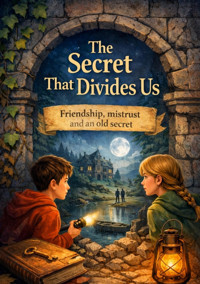
The Secret That Divides Us
Friendship, mistrust and an old secret – an exciting children’s book for ages 10 and up
tredition GmbH
© 2026 Dominik Mikulaschek
Printing and distribution on behalf of the author:
tredition GmbH, Heinz-Beusen-Stieg 5, 22926 Ahrensburg, Germany
This work, including its parts, is protected by copyright. The author is responsible for the content. Any use without his consent is prohibited. Publication and distribution are carried out on behalf of the author, who can be contacted at: Dominik Mikulaschek, Holzwurmweg 5, 4040 Linz, Austria.
Contact address in accordance with the EU Product Safety Regulation:
[email protected]Chapter 1 – The thing that ought not to exist
Wednesday morning, seven forty-four, and Mia already knew this day was going to be rubbish. Not because anything had happened. But because nothing had happened. Nothing for days. Ever since that one thing with Lina in the school playground, which nobody talked about, but which lay in her pocket like a stone she could feel all the time, no matter how often she put her hand in to check if it was still there. She pushed her bike into the rack outside the school, clicked the lock shut, and took a deep breath. The air smelled of autumn and the last flowers someone had planted in the boxes outside the main entrance, red and orange, as if they wanted to prove that summer wasn’t quite over yet. But it was. Over. Like so many things. “Mia!” Noah waved from the steps, his bag slung crookedly over one shoulder, his hair sticking out in all directions, as if he’d overslept and then decided to go for the ‘stylish’ look anyway. Next to him was Sam, hands in his jacket pockets, staring at his mobile, but that was normal for Sam. Sam always checked everything three times. The weather, the news, whether anyone had posted anything you needed to know. Sam always knew everything before anyone else. Mia shrugged and walked over. “Morning.” “You’re a bit excited today,” said Sam, without looking up. “I’m almost getting goosebumps with joy.” “Leave her be,” said Noah, grinning. “Mia’s just not a morning person. But a likeable one.” “I’m not,” said Mia, but she grinned back, just for a moment. “Where’s Lina?” The question hung in the air for a moment too long. Sam finally looked up from his phone, Noah shrugged, but it was that shrug that came too quickly, meant to be indifferent but wasn’t. “No idea,” said Noah. “Maybe she’s ill?” “Lina’s never ill,” said Mia. “Yes, she is,” said Sam. “Last year. Three days. Sore throat.” “That doesn’t count, that was in May.” Mia squeezed between the two of them and headed for the door. “Come on. I don’t want to be late again.” Inside, it smelled of cleaning products and the greasy rolls from the cafeteria, which were actually only ever fresh until ten in the morning, but somehow never were— . The corridors were filling up, rucksacks were banging against shins, somewhere someone was laughing too loudly at something that couldn’t possibly be funny. Mia usually loved this noise. It was like a blanket you could disappear under, just being part of something without having to stand out. But today it was just throbbing in her head. She checked her mobile as she walked to her locker. No message from Lina. Not since last night, when Mia had asked if they wanted to do maths together, and Lina had simply replied, “Can’t.” No reason. No “maybe tomorrow”. Just “Can’t”. Full stop. Mia put her phone away, tapped in the combination for her lock, and the locker sprang open with that metallic click she knew by heart. She threw her jacket inside, pulled out her maths book, and then she saw it. A note. It was stuck to the inside of the locker door, right at eye level, as if someone had wanted her to see it straight away. A small, yellow sticky note, the sort they had in pads in the staff room, with that adhesive strip on the back that never stuck properly after a few hours. But this one stuck. And on it was written, in black ballpoint, in a handwriting Mia didn’t recognise: If you dig this up, you’ll lose yourselves. Mia stared at it. Her fingers were still on her jacket’s zip, but she didn’t move. Five seconds. Ten. The noise around her suddenly seemed very far away, as if through a thick pane of glass. “Hey, are you okay?” Noah was standing behind her, his head tilted to one side, and when she didn’t answer straight away, he stepped closer and looked into the locker. His face changed. Not much, but enough. The little crease between his eyebrows that always appeared when he was thinking, or when something didn’t sit right with him. “What’s that?” “No idea,” said Mia. Her voice sounded strange. Too calm. She peeled off the note, very carefully, as if it might tear or vanish into thin air. There was nothing on the back. Just that one sentence, eight words, etching themselves into her mind like ink on blotting paper. “Let me have a look.” Sam had appeared, she had no idea when, and was already holding out her hand. Mia handed her the note, and Sam turned it over and over, held it up to the light, even sniffed it. “Ordinary glue. Ordinary paper. Ballpoint pen, black, cheap ‘ ’ brand. No distinguishing features.” “You sniff notes?” asked Noah. “Sometimes. If they’re weird.” Sam looked at Mia. “When was the last time you were at your locker?” “Yesterday afternoon. After sixth period. I got my sports kit out and then I went home.” “And you haven’t opened it since?” “No. Why would I?” Sam shrugged and handed the note back to her. “Then it was either yesterday between sixth period and now, or this morning. Picking locker locks isn’t that hard if you know how. But why would someone pick your locker just to put a note inside?” “Maybe it wasn’t my locker,” Mia said slowly. “Maybe it was just a locker. And I happened to be the one who got it.” “Or it was specifically yours,” said Noah. “Because you’re you.” The words hung between them. Mia knew what he meant, but she didn’t want to say it out loud. For weeks there had been this feeling that something wasn’t right. That Lina was different. That the gang didn’t work the same way as it used to. That conversations were suddenly cut short when she joined in. Maybe she was imagining it. Maybe it was just autumn and tiredness and that stupid phase where everyone was twelve and had to sort themselves out somehow. But maybe not. “Let me see.” Mia flinched. Lina was standing next to her. No idea where she’d suddenly come from, but she was there, and her eyes were red-rimmed, as if she’d slept badly or cried or both. Lina took the note without asking and read the sentence. Once. Twice. Her face remained completely expressionless. “Strange,” was all she said, handing it back. “Throw it away.” “Throw it away?” asked Mia. “Seriously? It says, ‘If you dig this up, you’ll lose yourselves’. This isn’t a maths homework problem you just throw away. It’s a threat. Or a warning. Or both.” “It’s a note,” said Lina. Her voice was flat. “From some idiot playing a prank. It happens all the time. Last week someone sprayed ‘Dead Cellar Kids’ on the toilet door. It was just paint too.” “That’s not the same,” said Sam. “That was graffiti, anonymous, for everyone. This is personal. In Mia’s locker. Targeted.” Lina shrugged. “So someone’s got it in for her . Big deal. Just forget about it.” She turned and walked down the corridor towards the classroom without looking back. Mia watched her go. Her heart was pounding in her throat, but not with fear. With anger. Lina had been right, in a way; it was just a note, but it was the way she’d said it. That cold shrug. That “Just forget it,” as if Mia were a little kid getting worked up over a silly dream. “What was that all about?” Noah asked quietly. “No idea,” said Mia. She stuffed the note into her jacket pocket, right down to the bottom, until it touched the fabric. “But I’m not forgetting anything.” The first lesson was maths, and maths was bad enough as it was, but today it was torture. Mia sat in the third row, right behind Lina, and the whole time she stared at the back of her head. At the way Lina didn’t even turn round. At the way she talked to Sam, who was sitting next to her, but so quietly that Mia couldn’t make out a word. The way she laughed when Mr Brenner made a joke about parabolas that wasn’t funny at all. Mia’s mobile was in her bag, right under the note. Once she wanted to take it out and send Lina a message. Just three words: “What’s going on?” But she didn’t. Because she already knew the answer. Nothing. Absolutely nothing. Everything’s fine. And obviously it wasn’t. During the break, she sat down on the bench outside the library, where they always sat, but Lina didn’t come. Sam didn’t come. Just Noah, with two apple turnovers from the cafeteria, one for her, one for him. “She’s in the loo,” he said and sat down. “Lina, I mean. Sam’s with her.” “Since when do Sam and Lina go to the loo together?” Noah shrugged and took a bite out of his pastry. “No idea. Maybe girl stuff.” “Sam isn’t the ‘girl stuff’ type.” “Sam isn’t much of a type,” said Noah. “But maybe there really is something going on. With Lina, I mean. Maybe she’s ill or something. Or a row at home. Something like that.” Mia looked at him. “You don’t even believe that yourself.” Noah chewed more slowly. Then he swallowed. “No. But I don’t want to always think that something bad is happening. It’s exhausting.” “Sometimes something bad is happening.” “Yeah. But sometimes it isn’t.” He looked at her, and in his eyes was that look Mia couldn’t stand because it was so damn understanding. “Do you still have the note?” Mia nodded and pulled it out of her pocket. She’d folded it several times so it wouldn’t crease, but now she smoothed it out on her knee. The letters were still there. Still black. Still that sentence. “If you dig this up, you’ll lose yourselves,” Noah read quietly. “What could that mean? What are we digging up?” “No idea. Maybe it’s just a saying. One of those cool phrases that someone thinks is cool.” “Too cool for our school,” said Noah. “Nobody writes cool stuff here. Here they write on the walls, if at all.” She had to agree with him. The graffiti in the school toilets was either names with hearts or insults or that one bloke who’d been scrawling ‘Fussel’ everywhere for two years, because his nickname was probably Fussel or because he thought Fussel was cool; nobody knew for sure. But she’d never seen anything like this note, with this handwriting, this sentence. “We could ask,” said Mia slowly. “In class. To see if anyone else got a note like that.” “And then? Then everyone will know, and it’ll get even weirder.” “Or we’ll find out who it was.” Noah sighed. “Mia, it’s a note. Not a detective case. Maybe Lina’s actually right. Maybe it really is just a stupid joke.” “Do you think so?” He didn’t answer. That was answer enough. After the fourth lesson, just before Biology, Sam caught up with her in the corridor. Her face was serious, but it always was; only today there was something else. A tension in her shoulders, a twitch in her jaw that Mia had never seen before. “Come with me,” said Sam. No question. Just those two words. “Where to?” “Library. I need to show you something.” Mia wanted to ask why, wanted to say that Biology was starting in five minutes and Mr Weber hated it when she was late, but Sam had already set off, so she just followed her. Down the corridor, down the stairs, past the canteen, where it smelled of chips that nobody wanted anymore because they’d been sitting under the heat lamp for an hour. The library was at the end of the corridor, an old glass door with frosted glass through which you could only see shadows. Sam pushed it open, and inside it was quiet and smelled of paper and that special library smell that Mia had always liked because it smelled of secrets. Behind the counter sat Mrs Chen, the librarian, sorting books into a pile . She looked up as the two of them came in, but Sam just gave a quick wave and walked further back, to the corner where the old newspapers were kept. The ones nobody wanted to read anymore because everything was online, but which, for some reason, were still being kept, in thick, heavy folders that smelled of dust. “Here,” said Sam, pulling out one of the folders. “Local news, from five years ago. Have a look at this.” Mia leaned over the folder. On top lay a newspaper page, yellowed at the edges, with an article that was half-highlighted. Someone had marked a few lines with a yellow highlighter. Mia read. School fair ends in chaos – fire in the equipment shed City, 15 September. What began as a cheerful school fair ended last night with a major fire brigade operation. At around 8 pm, a fire broke out in the old equipment shed on the school grounds, which quickly spread to the adjacent gazebo. No one was injured, but the police are investigating on suspicion of arson. Initial witness statements point to several teenagers who are said to have been in the vicinity shortly before the fire broke out. The school management expressed their dismay and announced that there would be consequences. Further investigations are ongoing. Mia looked up. “And?” “Read on,” said Sam. She sounded different. She squeezed the words out as if forcing herself. Mia read on. The article wasn’t long, but at the end there was a name. A single name, in a sentence about the witness statements. A pupil who wished to remain anonymous stated that she had observed an altercation between several teenagers shortly before the fire. According to her statement, the name “Lina” was mentioned. Mia’s fingers on the page went completely cold. She stared at the name, at those four letters standing there, black on yellowed paper, as if they’d always been meant to be there. As if they’d just been waiting to be found. “Lina?” she whispered. “Our Lina?” Sam nodded slowly. “She was seven back then. Or eight. But she was there. At the school fair. With her family, probably. And something happened. Something to do with that fire.” “That was years ago. It can’t have anything to do with today.” “Can’t it?” asked Sam. She looked at Mia with that look that knew everything before you knew it yourself. “Then explain to me why a note suddenly turned up in your locker this morning saying we shouldn’t dig anything up. And why Lina’s acting as if she’s scared. And why this article has exactly the same yellow marker as the one we used in art class last week when we were making those collages. Do you remember? Lina had one like that. She used it to mark her photos.” Mia looked at the page. The yellow marker glowed like a warning. Like a trail someone had laid. On purpose. So that she would be found. “Who showed you this?” asked Mia. “Who put this folder here?” “That’s the thing,” said Sam. Her voice trembled, just a little. “Nobody. The folder was just lying there. On the table, in the corner. Opened. Right on this page. As if someone wanted us to find it.” Mia felt the note in her pocket. Felt its weight, that light, thin paper that suddenly felt as heavy as a tonne. She thought of the sentence. If you dig this up, you’ll lose yourselves. Too late. They’d already started. And now the question was no longer whether they’d carry on. But what they’d find if they didn’t stop.
Chapter 2 – A Name in the Shadows
Mia was still staring at the newspaper page when the library door opened. She flinched, but it was just a boy from Year 7 looking for a book for English class; he wasn’t interested in her at all. Sam had long since closed the page, shut the folder and was now pushing it back onto the shelf as if nothing had happened. Her hands weren’t shaking. Sam never shook. But Mia had known her long enough to see how shallowly she was breathing, how her shoulders were right up against her ears—that little escape mode she always went into when things got too much. “We have to go,” said Sam. “Bio. Weber’s going to flip out.” “Fuck Weber,” said Mia. But she stood up anyway and followed Sam to the door. Out in the corridor, it was brighter, louder, more normal. The break bell had rung minutes ago, and now everyone was streaming into the classrooms, pushing past them without really seeing them. Mia felt as if she were underwater. Everything around her was moving in slow motion, whilst her mind was racing. Lina. Fire. A name in the shadow of a newspaper from five years ago. They’d put the folder back, but the image of the page was seared into Mia’s memory. The letters. The yellow marker. The way the article ended right where it got interesting, as if someone had cut out the rest, even though nothing had been cut out, just empty columns, because the text simply stopped. In Biology, Mia sat down next to Noah, who had already taken his seat and was scribbling something in his notebook. Lina sat two rows in front of them, next to Sam, and was taking notes as if everything were perfectly normal. Her hand moved steadily across the paper; she didn’t even look back. Mia watched the nape of her neck, the tiny hairs peeking out from beneath her hairline, the way she sometimes stroked her forehead when she was thinking. Nothing about it was any different from usual. And yet, suddenly, everything was different. “What’s going on?” whispered Noah, without taking his eyes off Mr Weber, who was drawing photosynthesis on the blackboard with green and yellow chalk that looked like children’s crayons. “Later,” whispered Mia back. Noah looked at her briefly, then nodded to . He never asked twice. That was the good thing about Noah. He could sense when things were serious, and then he waited until she was ready to talk. The lesson dragged on like chewing gum. Mia didn’t hear a word of what Mr Weber was saying. She saw the words on the blackboard, but they made no sense. Photosynthesis. Chlorophyll. Light reaction. Just letters that refused to form sentences, whilst completely different sentences swirled round in her head. If you dig that up, you’ll lose yourself. A student who wishes to remain anonymous. The name Lina. When the bell finally rang, Mia was already halfway to her feet before the sound had faded. She packed her rucksack so quickly that her notebook almost fell to the floor, and then she was already standing in the corridor, ready to go. But Sam was quicker. Sam suddenly stood beside her, his hand on her arm, firm enough that Mia had to stop. “Not here,” Sam said quietly. “Outside. By the bench. In five minutes.” Mia wanted to object, wanted to say that they had to talk now, immediately, but Sam had already let go and disappeared into the stream of other students. Lina was gone too. No idea when she’d left. Mia hadn’t even seen her get up. “Come on,” said Noah behind her. “Let’s go outside. You explain everything to me. And then we’ll figure out what to do.” The bench outside the library was their spot. Ever since Year 5, they’d sat here when the sun was shining or when it was raining and they still wanted to be outside, because there was always someone inside who was getting on their nerves. Today the sun was shining, but Mia didn’t feel it. She sat there, hands in her pockets, and waited. Sam was the first to arrive. She sat down next to Mia, so close that their arms almost touched, and said nothing. Then Noah came and sat on the other side, and then Lina didn’t come. Because Sam hadn’t called her. Because this was a conversation without Lina, and Mia knew that, but it still felt wrong, like a betrayal she hadn’t committed yet, but was about to commit. “Right,” said Noah. “Spit it out.” Mia took the note out of her pocket. Not the one from this morning—she still had that one—but that wasn’t the one she meant. She meant the copy Sam had secretly made in the library, on the old photocopier that always rattled so loudly you could probably hear it all the way out in the corridor. She’d made it during break, whilst Mia stood at the counter distracting Mrs Chen with questions about old newspapers. A minute, maybe two, and then they had the page, folded up in Sam’s jacket pocket, like evidence no one was allowed to see. Now Mia pulled out the copy and placed it on the bench between them. The paper was still warm from the photocopier, and the letters were sharp and black, much clearer than in the original. The yellow marker had turned grey, but you could still see it. You could see everything. Noah leaned forward and read. His lips moved slightly as his eyes scanned the lines. Then they came to the sentence, and he stopped moving. His lips remained half-open, as if he’d forgotten to close them again. “Lina?” he asked. His voice sounded thin. “It says Lina. Our Lina?” “There aren’t that many Linas at this school,” said Sam. “Actually, just one. And she was there. Five years ago. At the school fair. When the shed caught fire.” “That’s crazy,” said Noah. He shook his head, but it wasn’t the kind of shake that meant rejection. It was the other kind. The one where you’re trying to make sense of something that doesn’t make sense. “She was seven. Or eight. What’s a seven-year-old got to do with a fire?” “Maybe nothing,” said Mia. “Maybe she just saw something. Maybe she was just there, and someone mentioned her name, by accident or something. But why is it in the paper then? Why is a seven-year-old mentioned in an article about arson?” Sam pulled out her mobile and swiped through the photos. “I’ve been looking into it. During the break. There’s almost nothing left online about the incident. Just a short article in the local paper’s archive, but it’s behind a paywall. And the social media posts from back then have long since been deleted or set to private. But I found something else.” She held her phone out to Mia. On the screen was a screenshot, blurry, as if someone had taken it quickly before the page disappeared. It was an old Facebook post, from a page called “Friends of the City School”. The date: 16 September, five years ago. So, one day after the fire. “Shock and grief following the fire at the school fair. The school management thanks all helpers and asks for your understanding, as the investigation is still ongoing. Our thoughts are particularly with the families of the children affected. We will keep you updated.” “Affected children,” said Mia. “That sounds as if it wasn’t just the shed that was affected. As if children were involved. Or injured. But the newspaper article says nobody was injured.” “Maybe someone was injured after all,” said Sam. “Not physically. But in some other way. And maybe it was covered up. Because children were involved. Because nobody wanted to take responsibility.” Noah was still staring at the copy. “And Lina? What does she have to do with it? She was one of those children, wasn’t she? She was there. She saw something. Or she did something. And now, five years later, this note suddenly turns up. With Mia. In her locker. Why?” Mia thought about the sentence. If you dig this up, you’ll lose yourselves. Perhaps it wasn’t a threat. Perhaps it was a warning. From someone who knew they’d start looking. Who knew Lina had a secret. Who wanted them to stop before it was too late. “We need to talk to her,” said Mia. “Right away. Now. We’ll sit her down and ask her what happened back then. And why she didn’t tell us.” “She won’t say,” said Sam. “She hasn’t said anything for years. Why would she come clean now?” “Because we’re her friends,” said Noah. “Because she can trust us.” “Can she?” asked Sam. She looked at Mia, and there was something in her eyes that Mia couldn’t quite make out. Grief? Accusation? Or simply that weariness that came when you’d thought too long about something with no solution. “We’re her friends,” Mia repeated. “That’s not just a word. It means something. It means we’re there for her, no matter what happened. That we won’t run away when things get complicated.” “And if she did something?” Sam asked quietly. “If she really had something to do with the fire? If, back then, as a child, she did something that wasn’t just stupid, but dangerous? Would you still be there for her then?” Mia wanted to say yes immediately. The word was on the tip of her tongue, ready to be blurted out, as always when it came to friendship. But this time it got stuck. Because she didn’t know. Because she didn’t know what Lina might have done . Because she didn’t know if there were things you couldn’t forgive, even if you were friends. Noah looked at her. He waited. Sam waited too. And Mia sat there, on that old bench in front of the library, feeling the sun burning on her skin, even though it wasn’t hot at all. “I don’t know,” she said at last. “But I want to find out. Before I make up my mind.” They found Lina on the sports field. She was sitting on the bottom step of the stands, alone, watching the boys playing football without really looking. Her gaze was somewhere else, far away, in another time, perhaps five years ago, perhaps just yesterday. When Mia sat down beside her, she flinched briefly, but then relaxed again, as if it was okay for Mia to be there. As if nothing had happened. “Can I sit down?” asked Mia, even though she was already sitting. Lina shrugged. “It’s a free country.” For a while they just sat there and watched. One of the lads scored a goal, and his mates cheered, and the goalkeeper punched the turf. Normal sounds. Normal movements. None of it had anything to do with them. “I was in the library today,” Mia said at last. She hadn’t planned to start like that. But now it was out, and she couldn’t take it back. Lina didn’t react straight away. Her eyes stayed fixed on the pitch, but Mia saw her hand clench around the metal of the step, just ever so slightly, barely visible. “Good for you,” said Lina. Her voice was flat. Too flat. “I found something,” said Mia. “An old newspaper. From five years ago. About a fire at the school fete.” Now Lina turned her head. Slowly, as if every movement were difficult. Her eyes were wide and dark, and in them was none of what Mia had expected. No anger. No fear. Just this strange emptiness, as if someone had pulled the plug and all the light had gone out. “And?” asked Lina. “Your name was in there,” said Mia. “It said that a pupil called Lina had seen something. Or that her name was mentioned. It wasn’t clear. But it was there. Your name. In the newspaper.” Lina looked away again. At the pitch, where people were still playing football, still scoring goals, where everything was still normal. “That was a long time ago.” “Five years isn’t a long time. Not when it comes to something like this. Not when you read your name in a newspaper, in an article about arson.” “I didn’t read it,” said Lina. “My parents cancelled the newspaper back then. So I wouldn’t see it. So nobody would see it.” “Why?” asked Mia. “What happened?” Lina was silent for so long that Mia thought she wouldn’t answer at all. The footballers were shouting to each other, the ball banged against the post, and somewhere someone was laughing. Everything was perfectly normal. Only here, in this stand, the air was suddenly completely still and heavy. “I was there,” Lina said at last. Her voice was quiet, but no longer flat. Now there was something in it. Something that hurt. “At the fair. With my mum and my little brother. He was four at the time. And he ran off. Just like that, through the stalls, and my mum didn’t notice. She was talking to someone, and I was keeping an eye on him, actually, but then there was this boy who wanted to give me a balloon, and I looked away for a moment, and when I looked back, Ben was gone.” She faltered. Her hands were now lying flat on her thighs, and Mia saw her knuckles turn white because she was clenching them so tightly. “I ran off,” said Lina. “I looked for him everywhere. Between the stalls, by the bouncy castle, by the toilets. Nothing. And then I saw him run behind the shed. Back there, where the new bike rack is now, but back then there was just that old shed that nobody used anymore. I went after him, and there he was. With two other boys. Older ones. They had some weird stuff with them, in bottles, and one of them had a lighter. Ben just stood there watching. I shouted for him to come, but then one of the lads saw me and threw something. A bottle. It shattered right next to me, and then there was this sound, this hissing sound, and suddenly the ground was on fire.” Mia held her breath. Sam had appeared beside her, very quietly, and Noah too, but Lina didn’t seem to notice them. She was completely lost in her own world, in that moment five years ago when it all happened. “I grabbed Ben and ran,” said Lina. “As fast as I could. Behind us it was getting brighter and brighter, and I heard screams, and people were running towards us, but I just kept going until I found my mum. I pushed Ben into her arms and then I cried. Just cried. For hours, I’ve been told. My mum said later I didn’t stop until the ambulance arrived, and even then I still didn’t stop.” “But the article said nobody was hurt,” Sam said quietly. Lina laughed. It wasn’t a happy laugh. It sounded as if something was breaking. “Not physically. But after that, nothing was the same as before. My mum blamed herself for not keeping an eye on him. My dad blamed himself for not being there. And I blamed myself for letting Ben out of my sight. We were all hurt. Just not in a way you could see.” “And the lads?” asked Noah. “The ones with the bottles?” Lina shook her head. “Never found. The police investigated, but there was no evidence. Just my statement, and I was seven. They didn’t believe me. Or they didn’t want to. Eventually they said it was probably an accident, and then they closed the investigation. But my parents knew it wasn’t an accident. And I knew it too. But we couldn’t prove anything.” Mia sat there and felt everything inside her tighten. So that was it. The secret. Not that Lina had done anything, but that she’d seen something, and that nobody had believed her. That she’d lived with this story for five years, all on her own, whilst everyone else thought it had just been an accident. “Why didn’t you ever tell us?” asked Mia. Lina looked at her. There was something in her eyes now that looked like hope, but also like fear. “Because it hurts. And because I thought you’d see me differently. As the one with something wrong with her. As the one who might have had something to do with it after all, because why else wouldn’t you believe a seven-year-old?” “We don’t think that,” said Noah firmly. “No one’s ever thought that.” “Not yet,” said Lina. “But now you know. And now you have to decide whether you’ll stay or go. Just like everyone else did back then.” Mia looked at Sam. Sam’s face was hard to read, but there was something in it that looked like determination. And Noah, who was just sitting there, completely calm, as if everything were exactly where it belonged— “We’re not going anywhere,” said Mia. “We’re your friends. That was true yesterday, it’s true today, and it’ll stay that way. But we need to know what really happened back then. Not just your version. The whole story. Because there’s someone out there who doesn’t want us to look. They put a note in my locker this morning. With a warning. And they left the newspaper page out for us in the library. So we’d find it. Or so someone else would find it. We don’t know. But we have to find out.” Lina looked at her for a long time. Then she nodded, very slowly. “Okay. But if we start looking, we do it together. No more secrets. No one goes off on their own. Promise?” “Promise,” said Mia. They sat there for a while longer, four friends on an old stand, whilst the sun slowly sank lower and the footballers left one by one. Nobody said much. But it was okay like that. For the first time that day, it was okay. When Mia went home later, pushing her bike alongside her because she simply didn’t want to ride it yet, her mobile rang. A message. From a number she didn’t recognise. You’re already digging. You just don’t know what yet. But you’ll regret it. Mia stopped. The mobile in her hand suddenly felt heavy, far too heavy. She turned around, looked down the street, at the houses, the trees, the streetlights slowly coming on. Nothing was different. Everything was normal. But somewhere out there was someone watching. Someone who knew they’d started digging. And who didn’t want them to find what lay down there. She put the mobile away without replying and pushed the bike on. At home, she’d ring Sam. And Noah. And Lina. They’d make a plan. They’d carry on. Because they couldn’t stop now. Not after what Lina had told them. Not after that message. If you dig that up, you’ll lose yourselves. Maybe that was true. Maybe they would lose themselves. But maybe they’d find something else. Something more important than safety. Something called truth, even if it hurt. Mia didn’t know. But she was ready to find out.