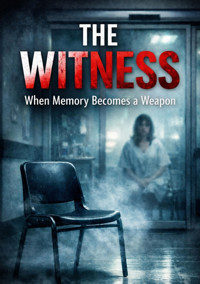
Dominik Mikulaschek, born in Linz in 1983, unravels the invisible mechanisms of power in his thriller *The Witness*. His incisive perspective reveals how truth is constructed and manipulated through filmed statements, credibility coaching and controlled narratives. Without clichéd action or heroes, he ruthlessly exposes the systems that shape reality and turn testimony into a weapon. The result is more than a thriller – it is an unsettling study of trust, manipulation and the price of truth in a world where narrative has long since defeated reality.
Dominik Mikulaschek
The Witness
When Memory Becomes a Weapon
tredition GmbH
© 2026 Dominik Mikulaschek
Printing and distribution on behalf of the author:
tredition GmbH, Heinz-Beusen-Stieg 5, 22926 Ahrensburg, Germany
This work, including its parts, is protected by copyright. The author is responsible for the content. Any use without his consent is prohibited. Publication and distribution are carried out on behalf of the author, who can be contacted at: Dominik Mikulaschek, Holzwurmweg 5, 4040 Linz, Austria.
Contact address in accordance with the EU Product Safety Regulation:
[email protected]Chapter 1 – Sprint into the New Day (Mara)
The morning had a taste of dust and cold fear. I had spent the night on the hard seat of a plastic chair in the admissions ward of the county hospital, my eyes fixed on the automatic sliding door through which they had wheeled Lena Voss out. She had disappeared beneath a cloud of blankets and tubes, a pale face frozen in shock in the flickering light of the corridors. Back then, twelve hours ago, my breath had drawn clouds in the icy air of the ambulance. I had held her hand, rubbed her cold fingers between mine, murmuring the same sentence over and over, a sentence that had gnawed its way into my head like a burrowing insect: You’re safe. You’re with me. You’re safe. It was a litany, meant more for me than for her. She hadn’t reacted, just gazed through me into an abyss I couldn’t see. But she was alive. She was here. She had seen it. And that made her the only lever in a world that was slowly but inexorably turning against me. Now, in the pale light of early morning, all that remained was the faint afterglow of that certainty, a phosphorescent flicker of hope that quickly faded. I stood in front of the hospital’s main entrance, my jacket collar turned up against the biting wind from the coast, and stared at my phone. The screen displayed the last entry in my contacts: Lena Voss. The number I’d retrieved from the hospital system just last night and saved straight away, so as never to lose it again. My thumb hesitated for a moment over the green handset icon, a final resistance against the premonition that was already closing around my chest like an icy ring. Then I pressed it. A single, whirring dial tone sounded, followed by a silence that lasted too long. Then a mechanical female voice, neutral, faceless, the words as precise as surgical incisions: ‘The number you have dialled is not in service. Please check the area code and try again.’ I let the phone drop; the cold plastic case pressed against my palm. Not in service. It could have been a mistake. A transmission error in the system, a wrong key press on my part last night, when my hands were still trembling with adrenaline. But deep inside, in that bony core that had been right so many times before, I knew better. It was the first, quiet click in a mechanism that was just starting up. I slipped the phone into my pocket and walked away. My footsteps echoed too loudly on the wet tarmac of the car park, a rhythm too fast for someone trying to feign control. The car, an unremarkable grey hire car, smelled of disinfectant and the sickly sweet scent of the air freshener I’d torn off and thrown out of the window yesterday. The engine started, a whirring sound that did nothing to calm me. The sat-nav showed me the address I’d jotted down from Lena’s scant personal details: 2147 Cedar Lane, Flat 3B. A street in a neighbourhood that wasn’t poor, but run-down, a place for people who wanted to remain invisible. Last night, as the paramedics had strapped her to the stretcher, Lena had muttered something. No words, just a string of syllables that I’d interpreted as this address. Zed-ar. Lane. It was the only thing left of her, apart from that panicked look. The journey took twenty-five minutes, which I spent in an endless inner monologue. Plans were made and discarded. What would I do if she was there? Take her with me, immediately, away from here. Somewhere where no one could find her until she was ready to talk. Until she could mould the truth into a form that would stand up in court. And if she wasn’t there? Then I would wait. I would do anything except lose sight of her. I parked the car a block away, strolled up the street, my eyes hidden behind large sunglasses, even though the sun had disappeared behind a wall of grey clouds. Number 2147 was a three-storey brick building, its façade weathered by the salt in the sea air. The letterboxes were mounted on a weathered wooden panel next to the front door, numbered with flaking black digits. My gaze wandered down fr to 3B. The nameplate holder was empty. Not fallen off or grimy, but deliberately empty. A rectangular patch of bare, matt metal that stood out against the slightly oxidised edges of the other plates. As if something had been removed. Recently. I stepped closer, leaned forward, as if I could read the invisibility. Nothing. Only the quiet thud of my own heart against my ribs. A young man with headphones and a rucksack came out of the building, holding the door open for me without looking at me. I nodded silently and slipped inside. The stairwell smelled of old linoleum and boiled cabbage. My footsteps on the stairs sounded loud in the silence. I stopped in front of the door to flat 3B. No sound from inside, no light shining under the door. I knocked. Softly at first, then louder. The echo was hollow, as if I were knocking against an empty chamber. I tried the door handle. Locked. Through the frosted glass of the peephole, I could see only indistinct shadows of furniture covered with white sheets. She wasn’t here. She had never been here. Or she had vanished so thoroughly that even the ghosts of her furniture had been driven away. A neighbour, an elderly woman wearing a smock over her house dress, opened her door a crack. “Are you looking for someone?” Her voice was suspicious, her eyes small and alert. “Lena Voss. From 3B.” The woman shook her head, her gaze drifting to the empty flat door. “She’s gone. Been gone for… three days? The landlord was here, took the nameplate down. New tenants are coming next week, I’ve heard.” She sized me up, searching for a story in my face. “A friend of hers?” “Yes,” I lied, the impulse quicker than my thoughts. “We’d arranged to meet. Did she… did she say anything? Where she was going?” That shake of the head again, slower this time, almost regretful. “She was always very quiet. Came and went. Never brought much with her. Looked as if she could leave at any moment.” The woman shrugged, as if people disappearing were a common occurrence, a natural cycle in this house. Then she closed the door, a soft, final click. I stood there for another minute, hands buried in my jacket pockets, staring at the door. Gone. For three days. That was before the confessional. Before I intervened. A cold shiver ran down my spine. That wasn’t a coincidence. That wasn’t an escape. That was an evacuation. Someone had taken her away before I’d even had a chance to find her. Or someone had made sure her tracks were covered, just in case I did come. I left the building; the daylight now seemed even paler, more diffuse. The wind had picked up and was sweeping scraps of newspaper across the pavement. I leaned against the brick wall and took my phone out again. This time I didn’t dial Lena’s number. I called the hospital, the switchboard, and asked for the ward where Lena must have been admitted last night. I gave her name and the estimated time of admission. I heard the clatter of a keyboard, muffled conversations in the background. The nurse’s voice on the other end sounded matter-of-fact, but her hesitation was audible. “Just a moment, I’ll check… Voss, did you say? Lena Voss?” More keyboard clatter. A long pause. “I’m sorry. I can’t find a patient by that name for yesterday or today. There’s no record in our admissions system.” “That’s impossible,” I said, and my voice sounded sharper than I’d intended. “I was there. I rode in the ambulance with her. She was admitted here, around twenty-one thirty.” “I see,” said the voice, now cautious, guarded. “But there’s no file. Perhaps it was a different hospital? Or the data hasn’t been fully transferred yet? Sometimes there are delays.” “There are no delays when it comes to a witness in a… in a potential case of violence,” I quickly corrected myself. “There must be a file. Please look again.” I heard a sigh, then the tapping resumed. “I’ve searched for all Voss entries from the last week. Nothing. I’m really sorry. Perhaps you could contact the admitting doctor or the doctor on duty?” I hung up without saying a word. The phone felt like a strange, menacing object in my hand. No number. No address. No medical records. Lena Voss hadn’t simply vanished. She had been deleted from the system. Her existence as a person who needed help, who had seen something, who could testify, had been erased. Only the witness remained. But where? And in whose care? My mind was now working with a cold, clinical precision. She was a resource. A living record. And someone had taken her into custody before I could assert my claim. But who? And why so quickly, so thoroughly? The official machinery was slow, cumbersome. This was smooth, efficient. Like tidying up after a professional operation. The word sprang to mind before I could fend it off: purge. I went back to the car, sat down, closed my eyes for a moment. The tiredness washed over me like a wave, saturated with adrenaline. I had to think differently. Not as someone looking for a witness, but as someone fighting against an invisible record. If Lena wasn’t in the official channels, she had to be somewhere else. Somewhere where witnesses are kept before they become official. Before they testify. Before they can be controlled. A thought flashed through my mind: there were those semi-official, grey ‘protection programmes’ I’d heard of. Places where people disappeared so they could be prepared for testimony. Often under the guise of care. Trauma-informed care, they called it. A nice term for a factory of credibility. My phone vibrated on the passenger seat. An unknown number. My breath caught. I reached for it, my fingers clenching around the casing. It could be Lena. It could be anyone. I answered the call, said nothing. “Mara Stein?” The voice was male, calm, professional. It didn’t sound hostile, just matter-of-fact. Too matter-of-fact. “Who’s speaking?” “Detective Rios. County Investigation Bureau.” A brief pause, as if he were silently gauging my reaction. “I understand you had contact with a Lena Voss last night. In a… precarious situation.” My whole body tensed. Rios. The name meant nothing to me. But he knew. He knew about last night. He knew my name. “Where is she?” it burst out of me, losing control for a moment. “She’s safe,” said Rios, his voice a steady flow— —that washed over any resistance. “We’ve enrolled her in our witness protection programme. After what she’s been through, it was the only responsible thing to do. She’s stabilised and being looked after.” Stabilised. The word hit me like a physical blow. It was a clinical term, a protocol word. It didn’t sound like care, but like a procedure. A box had been ticked on a checklist. “I’d like to see her,” I said, trying to steady my voice. “I was there. I can… I might be able to help complete her statement.” “That’s not possible at the moment,” replied Rios, and in his refusal lay a final, gentle force. “Any outside contact would be counterproductive. We must prevent her trauma from being re-traumatised. You understand.” I understood. I understood that he was slamming a door in my face whilst simultaneously portraying me as the one who would cause harm by my insistence. “She might need a familiar perspective,” I insisted, even though I knew it was futile. “I was the last person to be with her.” “That’s precisely why,” said Rios, and now there was a barely perceptible undertone in his voice, a hint of something I couldn’t interpret. “We must ensure her memories remain pure. Uninfluenced. The protocol is very clear on this.” He paused briefly. “I’m actually calling for another reason. It would be helpful if you could come in for an initial interview. To describe the events of last night from your perspective. The sooner, the better for everyone involved.” It was a request that sounded like an invitation, but the threat behind it was clear. If I didn’t cooperate, I’d make myself a suspect. If I did cooperate, I’d be stepping onto his playing field, playing by his rules. “When and where?” I asked, my mind racing, searching for a way out, a trap in his choice of words. “I’ll send you a text message with the address. This afternoon, say… three o’clock? That gives us all time to process what’s happened.” Before I could reply, the call had ended. A soft click, then silence. I let the phone fall onto the seat; my hand trembled slightly. He hadn’t asked if the time suited me. He’d set it. He’d slotted me into his schedule. The phone vibrated again, once briefly. A text message from the same number. No greeting, just an address: *1247 Westgate Drive, Suite 200*. I knew the street. It was a business district on the edge of the administrative district, full of nondescript office blocks where lawyers, insurance brokers and, no doubt, government subcontractors had their offices. No police station. No official investigation office. Suite 200. That sounded like a consultation room. I started the engine, but I didn’t drive to Westgate Drive. I drove back into the city centre, to the public library building, which still had working internet terminals in enclosed booths. I needed information that couldn’t be tracked from my own device. The cubicle smelled of old wood and cleaning products. The screen flickered as it booted up. I searched for ‘Detective Rios’ and the county authority. The results were sparse. A few references to older cases, standard press releases without a photo. Nothing that made him tangible as a person. He was a name associated with authoritative statements. I tried the address. 1247 Westgate Drive. The search results showed an office building owned by a holding company called ‘Aegis Properties LLC’. A quick search for Aegis revealed an opaque web of shareholdings, no clear links to law enforcement. But on a subpage, hidden in a local forum for office rentals, I found an outdated listing. “Leased: Suite 200, 1247 Westgate. Ideal for psychosocial counselling or confidential client support.” Counselling. Confidential client support. It was the perfect cover for a witness protection programme that didn’t want to attract too much attention. My time in the library was up. I left the building with a sense of unease that ran deeper than before. Rios wasn’t a normal detective following a lead. He was running something. And Lena was caught up in it. The afternoon dragged on, a leaden blanket of waiting and powerlessness. Shortly before half past two, I parked some distance from Westgate Drive and watched the building. It was a two-storey block of glass and steel, as nondescript as a shoebox. A few people came and went, all in business attire, none of them standing out. No patrol cars, no obvious security staff. Suite 200 would be on the second floor, probably overlooking the quiet rear of the building. At three-fifteen sharp, I entered the lobby. The polished granite floor reflected the dim light from the ceiling lamps. A directory on the wall listed the tenants. Next to Suite 200, it simply said ‘Consultancy Office’. No company name. I took the lift. On the second floor, a narrow, carpeted corridor led to a row of doors with frosted glass panes. I stopped in front of Suite 200. No sign, no logo. I took a deep breath and knocked. “Come in.” Detective Rios’s voice came through the door. I pushed the handle down and stepped inside. The room was a mixture of a sterile office environment and a contrived relaxation zone. A large desk made of light wood, behind it a shelf with files neatly lined up. In one corner stood a small seating area with two grey sofas and a low table, on which sat an untouched carafe of water and two glasses. The light was soft and even, coming from concealed lights in the ceiling. No windows. Rios was not sitting at his desk. He was standing next to the sofa, his hands in the pockets of his well-cut but unremarkable suit trousers. He was perhaps in his late forties, with short, greying hair and a face that seemed neither friendly nor unfriendly, simply present. His eyes scanned me, quickly, thoroughly, without any discernible emotion. “Ms Stein. Thank you for coming. Please, take a seat.” He gestured towards the sofa opposite where he was standing. I sat down, keeping my jacket on. “Where is Lena?” I asked, without preamble. I wasn’t going to play his game, not from the comfort of the sofa. Rios slowly settled onto the edge of the other sofa, his legs slightly apart, his hands now folded on his knees. An open yet controlled posture. “As I said before, she is safe and receiving comprehensive care. Her well-being is our top priority.” “I’d like to have that confirmed by an independent party,” I said. “A lawyer, a doctor I trust.” He shook his head gently, an almost regretful smile playing around his lips. “Unfortunately, that is not possible under the circumstances. Her protection is based on absolute confidentiality. Any further contact, even of a medical nature, poses a risk. You understand, we cannot tolerate any gaps in security.” His words were a solid wall. Any of my demands would be reinterpreted as a potential danger to Lena. I had to change tactics. “What exactly did she tell you? About last night?” Rios leaned back slightly. “At this stage, I cannot disclose any details of the witness statement. The investigation is ongoing. However, I can tell you that Ms Voss gave a clear and coherent account of the events. She is a valuable witness.” Clear and coherent. That didn’t fit with the trembling, almost speechless woman I’d pulled out of the confessional. Trauma doesn’t make memories clear and coherent; it shatters them. Unless someone helps piece them back together. And in a specific way. “She was in a state of shock,” I interjected. “Her memories might be fragmentary. Distorted.” “That’s precisely why,” said Rios, nodding as if to agree with me whilst undermining my point, “that’s why professional support is so important. We have specialists on site who are trained to guide witnesses through such difficult processes without compromising the integrity of their testimony. Our aim is to bring the truth to light. Nothing else.” The way he said “truth” sounded like a finished product, something you could pack into a box and deliver. The conversation was going round in circles. He revealed nothing, but he drew me deeper and deeper into his narrative: that he was the protector, I was the disruptive variable, and Lena was the object worth protecting, being moulded into a perfect statement. Suddenly he stood up and walked over to his desk. He opened a drawer and took out a slim tablet. “There is one thing I can show yo ,” he said, returning. “Something that might deepen your understanding of the situation and strengthen your confidence in our measures.” He sat down again, switched on the tablet and turned it towards me. A video was playing on the screen. The quality was high, professional. It showed a simple, neutral room with light grey walls. A table, two chairs. Lena was sitting on one of the chairs. She was wearing clean, unassuming clothes, a beige blouse. Her hair was brushed smooth, her face looked calm, composed. No trace of last night’s panicked despair. She looked straight into the camera, her hands resting calmly on the table. The lighting was soft but clear, eliminating any shadow that might have betrayed emotion. It was the same lighting setup as in the confessional room, only cleaner, more clinical. Then she spoke. Her voice was steady, clear, without a tremor. “My name is Lena Voss. I am a witness. I saw Mara…” The video stopped abruptly before she could finish the sentence. Rios pulled the tablet back. “You see,” he said, his voice now almost gentle, “she is stable. She is ready. Her testimony will be crucial.” I stared at the black, reflective surface of the tablet, in which my own frozen face was mirrored. The words burned into my skull. I am a witness. I saw Mara… That wasn’t a statement. It was a prologue. An accusation that was only just beginning to take shape. Lena hadn’t disappeared. She had been transformed. And she was now speaking for someone else. The cliffhanger: Rios sent a video: Lena says “I am a witness”.
Chapter 2 – The Official Picture (Mara)
The video was gone, the link dead, when I tried to open it again five seconds later. Only an error message remained on the screen, a white box with grey text claiming the content was unavailable. Rio’s message, however, burned itself into my eyes, three short words that were more of a threat than an invitation. I placed the phone on the passenger seat; my hands were cold and clammy, and I rubbed them on my jeans. Lena hadn’t vanished; she’d been transformed, from a trembling human fragment into a pristine digital witness. The clip was perfectly produced; even my shocked mind could see that. The lighting was even and harsh, not a single shadow on her face; this was professional studio lighting, not the dim neon of a police station. And this light, this particular, cold white, seemed terribly familiar to me. I closed my eyes, searched my memory, and there it was: the confessional room. The same quality of light, the same way it made the pores of the skin visible and reduced every emotion to a matter of technique. It was the same setup, perhaps even the same lamps. That meant the same team, the same signature style. Lena hadn’t simply been interrogated; she’d been staged, in a controlled environment that made truth and production indistinguishable. I had to check the video, its origin, its authenticity, but it had vanished, withdrawn into the digital invisibility from which it had come. A single screening, just long enough to plant her message and destabilise me, then it disappeared, leaving me with the memory of it and the nagging doubt as to whether I’d even seen it. But I had seen it. Her words were etched into my mind. I am a witness. I saw Mara… Mara what? The unfinished sentence was perhaps the most dangerous part; it gave free rein to my paranoia to fill in all manner of horrors. She had said my name, in that clear, composed voice. That was the message. The rest was context that Rios would presumably provide. I started the engine; the hum filled the car, a familiar vibration beneath my hands. I couldn’t just sit here; I had to move, to act. But where to? To the police? To Rios? That was exactly what he wanted. He’d cast the bait, and I was already tugging at the line. Instead, I drove aimlessly, letting the streets pass me by whilst my mind worked. The clip was official; that was its entire design. Clean, credible, irrefutable. No fuss, no pressure of interrogation, just a calm witness giving a statement. That was the narrative he was constructing, and it was damn convincing. Standing opposite me was Mara Stein, the woman who’d dragged a terrified woman out of a hospital last night, who was snooping around her missing flat and a deleted medical record this morning. How would that look? Like the actions of a guilty party trying to silence a witness. I was in the process of painting my own perpetrator profile, with every step I took. I had to rethink things. I couldn’t just find Lena anymore. I had to find the system that had created her. The witness protection unit. The word popped into my head, a term Rios had casually dropped in an earlier, different case. A place where witnesses were looked after, prepared, protected. Or reshaped. That was the official cage they’d put her in. I turned into a quieter street and finally parked under a bare tree. I took out my phone, Googled the term along with the town, but found only generic entries about victim protection programmes, nothing concrete. There wouldn’t be a public address. Rios would give it to me, or at least a clue. That was the next move in his game. I waited. The minutes ticked by slowly; I watched the life on the street, a normal world that had no inkling of the rabbit hole I’d fallen into. My phone remained silent. He was making me wait, letting the pressure mount, making me mull over the unfinished sentence. I saw Mara… Suddenly it vibrated. A new message, again from the unknown number. No ‘ ’ text this time. An address. 1742 Mercer Street. No time, no further instructions. Just the address. I typed it into my maps app. It was an industrial estate by the river, old warehouses repurposed as offices and studios. A perfect location for a neutral, inconspicuous interview room with professional lighting. A perfect place for a witness station. That was the trap, and I knew it. An obvious bait. If I went, I’d be stepping onto his playing field, playing by his rules. If I didn’t go, he’d win anyway, because I’d find out nothing and Lena would continue to vanish into his machinery. I stared at the address, my finger hovering over the screen. The pressure that had been building in my chest since the empty letterbox reached a new peak, a throbbing, painful weight. Every piece of information was a controlled gift, every step a predetermined move. I felt as though I were running through a narrow tunnel whose walls were slowly closing in. The address was there. It invited me. It challenged me. And in my head, the clip played on an endless loop: Lena’s composed face, the cold light that made her eyes flat and impenetrable. Then, clear and unmistakable, I heard the words again, but this time complete, as if my subconscious had filled in the gap with the worst possible version. The voice was hers, but the tone was Rio’s. I’m a witness. I saw Mara do it. The last word echoed, a dull thud in the silence of the car. It hadn’t actually happened, but it felt as though it would soon, as though the statement, once set loose into the world, created its own truth. I took a deep breath; the air smelled of plastic and my own fear. I couldn’t stay sitting here. I had to at least see, had to at least understand what I was dealing with. I started the engine and headed towards Mercer Street. The traffic thinned out, the buildings grew taller and shabbier. I found number 1742, a two-storey brick hall with large windows, painted white on the inside. No sign, no name. A few parking spaces in front, some of them taken. It looked like dozens of other places. I drove slowly past without stopping. A black SUV stood near the entrance, unmarked but professional. A delivery van was parked a few doors down. Nothing screamed official police work, but everything screamed privacy and control. I turned the corner, parked out of sight of the building, and got out. I leaned against the cold metal side of my car and watched. Nothing moved. The address was there, but it was a fortress. An invitation with no time specified was a trap that could snap shut at any moment. If I went in now, I might walk in whilst something was being prepared. If I went in later, I might walk into something that had already been concluded. I pulled out my phone to check the time. It was just after midday. Then I saw it, a second message that had come in beneath the address whilst I was driving. It was shorter, just two words. Come in. It wasn’t a question. It was an instruction. And as I read the words, the door of the brick building opened. A man stepped out, not Rios, someone younger, in a dark utility jacket. He didn’t look back; he walked straight to the black SUV, got in and drove off. The door remained ajar. An open door was even more tempting than an address. It was an open invitation, a test of my courage or my stupidity. The pressure in my chest was now a single, sharp pain. I pushed myself away from my car; my legs felt heavy. I walked along the street, not straight towards the door, but in an arc that took me round to the side of the building. A narrow path led between two halls. I went inside; the air grew cooler, the noise of the city muffled. At the back I found a side entrance, a metal door with a keypad. Locked. No window. I returned to the front. The open door grinned at me like a dark mouth. I stood in the shadows for a moment, observing the silent building, the empty windows. There was no movement, no sign of life. But someone had left the door open. For me. I stepped forward, every footstep on the rough asphalt echoing in my ears. The distance shrank, ten metres, five. I could see the dark gap of the doorframe, behind it nothing but blackness. My hand darted into my jacket pocket to reach for my phone, for light, for a sense of security that couldn’t exist. Three metres. The silence was absolute. Then, as I stepped onto the pavement, right in front of the entrance, the door creaked slowly further open, driven by an invisible draught or something else. Inside, a corridor came into view, covered in linoleum, dimly lit by emergency lights. I stopped, on the threshold between outside and inside. The cold air from the corridor brushed across my face. It smelled of cleaning products and something metallic. I forced myself to take a step over the threshold. The sound of my footsteps on the linoleum was unnaturally loud. The door swung slowly shut behind me and closed with a soft but decisive click. I was inside. The darkness wasn’t complete, but it was thick enough to obscure the outlines of the walls and a closed door at the end of the corridor. I waited, listening. Only the faint hum of electrical wiring somewhere. Then, from right at the back, from behind the closed door, came a sound. Not footsteps. Not a voice. It was the faint but unmistakable rustle of fabric, as if someone were shifting in a chair. A breath, audibly drawn in and held. Someone was waiting there. Not Rios. I could sense that. Someone else. I walked slowly down the corridor, my hand brushing the cold wall. The closed door drew nearer. It was made of light wood, with a simple handle. No sign. The rustling behind the door stopped. Absolute silence. I placed my hand on the cold metal handle. I hesitated. This was it. This was the point where the official story and mine would collide. I pressed the handle down and pushed the door open. The room behind it was dark, but not dark enough. A strip of light fell through a blind on a high window, hit the floor and illuminated dust particles dancing in the air. And in the middle of that strip of light, a person sat on a chair, their back to me. Short, dark hair. A slender back beneath a light-coloured fabric. She didn’t move. Lena. It had to be Lena. I stepped inside; the door closed behind me with a soft swish. The room smelled of fear and dry air . I took a step, then another. She didn’t move. ‘Lena?’ I said, and my voice was nothing but a hoarse whisper. The figure on the chair flinched slightly. Then, slowly, very slowly, she began to turn round. The chair creaked. She turned, and the light from the blind fell on her face. It was Lena, but at the same time it wasn’t her. Her face was pale and expressionless, her eyes wide open, but they didn’t seem to see me. She stared right through me, as if I were a ghost. Then she opened her mouth, and a voice came out, flat and mechanical, like a tape being played. ‘I am a witness,’ she said. ‘I saw Mara there.’ The words were clear, but her lips weren’t moving quite in time. It was a recording. It was a bloody recording. And as I realised this, as the shock froze me, the light in the room came on full, blindingly bright, the same sterile white as in the video. And a voice spoke from behind, from the door through which I had come, a calm, controlled voice that I recognised. ‘You can’t just take her away, Mara,’ said Detective Rios. ‘She’s official now.’ I spun round. He was standing in the doorway, hands in the pockets of his jacket, his face a mask of professional concern. And behind him, in the brightly lit corridor, I saw the outline of another man carrying a tripod and a heavy camera.
Chapter 3 – The Official Cage (Mara)
The light burned itself onto my retina, a painfully white afterimage, even as I blinked. Rios’s figure was merely a silhouette against the glaring brightness of the corridor lighting behind him. Lena sat motionless in the chair, her face now completely submerged in the artificial light, expressionless and pale as plaster. The mechanical words still echoed in the room. I am a witness. I saw Mara there. There. An unspecified place, an unspecified act. It was just as dangerous as a specific accusation, because it stirred the imagination and filled every gap with suspicion. I tore my gaze away from Lena and focused on Rios. His face slowly came into view as my eyes adjusted to the light. He wasn’t wearing a uniform jacket, just dark trousers and a shirt, the top unbuttoned, with a plain T-shirt underneath. He looked like someone working overtime, tired but focused. His expression wasn’t hostile, but regretful, almost sad. That made it worse. “Mara,” he said, and his voice was soft, but it cut through the quiet hum of the lighting system. “This isn’t helping anyone. You must understand, she’s under our protection. No contact. Any contact on your part jeopardises the case and, above all, her.” He made a small gesture towards Lena, who was still sitting there frozen. “She’s extremely vulnerable.” What you’ve just heard was a trauma response, a rehearsed fragment designed to stabilise the initial statement. She doesn’t mean it personally. Yes, I thought, she does. That was precisely the point. It was absolutely personal, and it was designed specifically to hit me personally. But I didn’t say it. I breathed in the cold, metallic air and tried to keep my own voice under control. Where am I, Rios? What is this place? This is a witness centre, Mara. A safe space. We offer support here, psychological first aid, legal advice. Everything to stabilise witnesses like Lena Voss and enable a secure statement. His tone was matter-of-fact, flawless; he could have read it straight from a flyer . It sounded legitimate. It sounded like what the public wanted to hear. And that was precisely what made me suspicious. So why does it look like a film studio? Why was she alone in a dark room with a pre-recorded message? I glanced at the camera and the man behind it, who was now quietly packing up his equipment. He avoided looking at me. “It’s part of the process,” replied Rios, still in that calm, explanatory voice. “Sometimes audiovisual methods help to externalise the experience. It’s a therapeutic tool.” A therapeutic tool that uses my name. I took a step towards him, and immediately the man with the camera stepped between us, not threateningly, but with a presence. Rios raised his hand reassuringly. Nobody wants any trouble here, Mara. I asked you to come so I could show you this. To make it clear to you that Lena is in good hands. That she’s talking. And that if you keep trying to contact her, you’ll only cause harm. To her and to yourself. It was a warning, wrapped in concern. An official cage, not just for Lena, but for me too. Any movement on my part that broke his rules would be interpreted as aggression. I looked over at Lena again. Her eyes were closed, as if she were asleep, but her fingers were clawing at the fabric of her trousers. She was there, she could hear everything. She wasn’t an empty shell; she was trapped in this process. I had to speak to her, really speak to her, not to this grafted-on version. I need to see her, Rios. In private. Not like this. That’s not possible, he said, and now his voice sounded final. Protocol doesn’t allow for it. Her condition is too fragile. Any uncontrolled contact could damage her credibility or deepen her trauma. We have a special programme for her here. A programme. The word hung between us. He didn’t say it as a threat, but as a fact. A structured process that would mould her from a frightened woman into a reliable witness. I wanted to ask what happened in this programme, what sort of therapy involved a recorded indictment, but I knew I’d only get more evasive, professional explanations. I had to take a different approach. I dropped my shoulders, pretending to give in, as if the air had been let out of me. Okay, I said, quietly. Okay, I understand. I don’t want to harm her. I just… I just want to know what happened. We all do, Mara, said Rios, and a flicker of something that looked like genuine empathy crossed his face. But the way to get there doesn’t go through you. It goes through us. Through structured interviews, through support, through time. You have to trust that the system works. I don’t trust any system that programs people in dark rooms with my name, I thought. But I just nodded. Can I at least know where she’s being held? Just for my own peace of mind? To know she’s safe? Rios shook his head slowly. I can’t tell you that. It’s part of the protection programme. The fewer people who know, the better. But she’s safe. I assure you of that. The man with the camera had zipped up his bag. He nodded to Rios and left the room, passing me without so much as a glance. Lena still hadn’t moved. It was as if the scene had been packed up and was ready for dispatch. Rios stepped aside and gestured towards the door. I’ll escort you out now. And, Mara, this is not a request, but an official instruction. Stay away from this witness location. Stay away from Lena Voss. Any further contact will be regarded as obstruction of the investigation and possibly as coercion. Is that clear? His eyes were cold now; the professional mask slipped for a moment, and I saw the calculation behind it. He was erecting a paper wall, a protocol I would come up against if I carried on. I said nothing. I walked past him, back into the corridor. The glaring light here was just as unnatural. He followed me, his footsteps soft on the linoleum. The door to the entrance hall stood open. The daylight outside looked dirty and pale compared to the clinical brightness inside. I stopped on the threshold. What happens to her next? That’s not your concern, said Rios behind me. But since you ask: further questioning. Consolidating the statement. We need to get a complete picture. A complete picture. I stepped out into the cool air, and the door closed immediately behind me. I heard the definitive click of the lock. I was locked out. I stood on the empty pavement and squinted into the grey light. The black SUV was back; it was now parked closer to the entrance. I walked to my car, feeling Rios’s gaze on the back of my neck, though I didn’t turn around. I got in and started the engine. My hands trembled slightly on the steering wheel. I had achieved nothing. I had seen Lena, but hadn’t reached her. I had spoken to Rios, but learnt nothing except the official parameters. The official cage had closed in on her, and it was beginning to close in on me too. I drove off, with no destination. I had to think. Rios wasn’t just an investigator protecting a witness. He was the guardian of a narrative. He’d only turned up after the clip was finished. He wasn’t the one gathering the evidence; he was the recipient of the finished product. That was the clue that stuck in my mind. He only ever turned up once a clip was finished. He wasn’t there at the hospital. He wasn’t there at Lena’s flat. But as soon as the video appeared on my phone, he was there. He knew the address of this witness shelter. He controlled access. He controlled the message. I needed a way to get past him. I needed another way to reach Lena, or to find out what was happening to her. The witness protection centre was a physical location. Somewhere in this city there had to be others working on it, others who might not be so convinced of Rios’s clean process. Or who were afraid. As I drove through the streets, my mind returned to the glaring light in the room. It was exactly the same setup. That meant the equipment was here, perhaps even permanently. This wasn’t just any old room that had been rented. This was a facility. And facilities had staff. They had routines. They had vulnerabilities. I turned into a side street and parked again. I took out my phone and searched for the Mercer Street address alongside business registers or company directories. Nothing useful came up. It was as if the building were invisible. That spoke once again to professionalism and concealment. Perhaps it had been rented under a front company. I leaned back and closed my eyes. The scene played out before me again. Lena on the chair. The man with the camera. Rios in the doorway. And then, on the edge of my perception, there had been something else. A sound, before I had entered the room. Not just the rustling of fabric. A faint, electronic hum, a buzzing, like from a power supply or a small fan. It had come from the right, from the wall next to the door. Perhaps there was a control panel there, or a small equipment rack. Or perhaps a camera recording everything. If there was a recording of my visit, then I was now part of their story. My presence in this room, my confrontation with Rios – everything could be used against me to show how I was harassing the witness, how I was disrupting the official proceedings. The pressure, which had eased whilst I was driving, was building again, tighter and more threatening. They wanted me to act. They needed my reactions to feed their narrative. Every move I made was a brushstroke in the picture they were painting of me. I had to be quiet, invisible. But I couldn’t leave Lena there. Not whilst they were turning her into a weapon. I opened my eyes and looked at the clock. The afternoon was slipping away. I needed a plan that didn’t involve direct confrontation. I needed inside information. And then I remembered a figure Rio had mentioned, not today, but weeks ago, in connection with a different, unrelated matter. A clerk, someone who dealt with records and paperwork. Someone who might have seen things he wasn’t meant to see. I didn’t know a name, but I knew they existed. The bureaucracy behind the façade. Someone had to keep the records for the witness office, the timetables, the accommodation records. That was my way in. Not through the front door, but through the back door of the files. It was a thin straw, but it was all I had. I started the engine and drove back towards the city centre, to the main government building. I wouldn’t be going to Rios. I would have a look around the building, in the public areas, perhaps in the cafeteria. People talk. People who are frustrated with their jobs, who notice small mistakes. I parked in a public car park and walked the few blocks to the grey concrete block that housed the police headquarters and several administrative departments. The security check at the entrance was routine; I showed my ID, which still carried a certain legitimacy, and was waved through. The air in the building was warm and stale, filled with the sound of photocopiers and muffled conversations. I didn’t go to the investigators’ offices, where Rios would be. Instead, I strolled down the corridor leading to the administrative and archive departments. The doors here were often open; the atmosphere was less hectic. I looked at the nameplates, at the titles on the doors. Minutes-taking, witness coordination, records management. I stopped in front of a room marked ‘Witness Support – Administration’. The door was ajar. I knocked lightly and stepped inside without waiting. A large room with several desks, but only one was occupied. A middle-aged woman with short, greying hair looked up from her computer screen. She wore glasses perched on the tip of her nose and a plain jumper. Her face was neutral, but her eyes were alert. Can you tell me where I can get the form for locating witnesses? I asked, my voice as indifferent as possible. The woman studied me for a moment. ‘That’s handled by the investigating unit,’ she said correctly. ‘You’ll need to contact the detective in charge.’ I sighed, feigning frustration. ‘The detective is never available. It’s a priority report regarding accommodation. Could I perhaps speak to someone here who handles the record-keeping for the Mercer Street witness office?’ Her expression didn’t change, but something in her eyes flickered, a tiny movement I almost missed. ‘Mercer Street?’ she asked, her voice carefully neutral. ‘That doesn’t fall under our general record-keeping. It’s a special programme. Could you tell me who I need to contact?’ I looked her straight in the eye , holding her gaze. For a second, she seemed to be considering whether to say anything. Then she shook her head slightly. I’m sorry. I can’t do that. You’ll have to speak to Detective Rios. He’s the case officer responsible for all matters relating to this programme. There’s no separate record-keeping. Everything goes through him. She lowered her gaze back to her screen, a clear sign that the conversation was over. But before I turned away, she muttered something, so quietly that I could barely make it out, more to herself than to me. Although one sometimes thinks there ought to be a dual chain of command. Her pen clicked, and she began to type something. I stood there for a moment, processing it. She had confirmed it. Everything went through Rios. There was no independent bureaucracy. That meant he controlled not only the witness, but also the paper that proved her existence in the system. Every record, every signature, every confirmation of her whereabouts came from him. That was frightening. But the woman had said something else too. Sometimes you think there should be a dual chain of command. That wasn’t a slip of the tongue. That was a clue. A quiet discontent. Perhaps she was my clerk. Perhaps she was Naomi Baird. I hadn’t heard the name, but she fitted the description. I turned towards the door, then paused once more. ‘Thank you for your help,’ I said. ‘Your name was?’ She didn’t look up. ‘Baird,’ she said curtly. ‘Naomi Baird.’ And then, after a tiny pause. ‘Have a good day.’ The message was clear. The door was closed. But it had shown a crack. I left the room and the building, my heart beating a little faster. I had a name. I had a potential ally who was afraid, but who saw the inconsistencies. That was something. That was more than I’d had an hour ago. As I walked back to my car, I no longer felt quite so at the mercy of others. I had a thread I could pull. But I had to be careful. If Rios controlled everything, then he probably also controlled who spoke to whom. My encounter with Naomi Baird might already have been reported. I got into my car and drove off, this time with a quiet goal in mind. I had to find a way to contact Naomi Baird again without putting her in danger. And I had to find out where Lena was really staying. Not the witness protection centre; that was just the front. Somewhere there was a room, a flat, a safe house where she lived when she wasn’t being filmed. As I drove over a bridge, my phone vibrated in my pocket. A new message. Again from the unknown number. My blood ran cold. I pulled out my phone and looked at the screen. It wasn’t a message from Rios. It was an address, again with no time. But this time it wasn’t a business address. It was a residential address in a quiet suburb. And underneath it was a single word: Today. It wasn’t a threat. It was an invitation to a meeting I didn’t understand. And that made it even more menacing. I stared at the address, then at the word. Today. The day was drawing to a close. I had a choice. I could go, walk into a possible trap. Or I could stay away and perhaps miss the only chance to reach Lena outside of Rio’s control. The address lay there, a silent command on the glowing screen. There were no further explanations. No signature. Just the information and the pressing time limit. I took the next exit and changed course. I would go. But not blindly. I would observe, wait, cover my bases. I’d had enough of official cages and scripted scenes. It was time to regain some control. The address led me out of the city, into a neighbourhood of detached houses and old trees. Twilight was beginning to fall, long shadows stretching across the road. I found the house, a medium-sized brick house with a neat lawn. No car in the driveway. The curtains were drawn. It looked deserted. I parked a little way down the road and watched. Nothing moved. No lights came on. The silence was complete. Five minutes passed, then ten. It seemed no one was home. Was that the point? That I’d come here and no one was there, and then something would happen that looked as though I’d done something? I’d become cautious. I got out and didn’t head straight for the house. I strolled along the other side of the street, as if I were just taking a walk . My gaze scanned the windows, the door, the neighbouring houses. Nothing. When I was level with the house, I saw something at the edge of the driveway. A small, inconspicuous object lay in the grass. I stopped, pretended to tie my shoelace, and took a closer look. It was a small, round brooch, made of plain metal. I’d seen it before. Lena had been wearing it on her cardigan, in the hospital. It was hers. She was here. Or she had been here. And she’d dropped something. A sign? An accident? Part of the script? I straightened up, my heart pounding. I had to get closer. I crossed the road and walked slowly towards the driveway. The brooch lay there, in the wet grass. I bent down to pick it up. At that moment, the front door opened.
Chapter 4 – The Stage Is Set (Mara)
My fingers closed around the cold metal of the brooch, and I straightened up as if propelled by a spring. The front door was now wide open, but no one appeared in the dark rectangle of the entrance. It was just an open door leading into a dark house, a silent invitation or a trap that was just snapping shut. I slipped the brooch into my jacket pocket and stood still, my muscles tense, ready to run away or duck. The silence was palpable, broken only by the distant sound of a passing car. Slowly, I took a step back from the driveway, back onto the pavement. My eyes scanned for movement behind the closed curtains of the neighbouring houses, for the glint of a camera lens, for anything that didn’t belong here. Nothing. The house itself seemed asleep, almost dead. But the open door was a living, menacing thing. “Rios?” I called, my voice sounding unnaturally loud in the still evening air. No answer. “Lena?” Again, nothing. A light breeze brushed across my face and made the door creak slightly. It wasn’t locked, perhaps hadn’t even closed properly. It could have been a coincidence, a forgotten tradesman, an absent-minded resident. But the brooch in the grass, the anonymous note with the address, the word ‘Today’ – those weren’t coincidences. That was choreography. I took out my phone to light the way, but the battery was in the red, a faint warning flashing. Damn. I put it away again. I couldn’t just stand there. I had to either go in or leave. If I left, I might never find out why Lena had lost her brooch here. If I stayed, I was stepping onto a stage whose script I didn’t know. The pressure that had been with me for days turned into a sharp, stabbing sensation in the pit of my stomach. They wanted me to come in. Everything was designed to lure me over the threshold. The open door, the personal item, the seclusion of the place. It was a perfect setup. And y , what was the alternative? Sitting in my car and waiting for something to happen that I couldn’t see? I took a deep breath and stepped forward. My footsteps echoed loudly on the concrete of the driveway. I reached the small front steps, two steps up to the open door. A draught had carried a faint smell of fresh paint and cleaning products from inside. I paused on the threshold and peered in. A small hallway, a polished wooden floor, an empty coat rack. Everything was clean, tidy, neutral. It looked like a show home waiting to be sold. No personal belongings, no shoes, no jackets. ‘Lena,’ I called again, more quietly this time. My voice was swallowed up by the walls. I stepped inside, and immediately the door closed behind me with a soft but decisive click. I spun round and jiggled the handle. Locked tight. An automatic lock. I was trapped. Don’t panic, I told myself. This had been expected. It was part of the plan. I had to stay calm and figure out what was happening here. I pulled my jacket tighter around me and walked slowly down the hallway. It led into a living room, equally immaculate and empty. The furniture was new, unused, the cushions on the sofa neatly arranged. On a glass table lay a remote control, right in the middle. It was too perfect. Too clean. A set. I walked on into the kitchen. Here too: spotless surfaces, an empty fridge humming, no spices, no crockery. It wasn’t a home. It was a set. And I was the leading lady in a play I didn’t understand. I left the kitchen and went up a short flight of stairs to the first floor. Three doors. The first led into a bathroom, again spotless, with unopened bars of soap and folded towels. The second door opened onto an empty bedroom, just a bed with a grey blanket. The third door was closed. I pressed my ear against it and listened. Absolute silence. Slowly, I turned the handle. The door wasn’t locked. It opened onto another bedroom, but this one was different. Here, clothes lay on a chair, an open handbag on the floor. On the bedside table stood a glass of water, half- . It smelled of a stranger’s perfume, floral and light. Someone had been living here, and recently. Lena. This had to be her room. I stepped inside, my senses on high alert. The bed was unmade, the duvet pushed to one side, as if someone had got up in a hurry. I went over to the handbag and bent down to look inside without touching anything. A purse, a lipstick, a rolled-up charging cable. No phone. I stood up and looked around the room. The wardrobe was leaning against the wall. I pushed it further open. It was full of clothes, but everything looked new; the price tags were still attached to some of the blouses. New clothes, just as described in the chapter card. She had been given a new wardrobe, not just in a figurative sense. She had been given a new wardrobe, part of her new identity. I closed the wardrobe and went to the window. The curtains were drawn. I pulled one aside a crack and peered out. The street lay still and dark. My car was not visible from here. Everything looked normal. Too normal. I let the curtain fall and turned back to the room. My eyes fell on the bedside table. Next to the glass of water lay a small notebook, the classic black-and-white chequered kind. I walked over and opened it with the sleeve of my jacket. The pages were blank, except for the last one. There, in hasty but legible handwriting, was a single line: They want me to remember.