


Erhalten Sie Zugang zu diesem und mehr als 300000 Büchern ab EUR 5,99 monatlich.
- Herausgeber: THP Ireland
- Kategorie: Geisteswissenschaft
- Sprache: Englisch
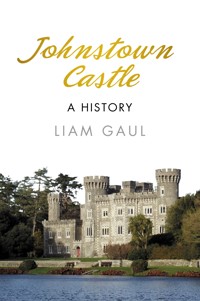
The harmony between great castles and their ornamental grounds is rarely seen in such perfect form as at Johnstown Castle. The gardens and grounds were designed by Daniel Robertson, of Powerscourt fame, assisted by Martin Day. The castle itself was home to two prominent Wexford families, the Esmondes and the Grogans, who have between them occupied the grounds from the fifteenth century right up to 1945. Today the castle is owned by Teagasc, the Agricultural and Food Development Authority, who manage the estate and provide access to the public. This book is the first published history of the castle, and in these pages author, historian and Wexford native Liam Gaul, explores the development of this imposing aspect of Wexford and national heritage from its earliest beginnings.
Sie lesen das E-Book in den Legimi-Apps auf:
Seitenzahl: 252
Veröffentlichungsjahr: 2014
Das E-Book (TTS) können Sie hören im Abo „Legimi Premium” in Legimi-Apps auf:
Ähnliche


















This book is dedicated to all those who have walked through the gates of Johnstown Castle demesne and to the ghosts of past residents there.
ACKNOWLEDGEMENTS
My special thanks to: Patrick Browne, Mairéad Esmonde, Aileen Cardiff, Patrick Sills, Edward McDonald and Sarah Lacey at Teagasc, Matt Wheeler and Michael Kelly.
I would also like to thank: D.F. Burchmore; Lily Burns; the Commonwealth War Graves Commission; Niamh Coulter; Alan Cuddihy; Dr Noel Culleton; Gráinne Doran; Laurence Doyle; the EPA in Johnstown; Marie Fane; The Friday Historians – Gloria, Nicky, Ken, Billy, Seamus and Tom; Jarlath Glynn; Ken Hemmingway; Lorcan Kehoe; Gerard Lawlor; Dr Patrick McKiernan; Peter Miller; Canon Arthur Minion; Matthew Murphy; Denise O’Connor-Murphy; the National Gallery of Ireland; the National Library of Ireland; Eoin Ó Donagáin; Gerry O’Leary; Dr Austin M. O’Sullivan; Nicky Rossiter; Georgina Rothwell; the churchwardens of St Mary the Virgin, Winchfield, Hampshire; Jimmy Taylor; Claire Verdun; Dan Walsh; and Michael, Ann, Claire, Susan and staff at Wexford Library.
Finally, I’d like to thank my wife and family for their interest, support and patience.
Photographic credits: Aerial view of Johnstown Castle – Gerry O’Leary; Capt. G.H. FitzGerald’s gravestone, France – Commonwealth War Graves Commission; Capt. M.G. Lakin’s gravestone, Tunisia – Denise O’Connor-Murphy; Johnstown Castle – EPA; Johnstown Castle – Irish Agricultural Museum Archive; midsummer night at the castle – Paddy Donovan; the National Gallery of Ireland and the National Library of Ireland.
CONTENTS
Title
Dedication
Acknowledgements
Introduction
1. The Normans and Esmondes Arrive
2. The Cromwellians
3. The Grogan Dynasty
4. A Gentleman Piper
5. Hero or Victim of the 1798 Rebellion?
6. A Diary by Thomas Lacy
7. Art, Artists and Artisans
8. Lord and Lady Maurice FitzGerald
9. Social Activities at the Castle
10. Joy and Sorrow
11. Johnstown at War
12. Castles, Gardens and Grounds
13. Architects and Landscapers – Robertson and Day
14. Fond Memory Brings the Light
15. A Johnstown Miscellany
16. The Act of 1945 – End of an Era
17. Peace Perfect Peace
18. The Irish Agricultural Museum
Appendix
Bibliography
About the Author
Copyright
Colour Plate
Johnstown Castle is a ten-minute drive from Wexford town centre. Indicated by brown road signs from the N25, it is situated a mile from the village of Murrintown.
GPS coordinates:
Garmin: N52° 17.782, W 006° 30.355
Tom Tom: N 52° 17.761, W 006° 30.335
Map courtesy of Karen Nolan Design
INTRODUCTION
Having worked in the analytical services for thirty years with An Fóras Talúntais and Teagasc, I became very familiar with Johnstown Castle, gardens and grounds. I enjoyed every aspect of this historic estate through the seasonal changes from the new spring growth through lush green lawns and flower-laden shrubbery of summer. I loved the multicoloured fallen leaves of autumn and oft-times the glittering sparkle of winter frost with the occasional dusting of snow which gave the landscape an eerie and serene effect.
The grey architectural pile of the castle dominates the scene like a sleeping giant with so many tales to relate of conquest, eviction and patriot allegiance. There are threads of a lost cause in the 1798 Rebellion and a story to be told from the final stately residents of the Anglo-Irish FitzGeralds, Earls of Kildare in the presence of Lord Maurice and Lady FitzGerald. The long tradition of occupancy from Norman knight and Cromwellian soldier to the demise of Lady Adelaide FitzGerald resulted in the castle and estate being gifted to the Irish State in 1945.
Since that time, Johnstown Castle and its grounds has served as a college for students of agriculture and has been the centre for experimental research and analytical services to the Irish farming community for over fifty successful years. Teagasc still continues with this very valuable service. In the past few years the campus has played host to the Environmental Protection Agency and the Department of Agricultural, Food and the Marine. The Irish Agricultural Museum is housed in farm buildings dating from 1810 and the Famine Museum is also incorporated within this museum of rural life in Ireland.
Over my years at Johnstown Castle my interest was stirred by the fascinating history of this special location just 4 miles from Wexford town and the result is this book which I trust will give enjoyment to its readers and stimulate further and more extensive research into this magical rural demesne. Current expectations indicate a restoration and refurbishment of the interior of the castle to its former glory and opulence.
Liam Gaul, 2014
1
THENORMANSANDESMONDESARRIVE
After the Vikings, the second invasion of the Wexford area was heralded by the arrival of the Normans. The coast of Wexford, separated as it is from Wales by a narrow stretch of sea, was the ideal landing place for the invading Normans and it opened the way forward to the rest of the country. Many historians consider this landing to be one of the most important events in Ireland’s history, resulting in change which has lasted to present times.
Following the death of the English king, Edward the Confessor, in January 1066, William, Duke of Normandy claimed the English throne in opposition to Harold II. He invaded and defeated Harold at the Battle of Hastings and was crowned King of England on Christmas Day 1066. William pushed through a more brutal transformation of English society than any other ruler, before or since. He built castles in all the major English towns and confiscated his opponent’s estates, transferring them to those he could rely on, nearly all Frenchmen, thus establishing an entirely new French-speaking ruling class.
One family which was granted land by William was the de Clare family who went on to become very influential. Richard de Clare, 2nd Earl of Pembroke from around 1130 to 1176, was a fearless soldier and leader who gained the nickname ‘Strongbow’. He inherited his father’s title as Earl of Pembroke in 1148 but no land as his father’s lands had been confiscated by Henry II when he came to the throne as punishment for supporting King Stephen (c. 1096-1154) during the civil war. Still out of favour at the English court, Strongbow decided to accept Dermot MacMurrough’s offer of marriage to his daughter Aoife and succession to the Kingdom of Leinster in return for military assistance. Dermot MacMurrough, King of Leinster, had been forced to flee his castle at Ferns after being opposed by the Irish chieftains. MacMurrough was said to have been a man of tall stature and strong build, with a warlike spirit, and was described as a despicable character who showed no mercy to his rivals. In 1166, after many years of strife and a litany of treacherous deeds and brutality the Irish chieftains turned on MacMurrough. He set out for Bristol, eventually going on to Normandy and obtained permission from Henry II, King of England, to recruit some of his subjects to help him regain his Kingdom of Leinster. It was Strongbow who agreed to help raise and lead this army.
Dermot returned in secret to Ferns Castle and awaited the arrival of the Norman invaders. When no invaders appeared, Dermot sent Maurice Regan, his secretary, to announce that all who would come over to help Dermot MacMurrough would get lands if they wished to stay and settle in Ireland. For those who wished to return at the finish of the campaign, money or cattle would be given. The offers made by MacMurrough proved too good to refuse. The first Norman knight to land in Ireland was Richard FitzGodbert de Roche in 1167, followed, in 1169, by the first contingent of a party of around thirty chain-mail clad knights landing at Baginbun on the south-west coast of County Wexford. It was on 1 May 1170 that an army of 390 men arrived under the leadership of Robert FitzStephen de Marisco. Meiler FitzHenry, Miles FitzGerald, son of the Bishop of St David’s, Maurice de Prendergast and Hervey de Montmorency were also part of the invasion force.
Norman knights. (Courtesy of Kevin Lewis)
Henry II was keeping a watchful eye on those freelance adventurers and the possibility of them setting up a Norman state in Ireland which might oppose him and undermine his power. In Ireland, the Normans would be out of reach of the king. Henry II therefore resolved his differences with Strongbow and the king sent his own army, under the leadership of Strongbow, to Ireland.
Strongbow embarked from Milford Haven with 1,200 men and landed near Waterford on 23 August 1170. The following day Strongbow was joined by Raymond le Gros and his men with the combined forces marched on the city of Waterford. Although it was bravely defended, it was soon taken by the Normans. Having established his authority in the city, Strongbow and Aoife, daughter of Dermot MacMurrough, were married as agreed beforehand. The Normans soon moved up through Ferns, taking the coast road to Dublin where the principal city was taken by assault and great slaughter. Further expeditions were taken by MacMurrough into Meath and other areas. A few months later MacMurrough died at his castle in Ferns on 1 May 1171 and was succeeded to the throne of Leinster by Strongbow.1
Esmondes
Esmonde is a derivation of the ancient family name of d’Osmond. The name d’Osmond reached England for the first time with the ancestors of this family as they migrated following the Norman Conquest of 1066. A branch afterwards returned to Normandy but the main family settled in Norfolk with another branch settling at Huntingdon in Lincolnshire. The name is a reference to Osmandville, on the River Bire in Bessin, Normandy, the principal place of residence of the family prior to the Norman Conquest. The family had been granted lands by Duke William of Normandy, their liege Lord, for their distinguished assistance at the Battle of Hastings.2 Geoffrey de Estmont, according to tradition, was one of the thirty knights who accompanied Robert FitzStephen to Ireland in 1169 and landed at Bannow, County Wexford. The Esmonde’s settled on the lands known as Johnstown and Rathlannon and commenced building tower-houses at those sites from around 1480. The original tower-house at Johnstown was built by Geoffrey de Estmont and his son, Maurice, built a tower-house on the same site at Rathlannon. Maurice died around 1225 and his son, John, built a castle on a new site, the current Johnstown Castle. John died in 1261 and on his death was succeeded by his son, Sir William Esmonde. Sir William had several sons including John who became Bishop of Ferns. Another son, Walter, became a Canon of the Diocese of Ferns and settled at Ballynastragh, near Gorey County Wexford.
These basic tower-houses were developed over the centuries by the different residents right up to Cromwellian times when the estate was confiscated and granted to Lt-Col John Overstreet. Up to that time the Esmonde family had established itself there and had risen to become high-ranking officials in both State and Church. Family members married into local families and built up considerable land holdings across County Wexford. The modern Esmonde family began with James Esmonde, around 1520, who married Isabel daughter of Thomas Rossiter of Rathmacknee castle.5 Their eldest son, Lawrence, married Eleanor Walsh, daughter of Walter Walsh of The Mountain, and their son William Esmonde succeeded his father to the estates. In turn, William married Margaret Furlong of Horetown, Foulksmill, County Wexford and they had seven sons and four daughters. Robert Esmonde was the eldest son and was described as one of the wealthiest gentlemen of the barony and was owner of considerable family property in north and south Wexford, including the castles of Johnstown, Ballytrent and Rathlannon with adjoining lands.6 Lawrence, the second son, renounced the Roman Catholic faith of his ancestors and adopted the new religion during the reign of Elizabeth I. He was duly appointed Major General of all the Crown forces in Ireland and was rewarded with a knighthood. It was Lawrence who built a castle and church at Lymbrick, Ballynastragh near Gorey in north County Wexford. He named the castle after the original Norman motte and bailey established by the Esmondes in the Barony of Forth. Lawrence was appointed Governor of Duncannon Fort in 1606, a position he held until his death in 1646. Lawrence had married a daughter of Grace O’Malley (1530-1603) and they had one son, Thomas. He was reared by his mother in Connaught as she feared he might be brought up as a Protestant. Sir Lawrence, although not having divorced his wife, married a second time, to Elizabeth Butler. They had no issue. On the death of his father, the estates passed to Sir Thomas. Following the confiscations of the Cromwellian period, parts of the estates were granted to Lawrence Esmonde, third son of Sir William of Johnstown, and it was Sir Lawrence who built Huntingdon Castle in Clonegal in 1625, on the Wexford–Carlow border. By this time Lawrence had been created Baron of Lymbrick. After his death in 1646, Sir Lawrence was interred in the vault of his church at Lymbrick.7
During the Cromwellian Confiscations, the Johnstown Esmondes, who were Catholic, were evicted and their estate granted to Colonel John Overstreet and later came into the possession of the Grogan family. The Ballynastragh lands were also confiscated together with their lands at Ballytramont, near Castlebridge, outside the town of Wexford and were granted to the Duke of Ablemarle (General Richard Monck). It took the Esmonde family sixty years and a huge amount of money to get back parts of their estates in north Wexford.
Sir Thomas Esmonde married Ellice FitzGerald, daughter of Sir John FitzGerald, and they had three sons, Lawrence, James and Patrick. The eldest son, Lawrence, inherited the title and as Sir Lawrence once again reoccupied Huntingdon Castle in 1682. The line of the Esmondes came down through the descendants of Sir Thomas as the 3rd, 4th, 5th and 6th baronets residing at Huntingdon Castle. Following the death of the 7th baronet, Sir James, in 1750 the title devolved to Thomas Esmonde of Ballynastragh who then became Sir Thomas.
Thomas had a brother James, a Franciscan Friar, killed as he was hearing confessions in the friary in Wexford during the 1798 insurrection.8 Another brother, John, a medical doctor, was hanged on Carlisle Bridge, Dublin, for his part in the rebellion. The property at Ballynastragh was confiscated because of the family’s involvement in the rebellion. As Thomas had no family the title passed on to Dr John’s eldest son, also named Thomas. He eventually regained the property and lands at Ballynastragh in 1816. The new baronet married twice, firstly to Mary Payne in 1852 and secondly to Sophia Maria Knox Grogan Morgan of Johnstown Castle. Having been confiscated by the Cromwellians the Johnstown Castle estate had once again returned into the possession of the Esmonde family, albeit for a short time. Sir Thomas Esmonde, 9th Baronet died in 1868 aged 82 years.9 As there was no issue, the Esmonde link with Johnstown was broken.
Notes
1 For an in-depth assessment of Dermot MacMurrough, King of Leinster and the Norman invasion of Ireland the author suggests the following publications: The Norman Invasion of Ireland, Richard Roche (Anvil, 1973);Diarmait, King of Leinster (Anvil, 1973) by Nicholas Furlong (Revised in 2000 by Mercier Press, Cork); Arrogant Trespass, Dr Billy Colfer (Duffry Press, 2002).
2Genealogical Memoir of the family of Montmorency by Hervey de Montmorency-Morres, p.583 (Paris, 1817).
3 See The Dialect of Forth and Bargy, Co. Wexford, Ireland, T.P. Dolan, Diarmaid Ó Muirithe, p.7.
4 Gordon, History of Ireland, Vol. 1, pp.81-82.
5 Thomas Rossiter’s son, Michael, brother of Isabel, was born in 1648 in Bargy Castle where the family were living at that time. He was ordained in Lisbon in 1672. He was Dean of the Dioceses of Ferns in 1692 when he was nominated for the bishopric by King James II. He was consecrated bishop in 1698 and in July was named as one of the four Catholic prelates then supposed to be in the country. In 1704, he registered as parish priest of Killenick, Kilmacree and Rathmacknee. Bishop Rossiter was living in Ringaheen where he died in 1709. Tradition says that his remains are buried with his ancestors in the churchyard of Rathmacknee. The Secular Priests of the Diocese of Ferns, Revd John V. Gahan, p.399.
6The Castles of County Wexford, W.H. Jeffrey, p.21.
7Genealogical Memoir of the family of Montmorency by Hervey de Montmorency-Morres, p.583/84 (Paris, 1817).
8 James Esmonde’s name is shown on a list of friars who were killed during the Cromwellian massacre in the Bull Ring and the 1798 Rebellion.
9The Wexford Gentry, Art Kavanagh and Rory Murphy, pp.97-111.
2
THECROMWELLIANS
A wet and stormy day at the beginning of October 1649 heralded the arrival of one of the most notorious visitors to Wexford town. The fifty-years-old Oliver Cromwell, together with 7,000 foot soldiers and 2,000 horsemen, camped on the north-west side of the town. His ships had sailed down the coast with his supplies and siege guns and soon blockaded the entrance to Wexford Harbour. He had already taken Enniscorthy Castle on his way to Wexford when the garrison surrendered without a blow. Cromwell had hoped to take Wexford town in a similar manner as the town, with its exceptionally strong 22ft high walls, would provide protection and winter quarters for his army. He had immediately taken the Fort of Rosslare when his cavalry rode across the isthmus as on seeing the approaching soldiers the defenders had evacuated the fort. The gun emplacements at the fort were trained seawards and were of little use against a land attack.
The Wexford town garrison, under the command of David Sinnott, refused to surrender unless certain conditions were met. These Cromwell refused and, following a short siege, Cromwell’s forces succeeded in breaching the town walls on 11 October and sacked the town.
Following his Irish campaign, Cromwell returned to England in 1650 and continued to rise through the ranks, eventually being declared Lord Protector for life. He was formally installed at Westminster Hall on 16 December 1653. By 1656 he was rewarding his loyal followers with knighthoods and to those soldiers and officers who remained in Ireland, parcels of land and property which were confiscated from their Catholic owners. The Esmonde family at Johnstown were Roman Catholics and so their land was liable for confiscation and they would have been on the list of Transplantable Catholics in 1653.10 It was about this date that the abstract of the title to the estates of Johnstown, Whitestown, Little Hayestown and Scoughmolin all formerly the estate of William Esmonde, who was involved in the Rebellion of 1641,11 were set out to Lt Col John Overstreet in lieu of payment for services rendered to Cromwell.12
Following the surrender of Colonel Wogan on the 17 August 1650, Duncannon Fort13 came into the hands of the Parliamentarians, with John Overstreet appointed as temporary governor. This same Colonel Overstreet was granted the Johnstown Castle estate in 1652, shortly after its confiscation from the Esmonde family. Upon which an order from Waterford, dated 22 July 1652, was sent to the Commissioners of Revenue at Wexford to:
Take an account upon oath of such money as was formerly ordered for repairing of ye said garrison, and to certify upon a Survey taken how much more money will be necessary to finish ye repairs of ye said Castle, and build competent lodgings for ye soldiers theirin, and likewise to cause a Survey to be made of ye probability of ye sinking of a well within ye said Castle and to reporte their opinions of the charge that may arise thereby, that further order may be taken thereupon.14
In May 1655, Commissary Withers of Wexford, on the recommendation of Major Symner, was appointed to ‘repaire to Duncannon Fort, and having well viewed and considered the present condition thereof, is to report what repaires will bee necessary together with an estimate of the charge thereof and what else he shall think fitt’.15
Major Overstreet was still governor of Wexford town in 1653 when, on application to the council, the former occupant of Johnstown Castle and estate, Sir Thomas Esmonde, was granted protection until 1 August 1653. Sir Thomas was allowed to ‘stay in the house he now lives in neer to Wexford’. This order was signed by four of the council members – Charles Fleetwood, Edward Luttrell, Miles Corbet and John Jones – at Dublin on 23 April 1653.16 Wexford Precinct had its own commissioners appointed for examining the delinquency of the Irish and other proprietors according to the Act for the Settlement of Ireland.17 On his promotion to lieutenant colonel, Overstreet served as part of a Committee for County Wexford with Col Sadlier; Col Puckle and Capt. Camby for the apprehension and transplantation of Irish Papists: those who are to be ‘kept in restraint’ and those who are to be released.
Lt Col Overstreet and his wife Bennett became sole occupants of Johnstown Castle and estate following its confiscation from the Esmonde family. The Overstreets had no issue and after the death of her husband, Bennett married Edward Withers, a marriage also without issue. Research has shown that this is the same Edward Withers who had served with Overstreet on the various committees in Wexford. A former Master Gunner with the Cromwellian train of artillery, Edward Withers was in command of the gunners of the Wexford Garrison and the adjacent one, as shown in his request to be supplied with ammunition dated 5 July 1652.18 In an order dated 8 September 1654, Withers salary as Woodreve and Commissioner of Survey was to be increased from £80 to £100 a year.19 On 26 May 1656, an order prohibiting the exportation of timber and for the preservation of wood in and about Wexford was received by Edward Withers and John Moore. The order also instructed both men that timber owned by the State and that belonging to private persons was not to be mixed together in the wood-yard at Wexford.20
Edward Withers was obviously becoming quite well-off and in 1657 he leased 44 acres of land at Maudlintown, in the Liberties of Wexford, at £8 a year. In the same year he rented ‘one waste plott of ground with ye walls of an old house thereto adjoining. 1 slate house in St. Patrick’s Parish. 1 thatcht cabin in Selskars’ Parish all for the fee of £1 10s.’21 Further property was acquired by Withers in St Iberius’ parish. In 1661 Withers was one of twenty-one burgesses of the Corporation of Wexford.22 On his marriage to Bennett Overstreet he entered into a recognisance of £300 and took the lease of Johnstown Castle and estate in 1660.23
A niece of Colonel John Overstreet, Elizabeth Lacy, had married a John Reynolds from Wexford town and Reynolds is listed as a property holder in the town. Col. John Reynolds, the officer rank cited by historian P.H. Hore24 was one of ‘The Forty-Nine’, a name given to those officers and soldiers who had seen service in Ireland before 5 June 1649, some four years before the arrival of Cromwell. They were ordered the payment of their arrears by Cromwell in 1654-55, and certain lands and houses were reserved for them, but they were overtaken by the Restoration and the officers were only satisfied.25
In 1668, Edward and Bennett Withers sold the castle and estate to Col John Reynolds and his wife for £500. John and Elizabeth Reynolds had three daughters, Mary, Jane and Susan, who were heirs to the estate in equal shares.
At the time John Reynolds acquired the castle, Cornelius Grogan, a yeoman, also bought property within the town. It is likely both men would have known each other. Grogan was a merchant, born c. 1635, the son of John Grogan, a carpenter, from Enniscorthy. Cornelius Grogan married Mary McDonnell, from Antrim, and their only son, John, was born in 1653. It was this John Grogan who married Mary Reynolds and thus began the Grogan family association with Johnstown Castle. Soon after, John Grogan, purchased his sister-in-laws’ shares in the estate. On the death of his wife in 1690 and the death one year later of Edward Withers, John Grogan becomes the sole owner of Johnstown Castle Estate. This was the beginning of the Grogan dynasty.
Notes
10The Wexford Gentry, Vol. 1, Art Kavanagh and Rory Murphy, pp.104-105.
11 The Rebellion of 1641 commenced on 23 October and continued for seven months to May 1642. It came about as Charles I attempted to maintain control over Ireland and his own parliament. On the eve of the planned attack on Dublin Castle, at that time the seat of English authority in Ireland, the proposed rising was compromised, its leaders arrested and the attack never came about. This led to the occupation of Ireland after Oliver Cromwell’s New Model Army decisively defeated the Irish Catholics and Royalists and re-conquering the country. The almost complete disenfranchisement of the native Irish Catholics and the increasing seizure of land and power from the established English settlers known as the ‘Old English’. Irish History, Séamus Mac Annaidh, pp.106-107.
12 The name Overstreet is a compound of two elements usually an adjective indicating size or an attractive quality as a prefix attached to a given or locational name. Overstreet is such a combination meaning a person who lived at a Roman road over a river bank. The name was first found in Cheshire where the family held a seat as lords of the manor.
13 ‘Duncannon Fort is situated on a rocky point on the County of Wexford shore. The principal battery to the sea is about 40ft above high water. It is very well situated to command the channel which becomes very narrow where it is opposite to the fort. The fort to the land has a good scarp wall about 23ft high with a sufficient parapet to resist common shot, a ditch near 30ft wide, a covered way and glacis. The ground in front descends to about 80 yards distance, from thence ascends gradually to a distance of three or four hundred yards, part of it above the level of the parapet. The Barracks being parallel to the Rampart cover the Parade, and a Traverse covers the guns that point to a ship’s broadside. The guns are of 24 and 18 pounders, in number 25.’ P.H. Hore, History of the Town and County of Wexford, Vol. 4, p.253.
14 Ibid., p.224.
15 Ibid., p.225.
16 P.H. Hore, History of the Town and County of Wexford,Vol. 5, p.309.
17 Members of the Commissioners in the Wexford Precinct were: Col Thomas Sadlier, Col John Overstreet, William Woodward, Edward Tomlins, Thomas Hart, John Walker, Ambrose Andrews, Barth Hussey, Thomas Dowse, Thomas Dancer, John Moore, Mathew Stoddard and Edward Withers. P.H. Hore, History of the Town and County of Wexford, Vol. 5, p.310.
18 Ibid., p.307.
19 Ibid., p.314.
20 Ibid., p.319.
21 Ibid., p. 321,322.
22 Ibid., p.351.
23 Ibid., p.328.
24 Ibid., p.348.
25 Ibid., p.350.
3
THEGROGANDYNASTY
The prefix ‘O’ to the surname Grogan as O’Grogan, or Ó Gruagáin in Irish, was omitted in the seventeenth century and does not seem to have been resumed since. According to Edward MacLysaght, the name Grogan is listed as one of the principal Irish surnames in the barony of Farbill in County Westmeath and in Ballyboy, County Offaly. In the seventeenth century the pedigree of the principal landed family of that name, Grogan of Johnstown Castle, County Wexford, was registered at the Office of Arms in Dublin Castle. In 1878 the Grogan estates totalled upwards of 13,000 acres in counties Wexford, Wicklow, Westmeath and Offaly.26
John Grogan
John Grogan and his wife hailed from County Antrim and settled in County Wexford, having been granted houses and lands in Wexford town by King Charles II in the twentieth year of the King’s reign (1667).
The Grogans had the following issue: Cornelius, John’s heir; John, who lived in Enniscorthy; Edward; and Anne. She married Sir Moses Hall in 1630.
Cornelius Grogan
On the death of his father, Cornelius succeeded to the estate and married Mary Raby. They had a son, John, and two daughters. Following Mary’s death in May 1685, Cornelius married Margaret Codd on 26 July that same year at Wexford. There was no issue from this marriage.
John Grogan
Cornelius was succeeded by his only son, John Grogan, born in 1653 who married Mary Reynolds, daughter and co-heiress of John Reynolds of Wexford. John Grogan and Mary Reynolds had the following children:
Elizabeth, born 2 December 1684. She married Richard Waddy of Cloghest Castle, County Wexford. They had a son and a daughter. Elizabeth died on 19 June 1709, aged just 25 years.
John, born 14 January 1686 at Wexford. He died in infancy and was buried in Wexford on 4 June 1686.
Cornelius, born 23 March 1687, who was heir to the estate.
John, born 27 July 1689 at Wexford. He died aged 14 years and was buried at Wexford on 14 October 1703.
William, born 6 October 1690. He died aged 13 years and buried in Wexford on 2 November 1703.
John Grogan’s wife, Mary, by whom the Johnstown Castle estate came into the family, died 28 October 1690 and is buried in the chancel of St Patrick’s church in Wexford. John Grogan then married Anne Smith Linington (widow), one of three daughters of Captain Charles Smith, on 18 January 1691.27 They had four sons and two daughters:
Nicholas, born 18 June 1692, died 26 November 1758 aged 66 years. He lived at Ardcandrisk, County Wexford.
George, born 17 November 1693. He worked in the East India Company’s Service. He died in India on 11 June 1754 aged 61 years. He had one daughter, Anne.
Edward, born 1 April 1695. He married Anne Lucas from County Carlow. and had three sons, John, Edward and Lawrence.




