


5,99 €
Mehr erfahren.
- Herausgeber: Prestel
- Kategorie: Geisteswissenschaft
- Sprache: Englisch
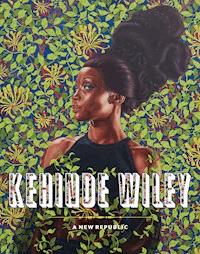
Filled with reproductions of Kehinde Wiley’s bold, colorful, and monumental work, this book encompasses the artist’s various series of paintings as well as his sculptural work—which boldly explore ideas about race, power, and tradition.
Das E-Book können Sie in Legimi-Apps oder einer beliebigen App lesen, die das folgende Format unterstützen:
Seitenzahl: 216
Veröffentlichungsjahr: 2015
Ähnliche




















Foreword
ARNOLD L. LEHMAN
Preface and Acknowledgments
EUGENIE TSAI
Introduction
EUGENIE TSAI
Kehinde Wiley: The Artist and Interpretation
CONNIE H. CHOI
Plates and Commentaries
Texts by Lee Ambrozy, Elizabeth Armstrong, Richard Aste, Naomi Beckwith, Kirsten Pai Buick, Beth Citron, Sara Cochran, Jeffrey Deitch, LaTasha N. Nevada Diggs, Kevin D. Dumouchelle, Quincy Flowers, David J. Getsy, Lewis R. Gordon, Rujeko Hockley, Christine Y. Kim, Venus Lau, Thomas J. Lax, Catharina Manchanda, Kobena Mercer, Valerie J. Mercer, Tumelo Mosaka, Steven Nelson, Molly Nesbit, Tavia Nyong’o, Annie Paul, Megha Ralapati, John B. Ravenal, Joanna Montoya Robotham, Franklin Sirmans, Claire Tancons, Touré, Murtaza Vali, Nicola Vassell, Rebecca Walker, and Deborah Willis
Notes on the Contributors
Selected Bibliography
Brooklyn Museum Board of Trustees
Index of Illustrations
Notes
FIGURE 1. Go, 2003. Oil on panel; five panels, each: 48 × 120 × 2½ in. (121.9 × 304.8 × 6.4 cm); overall: 240 × 120 in. (609.6 × 304.8 cm). Brooklyn Museum; Mary Smith Dorward Fund and Healy Purchase Fund B, 2003.90.1a–e. © Kehinde Wiley. (Photo: Brooklyn Museum)
Foreword
ELEVEN YEARS after Kehinde Wiley’s first-ever solo museum exhibition, Passing/Posing, opened here at the Brooklyn Museum in 2004, we are proud to present Kehinde Wiley: A New Republic, a celebration of this major American artist and of our institution’s long-term commitment to him. An overview of Wiley’s prolific career from 2001 to the present, A New Republic features spectacular portraits of black men—the artist’s signature works—along with exciting new developments: portraits of women, monumental sculpture, and “paintings” in stained glass. The exhibition allows us to regard the remarkable sweep of his multifaceted career.
Wiley’s work consistently reaches out to engage the Museum’s visitors. Three large male portraits and an illusionistic ceiling painting of break-dancers (figure 1), from the Passing/Posing series, have long been on view in a chapel-like space in our Contemporary Art Galleries and are among the most visited works in the Museum. This ensemble, along with Napoleon Leading the Army over the Alps (figure 3), which holds pride of place in our lobby, inspires conversations about issues of self-representation, entitlement, power, and privilege so relevant to our lives in this era of cultural transformation.
With its many knowing references to the grand European tradition of painting, Wiley’s work affirms the significant role art from the past can play in forming a contemporary vision and, in turn, how that vision can illuminate older art. This play between past and present is particularly important at the Brooklyn Museum, where a distinguished historical, global collection provides a context for art of the here and now.
Brooklyn is now one of the world’s creative capitals. Kehinde Wiley: A New Republic is the most recent of our many exhibitions over the past years showcasing art created by the brightest and most talented based in the borough and now applauded worldwide, among them Swoon, Wangechi Mutu, Fred Tomaselli, Mickalene Thomas, Lorna Simpson, and the Bruce High Quality Foundation, along with the many artists in Open House: Working in Brooklyn (2004), Crossing Brooklyn: Art from Bushwick, Bed-Stuy, and Beyond (2014), and the series Raw/Cooked (2011–13).
I extend my gratitude to Eugenie Tsai for organizing this exhibition in collaboration with the artist, and to Lance Singletary for producing a spectacular installation design. I am also most grateful to Suzi and Andrew B. Cohen for their extremely generous long-term loan of Napoleon Leading the Army over the Alps, which reminds me and (I hope) all our visitors every day of the critical role that museums play in communicating the history of art. I would like to acknowledge Ellen Holtzman and the Henry Luce Foundation for their generous and steadfast support. Warm thanks to our great friend Sean Kelly of the Sean Kelly Gallery, New York, for his visionary support of Kehinde’s work, and to his gallery colleague, Janine Cirincione; as well as to Julie Roberts and Bennett Roberts of Roberts & Tilton, Los Angeles, and Meghan Clohessy of the Wiley Studio for their essential roles in bringing this exhibition to life.
We are truly grateful for the generosity of the funders who have made this exhibition possible, including the Henry Luce Foundation, the National Endowment for the Arts, and Grey Goose Vodka, with additional support provided by John and Amy Phelan, Sean Kelly Gallery, Stephen Friedman Gallery, and Roberts & Tilton.
Most of all, a major Brooklyn shout-out to Kehinde Wiley, whose talent and exuberance inspire us all.
We extend special gratitude to Elizabeth A. Sackler, Chair, and every member of our Board, whose confidence and active engagement make it possible to maintain the high level of exhibition and publication programming exemplified by Kehinde Wiley: A New Republic.
Arnold L. Lehman
Shelby White and Leon Levy Director
Brooklyn Museum
FIGURE 2. Saint Andrew, 2006. Oil on canvas, 96 × 84 in. (243.8 × 213.4 cm). Courtesy of Sean Kelly, New York; Galerie Daniel Templon, Paris; and Stephen Friedman Gallery, London. © Kehinde Wiley
Preface and Acknowledgments
I HAVE enjoyed the privilege and pleasure of working on the exhibition and book Kehinde Wiley: A New Republic. Yet one of the great challenges in a project of this scope is the question of how to do justice to the subject, not only by representing a generous selection of work, but also by eliciting new ideas about the artist. After all, much has already been written about Kehinde Wiley and his art.
To provoke fresh insights, the format of this book departs somewhat from existing conventions of long-form scholarship and critical writing, presenting instead a series of short commentaries, each devoted to an individual work or series of works, and commissioned from thirty-five invited individuals. Because Wiley’s paintings make reference to sources from both art history and contemporary popular culture, the writers we invited are not only art historians and critics but also poets, fiction writers, and cultural commentators. The chronological arrangement of the plates allows Wiley’s career to gradually unfold, accompanied by the multiple responses of our nearly three dozen writers.
To prepare the reader for the collage-like juxtaposition of these varied voices and approaches, we have also produced a brief history of interpretations of the artist’s work, retracing the thematic strands that have emerged in the discourse on Wiley to date and outlining the context in which our commentators add their new insights. Against that background, the plate section commentaries offer a snapshot in time of how so many different people are thinking about Wiley at this moment in his career.
Kehinde Wiley: A New Republic is the result of the collaboration of many individuals within and outside the Museum. I would like to thank Arnold Lehman, the Shelby White and Leon Levy Director of the Brooklyn Museum, for giving me the opportunity to work on this important exhibition. I extend my deepest appreciation to Rujeko Hockley, Assistant Curator, Contemporary Art, and Adrianne Koteen, Research Assistant, Contemporary Art, for their dedication and diligence in preparing the materials for this volume and exhibition, as well as to Marguerite Vigliante, Department Coordinator. I am grateful to Deana West, Registrar for Exhibitions and International Loans, for managing the many details of the incoming loans; to Alice Cork, Picture Researcher, Digital Collections and Services, for tracking down the needed photographs and related caption information; and to Brian Pinkley, registrar at the Wiley studio, for active support and help. A very special thank-you to Connie Choi, and to the other catalogue contributors, who graciously agreed to participate and produced compelling pieces under a short deadline. I am grateful as well to Larissa Harris, Curator at the Queens Museum, for generously sharing portions of her research on Andy Warhol’s series 13 Most Wanted Men. And, of course, we are greatly indebted to the lenders of the artworks, who made this exhibition possible by agreeing to part with their treasured works for an extended period of time.
Eugenie Tsai
John and Barbara Vogelstein Curator of Contemporary Art
Brooklyn Museum
Introduction
EUGENIE TSAI
WHAT MAKES Kehinde Wiley’s Napoleon Leading the Army over the Alps (2005; figure 3) such a compelling work of art? This question comes to mind nearly every day as I pass by this popular painting in the lobby of the Brooklyn Museum, where it attracts spectators of all ages, eliciting responses of surprise, curiosity, and delight. Perhaps it is the size of the canvas, which holds its own as it presides over an enormous public space. Perhaps it is the flashy gilded frame. Perhaps it is the subject: a young African American man in contemporary urban dress—camouflage pants and shirt and Timberland boots—astride a rearing steed. Perhaps it is the odd sense of dissonance between the contemporary black male subject, who could have walked in from the neighborhood this morning, and the title of the work, which identifies the subject as a renowned European general from the historical past. Heightening the feeling of dislocation is the picture’s setting: a rocky outcropping inscribed with names of past great military commanders and silhouetted, with the figure, against a rich red ground with a gold decorative pattern resembling brocade.
FIGURE 3. Napoleon Leading the Army over the Alps (detail of plate 6)
A label informs us that Wiley’s painting takes as its point of departure a nineteenth-century history painting titled Napoleon Bonaparte Crossing the Alps at Great St. Bernard Pass (1801; figure 15), by the French artist Jacques-Louis David. Reproduced on the label, the comparative image reveals that Wiley’s painting preserves the pose and composition in David’s piece while swapping out the heroic figure of Napoleon for an unnamed African American man. Wiley’s deliberate riff on this art-historical masterpiece skillfully engineers a collision between past and present that raises questions about race, gender roles, and the politics of representation. In this regard, is emblematic of Wiley’s artistic enterprise. Since 2001, his practice has been based on transforming historical portraits originally commissioned from Old Masters, intended to convey the status and power of the sitter, into monumental contemporary paintings that, by placing black subjects front and center, draw attention to their absence from canonical works of art history and from our cultural narratives. , the first museum survey exhibition of the artist’s body of work, presents a selection of his portrait paintings as well as recent explorations in sculpture and stained glass, allowing us to see how his expansive career has unfolded from 2001 to the present.
Lesen Sie weiter in der vollständigen Ausgabe!
Lesen Sie weiter in der vollständigen Ausgabe!
Lesen Sie weiter in der vollständigen Ausgabe!
Lesen Sie weiter in der vollständigen Ausgabe!
Lesen Sie weiter in der vollständigen Ausgabe!
Lesen Sie weiter in der vollständigen Ausgabe!
Lesen Sie weiter in der vollständigen Ausgabe!
Lesen Sie weiter in der vollständigen Ausgabe!
Lesen Sie weiter in der vollständigen Ausgabe!
Lesen Sie weiter in der vollständigen Ausgabe!
Lesen Sie weiter in der vollständigen Ausgabe!
Lesen Sie weiter in der vollständigen Ausgabe!
Lesen Sie weiter in der vollständigen Ausgabe!
Lesen Sie weiter in der vollständigen Ausgabe!
Lesen Sie weiter in der vollständigen Ausgabe!
Lesen Sie weiter in der vollständigen Ausgabe!
Lesen Sie weiter in der vollständigen Ausgabe!
Lesen Sie weiter in der vollständigen Ausgabe!
Lesen Sie weiter in der vollständigen Ausgabe!
Lesen Sie weiter in der vollständigen Ausgabe!
Lesen Sie weiter in der vollständigen Ausgabe!
Lesen Sie weiter in der vollständigen Ausgabe!
Lesen Sie weiter in der vollständigen Ausgabe!
Lesen Sie weiter in der vollständigen Ausgabe!
Lesen Sie weiter in der vollständigen Ausgabe!
Lesen Sie weiter in der vollständigen Ausgabe!
Lesen Sie weiter in der vollständigen Ausgabe!
Lesen Sie weiter in der vollständigen Ausgabe!
Lesen Sie weiter in der vollständigen Ausgabe!
Lesen Sie weiter in der vollständigen Ausgabe!
Lesen Sie weiter in der vollständigen Ausgabe!
Lesen Sie weiter in der vollständigen Ausgabe!
Lesen Sie weiter in der vollständigen Ausgabe!
Lesen Sie weiter in der vollständigen Ausgabe!
Lesen Sie weiter in der vollständigen Ausgabe!
Lesen Sie weiter in der vollständigen Ausgabe!
Lesen Sie weiter in der vollständigen Ausgabe!
Lesen Sie weiter in der vollständigen Ausgabe!
Lesen Sie weiter in der vollständigen Ausgabe!
Lesen Sie weiter in der vollständigen Ausgabe!
Lesen Sie weiter in der vollständigen Ausgabe!
Lesen Sie weiter in der vollständigen Ausgabe!
Lesen Sie weiter in der vollständigen Ausgabe!
Lesen Sie weiter in der vollständigen Ausgabe!
Lesen Sie weiter in der vollständigen Ausgabe!
Lesen Sie weiter in der vollständigen Ausgabe!
Lesen Sie weiter in der vollständigen Ausgabe!
Lesen Sie weiter in der vollständigen Ausgabe!
Lesen Sie weiter in der vollständigen Ausgabe!
Lesen Sie weiter in der vollständigen Ausgabe!
Lesen Sie weiter in der vollständigen Ausgabe!
Lesen Sie weiter in der vollständigen Ausgabe!
Lesen Sie weiter in der vollständigen Ausgabe!
Lesen Sie weiter in der vollständigen Ausgabe!
Lesen Sie weiter in der vollständigen Ausgabe!
Lesen Sie weiter in der vollständigen Ausgabe!
Lesen Sie weiter in der vollständigen Ausgabe!
Lesen Sie weiter in der vollständigen Ausgabe!
Lesen Sie weiter in der vollständigen Ausgabe!
Lesen Sie weiter in der vollständigen Ausgabe!
Lesen Sie weiter in der vollständigen Ausgabe!
Lesen Sie weiter in der vollständigen Ausgabe!
Lesen Sie weiter in der vollständigen Ausgabe!
Lesen Sie weiter in der vollständigen Ausgabe!
Lesen Sie weiter in der vollständigen Ausgabe!
Lesen Sie weiter in der vollständigen Ausgabe!
Lesen Sie weiter in der vollständigen Ausgabe!
Lesen Sie weiter in der vollständigen Ausgabe!
Lesen Sie weiter in der vollständigen Ausgabe!
Lesen Sie weiter in der vollständigen Ausgabe!
Lesen Sie weiter in der vollständigen Ausgabe!
Lesen Sie weiter in der vollständigen Ausgabe!
Lesen Sie weiter in der vollständigen Ausgabe!
Lesen Sie weiter in der vollständigen Ausgabe!
Lesen Sie weiter in der vollständigen Ausgabe!
Lesen Sie weiter in der vollständigen Ausgabe!
Lesen Sie weiter in der vollständigen Ausgabe!




