


199,99 €
Mehr erfahren.
- Herausgeber: John Wiley & Sons
- Kategorie: Fachliteratur
- Serie: Polymer Science and Plastics Engineering
- Sprache: Englisch
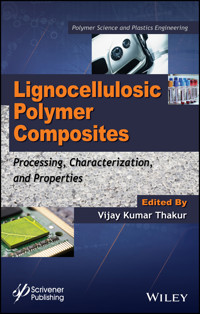
The book presents emerging economic and environmentally friendly lignocellulosic polymer composites materials that are free from side effects studied in the traditional synthetic materials. This book brings together panels of highly-accomplished leading experts in the field of lignocellulosic polymers & composites from academia, government, as well as research institutions across the globe and encompasses basic studies including preparation, characterization, properties and theory of polymers along with applications addressing new emerging topics of novel issues. * Provide basic information and clear understanding of the present state and the growing utility of lignocellulosic materials from different natural resources * Includes contributions from world-renowned experts on lignocellulosic polymer composites and discusses the combination of different kinds of lignocellulosic materials from natural resources * Discusses the fundamental properties and applications of lignocellulosic polymers in comparison to traditional synthetic materials * Explores various processing/ mechanical/ physic-chemical aspects of lignocellulosic polymer composites
Sie lesen das E-Book in den Legimi-Apps auf:
Seitenzahl: 1056
Veröffentlichungsjahr: 2014
Ähnliche
















Contents
Cover
Half Title page
Title page
Copyright page
Dedication
Preface
Part I: Lignocellulosic Natural Polymers Based Composites
Chapter 1: Lignocellulosic Polymer Composites: A Brief Overview
1.1 Introduction
1.2 Lignocellulosic Polymers: Source, Classification and Processing
1.3 Lignocellulosic Natural Fibers: Structure, Chemical Composition and Properties
1.4 Lignocellulosic Polymer Composites: Classification and Applications
1.5 Conclusions
References
Chapter 2: Interfacial Adhesion in Natural Fiber-Reinforced Polymer Composites
2.1 Introduction
2.2 PLA-Based Wood-Flour Composites
2.3 Optimizing Interfacial Adhesion in Wood-Polymer Composites
2.4 Evaluation of Interfacial Properties
2.5 Conclusions
References
Chapter 3: Research on Cellulose-Based Polymer Composites in Southeast Asia
3.1 Introduction
3.2 Sugar Palm (Arenga pinnata)
3.3 Oil Palm (Elaeis guineensis)
3.4 Durian (Durio zibethinus)
3.5 Water Hyacinth (Eichhornia crassipes)
3.6 Summary
References
Chapter 4: Hybrid Vegetable/Glass Fiber Composites
4.1 Introduction
4.2 Vegetable Fiber/Glass Fiber Thermoplastic Composites
4.3 Intra-Laminate Vegetable Fiber/glass Fiber Thermoset Composites
4.4 Inter-Laminate Vegetable Fiber/glass Fiber Thermoset Composites
4.5 Concluding Remarks
Acknowledgement
References
Chapter 5: Flax-Based Reinforcement Requirements for Obtaining Structural and Complex Shape Lignocellulosic Polymer Composite Parts
5.1 Introduction
5.2 Experimental Procedures
5.3 Results and Discussion
5.4 Discussions
5.5 Conclusions
References
Chapter 6: Typical Brazilian Lignocellulosic Natural Fibers as Reinforcement of Thermosetting and Thermoplastics Matrices
6.1 Introduction
6.2 Experimental
6.3 Results and Discussion
6.4 Conclusions
Acknowledgements
References
Chapter 7: Cellulose-Based Starch Composites: Structure and Properties
7.1 Introduction
7.2 Starch and Cellulose Biobased Polymers for Composite Formulations
7.3 Chemical Modification of Starch
7.4 Cellulose-Based Starch Composites
7.5 Conclusions/Perspectives
References
Chapter 8: Spectroscopy Analysis and Applications of Rice Husk and Gluten Husk Using Computational Chemistry
8.1 Introduction
8.2 Methodology
8.3 Results and Discussions
8.4 Conclusions
References
Chapter 9: Oil Palm Fiber Polymer Composites: Processing, Characterization and Properties
9.1 Introduction
9.2 Oil Palm Fiber
9.3 Oil Palm Fiber Composites
9.4 Conclusions
References
Chapter 10: Lignocellulosic Polymer Composites: Processing, Characterization and Properties
10.1 Introduction
10.2 Palm Fibers
10.3 Pineapple Fibers
Acknowledgements
References
Part II: Chemical Modification of Cellulosic Materials for Advanced Composites
Chapter 11: Agro-Residual Fibers as Potential Reinforcement Elements for Biocomposites
11.1 Introduction
11.2 Fiber Sources
11.3 Fiber Extraction Methods
11.4 Classification of Plant Fibers
11.5 Properties of Plant Fibers
11.6. Properties of Agro-Based Fibers
11.7 Modification of Agro-Based Fibers
11.8 Conclusion
References
Chapter 12: Surface Modification Strategies for Cellulosic Fibers
12.1 Introduction
12.2 Special Treatments during Primary Processing
12.3 Other Chemical Treatments
12.4 Conclusions
References
Chapter 13: Effect of Chemical Functionalization on Functional Properties of Cellulosic Fiber-Reinforced Polymer Composites
13.1 Introduction
13.2 Chemical Functionalization of Cellulosic Fibers
13.3 Results and Discussion
13.4 Conclusion
References
Chapter 14: Chemical Modification and Properties of Cellulose-Based Polymer Composites
14.1 Introduction
14.2 Alkali Treatment
14.3 Benzene Diazonium Salt Treatment
14.4 o-hydroxybenzene Diazonium Salt Treatment
14.5 Succinic Anhydride Treatment
14.6 Acrylonitrile Treatment
14.7 Maleic Anhydride Treatment
14.8 Nanoclay Treatment
14.9 Some other Chemical Treatment with Natural Fibers
14.10 Conclusions
References
Part III: Physico-Chemical and Mechanical Behaviour of Cellulose/ Polymer Composites
Chapter 15: Weathering of Lignocellulosic Polymer Composites
15.1 Introduction
15.2 Wood and Plant Fibers
15.3 UV Radiation
15.4 Moisture
15.5 Testing of Weathering Properties
15.6 Studies on Weathering of LPCs
15.7 Conclusions
References
Chapter 16: Effect of Layering Pattern on the Physical, Mechanical and Acoustic Properties of Luffa/Coir Fiber-Reinforced Epoxy Novolac Hybrid Composites
16.1 Introduction
16.2 Experimental
16.3 Characterization of ENR-Based Luffa/Coir Hybrid Composites
16.4 Results and Discussion
16.4 Conclusions
Acknowledgements
References
Chapter 17: Fracture Mechanism of Wood-Plastic Composites (WPCS): Observation and Analysis
17.1 Introduction
17.2 Fracture Mechanism
17.3 Toughness Characterization
17.4 Fracture Observation
17.5 Fracture Analysis
17.6 Conclusions
References
Chapter 18: Mechanical Behavior of Biocomposites under Different Operating Environments
18.1 Introduction
18.2 Classification and Structure of Natural Fibers
18.3 Moisture Absorption Behavior of Biocomposites
18.4 Mechanical Characterization of Biocomposites in a Humid Environment
18.5 Oil Absorption Behavior and Its Effects on Mechanical Properties of Biocomposites
18.6 UV-Irradiation and Its Effects on Mechanical Properties of Biocomposites
18.7. Mechanical Behavior of Biocomposites Subjected to Thermal Loading
18.8 Biodegradation Behavior and Mechanical Characterization of Soil Buried Biocomposites
18.9 Conclusions
Reference
Part IV: Applications of Cellulose/ Polymer Composites
Chapter 19: Cellulose Composites for Construction Applications
19.1 Polymers Reinforced with Natural Fibers for Construction Applications
19.2 Portland Cement Matrix Reinforced with Natural Fibers for Construction Applications
References
Chapter 20: Jute: An Interesting Lignocellulosic Fiber for New Generation Applications
20.1 Introduction
20.2 Reinforcing Biofibers
20.3 Biodegradable Polymers
20.4 Jute-Reinforced Biocomposites
20.5 Applications
20.6 Concluding Remarks
Acknowledgement
References:
Chapter 21: Cellulose-Based Polymers for Packaging Applications
21.1 Introduction
21.2 Cellulose as a Polymeric Biomaterial
21.3 Cellulose as Coatings and Films Material
21.4 Nanocellulose or Cellulose Nanocomposites
21.5 Quality Control Tests
21.6 Conclusions
References
Chapter 22: Applications of Kenaf-Lignocellulosic Fiber in Polymer Blends
22.1 Introduction
22.2 Natural Fibers
22.3 Kenaf: Malaysian Cultivation
22.4 Kenaf Fibers and Composites
22.5 Kenaf Fiber Reinforced Low Density Polyethylene/Thermoplastic Sago Starch Blends
22.6 The Effects of Kenaf Fiber Treatment on the Properties of LDPE/TPSS Blends
22.7 Outlook and Future Trends
Acknowledgement
References
Chapter 23: Application of Natural Fiber as Reinforcement in Recycled Polypropylene Biocomposites
23.1 Introduction
23.2 Recycled Polypropylene (RPP) - A matrix for Natural Fiber Composites
23.3 Natural Fiber-Based Composites – An Overview
23.4 Conclusion
References
Index
Lignocellulosic Polymer Composites
Scrivener Publishing100 Cummings Center, Suite 541JBeverly, MA 01915-6106
Polymer Science and Plastics Engineering
The series combines the two interdisciplinary fields of polymer science and plastics engineering to publish state of the art advances in the science and engineering of polymers and plastics. The book series publishes both short and standard length monographs, textbooks, edited volumes, handbooks, practical guides, and reference works related to all aspects of polymer science and plastics engineering including, but not limited to, renewable and synthetic polymer chemistry and physics, compositions (e.g. blends, composites, additives), processing, characterization, testing, design (materials and equipment), and applications. The books will serve a variety of industries such as automotive, food packaging, medical, and plastics as well as academia.
Proposals or enquiries should be sent to the series editor Dr. Srikanth Pilla at: [email protected]
Publishers at ScrivenerMartin Scrivener([email protected])Phillip Carmical ([email protected])
Copyright © 2015 by Scrivener Publishing LLC. All rights reserved.
Co-published by John Wiley & Sons, Inc. Hoboken, New Jersey, and Scrivener Publishing LLC, Salem, Massachusetts. Published simultaneously in Canada.
No part of this publication may be reproduced, stored in a retrieval system, or transmitted in any form or by any means, electronic, mechanical, photocopying, recording, scanning, or otherwise, except as permitted under Section 107 or 108 of the 1976 United States Copyright Act, without either the prior written permission of the Publisher, or authorization through payment of the appropriate per-copy fee to the Copyright Clearance Center, Inc., 222 Rosewood Drive, Danvers, MA 01923, (978) 750-8400, fax (978) 750-4470, or on the web at www.copyright.com. Requests to the Publisher for permission should be addressed to the Permissions Department, John Wiley & Sons, Inc., 111 River Street, Hoboken, NJ 07030, (201) 748-6011, fax (201) 748-6008, or online at http://www.wiley.com/go/permission.
Limit of Liability/Disclaimer of Warranty: While the publisher and author have used their best efforts in preparing this book, they make no representations or warranties with respect to the accuracy or completeness of the contents of this book and specifically disclaim any implied warranties of merchantability or fitness for a particular purpose. No warranty may be created or extended by sales representatives or written sales materials. The advice and strategies contained herein may not be suitable for your situation. You should consult with a professional where appropriate. Neither the publisher nor author shall be liable for any loss of profit or any other commercial damages, including but not limited to special, incidental, consequential, or other damages.
For general information on our other products and services or for technical support, please contact our Customer Care Department within the United States at (800) 762-2974, outside the United States at (317) 572-3993 or fax (317) 572-4002.
Wiley also publishes its books in a variety of electronic formats. Some content that appears in print may not be available in electronic formats. For more information about Wiley products, visit our web site at www.wiley.com.
For more information about Scrivener products please visit www.scrivenerpublishing.com.
Library of Congress Cataloging-in-Publication Data:
ISBN 978-1-118-77357-4
To my parents and teachers who helped me become what I am today
Vijay Kumar Thakur
Preface
The development of science and technology is aimed to create a better standard of life for the benefit of human beings all over the world. Among the various materials used in present day life, polymers have substituted many of the conventional materials, especially metals, in various applications due to their advantages. However, for some specific uses, some mechanical properties, e.g. strength and toughness, of polymer materials are found to be inadequate. Various approaches have been developed to improve such properties. In most of these applications, the properties of polymers are modified using fillers and fibers to suit the high strength/ high modulus requirements. Generally, synthetic fibers such as carbon, glass, kevlar etc., are used to prepare the polymer composites for high-end sophisticated applications due to the fact that these materials have high strength and stiffness, low density, and high corrosion resistance. Despite having several good properties, these materials (both the reinforcement and polymer matrices) are now facing problems due to their shortcomings especially related to health and biodegradability. Moreover, these fibers are not easy to degrade and results in environmental pollution. On the economic side, making a product from synthetic fiber reinforced polymer composites is a high cost activity associated with both manufacturing process and the material itself. The products engineered with petroleum-based fibers and polymers suffer severely when their service life meets the end. The non-biodegradable nature of these materials has imposed a serious threat to the environment when ecological balance is concerned. These are some of the issues which have led to the reduced utilization of petroleum-based non-biodegradable composites and the development of bio-based composite materials in which at least one component is from biorenewable resources.
Indeed, the concerns about the environment and the increasing awareness around sustainability issues are driving the push for developing new materials that incorporate renewable sustainable resources. Researchers all around the globe have been prompted to develop more environmentally-friendly and sustainable materials as a result of the rising environmental awareness and changes in the regulatory environment. These environmentally-friendly products include biodegradable and bio-based materials based on annually renewable agricultural and biomass feedstock, which in turn do not contribute to the shortage of petroleum sources. Biocomposites, which represents a group of biobased products, are produced by embedding lignocellulosic natural fibers into polymer matrices and in these composites at least one component (most frequently lignocellulosic natural fibers as the reinforcement) is from green biorenewable resources. For the last two decades, lignocellulosic natural fibers have started to be considered as alternatives to conventional man-made fibers in the academic as well as commercial arena, for a number of areas including transportation, construction, and packaging applications. The use of lignocellulosic fibers and their components as raw material in the production of polymer composites has been considered as technological progress in the context of sustainable development. The interest in lignocellulosic polymer composites is mainly driven by the low cost of lignocellulosic natural fibers, as well for their other unique advantages, such as the lower environmental pollution due to their bio-degradability, renewability, high specific properties, low density, lower specific gravity, reduced tool wear, better end-of-life characteristics, acceptable specific strength and the control of carbon dioxide emissions.
Keeping in mind the advantages of lignocellulosic polymers, this book primarily focuses on the processing, characterization and properties of lignocellulosic polymer composites. Several critical issues and suggestions for future work are comprehensively discussed in this book with the hope that the book will provide a deep insight into the state-of-the-art of lignocellulosic polymer composites. The principal credit of this goes to the authors of the chapters for summarizing the science and technology in the exciting area of lignocellulosic materials. I would also like to thank Martin Scrivener of Scrivener Publishing along with Dr. Srikanth Pilla (Series Editor) for their invaluable help in the organisation of the editing process.
Finally, I would like to thank my parents and wife Manju for their continuous encouragement and support.
Vijay Kumar Thakur, Ph.D.Washington State University, U.S.A.August 5, 2014
Part I
LIGNOCELLULOSIC NATURAL POLYMERS BASED COMPOSITES
Chapter 1
Lignocellulosic Polymer Composites: A Brief Overview
Manju Kumari Thakur*, 1, Aswinder Kumar Rana2 and Vijay Kumar Thakur*, 3
1Division of Chemistry, Government Degree College, Sarkaghat, Himachal Pradesh University, Summer Hill, Shimla, India
2Department of Chemistry, Sri Sai University, Palampur, H.P., India
3School of Mechanical and Materials Engineering, Washington State University, Washington, U.S.A.
*Corresponding author: [email protected]; [email protected]
Abstract
Due to their environmental friendliness and several inherent characteristics, lignocellulosic natural fibers offer a number of advantages over synthetic fibers such as glass, carbon, aramid and nylon fibers. Some of the advantages of lignocellulosic natural fibers over synthetic fibers include biodegradability; low cost; neutrality to CO2 emission; easy processing; less leisure; easy availability; no health risks; acceptable specific properties and excellent insulating/noise absorption properties. Due to these advantageous properties, different kinds of lignocellulosic natural fibers are being explored as indispensable components for reinforcement in the preparation of green polymer composites. With these different advantageous properties in mind, this chapter provides a brief overview of different lignocellulosic natural fibers and their structure and processing, along with their applications in different fields.
Keywords: Lignocellulosic natural fibers, structure, processing and applications
1.1 Introduction
Different kinds of materials play an imperative role in the advancement of human life. Among various materials used in present day life, polymers have been substituted for many conventional materials, especially metals, in various applications due to their advantages over conventional materials [1, 2]. Polymer-based materials are frequently used in many applications because they are easy to process, exhibit high productivity, low cost and flexibility [3]. To meet the end user requisitions, the properties of polymers are modified using fillers and fibers to suit the high strength/high modulus requirements [4]. Generally synthetic fibers such as carbon, glass, kevlar, etc., are used to prepare polymer composites for high-end, sophisticated applications due to the fact that these materials have high strength and stiffness, low density and high corrosion resistance [5]. Fiber-reinforced polymer composites have already replaced many components of automobiles, aircrafts and spacecrafts which were earlier used to be made by metals and alloys [6]. Despite having several good properties, these materials (both the reinforcement and polymer matrices) are now facing problems due to their shortcomings especially related to health and biodegradability [7]. As an example, synthetic fibers such as glass and carbon fiber can cause acute irritation of the skin, eyes, and upper respiratory tract [8]. It is suspected that long-term exposure to these fibers causes lung scarring (i.e., pulmonary fibrosis) and cancer. Moreover, these fiber are not easy to degrade and results in environmental pollution [9]. On the economic side, making a product from synthetic fiber-reinforced polymer composites is a high cost activity associated with both the manufacturing process and the material itself [10]. The products engineered with petroleum-based fibers and polymers suffer severely when their service life meets their end [11]. The non-biodegradable nature of these materials has imposed a serious threat for the environment where ecological balance is concerned [12]. Depletion of fossil resources, release of toxic gases, and the volume of waste increases with the use of petroleum-based materials [13]. These are some issues which have led to the reduced utilization of petroleum-based non-biodegradable composites and development of biobased composite materials in which at least one component is from biorenewable resources [14].
Biobased composites are generally produced by embedding lignocellulosic natural fibers into polymer matrices, and in these composites at least one component (most frequently natural fibers as the reinforcement) is from green biorenewable resources [15]. This book is primarily focused on the effective utilization of lignocellulosic natural fibers as an indispensable component in polymer composites. The book consists of twenty-three chapters and each chapter gives an overview of a particular lignocellulosic polymer composite material. Chapter 2 focuses on natural fiber-based composites, which are the oldest types of composite materials and are the most frequently used. The book has been divided into three parts, namely: (1) Lignocellulosic natural polymer-based composites, (2) Chemical modification of cellulosic materials for advanced composites, and (3) Physico-chemical and mechanical behavior of cellulose/polymer composites. In the following section a brief overview of lignocellulosic fibers/polymer composites will be presented.
1.2 Lignocellulosic Polymers: Source, Classification and Processing
Different kinds of biobased polymeric materials are available all around the globe. These biobased materials are procured from different biorenewable resources. Chapters 2–10 primarily focus on the use of different types of lignocellulosic fiber-reinforced composites, starting from wood fibers to hybrid fiber-reinforced polymer composites. Chapter 3 summarizes some of the recent research on different lignocellulosic fiber-reinforced polymer composites in the Southeast region of the world, while Chapter 6 summarizes the research on some typical Brazilian lignocellulosic fiber composites. The polymers obtained from biopolymers are frequently referred to as biobased biorenewable polymers and can be classified into different categories depending upon their prime sources of origin/production. Figure 1.1(a) shows the general classification of biobased biorenewable polymers [11, 13, 16].
Figure 1.1 (a) Classification of biobased polymers [11, 13, 16].
For the preparation of polymer composites, generally two types of fibers, namely synthetic and natural fibers, are used as reinforcement. Figure 1.1(b) shows different types of natural/synthetic fibers frequently used as reinforcement in the polymer matrix composites.
Figure 1.1 (b) Types of fiber reinforcement used in the preparation of polymer composites[11, 13, 16].
Natural fibers can further be divided into two types: plant fibers and animal fibers. Figure 1.2 shows the detailed classification of the different plant fibers. These plant fibers are frequently referred to as lignocellulosic fibers.
Figure 1.2 Classification of natural fibers [11, 13, 16].
Among biorenewable natural fibers, lignocellulosic natural fibers are of much importance due to their inherent advantages such as: biodegradability, low cost, environmental friendliness, ease of separation, recyclability, non-irritation to the skin, acceptable specific strength, low density, high toughness, good thermal properties, reduced tool wear, enhanced energy recovery, etc. [11,13,16,17]. Different lands of lignocellulosic materials are available all around the world. These lignocellulosic materials are procured from different biorenewable resources. The properties of the lignocellulosic materials depend upon different factors and growing conditions. Lignocellulosic natural fibers are generally harvested from different parts of the plant such as stem, leaves, or seeds. [18]. A number of factors influence the overall properties of the lignocellulosic fibers. Table 1.1 summarizes some of the factors affecting the overall properties of lignocellulosic fibers. The plant species, the crop production, the location, and the climate in which the plant is grown significantly affect the overall properties of the lignocellulosic fibers [18].
Table 1.1 Factors effecting fiber quality at various stages of natural fiber production. Reprinted with permission from [18]. Copyright 2012 Elsevier.
Stage
Factors effecting fiber quality
Plant growth
Species of plant
Crop cultivation
Crop location
Fiber location in plant
Local climate
Harvesting stage
Fiber ripeness, which effects: – Cell wall thickness – Coarseness of fibers – Adherence between fibers and surrounding structure
Fiber extraction stage
Decortication process
Type of retting method
Supply stage
Transportation conditions
Storage conditions
Age of fiber
The properties and cost of lignocellulosic natural fibers vary significantly with fiber type. Figure 1.3(a–c) shows the comparison of potential specific modulus values of natural fibers/glass fibers; cost per weight comparison between natural fibers and glass and cost per unit length respectively.
Figure 1.3 (a) Comparison of potential specific modulus values and ranges between natural fibers and glass fibers.
Reprinted with permission from [18]. Copyright 2012 Elsevier.
Figure 1.3 (b) Cost per weight comparison between glass and natural fibers.
Reprinted with permission from [18]. Copyright 2012 Elsevier.
Figure 1.3 (c) Cost per unit length (capable of resisting 100 KN load) comparison between glass and natural fibers.
Reprinted with permission from [18]. Copyright 2012 Elsevier.
Chapters 2–10 discuss in detail the different properties of natural lignocellulosic fibers, their processing and fabrication of polymer composites. Chapter 11 summarizes the structure, chemistry and properties of different agro-residual fibers such as wheat straw; corn stalk, cob and husks; okra stem; banana stem, leaf, bunch; reed stalk; nettle; pineapple leaf; sugarcane; oil palm bunch and coconut husk; along with their processing.
1.3 Lignocellulosic Natural Fibers: Structure, Chemical Composition and Properties
Lignocellulosic natural fibers are primarily composed of three components, namely cellulose, hemicellulose and lignin. Figure 1.4 (a, b) shows the structure of cellulose and lignin. Cellulose contains chains of variable length of 1–4 linked β-d-anhydroglucopyranose units and is a non-branched macromolecule[19]. As opposed to the structure of cellulose, lignin exhibits a highly branched polymeric structure [17–19]. Lignin serves as the matrix material to embed cellulose fibers along with hemicellulose, and protects the cellulose/hemicellulose from harsh environmental conditions [1, 13, 16]. Chapter 11 discusses in detail the chemical composition of lignocellulosic natural fibers.
Figure 1.4 (a). Chemical structure of cellulose.
Reprinted with permission from [19]. Copyright 2011 Elsevier.
Figure 1.4 (b) Structure of Lignin [1, 13, 16].
The plant cell wall is the most important part of lignocellulosic natural fibers. Figure 1.4(c) shows the schematic representation of the natural plant cell wall [19]. The cell wall of lignocellulosic natural fibers primarily consists of a hollow tube with four different layers [19]. The first layer is called the primary cell wall, the other three, the secondary cell walls, while an open channel in the center of the microfibrils is called the lumen [1, 13, 16]. These layers are composed of cellulose embedded in a matrix of hemicellulose and lignin. In lignocellulosic natural fibers, cellulose components provide the strength and stiffness to the fibers via hydrogen bonds and other linkages. On the other hand, hemicellulose has been found to be responsible for moisture absorption, biodegradation, and thermal degradation of the fibers [1, 13, 16].
Figure 1.4 (c) Schematic picture of cell wall of the natural plants.
Reprinted with permission from [19]. Copyright 2011 Elsevier.
Table 1.2 summarizes some of the advantages/disadvantages of lignocellulosic natural fibers[20].
Table 1.2 Advantage and disadvantages of natural fibers cellulosic/synthetic fiber-reinforced polymer hybrid composites [20]. Copyright 2011 Elsevier.
Advantages
Disadvantages
Low specific weight results in a higher specific strength and stiffness than glass
Lower strength especially impact strength
Renewable resources, production require littleenergy and low CO
2
emission
Variable quality, influence by weather
Production with low investment at low cost
Poor moisture resistant which causes swelling of the fibers
Friendly processing, no wear of tools and no skin irritation
Restricted maximum processing temperature
High electrical resistant
Lower durability
Good thermal and acoustic insulating properties
Poor fire resistant
Biodegradable
Poor fiber/matrix adhesion
Thermal recycling is possible
Price fluctuation by harvest results or
Chapter 5 summarizes the investigation of lignocellulosic flax fiber-based reinforcement requirements to obtain structural and complex shape polymer composites. This chapter discusses in detail the possibility of forming complex shape structural composites which are highly desirable for advanced applications. Chapter 7 focuses on the structure and properties of cellulose-based starch polymer composites, while Chapter 8 focuses on the spectroscopic analysis of rice husk and wheat gluten husk-based polymer composites using computational chemistry. Chapter 9 summarizes the processing, characterization and properties of oil palm fiber-reinforced polymer composites. In this chapter, the use of oil palm as reinforcement in different polymer matrices such as natural rubber, polypropylene, polyurethane, polyvinyl chloride, polyester, phenol formaldehyde, polystyrene, epoxy and LLDPE is discussed. Chapter 10 also focuses on the processing and characterization of oil palm- and pine apple-reinforced polymer composites.
1.4 Lignocellulosic Polymer Composites: Classification and Applications
Lignocellulosic polymer composites refer to the engineering materials in which polymers (procured from natural/petroleum resources) serve as the matrix while the lignocellulosic fibers act as the reinforcement to provide the desired characteristics in the resulting composite material. Polymer composites are primarily classified into two types: (a) fiber-reinforced polymer composites and (b) particle-reinforced polymer composites. Figure 1.5 (a) shows the classification of polymer composites depending upon the type of reinforcement.
Figure 1.5 (a) Classification of polymer composites, depending upon the reinforcement type [1, 13, 16].
Depending upon the final application perspectives of the polymer composite materials, both the fibers as well as particle can be used as reinforcement in the polymer matrix.
Polymer composites are also classified into renewable/nonrenewable polymer composites depending upon the nature of the polymer/matrix [1, 13, 16]. Figure 1.5 (b) show the classification of polymer composites depending upon the renewable/nonrenewable nature. Polymer composites in which both components are obtained from biorenewable resources are referred to as 100% renewable composites, while composites in which at least one component is from a biorenewable resource are referred to as partly renewable polymer composites[1, 13, 16]. Chapter 4 of the book presents a review on the state-of-the-art of partly renewable polymer composites with a particular focus on the hybrid vegetable/glass fiber composites. This chapter summarizes the hybridization effect on the properties of the final thermoplastic and thermoset polymer matrices composites. On the other hand, the polymer composites in which none of the parts are from biorenewable resources are referred to as nonrenewable composites.
Figure 1.5 (b) Classification of polymer composites depending upon both the polymer matrix and reinforcement type [1, 13, 16].
Although lignocellulosic natural fibers and their respective polymer composites offer a number of advantages over their synthetic counterparts, these lignocellulosic fibers/polymer composites also suffer from a few drawbacks [21][22][23]. One of the biggest drawbacks of these fibers and their composites is their sensitivity towards the moisture and water, which ultimately deteriorates the overall properties of these materials [24] [25] [26]. These lignocellulosic fiber/polymer composites also show a poor chemical resistance [27–29]. In addition to these drawbacks, another main disadvantage encountered during the addition of lignocellulosic natural fibers into a polymer matrix, is the lack of good interfacial adhesion between the two components [2][14][19][30]. Chapter 2 primarily focuses on the adhesion aspects of natural fiber-based polymer composites. Different characterization techniques for the evaluation of the interfacial properties of the polymer composites are described in this chapter. The hydroxyl groups present on the lignocellulosic fibers are also incompatible with most of the matrices, especially the thermoplastic polymer matrices [2][14] [19][30]. A number of methods are presently being explored to improve the surface characteristics of these lignocellulosic fibers. Some of the most common techniques used to increase the physico-chemical characteristics of the lignocellulosic natural fibers include mercerization, silane treatment and graft copolymerization [9][12][31–35].
Chapters 11–14 of this book focus solely on the different chemical modification techniques used to improve the physico-chemical properties of the lignocellulosic fibers. In addition to these chapters, other chapters also briefly focus on some selected chemical modification techniques. For example, Chapter 10 briefly discusses the effect of alkali treatment on the properties of oil palm- and pine apple-reinforced polymer composites. Chapter 11 discusses the effect of both the physical and chemical modification techniques on the properties of lignocellulosic polymer composites. The chemical modification techniques summarized in this chapter include alkalization treatment, acetylation, silane treatment, bleaching, enzyme treatment, sulfonation and graft copolymerization. Chapter 12 also focuses on the different chemical treatments for cellulosic fibers carried out during the primary processing of polymer composites. Chapter 13 summarizes the effect of mercerization and benzoylation on different physico-chemical properties of the lignocellulosic Grewia optiva fiber-reinforced polymer composites. Chapter 14 focuses on the effect of chemical treatments, namely alkali treatment, benzene diazonium salt treatment, o-hydroxybenzene diazonium salt treatment, succinic anhydride treatment, acrylonitrile treatment, maleic anhydride treatment, and nanoclay treatment; along with several other chemical treatments on different cellulosic fibers.
Chapters 15–18 focus on the weathering/mechanical study of lignocellulosic fiber-reinforced polymer composites. The effect of different environmental conditions on the physico-chemical and mechanical properties of the polymer composites is discussed in detail in these chapters. Chapter 15 mainly focuses on the effect of weathering conditions on the properties of lignocellulosic polymer composites. Most of the focus of this chapter is the effect of UV radiation on different properties of composites. Chapter 16 describes the effect of layering pattern on the physical, mechanical and acoustic properties of luffa/coir fiber-reinforced epoxy novolac hybrid composites, and Chapter 17 summarizes the fracture mechanism of wood plastic composites. Chapter 18 focuses on the mechanical behavior of biocomposites under different environmental conditions.
Lignocellulosic polymer composites are mainly fabricated using the following processes: (a) Compression Molding, (b) Injection Molding, (c) EXPRESS Process (extrusion-compression molding), and (d) Structural Reaction Injection Molding (S-RIM). Among these processes, compression molding is most frequently used and sometime combined with the hand lay-up method.
The use of natural fiber-reinforced composites is increasing very rapidly for a number of applications ranging from automotive to aerospace. Chapters 19–23 describe the different applications of lignocellulosic polymer composites. Chapter 19 focuses on the applications of lignocellulosic fibers in construction, while Chapter 20 summarizes the use of lignocellulosic jute fibers for next generation applications. Chapter 21 discusses in detail the use of cellulosic composites for packaging applications. Lignocellulosic fiber-reinforced polymer composites are seriously being considered as alternatives to synthetic fiber-reinforced composites as a result of growing environmental awareness. Figure 1.6 summarizes some of the recent applications of lignocellulosic natural fiber-reinforced polymer composites in different fields.
Figure 1.6 Potential Applications of lignocellulosic polymer composites.
1.5 Conclusions
Among different composite materials, lignocellulosic polymer composites have a bright future for several applications due to their inherent eco-friendliness and other advantages. The effective utilization of different lignocellulosic fibers as one of the components in the polymer composites have immense scope for future development in this field. For the successful development of low-cost, advanced composites from different lignocellulosic materials, comprehensive research on how to overcome the drawbacks of lignocellulosic polymer composites, along with seeking new routes to effectively utilize these composites, is of utmost importance.
References
1. R. Prasanth, R. Shankar, A. Dilfi, V. Thakur, and J.-H. Ahn, Eco-friendly fiber-reinforced natural rubber green composites: A perspective on the future, in Green Composites from Natural Resources, CRC Press, Boca Raton, FL (2013).
2. V.K. Thakur, A.S. Singha, and M.K. Thakur, Green Composites from Natural Fibers: Mechanical and Chemical Aging Properties. Int. J. Polym. Anal. Charact. 17, 401–407 (2012).
3. V.K. Thakur, M.K. Thakur, and R. Gupta, Eulaliopsis binata: Utilization of Waste Biomass in Green Composites, in Green Composites from Natural Resources, pp. 125–130, CRC Press, Boca Raton, FL (2013).
4. V.K. Thakur, M.K. Thakur, and R. Gupta, Green Composites from Functionalized Renewable Cellulosic Fibers, in Green Composites from Natural Resources, pp. 307–318, CRC Press, Boca Raton, FL (2013).
5. M.A. Pinto, V.B. Chalivendra, Y.K. Kim, and A.F. Lewis, Effect of surface treatment and Z-axis reinforcement on the interlaminar fracture of jute/epoxy laminated composites. Eng. Fract. Mech. 114, 104–114 (2013).
6. M.A. Pinto, V.B. Chalivendra, Y.K. Kim, and A.F. Lewis, Valuation of surface treatment and fabrication methods for jute fiber/epoxy laminar composites. Polym. Compos. 35, 310–317 (2014).
7. Y. Srithep, T. Effingham, J. Peng, R. Sabo, C. Clemons, L.-S. Turng, and S. Pilla, Melt compounding of poly (3-hydroxybutyrate-co-3-hydroxyvalerate)/nanofibrillated cellulose nanocomposites. Polym. Degrad. Stab. 98, 1439–1449 (2013).
8. A.S. Singha and V.K. Thakur, Fabrication of Hibiscus sabdariffa fibre reinforced polymer composites. Iran. Polym. J. 17, 541–553 (2008).
9. V.K. Thakur, M. K. Thakur, and R. K. Gupta, Graft copolymers from cellulose: Synthesis, characterization and evaluation. Carbohydr. Polym. 97, 18–25 (2013).
10. V.K. Thakur, M.K. Thakur, and R.K. Gupta, Synthesis of lignocellulosic polymer with improved chemical resistance through free radical polymerization. Int. J. Biol. Macromol. 61, 121–126 (2013).
11. N. Dissanayake and J. Summerscales, Life cycle assessment for natural fiber composites, in Green Composites from Natural Resources, pp. 157–181, CRC Press, Boca Raton, FL (2013).
12. V.K. Thakur, M.K. Thakur, and R.K. Gupta, Graft copolymers from natural polymers using free radical polymerization. Int. J. Polym. Anal. Charact.18, 495–503 (2013).
13. V.K. Thakur and A.S. Singha, Biomass-based biocomposites, iSmithers Rapra, (2013).
14. V.K. Thakur, A.S. Singha, and M.K. Thakur, Fabrication and physico-chemical properties of high-performance pine needles/green polymer composites. Int. J. Polym. Mater. 62, 226–230 (2013).
15. V.K. Thakur, A.S. Singha, and M.K. Thakur, Biopolymers Based Green Composites: Mechanical, Thermal and Physico-chemical Characterization. J. Polym. Environ.20, 412–421 (2011).
16. V.K. Thakur, M.K. Thakur, R. Gupta, R. Prasanth, and M. Kessler, Green composites: an introduction, in Green Composites from Natural Resources, pp. 1–10CRC Press, Boca Raton, FL (2013).
17. V.K. Thakur, M.K. Thakur, and R.K. Gupta, Review: Raw natural fibers based polymer composites, Int. J. Polym. Anal. Charact..
18. D.B. Dittenber and H.V.S. GangaRao, Critical review of recent publications on use of natural composites in infrastructure. Compos. Part Appl. Sci. Manuf. 43, 1419–1429 (2012).
19. H.M. Akil, M.F. Omar, A.A.M. Mazuki, S. Safiee, Z.A.M. Ishak, and A. Abu Bakar, Kenaf fiber reinforced composites: A review. Mater. Des. 32, 4107–4121 (2011).
20. M. Jawaid and H.P.S.A. Khalil, Cellulosic/synthetic fibre reinforced polymer hybrid composites: A review. Carbohydr. Polym. 86, 1–18 (2011).
21. A.S. Singha and V.K. Thakur, Synthesis and characterization of grewia optiva fiber-reinforced PF-based composites. Int. J. Polym. Mater. 57, 1059–1074 (2008).
22. A.S. Singha and V.K. Thakur, Synthesis, characterisation and analysis of hibiscus sabdariffa fibre reinforced polymer matrix based composites. Polym. Polym. Compos. 17, 189–194 (2009).
23. A.S. Singha, V.K. Thakur, and B.N. Mishra, Study of Grewia optiva fiber reinforced urea-formaldehyde composites. J. Polym. Mater. 26, 81–90 (2009).
24. A.S. Singha and V.K. Thakur, Synthesis and characterization of pine needles reinforced RF matrix based biocomposites. J. Chem. 5, 1055–1062 (2008).
25. A.S. Singha and V.K. Thakur, Chemical resistance, mechanical and physical properties of biofibers-based polymer composite. Polym. Plast. Technol. Eng. 48, 736–744 (2009).
26. A.S. Singha and V.K. Thakur, Fabrication and characterization of H. sabdariffa fiber-reinforced green polymer composites. Polym. Plast. Technol. Eng. 48, 482–487 (2009).
27. A.S. Singha and V.K. Thakur, Physical, chemical and mechanical properties of Hibiscus sabdariffa fiber/polymer composite. Int. J. Polym. Mater. 58, 217–228 (2009).
28. A.S. Singha and V.K. Thakur, Morphological, thermal, and physicochemical characterization of surface modified pinus fibers. Int. J. Polym. Anal. Charact. 14, 271–289 (2009).
29. V.K. Thakur and A.S. Singha, Physicochemical and mechanical behavior of cellulosic pine needle-based biocomposites. Int. J. Polym. Anal. Charact. 16, 390–398 (2011).
30. V.K. Thakur, A.S. Singha, and M.K. Thakur, Natural cellulosic polymers as potential reinforcement in composites: Physicochemical and mechanical studies. Adv. Polym. Technol. 32, E427–E435 (2013).
31. V.K. Thakur, A.S. Singha, and M.K. Thakur, Synthesis of natural cellulose-based graft copolymers using methyl methacrylate as an efficient monomer. Adv. Polym. Technol. 32, E741–E748 (2013).
32. V.K. Thakur, A.S. Singha, and M.K. Thakur, Pressure induced synthesis of EA grafted Saccaharum cilliare fibers. Int. J. Polym. Mater. Polym. Biomater. 63, 17–22 (2014).
33. V.K. Thakur, A.S. Singha, and M.K. Thakur, Graft copolymerization of methyl methacrylate onto cellulosic biofibers. J. Appl. Polym. Sci. 122, 532–544 (2011).
34. V.K. Thakur, M.K. Thakur, and R.K. Gupta, Rapid synthesis of graft copolymers from natural cellulose fibers. Carbohydr. Polym. 98, 820–828 (2013).
35. V.K. Thakur, M.K. Thakur, and R.K. Gupta, Graft copolymers of natural fibers for green composites. Carbohydr. Polym. 104, 87–93 (2014).
36. R.M. dos Santos, W.P. Flauzino Neto, H.A. SilvÉrio, D.F. Martins, N.O. Dantas, and D. Pasquini, Cellulose nanocrystals from pineapple leaf, a new approach for the reuse of this agro-waste. Ind. Crops Prod. 50, 707–714 (2013).
Chapter 2
Interfacial Adhesion in Natural Fiber-Reinforced Polymer Composites
E. Petinakis*,1,2, L. Yu 2, G. P. Simon2, X. J. Dai3, Z. Chen3 and K. Dean2
1CSIRO, Manufacturing Flagship, Melbourne, Australia
2Department of Materials Engineering, Monash University, Melbourne, Australia
3Institute for Frontier Materials, Deakin University, Melbourne, Australia
*Corresponding author: [email protected]
Abstract
Concerns about the environment and increasing awareness about sustainability issues are driving the push for developing new materials that incorporate renewable sustainable resources. This has resulted in the use of natural fibers for developing natural fiber-reinforced polymer composites (NFRPCs). A fundamental understanding of the fiber-fiber and fiber-matrix interface is critical to the design and manufacture of polymer composite materials because stress transfer between load-bearing fibers can occur at the both of these interfaces. Efficient stress transfer from the matrix to the fiber will result in polymer composites exhibiting suitable mechanical and thermal performance. The development of new techniques has facilitated a better understanding of the governing forces that occur at the interface between matrix and natural fiber. The use of surface modification is seen as a critical processing parameter for developing new materials, and plasma-based modification techniques are gaining more prominence from an environmental point of view, as well as a practical approach.
Keywords: Natural fibers, biocomposites, interfacial adhesion, impact strength, morphology, atomic force microscopy
2.1 Introduction
In order to develop natural fiber-reinforced polymer composites, the primary focus should be given to the nature of the interface between the natural fiber and the polymer matrix. A fundamental understanding of fiber-fiber and fiber-matrix interface is critical to the design and manufacture of polymer composite materials because stress transfer between load-bearing fibers can occur at the fiber-fiber interface and fiber-matrix interface. In wood-polymer composite systems there are two interfaces that exist, one between the wood surface and the interphase and one between the polymer and interphase [1]. Therefore, failure in a composite or bonded laminate can occur as follows; (i) adhesive failure in the wood–interphase interface, (ii) the interphase-polymer interface, or (iii) cohesive failure of the interphase. The major role of fibers is to facilitate the efficient transfer of stress from broken fibers to unbroken fibers by the shear deformation of the resin at the interface. Therefore, the degree of mechanical performance in natural fiber composites is dictated entirely by the efficiency of stress transfer through the interface. In general, increased fiber-matrix interactions will result in a composite with greater tensile strength and stiffness, while the impact properties of the composite will be reduced. The final properties of the composite will entirely be controlled by the nature of the interface. The interfacial shear strength (IFSS) in fiber-reinforced composites is controlled primarily by mechanical and chemical factors, as well as surface energetics. The mechanical factors include thermal expansion mismatch between the fibers and the resin, surface roughness and resulting interlocking of the fiber in the resin, post-debonding fiber resin friction, specific surface area, and resin microvoid concentration adjacent to the fibers. Most fiber-reinforced composites are processed above room temperature, so as the composites cool down following processing, differences in the coefficient of thermal expansion of the fiber and resin will result in resin shrinkage, causing circumferential compressive forces acting on the fiber, resulting in a strong grip by the resin on the fiber. Fiber surface roughness also improves the IFSS since the surface roughness can increase mechanical interlocking between well-aligned fibers and polymer matrix.
Lesen Sie weiter in der vollständigen Ausgabe!
Lesen Sie weiter in der vollständigen Ausgabe!
Lesen Sie weiter in der vollständigen Ausgabe!
Lesen Sie weiter in der vollständigen Ausgabe!
Lesen Sie weiter in der vollständigen Ausgabe!
Lesen Sie weiter in der vollständigen Ausgabe!
Lesen Sie weiter in der vollständigen Ausgabe!
Lesen Sie weiter in der vollständigen Ausgabe!
Lesen Sie weiter in der vollständigen Ausgabe!
Lesen Sie weiter in der vollständigen Ausgabe!
Lesen Sie weiter in der vollständigen Ausgabe!
Lesen Sie weiter in der vollständigen Ausgabe!
Lesen Sie weiter in der vollständigen Ausgabe!
Lesen Sie weiter in der vollständigen Ausgabe!
Lesen Sie weiter in der vollständigen Ausgabe!
Lesen Sie weiter in der vollständigen Ausgabe!
Lesen Sie weiter in der vollständigen Ausgabe!
Lesen Sie weiter in der vollständigen Ausgabe!
Lesen Sie weiter in der vollständigen Ausgabe!
Lesen Sie weiter in der vollständigen Ausgabe!
Lesen Sie weiter in der vollständigen Ausgabe!
Lesen Sie weiter in der vollständigen Ausgabe!
Lesen Sie weiter in der vollständigen Ausgabe!
Lesen Sie weiter in der vollständigen Ausgabe!
Lesen Sie weiter in der vollständigen Ausgabe!
Lesen Sie weiter in der vollständigen Ausgabe!




