


Erhalten Sie Zugang zu diesem und mehr als 300000 Büchern ab EUR 5,99 monatlich.
- Herausgeber: The History Press
- Kategorie: Sachliteratur, Reportagen, Biografien
- Sprache: Englisch
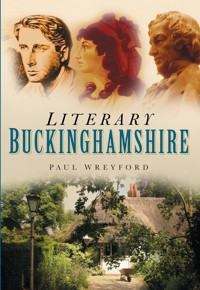
Poet John Betjemen was not the only scribe 'beckoned out to lanes in beechy Bucks'. Many of the country's most famous writers shared his fondness for the county and sought solace within its boundaries. John Milton came here to escape the plague in London; Enid Blyton fled the capital's increasing development, while D.H. Lawrence and his German wife took refuge on the outbreak of the First World War. Running along Buckinghamshire's southern border is the Thames, where Jerome K. Jerome, Percy Shelley and Kenneth Grahame enjoyed 'messing about in boats'.
Sie lesen das E-Book in den Legimi-Apps auf:
Seitenzahl: 221
Veröffentlichungsjahr: 2008
Das E-Book (TTS) können Sie hören im Abo „Legimi Premium” in Legimi-Apps auf:
Ähnliche














LITERARY
BUCKINGHAMSHIRE
PAUL WREYFORD
This book is dedicated to Michella
First published in the United Kingdom in 2008 by
Sutton Publishing
The History Press
The Mill, Brimscombe Port
Stroud, Gloucestershire, GL5 2QG
www.thehistorypress.co.uk
This ebook edition first published in 2013
All rights reserved
© Paul Wreyford, 2008, 2013
The right of Paul Wreyford to be identified as the Author of this work has been asserted in accordance with the Copyright, Designs and Patents Act 1988.
This ebook is copyright material and must not be copied, reproduced, transferred, distributed, leased, licensed or publicly performed or used in any way except as specifically permitted in writing by the publishers, as allowed under the terms and conditions under which it was purchased or as strictly permitted by applicable copyright law. Any unauthorised distribution or use of this text may be a direct infringement of the author’s and publisher’s rights, and those responsible may be liable in law accordingly.
EPUB ISBN 978 0 7509 5342 9
Original typesetting by The History Press
Contents
Introduction
1. Cowper Country
2. Buckingham and the Vale of Aylesbury
3. Gateway to the Chilterns
4. Heart of the Chilterns
5. Metroland
6. Beacon for the Rich and Famous
7. Messing About in Boats
8. Just Over the Border
Introduction
Think of Buckinghamshire and you will not immediately think of literature. while many counties are synonymous with a famous writer, or go to great lengths to proclaim scribes for their own, ‘beechy Bucks’ – as poet John Betjeman fondly called it – has remained largely quiet on the subject in recent years.
Some regions have more than one book devoted to their literary associations, but to my knowledge, this is the first to solely celebrate Buckinghamshire’s rich literary heritage. And rich it is indeed. The aim of this book is to prove that the county is just as rich, if not richer, than many of its more prominent neighbours.
Betjeman is perhaps one of the first names many will utter if asked for a famous writer connected with Buckinghamshire. Through his popular television series, Metroland, he did much to put the county on the map, but he was by no means the only author to seek solace within its boundaries.
John Milton came here to escape the London plague; Enid Blyton fled the capital’s increasing development, while D.H. Lawrence and his German wife took refuge during the outbreak of the First world war – unsuccessfully.
Benjamin Disraeli could not bear to leave his Buckinghamshire home, even for a short spell, while G.K. Chesterton discovered the county by accident and stayed for the rest of his life.
In its landscape, there is perhaps not a more ‘English’ county. To the north is the Vale of Aylesbury and its fertile pasture lands, while the south is dominated by the beechwoods of the chiltern Hills. Running along the bottom of the county, acting as a natural border, is the River Thames, where Jerome K. Jerome, Percy Bysshe Shelley and Kenneth Grahame enjoyed ‘messing about in boats’.
I have organised the book by splitting the county into seven sections, while there is also a section on some of the literary connections ‘just over the border’. This is a comprehensive guide to literary Buckinghamshire, but not an exhaustive one. It would be impossible to include every man and woman of letters to have come here.
Many of the properties that were once home to writers are now private residences and, while I have found the majority of their current owners to be only too delighted to discuss the history of their homes, their privacy should also be respected, should you decide to visit the area yourself. where properties are open to the public, I have made a point of mentioning this fact.
All pictures are from my own collection. It just remains for me to thank all those who have helped with my research in some way, by answering a question or merely pointing me in the right direction.
1
Cowper Country
The River Great Ouse winds its way through the very northern corner of Buckinghamshire. This is cowper country, an area enchanted by a shy and retiring poet who immersed himself in nature and his rural surroundings. He was a man who lamented change and would have been horrified by the emergence of the M1 motorway and the new city of Milton Keynes – with its concrete cows – to the south, but even here, amid the outlining villages, there are literary surprises waiting to be unravelled.
OLNEY
William Cowper
There is no doubting the impact that poet and hymn-writer William Cowper had on this corner of North Buckinghamshire, nor the impact the area had on him.
The region inhabited by this shy and melancholy man of letters is today often marketed as ‘Cowper Country’, with Olney – the town he lived in for some nineteen years – sitting at its heart. The local landscape inspired Cowper to pen many of his famous nature poems, as well as some of the country’s best-loved hymns.
Many who come to the area might think little has changed since Cowper’s day, but the poet would probably not agree. In The Task, a poem written in the second half of the eighteenth century, when England was largely untouched by modern encroachment, Cowper still talked of change and harked back to the glorious past. ‘God made the country, and man made the town,’ he famously declared. He lamented the wind of change, with the stagecoach partly to blame, the ‘stir of Commerce, driving slow, and thundering loud, with his ten thousand wheels’. He added: ‘We have bid farewell to all the virtues of those better days, and all their honest pleasures.’
Despite Cowper’s fears of change, he still loved this part of the world with all his heart. The Task, written at Olney, fondly describes many local scenes, such as the River Great Ouse.
Cowper came to Olney from Huntingdon following the death, in 1767, of close friend Morley Unwin, a retired Evangelical churchman. His widow, Mary Unwin, came with the poet. Though only a few years his senior, she was like a mother to him.
It was the preacher John Newton, a converted ex-slave trader, who was the curate here, and who persuaded the pair to come. Cowper and Newton were an unlikely partnership, like chalk and cheese, but they combined to produce some of the greatest words in British hymnology.
It is generally accepted that Newton, a radical Calvinist, wrote 280 of the Olney Hymns, while Cowper, a reserved and timid man, penned sixty-eight, including God Moves in a Mysterious Way. Newton encouraged much of Cowper’s poetry. Sadly, his influence was not always beneficial. He used Cowper as a sort of lay curate and the endless visits to the sick, prayer meetings and theological studies took their toll. Cowper, already prone to bouts of depression, continued to suffer from mental illness for the rest of his life. Ironically, he sought comfort from the well-meaning Newton, but his passionate and formidable friend might not have been the best person to turn to, his ravings sowing more seeds of doubt and fears of damnation. A path in the garden of Cowper’s house, situated in Market Place, led across a small field to Newton’s vicarage and the poet is known to have fled there on at least one occasion when tormented by the demons in his mind. Cowper and Newton paid the owner of an orchard that lay between their two homes a guinea a year for the privilege of crossing the land to reach each other’s garden. It is still known as Guinea Field.
The Cowper & Newton Museum at Olney.
Cowper and Mary lived at Olney for about nineteen years before moving the short distance to the village of Weston Underwood to be closer to the Throckmortons of weston Hall, their closest friends.
The Olney house in which Cowper lived, Orchard Side, is now a museum dedicated to the life of both the poet and Newton. Visitors can still see the summer house in the garden where Cowper wrote some of his greatest works. He came to the ‘verse manufactory’, as he called it, after breakfast each day. The poet loved his garden and said ‘gardening was, of all employments, that in which I succeeded best’.
One of Cowper’s other loves at Olney was his three pet hares. He was given them in the hope they would take his mind off his illness. He built them homes to sleep in and visitors had to enter the house via the kitchen, the front door rarely being opened for fear they would escape. Cowper wrote much about his hares in letters to fellow scribes, including Samuel Taylor Coleridge.
Apart from his hymns, Cowper penned The Diverting History of John Gilpin at Olney, though it is The Task that best reflects his love of the surrounding countryside. The same views Cowper wrote about can still be seen and, despite his own fears, have changed little.
The summer house where Cowper wrote.
Cowper knew many of the surrounding villages well. It was at Clifton Reynes that the poet first met Lady Austen, the widow of a wealthy baronet, who came here to stay with her sister at the parsonage, the latter’s husband being the curate at the time and a friend of Cowper. She told Cowper the story of John Gilpin, which the poet later turned into verse, and set him the challenge of writing about his sofa, which led to him penning his greatest poem – The Task.
Cowper also spent many hours visiting the Chesters at Chicheley Hall. He also had friends at Gayhurst, Newport Pagnell and, of course, Weston Underwood, the village he later moved to.
William Cowper’s house at Olney became something of a literary shrine following his death and many writers came to pay homage to this great man of letters.
Scottish travel writer Hugh Miller was disappointed when he visited in the nineteenth century to see the house, then a school, much changed and looking a little shabby.
Poet John Betjeman was a twentieth-century visitor, Cowper being one of his favourite poets.
John Newton
It is not surprising that John Newton believed God had shown ‘amazing grace’ to save ‘a wretch like me’.
Few spiritual conversions have been as dramatic as that of the curate of Olney. Newton was a loathsome, foul-mouthed slave trader, but, from his selfish and cruel existence, he became one of the great leaders of the Evangelical Revival, penning one of the country’s most famous and best-loved hymns – Amazing Grace.
It is believed Newton turned to God following a storm at sea. Fearing death, he pleaded for mercy and, when the storm finally subsided and his life was spared, Newton pledged to dedicate it to his creator, eventually giving up his seafaring exploits for the pulpit.
Newton came under the influence of John Wesley and Charles Wesley, but became an Anglican, rather than a Methodist. He became the curate of Olney in 1764 and spent sixteen years here.
Newton’s hymns were first sung on weekday evenings, the singing of hymns in church on Sundays still not being totally acceptable. The popular preacher, who packed out his church, did much to promote hymns as a form of worship. Those evening sessions, such was their popularity, soon had to switch to larger premises.
Newton was a brilliant preacher. His sermons attracted people from far and wide, and he became something of a celebrity. He penned a number of theological works, including a book on ecclesiastical history, though it is for his hymns, such as How Sweet the Name of Jesus Sounds, that earned him lasting fame.
Newton also played a big part in ending the slave trade he was once at the heart of. He encouraged William Wilberforce, the Evangelical MP, in his fight to abolish slavery, a bill eventually being passed in 1807.
Newton left Olney in 1780 and died in the London parish he served following his departure, but his body was brought back to Buckinghamshire and he now lies at rest in the churchyard at Olney.
The tomb of John Newton.
The vicar of Olney at the time John Newton was the curate was Moses Browne, himself a writer of poems and plays.
A later vicar was Henry Gauntlett, who served from 1815–33, and published a number of sermons. His son, Henry John Gauntlett, became a famous composer and the editor of psalms and hymn tunes.
Though not born in Olney, Gauntlett Junior spent part of his childhood here and became the organist at St Peter & St Paul’s Church. He went on to compose hundreds of hymn tunes and was labelled the ‘Father of English Church Music’.
Thomas Scott
John Newton persuaded many to join the Evangelical Revival and Thomas Scott – the man who eventually succeeded him at Olney – was one of them.
Scott, who later gained fame for a commentary on the Bible, was a clergyman who needed to be converted. In his autobiography, Force of Truth, which appeared in 1779, Scott wrote that he had no spiritual zeal when he was ordained in the Church of England in his mid-20s. It was not unusual for people to look upon the Church as a career rather than a vocation. Scott was one of many indifferent clergymen and admitted that he took up the career because of the intellectual interest the profession afforded. He took the job as a way of earning a comfortable living and to gain time to continue more interesting studies. Scott revealed that he carried out just enough duties to support a decent character.
But Newton, such was his influence, was to change everything. Scott first came across Newton while serving the parishes of Weston Underwood and Stoke Goldington. At first he regarded his Olney predecessor with disgust and challenged the Evangelical to write an essay about the points they differed on. Scott clearly believed he would win the argument, but, instead, gradually became won over and eventually joined the movement he once so despised.
Scott launched himself into his pastoral labours with added rigour and enthusiasm from that day and went on to become one of the great preachers of the age. However, his efforts appear not to have been appreciated – not at Olney, at any rate. He had a hard act to follow in the charismatic Newton and recorded: ‘I am very unpopular in this town, and preach in general to small congregations.’ He left Olney for London in 1785. His commentary, written in the capital, was a six-volume attempt to interpret every line of Scripture.
Scott eventually returned to Buckinghamshire and spent his final years serving the people of Aston Sandford, near Haddenham.
William Carey
The Baptist Church at Olney played an important part in the life of William Carey, the father of modern missions.
Though mostly associated with several villages over the border in Northamptonshire, Carey was set apart for the ministry here and met others who co-founded the Baptist Missionary Society (BMS), which still exists today. Pastors John Sutcliff, John Ryland and Andrew Fuller, who was to become the secretary of the mission, were themselves writers of theological works.
Carey’s most famous literary work, popularly known as Enquiry, was written to encourage missions abroad, though he was also responsible for many Bible translations, making use of his expertise in Indian languages. Carey was the first missionary of the BMS, setting off for India in 1793, the year after the organisation was formed.
Michael Drayton
It is not known whether poet Michael Drayton ever visited Olney, or even Buckinghamshire itself.
Readers of his chief work, Poly-Olbion, would assume that he did, but it is thought that most of the material gathered for the epic topographical poem came from written sources. There is no evidence to prove that he travelled to the many places mentioned in his poetical survey of England and Wales.
The work, which Drayton spent much of the early seventeenth century working on, aimed to awaken readers to the splendour of their surroundings. The landscape, sights and history of the country are featured, with particular emphasis on rivers, including the River Great Ouse. Drayton remarks on the fast-flowing river running through Olney: ‘Ouse having Olney past, as she were waxed mad.’
Other parts of Buckinghamshire are also mentioned in the work, including Aylesbury Vale, ‘that walloweth in her wealth’.
WESTON UNDERWOOD
William Cowper
‘The limes and the elms of Weston can witness for us both how often we have sighed and said, Oh that our garden door opened into this grove, or into this wilderness!’
Michael Drayton remarked on the River Great Ouse at Olney.
William Cowper and Mary Unwin long dreamed of living at Weston Underwood, and this became a reality in 1786, after some nineteen years at Olney. Cowper said for many years, the two walked the mile or so from their Olney home every day. Their destination was usually Weston Hall, home of the Throckmortons, their close friends. The renowned Roman Catholic family offered them Weston Lodge, now called Cowper’s Lodge, so that they would be closer – not that Cowper dreaded the trek, as his works reveal that he liked nothing better than rambling in the countryside.
Cowper described Weston Underwood as ‘one of the prettiest villages in England’. The poet drew inspiration from the land, one of his favourite spots being the Alcove, which was erected by the Throckmortons and can be found in a field half a mile up Wood Lane. Here the writer would sit and draw inspiration from the splendid view. It is said that many of his later works were written here, including his translation of Homer’s Iliad. A plaque in the Alcove contains some lines from The Task, the work that was perhaps most inspired by the Buckinghamshire landscape: ‘The summit gained, behold the proud alcove that crowns it.’
Sadly, Cowper’s mental problems worsened at Weston Underwood and Mary’s health also took a turn for the worse. The poet made at least one suicide attempt here.
Friends decided in the best interests of both, that a complete change of scenery would do them good. So, in 1795, they left for a new life in Norfolk. Cowper loved Buckinghamshire and could not bear to leave. He wrote on a panel of his bedroom window shutter, which can now be found in the museum at Olney, the words: ‘Farewell, dear scenes, for ever closed to me; Oh, for what sorrows must I now exchange ye!’ His words were sadly prophetic. Cowper’s health declined further in Norfolk and he died five years later.
William Cowper’s Weston Underwood home.
Cowper came to the Alcove to write.
Words from The Task can be found in the Alcove.
Cowper’s Lodge remains in the village, but Weston Hall no longer exists. The poet’s former home is close to Cowper’s Oak, a pub named in honour of a now long-gone ancient tree at nearby Yardley Chase, which inspired one of his poems.
Thomas Scott
Thomas Scott took possession of the joint curacy of Weston Underwood and Stoke Goldington when he first came to the county in the early 1770s. He later also served the people of Ravenstone.
It was at Weston Underwood that he first came under the influence of John Newton, whom he replaced as the curate of Olney in 1781.
RAVENSTONE
Thomas Seaton
The Church of All Saints is the resting place of Thomas Seaton, the man who gave his name to one of the most famous prizes in literature.
The Seatonian Prize for sacred poetry at Cambridge has been awarded since 1750, Christopher Smart having been the first recipient.
Seaton, a religious writer himself, was the vicar of Ravenstone from 1721–41. He turned his pen towards defending the Orthodox Church, as well as producing a number of works on moral and devotional issues.
John Milton
Heneage Finch gave much to the village of Ravenstone, but he is also remembered as the man who tried to hang poet John Milton.
Finch, a Royalist, argued that the writer, a prisoner following the death of Oliver Cromwell, was, in his role as Latin secretary to the great Parliamentarian, a worthy case for the noose. Fortunately for Milton – and literature – the solicitor-general, Finch, who later became Lord Chancellor, never got his way.
Finch’s tomb dominates the church at Ravenstone and his legacy is all around. He founded the almshouses close to the church. Samuel Pepys mentioned Finch in his famous diary.
Finch’s almshouses at Ravenstone.
LAVENDON
Isaac Newton
Scientist and philosopher Isaac Newton, who gained fame for his theories of gravitation, found the pull of Lavendon Grange too strong to resist. He was a frequent visitor here, the property belonging to relatives. Though not known for his literary output, Newton was still a successful writer, penning many scientific, mathematical, philosophical and religious treatises.
NEWTON BLOSSOMVILLE
William Warburton
Religious controversialist William Warburton was perhaps not the most popular rector to serve the Church of St Nicholas at Newton Blossomville.
Warburton has often been labelled the most quarrelsome literary figure that ever lived. He turned his pen against all who dared criticise him and also launched numerous unprovoked attacks.
Warburton, who served the parish at the beginning of his ecclesiastical career for a short spell from 1726, was mostly concerned with theological issues. He became a bishop in later life and was typical in his reaction against anyone who threatened change within the Church; the Evangelicals and freethinkers being among those he sought issue with. Warburton is best known for The Divine Legation of Moses, a work that attempted to show why there was no mention of the afterlife in the Old Testament.
As well as his religious works, Warburton gained fame as the literary executor of Alexander Pope. It is said he persuaded his friend to pen The New Dunciad.
NORTH CRAWLEY
John Garbrand
Theologian John Garbrand served as the rector of North Crawley from the mid-1560s until his death in 1589.
Though almost forgotten today, Garbrand was a respected preacher and scholar in his time. He was present at the death of Bishop John Jewel in 1571, the famous defender of the Church of England who bequeathed his papers to Garbrand, who edited some of his works.
James Boswell
The name of Boswell has been associated with North Crawley since the eighteenth century. David Boswell, the younger brother of James, settled at Crawley Grange after returning from abroad. James Boswell is best remembered as the biographer of Samuel Johnson.
GAYHURST
Kenelm Digby
The terrible fate of his father did not dissuade Kenelm Digby from taking up his pen for the Catholic cause.
Digby, who became one of the most remarkable thinkers of the day, was not even 3 years old when Everard Digby was hanged, drawn and quartered for his part in the Gunpowder Plot. Though Digby Junior would not go to such lengths in a bid to see a Catholic monarch restored to the throne, he still devoted much of his life to securing rights for Catholics, and wrote a famous defence of the faith – A Conference with a Lady About Choice of Religion. The work, published in the 1630s, argued that the Catholic Church was the only true church. This was a belief shared by his devout father, who is said to have made frequent use of the priest holes and secret passages at the family home in Gayhurst. The impressive manor house became a place for the Catholic conspirators to plot their dastardly deed. Of course, Kenelm, who was born at Gayhurst in 1603, would have been too young to comprehend what his father and friends were concocting.
As an adult, Digby was certainly not as devout as his father and there were some who even questioned whether he was totally sincere in his religious beliefs. The scribe, who came under the tuition of Archbishop William Laud, switched to Anglicanism for a spell, for fear his Catholic upbringing would become a hindrance to his many aspirations. However, he soon reverted back to Catholicism and went on to pen many treatises on the subject.
Gayhurst, home of Kenelm Digby.
As well as being a writer, Digby could list a wide range of occupations during his lifetime, including courtier, naval commander, diplomat, philosopher and scientist. He spent much of his life abroad, often at sea or later in exile. The scribe became a loyal supporter of Charles I and backed the Royalist cause during the Civil War. He later became chancellor to Queen Henrietta Maria when she fled England, something that worked in his favour at the Restoration.
Digby was a versatile writer. As well as his religious works, he also had a great interest in science, alchemy and astrology. He even wrote a cookbook.
Digby was a man torn between the physical and spiritual. He is regarded as the first person to note the importance of oxygen to plants, but believed in the ‘powder of sympathy’ to heal wounds. The author’s treatises on the soul have proved to be more enduring than his scientific ones, but Digby’s works, though celebrated in his day, are all now largely forgotten.
Poet and playwright Ben Jonson was one of many writers to immortalise the wife of Kenelm Digby. Venetia Stanley, a well-known intellectual and beauty, turned heads when she was presented to the royal court and had many admirers.
Digby and Venetia were childhood friends, the latter having been brought up by a Catholic family at Salden, a few miles south of Gayhurst, following her mother’s death. Both families opposed the attachment and the two eventually wed in secret. After Venetia’s premature death in 1633, Jonson (Digby was his literary executor) was one of many poets to dedicate an elegy in her memory. He called Venetia his muse. Dramatist James Shirley is believed to have based The Wedding on the couple’s situation.
William Cowper was a later visitor to the manor house at Gayhurst. The poet and hymn-writer came with Mary Unwin from their Olney home and was full of praise for the elegant gardens. ‘I was delighted at all I found there,’ he wrote. Cowper also walked here on other occasions, to exchange seeds with the gardener.
NEWPORT PAGNELL
Samuel Butler
A former worthy of Newport Pagnell is said to have been the chief target in Samuel Butler’s most famous attack on Puritanism.
Butler is reputed to have based the title character of the satirical poem Hudibras on Samuel Luke, the Presbyterian knight and governor of the town during the Civil War.
The writer served Luke, whose home was at Cople in Bedfordshire, as a secretary for a spell and the experience obviously left a lasting impression on him, with Butler supposedly exacting revenge on his former employer through the work.
Butler, who served as an attendant at various country homes over the years, penned what was probably the most famous literary response to the tyranny of the Commonwealth. Hudibras




