


22,99 €
Mehr erfahren.
- Herausgeber: John Wiley & Sons
- Kategorie: Geisteswissenschaft
- Serie: Blackwell Great Minds
- Sprache: Englisch
In a focused assessment of one of the founding members of the liberal tradition in philosophy and a self-proclaimed “Under-Labourer” working to support the scientific revolution of the seventeenth century, the author maps the full range of John Locke’s highly influential ideas, which even today remain at the heart of debates about the nature of reality and our knowledge of it, as well as our moral and political rights and duties.
- Comprehensive introduction to the full range of Locke’s ideas, providing an up-to-date account that acknowledges issues raised by recent scholarship over the past decade
- A well-rounded perspective on one of the intellectual giants of the western philosophical tradition
- Provides detailed coverage of Locke’s two key works, An Essay Concerning Human Understanding and The Two Treatises of Government.
- A sophisticated analysis by a highly respected academic
- A vital addition to the Blackwell Great Minds series
Sie lesen das E-Book in den Legimi-Apps auf:
Seitenzahl: 577
Veröffentlichungsjahr: 2014
Ähnliche




















Table of Contents
blackwell great minds
title page
copyright page
dedication
preface
abbreviations
chapter 1: locke's life
chapter 2: the nature and role of ideas
chapter 3: the negative project: against innatism
chapter 4: the positive project: ideational empiricism
4.1 Simple Ideas
4.2 Sensation and Reflection
4.3 Complex Ideas
4.4 Abstract Ideas
4.5 Challenges to Ideational Empiricism: The Ideas of Infinity and Substratum
chapter 5: substances
5.1 Body, Matter, Space, and Vacuum
5.2 Spirit
chapter 6: qualities
chapter 7: mental operations
7.1 Actions and Passions
7.2 Will and Willing
7.3 Voluntariness and Involuntariness
7.4 Freedom, Necessity, and Determination of the Will
7.5 A Problem
chapter 8: relations
8.1 Identity and Diversity
8.2 Moral Relations
chapter 9: language
9.1 Language and Meaning
9.2 The Imperfections and Abuses of Language
9.3 Nominal Essence, Real Essence, and Classification
chapter 10: knowledge and belief
10.1 The Official Account of Knowledge
10.2 The Degrees of Knowledge
10.3 Anti-Dogmatism and Anti-Skepticism
10.4 Faith and Religious Enthusiasm
chapter 11: moral philosophy
11.1 Morality and God's Will
11.2 Natural Law
11.3 Punishment and Slavery
11.4 Property
11.5 Family
chapter 12: political philosophy
12.1 Political Society
12.2 Legitimate Rule
12.3 Varieties of Illegitimate Rule
12.4 Toleration
index
blackwell great minds
edited by Steven Nadler
The Blackwell Great Minds series gives readers a strong sense of the fundamental views of the great western thinkers and captures the relevance of these figures to the way we think and live today.
This edition first published 2014
© 2014 Samuel C. Rickless
Registered Office
John Wiley & Sons Ltd, The Atrium, Southern Gate, Chichester, West Sussex, PO19 8SQ, UK
Editorial Offices
350 Main Street, Malden, MA 02148-5020, USA
9600 Garsington Road, Oxford, OX4 2DQ, UK
The Atrium, Southern Gate, Chichester, West Sussex, PO19 8SQ, UK
For details of our global editorial offices, for customer services, and for information about how to apply for permission to reuse the copyright material in this book please see our website at www.wiley.com/wiley-blackwell.
The right of Samuel C. Rickless to be identified as the author of this work has been asserted in accordance with the UK Copyright, Designs and Patents Act 1988.
All rights reserved. No part of this publication may be reproduced, stored in a retrieval system, or transmitted, in any form or by any means, electronic, mechanical, photocopying, recording or otherwise, except as permitted by the UK Copyright, Designs and Patents Act 1988, without the prior permission of the publisher.
Wiley also publishes its books in a variety of electronic formats. Some content that appears in print may not be available in electronic books.
Designations used by companies to distinguish their products are often claimed as trademarks. All brand names and product names used in this book are trade names, service marks, trademarks or registered trademarks of their respective owners. The publisher is not associated with any product or vendor mentioned in this book.
Limit of Liability/Disclaimer of Warranty: While the publisher and author have used their best efforts in preparing this book, they make no representations or warranties with respect to the accuracy or completeness of the contents of this book and specifically disclaim any implied warranties of merchantability or fitness for a particular purpose. It is sold on the understanding that the publisher is not engaged in rendering professional services and neither the publisher nor the author shall be liable for damages arising herefrom. If professional advice or other expert assistance is required, the services of a competent professional should be sought.
Library of Congress Cataloging-in-Publication Data applied for
Hardback ISBN: 978-1-4051-8935-4
Paperback ISBN: 978-1-4051-8936-1
A catalogue record for this book is available from the British Library.
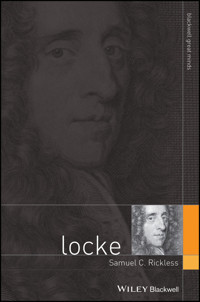
Cover image: Engraving of John Locke. © Bettmann/Corbis.
Cover design by Cyan Design.
To my mother,
Regina Sarfaty Rickless
preface
Writing a book on the most important themes of John Locke's entire philosophical output is a singular challenge. One of the reasons he was such a great philosopher is that he was remarkably knowledgeable and instinctively curious, with a penchant for clarity and systematicity. His work covers topics in the philosophy of mind, metaphysics, philosophy of language, epistemology, moral philosophy, and political philosophy. I have done my very best to provide a concise, clear, and, I hope, relatively accessible conspectus of Locke's contributions in these areas. I would have liked to have been able to discuss more of Locke's theological views, as well as the details of his investigations into natural philosophy (science). But I had to leave these matters to one side for reasons of space. Readers who are interested in these topics will learn a great deal from the work of Victor Nuovo (on the first) and Peter Anstey (on the second), among others.
I have many people to thank for helping me to bring this book to fruition. First and foremost, I am grateful to Steven Nadler and the editorial staff at Wiley Blackwell for granting me the commission, and I thank Gideon Yaffe for encouraging me to take it. Although I had spent some years thinking about various aspects of Locke's philosophy, I had certainly not thought through his views on all the matters covered in the pages to follow. As I wrote, I tried out chapters (or parts thereof) on two audiences, for whose patience and constructive comments I am very grateful: the Roger Woolhouse Memorial Conference at the University of York in June–July 2012, and the History of Philosophy Roundtable at UCSD – with special thanks to Donald Baxter, Martha Bolton, Justin Broackes, Lisa Downing, Paul Lodge, Antonia LoLordo, Peter Millican, Lex Newman, Pauline Phemister, Gonzalo Rodriguez-Pereyra, Timothy Stanton, and Tom Stoneham. For their supremely clear-eyed and helpful contributions on a variety of matters Lockean, whether in conversation or on paper or both, I would also like to thank Peter Anstey, Margaret Atherton, Vere Chappell, Michael Jacovides, Nick Jolley, Jessica Gordon-Roth, Ruth Mattern, Ed McCann, David Owen, John Simmons, Galen Strawson, Matthew Stuart, Udo Thiel, Bill Uzgalis, Jeremy Waldron, Ken Winkler, Roger Woolhouse, and Gideon Yaffe: it really does take a village. For supporting my research with the help of a grant that enabled me to purchase most of Locke's correspondence, I would like to thank the UCSD Dean of Arts and Humanities, Seth Lerer, from whom I also learned a great deal about Locke's philosophy of education and his appreciation for, and translation of, Aesop's fables.
For their moral support and willingness to help me parcel out my research and teaching time in the most efficient way possible, I am very grateful to my colleagues David Brink and Don Rutherford, both of whom sacrificed a great deal as (consecutive) department chairs in order to make the UCSD philosophy department the vibrant and stimulating intellectual community that it is. The community of historians of philosophy at UCSD, including my colleagues David and Don, Eric Watkins, Clinton Tolley, Michael Hardimon, and Monte Johnson, and my doctoral student, Nate Rockwood, made excellent suggestions and provided useful objections that contributed to improvements in the book. More than anything, I thank my lucky stars for the fact that my wife and colleague, Dana Kay Nelkin, and our two wonderful children, Sophie and Alice, make it possible for me to live and work in an environment pervaded by intellectual honesty, boundless curiosity, and untrammeled love.
My first ever publication (in 1997) was on Locke's distinction between primary and secondary qualities. When I received the offprints, I immediately sent one to my mother. When I next visited her, she had found a special stand for it and had given it a prominent place in her study. Every day of my life she has been proud of me and given me unconditional love and support. So this book is dedicated to you, Mom: wife, mother, and opera singer extraordinaire. Thanks for everything, but especially for the banana cream pie.
abbreviations
chapter 1
locke's life
If you ask what sort of a man he was, the answer is that he was contented with his modest lot. Bred a scholar, he used his studies to devote himself to truth alone.
Locke's description of himself, translated by Roger Woolhouse from the original Latin on his tombstone
John Locke was an accidental philosopher. For most of his intellectual life, he was attracted to the kinds of activities engaged in by the research scientists of his day: collecting data, formulating explanatory hypotheses on the basis of observation, and testing hypotheses by controlled experiments. But because of a broad and insatiable intellectual curiosity and a devotion to truth wherever it lay, as well as a deep antipathy to absolute power and its abuses, Locke found himself drawn into a number of important philosophical and political controversies that, as he saw it, required clear definition of terms, precise reasoning, and a firm grasp of the extent and limits of human understanding. His impatience with what he saw as the fruitless and endless disputation of his more Scholastically minded contemporaries, combined with his own investigations into the mental abilities of human beings and his liberal views on the inclusive nature of Christianity and the importance of toleration, led him to defend a number of controversial philosophical and theological doctrines that more than ruffled the feathers of prominent Anglican (Church of England) clergymen. His claim that the legitimacy of government is grounded in the consent of the people was anathema to supporters of the divine right of kings and of the importance of absolute rule as a bulwark against chaos and civil war. He was mostly lucky in that he was able to devote much of his life to the pursuits that gave him the greatest satisfaction: observing, cataloguing, discovering, reading, writing, and sharing ideas with like-minded friends. And he lived long enough and worked sufficiently tirelessly to leave us with a priceless intellectual legacy, one that rivals, in both quality and influence, the output of the rest of the Western world's greatest philosophers.
John Locke was born in Wrington, Somerset, in 1632, and spent the first 14 years of his life in the village of Belluton, 6 miles south of the thriving market town of Bristol. His mother, Agnes Keene, and father, John, 10 years her junior, lived in a house given to them by Locke's grandfather, who had made his fortune in the cloth trade. In later years, Locke would describe his mother as very pious and affectionate, but little else is known about her. He also had kind things to say about his father, approving of the strict discipline with which he was raised before adolescence and the gradual loosening of this discipline thereafter, allowing for the possibility of true friendship between parent and son in adulthood. Of Locke's two brothers, one died in infancy, and the other, Thomas, five years younger than John, died in 1663, most likely of tuberculosis.
Locke's parents were probably Puritans, Calvinists who leaned towards Presbyterianism. As Protestant dissenters, they opposed Anglican orthodoxy and demands for uniformity, as well as Catholicism. No doubt this dual hostility had a significant impact on Locke, much of whose later theological output (perhaps unsurprisingly) reflected the basic attitudes of his parents. Locke's father was a lawyer, charged in part with collecting local taxes to support the increasingly unpopular administration of King Charles I, who believed in his divine right to absolute rule. In 1642, when Locke was 10 years old, a two-year standoff between Parliament and Charles I led to civil war. Locke's father, at some cost to himself, joined a Parliamentary regiment organized by a local MP, Alexander Popham. The regiment was defeated, and John Sr returned home in 1643. But thanks to Popham's power to nominate boys for entrance into selective private schools, Locke's father was able to secure a place for him at Westminster School in 1646.
Lesen Sie weiter in der vollständigen Ausgabe!
Lesen Sie weiter in der vollständigen Ausgabe!
Lesen Sie weiter in der vollständigen Ausgabe!
Lesen Sie weiter in der vollständigen Ausgabe!
Lesen Sie weiter in der vollständigen Ausgabe!
Lesen Sie weiter in der vollständigen Ausgabe!
Lesen Sie weiter in der vollständigen Ausgabe!
Lesen Sie weiter in der vollständigen Ausgabe!
Lesen Sie weiter in der vollständigen Ausgabe!
Lesen Sie weiter in der vollständigen Ausgabe!
Lesen Sie weiter in der vollständigen Ausgabe!
Lesen Sie weiter in der vollständigen Ausgabe!




