


8,49 €
Mehr erfahren.
- Herausgeber: DYM Worldwide Publishers
- Kategorie: Lebensstil
- Sprache: Englisch
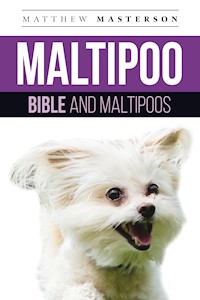
"Maltipoo Bible and Maltipoos is such a great Maltipoo guide! It's really helped me a lot to understand my Maltipoos better thanks! - Stacy Adams, Raleigh, NC.
"Maltipoos are the best little dogs and this is the best Maltipoo guide I've found- pick one up today! - Donna Withers, Minneapolis, MN.
"Maltipoo specific information and a very entertaining read. - Cathy Dimmocks, Baltimore, MD.
"This Maltipoo resource is full of INSIDER Maltipoo tips that you may not find anywhere else." - Sharon Disnat, Seattle, WA.
-What Makes Maltipoos So Great? They will get along with just about anyone, whether an adult, child or another animal. They are playful. This dog is not the kind to lazily hang around the house when there is playtime to be had!
-Because Maltipoos are eager to please, this also makes them very easy to train. Maltipoos are smarter than they look. They have also been found to repeat a specific behavior if they find a positive response to it. Aside from this, a Maltipoo will always be curious. Expect your Maltipoo to go sniffing at a new dog, a new cat, or a new person they have been introduced to.
-Don't let its small size fool you, a Maltipoo is an energetic animal that requires constant stimulation. This little dog is a bundle of energy, and that energy needs to be burned off. It will enjoy playtime and walking time very much. Maltipoos love attention and will respond to love with loyalty!
-In this acclaimed Maltipoo guide, you will find a collection of invaluable advice about this wonderful breed: from spotting a healthy Maltipoo puppy and reputable Maltipoo breeder, to how to prepare your home for your Maltipoo, how to make sure it grows up healthy into adulthood and into a great companion for you for the many years you'll spend together.
-All your Maltipoo questions will be answered such as "does the Maltipoo get along well with other pets? "What about with children?" "Is excessive barking an issue?" "Where's the best place to find the healthiest Maltipoo with the best personality? "How do I keep my Maltipoo healthy?' "Should I breed my Maltipoo?" And, much, much more!
-All of the advice you need to understand the Maltipoo and to care for it properly is waiting inside. So, what are you waiting for? Click the Add to Cart Button Now on the top right of this page- to keep reading to discover what makes the Maltipoo so great!
"Maltipoo Bible and Maltipoos is such a great Maltipoo guide! It's really helped me a lot to understand my Maltipoos better thanks! - Stacy Adams, Raleigh, NC.
"Maltipoos are the best little dogs and this is the best Maltipoo guide I've found- pick one up today! - Donna Withers, Minneapolis, MN
."Maltipoo specific information and a very entertaining read. - Cathy Dimmocks, Baltimore, MD.
"This Maltipoo resource is full of INSIDER Maltipoo tips that you may not find anywhere else." - Sharon Disnat, Seattle, WA.
Das E-Book können Sie in Legimi-Apps oder einer beliebigen App lesen, die das folgende Format unterstützen:
Veröffentlichungsjahr: 2020
Ähnliche

















Published by DYM Worldwide Publishers 2020.
ISBN: 978-1-913154-25-7
Copyright © DYM Worldwide Publishers, 2020.
2 Lansdowne Row, Number 240 London W1J 6HL
ALL RIGHTS RESERVED. This book contains material protected under International & Federal Copyright Laws & Treaties. Any unauthorized reprint or use of this material is strictly prohibited. No part of this book may be reproduced or transmitted in any form or by any means, electronic, mechanical, or otherwise, including photocopying or recording, or by any information storage or retrieval system without express written permission from the author.
Copyright and Trademarks. This publication is Copyright 2020 by DYM Worldwide Publishers. All products, publications, software, and services mentioned and recommended in this publication are protected by trademarks. In such an instance, all trademarks & copyright belonging to the respective owners.
All rights reserved. No part of this book may be reproduced or transferred in any form or by any means, graphic, electronic, or mechanical, including but not limited to photocopying, recording, taping, scanning, or by any information storage retrieval system, without the written permission of the author. Pictures used in this book are royalty-free pictures purchased from stock photo websites with full rights for use within this work.
Disclaimer and Legal Notice. This product is not legal or medical advice and should not be interpreted in that manner. You need to do your own due diligence to determine if the content of this product is right for you. The author, publisher, distributors, and or/affiliates of this product are not liable for any damages or losses associated with the content in this product. While every attempt has been made to verify the information shared in this publication, neither the author, publisher, distributors, and/or affiliates assume any responsibility for errors, omissions, or contrary interpretation of the subject matter herein. Any perceived slights to any specific person(s) or organization(s) are purely unintentional. We have no control over the nature, content, and availability of the websites listed in this book.
The inclusion of any website links does not necessarily imply a recommendation or endorse the views expressed within them. DYM Worldwide Publishers takes no responsibility for, and will not be liable for, the websites being temporarily or being removed from the Internet. The accuracy and completeness of the information provided herein and opinions stated herein are not guaranteed or warranted to produce any particular results, and the advice or strategies contained herein may not be suitable for every individual. The author, publisher, distributors, and/or affiliates shall not be liable for any loss incurred as a consequence of the use and application, directly or indirectly, of any information presented in this work. This publication is designed to provide information regarding the subject matter covered. The information included in this book has been compiled to give an overview of the topics covered. The information contained in this book has been compiled to provide an overview of the subject. It is not intended as medical advice and should not be construed as such. For a firm diagnosis of any medical conditions, you should consult a doctor or veterinarian (as related to animal health). The writer, publisher, distributors, and/or affiliates of this work are not responsible for any damages or negative consequences following any of the treatments or methods highlighted in this book.
Website links are for informational purposes only and should not be seen as a personal endorsement; the same applies to any products or services mentioned in this work. The reader should also be aware that although the web links included were correct at the time of writing, they may become out of date in the future. Any pricing or currency exchange rate information was accurate at the time of writing but may become out of date in the future. The Author, Publisher, distributors, and/or affiliates assume no responsibility for pricing and currency exchange rates mentioned within this work.
Table of Contents
Chapter 1 – The Maltipoo: An Introduction
What is a Maltipoo?
Chapter 2 – Maltipoo History
Maltipoo Origins
Different “Types” of Maltipoo
Coat
A Warning About Maltipoo Crossbreeds
Chapter 3 – The Maltipoo Breed
Maltipoo Breed Standard
Maltipoo Breed Recognition
Chapter 4 – Buying a Maltipoo
Where to Get a Maltipoo?
Should You Get a Puppy or an Adult?
Maltipoo Temperament
The Maltipoo Around Others
Pros and Cons of a Maltipoo
Cons
Pros
Is it Easy to Care for?
Chapter 5 – Your Maltipoo Puppy
Maltipoo stages
Picking the Right Breeder
How to Choose the Right Puppy?
What Color to Go for?
Bringing a Puppy Home
Puppy-proofing the Home
Puppy Spaces
The First Few Days
Pet Training
Chapter 6 – Your Pet Maltipoo
Before You Get One
Feeding Your Maltipoo
What to Feed Your Maltipoo
Homemade Dog Food
A Good Balance
How Often to Feed Your Maltipoo
Your Maltipoo’s Living Environment
Maltipoo Living Space
Other Ideal Conditions
Maltipoo Socialization
Chapter 7 – Caring for your Maltipoo
Playing and Bonding
Maltipoo Exercise
Walking
Maltipoo Separation Anxiety
Maltipoo Transport
Other Things to Remember
Maltipoo Toys
Chapter 8 – Grooming and Bathing Your Maltipoo
Keeping Your Maltipoo Clean
Maltipoo “Shedding”
Maltipoo Bathing
Maltipoo Grooming
Professional Grooming
Maltipoo Care Supplies
Don’t Use Your Shampoo on Your Dog
Chapter 9 – How to Train Your Maltipoo
How Difficult are Maltipoos to Train?
Equipment You Will Need
What to Train Your Maltipoo
Teaching Your Dog How to Sit
Teaching Your Maltipoo to Stay
Teaching Your Maltipoo How to Come To You
Teaching Your Dog How Not to Bark
Teaching Your Dog How Not to Jump at You
Maltipoo Tricks
Training Yourself
Chapter 10 – Maltipoo Health
Signs of a Healthy Maltipoo
When to Be Concerned
Maltipoo Lifespan
Maltipoo Food Allergies
Maltipoo Immunizations
Medical Conditions and Their Solutions
Pros and Cons of Neutering / Spaying
How to Choose a Good Veterinarian For Your Maltipoo
Chapter 11 – Maltipoo Breeding
How to Breed the Best Maltipoo Possible
Ideal Breeding Age
A Few Rules
Breeding for Color
Signs of Pregnancy
A Warning for Maltipoo Breeders
Chapter 12 – Caring For Older Maltipoos
Signs of Aging
Behavioral Changes
The Daily Routine for Older Maltipoos
Saying Goodbye
If You Decide to Make a Painful Decision
Memorializing Your Dog
An Important Thing to Remember
Chapter 13 – Things Maltipoo Owners Must Know
Maltipoo Licenses
Maltipoo Insurance
Conclusion
Bonus Chapter – Your Trusted Maltipoo Resource List
CHAPTER 1
The Maltipoo: An Introduction
Around 14,000 years ago, ancient man first discovered that the dog was a good companion and has always kept dogs by his side ever since. At first, it was only for survival reasons; dogs helped ancient man hunt and get his food, sniffed out danger for him, and helped keep him safe from enemies at night.
As the centuries went by, life became better for men. However, he still preferred to keep his canine best friend by his side. Although the initial purpose of a dog was to keep humans alive, people found out that dogs were good for making life worth living as well.
The Maltipoo is one of the most rewarding crossbreeds to own!
Dog breeders began to breed different dogs to suit different kinds of people and their various needs and quirks. Big, active dogs were bred for keeping up with people with active lifestyles. Small designer dogs went to those who wanted animals that could also serve as fashion statements. The tough dogs were trained for jobs in the police and military that humans were not capable of doing, and so on.
Breeding two different species of dogs produced a unique breed. And taking that result and breeding it with another produces an even more unique breed. With that, breeders found out they could provide dogs with the good qualities that they wanted and none of the bad characteristics, or at least as little of the bad attributes as possible.
One breed that many people are familiar with is the poodle. Today it is widely known as a show dog, but unknown to many, the poodle did not start like that. It was bred by hunters in France and Germany to be water dogs that retrieved ducks that had been shot down.
The word “poodle” is said to have been a bastardization of a Low German word “pudel” meaning “to splash in water,” which is what they did to go after fallen game birds.
By the 18th century, the poodle had become the principal pet dog in Spain. Despite their apparent talents in the outdoors, they would eventually become the preferred pets of French royalty. So much so that poodles are represented in many paintings, drawings, and engravings commissioned in that era.
Over the years, the poodle was bred with other species to become smaller in size. There are now three standard sizes, as described by both the American Kennel Club (AKC) and the UK Kennel Club (KC); standard, miniature, and toy.
Contrary to popular belief, their puffball appearance (where the hair seems to concentrate “balls” on their head, upper chest, lower legs, and even the tip of their tail) is not their natural look but the result of professional trimming and grooming. By nature, poodles are covered by an even but coarse coat all over their bodies.
Poodles are described as active, agile, and very smart, owing to their past as active hunting partners.
Another breed that gained prominence was the Maltese, another dog that originated from Europe. Unlike the poodle which appears to have bred by modern humans, the Maltese go further back into history. The earliest mention of a Maltese goes back to 370 BCE when Aristotle described the breed, calling it the Malleate Catelli.
Just as the poodle was bred to retrieve game fowl, the Maltese was bred to help its human companions. This was to control rodents and rats. Its small size made it ideal to go after rats and other pests that threatened the food stores of humans living around the Mediterranean.
Eventually, it became known for its cuddliness and small size, and soon it became the favorite of Mediterranean noblewomen.
Today, the Maltese is officially recognized by the AKC as a breed in the toy dog group. They average seven to nine inches high and weigh no more than seven lbs. They have long coats that often reach the floor, and they are generally described as gentle, playful, and charming.
As a holdout to their being ridders of rodents for centuries, Maltese are alert and fearless. They also get along with other dogs and respond well to reward-based training despite showing signs of occasional stubbornness.
You can probably guess by now that these two breeds, the Maltese and the Poodle, were bred to come up with one of the cutest and cuddliest dog breeds to ever walk the earth, the Maltipoo.




