


19,99 €
Mehr erfahren.
- Herausgeber: John Wiley & Sons
- Kategorie: Fachliteratur
- Sprache: Englisch
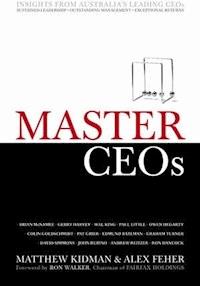
Filled with insights from leading Australian CEOs, Master CEOs taps into the thoughts of Australia's leading chief executive officers or managing directors in an effort to understand why they are such outstanding leaders, and why the companies they run have delivered above-average results. Master CEOs is not only about management -- it also delivers a very strong message on leadership. * To be interviewed for the book, the CEO had to be in charge of their company for at least 10 years and delivered shareholders a return greater than the share market in that period. * CEOs covered include: Gerry Harvey from Harvey Norman, Paul Little from Toll Holdings, Graham Turner from Flight Centre, David Simmons from Hills Industries and many more. * All new interviews, never before published.
Sie lesen das E-Book in den Legimi-Apps auf:
Seitenzahl: 621
Veröffentlichungsjahr: 2012
Ähnliche

















Contents
Foreword
About the Authors
Acknowledgements
Introduction
Chapter 1: Selecting the Master CEOs
Chapter 2: Tough Medicine
Chapter 3: David to Goliath
Chapter 4: The Best Mistake I Ever Made
Chapter 5: Making the World Little
Chapter 6: The Hills are Alive with the Sound of Music
Chapter 7: SuperSonic
Chapter 8: Building a Kingdom
Chapter 9: Banks, Boats and Bundy
Chapter 10: Soaring High
Chapter 11: A Bloody Miracle
Chapter 12: Out of Africa
Chapter 13: Mining for Values
Chapter 14: Go Gerry, Go, Go, Go
Conclusion
Index
First published 2009 by
John Wiley & Sons Australia, Ltd
42 McDougall Street, Milton Qld 4064
Office also in Melbourne
Typeset in Baskerville Classico 11/13.7pt
Reprinted 2009
© Matthew Kidman and Alex Feher 2009
The moral rights of the authors have been asserted
National Library of Australia Cataloguing-in-Publication entry:
Author: Kidman, Matthew, 1968-
Title: Master CEOs: insights from Australia’s leading CEOs/Matthew Kidman, Alex Feher.
ISBN: 9780731409846 (pbk.)
Notes: Includes index.
Subjects: Chief executive officers —Australia —Case studies. Success in business —Australia —Case studies. Leadership —Australia —Case studies. Management —Australia —Case studies.
Other Authors/Contributors: Feher, Alex.
Dewey Number: 658.400994
All rights reserved. Except as permitted under the Australian Copyright Act 1968 (for example, a fair dealing for the purposes of study, research, criticism or review), no part of this book may be reproduced, stored in a retrieval system, communicated or transmitted in any form or by any means without prior written permission. All inquiries should be made to the publisher at the address above.
Cover image © Christina M Hicks
Author photos reproduced with permission, courtesy of as follows. Dr Edmund Bateman: © Fairfax Photo Library/Jim Rice. Andrew Reitzer: © Andrew Reitzer. John Rubino: © John Rubino. Paul Little: © Paul Little. David Simmons: © David Simmons. Colin Goldschmidt: © Colin Goldschmidt. Wal King: © Karl Schwerdtfeger. Ron Hancock: © Raymond Linderberg. Graham Turner: © Fairfax Photo Library/Michele Mossop. Brian McNamee: © Brian McNamee. Pat Grier: © Patrick Grier. Owen Hegarty: photograph supplied by OZ Minerals. Gerry Harvey: © Generic Publications Ltd/Adam C. Sutherland.
Disclaimer
The material in this publication is of the nature of general comment only, and does not represent professional advice. It is not intended to provide specific guidance for particular circumstances and it should not be relied on as the basis for any decision to take action or not take action on any matter which it covers. Readers should obtain professional advice where appropriate, before making any such decision. To the maximum extent permitted by law, the authors and publisher disclaim all responsibility and liability to any person, arising directly or indirectly from any person taking or not taking action based upon the information in this publication.
Foreword
Wartime British prime minister Sir Winston Churchill once said, ‘Success is going from failure to failure without losing enthusiasm’. Churchill, one of the greatest leaders the modern world has known, captured in those few words the struggle required to succeed in whatever field of endeavour you choose. And nothing could be more appropriate for an assessment of Australia’s top corporate leaders who have managed to overcome myriad hurdles to achieve outstanding results. Churchill, continuing on the same theme, also commented, ‘Continuous effort —not strength or intelligence — is the key to unlocking our potential’. He believed in setting the agenda and taking decisive action, overcoming any obstacles along the way.
While the CEOs in this book may not have read much of what Churchill said on leadership, it becomes clear from the interviews that they have a similar philosophy of striving to do their best despite the odds. A classic example is Toll Holdings’s managing director Paul Little, who believed he could build a transport company from humble beginnings that would meet the needs of customers better than anyone in this country. He fought hard, overcame a tenacious competitor in Patrick Corporation’s Chris Corrigan and, today, some twenty-two years after starting, heads the leading transport and logistical company in Australasia.
In the United States leadership, especially corporate leadership, has been much investigated and documented. In Australia, though, most members of the public believe people who run companies are fat cats who cannot be trusted. This view has been reinforced over the years by many executives receiving bloated payouts when strategies go wrong. However, that is only one side of the story. As is the case in the US, there are many examples of companies succeeding in Australia, with employees, executives and shareholders experiencing a fantastic evolution, even as they encounter challenges posed by economic cycles. On most occasions, these good stories revolve around superior leadership and the determination of key individuals to set the course and follow through regardless of the impediments put in front of them.
While the financial rewards may be high, leading a company to success is a tremendously difficult job. Not only do leaders have to be financially canny, tough negotiators and opportunistic, they must also be leaders of people. Without the backing of their staff, leaders cannot achieve anything. As Scottish-born, US industrialist Andrew Carnegie said, ‘No man will make a great leader who wants to do it all himself or to get all the credit for doing it’. It is natural for most people to want to claim glory when they are winning and to blame others when things go wrong. However, as Carnegie points out, and is reinforced in Master CEOs, leaders are not about blame or bragging rights. They are committed to getting the best out of their people and working as a team, so that success is sustainable.
As a leader in business and politics over the years through my roles as lord mayor of Melbourne, treasurer of the federal Liberal Party, founding partner of construction group Hudson Conway and Crown Casino, and more recently chairman of Fairfax Media, Australasia’s largest media group, I understand how difficult a job it is. Sustaining top-level performance year in, year out is an even tougher assignment because there will always be problems to overcome. In addition, leading can also be a lonely pursuit. This is probably best summarised by poet and author Robert Louis Stevenson who once said it is, ‘Best to keep your fears to yourself, but share inspiration with others’. Leaders need to be courageous enough to bury their fears so that others who follow them will not be overcome with doubt. A leader of a company must always present a clear path forward that is driven by optimism and a desire to succeed. He or she has no-one to turn to for advice, but must find the internal resolve to battle through.
Why some corporate leaders succeed over long periods is a difficult question to answer, but it is a subject worth exploring. Maybe Warren Buffett can tell us. Master CEOs is an attempt not only to tell some fantastic stories of interesting individuals, it is also one of the few genuine attempts to unlock many of the mysteries to what makes good leadership. I thoroughly enjoyed this book and hope you do too.
Ronald J Walker AC CBE
Chairman, Fairfax Media
About the authors
Matthew Kidman is a former journalist with The Sydney Morning Herald who now works for Sydney-based funds manager Wilson Asset Management. He worked for SMH for four years covering the media, telecommunications and property sectors. In 1997 Matthew was appointed investment editor of SMH with responsibility for the paper’s sharemarket coverage. Before joining SMH, Matthew completed dual degrees in law and economics at Macquarie University. In 1993 he gained his first job in journalism working for News Limited’s Cumberland Newspapers. Matthew was co-author of Masters of the Market.
Alex Feher is an executive coach and consultant in workplace culture and leadership. He is a director of the Institute of Human Excellence, an organisation dedicated to helping people and organisations achieve their full potential.
He coaches chief executive officers, general managers and their teams across industries including information technology, funds management, financial services, manufacturing, consumer goods, property development and SME startups.
He started out as an industrial engineering consultant for large manufacturing organisations and was responsible for reorganising work teams and factory layouts, and implementing manufacturing planning and control systems.
Shortly after immigrating to Australia from South Africa he co-founded a manufacturing and IT conference company, which was eventually acquired by Softbank Expos, and later merged with US-based IT media company Ziff-Davis. Alex was managing director of Ziff-Davis Australia and its events offshoot Key3Media until 2002.
He has a Master of Science (Industrial Engineering) and lives in Sydney with his family.
Acknowledgements
This project was made easy and pleasant by many people.
We would like to thank all the CEOs who participated. They gave a great deal of their time and, for the most part, they were incredibly efficient meeting deadlines. We would also like to thank the CEOs’ personal assistants who organised interview times, drafts of the interviews and photographs through a veritable mountain of emails and phone calls.
Matthew Kidman would like to thank his colleagues at Wilson Asset Management for their support and for listening to endless stories about the interviews: Geoff, Chris, Kate, Natasha, Zahidi, Tal and Graham. He would also like to thank many members of the investment community who helped out on the project. Special mention must go to Ben Silluzio and Hugh Robertson, and James Gordon for his unique nursing qualities. Matthew would also like to thank his co-author, Alex Feher. Alex had not written a book before and felt slightly apprehensive at times. He rose above this and his commitment to the project was inspiring. He has many writing projects left in him. Hopefully, with the passage of time one or two may once again be written with Matthew.
Above all Matthew would like to thank his family for their support. His wife, Suzy, read a lot of the interviews in draft form. She must have wondered why she was married to Matthew, given he was strapped to the computer most nights, weekend mornings and even during the holidays. No doubt absence makes the heart grow fonder. He would also like to thank his children —Bella, Will and Max —who still can’t quite work out why Dad sat at the computer hour after hour. Special thanks must also go to Matthew’s parents, John and Marlene, who have always been very encouraging and always interested in the world at large.
Alex Feher thanks Matthew Kidman for inviting him to be part of this exciting project and for taking the lion’s share of the workload. Alex commends Matthew for his willingness to explore the essence of leadership and taking this path. Typically, funds managers will focus on the numbers; rarely do they analyse such things as teamwork, culture, vision and values. For both of us it’s been a journey of learning and discovery, and we have had too many coffees to count discussing the interviews and the characters we’ve met along the way!
Alex would also like to thank a number of people in his life who have been mentors and teachers. These include his colleagues at the Institute of Human Excellence, Niran Jiang and Sir John Whitmore. John is an exceptional individual whose dedication to working with leaders to make the world a better place is inspirational. A special mention to Rob Irving of Forte Communications, a great friend, mentor and colleague of many years. We have travelled a great journey together! Also, thanks to Anthony Shubitz for his friendship, support and belief in me.
My late father, George, and my mother, Eva, have always been an inspiration to me with their survival through the Holocaust and Hungarian Revolution, and arriving in a foreign country as refugees.
Most of all thanks to my wife, Lisa, and my kids, Ben and Robert, who constantly encourage me in my passion for the work I do.
Alex dedicates this book to his much-loved brother, Tom Feher, an exceptional spirit and one of the most generous people in the world.
The authors would also like to thank the team at John Wiley & Sons for backing the book from day one.
Introduction
Writing books is like having babies. Straight after giving birth every mum claims she will never go through the pain again. As time passes, though, the wretched memories fade and, invariably, the clucky emotions surface again. After helping to write the investment book Masters of the Market, I thought writing another book was way off in the future. However, after three years, here we go again.
After working on the first edition of Masters of the Market with journalist Anthony Hughes and fellow funds manager Geoff Wilson, I started to think about conducting a series of interviews with Australia’s best chief executive officers. After pondering the idea for five years, I put the proposal to Anthony and he thought it was a worthwhile pursuit. We sent out letters to approximately twenty corporate leaders around the country asking for their participation. At about the same time we recruited leadership and culture consultant Alex Feher to make it a troika of writers. After all, Anthony and I didn’t know much about corporate leadership and Alex was thrilled to contribute. For Alex, this was a great opportunity to tap into the thoughts of Australia’s top company chiefs in a bid to unearth what is at the core of leadership and success in corporate Australia.
As the responses came streaming in, Anthony received the news that he was being relocated from his job with The Australian Financial Review in Sydney to become the paper’s correspondent in New York. These sorts of opportunities come along fleetingly, so off he went. That left Alex and me to ponder whether it was worthwhile tackling the assignment at hand without the only genuine writer in the pack. The decision was somewhat made for us by the CEOs themselves, many showing a willingness to tell their stories. It was apparent that many corporate leaders in Australia were eager to divulge their life’s work, something they had not been asked to do before. And so the process of late nights and weekly meetings at the Ten Buck Alley cafe in East Sydney began.
Some CEOs we wrote to —such as Frank Lowy of Westfield, Frank O’Halloran of QBE and Alan Wilson of Reece Plumbing–did not want to participate. However, we were stunned at the list of names who wanted to be involved. In all, thirteen CEOs responded favourably. Like Masters of the Market, we thought it best to dedicate a chapter to each of the CEOs and stick to the question-and-answer format. We constructed a list of questions that tried to capture the individual’s life story, and their leadership and management style.
From a company point of view, the central theme was sustainability. Many people, including coaches or politicians, have short-lived golden periods. For coaches, it could be having outstanding playing talent at their disposal. For politicians, it could be the backdrop of robust economic conditions that sees them reviewed in a bright light. For corporate CEOs, the wind may be strongly behind their back if the economic cycle falls in their favour. Only the truly outstanding CEOs have the ability to sustain above-average performance through these cycles.
Rich people in Australia such as James Packer, Frank Lowy, Kerry Stokes and Richard Pratt are household names. Meanwhile, people who run highly successful companies, employing tens of thousands of people —such as Colin Goldschmidt, Owen Hegarty and Wal King —are virtually anonymous, despite having delivered investors returns in the hundreds or, in some situations, thousands of percentage points. A high proportion of adult Australians spend between thirty-five and sixty hours a week working in these organisations, yet we spend little time examining why some companies succeed and others just fall by the wayside. When choosing a school for our children we examine closely the credentials of the headmaster. Similarly, when we select a doctor or lawyer we pursue the best that money allows. Perhaps names like Colin, Owen and Wal just aren’t exciting enough.
In the home of capitalism, the United States, the voices of corporate chiefs are, for better or worse, heard and usually have a major impact on society. Commentators and investors hang on every word that Jack Welch of General Electric or Steve Jobs of Apple utter in the hope of learning about success. In fact, the US has managed to turn corporate examinations and, more specifically, corporate leadership into a subject of interest. Our bookshops are full of publications on leadership and business, but you can count on one hand how many of them have examined the Australian corporate landscape in a bid to uncover stories of success.
As a funds manager, it has increasingly intrigued me that the Australian professional investment community pays scant regard to the reasons companies succeed over extended periods. To the average professional investor, research begins and ends with numbers. Some investors and stockbrokers pay lip service to a company’s good management track record, but stop short of exploring why a manager and his or her team have been a standout in a sector, delivering above-average returns through good and bad times. While numbers are paramount to investing, they are only the result of human effort and endeavour.
This book was born out of a desire to discover the type of leadership that is required for long-term, sustainable success. In Australia, the idea of leadership in politics and sport has been well researched, but our goal is to challenge people to start thinking about corporate leadership, a subject that affects significantly more citizens than whether the right man to captain the Australian cricket team has been chosen.
Australian society faces enormous challenges in the years ahead —globalisation, global warming, instant information, rapid capital flows, talent retention and skill shortages among others. Our corporate leaders are facing increasing scrutiny and pressure to perform. There is a wave of desire for them to provide an environment that makes citizens in our community fulfilled. Yet, beneath the well-known names such as the Packers and Lowys, lies a group of people who have a huge impact on our lives, but are rarely quoted in the press. These are the CEOs of our most sustainably successful companies. The CEOs we interviewed for this book run companies that together employ over 120 000 people and have an impact on millions more. Through their leadership styles they have a major influence on how many of us conduct our working lives. We have come to rely on politicians to create the society we want, but many of the Master CEOs have created their own societies or communities that could be models for an improved society. It is time that we listened to, respected and learned from them.
We hope this book enlightens managers, workers, investors and even other CEOs. Above all, we hope it is a good read.
Matthew Kidman
Sydney
October 2008
Chapter 1
Selecting the Master CEOs
The selection process for the Master CEOs was kept quite simple. There were four key criteria:
The CEO or managing director must have been in charge of the company for a minimum of ten years. The minimum tenure was based on a desire to, as best as possible, eliminate the benefit or detriment of an economic cycle —that is, we wanted the CEOs to have performed through good and bad times. The average term of CEOs in listed companies is closer to five years.The CEO had to be still actively running the company at the time we invited them to participate in the book.The company must have been listed on the Australian Securities Exchange for at least the ten years the CEO was in charge. There were many companies whose CEO had been there for many years before listing, but these companies could not be considered because they had been listed for less than ten years.The company’s total return to its shareholders must have outperformed the All Ordinaries Accumulation Index over the period the CEO was in charge. The All Ordinaries Accumulation Index measures the overall performance of the Australian sharemarket, including dividends, so we thought it was the best benchmark to work from.We applied the criteria to the companies in the All Ordinaries Accumulation Index and more than twenty CEOs qualified. Letters were sent to these people and thirteen accepted. This was a tremendous response, given the time constraints and obligations of the people involved. We accept that the list of CEOs is not exhaustive; however, it contains a variety of people from different industries and backgrounds, and all have inspiring stories to tell. Selection processes are often contentious, whether they are for the best teams in sport or the top musicians of an era, and our selection process will not suit everyone.
Three of the CEOs retired after being interviewed — David Simmons of Hills Industries, Pat Grier of Ramsay Health Care and Owen Hegarty of Oxiana. It was decided that all three should stay in the book, given they had a lot to offer and that they had already been involved in the process.
Each of the thirteen CEOs was interviewed directly by the authors. The intention was to have them tell their life story and at the same time explain why they have been such outstanding leaders in corporate life. Most of the interviews begin with the CEO’s childhood and rise to the top, before switching to the subject of leadership and management.
These leaders are from a range of sectors, with health care the dominant industry (providing four of the thirteen people). The remainder are from industries including banking, retail, construction, grocery wholesaling, transport, mining, mining services and diversified industry. Interestingly, they also come from a good cross-section of the country, with six from New South Wales, three from Victoria, two from Queensland, one from South Australia and one from Western Australia. Nine grew up in Australia, two in South Africa, one in Zimbabwe and one in Italy.
Of significance was that only one of the CEOs was brought in from overseas to run a company. That person was Andrew Reitzer, who was placed in the top job at food and liquor wholesaler Metcash after his South African employer made a takeover bid for the company. The rest had learned their management skills in Australia — a fact not wasted on Leighton Holdings CEO Wal King, who had some strong comments about the conduct of Australian boards and the selection of management.
Unfortunately, no female CEOs passed the selection criteria. The one exception was Katie Page, who along with her husband, Gerry Harvey, has run the highly successful Harvey Norman retail group for twenty-five years. We were hopeful that Katie and Gerry could be interviewed together, but she preferred not to be involved, leaving Gerry to do the talking.
There were a number of objectives in writing this book. Firstly, we were keen to look beyond the numbers and investigate how some leaders manage to continually perform highly. All too often analysts and funds managers are only concerned with the end result, rather than with why some managers have the ability to deliver outstanding results over long periods. Sustainable businesses are difficult to find, and when we do come across them it is incumbent on investors, managers and employees to study why they have delivered great outcomes.
Secondly, the subject of leadership has been much researched in other western markets, such as the United States and United Kingdom, and is a much-debated topic in other fields, such as politics and sport. However, leadership in Australian companies has been explored very little.
Finally, as students of business and life we are excited by the subject of success. The thirteen CEOs we interviewed for this book have enjoyed outstanding success in their chosen careers. Tapping into their thoughts was an exercise worth doing even if we had not been writing a book.
Table 1.1 overleaf sets out the returns the thirteen Master CEOs have presided over at their companies. While the returns vary greatly, we believe each leader has done an outstanding job for their investors, given the time frame and the industry they are in. The returns are based on when the individuals became CEO until we started interviewing them in February 2008.
Table 1.1: company returns
We look forward to writing a sequel to Master CEOs. While it would be difficult to come up with a long list of names today, or even in a year’s time, we are confident there are many new corporate leaders who will qualify in the future. People such as John Grill from WorleyParsons, Mark McInnes from David Jones, Reg Kermode from Cabcharge and Peter Dunai from IRESS will easily qualify in the next few years if they stay where they are and continue to perform. Even at the smaller end of the market, people such as Theo Hnarakis from Melbourne IT and Clive Rabie from Reckon are in line to join the list.
We found that many of the CEOs interviewed shared many similar traits even though they all have very different personalities. While there is no one way to run a business successfully, we found that there are some crucial components that go into making a great leader.
After the AMA saga I thought whatever they do to me, I can survive it. From that point on, I wanted to be my own self and I didn’t want the world to be chasing me and sticking pins in me. If I can put up with that, I can put up with anything people throw at me.
Dr Edmund Bateman
Primary Health Care
Primary Health Care operates the largest medical centre business in Australia, with forty sites around the country. The centres provide access to general practitioners, specialists, pharmacy, pathology, radiology, occupational therapy and paramedical services. Following the takeover of Symbion Health, Primary also operates significant stand-alone pathology and radiology businesses. The company reported a net profit of $57.4 million for the 2007–08 financial year.
Investors have received a return of 638 percent during Dr Edmund Bateman’s time as CEO, between 1998 and 2008, compared with a 207 percent return by the All Ordinaries Accumulation Index.
Chapter 2
Tough medicine
Dr Edmund Bateman
Dr Edmund Bateman is a colossus in the Australian medical industry. In many ways he is to medical business what Kerry Packer was to the media industry in the 1970s and 1980s. Like Packer, Dr Bateman has a hard exterior and a reputation for being tough and uncompromising, yet charming. It takes a game person to go into battle with the doctor. Dr Bateman’s sons describe their father’s leadership style as ‘his way or the highway’, and while their father laughs at this suggestion, there is little confusion about who is in charge at the stunningly successful medical company, Primary Health Care. In many ways Dr Bateman is a visionary. Under his leadership Primary has changed the way medicine is practised in Australia. This change has not come easy, with many of the medical fraternity stinging in their criticism of Dr Bateman and his style. However, the public have voted with their feet, beating a path to Primary’s string of medical centres across the country.
Virtually every GP in Dr Bateman’s home town of Sydney has a story about him and his no-nonsense style of implementing the company’s business plan. The investment community has applauded his direct style and his ability to deliver returns. After watching the doctor give a presentation some years back, one cheeky Sydney funds manager nicknamed him Dr Evil, after the character in the Mike Myers’ Austin Powers films. Dr Bateman is a stern-looking man who, on the face of it, has little time for people who ask impertinent questions and who have the temerity to question his decision making.
Lesen Sie weiter in der vollständigen Ausgabe!
Lesen Sie weiter in der vollständigen Ausgabe!
Lesen Sie weiter in der vollständigen Ausgabe!
Lesen Sie weiter in der vollständigen Ausgabe!
Lesen Sie weiter in der vollständigen Ausgabe!
Lesen Sie weiter in der vollständigen Ausgabe!
Lesen Sie weiter in der vollständigen Ausgabe!
Lesen Sie weiter in der vollständigen Ausgabe!
Lesen Sie weiter in der vollständigen Ausgabe!
Lesen Sie weiter in der vollständigen Ausgabe!
Lesen Sie weiter in der vollständigen Ausgabe!
Lesen Sie weiter in der vollständigen Ausgabe!
Lesen Sie weiter in der vollständigen Ausgabe!
Lesen Sie weiter in der vollständigen Ausgabe!
Lesen Sie weiter in der vollständigen Ausgabe!




