



4,49 €
Mehr erfahren.
- Herausgeber: Steeger Books
- Kategorie: Krimi
- Sprache: Englisch
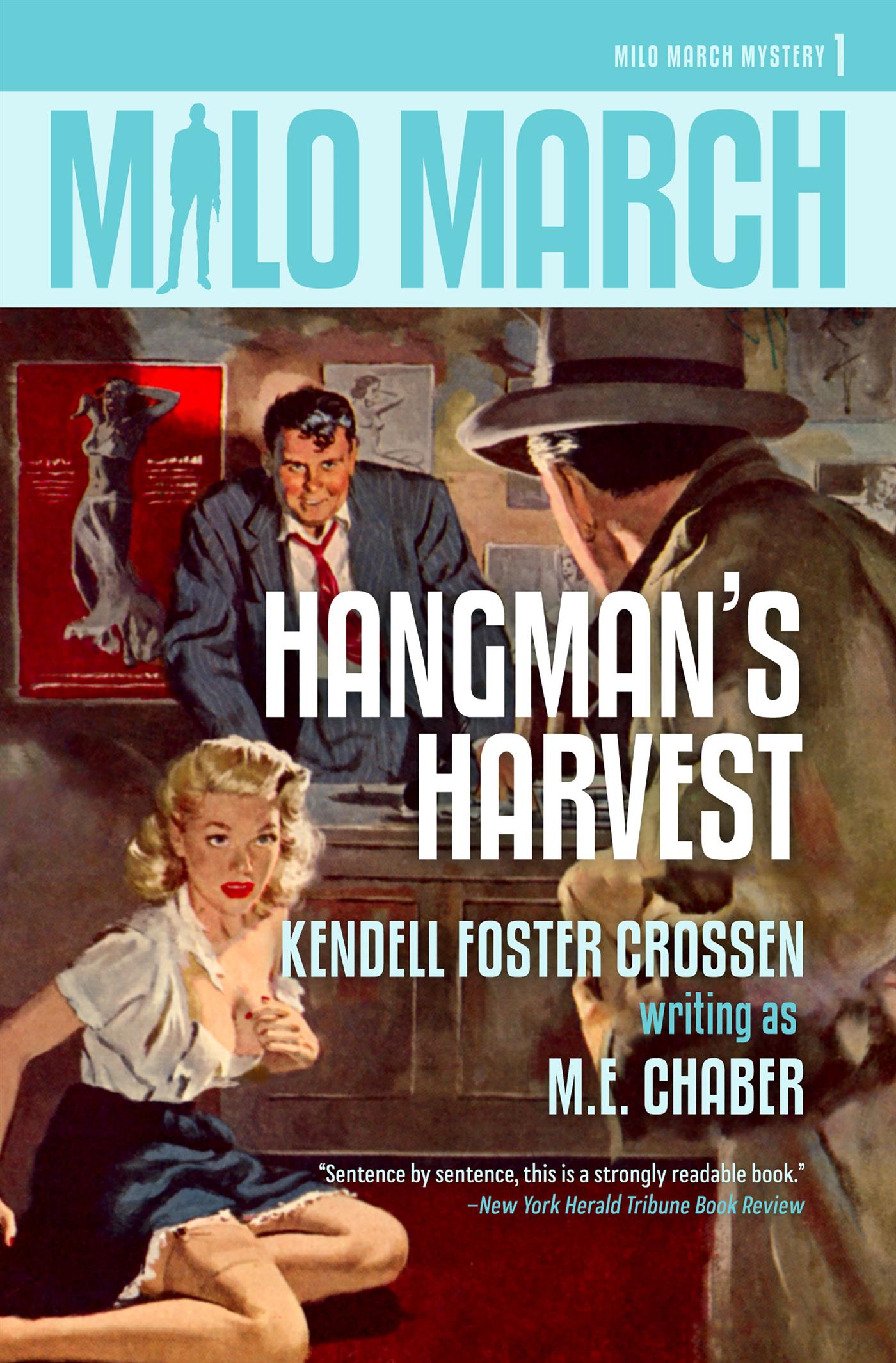
Once again, private eye Milo March, a Major in the Army reserves, is recalled by the CIA for a special mission. At a time when relations between the U.S. and Soviet Russia are somewhat relaxed, the Russians have asked a Syndicate-owned American company to send an expert to teach them how to build coin vending machines and plan where to install them. The CIA easily makes a deal with the Syndicate, and Milo is assigned to go undercover in the guise of this expert.
Since both the Syndicate and the Soviets know who Milo March is, his identity must be kept secret. The CIA provides Milo with I.D. papers and a history covering his entire life as a gangster named Peter Miloff. After a crash course in vending machines, he is off to Moscow. Never mind that the Russians have his fingerprints on file. He will spend much of his time opening doors with his palm and closing them with his elbow.
Milo’s mission is twofold. First there’s an American agent who disappeared into a Russian prison somewhere, and Milo has to figure out where he is. The other assignment is to finish that agent’s job: find out whether a master Soviet spy who was believed killed during the war is actually still alive and running a special espionage bureau.
And so our hero arrives in Moscow armed with several 007 gadgets and a gun, without which he would feel naked. He has also been offered the assistance of four double agents, two Russian nationals and two Yugoslavs. Just as Milo is deciding that he cannot expect much from these little helpers—apart from the company of the two who are lovely young women—a warning comes from Washington that one of the four agents is a traitor. But which one? The Russians are good at playing the cat-and-mouse game, and now Milo had become the mouse….
Das E-Book können Sie in Legimi-Apps oder einer beliebigen App lesen, die das folgende Format unterstützen:
Veröffentlichungsjahr: 2021
Ähnliche



















Wild Midnight Falls
by
Kendell Foster Crossen
Writing as M.E. Chaber
With an Afterword by Kendra Crossen Burroughs
Steeger Books / 2020
Copyright Information
Published by Steeger Books
Visit steegerbooks.com for more books like this.
©1996, 2020 by Kendra Crossen Burroughs
The unabridged novel has been lightly edited by Kendra Crossen Burroughs.
All rights reserved. No part of this book may be reproduced or utilized in any form or by any means, electronic or mechanical, without permission in writing from the publisher. The scanning, uploading, and distribution of this book via the Internet or via any other means without the permission of the publisher is illegal and punishable by law.
Publishing History
Hardcover
New York: Holt, Rinehart & Winston (A Rinehart Suspense Novel), August 1968. Dust jacket by James McMullan.
Toronto: Holt, Rinehart & Winston of Canada, 1968.
Roslyn, NY: Detective Book Club #318, Walter J. Black, Inc., October 1968. (With Fuzz by Ed McBain and A Taste of Sangria by Carlton Keith.)
Paperback
New York: Paperback Library (63-265), A Milo March Mystery, #5, February 1970. Cover by Robert McGinnis.
Dedication
For Maria Louisa Eleni Palmieri Magazu Crossen—whose lovely facets far outnumber her names
What will you say when the world is dying?
What, when the last wild midnight falls
Dark, too dark for the bat to be flying
Round the ruins of old St. Paul’s?
—Alfred Noyes, Tales of the Mermaid Tavern
Potpourri
The young, hard-faced American tossed on the bare floor of the cell and then screamed at the darkness that closed in on his mind. The sound of his own voice awakened him and he sat up, angered by the weakness that struck when he was asleep. There was still nothing but darkness, but this was real and not something in his mind, and it did not frighten him. It was always dark in the cell, and he had no idea whether it was day or night—not that it made any difference. He wished he had a cigarette, but even that hunger had been dulled by time.
Finally he stood up and reached over to the wall, running his hand along it until he felt the marks he’d made. He thought that they brought him food twice a day. At least they brought coffee and bread; then later what tasted like watery cabbage soup, more bread, and tea. After that it was coffee and bread again. Once, a guard had forgotten to take the spoon when he came for the bowl. The American had sharpened the handle on the stone walls and after that always made a mark on the wall each time he was given coffee and bread. There were now sixty-one marks. He counted them again to be sure. Then his hand slipped down to where he had scratched his name.
James Hartwell. It gave him substance, which was often on the verge of vanishing in the prison. And someday someone might see it and the information would travel back across the ocean and close an open file. He expected no more. The prospect of a cell like this and then death was a part of his profession.
After a while he curled up on the floor again and went back to sleep. The guards had to shake him awake when they brought his coffee and bread. They did not speak, for they knew that he understood their language.
Grigory Masinov was one of the new Soviet men. He had been born after the Revolution and had never known any form of society other than that in the Soviet Union. He was a loyal Russian.
He was also a cynic. He saw no great conflict in these two positions. He had become a member of the secret police while he was still at university. He had advanced in his profession until, at the age of thirty-four, he was a member of the KGB with a rating equivalent to that of a sergeant in the Red Army. He was trusted. He had been part of a security guard on trips to the United States, France, England, and Yugoslavia. For six months he had been assigned to the Soviet delegation to the United Nations. It was sometime during this period that Grigory became a cynic. But that was not the way that he saw himself. He was a realist, in a Marxist sense, about mankind as well as systems.
He went ahead, carefully setting a trap for the man he was supposed to watch, but his thoughts were really on his future.
Marya Rijekta undressed quickly in the tiny bathroom and glanced down at her body. It was a beautiful body, unmarred by wrinkles or fat, smooth and full, accented by the coral-tipped breasts and the triangle of red-gold hair. How long, she thought, would it look like this? She ran her fingers through her long, blond hair and walked into the other room where the man waited impatiently. She glanced automatically at the chandelier where the microphone was hidden. There was always a microphone, she thought bitterly, although it was not always the property of the same people. She wondered what it would be like to make love in a room where there were no microphones.
The microphone faithfully recorded the creak of the bed and the heavy breathing of the man. It failed to catch the inaudible sigh of Marya Rijekta or the expression in her eyes as she stared up at the chandelier.
Josip Voukelitch was merely one of many journalists sitting in the large room listening to the remarks of the Soviet Premier and making notes in two neat columns. One column would end up in a special bureau, where it would be analyzed for the benefit of Tito. The other would end up in another special bureau thousands of miles away. Voukelitch was bored. It was his normal state.
Irina Simonov a attended this same news conference and would later write a story for Pravda. She didn’t have to take notes. She had a copy of the speech, and if there was any departure from the text the additions would be waiting for her when she reached the office. Irina was also bored, although her outward appearance was that of any attractive woman of twenty-five from almost any country. Irina carried a dream deep within her, but it was now more than two months since she had been able to do anything about it. She wasn’t certain why this was true and didn’t think too much about it. She knew it was an area where thinking was dangerous.
James Hartwell, Grigory Masinov, Marya Rijekta, Josip Voukelitch, Irina Simonova—they were all quite different from each other, yet they shared one thing in common. Each one of them existed in his or her own prison, real or imagined, yet not one of them knew or for that matter cared about any of the others. And there were two men, unknown to any of them, who would soon start moving them as if they were puppets on strings.
One of these men was sitting in a large office in the Kremlin. It was a special office, known to only a few and inspiring fear in most of them. The man who sat there and pulled his thousands of strings, stretching all over the world, had once been famous, but it was believed that he had died more than twenty years earlier in a Japanese prison. He was now in his seventies; his hair white and his face lined with the passions and cruelties that had filled his life. He pressed a button on his desk and waited. The soldier who entered saluted and stood at attention.
“Hartwell?” the old man asked.
“He has not yet broken,” the soldier replied. “Perhaps it is time for stronger measures.”
The old man studied him. “Would stronger measures break you, Nikolai?”
Something like fear came into the soldier’s eyes. “Of course not,” he said quickly. “But I am different.”
“No, you’re not,” the old man said quietly. “Hartwell is also a professional. He would die with the same quietness that marked his work until we were lucky enough to catch him. Notice that I said luck, Nikolai. It was luck. The next time it must be skill. Move Hartwell to another cell. Feed him better—but not too much better. Have him watched, but leave him alone. Hartwell will become our prize cheese.”
“Yes, sir,” the soldier said, but he sounded puzzled.
“Sooner or later a hungry mouse will come looking for cheese, and there he will be.”
“Then why not show him off in a public trial?”
The old man shook his head. “You’ve been listening to our propaganda again, Nikolai. I’ve warned you about that before. They are not stupid. They will find him. But if we make it easy for them, they will merely write him off and forget about it. We have plenty of time. Impatience, my dear comrade, is the cardinal sin of our profession. Try to remember that.”
The soldier saluted and left.
And there was yet another man in New York City…
One
Up to a point it was like every other morning. I went to my office on Madison Avenue in New York City and opened the mail. It was mostly bills, but somebody did want me to give money to a worthy cause and somebody else wanted me to subscribe to the Wall Street Journal. I made out checks for the bills and threw the other things into the wastebasket.
There wasn’t anything else for me to do at the moment, so I went to the file cabinet and got out a bottle of V.O., poured myself a small drink, and sipped it, wishing the phone would ring. That was my first mistake.
I’m March. Milo March. I have a couple of pieces of paper that say I’m a private detective, but I work as an insurance investigator. At least that’s the way I make my living. Most of my work comes from a single company, although I occasionally work for one of the others.
The phone rang. I thought it might mean a job. I snatched up the receiver and said hello.
“March?” a voice asked.
“Yes,” I said. That was my second mistake.
“I’m calling for your Uncle Bobby,” the man said. “You are to be in the bar of the Holson Hotel on Madison Avenue at eight o’clock tonight.” He hung up.
I replaced the receiver and cursed. I poured myself another drink and stared moodily at it. The phone call meant nothing but trouble.
Once upon a time I had spent several years in the United States Army. I had been assigned to the OSS and then, later, to the CIA. I was still in the Reserves, with the rank of Major, and had been recalled several times to do a special job for the agency. Usually they just recalled me and then ordered me on to a job. They were using a different tactic this time. “Uncle Bobby” was the code name for General Sam Roberts, an important man in the CIA.
As far as I was concerned, the day was shot anyway, so I locked the office and left. I went downtown to my favorite restaurant, the Blue Mill, and worked over some martinis and talked to Alcino until it was lunchtime.
After lunch I went home, which was only a few blocks away, on Perry Street. I checked with my answering service, but there hadn’t been any more calls. So I said to hell with it and took a nap. I’d been up late the night before.
I walked into the bar at the Holson Hotel at exactly eight o’clock. There were only a few people in the bar, and General Roberts was not one of them. I didn’t expect him to be there. He was usually trickier than that. I took a stool at some distance from the other drinkers and ordered a martini. A few minutes later another man entered and sat on the second stool away from me. I glanced at him. He looked like any eager young executive, and he wasn’t paying any attention to me.
I was watching the mirror in back of the bar. I could see behind me through the entrance to the lobby; I figured the General or one of his trained seals might come from that direction. I didn’t see the General, but I did see somebody else who caught my attention. She was tall and blond and beautiful. She walked through the lobby with a swing that must have caused tremors in every earthquake center in the country.
“Beautiful, isn’t she?” a voice asked. It was the man who had taken a stool near me.
“I guess so,” I said shortly. I turned back to my martini.
“Merry Sanders,” he said conversationally. “Thirty-six, twenty-four, thirty-six.
Calls herself a model. Price: one hundred dollars a night and, I’m told, worth every cent of it.”
This time I really looked at him, and began to revise my opinion. “Really?” I asked. “Are you her pimp?”
He didn’t like that, but his only reaction was a slight tightening of the muscles around his mouth. “No. Besides, it’s not necessary. She’s already booked for the night.”
“That’s nice. What are you selling? Peeping privileges through the keyhole in the adjoining suite?” I was deliberately being as insulting as I could.
The muscles tightened a little more. “No, but you might be interested to know where she’s going.”
“All right,” I said wearily, “I’ll play your little game. Where is she going?”
“To a suite on the fifth floor,” he said. He was still not looking at me, paying strict attention to his drink and speaking very softly.
“The suite was rented by you three days ago. You asked for the girl for tonight through her regular answering service. She is probably in the bedroom by now, getting ready for you.”
“And it’s not even Christmas,” I said. “Is there an explanation for this, or are you just talking?”
“The girl is in the bedroom waiting for you. Uncle Bobby is in the living room waiting for you. And there are people in and around the hotel who are watching you and have been since you arrived at eight o’clock.”
“I must be getting old,” I said, sighing. “I should have smelled you when you first came in. Any other tasty little bits of information for me?”
“You rented the suite under the name of Peter Miloff three days ago. I believe there is some mail for you at the desk. You won’t need a key to get in. The door to the suite is unlocked. That’s all.”
“Not quite. You didn’t tell me the number of the suite.”
He flushed. “Five twelve.” He turned slightly away from me.
I smiled to myself and finished my martini. Then I walked into the lobby and took the elevator to the fifth floor.
I found the suite without any trouble. I had known the General for a long time and was familiar with the way he liked to set up little traps for his men, just to be sure they were on their toes. I took my gun from its shoulder holster and gently tried the doorknob. As soon as I knew it would open, I moved into the room fast.
General Roberts was sitting in a chair, a drink in his left hand and a gun in his right. But the gun was pointed in the wrong direction. He started to lift it, then realized he was too late.
I shut the door behind me. “Just wanted to see if you were on your toes, sir,” I said.
He reddened. “I see that time has not made you any more respectful,” he growled. “All right. Put it away. And you’d better go tell the young lady in the next room that you have some business to take care of before you can see her. She’s liable to get curious hearing voices in here.”
I put the gun away and went to what was obviously the bedroom door. I tapped on it gently and then opened it. She had already changed into something soft and transparent. I had to admit that she was quite a vision.
“Hi, honey,” I said.
“Hi,” she said. “You mean you’re my customer?”
“It looks like it.”
“You mean I get lucky for once.”
“Thanks,” I told her. “I have to talk some business in the next room for a few minutes. Make yourself at home. If you want anything from room service, order it and sign my name.”
“Champagne?” she asked hopefully.
“Anything you want, baby. But if you get it, you’d better throw on a robe so the waiter doesn’t have a heart attack.”
She laughed, and I went back to the other room.
The General looked at me sourly and waved to a small bar. “We ordered the things that you seem to like.”
“How kind of you,” I said. I went over and looked. There was gin and vermouth and V.O. I mixed myself a martini and went back to sit across from him.
“Things have certainly changed,” I said. “It used to be that I was ordered back into uniform when you wanted something and then given orders. Now, suddenly, I have a hotel suite, a lot of free booze, and a hundred-dollar whore. What would the taxpayers say?”
He cleared his throat nervously. “This is a special situation,” he said. “I feel that it is safer for you if you are not back in uniform for this assignment. I am therefore asking you to volunteer. If you refuse, I will then have no choice but to have you recalled to active duty.”
“Let’s hear about it,” I said. “I gather that was your trained seal down in the bar?”
“He is one of my men, yes.”
“He said something about me being watched since I arrived at the hotel. Who’s doing the watching?”
“Soviet personnel.”
“Why?”
“It is slightly complicated,” he said. “A few months ago an important Russian trade official came to America. Among other things, he attended a trade showing of coin vending machines. The show was held in Chicago. During it, he had several meetings with one of the officers of a firm known as the Brotherhood Coin Vending Company. He was very interested in all types of vending machines. Sometime after he returned to the Soviet Union, he requested the Brotherhood company to recommend a vending machine specialist who might be hired by the Russian government for a period of six months, subject to the approval of the State Department here.”
“Who owns the vending machine company in Chicago?”
“The Syndicate.”
“I thought maybe that’s what that ‘brotherhood’ jazz meant. So what did they do about it?”
“They recommended a specialist. His name is Peter Miloff.”
I started to ask a question, then stopped. I suddenly remembered what the man downstairs had said. He’d mentioned that I had rented this suite three days ago, and that it was rented in the name of Peter Miloff.
“As if I didn’t know,” I said casually, “who is Peter Miloff?”
He gave me what passed for a smile in the upper ranks. “You are, my dear Milo.”
“Isn’t that sweet? Does the Syndicate know who Peter Miloff is?”
“Only that he is someone that we want sent to Russia.”
“And they agreed just like that? Since when did you get so chummy with the Syndicate?”
“It’s really very simple. First, they like to think of themselves as patriotic Americans when it comes to international politics. It’s very silly, although they did make one important contribution to the invasion of Europe during the last war.”
I gave a simple, four-letter word summation of my opinion of that.
“Secondly,” he continued, “we are in a position to put certain pressures on an individual group such as this that could not be used by the regular law enforcement agencies. The Syndicate notified another Federal agency when they were first approached by the Russians. This information was passed along to us through channels.”
“How else?”
He flushed. “We talked to them, and they were glad to suggest you as the specialist. As it now stands, you’ve been working for them for slightly more than two years at a very good salary. Their records will bear this out. There are also records proving that you have lived in one apartment in Chicago for the same period of time. We have provided you with complete identification and a history covering your entire life. You will find all of it in a file in the dresser drawer. I suggest that you memorize it.”
“You’ve gone to a lot of trouble without knowing whether I’ll do the job for you or not.”
“You’ll do it,” he said grimly, “one way or the other.”
“Charm was always one of your weak spots, General,” I told him. “Where did you dig up this name Peter Miloff for me?”
“Well, Miloff is close enough to your real first name, so you shouldn’t have too much trouble responding to it from the beginning. And according to your records, you are a third-generation American of Russian ancestry. This will help explain your familiarity with the language.”
“What happens if the Russians don’t go for this after you’ve spent so much time on it?”
“They already have gone for it. They have made their request to the State Department, and I have good reason to believe that one of your two letters down at the desk is also from the Russians. It was delivered this afternoon by hand by a Russian. The other letter contains your paycheck from the Brotherhood company.”
“What do I do with that?”
“Spend it. We’ve given them the money. They’re not that patriotic.”
“Well,” I said, “it seems to leave only one small question. I realize that it’s unimportant, but I do feel compelled to ask it.”
“What?”
“What do we do about the fact that the only thing I know about a coin vending machine is that you put coins into it, then push buttons or pull levers, and something comes out of it or two lemons show up and you shrug. I doubt if that will satisfy even the most backward Russian.”
“That’s no problem,” he said airily. “A Mr. Benotti is the owner of the Brotherhood company. You might call him wealthy. He owns what he calls a camp on a lake in Upstate New York, but I understand it has all the comforts of home. It is also remote and boasts a very large collection of vending machines. You are going to spend a two-week vacation there before going on your Russian trip.”
“That’s a nice touch,” I said. “The trusted and valuable associate who gets the use of the family castle. Do I get a well-deserved rest on this vacation?”
“You do not. You will go through a crash program on the subject of vending machines. By the end of the two weeks you should be able to give the Russians sound advice on how to build and operate machines which will dispense food, hot tea, and various small articles that the citizens might wish to purchase without lining up in front of a store.”
“What about a nice cup of vodka?”
He ignored me. “You will also be briefed on your assignment in Russia. The Russians will probably follow you to the camp and maintain a watch on it while you are there. Mr. Benotti’s chauffeur will be in residence for your convenience and lives in an apartment over the garage. He is also the expert who will instruct you about vending machines. He has been carefully checked out. Some of our personnel will already be in the house when you arrive, and will, naturally, stay out of sight while you are there.”
“And when do I take this vacation?”
“In four or five days, depending somewhat on the results of your meeting with the Russian officials. You will tell them that you came here on business for the company and that your vacation was already planned. You intend to take it before going on to anything else. You’ll go to your apartment in Chicago from here, then from there back to New York to the camp. You will undoubtedly be followed.”
“Won’t they check on the Chicago apartment?”
“I’m sure they will, but it will check out. Mr. Benotti also owns that building.”
“Strange bedfellows,” I murmured. “Do the Russians know who they’re dealing with?”
“I’m sure they do. But they’re practical fellows, and when they want help, they want the best.”
“And does your Mr. Benotti know who this Peter Miloff is?”
“You mean does he know you’re Milo March? No.”
“General,” I said, “you always manage to put me in such interesting situations. My erstwhile employer belongs to a group who would love to get Milo March. They are loaning me out to a group of people who would love to get Milo March.”
“My boy, I have confidence in you.”
“I’ll try to remember that when they shoot me,” I said. “What do I do, now that I’m going to be followed, about getting any of my clothes out of my real apartment?”
“No problem. We naturally know your size and your taste in clothes. You will find quite a bit of clothing here and two fine pieces of luggage. You will find more in the apartment in Chicago.” He squinted at me. “I see you’re carrying a gun. I suggest that you give it to me to keep until you return from Russia. You’ll find a very good gun in the dresser. It’s registered to Peter Miloff in Chicago and there’s a permit for it. I also suggest that you give me all of your personal papers and substitute the ones that are here.”
I took out the gun and gave it to him. Then I removed everything that identified me as Milo March and handed these over. I felt as if I were walking naked on the street. He put everything away in a briefcase.
“I guess,” he said, “that’s about it for now. We’ll give you the rest at the camp. As soon as you know when you will go to the camp, phone the special number. Benotti’s man will pick you up at the apartment. In the left-hand drawer of the dresser you will find the key to this suite and the key to your Chicago apartment, plus the address of that apartment, which is on your identification papers. If you want anything from your own place, tell us when you call the special number, and we’ll see that those things are transferred to your Chicago apartment while you’re at the camp.”
“I haven’t agreed to do it yet,” I said.
His eyebrows went up. “You mean I have to have you recalled to active duty, Major?”
“I’ll do it,” I said, “but I just don’t like to be taken for granted. I may be a floozy, but I’m my own floozy. Let us keep that clearly in mind, General.”
He cleared his throat. “Just wanted the issue to be clear. Well, I’d better be going.”
“Just one more thing, General,” I said gently. “You haven’t told me what you expect me to do in Russia, besides telling them how to build a machine that will spit out a doughnut if someone deposits a kopeck.”
“Only two things,” he said heavily. “One of our agents, James Hartwell, vanished in Russia a little more than two months ago. We want you to find out if he’s alive and where he is. You don’t have to rescue him. With the new relationship between the two countries, we can take the necessary steps once we know where he is.”
“And?”
“Do you remember the name of Richard Sorge?”
“Yes,” I said. “He was the head of the Russian Fourth Bureau during World War II. He was arrested in Japan and executed there.”
He nodded. “We have reason to believe that he was never executed, but that he’s still alive and still the head of the Fourth Bureau. If so, he is the most dangerous man in the country, even though he would now be in his seventies. Since we know quite a bit about him, it would be a big help if we knew he was still alive and operating. We want you to check this out.”
I looked at him. “If he is still alive, are you aware that he will be hidden somewhere in the Kremlin? That he will be so carefully concealed that it would take a hundred super-bloodhounds to sniff him out? And that it will be practically impossible for an industrial consultant to get within shouting distance of him?”
“Are you quite finished, Major?”
“Then,” he said, “I can only tell you that checking out Sorge has top priority. It is an assignment.”
Two
That was quite an assignment, I thought. Go to Russia, where they had my picture and my fingerprints, and find a master spy who had supposedly died—had certainly vanished—more than twenty years ago.
“Thanks,” I told the General dryly. “I guess I’ll see you at the camp.”
“I’ll be there,” he said. He gave me an equally dry smile and glanced toward the bedroom door. “Enjoy yourself, my boy.” He picked up his briefcase and marched out of the suite.
Well, that was my boy. I’d known him for more than twenty years and he’d always been the same. I shrugged and went over to check the dresser. I had to admit that they did a good job. The identification was as complete as it was possible to be. I put everything in my pockets. The gun was as good as he’d said. I put it in my holster. Then I added the hotel key and the Chicago apartment keys to my pocket and went over to the bedroom. I tapped lightly and opened the door.
She was stretched out on the bed, wearing only a nightgown, which was the same as nothing. She was quite a sight. She had a glass of champagne in one hand and a cigarette in the other. She looked up and smiled.
“Business all finished?” she asked.
“Yes,” I said. “Get dressed.”
The smile faded from her face. “You mean you don’t like me?”
“I don’t mean anything of the kind. But you have been paid for the whole night, haven’t you?”
“Yes.”
“Have you had dinner?”
“No, but I had a late lunch.”




