


210,99 €
Mehr erfahren.
- Herausgeber: John Wiley & Sons
- Kategorie: Fachliteratur
- Sprache: Englisch
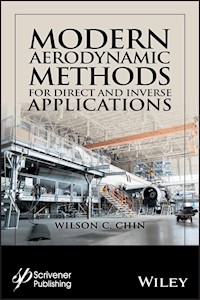
A powerful new monograph from an aerodynamicist reviewing modern conventional aerodynamic approaches, this volume covers aspects of subsonic, transonic and supersonic flow, inverse problems, shear flow analysis, jet engine power addition, engine and airframe integration, and other areas, providing readers with the tools needed to evaluate their own ideas and to implement the newer methods suggested in this book. This new book, by a prolific fluid-dynamicist and mathematician who has published more than twenty research monographs, represents not just another contribution to aerodynamics, but a book that raises serious questions about traditionally accepted approaches and formulations, providing new methods that solve longstanding problems of importance to the industry. While both conventional and newer ideas are discussed, the presentations are readable and geared to advanced undergraduates with exposure to elementary differential equations and introductory aerodynamics principles. Readers are introduced to fundamental algorithms (with Fortran source code) for basic applications, such as subsonic lifting airfoils, transonic supercritical flows utilizing mixed differencing, models for inviscid shear flow aerodynamics, and so on. These are models they can extend to include newer effects developed in the second half of the book. Many of the newer methods have appeared over the years in various journals and are now presented with deeper perspective and integration. This book helps readers approach the literature more critically. Rather than simply understanding an approach, for instance, the powerful "type differencing" behind transonic analysis, or the rationale behind "conservative" formulations, or the use of Euler equation methods for shear flow analysis when they are unnecessary, the author guides and motivates the user to ask why and why not and what if. And often, more powerful methods can be developed using no more than simple mathematical manipulations. For example, Cauchy-Riemann conditions, which are powerful tools in subsonic airfoil theory, can be readily extended to handle compressible flows with shocks, rotational flows, and even three-dimensional wing flowfields, in a variety of applications, to produce powerful formulations that address very difficult problems. This breakthrough volume is certainly a "must have" on every engineer's bookshelf.
Sie lesen das E-Book in den Legimi-Apps auf:
Seitenzahl: 591
Veröffentlichungsjahr: 2019
Ähnliche
















Contents
Cover
Title page
Copyright page
Preface
Acknowledgements
Chapter 1: Basic Concepts, Challenges and Methods
1.1 Governing Equations – An Unconventional Synopsis
1.2 Fundamental “Analysis” or “Forward Modeling” Ideas
1.3 Basic “Inverse” or “Indirect Modeling” Ideas
1.4 Literature Overview and Modeling Issues
1.5 References
Chapter 2: Computational Methods: Subtleties, Approaches and Algorithms
2.1 Coding Suggestions and Baseline Solutions
2.2 Finite Difference Methods for Simple Planar Flows
2.3 Examples – Analysis, Direct or Forward Applications
2.4 Examples – Inverse or Indirect Applications
Chapter 3: Advanced Physical Models and Mathematical Approaches
3.1 Nonlinear Formulation for Low-Frequency Transonic Flow
3.2 Effect of Frequency in Unsteady Transonic Flow
3.3 Harmonic Analysis of Unsteady Transonic Flow
3.4 Supersonic Wave Drag for Nonplanar Singularity Distributions
3.5 Supersonic Wave Drag for Planar Singularity Distributions
3.6 Pseudo-Transonic Equation with a Diffusion Term
3.7 Numerical Solution for Viscous Transonic Flow
3.8 Type-Independent Solutions for Mixed Subsonic and Supersonic Compressible Flow
3.9 Algorithm for Inviscid Compressible Flow Using the Viscous Transonic Equation
3.10 Inviscid Parallel Flow Stability with Nonlinear Mean Profile Distortion
3.11 Aerodynamic Stability of Inviscid Shear Flow Over Flexible Membranes
3.12 Goethert's Rule with an Improved Boundary Condition
3.13 Some Singular Aspects of Three-Dimensional Transonic Flow
Chapter 4: General Analysis and Inverse Methods for Aerodynamic Modeling
4.1 On the Design of Thin Subsonic Airfoils
4.2 Airfoil Design in Subcritical and Supercritical Flows
4.3 Direct Approach to Aerodynamic Inverse Problems
4.4 Superpotential Solution for Jet Engine External Potential and Internal Rotational Flow Interaction
4.5 Thin Airfoil Theory for Planar Inviscid Shear Flow
4.6 Class of Shock-free Airfoils Producing the Same Surface Pressure
4.7 Engine Power Simulation for Transonic Flow-Through Nacelles
4.8 Inviscid Steady Flow Past Turbofan Mixer Nozzles
Chapter 5: Engine and Airframe Integration Methods
5.1 Big Picture Revisited
5.2 Engine Component Analysis
5.3 Engine Power Simulation Using Actuator Disks
5.4 Mixers and Supersonic Nozzles
5.5 References
Cumulative References
Index
About the Author
End User License Agreement
Guide
Cover
Copyright
Table of Contents
Begin Reading
Pages
ii
iii
iv
xii
xiii
xiv
1
2
3
4
5
6
7
8
9
10
11
12
13
14
15
16
17
18
19
20
21
22
23
24
25
26
27
28
29
30
31
32
33
34
35
36
37
38
39
40
41
42
43
44
45
46
47
48
49
50
51
52
53
54
55
56
57
58
59
60
61
62
63
64
65
66
67
68
69
70
71
72
73
74
75
76
77
78
79
80
81
82
83
84
85
86
87
88
89
90
91
92
93
94
95
96
97
98
99
100
101
102
103
104
105
106
107
108
109
110
111
112
113
114
115
116
117
118
119
120
121
122
123
124
125
126
127
128
129
130
131
132
133
134
135
136
137
138
139
140
141
142
143
144
145
146
147
148
149
150
151
152
153
154
155
156
157
158
159
160
161
162
163
164
165
166
167
168
169
170
171
172
173
174
175
176
177
178
179
180
181
182
183
184
185
186
187
188
189
190
191
192
193
194
195
196
197
198
199
200
201
202
203
204
205
206
207
208
209
210
211
212
213
214
215
216
217
218
219
220
221
222
223
224
225
226
227
228
229
230
231
232
233
234
235
236
237
238
239
240
241
242
243
244
245
246
247
248
249
250
251
252
253
254
255
256
257
258
259
260
261
262
263
264
265
266
267
268
269
270
271
272
273
274
275
276
277
278
279
280
281
282
283
284
285
286
287
288
289
290
291
292
293
294
295
296
297
298
299
300
301
302
303
304
305
306
307
308
309
310
311
312
313
314
315
316
317
318
319
320
321
322
323
324
325
326
327
328
329
330
331
332
333
334
335
336
337
338
339
340
341
342
343
344
345
346
347
348
349
350
351
352
353
354
355
356
357
358
359
360
361
362
363
364
365
366
367
368
369
370
371
372
373
374
375
376
377
378
379
380
381
382
383
384
385
386
387
388
389
390
391
392
393
394
395
396
397
398
399
400
401
402
403
404
405
406
407
408
409
410
411
412
413
414
415
416
417
418
419
420
421
422
423
424
425
426
Scrivener Publishing 100 Cummings Center, Suite 541J Beverly, MA 01915
Publishers at Scrivener Martin Scrivener ([email protected]) Phillip Carmical ([email protected])
Modern Aerodynamic Methods for Direct and Inverse Applications
Wilson C. Chin
This edition first published 2019 by John Wiley & Sons, Inc., 111 River Street, Hoboken, NJ 07030, USA and Scrivener Publishing LLC, 100 Cummings Center, Suite 541J, Beverly, MA 01915, USA © 2019 Scrivener Publishing LLC For more information about Scrivener publications please visit www.scrivenerpublishing.com.
All rights reserved. No part of this publication may be reproduced, stored in a retrieval system, or transmitted, in any form or by any means, electronic, mechanical, photocopying, recording, or otherwise, except as permitted by law. Advice on how to obtain permission to reuse material from this title is available at http://www.wiley.com/go/permissions.
Wiley Global Headquarters 111 River Street, Hoboken, NJ 07030, USA
For details of our global editorial offices, customer services, and more information about Wiley products visit us at www.wiley.com.
Limit of Liability/Disclaimer of Warranty While the publisher and authors have used their best efforts in preparing this work, they make no representations or warranties with respect to the accuracy or completeness of the contents of this work and specifically disclaim all warranties, including without limitation any implied warranties of merchantability or fitness for a particular purpose. No warranty may be created or extended by sales representatives, written sales materials, or promotional statements for this work. The fact that an organization, website, or product is referred to in this work as a citation and/or potential source of further information does not mean that the publisher and authors endorse the information or services the organization, website, or product may provide or recommendations it may make. This work is sold with the understanding that the publisher is not engaged in rendering professional services. The advice and strategies contained herein may not be suitable for your situation. You should consult with a specialist where appropriate. Neither the publisher nor authors shall be liable for any loss of profit or any other commercial damages, including but not limited to special, incidental, consequential, or other damages. Further, readers should be aware that websites listed in this work may have changed or disappeared between when this work was written and when it is read.
Library of Congress Cataloging-in-Publication Data
ISBN 978-1-119-58056-0
Preface
I am privileged to write this monograph, one focused on ideas new and old, but through it all, a book aimed at conveying new approaches to students and making it simple. In doing so, I want to teach important and subtle ideas while sparing the jargon – and provide readers with usable and down-to-earth programming tools to evaluate new approaches.
All of this, I am adept in. With no shortage of exposure to confusion, bewilderment and getting lost. At Caltech, where I earned my Master's, I studied with Gerald Whitham, the aerodynamicist renown for “sonic boom” modeling, while at M.I.T., where I did my Ph.D., I worked with Marten Landahl, the leading pioneer in transonic flow. My exposure to aerodynamics was good but I was compelled to learn fast. But interestingly, by the time I met Whitham and Landahl, both had moved on to hydrodynamic stability. So I'd struggle with that too, extending Whitham's kinematic wave theory to second-order, and learning the intricacies behind applied math and nonlinear equations.
I had never programmed nor touched a computer, remarkably. Not even Fortran, the mainstay of engineering. Completely alien. All I knew were differential equations and differential equations. On my first day at Boeing, I asked my supervisor, Paul Rubbert, who also worked with Landahl for his doctorate, “What kind of answers do computers give?” Sarcastically, he replied, “Any answers you want.” Strange, I thought, but I would gradually appreciate those words of wisdom.
Whereas Rubbert's group focused on panel methods, Hideo Yoshihara (my second boss) and his team specialized in transonic flow – wow, the world sure was small. I learned a lot during the two years I worked at Boeing, publishing almost two dozen papers that probed the depths of fluid dynamics. And I would move to Pratt & Whitney Aircraft as Manager of Turbomachinery, applying new-fangled methods in transonic flow analysis to the innards of turbines and compressors. Here, I'd also share a cubicle with Richard Whitcomb, the leading authority on supercritical wing design, winglets and Coke bottles, during six long months as we labored days on end to refine Pratt's engine and airframe integration efforts. Were it not for the pungent cigars he smoked, everything would have been perfect.
But I would not stay long. That defining year, I accepted new challenges with the petroleum industry – at latest count, more than two decades in oil and gas exploration, where I'd author more than twenty books with John Wiley & Sons and Elsevier Science, earn about four dozen patents, write over a hundred papers. My fascination with aerodynamics, however, had never died. The feeling goes on. I want to continue the research I once enjoyed and encourage their application in airplane design, to develop smarter models, to learn from a thriving industry as the world takes a renewed interest in subsonic, transonic and supersonic flow. It's an exciting world and getting better by the minute.
It's great to be back.
Wilson C. Chin, Ph.D., M.I.T. Houston, Texas
Email: [email protected] Phone: (832) 483–6899
November 2018
Acknowledgements
The subject matter, insights and perspectives in this book were conceived years ago during my aerospace studies at Caltech and M.I.T. and subsequent affiliation with Boeing and Pratt & Whitney Aircraft. Conversations and lengthy discussions with Fritz Bark, Judson Baron, Francis Edward Ehlers, Marten Landahl, Harvard Lomax, Thomas Matoi, Donald Rizzetta, Paul Rubbert, Richard Whitcomb, Gerald Whitham, Sheila Widnall and Hideo Yoshihara were particularly helpful and molded my initial approaches to aerodynamics and fluid mechanics.
Funding agencies that supported my early career work were several, including Air Force Office of Scientific Research (AFOSR), National Science Foundation (NSF), Office of Naval Research (ONR), and later, the United States Department of Energy (DOE). I also thank the Kungliga Tekniska högskolan (KTH Royal Institute of Technology) in Stockholm, Sweden, which hosted and supported my early fluid mechanics training and provided me with lasting and kind memories.
As usual, many thanks to Phil Carmical, Publisher, for his interest in my varied scientific activities, first petroleum and now aerospace, and for his unwavering faith and confidence that I would not compose anything too terribly incorrect. And lastly, I express my gratitude to Jenny Zhuang, my friend and companion, for discovering these almost forgotten jewels from my academic past and encouraging me to share them with similarly curious fluid-dynamicists and aerospace engineers.




