


18,99 €
Mehr erfahren.
- Herausgeber: John Wiley & Sons
- Kategorie: Geisteswissenschaft
- Sprache: Englisch
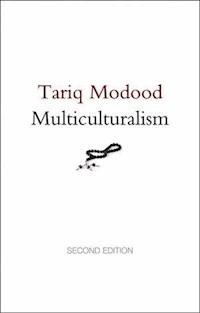
At a time when many public commentators are turning against multiculturalism in response to fears about militant Islam, immigration or social cohesion, Tariq Modood, one of the world's leading authorities on multiculturalism, provides a distinctive contribution to these debates. He contends that the rise of Islamic terrorism has neither discredited multiculturalism nor heralded a clash of civilizations. Instead, it has highlighted a central challenge for the 21st century - the urgent need to include Muslims in contemporary conceptions of democratic citizenship.
In the second edition of this popular and compelling book, Modood updates his original argument with two new chapters. He reassesses the relationship between multiculturalism, cosmopolitanism and assimilation, demonstrating that multiculturalism is crucial for successful integration. He also argues that while multiculturalism poses a significant challenge to existing forms of secularism, this challenge should not be exaggerated into a crisis. In so doing, Modood adds new vigor to the claim that multiculturalism remains a living force which is shaping our polities, even as its death is repeatedly announced.
This book will appeal to students, researchers and teachers of politics, sociology and public policy, as well as to anyone interested in the prospects of multiculturalism today.
Sie lesen das E-Book in den Legimi-Apps auf:
Seitenzahl: 370
Veröffentlichungsjahr: 2013
Ähnliche



















Table of Contents
Cover
Title page
Copyright page
Dedication
About the Author
Acknowledgements
Second Edition Acknowledgements
1 Is Multiculturalism Appropriate for the Twenty-first Century?
A New Idea but not a Comprehensive Political Philosophy
A Crisis of Multiculturalism?
Fit for This Century?
2 A Liberal’s Bias
State Neutrality, Ethnicity and Religion
National Cultures and Immigrants
3 Difference, Multi and Equality
The Accommodation of ‘Difference’
Multiplicity
Integration
Equality
Other Forms of Inequality
4 Liberal Citizenship and Secularism
3+1 Implications for Liberal Citizenship
Secularism: Different Public–Private Boundaries in Different Countries
Moderate Secularism As an Implication of Multicultural Equality
Conclusion
5 Multiculturalism and Essentialism
Are Groups Less Real than Individuals?
Who Essentializes?
Multi-dimensionality
Goodbye to Old Ethnicities?
The Politics of (Anti-)Essentialism
Conclusion
6 Multicultural Citizenship
Citizenship
The Danger of Ideology
Muslims and Identity
Debating Muslims
Variable Group Representation
National Identity
7 The Strange Non-Death of Multiculturalism
Integrating Difference
Four Modes of Integration
Multiculturalism without Groups?
Ways in Which Multiculturalism is Not Dead
Social Unity
Giving Each Mode of Integration Its Due
8 Multiculturalism and the ‘Crisis of Secularism’
Moderate and Radical Secularist Responses to Muslim Assertiveness
Additional Responses: Christian Values and Muscular Liberalism
To Pluralize or Abandon Moderate Secularism?
Are the US and India Succeeding Where Europe is Failing?
References
Index
Copyright © Tariq Modood 2007, 2013
The right of Tariq Modood to be identified as Author of this Work has been asserted in accordance with the UK Copyright, Designs and Patents Act 1988.
First published in 2007 by Polity Press; second revised edition with new material 2013
Polity Press Polity Press
65 Bridge Street 350 Main Street
Cambridge CB2 1UR, UK Malden, MA 02148, USA
All rights reserved. Except for the quotation of short passages for the purpose of criticism and review, no part of this publication may be reproduced, stored in a retrieval system, or transmitted, in any form or by any means, electronic, mechanical, photocopying, recording or otherwise, without the prior permission of the publisher.
ISBN-13: 97807456-6286-2
ISBN-13: 97807456-6287-9 (pb)
ISBN-13: 97807456-6964-9 (Multi-user ebook)
ISBN-13: 97807456-6965-6 (Single-user ebook)
A catalogue record for this book is available from the British Library.
The publisher has used its best endeavours to ensure that the URLs for external websites referred to in this book are correct and active at the time of going to press. However, the publisher has no responsibility for the websites and can make no guarantee that a site will remain live or that the content is or will remain appropriate.
Every effort has been made to trace all copyright holders, but if any have been inadvertently overlooked the publishers will be pleased to include any necessary credits in any subsequent reprint or edition.
For further information on Polity, visit our website: www.politybooks.com
For Glynthea, Ghizala and Yasmin
About the Author
Tariq Modood is Professor of Sociology, Politics and Public Policy, and the founding Director of the Centre for the Study of Ethnicity and Citizenship at the University of Bristol, UK. He is a leading authority on post-immigration ethnicity, racial equality and the theory and politics of multiculturalism. He has written over thirty (co-)authored and (co-)edited books and reports and over 150 articles or chapters in political philosophy, sociology and public policy. He was the principal investigator of the PSI Fourth National Survey of Ethnic Minorities (UK) and has participated in and led numerous research projects, including as co-Director of the Bristol–UCL Leverhulme Programme on Migration and Citizenship. He is a co-founding editor of the international journal Ethnicities. His latest books include Still Not Easy Being British (2010), and, as co-editor, Secularism, Religion and Multicultural Citizenship (2009), Global Migration, Ethnicity and Britishness (2011) and European Multiculturalisms (2012). He is a regular contributor to the media and to policy discussions in Britain and was a member of the Commission on the Future of Multi-Ethnic Britain (the Parekh Report, 2000) and the National Equalities Panel. He was awarded an MBE for services to social science and ethnic relations in 2001 and elected to the UK Academy of Social Sciences in 2004. His website is <tariqmodood.com>.
Acknowledgements
This book does not aspire to be a comprehensive theory, detailed comparative study or a policy blueprint. It is written to help us see the wood and not just a bunch of trees; to better identify what multiculturalism might mean as a political project that we might be for or against. The argument is that there is an understanding of civic equality that offers a core vision of multiculturalism that is not only coherent and relevant to the twenty-first century but is also attractive and ought to be a basis for civility, political reform and social research.
The arguments presented in this book have benefited from the opportunities I have had to do a number of presentations and engage with diverse gatherings. The people who have been helpful in these ways are too many to acknowledge individually and I offer them a collective thanks. I would like expressly to thank those who offered comments in writing. Thanks to Yahya Birt, Geoffrey Levey, Nasar Meer, Bhikhu Parekh, Andy Pilkington and Varun Uberoi for reading and commenting on a draft of the book (and also to two anonymous readers). I am also grateful to Veit Bader, Rainer Baubock, Adrian Favell and Jon Fox for the same in relation to Chapter 5. It is a privilege to have so many expert friends and colleagues to be able to call on for constructive feedback; I hope they will forgive me for not always acting on their comments.
I would also like to thank the Leverhulme Trust. Co-directing the Bristol–UCL Leverhulme Programme on Migration and Citizenship perhaps competed for my attention with the writing of this book rather than flowed from it but I am conscious that the Trust’s generous funding created a level of activity which provided me with a stimulating context to think about social research in relation to the development of multicultural societies.
As is perhaps true of many university books today, much of the writing was done outside formal work time. Many people could complain that they have a time-IOU from me in their hands but I am most conscious of the diminution of companionship and family life that it has entailed for my wife, Glynthea, and daughters, Ghizala and Yasmin. It is small recompense but I dedicate this book to them, the most important loves of my life.
Second Edition Acknowledgements
I am pleased that there is a demand for a second edition of this book when its topic is supposed to have intellectually and politically died some years ago. I have made some minor corrections and amendments and added two new chapters, each of which try to take the argument of the book further. Chapter 7 develops the view that integration will remain incomplete without multicultural citzenship. Chapter 8 gives further substance to the view that political secularism is the new, major site for multiculturalism, and while this does not amount to a crisis it means that the current controversies around political secularism are structured by pro- and anti-multiculturalism.
My membership of the two European Union FP7 projects, A European Approach to Multicultural Citizenship: Legal Political and Educational Challenges (EMILIE, 2006–9) and Tolerance, Pluralism and Social Cohesion (ACCEPT PLURALISM, 2010–13), nine and sixteen countries projects respectively, enabled me to continue to explore the nature of diversity and how it was changing across Europe, and I would like to express thanks both for the funding and the stimulating collaboration. The work for chapter 8 was done during an AHRC Fellowship (2010–11) and I am grateful to the AHRC for the award.
I would like to renew the thanks of the original Acknowledgements, in particular to Nasar Meer and Varun Uberoi, who have in this period become co-authors even when not employed to be so, and to Jan Dobbernack for his research assistantship.
I am also pleased to renew the original dedication.
1
Is Multiculturalism Appropriate for the Twenty-first Century?
The 1960s were a time for asserting the singular character of the human race. Nazism had asserted the irreducible difference between Aryan, Jew, Slav and so on but it had been defeated and anti-racism was on the march. Martin Luther King Jr and his followers proclaimed humanity’s essential sameness, that nothing differentiated whites and blacks other than skin colour and few outside the besieged laager of apartheid were willing to defend separate development. The imperial idea of ‘the White Man’s burden’ of ruling ‘the lesser breeds without the Law’ was regarded as an embarrassing anachronism if not a matter of shame amongst white youth. Yet it was also the time for the celebration of difference. A time when people were not only encouraged to ‘do their own thing’ but when African-Americans started to assert a new black historical pride and the need for a specifically black political mobilization. Some women focused on their sexual differences from men and postulated that women were naturally more caring, consensual and empathetic. For gays the company of co-sexuals became a necessity in order for them to explore the nature of homosexuality and to allow it to be its own thing in its own space without shame or copying heterosexuality.
At the very same moment that the related ideas of humanism, human rights and equal citizenship had reached a new ascendancy, claims of group difference as embodied in the ideas of Afrocentricity, ethnicity, femaleness, gay rights and so on became central to a new progressive politics. It was a politics of identity: being true to one’s nature or heritage and seeking with others of the same kind public recognition for one’s collectivity. One term which came to describe this politics, especially in the United States, is ‘multiculturalism’.
Multiculturalism also has a more restricted meaning, especially in Britain and other parts of Europe. Here we are said to have become a multicultural society not so much by the emergence of a political movement but by a more fundamental movement of peoples. By immigration – specifically, the immigration from outside Europe, of non-white peoples into predominantly white countries. Here, then, the political idea of multiculturalism – the recognition of group difference within the public sphere of laws, policies, democratic discourses and the terms of a shared citizenship and national identity – while sharing something in common with the political movements described above has a much narrower focus. Perhaps the narrower and the broader meanings of multiculturalism – focusing on the consequences of immigration and on the struggles of a range of marginalized groups or on group differences per se – cannot be entirely separated from each other. The narrower meaning might reasonably be construed as a part, a strand, of the larger current. Nevertheless, post-immigration multiculturalism has its own distinctive concerns and sensibilities which can be distorted or obscured if we see it in generic multicultural terms. It may have connections with racism, which may be quite different when the right to settle is not an issue; or, it may have connections with sexism which can only be attended to when there is sensitivity to culturally differentiated sexual norms or gender roles. Moreover, even within the narrower post-immigration phenomenon, the issues can vary between countries. In some countries, racism and the legacy of colonialism may be central; in others, the concern may be how to convert a condition of guest worker into citizen when the former condition offers no opportunity to exercise democratic power. Beginning with a larger idea of multiculturalism tends, as I will illustrate in the next chapter in the case of the philosopher, Will Kymlicka, to distort, even marginalize, some of the specific contemporary issues in relation to the politics of post-immigration, especially in western Europe.
The first countries to speak of themselves as having become multicultural societies were, perhaps not surprisingly, countries which have a long, historical experience of immigration and indeed which have been built up out of immigration, namely, Canada, Australia and the United States. Their previous histories of migration and settlement meant that migrants were more readily seen as prospective co-citizens and the nation was seen as multiethnic in its source, even if till the 1960s and 1970s, assimilation (anglo-conformity) was what was expected from migrants and certainly their children. Most of these historical migrants were of European descent but, as migration policies were loosened to allow non-whites, there was a sense both that the new migrants were more culturally different than many of their predecessors and that assimilation was not acceptable as a policy. As part of, or because of, the wider political acceptance of ‘difference’ mentioned above, it was felt that the migrants should be able to retain their distinct cultures while they adapted to working and living in their new countries. No doubt some assimilation would take place but it should not be required.1
In the decades that followed, some western European societies, especially Britain, the Netherlands and Sweden, began to follow suit. Western Europe had been importing labour, particularly between the late 1940s and the oil crisis of 1973, to rebuild its postwar economies, and the inward flow carried on as dependants and other kin, legally and illegally, joined the migrants, as the economic cycle created new labour demand and refugees sought shelter. Most European countries do not collect data on non-white citizens and residents, only on foreigners, so all figures are guess estimates, but it seems that more than 5 per cent and possibly up to 10 per cent of citizens and residents of EU15 are of non-European descent. Currently most of the largest, especially the capital, cities of northwest Europe are about 15–30 per cent non-white (i.e., people of non-European descent). Even without further large-scale immigration, being a young, fertile population, these proportions will grow for at least one generation more before they stabilize, reaching or exceeding 50 per cent of some cities in the next decade or so. The trend will include some of the larger urban centres of southern Europe. A high degree of racial/ethnic/religious mix in its principal cities will be the norm in twenty-first century Europe, and will characterize its national economic, cultural and political life, as it has done in twentieth (and will do so in the twenty-first) century US. Of course there will be important differences too between western Europe and the US. Amongst these is that the majority of non-whites in the countries of Europe are Muslims; the UK, where Muslims form about a third of non-whites or ethnic minorities, is an exception. With an estimated over 15 million Muslims in western Europe today, about four per cent of the population (Savage 2004), they are larger than the combined populations of Finland, Denmark and Ireland. For this, if for no other reason, Muslims have become central to the merits and demerits of multiculturalism as a public policy in western Europe, though it is to state the obvious that, at least since the attacks of 11 September 2001, Muslim migrants and settlers have come under new political and security scrutiny even in countries in which Muslims form a relatively small proportion of recent settlers, such as the US, Canada and Australia.
The recognition that a society had become multiethnic or multicultural was not simply about demographics or economics. It was an understanding that a new set of challenges were being posed for which a new political agenda was necessary (or alternatively, had to be resisted: the view of certain conservatives, nationalists and French republicans). While this politics was connected with the wider meanings of multiculturalism mentioned above, and was entwined with issues of racial equality, I shall here mean by multiculturalism the political accommodation of minorities formed by immigration to western countries from outside the prosperous West.
A New Idea but not a Comprehensive Political Philosophy
There have been many multicultural societies in the past, especially outside European nation-states, for example, in the Ottoman Empire, where the levels of religious tolerance and accommodation (shown by Muslim rulers towards Jews and Christians) were much greater than those found in western Europe till recent times. Some contemporary societies are much more deeply multicultural than the societies that are the focus of this book. The former include countries like India, which has many millions of followers of most of the major world religions, as well as being the home of many smaller-sized religions, dozens of ethnic groups, over twenty official languages and so on.
The deep communal cultural diversity that characterizes countries like India, no less than the territorial nationalisms of the Quebecois, for instance, or claims of indigenous peoples, is beyond the scope of my theme. The concern here is with the relatively limited diversity caused by large-scale immigration of people perceived to be ‘different’, who do not simply melt away into the populations they have settled amongst but are ethnically visible and so various multicultural, multiethnic, multifaith urban dynamics come to be and do not seem to be short term only. The ‘difference’ in question is typically marked by various forms of racism and similar forms of ideologies as the migrants come from societies or groups that have been historically ruled and/or perceived as inferior by the societies into which they have settled. Yet the latter are typically also liberal democracies. That is to say they are places in which – compared to the norm in the world, past and present – an ethical primacy is given to the individual and individual rights are politically fundamental. Relatedly, embedded institutionally are ideas of equality of participation in national self-determination, in democratic processes and public participation, which make up the practice of citizenship and debates – including serious contestations – about how equal citizenship is to be extended.
This is what makes contemporary multiculturalism a new political idea, a new ‘-ism’. It arises in the context of liberal or social democratic egalitarianism and citizenship whereas earlier manifestations of similar political ideas were in the absence of political citizenship, where the minorities and majorities alike were subjects of the crown/emperor. Hence it is not right to look at the pioneering policy developments in Canada as a ‘return to an ancient pattern. … Specifically, Canada is finding space for the classical, Islamicate model that existed into the modern era only to be eradicated, not by colonialism, but the triumphalism of the West’ (Sardar 2004: 29).2 This does not mean that multiculturalism is simply a liberal idea, an outgrowth of liberalism. But nor is it a political philosophy in its own right, if by that is meant a comprehensive theory of politics. The closest it has come to that, in my opinion, is in Bhikhu Parekh’s tour de force, Rethinking Multiculturalism (2000). Yet even though Parekh does seem to treat multiculturalism as a philosophy and argues, for example, that all the functions of the state have to be reconceived in the light of it, for they are currently conceived within the ideas that the state represents national and cultural homogeneity, and that citizenship cannot be differentiated other than territorially, he pointedly states that multiculturalism is not a fully fleshed-out political doctrine (Parekh 2000: 336). Moreover, contrary to popular caricature, the multiculturalism I speak of is not necessarily dependent on a general theory about the nature of morality or an epistemology and so is not a form of moral or knowledge relativism. Of course, a political multiculturalism may be part of a larger theory such as moral or truth relativism, liberalism, postcolonialism, (anti-)globalization and so on. My point is that it is possible to construct and defend a more intellectually modest and non-totalistic political perspective, and this is what I endeavour to do here.
While I am not a liberal in the sense of, say, Kymlicka (1995), of wanting to show that multiculturalism can be derived from theories of liberalism,3 the context of the multiculturalism that I seek to elaborate is, as I have said, democratic; for multiculturalism arises within liberal democracies and its advocacy and critique have to relate to existing, functioning liberal democracies (which of course will not be perfect instantiations of political ideals, let alone of any one ‘-ism’). This does not mean that an evaluation of multiculturalism is or should be framed by liberalism. My point is that multiculturalism presupposes the matrix of principles, institutions and political norms that are central to contemporary liberal democracies; but multiculturalism is, as we shall see, also a challenge to some of these norms, institutions and principles. In my view, multiculturalism could not get off the ground if one totally repudiated liberalism; but neither could it do so if liberalism marked the limits of one’s politics. Multiculturalism is a child of liberal egalitarianism but, like any child, it is not simply a faithful reproduction of its parents. I assume both that liberal democracies are composed of a complex of principles and compromises, open to a number of interpretations and ways forward; and that the right attitude to any of these principles, including liberalism, is not simply take-it-or-leave-it but a respectful and critical engagement. This engagement, however, should be informed by Hegel’s insight that tensions or contradictions in our ways of thinking, usually accompanied by or a product of new social relations, can sometimes only be resolved by going beyond our starting ‘-ism’ or ‘-isms’. This requires creative thinking – not simply the work of theorists – which often takes shape through, indeed is led by, changes taking place in the world, including political struggles, which suggest new ideas and adjustments, or offer what Oakeshott called ‘intimations’ (Oakeshott 1962), a modest and tentative sense of where we are going and how to get there.
The novelty of contemporary multiculturalism is that first it introduces into western nation-states a kind of ethno-religious mix that is relatively unusual for those states, especially for western European states; though there are some relevant parallels to do with the Jews, blacks, Christian sectarianism and so on. Secondly, it brings to bear notions of democratic citizenship and individual rights on the idea of a co-presence of ethnic and religious communities which goes well beyond the experience of pre-nation-state multiculturalism even if not necessarily approximating to the extent of institutionalized cultural plurality that was achieved by imperial states such as the Ottoman Empire or Muslim Spain or is to be found in contemporary India.
A further specificity of my focus is that my principal reference point will be Britain and then the countries most similar to Britain: those of western Europe on the one hand and north America on the other. This is not because Britain is any more exceptional in regard to multiculturalism than any other country for each has its distinctive history, political culture, divisions and so on. It is important, therefore, not to lose sight of how our analytical and policy frames will have more relevance for some countries rather than others. As it happens, Britain is an interesting example for it combines historical and contemporary features, some of which are most represented in western Europe and others in north America. On the one hand, it has a colour racism and stratification, extreme versions of which are more characteristic of the US; and a nested British identity (hosting national identities of Scottish, Welsh and English and a variable relation to Irish) which allows for a degree of relatively open-textured citizenship and national identities (best exemplified by colonial anglophone settler countries such as the US, Canada and Australia), and which countries like France and Germany, for different reasons, find more difficult. On the other hand, like its western European neighbours, it has a self-image of being an ‘old country’, a country with a historic character that can, no less than socio-economic and welfare policies, be central to the state; and, also like its neighbours, Britain has to address an anti-Muslim cultural racism as Muslims become a significant feature of its cities, and it seems to be more alive to this than its neighbours.
The starting point of any discussion of multiculturalism today has to be its present crisis, which can be captured well by recording it in Britain.
A Crisis of Multiculturalism?
The New Labour Government, which came into office in 1997, sought in its first term to emphasize the plural and dynamic character of British society by speaking of ‘Cool Britannia’, of ‘rebranding Britain’, of Britain being a ‘young country’ (Tony Blair), a ‘mongrel’ nation (Gordon Brown) and a chicken tikka masala-eating nation (Robin Cook). The year 2001, however, was a turning point for the idea of multiculturalism in Britain, when in rapid succession over a few months David Blunkett became Home Secretary, there were riots in some northern English cities and the attacks of 9/11 took place in the US. These events, especially the riots and the global ‘arrival’ of a certain kind of armed, messianic jihadism which some feel that too many Muslims in Britain (secretly) support, led to not just a governmental reversal but to a new wave of criticism against multiculturalism from the centre-left, including from amongst some of its erstwhile supporters. Of course, there have been left-wing critics of multiculturalism from the beginning, from way back in the 1970s, when it was ridiculed as ‘saris, somosas and steelbands’ by anti-racists (Mullard 1985; Sivanandan 1985; Troyna 1993), let alone those who thought it was a distraction from class struggle or even a scam on the part of global capitalism (Sivanandan 1982; Zižek 1997).4 The new criticism, however, came from the pluralistic centre-left, people who do not see everything in two-racial or two-class terms, and have been sympathetic to the rainbow coalitional politics of identity and the realignment and redefinition of progressive forces. Examples of attacks on multiculturalism in 2001 from those who have long-standing anti-racist credentials include the Commission for Racial Equality publishing an article by Kenan Malik, arguing that ‘multiculturalism has helped to segregate communities far more effectively than racism’ (Connections, Winter 2001). The late Hugo Young, the leading liberal columnist of the Guardian newspaper, went further and wrote that multiculturalism ‘can now be seen as a useful bible for any Muslim who insists that his religio-cultural priorities, including the defence of jihad against America, override his civic duties of loyalty, tolerance, justice and respect for democracy’ (6 November 2001). More extreme again, Farrukh Dhondy, an Asian one-time Black Panther radical who pioneered multicultural broadcasting on British television, wrote of a ‘multicultural fifth column’ which must be rooted out, and argued that state funding of multiculturalism should be redirected into a defence of the values of freedom and democracy (City Limits, 11:4).
By 2004 it was common to read or hear that a challenge to Britishness today is the cultural separatism and self-imposed segregation of Muslim migrants and that a ‘politically correct’ multiculturalism had fostered fragmentation rather than integration (Meer 2006) – the public view now of no less a figure than the Chairman of the Commission for Racial Equality, Trevor Phillips, who declared that multiculturalism was useful once but is now out of date, for it made a fetish of difference instead of encouraging minorities to be truly British (Baldwin 2004). In 2004 a swathe of civil society fora and institutions of the centre-left or the liberal-left held seminars or produced special publications with titles like ‘Is Multiculturalism Dead?’, ‘Is Multiculturalism Over?’, ‘Beyond Multiculturalism’ etc.5 This critical, sometimes savage, discourse reached a new peak with the London bombings of 7 July 2005 (‘7/7’) and the abortive bombings of ‘21/7’. The fact that most of the individuals involved were born and/or brought up in Britain, a country that had afforded them or their parents refuge from persecution, poverty and freedom of worship, led many to conclude that multiculturalism had failed – or, worse still, was to blame for the bombings. The multinational commentary in the British media included William Pfaff who stated that ‘these British bombers are a consequence of a misguided and catastrophic pursuit of multiculturalism’ (Pfaff 2005), Gilles Kepel observing that the bombers ‘were the children of Britain’s own multicultural society’ and that the bombings have ‘smashed’ the implicit social consensus that produced multiculturalism ‘to smithereens’ (Kepel 2005), and Martin Wolf concluding that multiculturalism’s departure from the core political values that must underpin Britain’s community ‘is dangerous because it destroys political community … (and) demeaning because it devalues citizenship. In this sense, at least, multiculturalism must be discarded as nonsense’ (Wolf 2005). Francis Fukyama offered a more balanced analysis but concluded that ‘countries like Holland and Britain need to reverse the counterproductive multiculturalist policies that sheltered radicalism, and crack down on extremists’ (Fukuyama 2005).6
As most people will be aware, this disillusionment with and anxiety about multiculturalism amongst the centre-left is neither simply a post-9/11 phenomenon nor confined to any one country. It is however strongly associated with the presence and activities of Muslims. While it is not quite true to say that ‘if we put Western democracies on a continuum in terms of the proportion of immigrants who are Muslim, this would provide a good predictor of public opposition to multiculturalism’ (Kymlicka 2005: 83; for qualifications see Jedwab 2005), there does seem to be some connection with what has been described as ‘a seismic shift’ and ‘a wholesale retreat from multiculturalism in Europe’ (Joppke 2004: 249 and 244; emphasis in original). The Netherlands has seen one of the biggest reactions. In many ways it was a pioneer of multiculturalism with its Ethnic Minorities Policy (Minderhedennota) of 1983 and generous provisions in relation to state-funded autonomous schools and broadcasting, which it combined not just with its social democratic approach to social housing, unemployment and welfare benefits but also affirmative action in employment. Initially led by the right, anti-multiculturalism spread across the political spectrum as Muslims became associated with sexual repression and political violence. In particular, they were blamed for the murders of the right-wing gay politician, Pim Fortuyn, in 2002 (despite his being killed by an animal rights activist) and the right-wing iconclast, Theo van Gogh, in 2004 (killed by a lone Muslim fanatic for producing a film with verses of the Qur’an superimposed on the exposed flesh of a woman to depict that the Qur’an teaches sexual oppression). An expert came to the conclusion that by 2005 the term ‘multiculturalism’ had in the Netherlands ‘been relegated to the dung-hill of history’ (Doomernik 2005: 35). In France, where republican anti-multiculturalism has always been the dominant position across the political spectrum and where Le Pen of the Front National got 18 per cent of the vote as a presidential challenger on an explicit anti-Arab platform in 2002, the French parliament banned the wearing of headscarves and other religious dress by pupils in state schools in February 2004 (Kastoryano 2006). Subsequently the Dutch began to explore the banning of the same in universities and the Germans in relation to schoolteachers (Schiffauer 2006). Similar movements of anti-multiculturalist – linked to Muslims – discourses from the right to the centre and left are also noticeable in Australia, the US and Canada (Jakubowicz 2005; for an international review see Bader 2005). In the US, commentators had once speculated that American denominational pluralism, in many ways the civic religion of the country, which from its roots in the plurality of Protestant churches had expanded to embrace Catholics and Jews, creating a self-image of a ‘Judeo-Christian civilization’, would in the same way come to accommodate Muslims (cf. Casanova 2007). A graphic example of the new, post-9/11 climate in the US and its effect on Muslims can be seen in the case of political participation. According to the American Muslim Alliance, about 700 Muslim Americans ran for public office in 2000; in 2002 it had plummeted to 70 and recovered somewhat in 2004 to 100 candidates (Jones 2006).7
Fit for This Century?
Contrary to all those who think that the time to speak of multiculturalism is over, I think it is most timely and necessary, and that we need more not less. Multiculturalism is indeed a prime candidate for ‘Themes of the Twenty-First Century’, as this book series is entitled. For multiculturalism is a form of integration. It is the form of integration that best meets the normative implications of equal citizenship and under our present post-9/11, post-7/7 circumstances stands the best chance of succeeding. Moreover, contrary to the claims of its critics (and sometimes of its advocates), the key trends and developments are broadly consistent with a moderate, pragmatic yet, inevitably, uneven multiculturalism. I would not go as far as to say that ‘multiculturalism is now the ruling idea of Western cities’ (Cesari 2004) but I disagree with those who think that multiculturalism in Britain only existed during the years that Ken Livingstone was the Leader of the Greater London Council, 1982 to 1986 (Gilroy 1990, 2005), or that it went awry in the 1990s (Alibhai-Brown 2000). Of the period before the Satanic Verses affair of 1989 it just about makes sense to caricature British multiculturalism as ‘saris, somosas and steelbands’ but the 1990s thinking on multiculturalism not only incorporated aspects of the anti-racist critique of the 1980s but began to take the Muslim challenge with a new and deserved seriousness.
While some readers in a number of countries will (positively) associate the term ‘multiculturalism’ with an educational reform agenda (e.g., as proposed in Britain by Swann 1985) or (negatively) with the target of anti-racism in the 1980s (Troyna 1993; for Australian parallels see Castles et al. 1992), the meaning that it has come to have is not primarily centred on education, except perhaps in the US. Nathan Glazer, a one-time fierce critic of affirmative action in the US and advocate of liberal ‘colour-blindness’, had been converted to the merits of the recognition of difference, as captured in the title of his book, We Are All Multiculturalists Now (1997). In it he argued that multiculturalism had been or was in the process of becoming a guiding philosophy in the educational systems of the US (in fact he still believes this to be the case but now acknowledges that intellectual opponents of multiculturalism outnumber intellectual supporters (Glazer 2006)). But more generally, multiculturalism came to mean the political accommodation of non-white, mainly post-immigration minorities in ways which went beyond the analyses of colour-racism and socio-economic disadvantage, though it varies between countries (as nicely signalled in the title of the US–Europe comparative article, ‘Why Islam is like Spanish’, Zolberg and Woon 1999; cf. Modood 2001). Here too multiculturalism seemed not just influential but ascendant by the end of the 1990s, leading Will Kymlicka to claim that ‘multiculturalists have won the day’ (Kymlicka 1999) and that within that the consensus was towards liberal multiculturalism (Kymlicka 2001a). So, there may be a crisis but it should be clear that the multiculturalism that I speak of is not just a remote or utopian ideal but something that exists as a policy idea qualifying citizenship and informing actual policies as well as relations in civil society.
I am aware that so far I have been quite abstract. While this is necessarily the case when the task is to elaborate and defend a public policy idea, let me at least offer two exemplars of what I mean by multiculturalism and which should be borne in mind as the policy examples of the arguments presented in this book. My first example is a policy dating back to 1971, the Canadian Multiculturalism Act (1988).8 This Act declares that the Canadian Government will recognize and promote the understanding that multiculturalism reflects the cultural and racial diversity of Canadian society and acknowledges the freedom of all members of Canadian society to preserve, enhance and share their cultural heritage. It asserts that multiculturalism is a fundamental characteristic of the Canadian heritage and identity and promotes the full and equitable participation of individuals and communities of all origins in the continuing evolution and shaping of all aspects of Canadian society and assists them in the elimination of any barrier to that participation. It recognizes the existence of communities whose members share a common origin and their historic contribution to Canadian society, and seeks to enhance their development. It commits Canadian governments to foster the recognition and appreciation of the diverse cultures of Canadian society and promote the reflection and the evolving expressions of those cultures. It is important to note that this Act is part of a matrix of legislation which mutually informs and qualifies itself. This includes the Canadian Charter of Rights and Freedom and the Canadian Human Rights Act. The former guarantees fundamental freedoms and democratic rights, including equality rights. The latter extends the laws in Canada to give effect to the principle that all individuals should have an opportunity equal with other individuals to make for themselves the lives that they are able and wish to have and to have their needs accommodated. In each case, discrimination on a number of grounds, including race, national or ethnic origin, colour and religion, are prohibited. Also relevant here is the Employment Equity Act (1995) which asserts that ‘employment equity means more than treating persons in the same way but also requires special measures and the accommodation of differences’. Of course these laws and subsequent policies have not necessarily worked to the extent that one might wish but it is notable that the first systematic study of the ‘ethnic penalty’ in employment found that out of thirteen countries studied, Canada came off best with regard to the situation of second generation of non-European ancestry (Heath and Cheung 2007).
My second example is what I believe to be the best public policy statement on multiculturalism in Britain, the report of the Commission for Multi-Ethnic Britain (CMEB), The Future of Multi-Ethnic Britain (also known as The Parekh Report, after its chair, Professor Lord Bhikhu Parekh).9 Similar to the Canadian case, the CMEB saw the idea of a ‘community of communities and individuals’ (para 4.19, unfortunately shortened to ‘community of communities’ in the media and subsequent debates)10 as undergirded by a human rights framework (CMEB, chapter 7) and by government commitment to substantially decreasing the scale of socio-economic inequalities current in Britain (CMEB, chapter 6). It highlighted the existence of newer and multiple racisms and put a lot of emphasis on identifying and eliminating these. It argued for the need to go beyond the concept of a liberal citizenship, and that a higher goal was the creation in all its citizens of a sense of belonging to the polity. It asserted that this goal could not be realized without a sustained public discussion of what it meant to be British in the twenty-first century. Readers may remember the report primarily for this item for it received massive and hostile press coverage in which it was falsely argued, amongst other things, that the Commission was unpatriotic and was suggesting that most members of ethnic minorities did not feel comfortable being British or that the country should be renamed because the term ‘British’ meant white (Richardson 2000; McLaughlin and Neal 2004). This was a distortion of the suggestion – which I think is an important aspect of multiculturalism – that the story a country tells about itself to itself, the discourses, symbols and images in which national identity resides and through which people acquire and renew their sense of national belonging, had to be revisited and recast through public debate in order to reflect the current and future, and not just the past, ethnic composition of the country.
Of course I do not endorse these documents in every detail and I go further in one or two important respects (e.g., religion, in particular the focus on the accommodation of Muslims). It will also be seen from the two examples that multiculturalism can have wide policy implications; in particular it connects with other forms of inequality, such as those to do with income, or gender, age and so on. This is worth stressing at the outset because in this book I will only touch on and not pursue these connections. For I am seeking clarity and space for the multiculturalist component of politics, i.e., those elements that arise because of an attempt to address the inequalities of post-immigration socio-cultural formations.
The point of these two illustrations is to show that I am not just discussing a theoretical (misguided or idealistic) abstraction, nor am I working with some idiosyncratic meaning. The multiculturalism I want to elaborate and defend in this book is rooted in recent and ongoing policies, politics and other real-world developments. It consists of ideas that influence policy-makers and public debates and are of great controversy. They have come to have the status that they have because of social and political struggles and negotiations surrounding racial, ethnic and religious differences largely led by immigrants and the second generation. In this book I seek to identify the intellectual core of this political complex. While I believe that these ideas have a certain distinctiveness and coherence to merit the suffix ‘-ism’, they do not, as I have said, represent a comprehensive political philosophy or policy programme.11 I see multiculturalism, therefore, as constituting an interrelated set of political ideas which are a development out of, and therefore after due modification compatible with, contemporary democratic politics, especially those of the centre-left. Multiculturalism of course challenges certain ways of thinking and certain political positions but the challenge is of inclusion and adjustment, not of giving up one comprehensive politics for another. Interestingly there is a cross-disciplinary irony here (May, Modood and Squires 2004). Social theory and cultural studies were amongst the first disciplines to become interested in ‘difference’ (e.g., Said 1985, and the collection of essays in Donald and Rattansi 1992) but from about the mid/late 1980s, in an intellectual environment influenced by the French theorists, Derrida and Foucault, criticism of the political discourses and uses of multiculturalism predominated (I discuss some of the key criticisms in chapter 5). Yet this is the period in which political theorists began to discuss and espouse multiculturalism (e.g., Kymlicka 1989; Young 1990; Parekh 1991; Taylor 1992). My own understanding of multiculturalism has been shaped by both these disciplines as well as by empirical socio-cultural and anthropological studies, but above all by the debates around political controversies of the last two decades such as the Satanic Verses affair (Modood 2005a). So I shall begin with the most prominent political theorist of multiculturalism, Will Kymlicka. He has perhaps done more than any other author to make the ideas of multiculturalism and multicultural citizenship central to contemporary anglophone political theory; in the next chapter I explain why some of the central aspects of his position are problematic for the project of this book.
In chapter 3 I outline my conception of political multiculturalism based on the ideas of ‘difference’, ‘multi’ and a double conception of equality. To further elaborate my concept of multiculturalism I contrast it in chapter 4 with some versions of liberalism and with philosophical multiculturalism. I then go on to argue why the multicultural accommodation of Muslims fits very well with a moderate secularism but not with a radical, ideological secularism. In chapter 5 I consider some social theory critiques which in their different ways argue that the conceptions of group and culture that multiculturalism employs are fundamentally flawed or not pertinent to how ethnic identities are lived today in countries that this book is concerned with. In chapter 6 I bring my argument together in a vision of citizenship that is not confined to the state but dispersed across society; compatible with the multiple forms of contemporary groupness; and sustained through dialogue, plural forms of representation that do not take one group as the model to whom all others have to conform, and through new, reformed national identities. While this multicultural citizenship by itself cannot solve the current crisis, I hope to show that multiculturalism cannot be held responsible for it and we need more not less multiculturalism if the crisis is not to deepen. Having given some substance to what I mean by multicultural citizenship, I return to the concept of integration in chapter 7 and offer a conceptual framework which brings out more fully why integration will remain incomplete without multicultural citizenship. Secularism has become a ‘hot’ topic in academia, with many speaking in an exaggerated language of ‘crisis’. Chapter 8 addresses this specifically by taking further the view of chapter 4 that political secularism is the new, major site for multiculturalism, and while this does not amount to a crisis it means that the current controversies around political secularism are structured by pro- and anti-multiculturalism.
So let us begin by turning to the leading liberal theorist of multiculturalism to gauge his suitability for the post-9/11 crisis in which the integration and loyalty of Muslims are the greatest challenges.
Notes
1 In many ways the impetus for multiculturalism in each of these countries varied somewhat, not least because of the politics to do with long established populations like the Quebecois in Canada, African-Americans in the US and the aboriginal peoples in Australia, but my focus is on minorities formed through migration.
2 Which is not to say that one cannot learn from other histories and cultures. Muslim history is certainly relevant, though especially worth emphasizing is where different traditions have had to be synthesized, as in the case of India. Rajeev Bhargava has argued that multiculturalism ‘has been an integral feature of public debate in India for more than a century’ and the key lesson from it for the contemporary West is ‘the need to rethink and reform another “ism” – secularism’ (Bhargava 2004). I think Parekh 2000 is reflective of a sensibility informed by this Indian experience.
3




