


Erhalten Sie Zugang zu diesem und mehr als 300000 Büchern ab EUR 5,99 monatlich.
- Herausgeber: The Lilliput Press
- Kategorie: Geisteswissenschaft
- Sprache: Englisch
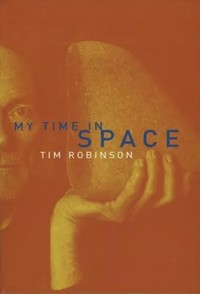
In an essay from 1996 collecton Setting Foot on the Shores of Connemara and Other Essays, Tim Robinson noted that 'we are spatial entities, which is even more basic than being physical entities, subject to the law of gravity'. In this dazzling new series of essays Robinson examines aspects of his own 'time in space', moving from his childhood in Yorkshire, to a deadly moment on a Malayan airstrip, a pilgrimage to the midnight sun, adventures in the art-worlds of Istanbul, Vienna and London, and finally to the spaces of the West of Ireland which he has interpreted with incomparable attention and fidelity over the past three decades. The essays explore problems in mathematics and mapping, the human implications of the arc of a missile the feelings of a sceptic upon approaching divine ground in the company of a mystic, and other encounters of the empirical with the numinous: Robinson has an uncanny capacity to write convincingly about both. The sequence ends with an angry outburst against the continuing destruction of the Irish countryside and a moving hymn to the delights of his own house and garden at the edge of the sea in Connemara. My Time in Space is the latest instalment in a literary corpus of singular integrity and endless fascination.
Sie lesen das E-Book in den Legimi-Apps auf:
Seitenzahl: 357
Veröffentlichungsjahr: 2001
Das E-Book (TTS) können Sie hören im Abo „Legimi Premium” in Legimi-Apps auf:
Ähnliche

















My Time in Space
TIM ROBINSON
CONTENTS
Title Page
Birdlife (and a preface)
The Curvature of the Earth
Ballistics
A Career in Art
Right Hand
Left Hand
Thickets and Dark Woods
Firewalking
The Extreme Edge
Constellation and Questionmark
The Mystic Hexagram
The Battleground of Form
The Echosphere
A House on a Small Cliff
The Fineness of Things
Notes
Copyright
MY TIME IN SPACE
BIRDLIFE
(AND A PREFACE)
It’s the wise thrush that knows its own song …
While my mother-to-be was lying in wait for me, a thrush sang unceasingly outside her hospital window, day after day. She told me this when I was grown up and her mind was rambling back through the past, and I have interiorized it as a seminal event, the second, to be precise, of my life. Such parental tales of one’s own beginnings, which one can no longer distinguish from memories, acquire the tremendum of legend, of revealed religion. The totem animal’s song enters the bloodstream via the umbilical cord; later the blood will answer to a call from outside. When I was about eleven, as near as I can guess, my mother told me that since I could fly I should go and live with the birds. I remember standing at the back door, full of the pathos of leaving home, looking at sparrows in a hawthorn tree.
That was a dream, but the idea that I could fly had seeped into my waking life. I used to practise levitation, lying face down and concentrating with such hypnotic intensity that I persuaded myself I was floating an inch or two off the floor. My memories of havingdrifted like a toy balloon around the ceiling of my bedroom, and of having glided down the long sloping field below the school, were convincingly vivid, but a ballast of scepticism kept me from telling anyone of them. Rapturous cloud-explorations, snipelike towerings, angelic freefalls, reoccurred for many years thereafter and are among my most treasured unrealities.
‘Hushaby baby in the treetop, when the wind blows the cradle does rock’ was not among the mantras of my childhood, but hearing it now reminds me of early fantasies of being born in a bird’s nest high among branches swaying in the wind. Perhaps that balancing, flexing, world promised a strange security. My father, who knew about such things from his own treeclimbing, bird’s-nesting, boyhood, often told me, as a marvel, how the woodpigeon’s eggs lie safely on a mere half-dozen crossed twigs. As for the moment of terror ‘when the bough breaks’, I had already survived it, for once when I was no bigger than a monkey a branch snapped off under my weight, and I fell rather slowly to earth astride its thick, air-resisting, foliage. I was good in trees, showing off to all who would pause to admire how I could hang by my knees, and daily practising Tarzan-swings from branch to branch of a long-suffering tree known as the Coronation Oak in a little park near home. A few years ago, when I visited the deserted villages of the Anasasi Indians built into hollows of a cliff hundreds of feet above the canyon floor of the Mesa Verde, I found myself envying the children who had looked down like hawks’ nestlings at the maplike geography of their future hunting grounds. But I am not a cliff-climber; the cliff-edge is the controlling emblem of my life, as I hope to explain deeper into this book, and I do not transgress it.
Once, after I had waited many hours for a lift by a road that was evidently little travelled, in Norway, an eagle appeared high overhead. Two crows from a nearby wood set out to pester it into quitting their patch of sky. Was it really in their territory according to bird-law? As they laboured upwards for minute after minute, shrinking to ragged dots almost lost against the pale glare, I began to have a sense of how far up the eagle was. It was only with great effort that the crows reached its level, whereupon it flapped one huge wing at them as if shaking dust off a carpet, and sailed out of range of harassment. Height, then, can only be won with expense of energy; the vertical dimension is not as easily penetrable as the horizontal ones; flight-space is stratified by increasing difficulty; up-draughts, thermals, are winds that help one up invisible hills.
Questions of how the spaces of experience, human and non-human, relate to real space, whether they can always be expressed as colorations, tensions, deformations or indexings of it, and whether real space itself is a perpetual creativity beyond comprehension in terms of the conceptual spaces of geometry, have always intrigued me, and I am far from answers to such problems. I suspect that the impossibility of my dream-flights does not lie in their effortlessness but in some geometrical incoherence in the space they traverse; dreams can benefit from the logic of contradictory foundations, in that anything can obtain in them, if only because their contradictions are not attended to. (The dream contains only what is attended to by the dreamer.) But when their spaces are inscribed in real space, they can fall to earth.
I painted a number of works called ‘Falling Bird’ once. This was in Vienna in the mid-sixties; that lugubrious Cold-War city seems in fact to have called forth macabre and surreal expressions of several themes that happily have also surfaced in less phobic periods of my life. Some of these birds looked as if they had been falling so long they were reduced to desiccated anatomies. What had stopped them in mid-flight was not to be known from the paintings; it might have been a burst of radiation from the Armageddon we half expected daily at that time. Contorted, rigid, they fell through layers of grey vapour, or hung like black silhouettes against it as if seen by one in free fall alongside them. Insensible or indifferent to all other influences, they were abandoned to gravity. That supreme space-shaper, the commanding force orthogonal to all the tentative, laterally spreading, webs of my mapwork, is immanent in much of what I have drawn or written.
A bird’s flight-world is perfused by its song-world, a structure of intensely significant directions, distances, locations and regions, perceived through the influx of sounds made by its congeners and to a lesser extent by other species: warning cries tracking the prowl of a cat, nestlings’ unappeasable demands, sexual advertisements, rivalrous bravado. We eavesdrop on this world, which intensifies both space and time for us: the echoing sea-cliff is redoubled by a peregrine falcon’s gaunt clamour; a slothful summer afternoon is lulled into still deeper inertia by a woodpigeon’s repetitious lucubrations. Stepping out of a cottage on the Aran Islands very early one spring day I found the slopes of rock and raggletaggle bushes around it being partitioned between half a dozen voluble cock blackbirds. Territoriality, the staking of exclusive claims, is the driving force behind much birdsong. What sounds like mere recreation is indeed re-creation: the reinvention or reimposition for another day of a political geography that had lapsed overnight. In fact a number of treaties were being drawn up as robins and wrens and other small birds added their distinctive signatures to that morning’s crisp parchment. A superimposition of transparent maps, the brouhaha of languages in a cosmopolitan restaurant, the interweaving of games played by different age-groups of children in a school yard, are all inadequate images of the endless interpretability of space.
The various possible relationships between bird territories also remind me of those diagrams in textbooks of logic, in which, for instance, two overlapping circles or similarly simple shapes, standing for two sets of elements, divide the page into various parts representing those elements that are members of both sets, of neither, of one but not the other, and so on. These Venn diagrams (so called after their inventor) are also useful in the formal logic devised by Boole in the last century: the interior of a shape represents a proposition and its exterior the contradictory of that proposition; the overlap of two shapes represents the conjunction of two propositions. Such a structure of abstract argumentation is termed a calculus, from the Latin for a stone as used in reckoning. Just as propositions can be about propositions, so sets can have sets as their members – but these logical systems founder in self-contradiction if sets are permitted to be members of themselves or if propositions are allowed to refer to themselves, as Bertrand Russell proved. The successive catastrophes provoked in logic by Russell, Gödel and Turing suggest that thought is not a matter of piling up stones, for that gives no play for paradox. Some such train of associations, together with my abiding fascination with theories that lie just beyond my comprehension and like birdsong seem always about to crystallize into sense, motivated a deranged harangue I wrote a few years before that dawn chorus in Aran; it purports to be a lecture delivered by a man in a tree to an audience also perched in trees, in the University of the Woods:
Is thought a calculus? A calculus a stone? Thrown at a bird, let fall to sound a well, used in a wall against a wind? Admit the wind! To fence a field? Consider the territorially of knowledge: the don defines a field (the territoriality of birds, we’ll say), assumes a stance (his axiom: each bird sings only ‘I am here!’), deploys his arms (poor scarecrow, the birds are flown already), and lets his field define himself. ‘I am my place!’ he sings, and produces proofs: ‘The song’s assurance dwindles with distance from the perch; each bird and its neighbour meet in equivocation and make their mutual boundary the locus of equal unconviction. Thus the land is parcelled out by blackbirds, thus by robins, thus by thrushes, in mutually invisible systems of exclusions …’ But Doctor Intelligence Discarnate views all from above, sees what is not to be seen (the crow’s border crossing the wren’s domain, linnetdom within chaffinchshire), discovers his hard calculus to hand and with it guards his empty coverts. Logic, not Song, is ritual attack! (Song is the riddle that turns upon itself.) If you are your thesis, best perfect its defences, claim complete originality, disguise guilty inclusions, defend your bounds against encroachment. For above all else you fear encirclement, the hell of being understood, analysed, part refuted, part absorbed and reinterpreted within a greater whole in which a fragmentary occluded you lives on, forced to chime its thinking with another’s. Are you the defect in your objectivity, the vulnerable centre? Should you exclude yourself, renounce your place in the winged flux, become impenetrable, a stone, at rest in the safety of complete disjunction from your kind?
Turn, Professor! Seek the glimmerings of sense in the thickets of your theory. There is a pool in which you figure, ringed by fleeting diagrams of your inconsequential algebras. This structure of fears you think of as yourself reflects you well – and so the affronted incalculable outwits you! Self-description is the cuckoo’s egg of contradiction among your sterile clutch of theorems – and an unexpected proof of kinship with the birds! From a contradictionall things follow; it is the all-devouring foster-child that bursts apart your systems and teaches you to fly. Follow its derisive voice, poor pipit, beyond the circles of your Boolean mind! Become insatiate of possibilities, watch Venn’s amoebae spiral out in unbelievable evolutions: multimen with flocks of voices, wind-tossed clouds of faculties and appetites juggled by perspective into momentary beings, infinities of selves lovingly nested one within another …
So, crazed by mad analogies of sanities yet to be invented, the sad professor mounts St Francis’s pulpit, humbly resolved to speak only as a bird speaks, for the pleasure of hearing a like voice return. And when the sun sets in his mind, as now, his thought flies inwards to its own dark woods, leaving a silence where it sang.
Rereading, I see an element of self-caricature. Perhaps the present book needs some apologetic preface; let this be it. I have written about many matters I do not understand (but if I restricted myself to what I do understand I would be wordless). Sometimes I have followed the sounds of words, trusting them (as a writer does; it is the difference between a writer and an intellectual) to lead me into sense. But I do believe that all things are in principle comprehensible – except two: the existence of the universe, and one’s own existence. These are mysteries, in the sense that one cannot even frame a question about them. About the universe, ‘Why?’ just directs us back into the web of interconnections constituting it; about oneself, ‘Why here? Why now?’ is empty, as asked by an embodied here-and-now. Questions of how consciousness arises in nature, and how and what one consciousness can know of others, are proper, if intractable; humanity has been grinding away at them for thousands of years and has sharpened them, at least. But a mystery is a questionmark in search of a question; it is unappeasable. The essays in this book hover, fascinated, about the self-mystery, and feel the wind of the universal mystery. They are all on themes, to do with space, that have outcropped often enough in my life – as a student of nature, of geometry, as artist, cartographer, topographical writer, environmentalist, hitchhiker, home-lover and cosmology-fan – to give it some continuity, at least in retrospective reconstruction. But they do not add up to an autobiography, a project that would not interest me; so far as my life-story goes, these are walks on the bank of a river of untold tales.
THE CURVATURE OF THE EARTH
TheWorldSeenEdgeways
Horizons are the eye’s best attempts upon infinity; we scan them avidly as if desperate to see as far as possible or searching for escape through the threadlike gap between the impenetrable globe and the indefinite depths of the sky. Perhaps two puzzles, one explicable and the other inexplicable, condensed into the mystique of horizons for me in childhood.
First, the rules of perspective, which I grasped at an early age. My parents were gratifyingly impressed by a drawing I did when about eight, of the undersides of the diningroom table and chairs seen obliquely from where I lay on the carpet – a worm’s-eye view, they told me. The trick of drawing in perspective is to imagine that one has a single, cyclopean, eye, keep it fixed in position, mentally reduce the edges of things so viewed to a flat array of angles and intersections, and copy that onto paper. The result is nothing like the world as registered by two eyes set in a mobile head and backed by an interpretative brain, but it is curiouslyconvincing. In a sketchbook mainly of childish scenes of interplanetary war, piously preserved by my parents, I find a little diagram evidently drawn to convince myself of the fact that an object subtends a smaller and smaller angle at the eye as it is removed farther and farther, and that, taken far enough away, it disappears. I used to like demonstrating this with drawings of roads winding away over rolling hills into the distance, vanishing into valleys and reappearing as ever-narrowing strips, until their two sides converged to a point on the horizon. I remember that a primary-school friend thought these drawings absurd; roads kept the same width all the way, he insisted.
The other puzzle was that of parallel lines meeting at infinity. (The unworldliness of the consideration suggests I was told of it by my uncle Richan, a quiet, unassuming Scot, my mother’s brother and regarded with irritation by her because of his lack of initiative, who read Sir James Jeans and Baudelaire and did his best with limited talents to make a living as an artist.) Since parallel lines are chiefly famous for never meeting, this meant that anything and everything might meet at infinity, which therefore I could draw as a menagerie of whatever I was capable of drawing. Since I particularly liked drawing elephants, I made many pictures of parallel lines arrowing in from all directions, with constellations of elephants big and little.
The horizon, then, is where the possible and the impossible meet. Did it also impress me as an all-encircling threat? For otherwise I cannot account for a painting from my mid-teens, called ‘A Man Cut in Half by the Horizon’. The man staggers towards one with terrifying or terrified hands raised above his head; his midriff is missing and in the gap one sees the dwindling road behind him and a low horizon between desolate heath and a lurid sky. Splashes of dark red along the roadside perhaps owe more to my defective colour-sense than to thoughts of blood. I showed this work to the physics master of the small provincial grammar school I attended. Why him, of all people, the representative of a version of reality compounded from blackboard-chalk and stale pipe-smoke, in the dragging gravity of which the school clock ran slow, who for year after year had reduced all the fantastic and precise ‘Properties of Matter’ to half a dozen experiments of mortal tediousness and indefinite outcomes? If I wanted to shock him I did not succeed. Instead of fulminating over the impossibilities of my scene, he merely asked why I didn’t paint something beautiful, such as a sunset; nobody, he said, could even imagine a painting called ‘The Ugly Sunset’.
That grammar school was in Ilkley, Yorkshire; the horizon of my fantasy was the skyline of the plateau above the picturesque crags and winding walks of Ilkley Moor itself. It is one of the Pennines’ dark moorlands underlain by millstone grit; the next, north of it, is Emily Brontë’s, and then come heights of the more luminous grey of limestone. I spent much time up there, sometimes with my younger brother and his small friends whom I coerced into scouring miles of heather for elephant hawk moth or oak eggar caterpillars, or with schoolfriends of my own, looking for golden plover nests or trying to rediscover a shallow pond we named Swoopers’ Tarn because we were once driven off from it by diving seagulls and which lay in such a level expanse of bog that with our small statures it was difficult to locate from a distance, or alone, seeing the two gaunt pylons on the highest point of the moor – disused radio-masts from the war years, I think – as elementals, giant embodiments of nature’s forces, stalking the edge of the world.
Cities were invented to protect us from the terrors and temptations of horizons. Façades stare down the would-be-wandering eye, direct it along perspectives that terminate in monuments to the centrality of the places they occupy. And the rebellious urge of some citizens – myself among them – to overcome these constrictions drives us to the tops of whatever poor heights the city’s bounds enclose. In London my urge to drink space and inhale distance had to be content with the views from Hampstead Heath and Parliament Hill. Constable could look out of London from there, into the countryside beyond, but now it is impossible to see the city whole. Nor do these views have anything of the map about them; they reveal neither the grand theorems scored by the Enlightenment nor the knots left in the grain of the modern city by the medieval villages it has grown around. The subject may occupy 180 degrees or more of the visual field horizontally, but hardly five degrees from top to bottom; we see the city edgeways on, an expanse almost without volume, a crust.
Pining for horizons, I used to walk through London so far as possible as if I were in open countryside. The site of my ‘University of the Woods’ could have been Hampstead Heath, but was in fact, or in imagination at any rate, a scruffy bit of parkland by the Welsh Harp reservoir, beyond Cricklewood and Neasden – beyond, that is, from the point of view of West Hampstead, my village when that piece of fiction was written – across which I used to ramble, until the body of a youngster from a delinquent family we knew of was dug up there, and it no longer seemed a safe landfall from the sea of chaos growling all around it. From that (quite properly) modest eminence one sees the Greater London of dingy towerblocks, cardboard-box industrial units and turbid rivers of traffic, with enough aircraft overhead to define a loose skein of flight-paths hanging above and declining into it at various grey points of the compass. Some notes have surfaced, of my first expeditions there:
19/5/72 I saw across the Kilburn valley (Watling St.) the spire of another church – from there one could look back and see the spire of the Priory Rd. church. Walking along Willesden Lane, ‘I’ll walk as far as the next village and then get the bus back.’ And it is a village. In the dental lab window: ‘Why not get an 18 or 22 carat gold tooth fitted to your dentures?’ Front doors with names and numbers stacked against the wall in the scrap metal yard; mercury 14s. a lb. today. Mr Whisker next to the pet shop. Metropolis, a magnificent green and red perspex service station.
I asked somebody ‘What’s that big building on the horizon?’ He stared along the sideroad. His first horizon in London? ‘Maybe one of those factories on the North Circular.’ Later I found it is the GPO Research Centre. The parkkeeper in Gladstone Park identified Wembley Stadium for me; ‘Cup Finals, we hear the roar.’
Beyond that, another valley, then up Dollis Hill. Dodging around to see the Adelaide Rd. towerblocks between the trees of Gladstone Park. Navigating by the sun through slow curves of semi-detached houses towards Willesden Green. A brilliant shortcut along Charlesworth Rd. Places you can see across London: from railway bridges, along the lines.
6/6/72 Drizzle and semis to Gladstone Park, and a steep hill to the GPO Research Centre, but from there a great vista down and across the Welsh Harp (at last!). From the North Circular Road see church and rounded treetops of a clearly defined village on the other shore beyond the masts of sailing boats. On the south shore, along Blackbird Hill to Neasden. Long detour to get down to the northern shore. Little woods. A squeaking and rustling; waited, saw a little shrew (W.H. Hudson writes about this in A Shepherd’s Life). Further on in the fields watched a pairof kestrels divebombing a crows’ nest. The crows frightened, silent, crouching on the nest. One flew off across the fields and was almost beaten to the ground by the hawk swooping on it. Ambiguous end; did both crows leave the nest? The other kestrel sat in the field for a long time. A robin perched a yard or two from me as I watched all this; thin wistful song, a lonely bird.
18/6/72 Went back to see if in fact it was the crows which were robbing the kestrels’ nest. Bus to Hendon Broadway; the sight of the lake is nearly as romantic as the inn-sign of it there, ‘The Old Welsh Harp’. Squally day, grey and silver. Coots and ducks on the waves. Watched the nest for a long time, sheltered under an elm from the rain. A hawk came into the tree briefly; the only crows were a little group in the field 200 yards away. So it was the hawks nesting in an old crows’ nest. The kestrels hovering and gliding across to the far side of the lake – and beyond them the regular sloping down of airliners towards Heathrow, quite silent at that distance, two visible at any time. A march-tit by the lake and yellow flags. An hour there, and no-one passed! Past the sailing clubs to Blackbird Hill, walked up it but couldn’t get much sense of the land beyond. Bus back to Willesden Garage, took the wrong turning coming out of a little bookshop and got spectacularly lost. Arrived at the Harrow Road! and walked back to Willesden Lane by endless slow-curved avenues. It was the bus-ride that broke my contact with the land’s directions.
But in the modern city’s layout ‘the land’s directions’ have been overridden by the impetus of transport; it is perverse to identify oneself with the losing side, the buried past, in this historical agon. My 1960s artistic projects for bringing into consciousness London’s suppressed geography – for instance, a walk along the course of the long-built-over Kilburn, the Kyle Burn of lost rural ways, leaving a bunch of watercress on the doorstep of each police stationI passed – could be seen not only as whimsical but as life-denying. The city builds, tears down, rebuilds, its own horizons; its skylines burgeon and decay like the close-packed petals of a rose. For the truly London pastime of identifying from half-obscured profiles buildings with names and histories, Primrose Hill, on the verge of the inner city, is the place. I forget what exactly is underfoot at the highest point of that shallow dome of trim grass and treed walks, but it is worn down into hardness or concreted or tarmacked, as if the constant directing of attention away from it to the vistas below has somehow annulled it. I used to call it ‘The Point of View’ and identified it with the site of the foot of Jacob’s ladder, and indeed it did occasionally reveal a visionary dimension to the city. One evening M and I were strolling on the slopes of the hill when we met a poet of our acquaintance coming down. He said, ‘There’s a lot of people up there; they must be expecting an event,’ and went on his way hunched in introspection. We hurried up to join the gathering on the Point of View. Nothing was happening but the evening itself; the event was London’s bewitchment by the level rays of sunset, its transformation into a poet’s city, Samarkand, Xanadu.
LinesofLatitude
Flying across the Great Plains, say from New Orleans to Denver, one looks down at a flatland divided precisely into squares, most of them further divided into four. Many of these smaller lots contain a huge circle, the extent of a crop irrigated by sprays on a centrally pivoted, slowly rotating beam; anyone seeing these discs for the first time will think, as I did, of a giant game of draughts played on an endless board. Underlying and half-effaced by this modern, rectilinear, rule-bound geography is another, vague, senescent, of sprawling elevations that look too slight to be captured in contours, and meandering streambeds abandoned to stagnancy and evaporation. If nature seems to be wandering at a loss in a directionless expanse, the work of humans knows the cardinal points of the compass exactly, and the roads that follow and define the boundaries of lots are singlemindedly intent on getting out of here, wherever ‘here’ is, as directly as possible. As the shadow of the plane advances over it for hour after hour, the agricultural geometry at last begins to lose conviction, the succession of squares wears out, a subdued chaos of desert shows through. Eventually only a few highways persist in their monomaniac westward career towards the Rockies.
Westward is the warp-direction, the underlying and sustaining drive of ruthless purpose, in this awe-inspiring tapestry of the advance of the frontiers of cultivation. A thousand miles of Euclid might also appear to be a convincing demonstration of the flatness of the Earth, the potentially limitless extent of human domination, but on reflection the grand theorem of the Plains proves just the opposite. While Manifest Destiny is obviously responsible for the general westwards trend of this landscape, why is it in fact orientated so precisely east-west? Could it not have run towards the west-north-west, for example, or in whatever other direction historical contingencies might have aimed it initially? In laying out such a uniform schema, the ideal would be for at least one set of boundaries to be straight and parallel, i.e. to maintain a constant compass-bearing and a constant lateral separation. But a line that intersects the meridians at any fixed angle other than ninety degrees will wind around the globe and if prolonged will eventually spiral in towards one of the Poles; therefore another line starting at a given separation from it and following the same compass-course will ultimately converge with it, and the strip of land between them will taper to nothing. On a continental scale, the only way to avoid the convergence of loxodromes, as such lines of constant bearing are called, is to have them running exactly east-west. Thus the claim of human sovereignty over the land, so aggressively asserted by this whole vast system of subdivision, is subverted by its prime parameter, forced into a covert assent to the curvature of the Earth and the finitude of our dominion.
From similar causes arise the complexes of feelings we invest in elements of the scaffolding of latitude and longitude: the Poles, the Meridian of Greenwich, the Equator, the Arctic and Antarctic Circles; these (always capitalized) intangibles combine totalitarian presumption with a due recognition of littleness. I have no experience of the Equator, and wonder at the demeaning horseplay associated with the crossing of it; but I have paid my respects to the Arctic Circle, the latitude at which on midsummer’s eve the sun’s apparent course is a circle that just touches the horizon, or would, in a perfectly spherical world of ideal horizons.
It was a Sunday; after many hours standing by the empty road to the deep north of Norway, I was offered a lift by a young would-be playboy in an open sportscar, driving to nowhere in particular because of what he described as ‘the small opportunities’ of the little town he was employed in. He was delighted to take me as far as I wanted to go, and it was an exciting ride, breezing through sunshine and empty moorlands towards that abstract line stretched taut around the curve of the globe, which I could feel ahead of me like the tape at the finish of a footrace. When we saw pretty blonde girls picnicking we shrieked to a halt, and then, as they ignored us, roared off again. Eventually a small sign announced the Arctic Circle. We stopped where a few cars were parked outside a little souvenir shop, stretched ourselves in the sunshine, jumped across the line drawn on the road, and poked about among dwarf willow and reindeer moss for a while, in a wide barrenness that lifted snowy wings to the blue sky on either side.
My driver turned back from there, and I pressed on, determined to see the midnight sun from the best possible vantage point on the upcoming midsummer’s eve. By stages and small adventures I came to a little port, and took a ferry to the Lofoten Islands. The sea was like black glass; the boat drew a lace curtain across it. The land of snowy peaks we were leaving, pale against a pale sky, followed us as wavering columns in the huge fan of the bow-wave. Silently another wall of rock approached, and opened a little to let us into a landlocked bay. A small town there was spread like fingers between immediate crags, and faced east. I determined to cross to the island’s north-Atlantic outlook, and out of a certain obstinacy persisted in doing this by hitchhiking. I remember waiting a long time and with growing alarm to be lifted out of a desolation among needle-sharp peaks, where viciously screeching terns zipped to and fro over the surface of a fjord; I wondered if the fish were aware of these flying knives and forks above their two-way mirror ceiling. It was late in the evening when I was dropped off in a run-down fishing village. The family who had brought me on the last stage had evident misgivings about leaving me there.
Nobody was visible in the street, so I began knocking on doors, and after several enquiries learned that none of the houses kept visitors. The sun was still high and I could have slept out, but a bank of fog moving into the bay like a huge battleship looked ominous, and I was relieved when another door opened and a cheery old salt came out to survey me. We had no common language, but my needs were obvious, and without a word he stuck his pipe in his mouth, put me into a car and drove me down to the waterfront, and then beyond it. I already had a fine sense of arrival, of having gone as far as possible to greet the midnight sun from the edge of the inhabited world, but now I was amazed to find myself crossing a long rough causeway to an islet even nearer that ideal horizon. It was scarcely more than a large rock with a couple of gaunt sheds, in one of which was a room perched over the water’s edge and reached by a ladder. The room was quite bare and smelled strongly of fish, but there were bunks, and two little windows looking at the sun. I had no food apart from an apple and a lump of goat’s cheese I had already dined and breakfasted off several times because the few shops and restaurants of the region had been closed by the time I reached habitation each evening and were still closed when I left in the mornings, but drinking water was to be had from a hose in the deserted fish factory close by. There my benefactor left me. A hippie couple lurking in another room of the building told me it was used during the winter by cod-fishermen, who moored their boats below and snatched a few hours’ rest from the waves in it without quite coming ashore. There was no one else on the islet. I was delighted with the extremity of my situation.
Towards midnight I wandered out among a few drifting scarves of fog. The sun, a pale disc, was gliding at a perceptible rate along the perfect skyline of a calm sea. Seabirds shrieked horribly. I looked for a memento of this mournful end of the world, but there was nothing on the rocks apart from a few bits of the sponge called Dead Man’s Fingers. In the middle of the islet stood an enormous skeletal structure of wooden beams, a hundred yards long, shaped like a nave with side-aisles. It was hung with thousands of dried codfish, whose brown and twisted corpses gaped downwards. The stench was confounding. I had hoped some ceremony would suggest itself for this moment, but could not have foreseen that it would be staged in a temple of death. As the sun rolled along the horizon, I steeled myself to walk, processionally, through the appalling gibbet-cathedral.
The next day – but it was already the next day; I had just seen two days being arc-welded into one – I recrossed the island, heading home to my love in London. The ferry to the mainland sailed at 11 p.m.; at first the sun was hidden behind the mountains of the island, but when we drew out it appeared above them in a sea of pink feathers. From a few miles away the island chain was a long wall of peaks as sharp as the beaks and claws of the hungry birds that followed us, and dark blue against the rosy sky and the huge disc of the sun. As the islands shrank back I saw for the first time in my life how large the sun really is. The islands, the whole globe, could have dwindled to a dot, and the sun would still have looked the same size. At midnight it was at the lowest point of the vast slanting circle it makes round the sky, and the circle held the earth like a pebble in the palm of a hand.
BALLISTICS
Flat in long grass, I watch the bomber coming in low over the palm trees. As its bomb doors gape open I tilt my bren gun up and fire into the dark of its belly…. Battle is the shift and crisscross of death-lines in the hand of space; one is supposed to read them, lurk in their interstices, then run between or under or magnificently overleap them, to claim a vantage and reconfigure them. However, I had no bullets in my gun to bring the plane down in flames and whoever was in it had no bomb to smear me around the walls of a crater; the episode was a practice-run, a moment in a military exercise that swept over me in a mind-splitting roar and otherwise left me for long hours to contemplate ants crawling up grass stems. But it was a thrill, even if I had to smile at myself wrestling with my bren gun, which toppled over at the crucial moment; I was invincible, a solo hero, like the man in a war film I saw once who lobbed a stick of dynamite into the path of the fighter diving to strafe him, causing the plane to disintegrate satisfactorily in a whirl of black smoke.
Ballistic space, the space imposed by weapons of death-at-a-distance,with its fields of fire, possible and actual trajectories, its terrains denied and zones of security and danger, is a playground mankind exults in. Show a male child a gun, the sociobiologists say, and he climbs back up the spiral staircase of the genes to the African savannahs, where a million generations were spent killing animals with throwing-sticks; that was the age of the world in which the qualities of manliness were born, and ours is the age in which they have entered into a suicide pact with technology.
Not so, womankind. During the war my parents were living near a target of the Luftwaffe. When sirens howled in the night and Daddy went out in his bomb-proof ARP hat, my mother used to crouch beneath a great stone slab in the larder with us two children gathered under her (it was the most dangerous place in the house, but how was she to know?) and try to assure us that the forces thundering around us were all protective: ‘Was that one of ours, Mummy?’ we would crow whenever a bang shook the house, and she would wail, ‘Yes! That was one of ours!’
As it happened, no bombs fell in our suburb and we children never saw the ugliness of war. Some mornings we were delighted to find trees and bushes hung with ribbons of aluminium foil, the chaff dropped by German bombers to confuse radar signals. Once when we had stolen away, unknown to our parents, to dig out spent bullets from a sandpit used by the Home Guard for target practice, we stirred up a puddle with some yellowish oily stuff in it, which suddenly exploded into a delightful momentary fountain. When Flying Fortresses began to be talked of by the adults, my imagination was fired and I made many drawings of winged castles that rose in battlements rimmed by cannon. The family moved to Ilkley shortly after VJ Day, and in subsequent years one of the ways in which I came to know the Moor was as a network of routes for crossing it under sniper fire: crawling through stands of bracken, worming along little watercourses, sprinting from the shelter of one boulder to the next. At that age my zest for life required an enemy to enliven the action; the War was in the past and I had missed it.
When I did find myself in a sort of war, as a National Serviceman in the RAF towards the end of the Malayan ‘Emergency’, I was inexcusably (so it seems to me now) unconcerned with its moral and political dimensions. The hothouse of adolescence, which had protected me from the tedium of my latter years in school, the savagery of Basic Training and the ice of a nine-month radar course in huts on the Wiltshire Downs, seemed to expand in Malaya to enclose a whole fervent world. The towers of cumulus pulsing with lightning all round the evening horizon, the exquisite girls who grouped themselves like bouquets and garlands of flowers in the streets or on the beach, the abyssal silences between gong-strokes in the Buddhist temple I haunted, the lurid backstreet nightlife to which fellow-conscripts less inhibited than I were keen to introduce me, all existed in the same perfumed atmosphere as my own rampant blooms of knowledge, desire, religion and poetry.
The malign aesthetics of weaponry took root in this tropical garden too. After some months spent puzzling into defective radar sets in the quiet of the servicing bay, I was banished to work on aircraft on the dispersal strip, where wing surfaces grew too hot to touch in the afternoons and one’s shoulderblades made dents in the tarmac when one lay under the fuselage of a fighter. This was supposed to be punishment for arguing with the sergeant, who regarded me as lazy and insubordinate (whereas I was merely incompetent and distrait); but in fact I preferred the ferocious sunlight on the strip, the vigorous camaraderie, even the stinging blast from jets manoeuvring on the ground, to the torpid slacking of the bay. My letters home were rhapsodies:
… a much better life, spacious and turbulent with noise and movement, and full of hard angular facts, sun, wind and blue sky; a welcome relief from intellectual questionings. The expanse of sky is immense. Inland, mountains




