


43,99 €
Mehr erfahren.
- Herausgeber: John Wiley & Sons
- Kategorie: Fachliteratur
- Sprache: Englisch
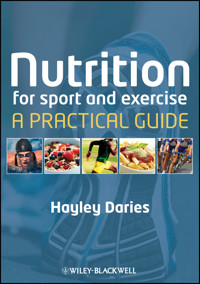
Food and drink choices before, during and after training and competition have a direct impact on health, body mass and composition, nutrient availability and recovery time, and an optimal diet can significantly improve exercise performance. Nutrition for Sport and Exercise outlines the fundamental principles of nutrition in relation to sport and exercise and then applies these principles through practical tools such as food and nutrient lists, recipes and menu options. This practical guide translates the athlete’s goals into achievable strategies and shortens the gap between theory and practice. Equipping the reader to successfully implement dietary changes, this is an invaluable resource for athletes, sports physicians and undergraduate students of nutrition and sport and exercise science courses.
Special Features
- Dedicated chapters on the impact and relevance of specific nutrients and food groups
- Includes recipes and menu options
- Covers the area of sport and exercise nutrition with an evidence-based approach
- Concise and accessible, combining theory and practice
Sie lesen das E-Book in den Legimi-Apps auf:
Seitenzahl: 459
Veröffentlichungsjahr: 2012
Ähnliche



















Contents
Cover
Dedication
Title Page
Copyright
Preface
Acknowledgments
Foreword
Chapter 1: Introduction
The importance of an adequate diet for athletes
Goals of an adequate sports diet
Barriers to achieving an adequate sports diet and best food practice
Rationale for following sport and exercise nutrition principles
Chapter 2: The Athlete’s Energy Needs
Energy
The nutrients providing energy
Energy and nutrients as fuel for exercise
Nutritional assessment of the athlete
Chapter 3: Laying the Foundation of a Good Diet
Food group illustrations
Accessibility of the eatwell plate, and healthy eating tips
Limitations of the eatwell plate
From food pyramid to food plate
Incorporating dietary guidelines in the athlete’s diet
Breakfasts and Smoothies
A Muesli & Granola Breakfast
Banana and Peanut Butter Smoothie
Beans and Chickpeas on Toast
Berry Smoothie
Broccoli Omelette
French Toast with Strawberry Fruit Salad
Orange, Carrot and Pineapple Juice
Oven-Baked Nectarines with Walnut and Ricotta Filling
Chapter 4: Carbohydrates
From carbohydrate to energy
Foods containing carbohydrates
Carbohydrate value
Stores of carbohydrate in the body
Measurement of muscle glycogen
Requirements for carbohydrate in sport and exercise
How the type of carbohydrate intake affects muscle glycogen stores
How to apply GI in sport and exercise
What to eat before exercise: preparing for a competition event
Preparing for competition
Example: How to calculate carbohydrate needs for training and carbohydrate loading
Pre-competition meal: What to eat in the hours before competition
Pre-competition meal: what to eat 30–60 minutes before competition
Carbohydrate intake during exercise
Carbohydrates for recovery
High-GI carbohydrate foods for first 1–2 hours post-exercise
Creating ‘plate space’ for carbohydrate foods
Pasta, Potatoes and Soups
Classic Pea and Ham Soup
Jacket Potato with Tuna and Mayonnaise filling
Macaroni, Chicken and Leek Bake
Roasted Onion and Potato Soup
Sundried Tomato Risotto
Tomato and Basil Pasta Sauce
Tuna and Anchovies with Basil Pesto
Warm Potato and Grilled Pepper Salad
Chapter 5: Protein
Protein reserves
Functions of proteins, at rest
Functions of proteins, during exercise
The role of protein after exercise
Estimating protein requirements
Protein requirements for exercise and sport training and recovery
Mass building: increasing muscle size
Harmful effects of high dietary intakes of protein
Protein: role in weight management
Proteins and allergic reactions
Protein foods that are high in fat
Protein-Rich Dishes
Bean and Lentil Burgers
Bean Curry
Lemon and Honey Chicken
Peppered Beef Fillet with Haricot Bean Mash
Roasted Spicy Chicken
Seafood Curry
Smoked Cod Risotto
Sweet and Sour Pork with Noodles
Chapter 6: Fats
Functions of fat
Fat for exercise
Dietary fats
Dietary Intake of fat
‘Fat-loading’ diets
High-fat diets and detrimental health effects
Overweight and obesity
Successful weight management
Three key strategies
Principal behavioural strategies
Sandwiches and Spreads
Gypsy Ham and Cheese Sandwich
Mozzarella, Tomato and Pesto on Rye
Salmon and Cottage Cheese Spread
Smoked Mackerel Pitta
Spicy Chicken Wraps
Turkey Burger
Veal Steak Rolls
Chapter 7: Vitamins and Minerals
Exercise and micronutrient requirements
Vitamins with specific roles in exercise metabolism
Vitamins with antioxidant properties
Vitamin and mineral requirements
Athletes at risk
Athletes’ micronutrient intake and supplementation practices
Avocado and Prawn Salad
Brown Rice and Lentil Salad
Salads and Fruit Recipes
Chicken Caesar Salad
Greek Salad with Lemon Vinaigrette
Mango and Chilli Juice
Melon Wrapped in Parma Ham
Roasted Sweet Potato Salad with Mint Yoghurt Dressing
Sardine Pasta Salad
Tofu and Vegetable Stir-fry
Chapter 8: Fluid Balance
Functions of water
Functions of electrolytes
Water losses
Sweat rates among athletes
Historical perspective of fluid intake during distance running
Dehydration, fluid intake and exercise performance
Involuntary dehydration
Drinking no fluid, ad libitum or ‘as much as tolerable’ during exercise
Over-hydration
Symptoms of hyponatremia
Carbohydrate and exercise performance
Fluid ingestion and ‘stitch’
Factors influencing gastric emptying rate
Oxidation of carbohydrate
Recommendations for fluid intake before, during and after exercise or sport
Alcohol and sport
Chapter 9: Performance-Enhancing (Ergogenic) Aids
Nutritional supplements
Nutritional ergogenic aids
The role players in clean sport
Caffeine
Side effects
Creatine (refer also to Chapter 1)
Sodium bicarbonate
Appendix: Reference Values for Estimated Energy Expenditure
Reference table for basal metabolic rate (BMR)
Energy
Protein
Glossary
Student Exercises
Chapter 1
Chapter 2
Chapter 3
Chapter 4
Chapter 5
Chapter 6
Breakfast
Mid-morning
Lunch
Afternoon
Evening meal
Evening snack
Chapter 7
Chapter 8
Chapter 9
Answers to Student Exercises
Leading words to Student Exercises
References
Internet Resources
Index
To Pops,
in loving memory
This edition first published 2012 © 2012 by Blackwell Publishing Ltd.
Wiley-Blackwell is an imprint of John Wiley & Sons, formed by the merger of Wiley’s global Scientific, Technical Blackwell Publishing was acquired by John Wiley & Sons in February 2007. Blackwell’s publishing program has been merged with Wiley’s global Scientific, Technical and Medical business to form Wiley-Blackwell.
Registered office: John Wiley & Sons, Ltd, The Atrium, Southern Gate, Chichester, West Sussex, PO19 8SQ, UK
Editorial offices: 9600 Garsington Road, Oxford, OX4 2DQ, UK The Atrium, Southern Gate, Chichester, West Sussex, PO19 8SQ, UK 2121 State Avenue, Ames, Iowa 50014-8300, USA
For details of our global editorial offices, for customer services and for information about how to apply for permission to reuse the copyright material in this book please see our website at www.wiley.com/wiley-blackwell
The right of the author to be identified as the author of this work has been asserted in accordance with the UK Copyright, Designs and Patents Act 1988.
All rights reserved. No part of this publication may be reproduced, stored in a retrieval system, or transmitted, in any form or by any means, electronic, mechanical, photocopying, recording or otherwise, except as permitted by the UK Copyright, Designs and Patents Act 1988, without the prior permission of the publisher.
Designations used by companies to distinguish their products are often claimed as trademarks. All brand names and product names used in this book are trade names, service marks, trademarks or registered trademarks of their respective owners. The publisher is not associated with any product or vendor mentioned in this book. This publication is designed to provide accurate and authoritative information in regard to the subject matter covered. It is sold on the understanding that the publisher is not engaged in rendering professional services. If professional advice or other expert assistance is required, the services of a competent professional should be sought.
Library of Congress Cataloging-in-Publication Data
Daries, Hayley. Nutrition for sport and exercise : a practical guide / Hayley Daries. p. ; cm. Includes bibliographical references and index. ISBN 978-1-4051-5354-6 (pbk. : alk. paper) I. Title. [DNLM: 1. Nutritional Physiological Phenomena. 2. Sports-physiology. 3. Diet. 4. Exercise-physiology. QT 260] 613.7–dc23 2012014814
A catalogue record for this book is available from the British Library.
Wiley also publishes its books in a variety of electronic formats. Some content that appears in print may not be available in electronic books.
Cover image: © iStockphoto: © Franois Pilon (large background image); left to right: © micron, © GMVozd, © Jim Parkin, © Georgina Palmer, © Hshen Lim
Cover design by Meadan Creative
Preface
I am a teacher at heart, and for this purpose I have been absorbing knowledge from a very young age. My first inspiration came from my father, Winston Warren Daries (Pops), who taught me in primary school. He had a gift for teaching and inspired his students with his enthusiasm for Geography. Later life brought me other great teachers in the field of nutrition and sport, like Professor Edelweiss Wentzel-Viljoen (dietetics) and Professor Timothy Noakes (sport and exercise medicine), and my previous colleague and author, the late Mary Barasi (nutrition) who are all great examples of Excellence in their respective fields.
Hence, the idea of this book first came about while lecturing Sport and Exercise Nutrition at the University of Wales Institute, Cardiff (now Cardiff Metropolitan University) and Cardiff University. There Mary Barasi recognized my dedication to sport and teaching and recommended me to Blackwell’s Nigel Balmforth. I will never forget my nerves and excitement on the day of our first meeting, and I am so grateful for the opportunity to impart what I know and have experienced in this field.
This book is for the many students, athletes and teachers who share my passion for sport and exercise nutrition. While it has a sound scientific underpinning, it presents the fundamental principles in an easy-to-read format. The subject is rapidly expanding and athletes and students want to know about the latest scientific research, the dietary habits of other athletes, and the spec on the most fashionable supplement. A book that can combine the science of sport and exercise nutrition with application of knowledge (as student exercises) and real food choices (as recipes) seems to achieve more than one objective. The students want to know ‘why?’ and the athletes want to know ‘who to?’ It is the ‘hands on’ part that will make it all stick in the end; this I have learnt through my work with students and athletes in the field.
Hayley Daries2012
Acknowledgments
I would like to thank the team at Wiley-Blackwell, including Nigel Balmforth, Katrina Hulme-Cross and Rupert Cousens. It is also with a grateful heart that I thank Sara Crowley-Vigneau for her support, encouragement and profound professionalism in the final leg of the manuscript. I have had the privilege of expert guidance and advice from Rebecca Huxley, and also thank Amit Malik for his contribution.
I have been very lucky to find Rene Petersen who helped with the recipes and did an excellent job, and Cheryl Wolfe whose optimistic assistance I could rely on day and night and who has exceptional organizational and technical skills.
I thank my husband Rupert, triathlete par excellence, with whom I share my love for exercise, and who has always been there with little and big rewards along the way. I am blessed with a wonderful family, also my cheerleading squad who always believed in me and saw me through all the seasons of my manuscript.
Natalie, Vanessa, Michelle, your families and Mom, Thank You So Much.
Last but not least, I thank all the athletes and students who have always been at the forefront of inspiration for me to complete this incredible journey.
Foreword
It is a special privilege to write the foreword for the book by a former student. For it is in the writing of a book that one acquires the wisdom that no teacher can ever impart. Teachers can provide the tools and perhaps the spark, but never the desire nor the commitment to expend the thousands of hours that are required to produce a work of substance as is this book.
I know Hayley Daries as an inquisitive, independent, self-directed but impatient thinker who is dissatisfied with the way things are. She is driven to understand what is beyond the horizon of our knowledge. The research for her Masters degree sought to answer the question: How much do athletes really need to drink during exercise? At a time when the global standard was ‘drink as much as tolerable’, she was one of the first courageous enough to question whether drinking according to the dictates of thirst might be better. Her findings were amongst the first to question the value of drinking at high rates during exercise.
Hayley’s gentle nature belies a steely strength and firm resolve to make a difference in all that she undertakes – as a teacher, clinician, researcher, writer, wife and mother. She does not need nor does she seek external affirmation; she alone is the best judge of the quality of the work she undertakes in all the different components of her life. Her standard is perfection. She told me about this book only after most of it had been written and then only to seek my advice about a specific section. She knows that she knows better than others on exactly what it is she needs to write. And this knowledge has been earned at the coalface – advising athletes what they need to eat and then putting that practical information together in lectures and articles, an ongoing process that will continue for as long as she practices her calling.
Hayley describes that her passion is to write a book that provides a practical resource for athletes, based on a sound analysis of the science of sports nutrition. Students, she says, want to know ‘why’ and the athletes want to know ‘how to’. In fact, both really want to understand both the practical ‘how’ and the scientific ‘why’. Hayley has succeeded admirably in describing both the art and the science of sports nutrition in a friendly and easily accessible format. She has succeeded in her goal of producing the practical information that she believes is often missing from the purely scientific texts. It is this information that she thinks will in the end ‘make it all stick’. And so her book will find a special place in the discipline because it resonates with the goodness, the honesty, the practicality and the intellectual integrity of its author.
Hayley knows that the abiding principle she learnt from me is that, at its core, science is about disproving that which we hold the most dear. She is aware of the maxim that 50% of what we teach is wrong but the problem is that we do not know which 50% that is. The core belief in sports nutrition mirrors that of the nutritional sciences both of which are founded on the belief that carbohydrate is the crucial macronutrient for both health and for competitive sport. Fat on the other hand is branded as unhealthy and a poor choice for those who are active. But the nature of our knowledge is that it is, and must always be, in flux.
Prior to the 1960s the worldview of nutrition was altogether different. Then it was believed that fat and protein are the healthy choices for athletes whereas carbohydrates are fattening. Athletes were also advised not to drink during exercise. The advice on fluid replacement was clearly wrong. But are we absolutely certain that our understanding of the ideal macronutrient composition of both the healthy and the athletic diet is beyond question?
I pose this question to remind us all that our eternal search is for the truth. And truth as one scientist wrote is like a mirage; the closer we approach it, the more likely it is to disappear.
Until we have that final truth, there is much in the nutritional sciences, especially as they apply to sport and health, which remains an art.
We must never forget that.
Professor Timothy Noakes OMS, MBChB, MD, DSc, PhD (hc), FACSM, (hon) FFSEM (UK) Discovery Health Professor of Exercise and Sports ScienceUniversity of Cape TownSports Science Institute of South Africa
CHAPTER 1
Introduction
The importance of an adequate diet for athletes
It has been clearly demonstrated that the nutritional composition and adequacy of an athlete’s diet has an impact on performance and overall well-being. The consumption of food and fluid as fuel and hydration, before, during and after training and competition, can affect the athlete’s nutritional and immune status, health, body mass and composition, energy stores and nutrient availability, exercise performance and recovery.
Participation in all types of exercise, ranging from recreational exercise to competitive sport increases the physical demands on the body. Their increased energy expenditure requires athletes to consume higher energy intakes and specific amounts of nutrients from food and fluids, in the pursuit of meeting the demands of sport and exercise. Therefore, an important goal of an adequate diet for athletes is achieving and maintaining energy balance, which aims to restore energy reserves and leads to greater fulfilment of health and performance goals. While positive energy balance (when energy intake is higher than energy expenditure) encourages weight gain, negative energy balance (when energy intake is lower than energy expenditure) can result in weight loss. However, there are consequences to both positive and negative energy balance that need to be considered in the long term. Positive energy balance may lead to over-fatness and chronic illness, and negative energy balance may result in an increased risk of muscle tissue loss, fatigue, injury and illness.
An adequate diet involves more than just energy balance, as key nutrients and fluid replacement have a role in preparation, support and enhancement of the athlete’s exercise and sports performance. An adequate sports diet also prevents some negative effects associated with prolonged exercise, such as nutrient fatigue. The nutrients, namely, carbohydrates, proteins and fats provide energy for exercising muscles. The proportion of these nutrients required are dependent on factors such as the athlete’s body weight, age, gender, intensity and duration of exercise and timing of meals (i.e. eating before, during and after training or competition). While many athletes believe they are eating a high-carbohydrate, low-fat eating plan, on closer inspection or analysis of the diet it is often revealed that the diet is in fact a high-fat, low-carbohydrate plan, and not much different to the average western diet. Participation in exercise may also increase the need for certain vitamins and minerals, those that have specific functions in exercise metabolism and the immune system.
Lesen Sie weiter in der vollständigen Ausgabe!
Lesen Sie weiter in der vollständigen Ausgabe!
Lesen Sie weiter in der vollständigen Ausgabe!
Lesen Sie weiter in der vollständigen Ausgabe!
Lesen Sie weiter in der vollständigen Ausgabe!
Lesen Sie weiter in der vollständigen Ausgabe!
Lesen Sie weiter in der vollständigen Ausgabe!
Lesen Sie weiter in der vollständigen Ausgabe!
Lesen Sie weiter in der vollständigen Ausgabe!
Lesen Sie weiter in der vollständigen Ausgabe!
Lesen Sie weiter in der vollständigen Ausgabe!
Lesen Sie weiter in der vollständigen Ausgabe!
Lesen Sie weiter in der vollständigen Ausgabe!
Lesen Sie weiter in der vollständigen Ausgabe!
Lesen Sie weiter in der vollständigen Ausgabe!
Lesen Sie weiter in der vollständigen Ausgabe!
Lesen Sie weiter in der vollständigen Ausgabe!
Lesen Sie weiter in der vollständigen Ausgabe!
Lesen Sie weiter in der vollständigen Ausgabe!
Lesen Sie weiter in der vollständigen Ausgabe!




